Saturday, My Sadder Day

Another sad Saturday — 83 of them since my life mate died. Even when I don’t remember that it’s Saturday, or that Saturday is the day of the week he died, my body remembers, and my usual muted feeling of sadness becomes more pervasive. It’s not that I want to be sad; the sorrow just comes, especially when the weather is as perfect as today’s — warm, still, clear sky, bright sun, gently cooling breeze. I’d worry more about my continuing sadness except that I tend to be of a melancholic bent. And the sadness does reminds me to pay attention. Since he can no longer make note of a lovely day, it’s as if I need to appreciate it twice — once for me and once for him.

If Saturday is a sadder day than normal, that must be a sign that I am doing okay most of the time (otherwise I wouldn’t feel sadder; I’d just feel sad). The world still feels flawed, I still feel the phantom itch from where he was amputated from my life, and I still yearn to talk with him. Part of me (perhaps that fabled inner child?) cannot understand why I can’t call him to find out how he is doing, to see if he needs anything, to ask if I can come home. This yearning flares up every Saturday, as if he’s closer on this day, and it seems as if I should be able to reach out and touch him. But he’s gone, out of reach of even my sadness.

Oddly, in many respects, my life is much better now, at least temporarily, than it was at the end of “our” life. I don’t have to worry about him any more (though the habit of a lifetime is hard to break, so I wonder if he is feeling as lost and as alone as I sometimes feel). I have a lovely place to stay with proximity to wild spaces. I have a respite from bills and other such annoyances. I have time to indulge myself with small excursions and escapes.

But my heart doesn’t care for such things. It wants what it cannot have, especially on Saturday, my sadderday.

Occupying Wall Street, the Desert, and Small Spaces

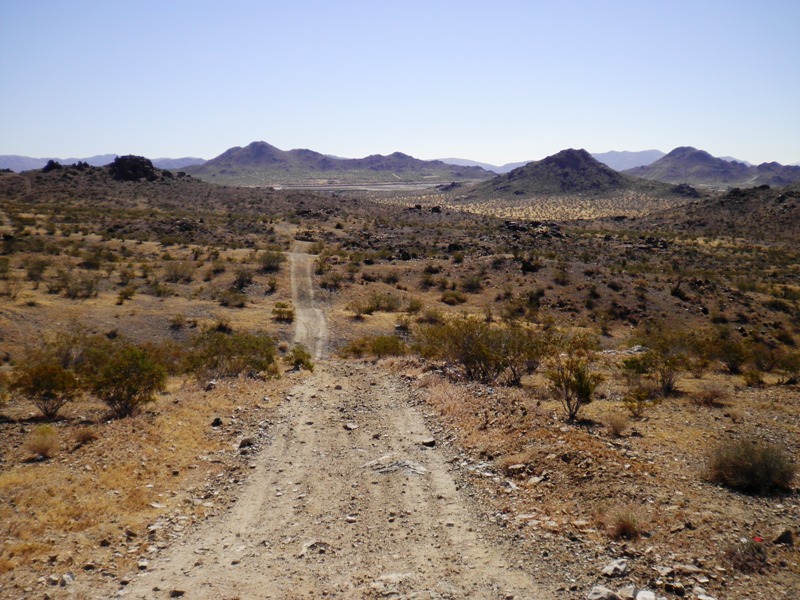
This morning I went walking among the creosote bushes with only jackrabbits for companionship. It was a gorgeous fall day in the desert and would have been perfect except for the smoke from people’s fireplaces that burned my lungs and aggravated my allergies. People are within their legal rights to use their fireplaces around here, but still, they encroached on my right to breathe clean air just because they didn’t want to wear sweaters or otherwise deal with inside temperatures a degree or two beneath their comfort level.

The problem with humans is that we encroach. We always want what we want without regard to others. And if we’re not stopped with regulations or fights or lawsuits, we continue to encroach.

An example of encroachment took place several years ago at an art show. Each person was allotted a ten-foot-by-ten-foot space. One woman (let’s call her Pat) used a six feet table across the front, with two feet on either side for an entry to an additional exhibit behind her table. All would have been fine except that the neighboring person used part of Pat’s space for an easel. People couldn’t get behind Pat’s table without tripping on the easel, so Pat moved her table to give people space to get around the easel. Next thing she knew, the neighbor moved the easel further into her space, so again Pat moved her table because it just didn’t seem worth fighting over such a petty matter. Again, the neighbor moved the easel, and yet again, but now there was no room to shove the table out of the way, so Pat asked the neighbor to move the easel, explaining it was in her space. The neighbor didn’t move it, so Pat did. And all the rest of the day, she had to listen to her neighbor complain about how Pat had moved her easel and stolen her space.

A silly story perhaps since there was nothing at stake besides a couple of feet of floor space, but it illustrates a fundamental human trait — we want whatever we can take, and once we’ve taken it, we feel it is ours.

The rich want to take from the middle class (they don’t want to take from the poor since the poor don’t have anything), the middle class (what’s left of it) wants to take from the rich, and the poor want to take from the rich, the middle class, the government, anyone they can. Our whole system of entitlement is based on this need to encroach. We need, so we should get. We are all trying to capture as much of our share of resources (power, money, land, energy) as we can. Sometimes we buy into the stock market hoping to make a killing. Sometimes we do get something for our investment; other times we lose it all, and when we lose it, we complain about all we have lost, when in fact we have lost nothing but paper profits we took from someone else. Sometimes we have many children, which is a way of staking out more than our share of resources. Sometimes we cheat a little — or a lot — and justify it because how else are we going to get what is ours? And sometimes we occupy someone’s space just because it’s there.

Quite by accident the other day, I happened to walk past a western offshoot of “Occupy Wall Street.” Most of these people wanted a redistribution of wealth, some wanted to ban Nukes, some wanted a place to stay or a reason to feel important. Perhaps those who began the movement are right and the rich have too great a share of the world’s resources, but the trouble is not the rich. The trouble is us — all of us, rich and poor alike — and our inbred penchant for encroachment. We all want more. The rich are just better at encroachment than the rest of us. Or maybe not. Maybe they just had more resources to begin with. Or were in the right place at the right time. Or were smarter. Or were more nefarious.  Or were born into a rich family. But it doesn’t really matter why they are rich. If the pyramid of wealth were reversed and the rich became poor and the poor became rich, the world would be exactly the same, just with different faces at the top and bottom. Our situation/status in life defines us just as much as we define our situation in life.

Still, whatever our status or situation, we want something we don’t have. And today what I wanted was a wonderful walk and a perfect day. And like most of our wants, I didn’t get it because other people wanted something completely different.

But the day was not lost. I got a blog topic out of the deal.
Life Goes On Even if the Whole Thing is Flawed

Today marks the nineteenth month since my life mate — my soul mate — died of inoperable kidney cancer. 580 days of missing him have passed, and there is still a lifetime of such days ahead of me.

It was a quiet day for me today, no big emotional storm — the storm came last month. I can see why there would be a grief upsurge at twelve months — that is a major anniversary and a big step. But at eighteen months? Can’t figure that one out. But, as I have learned, grief has no logic. It comes and goes as it pleases. Most times I do well by keeping busy and focusing on the moment, other times I am overwhelmed . . . again . . . by the realization that he is dead.

I hate that he is gone. The world is so much poorer without him. If he had left me for another person or place on earth, I would probably be furious at him for leaving, but I would not have this feeling of blank. It’s as if something in the middle of the page of my life was erased, and that blank spot remains. I work around the blank spot, fill it with excursions, friends, exercise, online activities, but still, it is there, a major flaw in my life.

He and I used to make tapes of the songs we liked, along with an index of each tape so we’d know what we have. I started going through some of his music tapes, trying to decide what I want to do with them. (I’d like to keep everything I have left of his, but when one leads an unsettled life, extraneous possessions become a burden rather than a luxury.) I was doing fine until I came across a tape marked flawed. I pulled out the paper that listed the songs on that particular tape. He had written in big letters across the top of the page: whole thing flawed. I set both the tape and the index on my work table, and that was the end of that. I haven’t been able to go through any more of his music, nor have I been able to throw away that tape or that paper. So every day I see that message: Whole thing flawed. That’s what life feels like now — it’s continuing on, but with him gone, the whole thing seems flawed.

I still have his tape player, and in the player is one of his tapes. If I rewind the tape a bit, I’ll be able to listen to the last song he ever heard. That’s something else I haven’t been able to do, or wanted to do. I don’t know how I’ll feel. Don’t know if it will make me feel connected to him, if it will set off a storm of tears, or if I will feel as if I were spying on him. So the tape player with that final tape is packed away, along with all his other tapes except the one on my table with it’s stark reminder: whole thing flawed.

Describing the Nondescript

Lately I’ve been coming across the word “nondescript” in novels. “Nondescript” is a perfectly ordinary word and shouldn’t raise my hackles, but it does. Most recently, I found this: “He caught a glimpse of a man running out of an alley, dressed like a local in nondescript clothes,” and what should have been a tense moment turned into one of cogitation. What are nondescript clothes? Since this story was taking place in Brazil, are Brazilian nondescript clothes the same as those in Thailand or Canada or the United States? Was he wearing baggy white cotton pants and a loose-fitting top?  Was he wearing jeans and a tee shirt? Shorts and a polo shirt? A suit and tie?

The author was a writer (not as much of an oxymoron as one might think since celebrity authors so often have someone else do their writing) and should have been able to come up with some way of describing the nondescript. Perhaps she could have said, “he was dressed like a local in loose white clothes.” Or she could have said, “He was dressed like a local in jeans and a bright-colored shirt.” Or he was dressed like a local in . . . well, no need to go on. You get the picture. Which is exactly the problem with “nondescript.” You don’t get a picture. You get a weasel word that fills space but gives you no idea of what to imagine.

I checked my manuscripts, and to my chagrin, I discovered I used “nondescript” twice. In Daughter Am I, I wrote, Mary glanced from Iron Sam to Tim then back at the road, goose bumps stippling her arms. How odd to think this nondescript bit of tarmac bound the three of them together. Actually, that’s not a bad use of nondescript, because how does one describe a stretch of tarmac on a interstate? Perhaps “ordinary” would have been a better word choice. Or perhaps I could have left off the adjective and just said, How odd to think this bit of tarmac bound the three of them together.

In A Spark of Heavenly Fire, I wrote: The bartender, a lank-haired individual with grooves of discontent etched on his otherwise nondescript face, continued to polish a glass. Hmmm. There is a bit of an image here, but still, I could have found some bit of description for his face. Or maybe not. Faces do tend to blend one into the other. Still, “undistinguished” would have been a better word choice.

At least I got rid of “nondescript car.” My hero in More Deaths Than One bought an old beat-up Volkswagen, and I called it nondescript. At one time such a car might have been nondescript, but now? Yikes — such a car would have attracted attention. Better for him to have bought a white sedan that looked like half the cars on the road.

So, this is my point: if you’re a writer, rethink “nondescript.” I’m sure you can come up with a bit of description to show that the nondescript isn’t so nondescript after all.

I’m Declaring This Blog Reader Appreciation Day

As most of you know, this has been a hard couple of years for me. I watched my life mate (soul mate, business partner, best friend) die slowly of inoperable kidney cancer. I survived months of grueling grief. I left my home to take care of my 94-year-old father. I’ve struggled to keep from being swallowed up in the quicksand of emotion and trauma.

Through it all, you’ve been here for me. I want you to know how much every comment, every word of support, every story you shared has meant to me. Even those of you who have never left a comment (so I was never able to thank you personally) have helped me get through this terrible time because I knew you were there, suffering your own traumas. Your presence made me feel as if we were going through this journey together.

And perhaps we are going through this journey together. We are so often in competition with each other we forget that in some intangible way, we are connected one to the other. The internet, though it does sometimes keep us from connecting in the offline world, keeps us connected in a more ethereal way. The internet and computers are fueled by electrons, and so are we.  Somehow the two streams of electrons manage to collide. How else to explain the very real connections we have made though many miles — sometimes half a world — separate us?

So, thank you. Thank you for holding out a virtual hand and keeping me from sinking. Thank you for reading my blog, for caring, for connecting. Thank you for being part of my stream of electrons.

Proving to Myself That I’m Real

I’m still struggling with the sense of loss that the death of my long time mate created in me. It’s not just that I lost him — I feel as if I’ve lost a sense of reality, a sense of my reality.

During the first months of almost unbearable pain, I felt that the situation itself was unreal. Part of me couldn’t believe he was dead (though I knew he was — I watched him die). It seems strange now, but accompanying the disbelief was a belief that something wonderful would soon happen to me, perhaps because I needed to believe good would come to balance the unbelievable wrongness of his absence. I no longer hold myself tensed against the reality of his death (though it does still tear through me at times), but I also no longer have that sense of an imminent good. What I’m left with is a feeling of waiting, though I don’t know what I’m waiting for.

This feeling of being in limbo seems to be a common stage of grief for those of us past the first year. So many of us are struggling with it, trying to find . . . a new reality, perhaps.

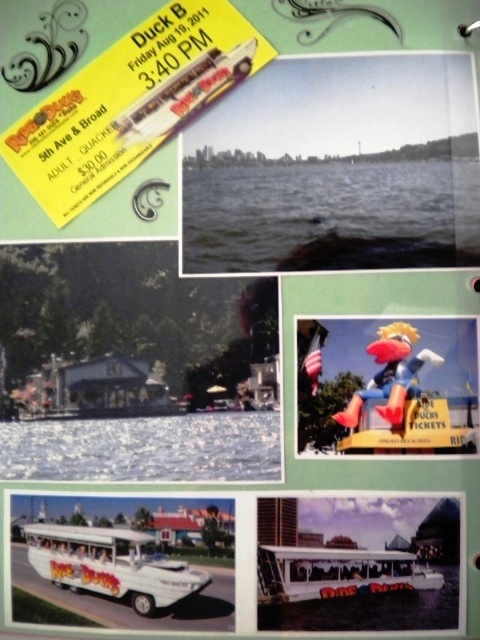
I’m not a sentimental person. I seldom kept keepsakes and I never chronicled my life with photos, but now I do both to prove to myself that yes, I am alive, and yes, I am doing something with my years. I’ve recently started a scrapbook of paper memories. Perhaps someday I will feel a sense of reality again, but if I don’t, I can look at the book and know the truth of it. I am real.


What Does Not Destroy Us Makes Us Stronger. Or Weaker. Or More Fearful

Nietzsche said, “What does not destroy me makes me stronger.” I’m not sure if that is strictly true. Sometimes that which doesn’t destroy us makes us makes us weaker because it makes us fearful of living, fearful of more trauma, fearful of fear itself.

Eleanor Roosevelt said, “You gain strength, courage and confidence by every experience in which you really stop to look fear in the face. You are able to say to yourself, ‘I have lived through this horror. I can take the next thing that comes along.’ You must do the thing which you think you cannot do.”

In life, we often have to do the thing we think we cannot do. Too many times during the past eighteen months I’ve felt that I can’t survive the pain of losing my life mate (we were together for 34 years). Panic kept washing over me, as if I’d been set down in the middle of an alien world with no idea how to deal with all the horror being thrown at me. I feared every new step, every change. I’d been especially fearful of growing old alone. Sometimes I still am. I’ve seen what dying can do. It’s a terrible way to end one’s life, and it seems even more terrible when one has to face it alone. Of course, there’s a chance that it will be decades before I have to face the grim reaper, and who knows what will happen until then?!

Well, I do know one thing that will happen: this discussion about life, writing, and the writing life!

So, what do you fear? How do you deal with your fear?

If you are a writer, how does that fear work its way into your stories? What do your characters fear? How do they deal with the fear? Is the fear a plot driver, something that drives the story forward or is it more of a subplot, a way of developing your character? Is the fear justified? Is the fear realized? (I mean, does the thing the character fear happen, and if not, why not?) How does the character deal with the fear? How does the fear change the character? How does facing his/her fear change the character?

What To Do When One of Your Beloved Pieces of Art Glass or Pottery Gets Broken

What do you do when one of your beloved pieces of art glass or pottery gets broken?

It breaks your heart to have to throw it away, but what else can you do with it?

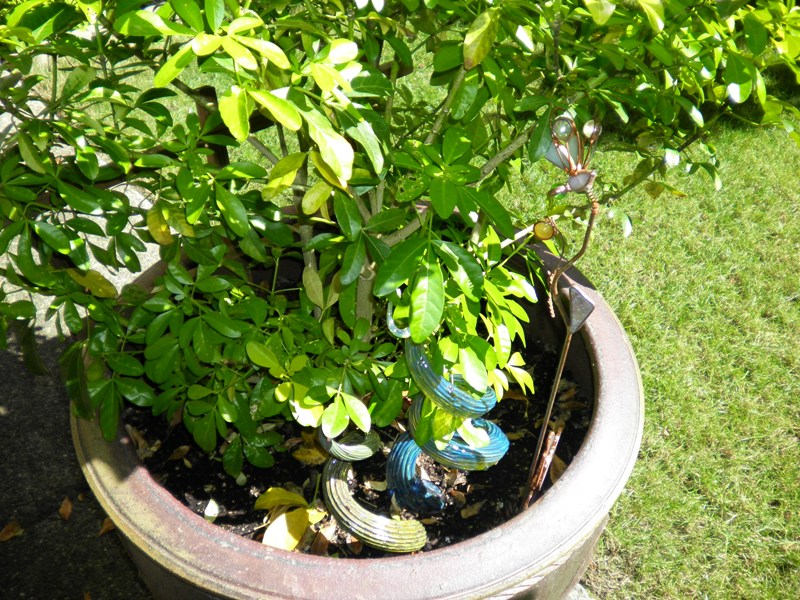
Don’t throw it away!! Plant it in your garden.

They make wonderful accent pieces. And you can continue to enjoy their beauty.

I wish this had been my idea, but I’m only passing it along.

The glassware collection and the idea of planting broken pieces of art glass and pottery are my sister’s.
I’m only posting the photos I took in the hopes that you enjoy her pottery garden as much as I did.

Life Needs a Laughtrack

While reading Nancy Cohen’s blog post “Cut That Wimpy Dialogue!,” I thought about how much smoother and more interesting dialogue in books is in comparison to normal conversation. In real life, we stutter and stammer, repeat words, interrupt each other, talk while another is still speaking, and we tell long drawn out stories that go nowhere. Such idiosyncracies would bore us to tears if we read them in a book, but we’re used to them in real life, perhaps because we’re more interested in our connection to the people we are talking to than the actual words we are using, or perhaps we are more forgiving because we know none of us can rewrite our spontanous speech to make it vigorous and decisive as we do in our books.

I used to be more congnizant of what I was saying. I would hear the wrong words as they came out of my mouth, and I tried to correct them before they hit the air, but that just made me sound like a stammering fool. Now that I don’t listen to myself as much, I talk smoothly without stammers, but still, my conversation is normal. In other words, if my life were a book, most of my words would be edited out.

Since most conversations in real life are less than scintillating (since most of life itself is less than scintillating) maybe what we need are laughtracks. Laughtracks — especially loud and raucus laughtracks — are prevalent in television comedies that have little humor and less wit, but the laughtrack gets your adrenaline going and makes you think you are watching something special. Or at least makes you think you have some connection to the story, which makes you feel less foolish for watching the silly show. Inane comments on a comedy without a laughtrack leave us cold. So why shouldn’t we each come with our own private laughtrack? If we say something that falls flat, canned laughter floats around us and our listeners, making us seem brilliant and witty. And if what we said was really inane, the laughtrack would rise to a crescendo, drowning out the echo of our words still hanging in the air, making it impossible for anyone to remember them.

On the other hand, the constant sound of raucus laughter could get on our nerves. Maybe it’s best to leave things the way they are, and save our wit and wisdom for writing where we can edit the words until they are so perfect there would be no need of a laughtrack for distraction.

Does Anyone Really Want to be Good? Do You?

There is no such thing as a bad driver. Ask people if they think they are good drivers, and they will all say yes. Why? Because we judge our driving ability by our strengths and values. If we think fast driving makes a good driver, and we drive fast, then we consider ourselves good drivers regardless of our discourtesy to other drivers or our lack of attention to possible hazards. If we think obeying every letter and number of traffic laws makes a good driver, and we obey the laws, then we consider ourselves good drivers even if our driving poses a risk to other drivers.

Of course, if you ask drivers if other drivers are good drivers, then there is no such thing as a good driver.

Goodness is the same way. We all consider ourselves to be good, but that’s because we judge goodness by what we do and what we value. If we think honesty makes a good person, and we scrupulously tell the truth no matter who we hurt, then we think we’re good. If we think adherence to religious doctrine or sexual mores makes a good person, and we adhere to those customs, then no matter what unkindnesses we commit, we consider ourselves good. If we think not murdering our horrible neighbors makes us good, and we refrain from inflicting bodily harm even though we believe the world would be a better place without them, then we consider ourselves good no matter what other havoc we might wreak.

Goodness, like good driving, isn’t as subjective as we think it is. Goodness is about character — integrity, honesty, kindness, generosity, moral courage, and all the other virtues we wrinkle our noses at because they are old fashioned.

I hadn’t considered “goodness” until I needed a topic for a writing discussion and came across this quote from playwright Maxwell Anderson: “The story of a play must be a conflict, and specifically, a conflict between the forces of good and evil within a single person.” A few hours later I found an article in the newspaper, a transcript of a Rosh Hashanah sermon by Dennis Prager in which he enumerates 13 obstacles to becoming a better person. (Supposedly, the purpose of Rosh Hashanah and Yom Kippur is moral introspection: What kind of person am I, and how can I become a better person? This struck a chord with me, because these questions are the focus of my life right now.) The combination of these two writings gave me my discussion topic: The Not Quite Good vs. the Not So Evil.

Prager made a good point: most of us don’t want to be good. We want to be other things, such as happy, smart, attractive, healthy, successful. In today’s workplace especially, those old fashioned virtues such as kindness, generosity, integrity are pretty much an antithesis to any kind of success.

Although I’ve been spending a lot of time thinking about what I want to do with the rest of my life and what I want to become, I never once considered “goodness” as a goal. To be honest, I’m not sure it’s even practical. It’s too nebulous. Perhaps I’ll settle for something more concrete, such as not killing my neighbors even when their music blasts my eardrums.

What about you? Do you want to be good?