Garage Gallery

I’ve been keeping track of my daily tarot card pick for a month now, and though I don’t see how the cards affect my life, there are certain things that show up again and again, such as sixes, which represent moving away from conflict, light after dark, and harmony. Another frequent card is the ten of weapons, which can mean anything from misfortune on a grand scale to a reminder that we can’t control everything.

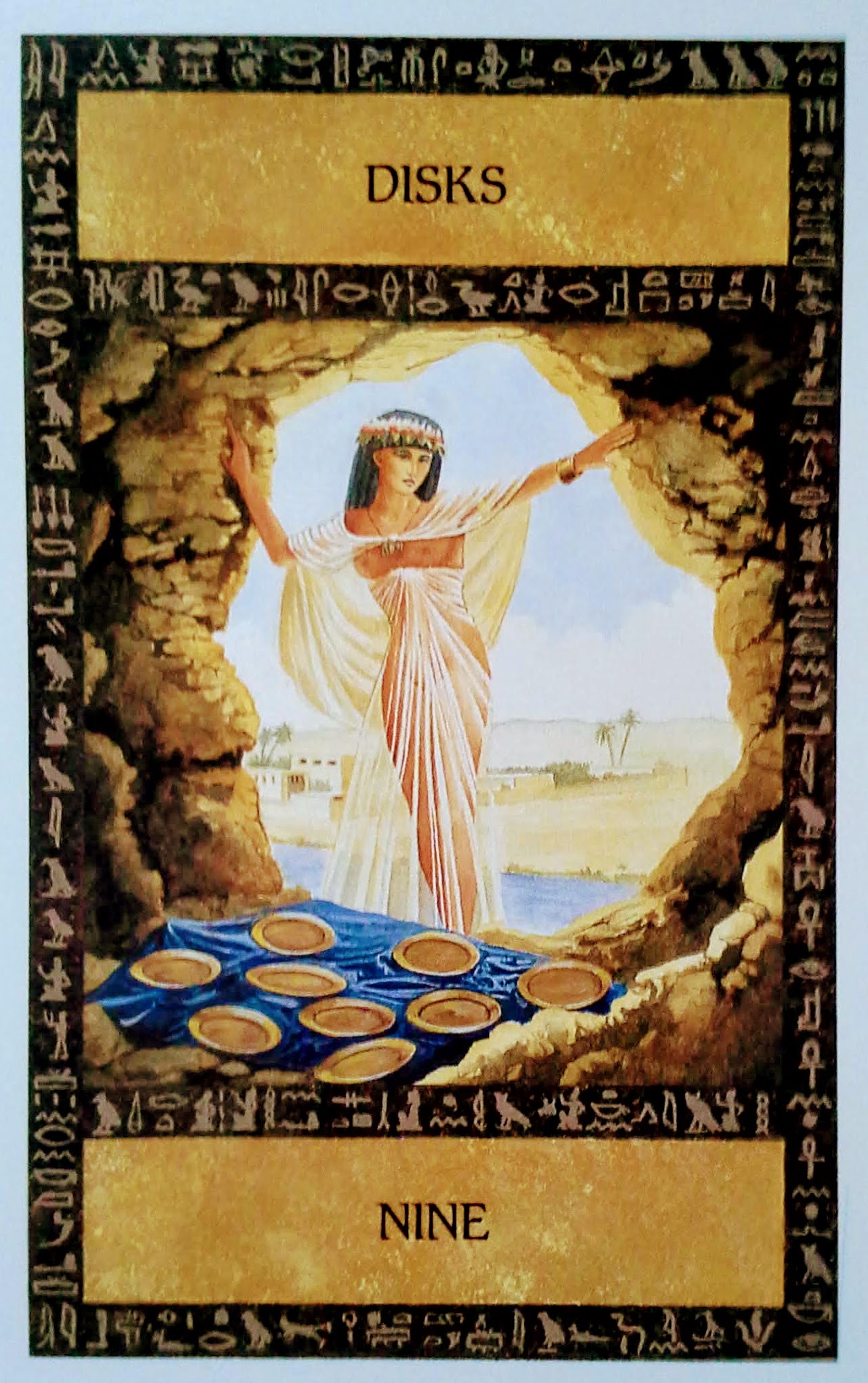
Today’s card, the queen of pentacles, is also a frequent card, showing up about once a week. The queen is sensible, hard-working and domesticated; loves the comforts of life and displays splendor of life. She’s kind and affectionate; generous and forgiving, and prone to weight problems. Also, she depends more on her intuitive skills than her intellect.

I was nodding through the whole description. Yep, me. Me. Me. Wait! What? Relies on intuitive skills rather than intellect? I thought it was the other way around, but I suppose if the card is right about all the rest of it, then it’s probably right about that, too. Or not. Who knows? Another meaning of the card is someone who is shrewd and capable, so that seems to contradict the intuitive skills dependence meaning.

And oh, yes — there’s one other thing: the card represents the embodiment of feminine creativity.

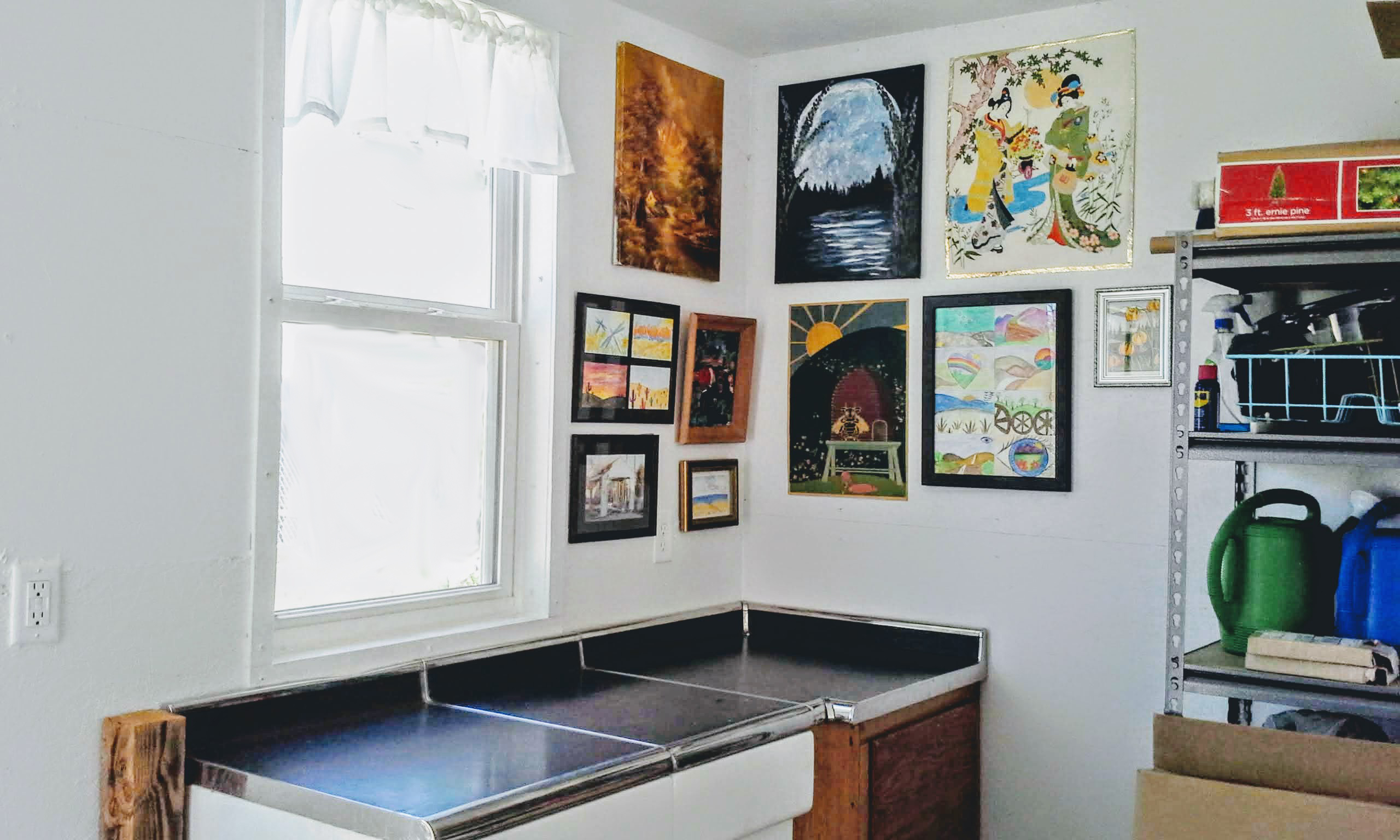
I did have to smile at that, considering that I spent the morning decorating my garage, or at least one corner of it. I don’t like clutter, especially on the walls inside my house, because too much stuff makes me feel closed in. Over the years, though, I’ve collected some pictures I liked and painted others, and the garage seems the perfect place for them. I’ll be able to see them occasionally, and won’t get overwhelmed or claustrophobic.

I even put up a frill of a curtain. I wasn’t sure I wanted a curtain, though it would seem to be the epitome of a girl garage, but when I was sorting through things to store, I found a curtain ruffle and a rod that was the perfect size. Apparently, the window wanted a curtain!

Maybe I shouldn’t post the photo of these bits of artwork because, as a blog reader pointed out, posting photos and talking about my possessions might put me at risk for break-ins. Not that I have anything that’s worth anything except maybe my car, but that garage door sure was expensive!

Still, I got a kick out of my garage gallery, and thought you might, too.

***

Pat Bertram is the author of Grief: The Inside Story – A Guide to Surviving the Loss of a Loved One. “Grief: The Inside Story is perfect and that is not hyperbole! It is exactly what folk who are grieving need to read.” –Leesa Healy, RN, GDAS GDAT, Emotional/Mental Health Therapist & Educator
Faceless Folk

I was offered a special treat yesterday — a visit to the big city! No, not Denver, but close: Colorado Springs.

Some friends were going to do some shopping at Costco and the Asian Market, and they invited me to go with them. The only drawback was that they were also going to the commissary at the base, and because of The Bob, the military has some sort of Defcon number in place, which means no one but authorized personnel were allowed on base. (It’s just as well — on the way back home, we saw a freight train heading our way loaded with all sorts of army vehicles and machinery and shipping containers transporting who knows what. And that in itself was enough to get my imagination going about military actions — I certainly didn’t need the extra stimulation of being on an army base to turn that imagination into actual fears.)

While my friends did their shopping at the commissary, I stayed at the Asian Market, which gave me plenty of time to watch all the faceless folk. It really is spooky seeing all sorts of people hidden behind masks and sunglasses. (Almost as spooky as seeing the army materiel on the move.) I mean, anything could be hidden in all that facelessness, and it wouldn’t have to be anything nefarious. Smiles and other signs of goodwill and connection were also hidden. No one seemed to be spending any time on the courtesies normally afforded when passing by others who were shopping. (People don’t seem to think the 6-foot rule applies to grocery store aisles. And apparently, if you take a step back and bump into someone, it doesn’t count, either.)

I did end up getting a few things at Costco, using my friend’s card (dried cherries, pistachios, cherry tomatoes and figs, if you’re curious), but mostly, things at places like that are not for women who live alone, or at least not this for this woman. I’m not fond of stocking up, for one thing, and for another, I generally can’t get through large stocks of food before it becomes outdated.

Still, it was fun seeing things I hadn’t seen for a while (or never, as in the case of a lot of the merchandise in the Asian market). And it was truly delightful being able to visit with my friends for the day.

It’s sort of interesting, but in each of the two days before we went, I got the ten of swords card for my card of the day. If you know anything about the tarot, you know, to the extent that any card is a death card, it’s the ten of swords that presages tragedy rather than the death card itself. The death card generally means a change of some sort, perhaps the death of the old you, but the ten of swords is more ominous and speaks of death, sudden misfortune on a grand scale, betrayal, and anything else not good. But since we can read anything we want to into a card, I tend to think it means that no matter how much we try, we cannot control everything, which can either lead to a defeat of the spirit or a letting go and accepting our present circumstances, no matter what they are. But, even in acceptance, we can take precautions. And, like the death card, the ten of swords ultimately can mean change and renewal. (Because nothing stays the same, any disaster almost by definition will eventually bring about a renewal.)

Considering The Bob and this ominous card, I must admit I was a bit worried about going on the trip — after all, at home by myself, I am safe, but out among the faceless folk? Not so much. Still, I took precautions — stayed away from everyone except my friends, and wore a mask out in public.

A side note — on the way back, after we saw the military train, we passed a mural of a group of people waiting for an old-fashioned train. I had to laugh at the painted fellow wearing a black bandanna as a mask because so many people I’d seen earlier had worn that very thing. Such masks sure mean something different today than they did a hundred years ago! Oddly, when I saw that mural, I had a brain hiccup, and for just a second I thought we were driving through Delta, three hundred miles to west on that very same highway, because Delta is the self-proclaimed “city of murals,” and I’d driven through that town perhaps a thousand times over the years.

Now I’m back to isolation, and grateful for it. At least when I’m by myself, I don’t have to wear a mask, and oh, do I hate wearing those things. They give me sinus headaches because they block off even more oxygen that just the stuffed sinuses do, and it’s hard to take deep enough breaths. And just as bad, they make me so very hot, which is not fun when it’s almost 100 degrees and humid besides.

Am I complaining too much? I don’t mean to. I really did have a lovely time. And it really was wonderful being not isolated for a day, even if it meant being around too many faceless folk.

***

Pat Bertram is the author of Grief: The Inside Story – A Guide to Surviving the Loss of a Loved One. “Grief: The Inside Story is perfect and that is not hyperbole! It is exactly what folk who are grieving need to read.” –Leesa Healy, RN, GDAS GDAT, Emotional/Mental Health Therapist & Educator
Touchdown

A touchdown is generally a good thing when it comes to spacecraft and airplanes, though in the case of airplanes, that initial touch can sure get the adrenaline going, especially when the plane bounces and then touches down yet again. A touchdown in football is a good thing for the one making the goal and a not-so-good thing for the opposite team. (At least, that’s my understanding of the game, though a touchdown could mean something else for all I know since my knowledge of football is limited to movies like The Replacements, Necessary Roughness, Rudy, and Radio.)

A touchdown when it comes to weather is something entirely different.

Last night, the tornado sirens sounded as they sometimes do. Normally I don’t worry because the familiar signs of an impending tornado are often absent, especially the eerie green skies. Last night, however, the ambient light was a sickly yellow-green. I waited to hear the screaming winds that often herald a touchdown, but all I could hear was the wind in the trees and the rain pounding against the windows. (Luckily no hail, though some areas around here did get bombarded.)

Since I didn’t want to go down into the basement — I’ve lost whatever talent for stairs I once had and so I was more afraid of falling than I was of the storm — I brushed my teeth. It sounds silly, doesn’t it? But the bathroom, which has no window, is the safest place next to the basement, and I wasn’t scared enough to huddle on the floor of the shower. So I brushed my teeth.

And the storm passed. Well, except for that one thing — a sheriff’s deputy got a video of a tornado touching down right outside of town.

Apparently, the cloud touched down for a few seconds, but there was no damage and no one was hurt.

This morning, I went outside and looked askance at Mother Nature. The crone gave me an innocent look as if to say, “What? Did I do something wrong?” All was still (except for those ubiquitous doves and their incessant call, “What-todo, what-todo.”). The sun shone with a golden light, the skies were bright blue, and the only indication of a storm was the standing water in the gutters where the drainage is especially poor.

Clouds are starting to roll in again, which is to be expected during monsoon season. (Normally, the winds in Colorado come from the west or northwest, but during the summer, they shift and come from the south and southwest and bring moisture and afternoon storms from the gulfs.) We can use the rain since this area is in extreme drought, but please, hold the tornadoes.

Things are bad enough — we don’t need any touchdowns around here.

***

Pat Bertram is the author of Grief: The Inside Story – A Guide to Surviving the Loss of a Loved One. “Grief: The Inside Story is perfect and that is not hyperbole! It is exactly what folk who are grieving need to read.” –Leesa Healy, RN, GDAS GDAT, Emotional/Mental Health Therapist & Educator
A Slightly Dreamy Woman

I’ve been doing a one-card tarot reading every morning this month, and every time I asked the same question — what do I need to know today?

I’m not sure what I need to know, but there is definitely a pattern to the cards. Five of the cards spoke of harmony. Two spoke of balance. Two spoke of working toward one’s dreams, and two said the dreams were coming to fruition because of previous hard work. Two or three mentioned change and growth. (That adds up to more than twelve cards, but some of the cards fell into a couple of these categories.)

It’s interesting to me that there is a theme to the cards I picked, but I have no way of interpreting it. Since at least two of the cards refer to intuition and inspiration, I should be able to intuit the meaning in these cards, but it’s hard to know if they are saying I’m almost to the point of balance and harmony or that I need to work harder to get to that point.

I must admit, I do feel as if I’ve found a balance to my life and seem to be in harmony with my self for a change, but since the tarot is about digging deeper and discovering what we don’t want to face, it’s possible I’m fooling myself. Though if I were, wouldn’t I feel out of harmony?

Either way, being in harmony (or nearing that state) and merely feeling as if I am in that state of near harmony, it seems to be the same thing — a feeling of having found a balance.

But since these cards also speak of change and working toward one’s dreams, maybe it means I have found near-harmony but that’s no reason to rest on my almost balanced laurels.

One of the cards I picked was the Keeper of the Crescents. This is a weird deck, one of those that the creators decided to forgo a lot of the traditional names and meanings and made up their own, as well as switching around the elemental meanings of a couple of the suits. This card is the equivalent to the Page of Cups. The book that came with the cards spent a lot of time describing the card and pointing out the symbolism and mythos of the various aspects of the card, but when it came to interpretation, they said only that it meant a quiet and slightly dreamy woman, full of deep passion and feelings.

Although the card seems apropos, I had to laugh. All of that imagery just to mean something simple as a slightly dreamy woman? Why not just do an image of a slightly dreamy woman then?

When I looked online for Page of Cups, I did find more of an explanation, such as this card representing the unexpected inspiration that comes from the unconscious (though isn’t inspiration, almost by definition, unexpected?), perhaps in ways we might not truly understand. It also says to be open to new ideas that come from intuitive inspiration, despite those ideas being something we might not expect.

So far, I haven’t come upon those new ideas yet — no ideas about the cards I’ve chosen so far this month and no ideas about anything, actually.

If I had an idea, I’d have written about it instead of writing about these cards.

Well, there was one idea that came to me — it suggested that I would have been better served to pick a more traditional deck for this first month’s foray into a daily tarot pick. That way, whatever I learned would have more relevance to other decks. So next month, I’ll be sure to pick a less esoteric deck.

***

Pat Bertram is the author of Grief: The Inside Story – A Guide to Surviving the Loss of a Loved One. “Grief: The Inside Story is perfect and that is not hyperbole! It is exactly what folk who are grieving need to read.” –Leesa Healy, RN, GDAS GDAT, Emotional/Mental Health Therapist & Educator

 

Pretty White Walls

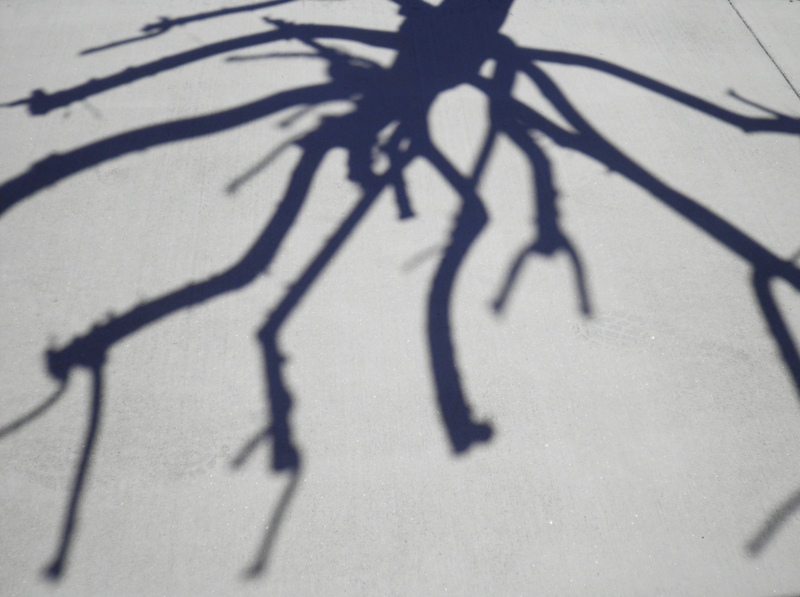
The insulation and the walls of the garage are in, and now the painting begins! The walls are white (not blue as they appear in the photo), to make sure the garage is nice and bright.

I’m still a way from being able to use the garage. Once the walls and ceiling are painted, the opener will be installed, and then gravel will need to be brought in to fill in the space between the driveway and the alley. I think the contractor wants the ramp/sidewalk from the house to the garage done before some of the rest of the work to make sure I have a safe way to get from one building to the next, but I’m not sure if the sequence matters as long as the sidewalk is done.

From the beginning, the contractor has understood that I’m fixing the place up now to prepare for my old age so I can be self-sufficient as long as possible, and he’s been very good about pointing out things I should be done, even things I wouldn’t have thought about. But he’s used to elder-proofing houses and yards, and I’m not used to being an elder. Though I’m getting there. Things I didn’t think I’d have to worry about for a few more years, such as going down the steps to the basement, are definitely things I need to worry about now. My bum knee, though it is healing and isn’t preventing me from doing things I need to do, doesn’t like stairs. (It’s a good thing we decided to make the garage big enough for storage because my original idea of storing things in the basement has become defunct.)

It’s nice having someone look at the place from a different point of view than mine. From his standpoint, I’m sure I already seem old-lady-ish, so it’s not much of a stretch for him to consider my safety, especially when I stumble because of a depression in the yard. Such unevenness will be taken care of with loads of dirt — they have to bring in dirt anyway to fill in where the old garage used to be, and to fill in around the garage — so it will be easy enough to expand the fill site. Besides, he’s going to be putting in pathways for me. (Made from something called breeze?)

It will be fun to gradually fill in the corners of the yard and the various secret spaces created by the walkways with interesting plants and artifacts, so that if I can’t go far, I can still have a micro adventure in my micro park. Such an undertaking will take years, of course — not just because I can only do so much at a time but because things take a long time to grow.

The contractor also seems to understand that I like the work he does, but that I also like the companionship. Knowing that congenial people are here, working for my welfare adds an additional dimension to the experience of owning a house and adds to the richness of the experience. Their presence has certainly helped to keep me from feeling completely isolated during these Bob times.

And it gives me something to look forward to on the days I know someone will be here.

Luckily, from a companionship standpoint, things are far from finished. Even though the garage is nearing completion, there is a whole list of other things that need to be done, such as the water lines replaced, the foundation maintained, the gutters fixed. Etc. Etc. Etc.

But I’m getting ahead of myself. Today, I am focusing on the garage and the pretty white wall.

***

Pat Bertram is the author of Grief: The Inside Story – A Guide to Surviving the Loss of a Loved One. “Grief: The Inside Story is perfect and that is not hyperbole! It is exactly what folk who are grieving need to read.” –Leesa Healy, RN, GDAS GDAT, Emotional/Mental Health Therapist & Educator

Maybe Rereading “Dune”

I’m rereading Dune. At least, I think I’m rereading it. I’m beginning to wonder if I ever read it at all until now.

I remember thinking I liking the book when I was young, and several times over the intervening years I’d end up with a copy and try to reread it, but I could never get into the story again. Admittedly, when I was young, I had a lot more patience for books that were mostly descriptions of day-to-day living, whether on this planet or another (the first 150 pages of Dune seem more like setting the scene than the beginning of a book) and I lost that patience in later years. It’s also harder to keep whole books in my head now, so that adds to my impatience with dragginess.

It’s possible the book gets better (I’m not even halfway through), and it’s possible it has a great ending that would make me feel good about the book. And it’s possible that something in the latter half will strike a chord of memory, but so far, there isn’t so much as a ding. Even if I can’t remember books I read decades ago, if they impressed me in some way, I have some sort of lingering impression of them. Most books, of course, leave no impression — there is simply no “there” there. I’m not sure where Dune would fit in the book spectrum because it is different enough that I should remember something or hear a faint echo of recognition in the back of my mind. But nope. Nothing. I can’t even figure out why I would have read it. I have never liked authors who have to create incomprehensible names for people, things, and places. The strange spellings seem to take up space in my brain that would normally be used for following the story.

Even more confusing, I see the cover in my mind’s eye — a reddish cover with a fellow trudging across a wide expanse of dunes. I spent some time looking at Dune covers today, and there is not a single one of them that looks familiar. (Except for the one I bought at a library book sale a while back and redonated unread.)

It makes me wonder what book I did read. It’s possible I read some other book and misremembered it as Dune. It’s possible I misremembered the cover. (If there even was a cover image. It could have been a rebound book from the library.) And I could have found the book completely unmemorable.

Too bad there’s no way to rewind a memory to see the truth of it.

What I am seeing is a lot of similarity to The Wheel of Time series, at least in small things — the witches, the truthsayers, the uncanny powers, the manipulation of people and events. Of course, these are all fairly common archetypes and scenarios for the hero/savior story, but people often compare The Wheel of Time world to The Lord of the Rings, and I don’t see it at all. (But then, that’s another iconic series I haven’t been able to slog through, so I could have missed any similarity.)

One thing that amused me — in a book that uses so many strange-sounding names and words, at one point, Frank Herbert describes someone as having olive skin. Couldn’t he have come up with a more interesting word? I have always hated “olive” applied to skin because it takes me out of the story and makes me wonder what color the character is. I still remember the first time I came across that descriptive word. I couldn’t figure out if the character had green skin or black. It took years before I realized the word referred to the color of the inside of a black olive.

So, I can remember being puzzled by olive skin, but I can’t remember anything about a book I thought I read and thought I liked.

The life of a reader does get bizarre at times.

***

Pat Bertram is the author of Grief: The Inside Story – A Guide to Surviving the Loss of a Loved One. “Grief: The Inside Story is perfect and that is not hyperbole! It is exactly what folk who are grieving need to read.” –Leesa Healy, RN, GDAS GDAT, Emotional/Mental Health Therapist & Educator
Feeling Clunky

I finished rererereading The Wheel of Time and resisted the urge to start over again, mostly because I have library books due and need to read them. I considered returning them unread, but the librarian was kind enough to deliver them and I didn’t think it proper to be so dismissive of her kind gesture.

The Wheel of Time has some hugely glaring faults, not the least being that Robert Jordan fell in love with his world and apparently didn’t want to waste even a single idea that crossed his mind, even if it didn’t fit with the story. He also had the annoying habit of creating characters for no apparent reason, pounding away at unimportant plot points and then simply dropping them, while at the same time, barely touching on some important issues. He seemed to like playing games with his readers and he especially seemed to like being mysterious for the sake of being mysterious, neither of which did anything to move the story along. He also seemed to change his mind about things he set up in early books, so that there are some awkward gear changes in later books.

But, that being said, the work really is brilliant. He is one of the few major writers I have heard about in the past few decades who actually spent years researching and building his world before he ever began writing. It’s fun trying to pick out all the symbolism and cultures, philosophies and costumes, influences and archetypes. But more than that, it’s a world of old-fashioned values such as honor and obligation, as well as being a world of less pleasant strictures such as compulsory obedience. But without the bad to push against, the good wouldn’t be as apparent. At times, the writing is almost lyrical, which helps lend an otherworldly air to the work.

I wondered how spending two months reading and rereading such a massive work would affect my interest in books taking place in today’s world, and as I feared, today’s world feels . . . clunky. It’s not just books that feel clunky, to be honest. Other things do too, such as modern methods of doctoring. In Jordan’s world, the “witches” can delve into people and heal them almost immediately instead of having them go through horrendous “therapies,” such as the cancer protocols of today. In some cases and places in The Wheel of Time, thought becomes real, so that one isn’t always battering against the solidity of this world. (Our world truly shouldn’t feel so solid, considering that things are made of atoms and atoms are comprised of a few particles, a bit of energy, and a lot of empty space.)

Still, it’s probably good for me to do something other than spend so much time in a fake world, especially one not of my own making. (Though oddly, my as yet unpublished book is a world of my own creation, which takes our world then breaks it and remakes it in a different way. I can honestly say that Jordan did not influence me in any way since my book was written — and the sequel planned — long before I discovered his works.)

Meantime, I’m still chiseling away at the tarot, picking a card every day and seeing what it means as well as how other tarot artists depict the symbol. (Today’s card is the hierophant, if you’re interested. The word hierophant means “revealer of sacred things,” and the card indicates someone who helps unravel mysteries. It’s also about intuition, i.e.: inner tuition — inner instruction or guidance.)

I almost started a tarot journal today, but who starts a new project on the 28th of the month? It is the beginning of the week, so there is that, but the first of the month is just a few days away, which seems even a better time to start. It also gives me plenty of time to change my mind. If I don’t change my mind, there is the decision of how to do it, whether in a long hand journal, or on line. Long hand is easier in some ways since there is the possibility of hand/brain connections, but online would be easier if I wanted to include images. I considered continuing my tarot studies as part of this blog, adding a bit of my tarot learnings to the bottom of the daily article as I did today, but I have a hunch I am alienating readers who see the tarot as something less than admirable. On the other hand, posting to two blogs every day is a bit much.

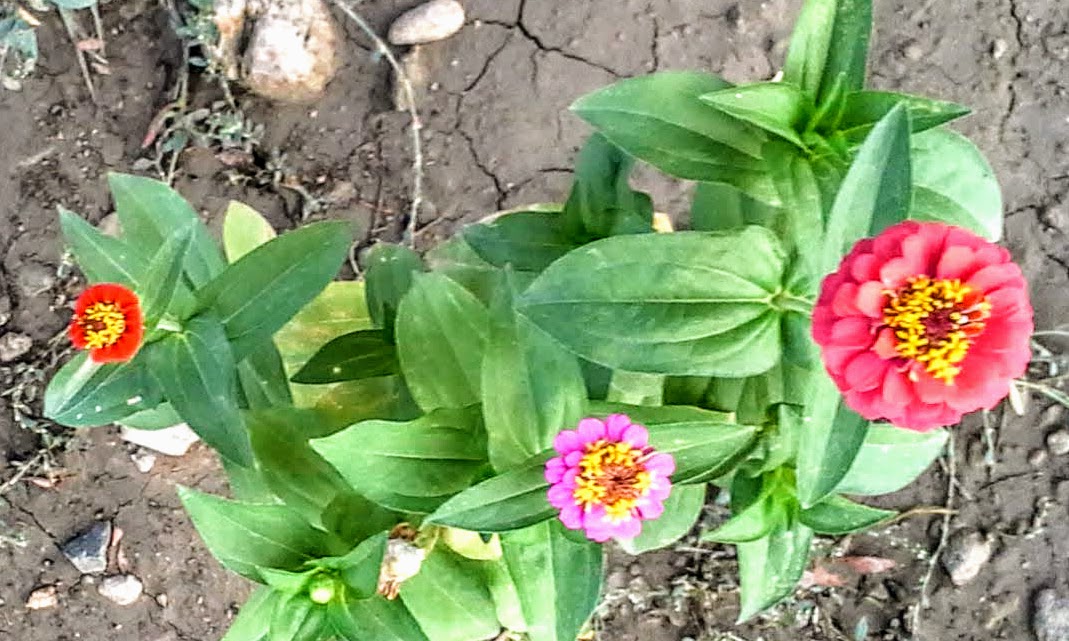
On a lighter note, I’ve had a surprise. I thought all the wildflower seeds I planted were defunct, but I think it’s more that our severe drought kept them from germinating, because I found a small patch of bachelor buttons below a gutter drainpipe. I didn’t plant it there, but there it is.

***

Pat Bertram is the author of Grief: The Inside Story – A Guide to Surviving the Loss of a Loved One. “Grief: The Inside Story is perfect and that is not hyperbole! It is exactly what folk who are grieving need to read.” –Leesa Healy, RN, GDAS GDAT, Emotional/Mental Health Therapist & Educator
 

Searching for Color

I had a bit of a shock today. In my continued studies into the meaning of the tarot, I decided to dig out the research on color I did for Light Bringer. Color was an important part of the story, adding what I hoped would be a different layer of meaning and “feel” to the characters and their interactions. I also wanted these meanings to resound within the reader even if they didn’t know specifically what a color meant, in the way that archetypal characters do. So, lots of research.

I found the notebook labeled “colors” and all that pertained to color in that notebook were lists of colors. In my novels, I try to stay away from the basic red, yellow, blue, etc. and use less obvious color names such as carmine and vermillion, primrose and mustard, lapis and indigo, and the list made it easier to find the proper color name. But that’s all I found. No notes from all those books I used in my color research.

Panic!

I had thrown away some writing notes. When I began writing fiction, I also studied the craft, reading and taking notes from myriad books. When I packed to move, I needed to get rid of stuff, and since I am beyond the writing basics, I figured I didn’t need all that extra weight, though I did keep some notes as reminders to go beyond the obvious and cultivate subtlety. I couldn’t have thrown away those valuable color notes, could I? It didn’t seem possible, but they weren’t where I thought they should have been.

I had written some articles for this blog and other sites pertaining to color, so I went searching for them, but apparently, most of those articles disappeared into the dead website graveyard, without even a ghost remaining. There are a few brief articles about color on this blog, but that’s it.

Unbelievable. All that research  . . . gone.

But no. I finally went through the stack of my research notebooks and found the color notes in the middle of a book labeled, “technical.” (As opposed to alternate technologies, religious studies, general notes, quotes, etc.)

It might not have mattered (from a tarot standpoint) if I hadn’t found the notes because I remember the basic meanings. The basics might be all that’s necessary to help get a feel for the various tarot cards, but only if the artist bothered to use the proper color symbolism. Or maybe it doesn’t matter? Perhaps it’s better to take each card as is, and not worry too much about what the artist intended. After all, the reader is supposed to gain a feeling for the card itself, and color helps intensify that feeling.

See also:
Coloring Your World
Everything You Always Wanted to Know About Green and More

**

Pat Bertram is the author of Grief: The Inside Story – A Guide to Surviving the Loss of a Loved One. “Grief: The Inside Story is perfect and that is not hyperbole! It is exactly what folk who are grieving need to read.” –Leesa Healy, RN, GDAS GDAT, Emotional/Mental Health Therapist & Educator.

Fool’s Journey and Hero’s Journey

I’m still playing around with the tarot decks I inherited from my brother, which seems an appropriate way of counting down the days to the second anniversary of his death. I haven’t been learning anything about him from the cards, though it still interests me that he collected them — not just one deck (which would indicative of curiosity), but so many of them. There are about four dozen different decks, another dozen or so duplicates, plus the triplicates I sent to a sister who also found the fact of the collection fascinating.

I have learned some things about the tarot itself, though. The most obvious lesson is that there’s no consensus on what the individual cards mean since the creators of each deck put their own slant on the cards to match their vision and their artwork. The instructions on how to learn the tarot invariably say to study the picture on the card, to figure out what the card means to you, but if every “sun” card, for example, is different from every other sun card, if the artists have added their own embellishments, then the images become simply pretty pictures to illustrate the simple idea of “sun.”

There’s no consensus on what the various suits of the minor arcana are, either. Normally, they are wands, swords, cups and coins or pentacles, but in the Robot Tarot, the suits are laser, light, void, and scarab; and in the Servants of the Light Tarot, the suits are weapons, spheres, crescents, staves. Even more confusing, there’s no consensus on what constitutes a tarot. Most decks are composed of 78 cards, but some tarot decks comprise only the 22 cards of the major arcana. Or less. Or more. The Deva Tarot has five suits instead of the normal four (the fifth is a suit called Triax and is supposed to represent the ether or the spirit). If the Deva Tarot is a deck that’s beyond the realm of a tarot, does it become a tarot if you remove the additional cards?

In other words, the tarot seems a rather arbitrary tool depending on what deck you use, what system of meaning you apply, what you read into the cards, and your own inclinations.

(This kind of reminds me of when I decided to learn the names of birds. After a while it began to seem laborious and arbitrary, especially when it dawned on me these were simply names humans gave the birds, not what the birds called themselves, and in no way imparted a sense of “birdness.” To this day, I only know a few common names, though I do have a bird book if I want to know more.)

However, there is one underlying, non-arbitrary aspect of the tarot: as story-telling cards. I was reading about the Major Arcana (the twenty-two trump cards) and discovered that they tell a story — the fool’s journey, from naivete to wisdom. And suddenly I understood — the fool’s journey is nothing more than the hero’s journey. See? Story!!

More than that, how the cards are laid out tell a story — the story of a person’s future; the story of their past, perhaps; maybe even a deeper story of their self. And since there are infinite possible layouts (and infinity squared when you take into consideration all the various types of cards and decks and meanings), there are an infinite number of stories.

So my idea of using the cards to write a story is not at all farfetched. I used the hero’s journey to tell the story of Daughter Am I, and I could use the fool’s journey to write a completely different sort of story. Each character could be assigned a role based on the Major Arcana, or I could do a reading for each character to see what their particular needs are. Or both.

Meantime, I’m on my own fool’s journey when it comes to the tarot. I’ve been doing a one-card reading for myself every day to get familiar with the cards. My question is always, “What do I need to know today?”

So far, the cards aren’t letting me in on any secrets, but the cards do seem to reflect my reflections. For example, today’s card was the sun card, which, according to the particular deck I used, means enlightenment, especially artistic enlightenment. Although card didn’t answer my question, simply reflected it, the card did answer my unasked question: Why should I blog about today?

So, arbitrary or not, the tarot, even in the simplest practice, has meaning.

***

Pat Bertram is the author of Grief: The Inside Story – A Guide to Surviving the Loss of a Loved One. “Grief: The Inside Story is perfect and that is not hyperbole! It is exactly what folk who are grieving need to read.” –Leesa Healy, RN, GDAS GDAT, Emotional/Mental Health Therapist & Educator.

i Tarocchi di Robot

I’ve been translating a booklet written in Italian that came with a deck of tarot cards, I Tarocchi di Robot. I thought it would be easy using MS Word translator and Google translator — just type in the text. And it was easy. Mostly. There were places of disagreement between the two translations, and even some words that seemed wrong in both translations. I’m pretty sure the writer meant suit of cups and suit of wands rather than seed of cups and seed of wands as presented in both translations, though who knows. When it comes to the tarot, people seem to like being mysterious simply for the sake of being mysterious. So I had to do some translation of the translation, if you know what I mean.

Most of the booklet was about the history of the tarot, which I didn’t bother with — I have several histories in English, which should be enough for anyone, and what was left seemed to be more about the philosophy of this particular deck rather than a practical application or practical information about the individual cards. According to what I could translate:

Robot is a word of Czech origin which means work. It was the playwright Karel Capek who invented the term robot in a novel, Rezon’s Universal Robots, which illustrated a utopian society governed by thinking machines. Later the word robot was used to designate automatons of various shapes and attitudes, and provided the inspiration for an infinite number of literary works, films, and comic books. But in the science fiction strands dedicated to the relationship between men and machines, Robot Tarot is an absolute novelty for the theme itself and for the way it has been developed.

Looking at the triumphal cards, or the Major Arcana, you immediately see that the characters represented, although they are obviously automatons, do not express the insensitive coldness of machines. On the contrary, they seem to be inhabitants of a world parallel to ours, or perhaps later than it. An extremely evolved world, where cyber science has been able to transfer human qualities to androids. Thus, the merits and defects carved into the genetic code of humans are found in the Robot Tarot. Among these automatons there can be love, madness, courage and lies. They too are divided by a social hierarchy, they know suffering and aspire to perfection, to that Paradise that only metaphysical thought is able to touch. There is undoubtedly a hint of poetry in these cards and also a lot of irony if the virtues of the tarot cards, which are difficult for humans to use, can be attributed to thinking machines. So, to be fully ironic about these figures, we want to give them even deeper meanings by imagining that metaphysics, the most sublime or most illusory science (since it tries to explain the meaning of things and life) finds itself projected into this world of steel, plastic and silicon where the soul would seem to be governed by capacitors and transistors and the spirit sacrificed to ideals of pure efficiency and productivity.

There’s definitely poetry in these cards — even without knowing what the images mean (in a tarot sort of way) and even without liking robots (I have no real interest in robots of any kind or in any medium) it’s easy to feel . . . something. The cards are truly stunning and unique, and yes, it delights me to think of automatons — creatures far from human thought — bringing us a deeper understanding of human life.

The main thing I learned from my efforts at studying the Italian prose was how the various suits translated into more traditional terms.

On the basis of what hidden logic have the coins turned into lights, the cups into scarabs, the swords into lasers, and the wands even into the suit of nothing? The answer to this question allows us to enter the philosophy of the Robot Tarot, thus tearing the veil of mystery that lingers on their fantasy world.

We have said that robot means work, and the Minor Arcana refers to work, not to manual and intellectual work but rather to natural work, that is, to those laws which, permeating the Cosmos in every direction, also dominate machines and inert bodies. We know that the creator of this deck knows the symbolic value of the beetle, a sacred animal not only among the Egyptians, because it is considered capable of being reborn from its own decomposition. In the Robot Tarot this figure replaces the Cup, another symbol of regeneration linked to the drink of immortality (think of the Grail Cup containing the blood of Christ, or the cup of the Hindu soma). The Scarab thus expresses the perpetual movement of life in the Universe, and in this movement three phases are distinguishable: one creative, one destructive, and a third one balancing.

The destructive energy, which does not necessarily have a negative meaning, and symbolized by the suit of Laser, replaces the symbol of the Sword (think of the Cherubim sword of fire, the Hindu vajira, or the lightning of Zeus). The creative energy, on the other hand, is represented by the suit of Light. This symbol, which replaces the Coin, is complementary to the Laser or, if you will, the other side of the same coin: as there is a light that destroys, there is another that gives life. The interdependence between these two energies was summed up by alchemists with the symbols of Mars and Venus, by the Taoists with the yin and yang image, and by the Hindus with the symbols of lingam and yoni.

The last pole, that of the permanent balance (equilibrium) and represented by the Nothing that replaces the suit of Wands, symbol of agriculture, of the seasonal balances and of the eternal fluctuation of the Galaxies (the Cosmic Tree). A thought of Heraclitus expresses the properties of this symbol: “Nothing is born and nothing dies, but everything becomes,” formula similar to the modern law on energy conservation.

And that’s all the booklet said about these cards in particular. Unfortunately, the very next part negated this information:

Playing with the analogies between Minor Arcana, symbols of esoteric traditions and universal principles of physics (motion, stillness, creation and destruction), we have proposed a logical structure capable of explaining the contents of the Robot Tarot. In any case, completely different structures could be built and other values and formulas discovered in them. But we prefer that it is the very reader who seeks, between the reflections of the plates (illustrations?) and the flashes of the lasers, the laws that link thought to forms, the relationships between the science of bodies and that of souls (i.e. among the Minor Arcana and the Major Arcana). After all, even this quest can turn into a game, as the history of tarot cards shows.

So in other words, the cards can mean anything a person wants them to mean. In a way, that does make sense since the tarot is not supposed to tell fortunes but help people gain a greater understanding of themselves and their relationship to life, as well as to help the reader of the cards develop a greater intuition.

But that doesn’t help with understanding the meaning behind the cards. I suppose, if I were to do a study of this deck, I’d have to check to see the traditional meaning of all the cards, and then interpret them in a robotically metaphysical way. (A metaphysically robotic way?)

Or I could just enjoy looking at the evocative images as I have been doing.

***

Pat Bertram is the author of Grief: The Inside Story – A Guide to Surviving the Loss of a Loved One. “Grief: The Inside Story is perfect and that is not hyperbole! It is exactly what folk who are grieving need to read.” –Leesa Healy, RN, GDAS GDAT, Emotional/Mental Health Therapist & Educator.