Happy End of the Creeping Darkness!

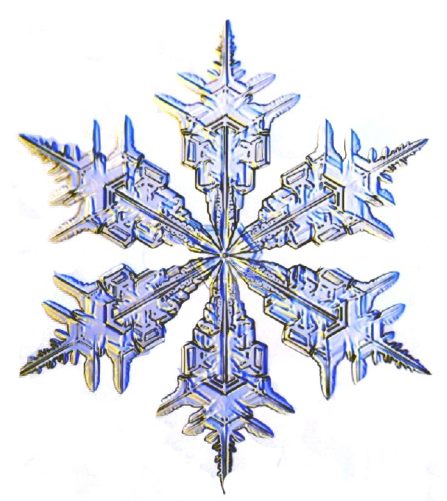
20171214_195354-1.jpgThe creeping darkness will end this evening at 9:19 pm MT. “Creeping darkness” is a phrase I created, which is probably why you haven’t heard of it before.  I have a hard time with this time of year and the way the darkness comes earlier and earlier, stealing light from my days, and so “end of the creeping darkness” seems a perfect name for this particular event. The correct term, of course, is “winter solstice.”

“Solstice” comes from two Latin words, sol meaning “sun” and sistere meaning “stationary” because on this day, in the northern hemisphere, the sun seems to stand still, as if garnering it’s strength to fight back the darkness.

Technically, the winter solstice marks the moment when there is a 23.5-degree tilt in Earth’s axis and the North Pole is at its furthest point from the sun — from here on, the days will get longer, gaining us an additional 6 and 1/2 hours of sunlight per day by June 21st when the days begin to get shorter again. (This is reversed in the southern hemisphere, so today those down under will be celebrating their summer solstice.)

Though neo-pagans have claimed the solstice for their own, this is one of those natural holidays (holy days) that we all should be celebrating. The end of the lengthening nights. The triumph of light over darkness. We don’t even need the metaphors of light=good and dark=bad to find reason to celebrate this day. It’s simply a day of stillness, of hope. A day to give thanks for the promise that even in our darkest hour, light will return.

My celebration will be simple. I’ll turn on my bowls of light and go outside to toast the pale winter sun with sparking cider. Technically, I will be toasting the moon since the sun will have set hours before, but the sun won’t care. It will be shining brightly in the southern hemisphere, and will return to this part of globe tomorrow with greater strength.

Wishing you a bright and hopeful end of the creeping darkness.

***

Pat Bertram is the author of the suspense novels Light BringerMore Deaths Than OneA Spark of Heavenly Fireand Daughter Am IBertram is also the author of Grief: The Great Yearning, “an exquisite book, wrenching to read, and at the same time full of profound truths.” Connect with Pat on Google+. Like Pat on Facebook.

Grieving at Christmas

The misconceptions people have about grief are appalling. Someone asked me today what grievers hope to accomplish by being depressed at Christmas (and not doing anything about it) when the grievers know being depressed won’t bring back their loved one.

As if we a choice about grieving. As if we want to be sad. As if drugging oneself into happiness is a viable choice.

Depression and grief are not choices. They happen whether we want them to or not.

Besides, grief over the loss of a loved one, at Christmas or the rest of the year, is not depression. Clinical depression is being sad for no reason. Grief is its own reason.

Holidays are painful. The first wedding anniversary, the first birthdays, the first major holidays. Each of these days brings a greater sense of grief because we are intensely aware that our life mate is not here to experience these once-happy holidays with us. Whatever traditions we developed together become obsolete when only one of us remains to carry on. The pain and the yearning to be together once more during these times can be devastating.

Thanksgiving, Christmas, Chanukah, New Years are the big holidays with the biggest challenges. These special days are family celebrations, and often we are left alone with our memories and our feelings, even if we are surrounded by family.

The holidays during the second and third and fourth and even beyond can be just as difficult. Not only are our traditions gone along with our loved one, every commercial, every song, almost every movie tells us we should be happy, but all we know is that the person we most want to be with, the person who helped bring us happiness or helped magnify our happiness is gone. Even worse, we often need to pretend to be happy about our situation to keep from ruining the festivities of others.

The grief we feel at this time of year is not a conscious choice and comes even if we aren’t reminded of the holidays.

Our bodies remember the special occasions. Our bodies as well as our minds and spirits grieve, so even if we are able to put our deceased loved ones out of our minds, our bodies grieve for us with an upsurge of adrenaline and a change in brain chemistry.

It takes a lot of energy to try not to remember, not to grieve, which overwhelms the brain and exacerbates the very stresses we are attempting to overcome.

This is all in addition to normal seasonal effects, such as depression from the shorter days and longer nights. It’s also in addition to the normal stresses of the holidays.

No one wants any of this. No one ever thinks grief will bring the loved one back. We wish . . . oh, how we wish for one more smile or one more word, but it’s not going to happen, and we know that. But still, watching others have what we don’t is very painful, even if we are happy for them and their love.

Supposing we could do something about our sadness at Christmas, what do you expect us to do? Drug ourselves into oblivion? That’s a heck of a lot worse than feeling sad. Grief connects us in a tenuous way to our lost love; it’s a way of honoring them, and feeling the pain is the best way to learn to live without our love.

Jeff has been gone long enough that I no longer feel much of an upsurge in grief at this time of year, but I am very aware of what it used to be like for me and what it remains like for many grievers.

So, if you, too, have archaic ideas about grief, like the person who asked the question, please try not to foist your ideas on grievers. After all, one day you might be grieving at Christmas, too.

See also: What Do You Say to Someone Who is Grieving at Christmas? and Dealing With Grief During the Holidays.

***

Pat Bertram is the author of Grief: The Inside Story – A Guide to Surviving the Loss of a Loved One. “Grief: The Inside Story is perfect and that is not hyperbole! It is exactly what folk who are grieving need to read.” –Leesa Healy, RN, GDAS GDAT, Emotional/Mental Health Therapist & Educator.

An Inside Look at a Small Town

Last night I attended a strategy session of the city council. I had no idea that’s what I was doing — the way it was originally explained to me, it seemed a one-time meeting to offer suggestions to improve conditions for senior citizens. Instead, it’s a seven-session focus group to address the needs of the community as a whole.

We discussed various matters, such as what we’d like the town to be, how it is now, how it is perceived by others, what change is under the control of the council and what is not.

Some things that need to be done, such as fixing the sidewalks and the storm drainage problem, are important, but won’t do much for how the town is perceived, though it sure would make it easier to walk! (Those of us who get around on foot generally walk in the streets.)

Most of what needs to be done, as far as I can see, is not under the control of the town. The loose dog situation is the county sheriff’s problem. Other situations are an individual’s problem. So many of the properties are abandoned, not just houses, but strips of what once were small businesses, though these places are probably not actually abandoned but still owned by someone who is simply not doing anything with them. Also, fewer than half the houses here are owner occupied, which makes for a tenuous situation at best, and there is no way to legislate away that ratio.

The council also wants to find a way to keep young adults here, and again, I don’t think it’s possible. The nearby towns that have brought in jobs are those that in the end destroy quality of life — one town brought in a feed lot, which, at certain times of the year, makes the air unbreathable. Same with the towns that brought in marijuana farms. Again, at certain times of the year, the air would be unbreathable. A neighbor a couple houses away has several marijuana plants, and in the summer, the smell of skunk is very strong. I can’t imagine an entire farm of that!

Other agriculture solutions are not feasible since so many rural folks sold their water rights. (That sure stunned me. Didn’t they ever watch westerns, where water rights are worth more than gold? But then, with agriculture collapsing in this area, I suppose they needed the cash in hand.)

Good paying jobs, such as those in the computer industry won’t be coming here, so ambitious young people would want to go out in the world and create a better life for themselves. The best the town can hope for is to make it a place where they want to come home to after they’ve seen and experienced more of life.

I did find it interesting that the youth and the older folk are looking at the situation from two different directions — so many of them are planning to leave, so many of us are here to stay.

A friend once said she thought the town should be advertising itself to seniors — because of the prevalence of small houses and their relatively low price as well as a moderate climate, the place is ideally suited for older people. (I mentioned this idea, but the council doesn’t want to focus on a single demographic.) I tend to think that over the years, this trend toward an older population is going to happen anyway because of the need for cheaper and smaller housing for retirees, though the lack of local doctors and urgent care could be a problem. There are doctors and a hospital about twenty-five miles away, but people who need specialists have to make the long trip to the cities along the front range — such as Pueblo, Colorado Springs, Denver.

No one seemed to care about my idea of an adult jungle gym since they didn’t think it had anything to do with changing how the town is perceived, though I think it does — it shows a progressive bent.

Even though this group isn’t what I thought it was, and even though I don’t really have anything to contribute (I can see the problems but not solutions), I might continue with these sessions. (As long as I can get a ride, that is — I’ve been told that it’s not safe to walk at night here, not even the few blocks to the town hall.) It gives me a different perspective of the town, and the councilwoman for whom I acted as a senior advisor last night wants me to come back. I know this woman from a painting class we took, and I like her, so I might continue for that alone.

Besides, the mayor asked me. Well, obliquely. He said, “Most of you are here because I asked you to come and be advisors, and those I haven’t already asked, I’m asking you now.”

So, there you have it, an inside look at the workings of a small town.

***

Pat Bertram is the author of Grief: The Inside Story – A Guide to Surviving the Loss of a Loved One. “Grief: The Inside Story is perfect and that is not hyperbole! It is exactly what folk who are grieving need to read.” –Leesa Healy, RN, GDAS GDAT, Emotional/Mental Health Therapist & Educator.

Appreciation

A local woman’s snowman collection is being featured at the historical museum. There are hundreds of the creatures, all kinds and sizes (though none made of real snow).

I don’t have anywhere near as many snowmen as she did, but I do have a very small collection of my own. Though I have no particular interest in snowfolk, things do tend to accumulate.

This is an ornament I did in a porcelain painting class. The subject matter was chosen by the teacher, probably because a snowman is a fairly easy subject for beginners:

This is a wooden wall decoration made for me by one of my new friends:

This is a gift card a friend sent to me couple of years ago, that I thought was clever.

And then there are these two five-inch-tall snowfolk who apparently think they are on an island adventure.

I wouldn’t even have those last two except for Jeff. Although they took me forever to make (each hand-sewn body consists of eight pieces, plus another eight for hands and feet), I wasn’t impressed, and intended to get rid of them, but Jeff wouldn’t let me. He liked most of what I made, and if I did throw something away, he always rescued it. These two snowfolk adorned his desk for many years, and at the end of his life, when he told me what he wanted me to do with his “effects,” he requested that I keep them. (In fact, most of the things he asked me to keep were things I had made.)

I realize I am not bound by any promises to the dead, but it’s such a little thing Jeff asked for, and though I still don’t particularly like these little guys, they remind me of him. He was such an appreciator, not just of my things, but of anything of artistic merit.

Jeff was the sort of person movie directors hope would watch their movies, would understand their vision and appreciate all the nuances that went into creating that vision. He’d study the backgrounds and settings, special lighting effects, the subtleties that most people (including me) would miss. It wasn’t just movies — he appreciated music, books, even comic strips. When we got Calvin and Hobbes books, I’d scan through them, reading the words, enjoying the jokes, and was done in a jiffy, but he studied every line of every panel, sometimes taking as long to read/appreciate one strip as it took me to read the whole book.

Most of the things I kept of his are packed away, but I dug out the two island hoppers for this latest installment of my Christmas show and tell.

Now I’m sitting here, staring at the computer screen, tears in my eyes, wishing for . . . I don’t know. Maybe one more of his appreciative smiles. But whatever it is I want, it’s something I can’t have.

What I do have are things. And kept promises.

And a greater appreciation for my small collection of snowmen.

***

Pat Bertram is the author of Grief: The Inside Story – A Guide to Surviving the Loss of a Loved One. “Grief: The Inside Story is perfect and that is not hyperbole! It is exactly what folk who are grieving need to read.” –Leesa Healy, RN, GDAS GDAT, Emotional/Mental Health Therapist & Educator.

All That Glitters

I haven’t done a lot for Christmas in recent years. When I was caring for my father, I made sure to make the day festive for him — decorating his small tree (which I inherited), making a requested meal (usually ham and potato salad), and getting token gifts. After he was gone, I did very little for Christmas, though I did exchange a couple of presents.

Since I’ve always saved wrappings and ribbons, I never had to purchase either. This year, however, I decided to go all out for Christmas — after all, it is the first Christmas/holiday season in my own home in my very own house. I’d used all the ribbons I had for hat decorations, and I had gotten rid of any paper when I condensed the stuff in my storage unit at the beginning of last year, so I needed to buy wrapping things.

The wrapping paper was cheap and pretty, and though I prefer blank undersides (to make gift cards and such), I had to admit the cutting lines made things easier. But oh, what a shock to find, at the end of the roll of wrapping paper not a cardboard tube (which I had plans for!) but simply rolled up brown paper. I did manage to roll that heavy brown paper tight enough to make an okay tube for what I needed (to store leftover window screening). But jeez. What’s the fun of buying rolls of wrapping paper if you don’t get a long tube with it?

And the ribbons. Oh, my. The upside: so glittery. The downside: so glittery.

When I finished wrapping my packages last night, I noticed that glitter was everywhere. I was covered with glitter. The floor was covered with glitter. The countertops and table were covered with glitter.

I dry mopped, thinking that the trap-and-lock cloths would easily pick up all the glitter. Nope. Some, sure, but not even most. Then I tried vacuuming. Again, nope. Those little suckers stuck to the floor and wouldn’t budge. Then I wet mopped — twice — which got up most of the remaining glitter, but now, when the lights are on, I can see glitter between the floorboards. My floor is the original antique flooring that has never been refinished, and some of the boards have shrunk a bit in this dry climate, leaving space for glitter to settle. I have a hunch I’ll be cleaning up glitter until next Christmas.

I was already tired from a full day of festivities at a Christmas event put on by both the museum folks and the art guild. (Here’s some of us art guild members all decked out in holiday gear.)

All that cleaning took me way past my bedtime (and I am not an early-to-bed-early-to-rise person) and wiped me out.

I try to end every blog post with some sort of hook or moral or lesson gleaned from the experience I’d written about — because otherwise, what’s the point — but the only thing I can think of to end this post is a note to myself: No matter how enticingly glittery the glittery things are, next year, be sure to buy plain old non-glittery ribbon and paper.

***

Pat Bertram is the author of Grief: The Inside Story – A Guide to Surviving the Loss of a Loved One. “Grief: The Inside Story is perfect and that is not hyperbole! It is exactly what folk who are grieving need to read.” –Leesa Healy, RN, GDAS GDAT, Emotional/Mental Health Therapist & Educator.

Oops

Oops. I’d completely forgotten I was supposed to be writing a 1920s murder mystery for a dinner in February, and it needs to be done by the middle of January.

When I agreed to do write the mystery, I had plenty of time, but I frittered that time away on . . . well, on living. So now I’m trying to catch up.

I sort of have an idea of who will be the victim, who the killer is. I know where all this takes place: one night at a speakeasy. I know an Italian dinner will be served. I know there will be a representation of at least some of the iconic elements of that 100-year-old decade besides the speakeasy: jazz, gangsters, flappers. Other than that, I haven’t a clue how to go about concocting such a mystery. Obviously, the first part of the dinner is about laying the background for the characters and why someone wanted to do the dastardly deed. Then, even more obviously, there needs to be a dead body. And finally, at the end, there needs to be a way for everyone to figure out who did it.

I’m not sure how to lay the clues. Or what the clues should be. I could write this as a mystery story, and then extrapolate the guessing game from that, but considering how long it takes me to write fiction, it might not be done until next year, especially since they want it to be funny, and funny takes longer.

Still, that’s not a bad idea, writing the mystery as a story. Once I have the whole story, I could possibly work backward. More importantly, it would give me bits of dialogue to hand out to guests, because it’s hard to tell people what they need to be saying if I don’t know.

All done in less than a month? With Christmas coming? Yikes!

Maybe I can start tomorrow. But no, I am helping with a fundraiser at the museum. Maybe Monday? But Monday I am going to the big city (or what passes for a big city in these parts) with a friend who has a doctor appointment. Maybe Tuesday? But Tuesday, I am going to a meeting to help brainstorm ideas for AARPs Livable Communities program.

It’s beginning to look as if the mystery will have to write itself.

***

Pat Bertram is the author of Grief: The Inside Story – A Guide to Surviving the Loss of a Loved One. “Grief: The Inside Story is perfect and that is not hyperbole! It is exactly what folk who are grieving need to read.” –Leesa Healy, RN, GDAS GDAT, Emotional/Mental Health Therapist & Educator.

 

Ornaments!

Next week I am supposed to bring a Christmas ornament to a party and tell the story of the ornament and why it’s special to me. It’s not really my thing, maybe because my grade school never had show and tell, so I hadn’t planned on doing it. Now I can’t. Too many to choose from!

Today I got a gift from my sister (who definitely sends the best presents ever) with instructions to open it right away. Inside the box were five small prettily wrapped gifts — Christmas ornaments for my first tree and my first Christmas in my first house.

Each ornament illustrated a facet of my life.

A nod to my new house, of course.

Books, definitely.

My car, naturally.

A dragon because we all need a dragon to guard and protect.

And . . . Pat in the Hat. (Front and back)

I’m not sure I ever mentioned how I became Pat in the Hat. I’ve always been a big walker, but it wasn’t until my middle years that I wised up and started to wear a hat to protect me from the sun. Back then, the hats I wore weren’t anything special — ball caps or straw hats, anything cheap and accessible.

Later, when I lived with my father, my sister would send the two of us ornately wrapped gifts with gorgeous bows. My father tore off the wrappings, and tossed them away, but I rescued the bows. They were simply too nice to throw away. I didn’t really have any use for those ribbons, but one day, when I came in from a walk, I tossed my hat on table where I’d put the most recent offering, and something clicked. I wrapped the ribbon around the hat, and was thrilled with the festivity of it all.

Not too long afterward, I noticed that the ribbon was gone, and it devastated me that I couldn’t find it. This was shortly after Jeff had died, when any loss, no matter how insignificant, set me on a downward spiral of grief. Although I retraced my steps several times, I never found that bow. Luckily, I had another one packed away. This time, I made sure to tack my makeshift hatband to the hat to keep from losing another ribbon. I still have a stash of ribbons from my sister, as well as a few things I bought to decorate whatever hat I happened to have.

Now, delightfully, not only is she providing decorations for my hat, but also my tree — my dad’s tree, actually, and come to think of it, my sister bought it for him.

For a person who isn’t that fond of show and tell, I sure do a lot of here! Maybe that’s why I don’t need to do it in person.

***

Pat Bertram is the author of Grief: The Inside Story – A Guide to Surviving the Loss of a Loved One. “Grief: The Inside Story is perfect and that is not hyperbole! It is exactly what folk who are grieving need to read.” –Leesa Healy, RN, GDAS GDAT, Emotional/Mental Health Therapist & Educator.

A Toast to Mother

Today is the twelfth anniversary of my mother’s death. I have thought about her more since I moved here to my new home than in all the years I lived at her house.

Admittedly, by the time I got to her house to take care of my father, it wasn’t really her house any more. During the last nine months of her life, she’d cleared out all of her things, and returned all the presents we’d given her over the years. (As one sister said, “If I had known we’d get this stuff back, I’d have given her better gifts.”)

There were a few things left that reminded me of her, like the cupboard full of unmatched stemware. I kept those goblets, and so now I too, have a cupboard of unmatched stemware. I also kept a few interesting utensils, ones that I didn’t already have, and a tiny cutting board, just perfect for cutting an apple. Also a few bits of furniture.

Ah ha! Now I know why I think of her so much. After my father died, I’d packed away the gifts she’d returned to me along with the few pieces I kept when I closed out their house. Now those things are part of my daily life, and every one of them reminds me of her.

When I got my first apartment, I asked her for the recipes that I especially liked — things like pierogis, tuna roll with cheese sauce, and hamburger rolls (known to others as Runzas or bierocks). I found it interesting that I was the only one of my siblings who had those recipes, so several years ago, I made each of my siblings a “Taste of Childhood” recipe book, which included those recipes as well as a Friday staple of our youth: creamed tuna and peas on toast. (Sounds disgusting but was actually quite tasty.)

I didn’t copy all of her cookie recipes. Neither cherry winks nor date nut pinwheels were favorites of mine when I was young, but luckily, my sister kept them, thinking that mother’s treat recipes shouldn’t be thrown away so now I am collecting some of the recipes I didn’t back then. Also, I imagine that at the time I got that first bunch of recipes, I wasn’t considering the distant future when she’d be gone.

Well now, she is.

She wasn’t much of a drinker, though she did love Bailey’s Irish Cream, so in honor of her this day, I offer a toast — in a Bailey’s glass that once belonged to her!

Here’s to you, Mom. I hope your new life is what you’ve prayed for.

***

Pat Bertram is the author of Grief: The Inside Story – A Guide to Surviving the Loss of a Loved One. “Grief: The Inside Story is perfect and that is not hyperbole! It is exactly what folk who are grieving need to read.” –Leesa Healy, RN, GDAS GDAT, Emotional/Mental Health Therapist & Educator.

Taking a Pot Shot at Pot Shops

In this tiny town where I now reside, there is one grocery store, one drug store, two dollar stores, two liquor stores, and three pot shops with another two rumored to be opening soon.

In addition, a hemp shop is supposed to be opening, and at a local craft show, several people sold CBD oil products, including brownies.

I’m not drawing any conclusions, just laying out the facts, but it’s no wonder that at certain times of the growing season, the whole area smells like skunk. (There are commercial growers as well as many recreational growers.)

Unsurprisingly, there is controversy about what the legalization of recreational marijuana means — some people think that since it’s legal to buy and use in this state (though still illegal according to Federal laws), they can smoke it anywhere, even at work. Moreover, the city is considering getting rid of drug testing for jobs since so many people test positive for marijuana. (Apparently, it stays in the body a week.)

Common sense, of course, tells us that just because something is legal doesn’t mean it is acceptable to smoke on the job (or even right before). After all, liquor is legal, but it’s not acceptable to drink or be drunk at work. For example, I’m sure no one wants their children under the care of someone under the influence of anything that might take their attention from their jobs.

You’d think that all this legalization would get rid of this particular aspect of the drug trade, but apparently, there is still a lot of illegal pot being sold. (The stores limit how much a person can buy at a time, though with three stores, all within a block of each other, it’s easy to enough to triple the dose.) The prevalence of marijuana also increases drug traffic because some people “trade up,” using their pot allotment to get more potent drugs.

None of this affects me, at least I don’t think it does, but I do have to be careful since I am highly allergic to all aspects of jute and hemp — both the smoke and the oils (and burlap!).

I know a lot of people use these products for pain and various other ills, but I’ve never understood the fun of using any sort of mind-altering substance. I have a hard enough time dealing with life when my brain is working on all available cylinders. (Nor would I use CBD oil. Since there is no regulation, the quality varies widely. Even worse, anyone can sell anything and call it CBD oil.)

Apparently, from the proliferation of the pot shops, I am in a minority here. But if I ever change my mind, I certainly have a plethora of places to choose from!

***

Pat Bertram is the author of Grief: The Inside Story – A Guide to Surviving the Loss of a Loved One. “Grief: The Inside Story is perfect and that is not hyperbole! It is exactly what folk who are grieving need to read.” –Leesa Healy, RN, GDAS GDAT, Emotional/Mental Health Therapist & Educator.

Small World

I noticed in the local weather forecast, that one day the winds would come from the north, the next day from the south, the next from the west, and it got me curious about what all those winds mean. After an hour or so, I’m still not sure. Too much of the information seemed roundabout and obfuscating, such as “the north wind blows from the north.” Despite this, I have gleaned enough to guess that the north wind brings cold, the south wind brings dampness, and the west wind brings dryness. These guesses might not be correct, but I got tired of researching a rather meaningless topic — after all, the wind will blow when and where it wants, and there’s not a whole lot I can do about it. As long as it’s not huffing and puffing enough to blow my house down or my roof off, it doesn’t really matter.

During the course of this hunt, I stumbled across something that amused me:

Sanandaj, Iran (7,028 miles away); Shāhreẕā, Iran (7,343 miles); and Alik Ghund, Pakistan (7,671 miles) are the far-away foreign places with temperatures most similar to the town where I am living.

In the annals of vital information, that has to be far down the list of importance, much further down even than wind direction.

Does knowing this get me anything besides amusement? To a degree, yes. It ties the world together in a way I hadn’t expected. Those towns I had never heard of, those townspeople I could never in my life have even imagined, are experiencing same weather today that I am.

Apparently, it is a small world after all.

***

Pat Bertram is the author of Grief: The Inside Story – A Guide to Surviving the Loss of a Loved One. “Grief: The Inside Story is perfect and that is not hyperbole! It is exactly what folk who are grieving need to read.” –Leesa Healy, RN, GDAS GDAT, Emotional/Mental Health Therapist & Educator.