Help Me Plan My Next Big Adventure!

I don’t feel like writing another bah humbuggish post. To be honest, I don’t feel like writing much of anything. Despite a lingering cold, today I went to dance class (classes, actually), and now I want a nap. But this is day thirty-three of my fifty-day blog challenge, so I want — need — to post something.

How about something fun? Something for me to look forward to?

I know! My next big adventure!

In May, I will be going to Seattle for a weekend with my sisters, and I will be driving through Northern California, Oregon, and Washington, camping and hiking along the way. I’m planning to be out adventuring for approximately a month. (Unless I become subsumed into the camping culture, then who knows how long I will be out wilding in the wilds.)

I’ve been looking at the atlas, and it seems as if it could take years to explore even one of those states (which someday I hope to do). A month will give me only the merest glimpse of the area, and I don’t know much about Oregon or Washington at all.

So . . .

If you have any suggestions of places (or people!) to visit or to stay away from, special campgrounds or dispersed camping spots, great hikes and other delights, please let me know so I can add them to my itinterary.

Thank you!

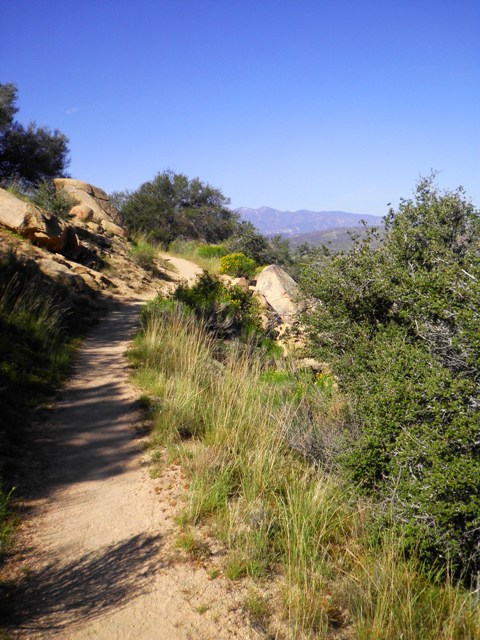
This photo was taken on my only trip to Oregon, a four or five mile hike along the Oregon Coast outside of Brookings. The impossible dream includes doing the whole coast, but . . .  well, impossible dreams by definition are impossible. Unless you want to come and carry my backpack for me?

***

Pat Bertram is the author of the suspense novels UnfinishedMadame ZeeZee’s Nightmare, Light BringerMore Deaths Than OneA Spark of Heavenly Fireand Daughter Am IBertram is also the author of Grief: The Great Yearning, “an exquisite book, wrenching to read, and at the same time full of profound truths.” Connect with Pat on Google+. Like Pat on Facebook.

Impossible Dreams

Quixotic means capricious, foolishly impractical, rash to the point of absurdity. But it can also mean (more because of the musical Man of La Mancha than because of the original Don Quixote story) dreaming impossible dreams.

Who hasn’t listened to the song “The Impossible Dream” and not got caught up in the romance of those powerful words? I certainly get caught up and did again today when a friend posted Jim Nabors’ version on Facebook. As I listened, I wondered what it would be like to have such a dream, wondered if I should go out and get myself one, then I realized I already have an impossible dream. Maybe even two.

(I say maybe two because one of the dreams has to do with selling enough books to make a living, and though it is highly improbable as things stand now, who’s to say if it will always be impossible?)

Ever since I first heard of the long national trails like the Appalachian Trail and the Pacific Crest Trail, I wished I could do such a hike. The first time I was young (well, younger), but had little experience hiking, no experience backpacking or camping, no money to support such a dream, and no fitness for it either. What I had was a very ill life mate/soul mate, whose death, I knew, would devastate me. I thought one way of dealing with my grief would be just to take off down (or up) such a trail and let my life run its course.

That particular time, he got better, but the idea of walking into oblivion remained in the back of head. Years later, when he got ill for the last time, I was too shattered to follow through on such a ridiculous idea. And anyway, my nonagenarian father needed someone to stay with him. But when my father got bad, and knowing I would soon be ousted from the house, I again resurrected the dream, but researching what it would take to do such a hike made me realize the impossibility of my ever undertaking such a project.

Instead, I went on a five-month cross-country trip in my ancient VW, but still, the idea of an epic hike keeps coming back. I do know why such a rashly romantic idea, such an impossible dream, keeps recurring. Partly, it’s the desire to run away (it was strongest when I was housebound because of my arm). Partly, it’s the desire to run toward something (it’s also strong when I am out hiking in the desert by myself.) And partly, well . . . what an incredible adventure!

I have often felt foolish to still be thinking of such an impossible thing because I am so not fit physically for such an escapade. I can hike for a couple of hours, can even set up camp (I have learned that much!), but carrying a heavy backpack is beyond me. (What is considered ultralightweight for others is immensely heavy for me. I remember when I hiked in Organ Pipe Cactus National Monument, I used my backpack for emergency supplies and extra water in case I got lost, and it felt oh, so heavy. And yet, when I met a fellow along the trail who offered to carry it for me, he picked it up with one finger as if weighed nothing.)

Periodically I think about how to offset the problems that would arise. For example, I did one day hike on the PCT where the trail was eroded, I had to take a very long and unsteady step on a narrow ledge to get past the erosion. A backpack would probably have pulled me over. But what if I could find someone who would be willing to carry the pack for me, sort of like a Sherpa? That’s no more impossible than the rest of the dream.

I also periodically research how to get in shape for such a thru hike, but the exercises they suggest are totally beyond me. Use a park bench for stair-stepping? Uh, no. A curb, sometimes, is too high! But I do go hiking to stretch my ability. I walk wherever I can. I take dance classes for strength and balance.

And I collect items that would be necessary, such as hiking clothes and lightweight camping gear.

Foolish. Quixotic.

And yet . . . and yet . . .

Maybe I will be better for this. Maybe the world will be better for this: that no matter how hopeless, no matter how far, one woman still strove to reach an unreachable star.

***
Pat Bertram is the author of the suspense novels UnfinishedMadame ZeeZee’s Nightmare, Light BringerMore Deaths Than OneA Spark of Heavenly Fireand Daughter Am IBertram is also the author of Grief: The Great Yearning, “an exquisite book, wrenching to read, and at the same time full of profound truths.” Connect with Pat on Google+. Like Pat on Facebook.

Merry Thanksgiving

Merry Thanksgiving!

***
Pat Bertram is the author of the suspense novels UnfinishedMadame ZeeZee’s Nightmare, Light BringerMore Deaths Than OneA Spark of Heavenly Fireand Daughter Am IBertram is also the author of Grief: The Great Yearning, “an exquisite book, wrenching to read, and at the same time full of profound truths.” Connect with Pat on Google+. Like Pat on Facebook.

A Gift of Frankincense and Myrrh

Once, long ago and far away, three wise men gave gifts of gold, frankincense, and myrrh to a baby. Today, a wise woman gave me a gift of frankincense and myrrh, which could prove as valuable as gold if they work as promised to relieve the pain of my poorly functioning hand.

It seems odd to know of those ancient substances without ever knowing what they were or what they were for. Seems even odder to take the story of the wise men and their gifts for granted. I mean, really — would you bring something so obscure to a baby shower? No, you’d stick with something practical like . . . I don’t know . . .  whatever is practical to give to a baby. But perhaps those aromatics weren’t merely valued for their scents. (I think that is what we were told, I don’t really remember.) Maybe the frankincense and myrrh were valued for medicinal purposes, for keeping the baby healthy and the mother pain-free.

One of the many weird aspects of growing older is the way the body’s fat migrates. The protective fat pads from my feet and hands have disappeared, which makes long distance walking painful (the tops of my feet, oddly, not the bottoms). Perhaps these gifts from the wise woman will enable me to ramble again (though, admittedly, when I did ramble for hours, it was not during a time I was taking dance classes. Those classes range from an hour on the shortest day to four hours on the longest day, as well the mile walk to and from class, so I am not actually as lazy as I think I am).

If nothing else, these mythic gifts bring me a wonderful feeling of strange, as if somehow I am connected to the ancient story of the magi and that journey they took so very long ago.

***
Pat Bertram is the author of the suspense novels UnfinishedMadame ZeeZee’s Nightmare, Light BringerMore Deaths Than OneA Spark of Heavenly Fireand Daughter Am IBertram is also the author of Grief: The Great Yearning, “an exquisite book, wrenching to read, and at the same time full of profound truths.” Connect with Pat on Google+. Like Pat on Facebook.

We Can Only Write the Novels Only We Can Write

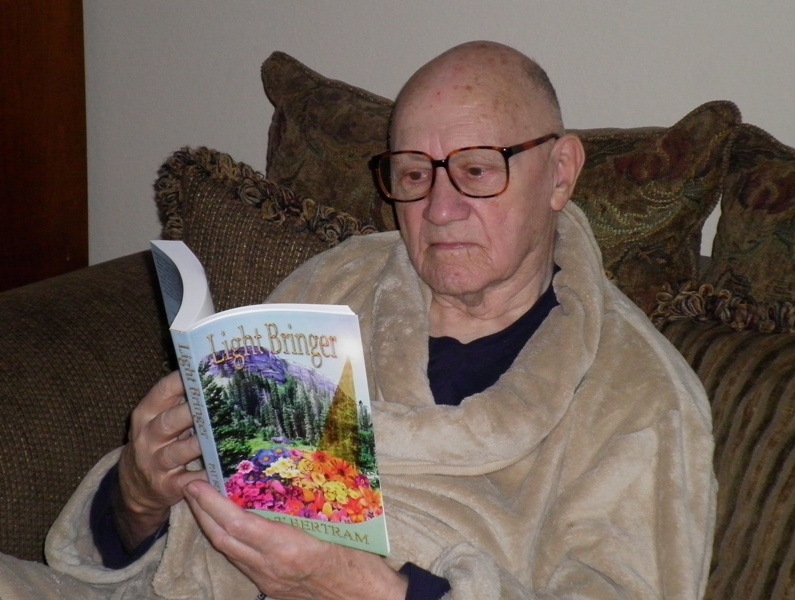
Of all the books I’ve written, the one that saddens me the most is Light Bringer because it never got the notice I thought it deserved. I don’t know what happened — perhaps I never knew how to categorize it, perhaps I am terrible at marketing. Perhaps a lot of things. But there it sits, a magical novel without much of a readership.
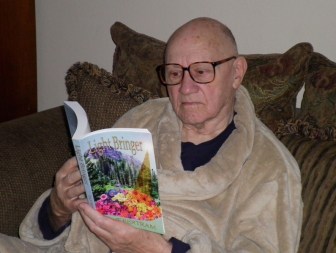
I understand the importance of categorizing novels — giving them a genre — because people like to know what they are getting. But what if the novel you wanted to write doesn’t fit within a genre? Are we supposed to not write it?

But truly, we can only write the novels only we can write.

To me, Light Bringer was mythic fiction — a story based on ancient cosmologies and modern conspiracy theories, but mention of ancient spacecraft and aliens made people want to throw it in the science fiction category, while secret government installations and covert international organizations made others think of it as thriller fare. And yet it is neither. Nor, despite the romances in the book, is it a romance. (It surprised me, but my father, who was not much of a fiction reader, understood all that.)

Writing the book, I never once considered genre. Well, come to think of it, that’s not true. In the very beginning, I thought naively of writing a book that fit all genres, but apparently that is an idea many neophyte writers come up with, and is considered the mark of an amateur. So I stopped trying to fit all genres into the book (though I did keep my cowboy character from the western elements and the ghost town and ghost cat from the horror genre.) I just wrote the book. I didn’t even have to do much research — so much of the book was based on my lifetime of studies into lesser known histories (also known erroneously as conspiracy theories), though I did research color and their meanings because color played a major role in the book, as the following excerpt will show:

After following the path for several minutes, they came to a place where the stream narrowed to no more than four feet. Chester bent over and began hauling out one of the boards stashed beneath a Douglas fir. The boards, withered a silvery-gray, were two inches thick, ten inches wide, and about six feet long.

With Rena and Philip helping Chester, it took only a few minutes to place the boards bank-to-bank, forming a makeshift bridge.

“I set these here for Gertie after she slipped and hurt herself wading across the stream,” Chester said.

Rena turned to Philip. “Gertie used to own this place.”

“She was my godmother. When she died, I dismantled the bridge.” Chester looked from the planks to Rena and Philip and then back again as if trying to make a decision. “I don’t know if you’ll like the place. Most people avoid it. They say it makes them shivery. Some even call it the devil’s garden, but me and Gertie called it . . . blessed.”

Rena touched the old man’s arm. “I’m sure we will, too.”

Chester nodded. He stepped onto the plank bridge and proceeded to the other side. Rena followed him, then turned and smiled encouragingly at Philip.

“It’s surprisingly sturdy. You won’t have any problem.”

A clear blue nimbus of trust emanated from Philip. Without hesitation, he clumped across the bridge.

In the full of the sun, the meadow grasses shone emerald. “Hurry, hurry,” they whispered.

I’m coming.

Rena set off at a run.

“There’s a pathway,” she heard Chester call.

She kept running, needing no footpath to lead her to their destination. She could feel the music tugging at her, guiding her, singing her forward.

At first a faint red trumpeting, the music swelled into a full orchestra: orange church bells, yellow bugles, green violins, blue flutes, indigo cellos, violet woodwinds.

Beneath it all, she could hear the grasses murmuring, “Hurry, hurry.”

And then there it was, spread out before her in a shallow thirty-foot bowl. A lake of flowers—chrysanthemums and tulips, daisies and daffodils, lilies and columbines and fuchsia—all blooming brightly, all singing their song of welcome.

Standing on the brink, waiting for Philip and Chester, she could not lift her gaze from the flowers. Many of them were familiar, but others, in seemingly impossible tints and shades, were new. She inhaled, filling her nose with the intoxicating scent, and felt herself losing her balance as if she were drunk. She flung out an arm to steady herself, and barely missed hitting Chester.

“Are you okay?” he asked.

“More than okay.”

Philip came to stand beside her. Hearing his sharp intake of breath, she knew he felt as stunned as she by the sight, sound, smell of the flowers.

Knowing Chester needed to hear the words, she said softly, “You and Gertie are right. The place is blessed. Thank you for bringing us.”

If you would like to read more of this magical book, you can find it on Amazon: https://www.amazon.com/Light-Bringer-Pat-Bertram-ebook/dp/B004U39WQ6/. And hey, if you can think how to categorize it, let me know!

***
Pat Bertram is the author of the suspense novels UnfinishedMadame ZeeZee’s Nightmare, Light BringerMore Deaths Than OneA Spark of Heavenly Fireand Daughter Am IBertram is also the author of Grief: The Great Yearning, “an exquisite book, wrenching to read, and at the same time full of profound truths.” Connect with Pat on Google+. Like Pat on Facebook.

Pleasure Banking

We are often asked, “Business or pleasure,” especially when travelling — at hotels, border patrol checkpoints, and airlines. The phrase has become so ubiquitous, that when I drove past a Citizen’s Business Bank, I immediately wondered about a Citizen’s Pleasure Bank.

Sometimes there seems to be a surfeit of good things, especially those that come all at once, and it’s hard to appreciate each pleasure appropriately. Well, with pleasure banking, you can have your cake, and eat it, too. In a manner of speaking. In the example of cake, you can always eat a piece and freeze the rest, but what about all the glorious sunsets you were too jaded to go out to see, the travels that you were too tired to enjoy, the funny antics of children or pets that inexplicably annoyed you, the friends who visited when you wanted to be alone? With pleasure banking, you could experience the pleasure when it would be most pleasurable for you. Perhaps you could even gain interest on the pleasurable occurrence before you take it out of the the bank to live it.

We do have a memory bank, of course, but the interest gained on remembered experiences is not compounded the same way as an experience we are currently living. With pleasure banking, though, when you finally claimed the deferred pleasure, it would be a true experience, not a memory. At least not until after you experienced it.

I doubt I would have much to deposit — I try to live for the day, and if I’m too tired to enjoy, I would still hang to on the pleasure, no matter how unpleasurable it is at the moment. Also, I would worry that in the future, interest would decline, and the pleasure would be even less pleasant. Still, even though I enjoyed every day of my cross country road trip, if I had been able to save some of the driving days where nothing much happened except driving, today I would be able to experience the zen-like nature of highway driving without actually having to leave my room.

At the pleasure bank, would also be able to borrow other people’s pleasures, and as with monetary banking, those pleasures will still be there for the person who deposited them. So, while I might not want to defer my own pleasures, I sure would love to experience some of the wonders of the world depositors might have saved, without my actually having the tedium of travelling to far distant places. (Hmmm. Makes me wonder how the accountants of the pleasure bank would determine the cost. Pleasure minus tedium, perhaps. Or maybe you’d have to pay more interest for pure pleasure without the tedium.)

So, would you open an account in a pleasure bank? If so, what would you deposit there? What would you borrow?

***
Pat Bertram is the author of the suspense novels UnfinishedMadame ZeeZee’s Nightmare, Light BringerMore Deaths Than OneA Spark of Heavenly Fireand Daughter Am IBertram is also the author of Grief: The Great Yearning, “an exquisite book, wrenching to read, and at the same time full of profound truths.” Connect with Pat on Google+. Like Pat on Facebook.
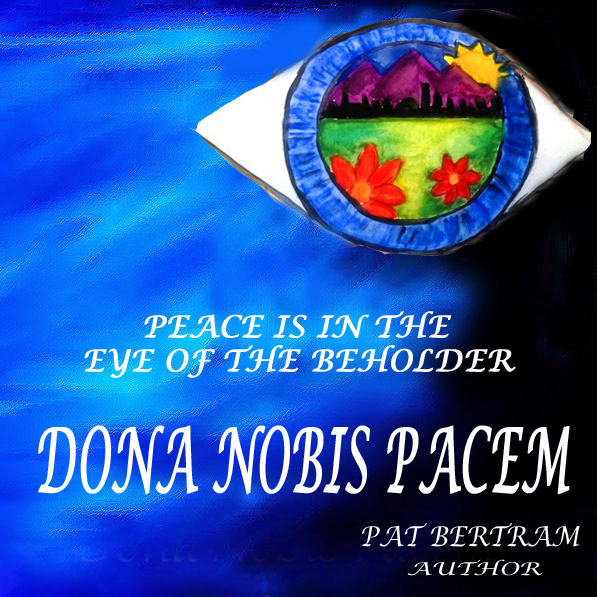
Dona Nobis Pacem

Today, along with thousands of people all over the world, I am blogging for peace. If words matter, this is important.

People always talk about the human race as if we are warmongers, and yes, some people are, most notably those who make money and take power from wars, but think about it. How many wars have you personally started? For the most part, we (you and me, anyway) are peace lovers. We shy away from violence. Most of us don’t even start personal conflicts, though sometimes we do unwilling get involved in contretemps we don’t quite know how to end.

Although I don’t think we can do much on an individual basis to bring global peace, we can try to find peace within ourselves. If all on this earth were at peace with themselves and those they see every day, then our human world would be at peace.

And that is what I wish for you today — peace in all you behold.

***
Pat Bertram is the author of the suspense novels UnfinishedMadame ZeeZee’s Nightmare, Light BringerMore Deaths Than OneA Spark of Heavenly Fireand Daughter Am IBertram is also the author of Grief: The Great Yearning, “an exquisite book, wrenching to read, and at the same time full of profound truths.” Connect with Pat on Google+. Like Pat on Facebook.

Shoes. Sheesh.

I normally try to write blog posts that touch on my insights, things I’ve learned, or questions I have about life — not just my life, but life in general. Occasionally, I even mention issues that irk me, but never, as far as I can remember have I talked about something so shallow as shoes.

I do blog about what is on my mind, though, no matter the depth of the topic, and today shoes are on my mind.

I have three pairs of shoes I’ve been wearing — one pair is completely worn out, one hurts the tops of my feet, and one hurts my heels. I still wear them because, well, shoes. Mostly, though, I wear them because I can almost never find shoes to fit. But now that it’s cooler, I need shoes I can wear for walking more than a mile or two, so off I went to hunt the wild shoe.

One store I planned to go to has disappeared, perhaps a victim of the trend toward internet shopping, though how anyone can buy shoes online, I don’t know. There doesn’t seem to be any consistency to size, as this little fable will show.

I was left with two stores: a national shoe store chain and a sporting goods store. At the national chain, I found one pair that seemed comfortable, but I couldn’t figure out where my toe was since the top of the toe seemed to be reinforced. I asked the salesclerk if she could tell where my toe ended. She felt the toe and said there was plenty of room. Yay!

Still, since I was in shoe shopping mode, I stopped by the sporting goods store. The first thing I saw was a pair of hiking shoes on sale for less than half price. They seemed a bit big, but thick hiking socks should make them fit. (Not that I’ve been doing any hiking, but ridiculously, I still think about doing an epic hike.)

Figuring I was on a roll, I tried on various other shoes and ended up buying a couple of pairs that fit as well as any shoe in a store ever fits.

The next day, I decided to try on the first pair of shoes I bought, and after walking around the house for a few minutes, I realized the left shoe was so short, it was cramping my toe. So I packed those shoes back in their box, and tried on another pair. Or tried to. I couldn’t even fit my foot into the shoe. And the third pair was huge.

As if that wasn’t weird enough, each pair of shoes was a different size. (For comparison, my foot measures 7 1/2.) The size 8 shoe was excessively wide. The size 8 1/2 was too short. The size 9 shoe was remarkably small.

Sounds like a fairy tale, doesn’t it? The grim sort. Or maybe a fable, but if it is a fable, I have no idea what the moral could be. I’ve gleaned no insights. Learned nothing.

I returned all the shoes except the hiking shoes, which puts me back at the beginning, with only shoes that hurt or are worn out. So . . . more shopping. Someday.

Shoes. Sheesh.

***
Pat Bertram is the author of the suspense novels UnfinishedMadame ZeeZee’s Nightmare, Light BringerMore Deaths Than OneA Spark of Heavenly Fireand Daughter Am IBertram is also the author of Grief: The Great Yearning, “an exquisite book, wrenching to read, and at the same time full of profound truths.” Connect with Pat on Google+. Like Pat on Facebook.

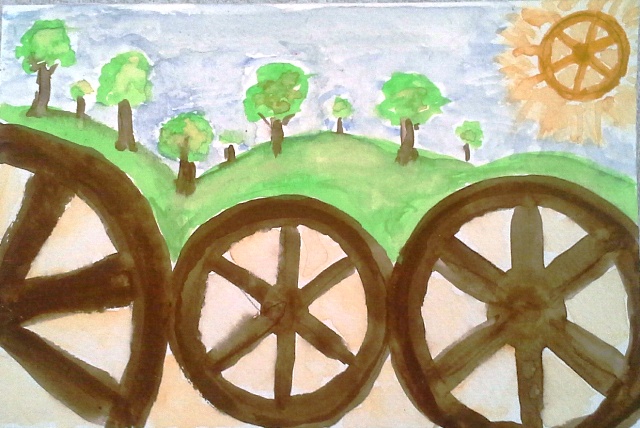
The Wheel of Time

Over the past several months, I’ve been reading (and rereading) Robert Jordan’s massive Wheel of Time series. The books in the series are not stand alone books — you cannot understand one book without the previous books — which means that in effect the WOT series is single novel of over four million words broken up into fifteen parts. In fact, the series itself is not stand alone — there are all sorts of books, blogs, discussion forums comprising billions of words where readers try to figure out the truth of the story.

Not only is the scope of WOT almost impossible to fathom, but Jordan had a bad habit of putting in bits of deus ex machina that he refused to elucidate in the work itself, companion books, or even interviews. Perhaps he himself did not know what those bits meant or maybe he simply wanted to be mysterious for mysterious’s sake, to create a legacy of people debating worthless points. Which they do. Ad infinitum. Jordan also refused to explain what to him are obvious story points, such as who killed a certain bad-guy-turned-maybe-good-guy, but again, dozens of forums present various theories because that obvious point was obvious only to he who created it. At least in this particular case, the murderer was revealed in an appendix several books after the fact. Jordan also spent thousands upon thousands of words on red herrings and subplots that go nowhere, but sometimes used a single sentence buried in huge blocks of description to bring out a major point. Yikes.

And wow, is there description. Tons of description. Whenever food was mentioned, I found myself skipping a paragraph or two. When clothes were mentioned, I’d skip a couple of pages. And sometimes, when there was zero action or character development, such as in a few very clean bathing scenes, I’d skip the whole dang chapter.

I also tended to skip over some of the women’s parts. Although Jordan mostly develops his three main male characters into individual heroes, he turns his three main women characters into insufferable caricatures, indistinguishable from one another except for a few annoying character tics. At first I thought he had a problem with women, but his secondary and tertiary female characters are often well-defined or at least not brats and prigs who believe, without giving a single shred of thought to the forces the other characters face, that they know the best for everyone.

I am not a fan of fantasy fiction, especially not one man vs. the powers of darkness stories, but when I was house bound for all those months, I needed something to do, and a massive read seemed to fill that need. Though I’d tried to get immersed into other such series, books that start with a war in a bizarre place with an incomprehensible name fought by characters with equally tongue-twisting names for a goal that seemed completely alien hold no interest for me. Luckily, the first Wheel of Time book began in an earthly place with understandable actions by understandable people with simple names.

Even after investing all this time in reading the books, I’m still not sure I like the series — although the theme seems to be about the importance of having choices, most of the characters, both good and evil, go out of their way to force others to their will. Too much torture and punishment for my taste. It seems to me that in a world where everyone is free to choose, it’s just as easy to find someone to willingly do your bidding as to waste the effort forcing someone to do it. (Oddly, the three main males do turn others to their will, but without wanting to or without even trying.)

But despite my ambivalence, I keep rereading. The scope to the story is utterly astounding. In the story, during the so-called age of legends, people wielding the power that turns the wheel of time, broke the world. Mountains grew where no mountains had been, waters flooded lands, green spaces became deserts. And humans started over. Again.

Interestingly, breaking the world is exactly what Robert Jordon did — he mashed our world into bits, mixed it all up — legends and traditions; countries and races, clothes and customs; myths and mysteries, religions and philosophies — and put it all back together into his own creation.

I wonder what it would be like to create such a massive fiction world, a world that reflects our world but not. A world that reflects our values but not. A world that exists only in our minds but not. Or, rather, maybe not. If it exists in our minds, it’s possible Jordan’s world exists for real, sort of dream world we all created together, just as philosophers and physicists say we do with the real world.

Assuming there is a real world.

Maybe we’re all writing the story of our world as we live it, creating with our hive mind the very fact of our existence. If we all stopped believing in it, would it disappear as if we were closing the cover of a novel? Would we disappear if we stopped believing all the things we see and hear except with our own eyes or ears? Would we be different if we simply refused to accept the role that has been forced on us?

Maybe, as I study Jordan’s world, I’ll learn how to help build a better version of our own — how to write it or right it, either one.

Meanwhile, the wheels of time keeps turning . . .

***

Pat Bertram is the author of the suspense novels UnfinishedMadame ZeeZee’s Nightmare, Light BringerMore Deaths Than OneA Spark of Heavenly Fireand Daughter Am IBertram is also the author of Grief: The Great Yearning, “an exquisite book, wrenching to read, and at the same time full of profound truths.” Connect with Pat on Google+. Like Pat on Facebook.
Blog For Peace

On November 4th, people all over the world blog for peace. Blog4Peace was created and founded by Mimi Lenox, who believes that because words are powerful, blogging for peace is important. Although I do not believe in the possibility of world peace (because war and stressful times are never our choice but are fostered and foisted on us by the power elite) I do believe in personal peace, in finding peace within ourselves no matter what others do to provoke us into chaos.

Before you start screaming about humans being a warlike creation, ponder this: how many wars have you personally started? None. In fact, we the people of the United States of America have seldom wanted to be involved in war. We have always been manipulated and tricked into fighting, and at the beginning of our “war culture”, even once war has been declared, people seldom willingly to do their “duty.” Draftees in World War I simply ignored their notices until it became a criminal offense to do so. Even in battle, soldiers seldom aimed to kill. It was only with the coming of insensitivity training (which was the origin of many of the realistic video games) that soldiers learned to overcome their base instinct for peace and could kill their enemies. Or someone’s enemies. At Christmas, during both world wars, men of both sides, against orders from their officers, sat down to celebrate together.

Yep. A warlike people.

Still, few of us find internal peace, and no wonder. The cognitive break between who we are and who we have been led to believe we are, creates internal chaos, so we fight each other over whose side is right. There is no right, especially when it comes to leadership. One leader or another. Heads or tails. It doesn’t really matter in the end, because it’s always the same damn coin. And we’re always the fodder for the coin-flippers’ wars.

Still, if we were all to find internal peace, perhaps . . . just perhaps . . .

Well, no. I doubt it will change the world. But if we change ourselves, we change our own personal world. And that is important.

How To Blog For Peace:

  1. Choose a graphic from the peace globe gallery http://peaceglobegallery.blogspot.com/p/get-your-own-peace-globe.htmlor from the photos on Facebook https://www.facebook.com/BlogBlastForPeace#!/BlogBlastForPeace/app_153284594738391Right click and Save. Decorate it and sign it, or leave as is.
  2. Send the finished globe to blog4peace@yahoo.com
  3. Post it anywhere online November 4 and title your post Dona Nobis Pacem (Latin for Grant us Peace)

Sounds cool, doesn’t it? See you on November 4!

***

Pat Bertram is the author of the suspense novels UnfinishedMadame ZeeZee’s Nightmare, Light BringerMore Deaths Than OneA Spark of Heavenly Fireand Daughter Am IBertram is also the author of Grief: The Great Yearning, “an exquisite book, wrenching to read, and at the same time full of profound truths.” Connect with Pat on Google+. Like Pat on Facebook.