Perpetuating the Santa Claus Myth

I don’t understand the whole believing-in-Santa-Claus thing. Well, from a commercial point I do. Since Christmas has expanded way beyond a holiday to celebrate the birth of Christ, big business needs a secular figure to personalize the day and make it special enough that people will spend money they don’t have on gifts. But other than that, no — I don’t get it.

I especialstnickly don’t understand why parents perpetuate the myth that there really is a Santa Claus. Many adults remember how betrayed they felt when they realized there was no such person living at the North Pole and dispensing gifts from a reindeer-driven sleigh, so why would they teach their children the same lie? To make the wonder of the season more wondrous? But the season is already radiantly wonderful with lights and gifts and delicious once-a-year treats. And it’s especially aglow for Christians as they celebrate the birth of the Son of God, which, after all, is the whole reason for the feast day.

I loved Christmas as much as any child, and I never believed in Santa Claus as a living entity — my mother was too pragmatic for that. It seems to me that most kids I knew weren’t taught to believe in a cartoonish jolly old St. Nick. We knew the real story of St. Nicholas (or at least the real legend.) We knew he was a Greek bishop and that he supposedly had a habit of passing out gold coins. Because of this, we believed the spirit of Christmas was generosity. We gave what gifts we could. We knew who gave us each of the gifts we received, and if we forgot, our parents reminded us when it came time to write thank you notes. Those thank-you notes were part of the season. Though they seemed laborious at the time, penning those notes taught us that the gifts were not a right but a blessing. It seems that a belief in Santa Claus fosters greed — a belief that we deserve gifts as a reward for being good, which is so not the spirit of Christmas.

I once saw a soldier talk about this very thing. He said that he had been a soldier in Vietnam. Although it felt like a war, and people died like in a war, technically it wasn’t a war — they weren’t allowed to win, only to occupy. They’d battle their way to the top of a hill then, when they’d gained the territory, they’d retreat, only to take the hill once more, or another like it.

One day as they sat on a hill they had just taken, he asked his buddies about the most disillusioning moments in their lives. He expected a heavy discussion on the absurdities of the war, or the shock of getting drafted, or the monumental stupidity of the military, but they all said the most disillusioning moment in their lives was discovering that Santa Claus didn’t exist.

And yet, people are still teaching their children that Santa is real. It’s amazing to me that children ever trust their parents after that.

On the other hand, considering how often life disillusions us, perhaps being disillusioned over something as innocuous as the Santa Claus myth is a good thing.

***

Pat Bertram is the author of the suspense novels Light Bringer, More Deaths Than One, A Spark of Heavenly Fire, and Daughter Am I. Bertram is also the author of Grief: The Great Yearning, “an exquisite book, wrenching to read, and at the same time full of profound truths.” Connect with Pat on Google+. Like Pat on Facebook.
Gifts Worth Treasuring

For the most part, I’m finished with grief (at least as finished as I will ever be). Still, sometimes grief comes to visit once again, taking me completely by surprise. I was at a Christmas party today (my second one this week! I’m turning into a party animal). It was with people from my exercise group, and we had one of those white elephant gift exchanges where people brought a gift that would be given anonymously to another guest. The presents were all in a pile, and when our number was called, we went to pick out a gift, so the gift I chose wasn’t geared toward me. It was just an unspecified gift from an unnamed giver.

Wgift4hen I opened it, I found a picture frame, which would have been okay, but it was meant as a memorial for someone who had died, and was inscribed with a long tackily sentimental poem/prayer about God taking the person too soon. Tears came to my eyes. I was stunned that someone would give such a gift at Christmas to a stranger, and distressed that I got it. Up until then, it had been a festive afternoon. I was in a small group with a couple of women I knew and two I hadn’t met before but enjoyed talking with. We’d spent a lighthearted couple of hours, and the reminder of my life mate/soul mate’s death at such a time took my breath away.

I showed the women the frame, then set it upside down on the table. A few minutes later I looked at it again, wondering if I had overreacted. But I teared up once more. One of the women took the frame out of my hand and replaced it upside down on the table, saying, “I bet you’re one of those people who pick at sores, too.” We laughed. And there the frame stayed. When I left, one of the women hugged me and said she’d take care of it for me.

If I hadn’t lost someone, it would have been a curiosity, would maybe even have elicited a laugh at such a thoughtless donation. As it is, I not only feel sad that he’s gone, I feel bad that I was such a poor sport. But such are the ways of grief — we don’t always act the way we would want to when reminders of our loss take us unaware.

The best thing about the situation was the caring response from the women I was with, and the laughter they brought to the occasion. Those are truly gifts worth treasuring.

***

Pat Bertram is the author of the suspense novels Light Bringer, More Deaths Than One, A Spark of Heavenly Fire, and Daughter Am I. Bertram is also the author of Grief: The Great Yearning, “an exquisite book, wrenching to read, and at the same time full of profound truths.” Connect with Pat on Google+. Like Pat on Facebook.
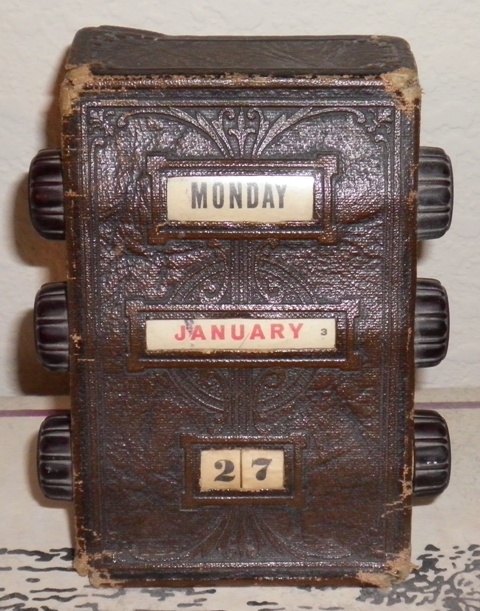
Happy Friday the 12Ath!

I have no particular opinion or fear about thirteen or Friday or Friday the thirteenth, though I do find a lot of irony associated with the avoidance of thirteen. For example, buildings with more than 13 floors don’t call the 13th floor the 13th floor, but instead skip the number and go directly to the 14th floor or call it 12A. It’s still the 13th floor, right? So do people simply fear the number rather than the actual floor? And if they fear the number, do they refuse to buy baker’s dozens of donuts or cookies? (Though perhaps that is dating me — I don’t think I’ve come across a baker’s dozen of anything in a long time.) And if it’s the number thirteen they fear, why is only Friday the thirteeth a fearful day? I realize it’s the conjunction of fateful Fcatriday and the ominous number that causes friggatriskaidekaphobia, but still, for those with the simpler case of triskaidekaphobia, wouldn’t any thirteenth day of the month be cause for concern?

(Interesting side note — in many Spanish speaking countries, Tuesday the thirteenth is the unlucky day, so for them, the movie Friday the Thirteenth was renamed Tuesday the Thirteenth.)

If Friday the thirteenth were really an unlucky day as more than 20 million Americans believe, to be on the safe side, shouldn’t the calendar makers follow the example of builders and call change all 13s that fall on a Friday to 14 or maybe even 12A? And speaking of calendars, our current calendar was not universally adopted in Europe until the eighteenth century. So is our current Friday the thirteenth the real Friday the thirteenth? Wouldn’t the day fall on other dates using other calendars?

Today is an especially interesting day considering that it’s exactly thirteen weeks since the last Friday the thirteenth in this year of twenty-thirteen, but I don’t know if that makes it more it a more dire day or simply a matter of curiosity.

Whether or not you believe that Friday the thirteenth is bad luck (and if you do, please forgive my levity), I hope you have a fearfully wonderful day.

***

Pat Bertram is the author of the suspense novels Light Bringer, More Deaths Than One, A Spark of Heavenly Fire, and Daughter Am I. Bertram is also the author of Grief: The Great Yearning, “an exquisite book, wrenching to read, and at the same time full of profound truths.” Connect with Pat on Google+. Like Pat on Facebook.
White Elephants, Life, and Other Gifts

I went to a Christmas party last night, the first one in . . . well, to tell the truth, I can’t remember ever going to a Christmas party, though I must have sometime or other.

We were each supposed to bring a gift — a white elephant, they said.

ElephantThe term “white elephant” is derived from the supposed Thai tradition of a king bestowing such an elephant on a subordinate he wished to ruin. The elephants were costly to maintain, didn’t do any work, and needed to be available to anyone who wished to worship the holy creature. A white elephant, then, is something unnecessary that is more trouble than it’s worth.

How that definition of white elephant fits in with a white elephant gift exchange, I don’t know, since the way the term is used now, a white elephant is simply something you have but don’t want, something you make, or maybe even something you buy that isn’t expensive. Some people at the party brought wrapped up junk — a bag of old video tapes, a cracked mug, long-expired candy. Others gave an elaborate gift like an insulated backpack or something special like a handmade birdhouse.

We played a game with the gifting. We each got a number. The first person picked a gift, and opened it. The second person could “steal” that gift if they liked it or pick a new one. The last person, of course, could choose any of the opened gifts or take a chance on the final unopened one. (If someone “stole” the gift you had opened, you got to choose another one.)

It was an interesting psychological study. Some people very boldly went and snatched the opened gift they wanted. Others did it timidly or apologetically. The rest just took an unopened gift, choosing one carefully after examining all the offerings, or simply picking one at random.

Me? I acted true to form. When it came to my turn, I chose the nearest unopened gift. There was one opened one that I would have liked, but someone had already stolen the gift — an insulated back pack fitted out with accoutrements for a picnic — and I knew she wanted it. I could have stolen it from her, of course, but any pleasure I would have derived from the gift would have been dimmed by her disappointment. There were a few other gifts that might have been nice to have, but the truth is, when it comes to life and other gifts, I will always choose a mysterious unknown over a mediocre known, even though I know there is a good chance I will come out of it badly. (As I did — I got a bottle of men’s cologne, which I have absolutely no use for. I ended up giving it away.)

Even though I came away without a gift, I’m grateful I didn’t get stuck with a real white elephant. The zoning variances alone would have cost a fortune!

***

Pat Bertram is the author of the suspense novels Light Bringer, More Deaths Than One, A Spark of Heavenly Fire, and Daughter Am I. Bertram is also the author of Grief: The Great Yearning, “an exquisite book, wrenching to read, and at the same time full of profound truths.” Connect with Pat on Google+. Like Pat on Facebook.

And oh, I’m alive, I’m alive, I’m alive

I went to a dance recital at the college the other day, and wow, those kids could fly! So young, so fit, so lithe. None of the dancers would have even a glimmer of clumsiness while doing the sitting test with incredible ease. Of course, the test is geared toward older folk, but even when I was young I didn’t have the strength and agility those kids had.

warriorThe first dance is the one that had the most impact on me, probably because it was the first. I’d never seen some of the stunts they pulled. Although dozens of dancers were on stage at all times, not everyone performed the same steps. It seemed as if two or three dances were going on at the same time in a dizzying blur of interconnected motion. But one thing they all did at one point— lie down as if they were going to do pushups, and then, on hands and toes, hop to the side again and again.

It was a very powerful dance, and no wonder — the song they danced to was “thatPower”. Not a song I was familiar with. Not one I would ever have willingly listened to. Most of it was  . . .  well, to be kind, let’s just say it’s not my kind of music. The chorus, however, is haunting me, and I’m allowing it to play in my mind.

In the midst of the non-song, the chorus (sung by Justin Bieber) was surprisingly tuneful and uplifting:

And oh, I’m alive, I’m alive, I’m alive
And oh, I can fly, I can fly, I can fly
And oh, I’m alive, I’m alive, I’m alive
And I’m loving every second, minute, hour, bigger, better, stronger power.

Usually I can’t stand when a song plays itself repeatedly in my head and do what I can to remove it, but I like this message, this affirmation. I am alive. I can fly if only in my thoughts and dreams. And while I might not be loving every minute, I am living every second, minute, hour. And I am getting better and stronger, more powerful. Sometimes I can even feel the power, though I don’t know where that power comes from. The earth maybe. Grief maybe. Myself maybe.  I do know I am more confident than I’ve ever been. More accepting of life and its ups and downs. Enjoying being alive — coming alive — for the first time in many years.

***

Pat Bertram is the author of the suspense novels Light Bringer, More Deaths Than One, A Spark of Heavenly Fire, and Daughter Am I. Bertram is also the author of Grief: The Great Yearning, “an exquisite book, wrenching to read, and at the same time full of profound truths.” Connect with Pat on Google+. Like Pat on Facebook.

Look Out Life, Here I Come!

I gave up dating when I was nineteen. It was too much like trying to slog my way through a pool of molasses without any of the sweetness to make the experience palatable. I remember once the boy took me to a nice restaurant, and then sat there like a lump. Perhaps he figured that since he was paying for the meal I had to entertain him, but if I said something, his eyes would glaze over or he’d shift his gaze away to look at anything but me. If I asked a question about him, he’d respond in as few words as possible, then lapse into shifty silence again. It was like dropping a pebble into the sand. No ripples of conversation. Just a few dull words plunked on the table between us. If it was only him this happened with, I might not have been so quick to exit the dating scene, but it was typical of ripplesall my dates. Which was okay. I didn’t want to fall in love, didn’t want to spend my life with anyone, didn’t want to be tied down.

Because of this dating experience, my meeting Jeff — the man I would spend thirty-four years of my life with — came as a total shock. I stopped into his health food store one day and happened to drop a few verbal pebbles. He took those pebbles, skimmed them across the space between us, creating ripples galore. Then he tossed more pebbles into the conversational waters while I was skimming those pebbles back to him. All those ripples caused a tide pool that kept me connected to him until he died. (I was an hour late for work that day we met, and when I told my boss and co-workers why, they laughed, thinking I was making a joke since they knew my history with the opposite sex.)

For the past few months, a friend has been trying to talk me into joining an online dating site, and I finally succumbed. I don’t want another lifelong relationship. I don’t even want to fall in love. But it would be nice to have someone to do things with. Go out to lunch once in a while. Maybe go bowling or to the beach. Something.

My friend has been finding matches for me, so I’ve been writing to her choices as well as the site’s matches. Only three people responded, and oh, man. Talk about regressing back to adolescence. Conversational pebbles plunking into the sand. No ripples. Just dead end thuds.

Don’t people know how to converse, in person or online? It’s simple. I say/write something, expressing an interest in you, then you say/write something, expressing an interest in me.

I wrote charming notes to dozens of prospects, referring to things they posted on their profiles and ending with a pertinent question to get the conversational ripples going. The three who responded answered the question in monosyllables, and that was it. When I responded to their response, I got even fewer syllables. No show of interest in me or in anything, actually.

One of the three claimed to be funny, to love jokes and all kinds of humor. I thought we might have a few laughs, but he found my attempt at humor insulting, and I found him pedantic. One guy claimed to love words, but when I offered a bit of word play and the link to a cool word site, he merely thanked me. Plunk.

I thought this would be hard because of my not being ready, but it’s hard in a way I never even imagined. Like reliving adolescence. Still, I didn’t really expect anything from the site. Signing up was mostly a symbolic way of throwing myself into the future. A way of saying, “Look out life, here I come!”

***

Pat Bertram is the author of the suspense novels Light Bringer, More Deaths Than One, A Spark of Heavenly Fire, and Daughter Am I. Bertram is also the author of Grief: The Great Yearning, “an exquisite book, wrenching to read, and at the same time full of profound truths.” Connect with Pat on Google+. Like Pat on Facebook.

How Many Years Do You Have Left?

Sometimes research gets so bizarre and obtuse that the results seem meaningless. For example, Brazilian physician Claudio Gil Araujo came up with a test to predict how many years we have left.

The test was for 51 to 80 year olds, but so far I haven’t found anyone that age who could perform the test perfectly, not even the dancers I know. For the test, you’re supposed to stand in the middle of the room, cross your legs, then gracefully lower yourself into a cross-legged sitting position without using your hands, elbows, or knees. You get 5 points if you can get down into a sitting position. If you can do it but are clumsy, you lose a point. Every time a hand or knee touched the ground, you lose another point. Next, you’re supposed to stand up, legs still crossed, without any part of you touching the ground. This gains you another five points, but again, if you are clumsy, you lose a point. Every time a body part touches the ground, you lose a point.

The maximum is ten points. Araujo’s research indicated that if you score less than 8 points, you are twice as likely to die within the next five years as those who scored more than 8, and if you score less than 3 points, you are five times more likely to die.

According to these statistics, I should have been dead long ago. I have never in my life, except perhaps as a small child, been able to do simply cross my legs and sink gracefully into a cross-legged sitting position.

Beyond that, the parameters of the test were ridiculous — there is a vast difference in mortality and fitness, health and agility from the ages of 51 to 80. The test would have had more validity if it centered on a single age or at least narrowed the age grouping. 51 to 60, 61 to 70, 71 to 80. It should also have been divided by men and women.

A 51-year-old male has a .59% chance of dying within a year, and a 51-year-old woman has a .35% chance of dying. An 80-year-old man has a 6.16% chance of dying within a year, and an 80-year-old woman has a 4.39 chance of dying. Considering that as a rule men have shorter life expectancies, and 68% of the participants were men, the test results would have been skewed even further. Supposedly, they adjusted for such factors, but there was no indication of what those adjustments comprised. Besides, genetics is a huge factor. If one’s parents lived to a very old age, you have a better chance of doing so yourself regardless of your ability to sit crosslegged. (The test does not apply to those less than 50 since the results are vastly different.)

The way I figure, f you want to know how long you have left to live — just live life to the fullest, and one day you will arrive at the end. Then you will know.

***

Pat Bertram is the author of the suspense novels Light Bringer, More Deaths Than One, A Spark of Heavenly Fire, and Daughter Am I. Bertram is also the author of Grief: The Great Yearning, “an exquisite book, wrenching to read, and at the same time full of profound truths.” Connect with Pat on Google+. Like Pat on Facebook.

Grief: Yes, There is Hope

A woman whose husband died six months ago contacted me to say she’s reading Grief: The Great Yearning and is finding comfort from knowing that what she is feeling, others have felt. She mentioned that some things I wrote were identical to things she wrote in her journal, which goes to show that grief is individual, and yet much is the same when it comes to losing a husband or a soul mate. The pain goes down so deep, it hits places in our psyches we didn’t even know existed.

The woman asked how I was doing, then posed the question that haunted me for years: “Is there hope for me?”

It’s hard to believe, when you are lost in the cyclone called grief, that there will ever come a time of peace. Since I had no such belief, I held tight to the belief of others that the pain will ebb, that I will find renewal. TheCalifornia sunrisey kept telling me to be patient, that it takes three to five years, but around four years most people find a renewed interest in life. And so it is with me. I feel alive again. I still have an underlying sadness. I miss him, of course, and always will — I even cry for him occasionally, though the tears pass easily without lingering pain.

I am finding that certain songs, movies, days, memories, bring about an upsurge of grief, and apparently, from what others have experienced, this will be true for the rest of my life, but at least I feel as if I am alive. I felt disconnected from life for a long time, as if I too had died. And partly, that is true — the person I was when I was with him did die. But now I need to be the person I am when I am with me. I can no longer take him into the equation of my life. My being alive does not make his being dead any less significant, though oddly, his being dead does make my being alive more significant. I once loved deeply. I once was so connected to another human being that his death sent me reeling for years.

But now, I am me. Just me. Not a bad thing to be.

This change in me is obvious. I met someone on my walk today, someone I’d talked to sporadically over the past three and a half years. He stopped me, asked me how I became such a star. (Radiant, he meant.) He barely recognized me, even though I was wearing the same sort of comfortable and inelegant clothes I always wear when walking. In fact, he said at first he thought I was young enough to be my daughter. He hunched his shoulders forward to show me how I used to walk — like an old woman.

So yes, there is hope. If you’re still grieving or feeling unalive after suffering a significant loss, take heart. If I can find my way back to life, so can you. Just grieve, find comfort where you can, try new things, and be patient with yourself. The pain does ebb, and chances are, around the fourth or fifth-year anniversary, you will find a renewed interest in life. Until then, wishing you peace.

***

Pat Bertram is the author of the suspense novels Light Bringer, More Deaths Than One, A Spark of Heavenly Fire, and Daughter Am I. Bertram is also the author of Grief: The Great Yearning, “an exquisite book, wrenching to read, and at the same time full of profound truths.” Connect with Pat on Google+. Like Pat on Facebook.

A Dearth of Matches

Early in the twentieth century, Ivar Kreuger, a match manufacturer and financier, managed to corner the match market. Through various deals, he ended up with the exclusive rights to sell matches in many countries, including most of Europe, but this monopoly was not enough for him. Back then, it was a common practice for two or three people to light their cigarettes from the same match. Ivar realized that if he could somehow keep that third person from using the match, he could greatly increase his sales, so he had his advertising department start the rumor that it was unlucky to light thflameree cigarettes from the same match. Tales were told of dreadful things happening to the third person who used a match, like the bride who had been left at the altar and the soldier who was killed after each had lit a cigarette from a match that two others had already used. Even today, the superstition that it’s unlucky to light three cigarettes from the same match persists.

Oddly, though the superstition still exists, matches don’t. I needed some matches yesterday, a couple of books or even a box of old fashioned kitchen matches, and I didn’t find a single one. One major retailer sold fireplace matches, the long kind, but they were out of stock. A convenience store/mini market didn’t have any. The clerk said they usually had some, but were out. I even went to a smoke shop. Where there’s smoke, there’s fire, right? Wrong. No matches.

I used to collect matchbooks, but when I had to leave my home of twenty years and put my stuff in storage, I got rid of the matches. I thought it was too dangerous to pack them away, but now I wish I had them, for curiosity’s sake if nothing else.

Matches were an incredible invention. I remember reading stories about frontier days, and how if the fire went out, they had to get live embers from a neighbor’s fire, protecting it through all the miles of travel. There were flints, of course, and before that, rubbing two sticks together, but eventually people realized that it’s a lot easier to start a fire with two sticks if one was a match. Other means of lighting fires are more prevalent now, which perhaps explains the scarcity of matches, but still, it seems odd that a simple little tool that was once so valuable it sparked a financial empire is so hard to find today.

***

Pat Bertram is the author of the suspense novels Light Bringer, More Deaths Than One, A Spark of Heavenly Fire, and Daughter Am I. Bertram is also the author of Grief: The Great Yearning, “an exquisite book, wrenching to read, and at the same time full of profound truths.” Connect with Pat on Google+. Like Pat on Facebook.

Taking “Z” Things With Gratitude

When it comes to life the critical thing is whether you take things for granted or take them with gratitude. ~~ G. K. Chesterton

All this month, I’ve been taking with gratitude some of those things I often take for granted — an entire alphabet’s worth! Since today is the twenty-sixth day of this surge of gratitude, I am giving thanks for “Z” things.

I am especially grateful for:

zany hatZaniness. There is not enough zaniness in the world. There is plenty of idiosyncrasy and unconventionality, but these are so often serious choices and serious pursuits without the fun and amusement that are necessary for zaniness. Still, there is some zaniness in the world, for which I am grateful, and in the coming years, I will do my part to add to that zaniness, if by nothing else than my amusing hats.

Zebras. I am grateful for zebras and other mythical creatures. I call zebras mythical because although they are supposed to exist, I have never seen one. I’m not a big fan of zoos (another Z!) since I can’t bear to see anyone or anything caged, but I am grateful for zoos because someday, perhaps, I will be able to see such a beast.

Zeal. I am grateful that I can still muster up enough zeal to start such projects as this alphabet of gratitude.

Zenith. And I am grateful for the zenith (meaning culmination) of this project. I’m not sure I learned much from it, nor am I sure it made me any happier, but at least I pondered for a few minutes each day about what to take with gratitude. So many things for which to be grateful. Such a wonderful world!

Wishing you many zzzzzzs.

So what “Z” things are you taking with gratitude?

***

See also:
Taking “V” Things With Gratitude, Taking “W” Things With Gratitude, Taking “X” Things With Gratitude, Taking “Y” Things With Gratitude

***

Pat Bertram is the author of the suspense novels Light Bringer, More Deaths Than One, A Spark of Heavenly Fire, and Daughter Am I. Bertram is also the author of Grief: The Great Yearning, “an exquisite book, wrenching to read, and at the same time full of profound truths.” Connect with Pat on Google+. Like Pat on Facebook.