Embracing the Play of Writing

I watched Talent for the Game the other day, and one of the points made in the movie was that baseball is big business. It seemed ironic to me that in our world play becomes business, and business, such as the business of writing, becomes play. (Most writers nowadays write for the love of writing, with always the dream of making a living at it as a goal, a dream that is slowly being eroded by the sheer masses of books, especially ebooks, on the market, so for most writers, the business has become play.)

Then it dawned on me that maybe writing, like baseball, has always been about play. Sure, both fields have their mega stars who make most of the money, but still, there are sandlot games and town leagues (mostly those leagues are softball, but let’s not let technicalities get in the way of a great analogy). Generally, anyone who wants to play baseball or softball can, but not everyone baseballmanages to turn the fun into profit. Writing is much the same. Anyone who wants to play can, but only a very small percentage ever makes a living at it.

I know people who won’t watch professional sports because they say the pros play for money and not for fun, that the players don’t seem to enjoy themselves, which takes the joy out of the game. In the same way, some of the major authors, the ones who are best at the business of writing, write the worst books. Obviously, most people don’t agree with me since they snatch the books up as soon as a new one comes on the market, but for me, after more than two or three books in a series, the authors lose their sense of play, and the books lose their luster.

Like baseball, writing is an inherently frivolous pursuit, made important only because of our frivolous lives. Okay, maybe our lives aren’t frivolous, but most of us don’t spend our days out in the wilderness gathering nuts and berries, hunting for meat to put on the table, chopping wood to keep warm, finding cover when it snows or rains. Writing in itself can’t do any of that, but wouldn’t it be nice if it could? I’d write a feast for us all, where we could come together and enjoy good food and good company at only the cost of a few words.

And no, I’m not advocating we junk civilization and go back to primitive times. I’m not much for the outdoors (except for walking) and frankly, I prefer indoor plumbing. But you have to admit, no matter how you look at it, writing is not a serious activity. It’s about making believe. Playing dolls and building worlds. We use words instead of toys, but basically, it’s the same thing.

Maybe we’ve been looking at writing all wrong. Maybe instead of celebrating the folk who embrace the business of writing, we should be celebrating those who embrace the play of it.

***

Pat Bertram is the author of the suspense novels Light Bringer, More Deaths Than One, A Spark of Heavenly Fire, and Daughter Am I. Bertram is also the author of Grief: The Great Yearning, “an exquisite book, wrenching to read, and at the same time full of profound truths.” Follow Pat on Google+. Like Pat on Facebook.


Life in Motion

I was driving in traffic today, running errands, when all of a sudden, the thought hit me: Is this all there is to my life? Just this constant motion — walking, driving, typing?

speedI didn’t have so much trouble dealing with the seeming foolishness of daily living when my life mate/soul mate was with me, but now that he is dead, so often it seems as if despite all the motion, I am simply running in place.

And yet, even if I am sitting still, going nowhere, everything is in constant motion.

It’s windy, and so the air is moving at about 20 per hour. The earth is also moving, of course, spinning on its axis at about 1000 miles per hour and it is hurtling around the sun at 67,000 mph. The sun is racing around the Milky Way Galaxy at 483,000 mph. And the galaxy is moving at perhaps 2,237,000 mph. The entire universe is also moving and expanding, at untold speeds.

And that’s not all. The very atoms of our bodies are constantly moving, creating and recreating themselves and us in the process. Thoughts are pinging around in our heads, sometimes faster than we can catch them, light is traveling at 186,202 miles per second, and sound is traveling at approximately 768 miles per hour in dry air.

All that motion. Constant motion. And for what? Just to be in motion? Is that all there is to life? Motion?

All this speed is wearing me out. I think I’ll go take a nap.

***

Pat Bertram is the author of the suspense novels Light Bringer, More Deaths Than One, A Spark of Heavenly Fire, and Daughter Am I. Bertram is also the author of Grief: The Great Yearning, “an exquisite book, wrenching to read, and at the same time full of profound truths.” Follow Pat on Google+. Like Pat on Facebook

Dreaming My Life into Being

JJ Dare, friend, fellow author and sister in sorrow, wrote a blog post today about Floating in the Sea of Dreams that got me thinking . . . again. . . . about how I am dreaming my life into being. The Sea of Dreams is like a primordial ooze where ideas and hopes rise up and evolve and then sink back into the deep only to ascend once more in a different guise. And every permutation of these dreams changes us, makes us grow, helps us reach our destiny.

A few months ago when my 96-year-old father (my current responsibility) seemed near death, the idea of living on the go appealed to me. I worry about settling down and stagnating somewhere, and moving from place to place would vanquish that worry, though of course, other worries would take its place. Weather, for example. It’s one thing to think of such a life in the puget soundstillness of a warm desert spring day, and another thing to consider the possibilities of snow and tornadoes, hurricanes and ice storms.

My father is doing well, so much so that it’s possible he could outlast me, and the thought of living on the road was subsumed into the Sea of Dreams. I’m back to taking life one day at a time, not thinking about the future, not making any long-term plans.

The other phase of my original idea of living on the go was to do an extended bookstore tour in an effort to introduce my books and my publisher to the offline literary word. That idea, as I have discovered, seems to be another overly rosy daydream. Since I couldn’t go on the road, I’ve been doing my bookstore tour via mail. Sending out letters, gift certificates, offers to interview booksellers.

There’s been little interest in my mailing, and unfortunately, it makes sense. Bookstores are in the business of making money, and since I am not a big name in the literary world (hard though it may be for you to believe), they have no incentive to stock my books. Of course, if/when I do become a big name, they will be interested in my books, but by then, I won’t need them. (If you are a bookstore owner and reading this, and you are interested in my books, let me know and I’ll send you a gift certificate. Or if you are interested in my interviewing you, you can find the interview questions here: Bookseller Questionnaire.)

So this dream of becoming an offline author, like many others I’ve had, is slowly sinking back into the depths, but already, some dreams are beginning to arise. I’m getting inklings of a desire to finish my works in progress. And the idea of being on the go is slowly evolving into something I can do now. I’m considering shutting off the internet one day a week (gasp!!) and taking myself on a fishing trip. (Not to fish for fish, of course, since such a hobby is only peaceful for the one fishing. The poor fish are scared, hurt, and fighting for their life.) My idea is to go fishing for life. Just take off for a day. Go wherever. See what I can see.

Meantime, I’ll continue floating on the Sea of Dreams, dreaming my life into being.

***

Pat Bertram is the author of the suspense novels Light Bringer, More Deaths Than One, A Spark of Heavenly Fire, and Daughter Am I. Bertram is also the author of Grief: The Great Yearning, “an exquisite book, wrenching to read, and at the same time full of profound truths.” Follow Pat on Google+. Like Pat on Facebook.

The Three-Year Anniversary of the Worst Day of My Life

Today is the three-year anniversary of the worst day of my life.

Oddly, the worst day wasn’t the day of Jeff’s death. (Jeff was my life mate/soul mate, a man with whom I’d spent almost thirty-four years of my life. Normally I don’t use his name when I write about my grief, but I need the comfort of seeing his name today.) The day of his death was a sadly inevitable day, one I had actually looked forward to. He’d been sick for so long and in such pain, that I was glad he finally let go and drifted away. I might have cried then. I might have been numb. I don’t really remember. All I know is that I sat there with him until almost dawn when the funeral services people came for his body.

I don’t remember when grief first washed over me, either, but I do remember the anguish building for days on end until I was nothing but a screaming bundle of raw pain. (You’d think that grief would start out strong and then weaken, but it doesn’t. It swells and continues to swell until it reaches some sort of breaking point, which gives you a brief moment of peace until it begins to swell again.)

We bereft are told not to make any major changes that first year since we aren’t always thinking clearly — we just want to escape the pain — but I had to leave our home to come take care of my then 93-year-old father. I put off sorting out Jeff’s things as long as possible since I could not bear the thought of clearing out what was left of his life, but I finally steeled myself to do the job.

I knew what to do with most things because toward the end he had rallied enough to tell me, but still, there were a few items that blindsided me, such as photos and business cards from his first store (where we met). Every single item he owned was emotionally laden, both with his feelings and mine, and I cried the entire time, huge tears dripping unchecked, soaking my collar.
How do you dismantle someone’s life? How do you dismantle a shared life? With care and tears, apparently.

Just thinking about it now makes me weep. If I could have waited a year or two, the task might not have been so traumatic, but the truth is, dismantling someone’s life is always filled with sorrow no matter how long you wait. I kept a lot of his things — things he asked me to save and things I couldn’t bear to get rid of such as his music tapes, games we played, a sweater he wore when we first met — and the thought of getting rid of those things still brings me pain.

I did manage to clear out some of those saved “effects” during that first year when I’d get angry at him for leaving me. (Silly, isn’t it? It wasn’t his choice, but I was still angry. Sometimes I still am.)

It’s amazing to me that I survived that day. It’s amazing to me that I’ve survived three years and 55 days of grief. It’s amazing to me that any of us do.

***

Pat Bertram is the author of the suspense novels Light Bringer, More Deaths Than One, A Spark of Heavenly Fire, and Daughter Am I. Bertram is also the author of Grief: The Great Yearning, “an exquisite book, wrenching to read, and at the same time full of profound truths.” Follow Pat on Google+. Like Pat on Facebook.

Giving Readers What They Want

Writers are often told not to write what they want, but to write what readers want, but some of us couldn’t do that even if we wanted to. We haven’t a clue what readers want or how to give it to them.

I always thought readers were like me — they liked well-written stand-alone novels that didn’t so much pull them into the story as that they pulled the story into them and somehow made them greater than they were. The books didn’t have to be literary. In fact, I have never been a fan of literary novels, but books did need enough intelligence and depth and character to find a place in my inner self. So those are the novels I wrote — seemingly simple stories that take on a complexity when readers bring themselves to the book.

People do seem to masseslike my books (unless they are romance readers who accidentally stumble into the wrong story), but I’ve never reached “the masses” and I never will for the simple reason that I don’t know what “the masses” want. (Normally I don’t use terms such as “the masses” because who among us ever sees him or herself as one of the masses? But still, when you are talking about 80 to 100 million readers, as some notorious writers have gained, those are massive numbers.)

Going by the books that reach vast numbers of people, what readers want is bondage with some S&M, and lots of raw sex, all pulled together with childish writing. Or they want simplistic stories with a lack of logic, poorly constructed sentences, faceless characters and lots of action with some cultural references thrown in to make them think they are in the know.

Okay, I admit, I’m being a bit simplistic myself and maybe even peevish. Sometimes good books with good writing do appeal to millions upon millions of people, but I don’t know why those books appeal to masses of readers anymore than why gray sex and brown symbols do. (I’m trying to be clever here, and probably failing miserably.)

It would be nice (maybe) to sell millions of books, but I can’t give readers what they want if I haven’t a clue. And I can’t get a clue. It’s like cilantro.

I never could understand why people liked cilantro. To me, it tastes like soap. Cilantro contains chemical compounds called aldehydes, which are also present in soaps and other cleaning agents, and apparently I don’t have the enzyme that breaks down the soap-like compounds of the herb into a tasty seasoning, so I get the full soap taste. Yuck.

And maybe I’m lacking the book “enzyme” that could help me understand what readers want. Heck, I don’t even know what I want anymore!

That said, I do write with readers in mind. Good writing, lack of typos, well-constructed sentences, interesting characters in vivid settings, hooks, conflicts, all keep my stories flowing smoothly and easy to read. I try to remove any hiccup that would pull the reader out of the story, or to pull the story out of the reader. And who knows. Maybe someday massive numbers of readers will discover that after all, I did give them what they want.

It could happen.

***

Pat Bertram is the author of the suspense novels Light Bringer, More Deaths Than One, A Spark of Heavenly Fire, and Daughter Am I. Bertram is also the author of Grief: The Great Yearning, “an exquisite book, wrenching to read, and at the same time full of profound truths.” Follow Pat on Google+. Like Pat on Facebook

Robinades, Beauty, and Other Things

What is the surname of The Swiss Family Robinson? If you’re like me, you’d assume it is Robinson, but apparently, Johann David Wyss never actually used the name “Robinson” in the book. It turns out that “Robinson” is a genre based on Daniel Defoe’s Robinson Crusoe, which started the whole desert island survivalist fiction movement. (Some say Defoe started the whole fiction movement, that Robinson Crusoe is the first real novel, but I don’t really know if that is true. I do know that book-length fiction was called a novel, because it was “novel.”)

I found it interesting that I would come across a mention of this genre right before watching the movie Enemy Mine, which is a robinsonade in a science fiction setting. Dennis Quaid is stranded on a desert planet — an island in space — and in true robinsonade fashion, nature is viewed as harsh and ungiving (as opposed to The Swiss Family Robinson, which views nature in a more benign fashion). Although Enemy Mine doesn’t follow the genre form of building a civilization out of that wilderness, Quaid does find a way to survive and to form a civilization of sorts with his marooned enemy, a Drac, played by Lou Gosset Jr.

The tagline tells the story: Enemies because they were taught to be. Allies because they had to be. Brothers because they dared to be.

The set, designed by Rolf Zehetbauer is magnificent, as is the make-up, but for me the most interesting effect of the movie is the subtheme of beauty and ugliness. (The Terran and the Drac each see the other as ugly.) Every time I see this movie, I am struck by how normal the Drac looks to me by the end of the movie, and I think how seriously damaging it is for us to beatify beauty. Sure, beautiful people are nice to look at, but so are those who aren’t quite so spectacular looking. It might take a while to get to know the person or to become used to a less than eye-catching appearance, but in the end, beauty means nothing. (Well, in the end, we are all worm food or a box of cremains, but let’s not go into that.)

I know one thing, though. If you were living a robinsonade life, stranded on a desert island with a less than attractive companion, as in Enemy Mine, you’d soon focus on what mattered most — survival. It is only in a world where survival is almost a matter of fact (at least for a while) that the differences in appearance can loom so large.

***

Pat Bertram is the author of the suspense novels Light Bringer, More Deaths Than One, A Spark of Heavenly Fire, and Daughter Am I. Bertram is also the author of Grief: The Great Yearning, “an exquisite book, wrenching to read, and at the same time full of profound truths.” Follow Pat on Google+. Like Pat on Facebook.

Wishing You Peace on Mother’s Day

For many people in the United States, Mother’s Day is a time of family get-togethers, joyful memories, and gifts honoring their mothers.

But for many people, women especially, this is a day of pain. Women who wanted children but were never so blessed. Mothers who lost children to death or despair. Mothers with missing children. Adoptees who never knew their birth mothers. People who are still grieving the death of their mothers.

To everyone who is silently suffering on this day, I wish you peace.

***

Pat Bertram is the author of the suspense novels Light Bringer, More Deaths Than One, A Spark of Heavenly Fire, and Daughter Am I. Bertram is also the author of Grief: The Great Yearning, “an exquisite book, wrenching to read, and at the same time full of profound truths.” Follow Pat on Google+. Like Pat on Facebook.

A New Permutation Of Grief?

The months keep passing. Thirty-seven of them have come and gone since the death of my life mate/soul mate.

I never imagined I would continue to be so affected by his absence after all this time. And back at the beginning of this bereft life, I never imagined I would survive to this point. The pain and shock of new grief was so vast that it took my breath away. (Grammar Check has underlined that phrase “took my breath away” as being trite. They want me to change it to “astounded me.” Yes, the pain astounded me, but the truth is, it literally took my breath away. I remember gasping for air, unable to suck enough oxygen into my lungs to make them inflate.)

Even now, all these months later, the thought that he is dead still has the power to steal my breath.

I am doing as well as anyone who has lost the one person who connected them to the world, and perhaps a bit better — or worse — than some in my “grief age group.” (Though this is not a contest. We have all lost, and we keep on losing every day they are Low tidegone.) I can get through the days, sometimes quite peacefully. I am lonely, of course, and even more than that, I am lonesome for him, but still, I do okay. I keep busy, both online and off, and I am getting used to his absence. Sort of.

But . . . when I remember the reason that he is absent — that he is dead, gone from this earth, forever beyond the reach of my arms — I again forget how to breathe. I gasp for air that somehow doesn’t make it beyond the tears that are blocking my throat.

Tears always seem to be pooling deep inside, even when I am at my most content, and they spill over at the least provocation. I find myself crying at losses (my own and other people’s, especially if they have lost a soul mate). I cry at changes, including change of season. (I’m not crying because the seasons changed, of course, but seasonal changes create corresponding hormonal changes in the body, and those changes bring on the tears.)

And I cry at movies. I’ve been going through my mate’s movie collection, and it’s rare for me to get through an entire movie without tears. I cry when a character leaves, because it reminds me that he left. I cry when a character returns because it reminds me that he never will come back. I cry at the moments we used to turn to each other and smile in shared enjoyment. The last time I watched these movies, I watched them with him, and sometimes I weep when the movie is over, no matter what the ending, because never again will I watch it with him.

This oversensitivity and tears might be a new permutation of grief (others who have lost their mates around the same time I did are also dealing with this same tendency to weepiness). Or it could be that my grief has changed me in some fundamental way, and now tears are a way of life.

Whatever the reason, this hypersensitivity is just something else to deal with as the months — and years — of this grief journey slip by.

***

Pat Bertram is the author of the suspense novels Light Bringer, More Deaths Than One, A Spark of Heavenly Fire, and Daughter Am I. Bertram is also the author of Grief: The Great Yearning, “an exquisite book, wrenching to read, and at the same time full of profound truths.” Follow Pat on Google+. Like Pat on Facebook.

Excerpt From “Grief: The Great Yearning” — Day 43

Someone asked me today if I had any tips for writing a book about grief, but I have no such tips. I never actually set out to write a book about grief, never planned to make any of my writing public (except for the blog posts, of course), but I was so lost, so lonely, so sick with grief and bewildered by all I was experiencing, that the only way I could try to make sense of it all was to put my feelings into words. Whether I was writing letters to Jeff (my deceased life mate/soul mate) or simply pouring out my feelings in a journal, it helped me feel close to him, as if, once again, I was talking things over with him. The only problem was, I only heard my side of the story.  He never told me how he felt about his dying and our separation. Did he feel as broken as I did? Did he feel amputated? Or was he simply glad to be shucked of his body, and perhaps even of me?

It’s been three years now since the following piece was written, and though I don’t have the physical trauma and emotional agony, I’m still lost, still miss him, still pinning my life mostly on “perhaps.” How did I get through three years of such great yearning? I honestly don’t know other than by taking life one step at a time.

Excerpt from Grief: The Great Yearning

Day 43, Grief Journal

On Wednesday I took my car to the mechanic to get it ready for the trip, on Thursday, I took Jeff’s car to get the brakes fixed, then yesterday I had the first day of the yard sale. Spent most of last evening crying and screaming. “Grief work” they call it. It’s sickening (literally) to be dismantling our lives. Sickening to think of leaving here, leaving Jeff behind.

My time with Jeff wasn’t always “quality” time in that we were out of sync the past couple of years (no wonder, what with his dying) but I have learned one thing. ALL time with a loved one is quality time. Time is the currency of love. It’s not so much what you feel as what you do. It’s having time for someone, being present for him.

I do okay while writing in this journal. I can write rationally about Jeff, our past and my future, but when I’m in the throes of anguish, I’m anything but rational. This whole experience makes me feel unbalanced. Well, I am un-balanced. When Jeff stepped off the world, he unbalanced it, unbalanced me. I have to find balance and do it on my own—I can’t expect anyone else to balance me and my world.

Well, gotta go get ready for another yard sale day. The worst part comes not from selling our stuff for pocket change, but from seeing all the couples picking over the shards of our life. If I’d known that the only ones stopping would be older couples, I might not have put myself through this. It’s too difficult. Reminds me that I am no longer half of a couple. That I have no one to grow old with. No one to be with.

I won’t cry.

At least not until I’m alone tonight.

Click here to find out more about Grief: The Great Yearning

***

Pat Bertram is the author of the suspense novels Light Bringer, More Deaths Than One, A Spark of Heavenly Fire, and Daughter Am I. Bertram is also the author of Grief: The Great Yearning, “an exquisite book, wrenching to read, and at the same time full of profound truths.” Connect with Pat on Google+

Any Pinterest Users Out There?

Pinterest is supposed to be one of the hottest socialnetworking sites, but what exactly is the point? I know you use it like a bulletin board to pin photos and such that interest you, sort of lke a scrapbook, but then what?

And what if you don’t see things you like? That’s my problem — I don’t like “things.”

I get that it’s a fun site for most people, gives them something to play around with or dream about, but then what?

If you’re an author, how does that help you connect to readers? Or doesn’t it?

An author needs to be mindful of his or her “brand.” How does Pinterest help with branding?

Do you use Pinterst? What do you use it for? Do you find it fun, annoying, fascinating?

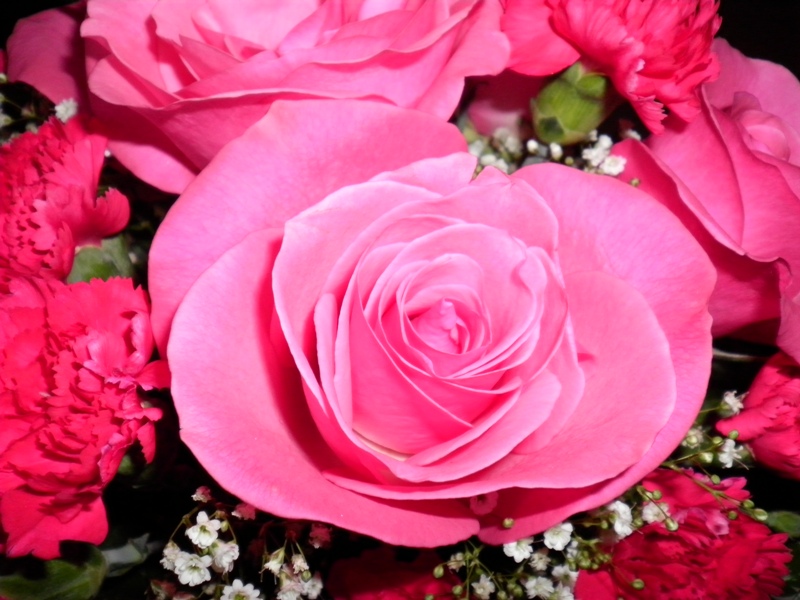
(This photo is from Second Wind Publishing’s Pins.)

Wild_Rose_-_saying

***

Pat Bertram is the author of the suspense novels Light Bringer, More Deaths Than One, A Spark of Heavenly Fire, and Daughter Am I. Bertram is also the author of Grief: The Great Yearning, “an exquisite book, wrenching to read, and at the same time full of profound truths.” Connect with Pat on Google+. Like Pat on Facebook.