A Sweet Tale or a Horror Story?

breadOn Valentine’s Day, a Facebook friend posted an anecdote that I can’t get out of my mind: A man made his wife toast on their anniversary, and she got upset. “For 50 years,” she said, “you have given me the end pieces and I am sick of it. I hate the end piece!” The man was stunned by her outburst and quietly responded, “But that is my favorite piece.”

Everyone who commented on the anecdote thought it was a sweet story, but all I could see was the horror of fifty years of misunderstanding. In fifty years, she never once told him she hated the end piece? Never once, when she got upset at him for some other hurt, did she bring up the matter of the toast? Never once did he bother to find out what she liked? Never once did he watch her make toast and see that she didn’t fix the end piece for herself?

This anecdote does not portray a loving relationship. She is long-suffering and uncommunicative, unable to find a way to express her wants until the frustration overwhelms her and she bursts out in anger. It’s even possible the problem isn’t the end piece at all — if the only thing he does for their anniversary is make her toast, then maybe she is upset at the lack of flowers or gifts or a meal in a nice restaurant, and mentioning the toast was simply a way of letting him know she wasn’t happy. He, on the other hand, is self-absorbed and arrogant, assuming that just because he likes something, so does she. He also seems smug in his belief that by giving her his favorite piece he is doing something loving, when in fact he is disregarding her by not considering her wishes.

Somewhere along the line, every new couple runs into such a situation, where one repeatedly does something the other doesn’t like, and so they compare notes about likes and dislikes and the expectations each has of the other. Something as simple as toast preferences should have been mentioned long before it became an emotional issue. If a couple can’t find a way around this sort of misunderstanding in the first few years of being together, then their problems run much deeper than who likes what piece of toast.

Love is seeing the truth of each other. Love is witnessing each other’s lives. Love is being present to each other. If after fifty years he did not know what she wanted, it shows how little he saw of her. If after fifty years, she did not know why he gave her the end piece, it shows how little she saw of him. It seems like a cold relationship at best.

On the other hand, loving or not, apparently they deserve each other, and maybe that’s what kept them together all those years.

This anecdote illustrates one other thing — the value of showing rather than telling. If this anecdote were developed into a scene as part of a story, it would be a great way of showing the problems of the couple’s relationship rather than simply saying that they misunderstood each other. Or it could be an example of how much he loved her, as the anecdote was meant to be. That’s the beauty of showing — the writer merely presents the story. Readers interpret it through their own experiences, deciding whether it is a horror story or a sweet tale, and hence make the story their own.

***

Pat Bertram is the author of the suspense novels Light Bringer, More Deaths Than One, A Spark of Heavenly Fire, and Daughter Am I. Bertram is also the author of Grief: The Great Yearning, “an exquisite book, wrenching to read, and at the same time full of profound truths.” Connect with Pat on Google+
Great Blog Resources for Writers

There are some phenomenal blogs and resources for writers that can help you take your writing to a more polished, compelling, or profound level. These are just a few of the links I have collected over the years:

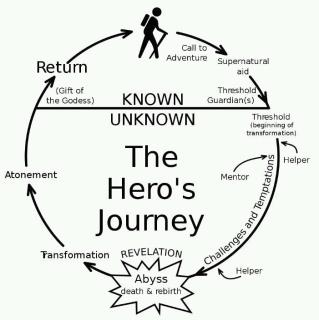
Ageless Wisdom & The Hero’s Journey lists the mythic and archetypal principles embedded in the structure of stories, along with the twelve stages of the hero’s journey. You don’t have to write fantasy to use such mythic elements. My contemporary novel, Daughter Am I, was written with these principles in mind.

The Editor’s Blog is the best resource for new writers who wish to learn the basics of writing and the best resource for experienced writers who wish to polish their work into a perfect gem. Whatever you want to know — hooking a reader, dialogue, action, conflict, editing — you will find great advice from freelance fiction editor Beth Hill.

The Bookshelf Muse has various fascinating thesauruses, such as the Emotional Thesaurus to help you show your characters emotions, Physical Attribute Thesaurus, Character Traits Thesaurus, Weather & Earthly Phenomena Thesaurus, Color, Textures and Shapes Thesaurus, Setting Thesaurus, and the Symbolism Thesaurus. (These are listed on the right sidebar.)

Guide to Grammar and Writing takes the mystery out of grammatical issues and English usage

Cliched, Overdone, or Boring Plotlines helps you find out if your brilliant idea really is as really as fantastic as you think it is, or if it is merely a rehash of a story that has been done a hundred times before.

100 Best First Lines from Novels might help you figure out how to write a first line that is every bit as compelling as those listed.

The Food Timeline helps you keep track of what foods your characters might be eating, especially if you write historical fiction.

Book Marketing Floozy is an indexed blog of sixty-five different articles by various writers about book promotion.

***

Pat Bertram is the author of the suspense novels Light Bringer, More Deaths Than One, A Spark of Heavenly Fire, and Daughter Am I. Bertram is also the author of Grief: The Great Yearning, “an exquisite book, wrenching to read, and at the same time full of profound truths.” Connect with Pat on Google+

Let It Ride — The Philosophy of Luck

luckWe do not all see the same story even if we watch the same movie or read the same book because we each bring our own feelings and philosophies and perceptions to the experience. I’ve always known this, of course, but now that the internet allows everyone to be a critic, it’s becoming a lot more obvious.



For example, professional critics panned the movie Let It Ride, calling it disjointed and only sporadically funny. The screenwriter herself didn’t like it, and had her name removed in favor of a pseudonym. Nonprofessional critics — those who posted reviews on the Internet Movie Data Base — generally liked the movie. In fact, the majority thought it was one of the all-time most underrated films. Even people who hated it didn’t have much bad to say about it other than it was simplistic and predictable.

In their reviews, the nonprofessionals talked about the great cast, the humor, the gambling. They talked about it being a feel-good film and mentioned how great it was to see an underdog win. And they said fans of thoroughbred racing would love the film, calling it the best horse racing comedy ever.

All that might be true, but it does not reflect the movie I see. To me, the movie is a philosophical gem about luck, about recognizing luck when it makes an appearance, trusting the luck and having the courage to go where it takes you.

Trotter (Richard Dreyfuss) lucks into a hot tip on a race. He has a hundred dollars he’d stashed away for such an occasion, but instead of betting the whole thing, he shares it with the friend who gave him the tip, which makes me wonder about the nature of luck. If he hadn’t been so generous, propitiating the gods of chance with his generosity, would his luck have died right there? (Well, obviously, his luck would have been whatever the writer decided it was, but since this is my version of the movie, I tend to believe that originally luck might have given him a small nod, but his generosity made good luck smile on him.)

His friends and friends-for-the-day envied him his luck, but when he offered to pool his money with theirs and bet it all, they backed off. Although they recognized Trotter’s luck, they didn’t trust it. Or perhaps they simply didn’t have the courage to trust it. It’s this lack of follow-through on their part, this variation on the theme, that helps give the movie its depth, and keeps the story from being as simple as it seems.

One thing I especially like about this movie, and what helps earn its appellation of being simplistic, is that there is no third act where everything goes wrong. I hate such third acts, and the lack of one in this movie keeps the story focused on the premise of a guy courageous enough to trust his luck.

The philosophy of luck interests me. I’ve never considered myself lucky, but overall, I’m not sure I’m particularly unlucky, either. I am aware that much of success in life is luck — being in the right place at the right time, perhaps — but what I don’t know is if we can create luck. Lucky people say yes, and of course they would since lucky people seldom see themselves as lucky — they take their largess as their due, as payment for their work, and refuse to see that others have put in at least as much effort without getting the same results. Unlucky people say we can’t create luck — we are either lucky or we aren’t.

Some people don’t believe in luck — either good or bad — because they believe that we decide before we are born into this life what traumas and situations we will have to deal with in order to learn certain lessons. Perhaps that is true, but what do I know? I’m having a hard enough time negotiating the steep rocky path of this life without worrying about what might have come before or what will come after.

To confuse the issue of luck, perhaps there is a different kind of good fortune, a sort of negative luck that makes us lucky even if we don’t seem to be lucky. In one scene of Let It Ride, Trotter is mistakenly arrested before he can bet what he thinks is a hot tip. And the horse loses. So what seems like bad luck is actually good luck.

Considering my interest in the philosophy of luck, it makes sense, then, that I would see the luck theme in Let It Ride, where others would see merely the wonderful comedy, the great cast, or the racing aspects.

So what does this philosophical vision of the movie teach me? Perhaps that luck — and life — should be taken as it comes, we should trust ourselves, and beyond that, we should just let it ride.

***

Pat Bertram is the author of the suspense novels Light Bringer, More Deaths Than One, A Spark of Heavenly Fire, and Daughter Am I. Bertram is also the author of Grief: The Great Yearning, “an exquisite book, wrenching to read, and at the same time full of profound truths.” Connect with Pat on Google+

A Palliative for the Brokenhearted

warriorThree years ago, a yoga teacher and fitness instructor living in Holland got tired of the cold, and so her husband put in a transfer to a warmer climate.

Three years ago, I was living a thousand miles away from the high desert in another state, watching my life mate/soul mate die.

Six months ago, that teacher’s life and mine crossed paths. A friend asked me to accompany her to an introductory therapy yoga class (a class geared toward each person’s abilities and disabilites), and there I met the woman from Holland, who was teaching the class. (She wasn’t from Holland originally. She was actually from California, but she’d living all over the world for the past two decades.)

At that yoga class, I began to come alive. Grief pulls you into yourself, huddling you against the pain, and the thrust of her classes was to open us up to the universe, to new experiences, and to ourselves. My friend dropped out after those introductory classes, but I was hooked. Coincidentally, all the women who remained in the class were in various stages of recovering from the deaths of their husbands, and we formed a bond with each other and with our globetrotting teacher. It was a rare and magical experience, the electric highlight of my week, but magic has a way of dissipating. The teacher was offered a wonderful job in another city that used all of her skills (and paid her a phenomenal amount of money), and she couldn’t turn it down.

Although I felt devastated when she made her announcement, I am trying to consider the ending of the class as a graduation. When a student is ready, a teacher appears, or so it said, and in my case it was true. So perhaps it is also true that when the student is ready, the teacher disappears. Perhaps I have learned from her what I need to know to continue on to the next stage of my life.

But this is all prelude to what I really want to talk about. Whenever I have mentioned how distressed I was at the loss of this class, the response has universally been, “Find another yoga class.” Ummm. Yeah. Find another confluence of people and events that come together from thousands of miles away to create a magical, electric, and life-affirming moment. Sure, I’ll get right on it.

This seems to be the response for every loss. Get a new class, a new life, a new soul mate. Is it really that easy for people to do? Or is it simply that it’s easy to say, a palliative for the brokenhearted?

I realize that soon I will need to find a new life, but as I’ve mentioned in a previous post, it’s not as if I can go to the mall and search the aisles at Lifes ‘R’ Us until I find a new life that fits properly and looks good. I’ve never really wanted anything or anyone, but out of the blue, my life mate/soul mate dropped into my life, bringing (for a while anyway) radiance and excitement, and then later companionship, but now that he’s out of my life, I’m back to not wanting anything. If I did want something, I’d go after it, but I don’t want what is out there to get. (Or maybe I mean I don’t want what I know is out there to get. For example, I’d never considered doing yoga, had no interest in it whatsoever, and yet out of the blue, the yoga teacher dropped into my life.)

Mostly I’m taking the need for a new life in stride. Whatever happens, happens. Wherever I go, there I go. It doesn’t seem to really matter — something will drop into my life or it won’t. Either way, I’ll deal with it.

The only thing I know (or rather, suspect) is that I will not remain here in the high desert. Because of the yoga teacher and her class, for the first time I’d been contemplating staying in the area so I could continue taking instruction from her, and her getting a new job seems to be a clear sign that my future doesn’t lie here. But then again, I don’t really believe in signs . . .

***

Pat Bertram is the author of the suspense novels Light Bringer, More Deaths Than One, A Spark of Heavenly Fire, and Daughter Am I. Bertram is also the author of Grief: The Great Yearning, “an exquisite book, wrenching to read, and at the same time full of profound truths.” Connect with Pat on Google+

Embracing My Inner Crone

My sister claims I must have a lot of karmic debt to pay off since the past five years of my life have been mostly spent taking care of the sick, dying, and aged — first helping with my mother, then my life mate/soul mate, now my father — but I have a hunch it’s more that I’m going through my crone stage a bit earlier than normal. Although “crone” has become a pejorative term, crone is one of the mythological stages of a woman’s life (maiden, mother, crone). Crones cared for the dying and were spiritual midwives at the end of life, the link in the cycle of death and rebirth. They were healers, teachers, way-showers, bearers of sacred power, knowers of mysteries, mediators between the world of spirit and the world of form.

Sounds wonderful, doesn’t it? Something to look forward to becoming — a wise woman — and yet crone is a word few women embrace, and no wonder since over the centuries, crone has come to mean “ugly old woman.”

It seems strange that there are so many derogatory words for ugly old women — witch, hag, crone, harridan, battle-ax, beldam, shrew, termagant — yet not a single derogatory to word to describe ugly old men. (At least, I can’t think of any.) And why are such wise women considered ugly, anyway? Apparently, after men have had their way with young maidens, then used up their youth in bearing and rearing children, they somehow expect women to still be attractive. Nowadays, of course, with creams and lotions and make-up and hair-dyeing and all the other beauty treatments available, most women do retain at least a semblance of their youthful looks. And yet those ancient terms for “wise old woman” still retain their pejorative connotations.

But no matter what she looks like or what she is called, a woman who calmly listens to the crotchets of the old folks, who patiently sits by the bedside of the dying, who deals with life’s unpleasant chores with a minimum of complaint, has an aura of beauty. I would be willing to be that no one who is ministered to by one of these “crones” thinks she is ugly. I bet her beauty shines through to them, if no one else.

I also bet she isn’t aware of her beauty. Like me, she is probably simply doing what needs to be done as calmly as possible.

It seems odd that so many of us who have lost our mates end up taking care of aged parents, but perhaps we are the ones who have the patience for dealing with the slow and inexorable ways of age and death.

***

Pat Bertram is the author of the suspense novels Light Bringer, More Deaths Than One, A Spark of Heavenly Fire, and Daughter Am I. Bertram is also the author of Grief: The Great Yearning, “an exquisite book, wrenching to read, and at the same time full of profound truths.” Connect with Pat on Google+

Becoming the Vibrant Person You Will Remember Being

I woke feeling tired today. Even though I would just as soon have lounged around all morning doing nothing, I got dressed, took a walk, and now I’ve turned on the computer to work on this blog post. After having watched my life mate/soul mate push through the impossible exhaustion of dying from cancer in order to do something, anything each day and now watching my father dealing with the infirmities of old age, including being unutterably weary all the time, I understand the truth. No matter how tired I feel today, in twenty years, I will look back on this time in my life as one of strength and vibrancy, and in thirty years, I will look back at this time as one of incredible youthfulness.

As I mentioned in a previous post, current research by Harvard psychologist Daniel Gilbert shows that while we can see how much we have changed in the past, we never think we will change in future. But this isn’t always true. There does come a time when we know that our advancing years will bring many changes. We know we will not always be feeling the way we do today.

Someone who is dealing with an enervating illness or the weariness of old age, for example, will no longer have an interest in physical activities such as bungee jumping. (Of course, it won’t take old age to rid me of such interests since I don’t have any to begin with. Even if I wanted to participate in such daredevilish activities, my body has a strong sense of self-preservation that simply would not let me step into nothingness.)

Dwelling on the future is as futile as dwelling on the past and brings about as much satisfaction — none. And even if you know what changes will be coming, they probably will not be exactly as you imagined (and maybe you won’t be exactly as you imagined, either), so there is no point in thinking about it. But. . . being aware of a future where you will look back on the person you are today as one who is vibrant and youthful has its advantages. It allows you to do what you want to (or need to) despite your tiredness, and in so doing, become the vibrant person the future you will remember being.

***

Pat Bertram is the author of the suspense novels Light Bringer, More Deaths Than One, A Spark of Heavenly Fire, and Daughter Am I. Bertram is also the author of Grief: The Great Yearning, “an exquisite book, wrenching to read, and at the same time full of profound truths.” Connect with Pat on Google+

Today I will be . . . seeing red

XI’ve been posting daily resolutions on my Facebook status as a way of focusing my attention on something positive rather than the truth. For example, if I have a hard time putting one foot in front of the other, I will write, “Today I will be . . . energetic.” Or if I know I’m going to have to rise to a challenge, such as coming to an agreement with someone who refuses to see my side of the situation, I will write, “Today I will be . . . flexible.” Or forgiving, or whatever the situation calls for.

Today I discovered a great new word: apolaustic, which means “seeking enjoyment,” and that seemed an appropriate resolution for the day since fun hasn’t been part of my life much lately.

The trouble is, I think the goblins out there got things confused, and they’ve been having a bit of enjoyment at my expense. When I opened the pantry this morning, I noticed there were two boxes of cherry Jello-O where yesterday there were three. Unless I walk in my sleep (or unless my father does, since he’s been spending most of his time sleeping lately), that box of red gelatin powder simply disappeared. (And since he doesn’t know how to make it and I don’t eat it, it couldn’t have been consumed by either of us in a wild bout of sleepeating.)

I wouldn’t have thought anything more of the missing red gelatin (well, that’s not true at all — I’ve spent hours searching for the ridiculous thing because something cannot disappear for no reason and the puzzle puzzles me) but an hour or so later, a red vehicle went missing. (No, not mine — whew! And anyway, I’m not exactly a red car sort of person, though that might be something to think about in the future as I’m trying to decide who I want to be.)

I was out walking in the desert when I saw, about a tenth of mile in front of me, a bright shiny new red pickup truck parked on a rise. I hesitated about going forward because vehicles parked in the middle of the desert take away from the enjoyment (ah! My apolaustic moment!) of my solitary walk, and besides, they make me nervous. Maybe I’ve spent too much time in my fictional community of Rubicon Ranch where my character has a penchant for finding dead bodies in the desert, or maybe I’m just careful. Either way, after the moment of hesitancy, I went forward.

I lost sight of the vehicle for a minute or two as I went around a bend, and when again I looked for the red pickup, it was gone. From where I was standing, I had a panoramic view of the desert, and no red truck was in sight though it wouldn’t have been able to drive out of sight in the brief time it was out of my view. About a quarter of a mile away, a white pickup, a much older model, was slowly making its way along a rutted desert road, but no red truck. I climbed to higher ground, and still couldn’t catch a glimpse of red, and in that stark beige world, even a touch of crimson would have been readily apparent.

So, who is stealing red from my life, and why? Are goblins or other tricksters playing games at my expense? Usually, when I get back from my walk, my cheeks are red from the cold, but today, they were barely pink. Had the goblins also taken the color from my blood? If I had pricked a finger, would I have bled blue or green?

Maybe a better status update on Facebook would have been, “Today I will be . . . seeing red.”

***

Pat Bertram is the author of the suspense novels Light Bringer, More Deaths Than One, A Spark of Heavenly Fire, and Daughter Am I. Bertram is also the author of Grief: The Great Yearning, “an exquisite book, wrenching to read, and at the same time full of profound truths.” Connect with Pat on Google+

The Dower House of Grief

floozyWhile doing a word puzzle, I came across the clue “widow,” which gave me pause since I couldn’t think of anything that means the same as widow, but then it came to me: dowager.  According to the dictionary, “Dowager” can apply to any elderly widow who behaves with dignity, though generally the word is used in historical, monarchical, and aristocratic contexts.

In previous eras, when an estate owner died and a married son took over the estates, the widow was often moved out of the principal family house and relegated to a dower house, a separate abode on the estate. If the heir wasn’t married, the dowager sometimes stayed in the main house until he got married, and then she was shunted off to the dower house, leaving the new bride as mistress of the family home.

Many of us today who have lost our mates have also been shunted off to a dower house of sorts. Without a husband or young children still living at home, we are often relegated to taking care of our elderly parents. Or, almost as frequently in these uncertain financial times, a daughter with a new baby moves in with us. This seems to be the “dower house” of grief, a way for us to still be part of the world, to still be useful, though we are no longer in our primary life of having our mates to care for and love.

Unlike the dowagers of old, the exile in our dower house of grief will come to an end, and then what? Most of us long for freedom and the resources to enjoy it. As one bereft friend says, “We need adventure and excitement and something different. A change of scenery, throwing caution to the wind or anything to get us “out of the parking lot” of our lives (which a friend claimed I’m stuck in).”

Maybe what we need is to embrace dowagerhood. Despite the definition of dowager as an elderly widow who behaves with dignity, I always had the impression of a dowager as a not-so-old, imperious and outspoken woman in outrageous hats, who sailed through life like an icebreaker, pushing ahead regardless of whatever obstacles floated in her path.

Sounds good to me. Meantime, I’ll go for a walk in the desert. That’s about the only adventure I get nowadays, and it’s better than sitting here coming up with (and mixing) metaphors for my life.

***

Pat Bertram is the author of the suspense novels Light Bringer, More Deaths Than One, A Spark of Heavenly Fire, and Daughter Am I. Bertram is also the author of Grief: The Great Yearning, “an exquisite book, wrenching to read, and at the same time full of profound truths.” Connect with Pat on Google+

Finding a New Life that Fits Properly and Looks Good

dancingIn a conversation with a friend about my father, who is still going strong at 96, I said, “I take after my mother, which is good because there is no way I want to live to such an advanced age, particularly since I won’t have a widowed daughter to come stay with me. It’s kind of spooky thinking of having to grow old alone.”

She said, “You never know what will happen. Maybe a new love will drop into your life. I can imagine you at some writer’s festival and a distinguished stud with salt and pepper hair and a sweet smile flirts with you. He asks for your number and the next thing the rest of us know, Pat’s out dancing and dining every Saturday night and she’s suddenly submitting romance novels for publication…”

I laughed. “I love the ‘sweet smile’ part. Who knows, with or without a stud, I might go out dancing every Saturday night. I desperately need a new life.”

She responded, “I think you need a new life too. I’m afraid you’re just wilting away. So — how do you get a new life? What do you want your new life to be?”

And that’s where the conversation stalled. How do you get a new life? It’s not as if you can go to the mall and search the aisles at Lifes ‘R’ Us until you find a new life that fits properly and looks good. (Though that does sound like an interesting concept.)

What-we-can-become is dependent on whether what-we-are is an integral part of our genetics, keeping us always “us,” or if we are infinitely mutable and can become whatever we wish to be despite our inborn proclivities. In other words, can we really get a new life or are we always “us”?

For me to go out dancing every Saturday night, I’d need a personality transplant. I’ve always been drawn to quiet activities, such as dinner and conversation that dances from one topic to another. If somehow I did overcome my natural inclination for such sedentary pursuits, where would I go dancing? I’m too old for nightclubs and too young for senior citizens groups.

Still, I will need a new life of some sort. My father will not live forever, and I will need to decide where to go and what to do. And the truth is, I haven’t a clue.

Current research by Harvard psychologist Daniel Gilbert shows that while we can see how much we have changed in the past, we never think we will change in future. (Hence that ill-advised tattoo you got when you were young and now wonder what you were thinking.) But this isn’t always true. I know how much I have changed in the past. I have a photo of me as a baby, and I can see the vast changes between me and that poor befuddled creature. I can also see how different I am today from what I was four years ago when I watched my life mate/soul mate’s slow descent into death, and I can see how different I am from what I was almost three years ago when grief catapulted me out of that shared life into a new one. I can extrapolate from those experiences of change that I will also drastically change in the future.

I always feel the same, of course. — just me. (There must be some sort of mechanism, like an internal gyroscope, that keeps us “us” no matter how we change.)

The point is that I cannot figure out now what I want my life to be when I am free to pursue that life because I don’t know who or what I will be at the time. Maybe by then, I’ll miraculously have developed grace and style, and will have become a dancing queen. Or not.

***

Pat Bertram is the author of the suspense novels Light Bringer, More Deaths Than One, A Spark of Heavenly Fire, and Daughter Am I. Bertram is also the author of Grief: The Great Yearning, “an exquisite book, wrenching to read, and at the same time full of profound truths.” Connect with Pat on Google+

Driving with “Big Brother”

grilleI just got a notice from my car insurance company telling me that if I have a 1996 or newer vehicle and have In-Drive, or a 2004 or newer vehicle equipped with OnStar, I can save big money on my insurance.

They, of all people, know that my car is much older than that, but insurance companies are not in the business of thinking, apparently, and just mindlessly stuffed the mailing envelope with whatever was within reach. Still, being one of those people who reads whatever falls into her hands, I examined the brochure. It said that if a vehicle is equipped with one of those devices, the information collected can be shared directly to the insurance company in return for a discount. That stunned me into verbosity. (Hence this bloggerie.) It seems unreal that people allow so much intrusion into their lives just to save a few dollars.

In-Drive is a device that records the number of miles a vehicle is driven, how the vehicle is driven, where the vehicle is driven. It also includes features such as automatically summoning assistance in case of emergency and receiving alerts about how a teenage dependent might be driving the vehicle.

OnStar is a service that offers emergency, security and hands-free calling services along with diagnostics reports and mileage records and other features.

Both these services seem as if they’d be helpful to drivers, but sending that information to an insurance company smacks of Big Brother. Sharing that information is optional now, but as such services become commonplace, chances are that insurances companies could compel drivers to have the information sent directly to them. (There must be a story in there somewhere. Maybe the murder of an insurance agent, and the villain needs to find a way to escape undetected? Maybe not. It sounds familiar, and anyway, Big Brother has been done to death — at least in fiction.)

If you are a safe driver (or rather, if the device decides you are a safe driver) you could potentially save 50%, but that’s only if you drive less than 500 miles a year, and even I, who drives but once or twice a week, puts on more miles than that. A more realistic mileage is about 8,500 miles per year. At that mileage, a safe driver could save 25%, while an average driver would save only 16%.

It makes me wonder how many people expect to get a “safe driver” rating only to find out they are an average or high-risk driver. (All drivers assume they are great drivers, but it only takes a few minutes on a busy road to see that most drivers overestimate their ability.)

Still, 16% could add up to a bit of a savings, but . . . (yep, there’s that “but” that always seems to show up in my blog posts) the OnStar service, for example, can cost almost $30.00 a month, which you’d have to take into consideration when figuring out your savings.

This wasn’t quite the humorous blog I intended, but truthfully, surveillance of any kind spooks me.

***

Pat Bertram is the author of the suspense novels Light Bringer, More Deaths Than One, A Spark of Heavenly Fire, and Daughter Am I. Bertram is also the author of Grief: The Great Yearning, “an exquisite book, wrenching to read, and at the same time full of profound truths.” Connect with Pat on Google+