A Shocking (And Embarrassing) Reality

I received my second royalty check yesterday and was shocked (and a bit embarrassed) by how few books I had sold online in the past couple of months. I’ve been a big advocate of online promotion, and I’ve had a great time connecting with people on Facebook, Gather, Twitter, Goodreads, this blog, and other sites. Apparently, however, while I’ve been making friends, I haven’t been making sales. I realize the economy is bad, that people are spending money for vacations and back to school clothes, that many people are without work, but that can’t be the total answer since 30% of each of my books is available as a free download on Smashwords. And people aren’t downloading them.

I’ve been saying all along that I’m missing a piece of the on-line promotion puzzle, and this just proves that I am right. To be honest, I still don’t know what that missing piece is. I get dozens of emails from authors telling me about their books, giving a synopsis and a plea to buy. I won’t follow their example. Such emails might work — people are kind and often will follow through — but I find them intrusive. And annoying. So annoying that I don’t even bother to read them. Since I won’t do unto others what I won’t let them do unto me, emailing people is out.

I know many authors who continually speak and write of their books, cramming them down our gullets until we want to scream. We can’t scream, of course, because that book is gagging us. That’s why you never hear a protest against this sort of tactic.

I could do what other authors are doing — give up on promotion to concentrate on writing another book that might be “the one.” The problem with this (for me, anyway) is that I already have two more books that will soon be published. Daughter Am I (sort of a gangsterish book with my own twist on the bootlegger story) will be published in August, and Light Bringer (sort of a science fiction, alternate history, retelling of human history novel, with my own twist on the past), will be published in November.

I can see one problem — I can’t write an elevator speech! After all this time, I still don’t know how to describe my books in a single sentence. Nor have I figured out my genre. One reader emailed me (yes, I do read and respond happily to emails from people who aren’t trying to sell me something unless it is one of those endlessly forwarded messages that no one ever reads). She commented: I now see what you mean about an unnamed genre. Kind of a big picture conspiracy, behind the scenes machinations and how that affects the little guy (or gal) on the street. (Thank you, Wanda!)

So, what’s the answer? I promise, when I figure it out, I will let you know. By November, I hope. Light Bringer is my magnum opus (of the four people who have read it, two called it brilliant; the other two merely said it was wonderful), but how magnum can an opus be if no one reads it?

Meantime, my fame, such as it is, is spreading. In the past few days, I found my name in four different blog posts and links to my blogs in a couple of surprising places:

Murder in the Wind — I won! Thank you! By Sheila Deeth

I blog, you blog, we all blog — Why? By Claire Collins

To Kindle or Not to Kindle by Norm Brown

Interview with Alan Baxter on Smashwords

Bookselling Links on the New Atlantic Independent Booksellers Association website

Yahoo Answers

It’s a good beginning.

add to del.icio.us : Add to Blinkslist : add to furl : Digg it : Stumble It! : add to simpy : seed the vine : : : TailRank : post to facebook

Sex SCENE not SEX Scene

One problem new writers have when they approach a sex scene is that they think of it as a SEX scene rather than a sex SCENE. Any effective scene — sex or not – serves multiple purposes. This is especially true of a sex scene, otherwise it will seem unconnected to the story, as if you just threw sex in the mix because you felt it was time to titillate your readers.

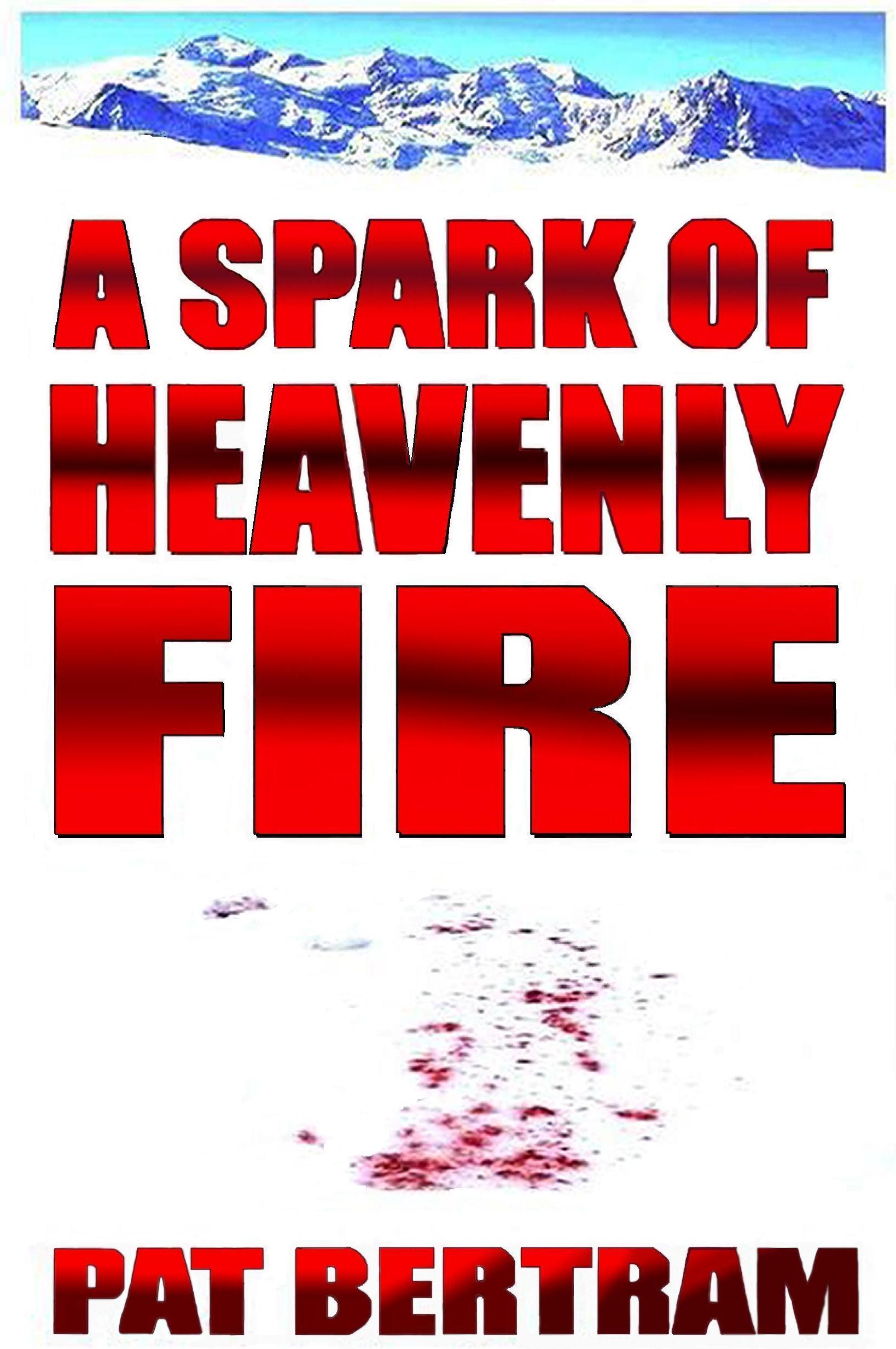
One good use of a sex scene is to show character. One of my favorite scenes in my novel A Spark of Heavenly Fire is when Jeremy King, a world famous actor, sleeps with a woman he just met in a bar.

The sound of weeping woke Jeremy. He turned his head toward his companion and saw one trembling shoulder and a tangle of gleaming hair.

He stretched luxuriously. The red hair hadn’t lied. The girl had been all fire, kindling a passion in him he hadn’t felt in years. The memory of it made him hard.

He reached over and pulled the girl into his arms. He smoothed back her hair and kissed away her tears, murmuring, “Honey,” and “Sweetheart,” and “Dear.”

“I’m such a terrible person,” she said, sobbing.

“Shh. Shh,” he whispered between tiny kisses.

Her arms stole around his neck, and her lips sought his. In a surprisingly short time she bucked beneath him, calling out his name.

You’ve still got it, King, he thought exultantly. Then, after one final thrust, he tumbled into oblivion.

I always liked that scene. It’s not very graphic, but it did what I wanted it to — define the characters

Another good use of a scene is to show the ebb and flow of human connection. For example, you could have three scenes spread throughout the story. In the first scene, perhaps, the man climaxes, feeling connected to the woman. When he immediately goes to sleep, she feels disconnected. In the second scene, perhaps he can’t get it up, leaving him feeling disconnected, but since he tries to make it up to her by cuddling her, she feels connected. In the third scene, they climax together, perhaps cuddle afterward, so they both feel connected.

In addition to the sex, then, you show a pattern of connection and disconnection between the couple (in other words, conflict), you show a whole new perspective of the characters, and you show a change in their relationship. You also end up with a subplot that adds to the overall richness of the story. In other words, you end up with a series of sex SCENES, not just SEX scenes.

add to del.icio.us : Add to Blinkslist : add to furl : Digg it : Stumble It! : add to simpy : seed the vine : : : TailRank : post to facebook

Pat Bertram and Malcolm R. Campbell Discuss the Writer’s Journey

Malcolm: I’ve always liked the concept of life as a journey in which each of us walks as a seeker and/or a hero on a winding route to places we don’t yet know or understand. So, I appreciate the invitation to stop by your blog and talk about the writer’s journey.

Bertram: The mythic journey concept has infinite possibilities, both as a story structure and a metaphor for one’s life as an author. Do you make use of the mythic journey structure in your writing?

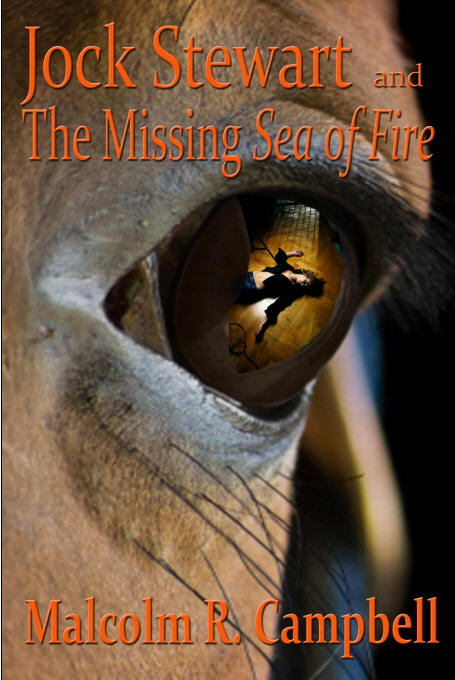
Malcolm: There are mythic qualities in THE SUN SINGER (2004) which is based on the hero’s path or the mythic journey as you call it. Ditto for the as-yet unpublished GARDEN OF HEAVEN. The upcoming JOCK STEWART AND THE MISSING SEA OF FIRE is unrelated to the others and is sort of a mystery/humor novel about a newspaper reporter.

Bertram: I like your image of writers as seekers walking a winding route to places we don’t yet know or understand. I often mention how hard writing is for me, but that’s because I don’t know how to write the books I want to write. I have to learn how to write each one separately as I’m writing them, and each takes me on a different journey.

Malcolm: My long-time mantra comes from author and teacher Richard M. Eastman’s book Style: Writing as the Discovery of Outlook (3rd edition, 1984):

“You don’t begin to write with a complete message or experience already imagined, which is then to be wrapped in language as a means of sending it to your readers. Writing isn’t so much communication as creation. In a real sense, you don’t have an outlook on anything without first having written on it. This outlook comes into being through the dozens of tests, choices, and unexpected chances which turn up as you write on some engaging topic; and most writers agree that the final creation isn’t anything you could have precisely anticipated when you first set pen to paper.”

Bertram: That makes sense. For me, blogging especially is a way of discovering my outlook on whatever it is that I’m writing about.

Malcolm: This has been true for me whether I was writing a national register application, applying for a grant, writing a feature article or working on my novels, The Sun Singer (2004) or Jock Stewart and the Missing Sea of Fire (coming soon). In each case, I began with a body of knowledge and an opinion that were very different by the time I finished writing.

In terms of subject matter, do you find this to be true with your novels? I’m guessing that regardless of what you knew about pandemics, your understanding of them and their potential impact was much different after you wrote A Spark of Heavenly Fire than it was when you were first thinking about writing the novel.

Bertram: My research into pandemics was actually quite extensive, and so was my research into the government’s response to such an emergency (I based my fictional response on actual executive orders that Clinton signed), so there wasn’t much difference in my understanding during the course of the book, but there was a big difference in my thoughts about what they want us to know and what they don’t. When I learned about Pingfan, the Japanese biological warfare installation where they did horrendous experiments on POW’s and nearby villagers, I thought I’d stumbled onto something really explosive. Yet, as happened to a character in A Spark of Heavenly Fire, the very next novel I picked up used Pingfan as a setting. It got me to thinking about the nature of cover-ups, and many of the discussions in the last half of the book took place while I was writing the book.

Malcolm: We often hear that the writer’s journey has an inner and outer aspect. I see the outer aspect plot as it unfolds with a variety of characters, locations, and challenges. You chose Denver and pandemics for A Spark of Heavenly Fire and I chose the Montana Rockies of an alternate universe for The Sun Singer. Thinking of stories based on the hero’s path schema, from Star Wars to The Matrix to Harry Potter, and Lord of the Rings, the emotional, psychological changes and spiritual growth of the protagonist are viewed as more central and important than his thoughts, words and deeds. In mythic terms, the hero undergoes a transformation by undergoing the trials and tribulations of the outer journey. Robert Adams undergoes a transformation in The Sun Singer just as Jock Stewart is changed by the events in Sea of Fire. Do you feel this way about Kate Cummings and Greg Pullman?

Bertram: All the characters in A Spark of Heavenly Fire undergo transformation, especially the women. I always liked Washington Irving’s quote, and wrote the book using it as the theme: “There is in every true woman’s heart, a spark of heavenly fire, which lies dormant in the broad daylight of prosperity, but which kindles up and beams and blazes in the dark hour of adversity.”

Malcolm: In my life, the deepest part of the writer’s journey comes from how the writing changes me. The Sun Singer and the darker, as-yet unpublished Garden of Heaven were each written over a twenty-year period because, other than the plot and theme the reader sees, these novels dealt with integral issues within my own life. I had a lot to work out!

Bertram: I’m beginning to see that what I write is what I happen to be living. My first four books explored the theme of public lies and hidden truths because that’s what I was studying at the time. My current work supposedly explores the theme of safety vs. freedom, but it’s really about change, and there is a lot of change in my life right now.

You have a book that’s going to be published this summer. You once mentioned that you wrote it differently from the first two.

Malcolm: In Jock Stewart and the Missing Sea of Fire, I opened the floodgates and let the words flow. I wrote quickly and it felt like play because I had turned my wisecracking alter ego loose with no chains or boundaries. When I finished writing and editing the material in less than two months, I felt the good kind of tired one feels after an afternoon at a carnival or a day at the beach. This was energizing because, well, I was still capable of play and the benefits of play. Do you feel this “play value” from certain chapters of your novels or from your short stories?

Bertram: I start out playing with ideas and characters, and then when I start writing and trying to make all the pieces come together, I lose that feeling of play. One of the things I am looking for on my journey as a writer is more playfulness. I don’t know if you can you choose where you want to go on the journey, or if the journey takes you where it wishes, but I would like to experience what you did — opening the floodgates and letting the story flow.

Malcolm: I’m curious about your novel in progress.

Bertram: So am I! For a long time I had no real idea what I was writing — I thought I was writing a whimsically ironic apocalyptic fantasy — then all of a sudden one day it dawned on me I’m writing another story of a mythic journey. As my hero tries to find his place in a world that changes by the minute — cities becoming prairie, oceans appearing out of nowhere — he follows the hero’s path, and becomes transformed.

My third book, which is going to be published in a couple of months, was my first mythical journey story. It’s about a young woman who discovers that her grandparents were recently murdered which came as a shock to her because her father claimed they had died before she was born. She goes on a journey to discover who her grandparents were, why someone wanted them dead, and why her father lied to her. I purposely used the mythic template for the book (wanted an excuse to use it, actually), though her mentors and allies aren’t the typical alien or fantasy characters such as wizards, but are aged gangsters and conmen.

Malcolm: My father’s brother was murdered in Fort Collins before I was born. The case was never solved. From time to time, I wonder what happened. Time and distance are part of the challenge of finding details. It would be a journey to dig into it as your character will do in Daughter Am I. I love the concept of going back to figure out the real story.

Bertram: I do, too. All of my books follow the same underlying story: who are we, really? And how do our experiences change us? Which brings me to another question I want to discuss: does a person write a book or does the book write a person?

Malcolm: Your question reminds me of the difference between a layperson’s view of a complex and a Jungian analyst’s view of a complex. People sometimes admit that they have one complex or another. Jungians see it the other way around, saying that the complex has you.

Perhaps the relationship between author and book is the same for many authors, with the book holding a much greater sway over the author’s life than s/he–and especially his readers–may believe. At best, it’s like a marriage, author and book, and the better the book is, the better that marriage has been.

Bertram: That makes sense. I am at a crossroads in my writing life. I’ve used up the theme that haunted me for many years — public lies and hidden truths. Because of my stories, I seem to have come to an accommodation with the reality, and so I no longer have any desire to write about such things. So now I’m waiting for some other . . . passion, perhaps. Or a transformation. Because it does seem as if writing transforms us.

Malcolm: People often talk about defining moments, good and bad. Afterwards, they see themselves and the world differently. Plunging into the deep waters of a work of fiction in progress is also a defining moment. Writers experience what their characters experience whether it’s the horrors of Pingfan or the joy of my protagonist in The Sun Singer when he reaches the summit of a mountain of visions. We polish these scenes until the horror and the joy are shown to the reader in ways that cause the greatest impact. Doing this, I think, changes a writer just as much as a “real life” experience.

Bertram: In The Writers Journey, Christopher Vogler talks about writing as a perilous journey to probe the depths of our souls, and that the struggles we undergo to write, to sell our work, to deal with rejection seem to kill us, but we are resurrected to write again. And to go on another journey. Best of luck with your next journey, Malcolm.

Malcolm: This has been fun, Pat. Of course, I’m not the same person here at the end of the post that I was when we started. But that’s what it’s like being on the path.

See Also:
The Writer’s Journey
Celebrating Five Years of The Sun Singer

add to del.icio.us : Add to Blinkslist : add to furl : Digg it : Stumble It! : add to simpy : seed the vine : : : TailRank : post to facebook

On Writing “Shadows”

My guest today is Joan De La Haye, author of Shadows and co-founder of Rebel e Publishers. Joan writes:

I started writing Shadows a few years ago. I was in the middle of editing and finishing off another book, which is now collecting dust in the back of a drawer, when the idea for Shadows hit me. In fact it did hit me, in the middle of the night, in the guise of a very freaky nightmare.

I decided that since it frightened me, it probably would also frighten others. I couldn’t go back to sleep so poured a glass of wine, switched on my old computer and started writing a story that seemed to come from somewhere else. It was one of those rare moments when the muse strikes and there’s just no arguing with her or in this case him. The story just flowed out of my fingers and onto the keyboard.

I spent a year working on the first draft. This time I took Stephen King’s advice and wrote with the door tightly shut. I’d made the mistake with my previous book, the one that’s collecting dust, and allowed too many people to influence it. As a result it ended up not being my book.

The first draft was only Sarah’s story and written from her perspective. It ended up being way too short, so I added Kevin’s story and tied them together. They fitted together seamlessly, but there was still something missing from the story. I couldn’t figure out what it was until I sent it off to a local publisher. The submissions editor loved it, but said that it was too short and she then suggested that I added some additional scenes.

The additions she suggested were all great and incredibly helpful, but she also got me thinking about another side. One I hadn’t even thought about. Carol’s story was written in a matter of days. I couldn’t focus on anything else until her story was written. Shadows became the interwoven story of three very flawed individuals struggling with their own demons.

I re-submitted it to the local publisher, who then unfortunately didn’t like the extra scenes that they’d requested. It wasn’t what they’d wanted. It took a year from my original submission to the day the publisher passed on Shadows.

Needless to say I was devastated. I’ve never been very good in handling rejection. What I did to get over the rejection can be found on Pat’s other blog: Book Marketing Floozy.

See also: Pat Bertram Introduces Jack, the Torment Demon from Shadows by Joan De La Haye

My First Review!!!!!!!

Steven Clark  Bradley, author of Patriot Acts, has written such a marvelous review of my novel More Deaths Than One, that I can’t keep it to myself. I want to shout it to the world! I knew it would be a good review, because several days ago he messaged me on Facebook. This is a transcript of our conversation:

Steven: (4/19/09 10:37 pm) Hi Pat, I wanted to let you know that I am deeply into your book and it is fantastic. You have a great hook, at least it certainly hooked me! You have a natural talent. I usually read a book really quickly when I am going to post it and review it, but your book has my total attention and it reads very well. If you can get a large number of people to know of it, I know you could have a best seller there. Once again, free of flattery, you are one of the smartest writers I have met. I promise, you’ll love what I write about More Deaths Than One.

Pat: (4/20/09 11:51 am) What a wonderful thing to say! I am thrilled you like More Deaths Than One. You’re one of the very few people who have started reading it, so your encouragement is much appreciated.

The question that has haunted me for months is how do I get a large number of people to know of the book. Perhaps someday I will find the answer. Your review will help, that’s for sure!

Steven: (4/20/09 12:14 pm) The only word that comes to mind is Superb! I read until 1:00 Am last night and forced myself to go to bed! Great work!

I think your characters are so interesting and human. I feel I know them well now. Could we call it “What about Bob?” ;>) you’re a really great writer and no reason why you cannot sell thousands of books.

Steven: (4/22/09 1:21 am) Hi Pat, Sorry I have not written, but I have been busy finishing one great novel . . . written by you! I have already posted a review for your novel. I have not read a book that enjoyable in a very long time. You are a natural. I hope you like what I wrote and every word is the truth. I am happy to be your first posted review on Amazon. That gave me great pleasure. Have a great night and thank you for allowing me to share in the mind of Pat Bertram.

Pat: (4/22/09 12:17 pm) Steven, I am sitting here trying to figure out how to thank you for the fantastic review and the wonderful presentation on your blog, but  am touched beyond words. Still, you deserve the words: thank you. Your review was so well done that even I am now anxious to read More Deaths Than One!

Steven’s review: More Death’s Than One

add to del.icio.us : Add to Blinkslist : add to furl : Digg it : add to ma.gnolia : Stumble It! : add to simpy : seed the vine : : : TailRank : post to facebook

Steel Waters by Ken Coffman — a Sort-of Review

When I first saw the movie Lone Hero starring Lou Diamond Phillips, I wasn’t impressed. It seemed trite — a retelling of High Noon with outlaw bikers set against the background of a wild west show. Yet the next morning, as the story slowly sank into the backwaters of my mind, one scene after another percolated to the surface, and I found myself smiling at the sly humor and wry nuances I was discovering. Lone Hero is now one of my favorite movies, one that gets richer with each viewing.

This retrospective appreciation has happened with a few other films, but I until recently I never read a book that became better with aging. Most go in one synapse and out the other before sinking into oblivion, but Steel Waters by Ken Coffman refuses to stay there.

Coffman’s wry humor and gritty descriptions immediately captivated me, but his hero didn’t. I have no use for characters (or people) who bring about their own miseries. Glen Wilson walked away from his wife and farm for no other reason than because he thought needed to. When he ended up in a Bolivian jail, I didn’t care. And neither did he. He seems to have a great capacity for accepting the status quo until suddenly he wants something else. (Usually without knowing what that something else is.)

Still, Glen Wilson was unique and compelling enough for me to keep reading. He is a mixture of opposites: hard-boiled and quixotic, opportunistic and idealistic, down-to-earth and impractical. And I enjoyed the book.

As Steel Waters percolates, however, I see much that I missed. Sure, Glen Wilson brings about his own predicament, but he is a victim of his own unresolved wants. They pull at him, buffeting him from one wild adventure to the other. The book has an episodic feel to it, but all mythic journeys do, and in the end, that is what Steel Waters is: mythic.

You are familiar with the mythic journey template. It’s the basic format of Star Wars, The Wizard of Oz, The Hunt for Red October. An ordinary person answers the call to adventure. Meets mentors, allies, enemies. Passes tests. Undergoes the supreme ordeal, seizes the reward, and finally returns home — a hero in truth. Or not. Coffman doesn’t follow the format exactly. Glen Wilson may or may not be a hero. He may or may not be changed. This is the beauty of the mythic journey template — it is infinitely changeable without ever losing its power.

So now I have to go back and reread Steel Waters with this percolation in mind, see the layering of the nuances and the humor. I’ll let you know if it’s as good the second time around as it is in memory.

See also: Pat Bertram Introduces Glen Wilson, Hero of Five Ken Coffman Novels

add to del.icio.us : Add to Blinkslist : add to furl : Digg it : add to ma.gnolia : Stumble It! : add to simpy : seed the vine : : : TailRank : post to facebook

Blog Exchange with Pierre Dominique Roustan

As part of my week-long book launch party, Pierre Dominique Roustan and I are exchanging blogs. (You can find me at Writing and Reading.) Pierre writes:

Wow, this is a nice place you got here, Pat. It’s not every day I get to step out of my pad at the “Writing and Reading” Universe and explore. Allow me to introduce myself then! Pierre Dominique Roustan. Yes, you readers out there can say it: it’s a cool name. And that’s because I’m cool. I’m a 2nd generation Hispanic, born in Chicago, Illinois, son to a fiery Puerto Rican woman and a tough-as-nails Nicaraguan man. And, yet, you ask why I have such a French name…. Because my dad’s half-French. Yes. It’s true.

I’ve been writing ever since I remembered being able to walk. It was one of those things you just couldn’t get away from, you know? My parents had me tested for giftedness, and the results came back showing I was gifted. What gift(s) I had? Wasn’t sure. Didn’t care. So much so that I sometimes omit the pronouns when I write. However, my parents cared, teachers cared, others cared; and they saw something in me. It didn’t take me long to realize that I loved to write-poetry, fiction, nonfiction, anything. I just had this need to fill the white space on a piece of paper with some sort of manifestation of my imagination (that’s a mouthful there), so much so that I followed my heart and earned a B.A. in Creative Writing at the University of Illinois at Chicago.

As I stand now before you, I’m a published author. My debut will be released in December. The number of people I could thank outnumber my fingers and toes and the fingers and toes of my family. I’m not exaggerating. I think it’s fair that I give you some insight into my journey of publication, though….

I write urban fantasy and thrillers (and sometimes those two genres go together for me). My debut is a fast-paced thriller known as THE CAIN LETTERS. Look for it. However, it wasn’t my first finished manuscript, nor my first project.

I actually wrote my first ‘story’ at the tender age of 10, I believe. It was about 20 pages long. The next ‘story’ I wrote landed me a 200-pager. I can’t remember exactly how old I was, but I think I was a freshman in high school. I then wrote another story that stretched to 300 pages long. Here’s the real kicker, though; the next project I took on actually pulled in about 540 pages…. 154,000 words, and the best part about that was I, initially, thought that was too short!

Go figure. I guess I was long-winded.

And then came THE CAIN LETTERS. At 74,000 words, it moved fast. I had learned a lot about storytelling, about pacing, about plot, about character. THE CAIN LETTERS is a culmination of all that I’ve learned.

For those aspiring writers out there, let me tell you: following a dream kills. The good thing, though, is your passion for writing makes you reborn every single time. Through every rejection, every bout with writer’s block, every setback, anything getting in your way, that desire to write brings you back up. Every single time. Let me tell you how dreaming kills: I received over 100 rejections for THE CAIN LETTERS, about 97% of them from literary agents. And those 100 rejections were spread over one year, almost to the day. The middle of March, 2008, was when I finished the manuscript. I just signed my contract with Eirelander Publishing about four days ago-without a literary agent. Funny how time flies.

You never know what’ll happen. I just learned to keep trying. It paid off.

That’s all I got for all of you, readers. Give it up for Pat Bertram as well! Put your hands together. It has been an honor being her guest, and do give her the honor of reading her work as well. Feel free to make as many comments as you like! Pat and I will be checking. Questions? Concerns? Coffee? Cupcakes? Oh, and stop by “Writing and Reading”, just to check out the scene, check out the pad, http://writingandreading.today.com. I’ll see you later. Taco Supreme.

Pierre is also a guest on my Dragon My Feet blog. See: The Cain Letters and Interview with Pierre Dominique Roustan.

add to del.icio.us : Add to Blinkslist : add to furl : Digg it : add to ma.gnolia : Stumble It! : add to simpy : seed the vine : : : TailRank : post to facebook

On the Eve of Publication…

After seeing my article, “A Book Reviewer’s Lexicon,” where I mentioned that I’d read 20,000 books, author Ken Coffman asked what books stuck out in my mind as premier ones, what authors consistently pleased me, and which books I’ve read more than once. Off the top of my head, I posted a list of books. Premier? I don’t know that they are, but for some reason, I remember the title and author years — sometimes decades — after finishing them:

Sakkara by Noel Barber
Sarum by Edward Rutherford
The River God by Wilbur Smith
The Left Hand of God by William Barrett
The Balance Wheel by Taylor Caldwell (for many reasons, both good and bad)
Great Expectations by Charles Dickens (because of the irony)
The Creature From Jekyll Island by G. Edward Griffin (non-fiction)
The Gods of Eden by William Bramley (non-fiction)
The Twelfth Planet by Zeccharia Sitchen (non-fiction)
Story by Robert McKee (non-fiction)
most books written by Antony Sutton (non-fiction)
most books written by Stephen J. Gould (non-fiction)
a few books written by Hank Messick (non-fiction)

I wouldn’t necessarily recommend any of these books. I read them so long ago, I was a different person. That I remembered titles and authors shows what an impact they had at the time. In recent years, the only book that had any impact on me was Duma Key by Stephen King. I’m ashamed to admit it, but he did get me with that one. During the past couple of decades, the only other books that have completely pulled me in are The River God and Sarum, both of which I intend to reread. The River God is a story based on scrolls found in an Egyptian tomb, and Sarum is a Michener-type book about the Salisbury Plain in England. I don’t agree with a lot of Rutherford’s history, but the book fascinated me. I want to reread Sakkara if I can ever get it again, though I don’t remember much about it except that it’s a sort of North African Gone With the Wind. (Interestingly, I don’t like Gone With the Wind, though I did when I was very young. I tried rereading it a while back, and got bored.) I did reread Tanamera, (also by Noel Barber, and a sort of Singapore Gone With the Wind) and liked it the second time, too. In fact, I will reread all of Noel Barber’s books some day. Maybe even some of Nevil Shute’s books. And David Westheimer’s.

I read The Balance Wheel during the Vietnam era. Now THAT made an impact — reading a book about the war-to-end-all-wars during a later war. If I ever come across a copy of the book, I’ll reread it. (I lent it to someone who promised — actually swore — that she’d return it but never did.)

One book that got left off the above list is The Killing Gift by Bari Wood. I read it many years ago, and always remembered it. Reread it a few years ago, and it still had the same impact. It’s one of the few I’ve kept to re-reread.

I’ve also kept a copy of The Proteus Operation by James P. Hogan, so I can reread it someday.

One author who consistently pleased me was Kate Wilhelm until she stopped writing science fiction. On my wish list would be a newly written Kate Wilhelm science fiction novel (Are you listening, Kate?), but so far she’s sticking with mysteries. (They’re mostly published by Mira, which seems like hiding a diamond in the mud.)

Interestingly, I started rereading some of the classics, and couldn’t do it. Nicholas Nickleby, Sense and Sensibilty, A Tree Grows in Brooklyn. AAGGHH!!!

For about fifteen years I got so sick of the pap put out by the major publishers that I stuck with non-fiction. Read everything — history, quantum mechanics, string theory, health, archeology, etc, etc, but that got old (or I did) so now I’m back to fiction.

I’ve decided I need to get rich so I can start buying indie books. I feel like the man who kept shrinking and shrinking until finally he shrunk so much he ended up in an entirely different universe, a microscopic one. For me, the publishing world has shrunk so much that the only hope for finding the sort of books that interests me is to find another world. Which I have. The indie world. I guess I’ll just have to get people to send me books to “review.” Yes, that’s it. I’ll tell people I’ll do a review if they send me their book.

I thought that it would bother me posting this for anyone to see — it does say something about me, though I don’t know what — and I half-intended to delete it, but then it dawned on me: this is the eve of my becoming a published author. I’ve approved the proofs, so More Deaths Than One and A Spark of Heavenly Fire will soon show up on Amazon. (They are already listed on the Second Wind Publishing site.) If a list of books I’ve read exposes me, then the books I’ve written will expose me even more.

So, here I am.

For what it’s worth.

add to del.icio.us : Add to Blinkslist : add to furl : Digg it : add to ma.gnolia : Stumble It! : add to simpy : seed the vine : : : TailRank : post to facebook

A Thrill of Books

51miDOzhkHL._SX333_BO1,204,203,200_A murder of crows. A quiver of cobras. A charm of finches. A mischief of mice. A tower of giraffes. A scurry of squirrels. To this list of wonderfully evocative group names, I’m adding “a thrill of books.”

When I was young, I used to love coming home from the bookstore or library with an armful of books. I’d study the covers, read the blurbs and acknowledgments, open the book and sample a few words. It was a special thrill, this stack of new worlds that would soon be a part of me. Where would I go? Who would I meet? What challenges would I have to overcome?

The years did their damage, as they always do. Or maybe the culprit wasn’t the passing years, perhaps it was too many trivial stories, too much homogenization of genre, too much corporate policy infringing on the art. For whatever reason, I lost the thrill of having new books to read, and I thought it was gone forever.

I mentioned in my previous blog that I offered to review a few books, and today I received two of them in the mail: Steel Waters and Toxic Shock Syndrome by Ken Coffman. I looked at the covers (okay, I did more than look, I ran my hand over them, savoring the feel of the brand new books). I read the back covers, the acknowledgements, the author’s signature — “To my friend and fellow writer, Pat Bertram. I wish you all the best with your work.”

Already I could feel the glimmer of that old familiar feeling. Then I opened Steel Waters to the middle and saw, “I looked and smelled like a Bolivian sewer rat.” From comments others had made, I knew this was no homogenized piece of corporate bilge, but right then I felt it — the thrill.

So thank you, Ken, for giving me — one more time — a thrill of books.

See also: Pat Bertram Introduces Glen Wilson, Hero of Five Ken Coffman Novels
On Writing: Style and Cadence by Ken Coffman
A Cheapskate Guide to Creating a Publishing Company by Ken Coffman

***

Pat Bertram is the author of the suspense novels UnfinishedMadame ZeeZee’s Nightmare, Light BringerMore Deaths Than OneA Spark of Heavenly Fireand Daughter Am IBertram is also the author of Grief: The Great Yearning, “an exquisite book, wrenching to read, and at the same time full of profound truths.” Connect with Pat on Google+. Like Pat on Facebook.

The Wolf’s Side of the Story

I bet you didn’t know the wolf had a story; he’s always been the villain. But is he as black as he’s been portrayed? I just read a marvelous story by Laurie Foston, an American author of science fiction. She posted it in on her blog, and there it sits for all to read. “The Wolf’s Side” by Foston starts out:

They call me the big bad wolf. They have been calling me that forever, since that meanie, “Little Red Riding Hood”, and her grandmother told a story about me that was not true. But, as the old saying goes, “What goes around, comes around!”

I don’t have any reason to tell you a lie. I’m a good wolf.

One beautiful spring day while I was lying in a bed of wild flowers, safely guarding some nearby sheep when I heard a voice call to me.

“Good morning, Wolf!”

I turned my head in the direction of the voice and saw Little Red Riding Hood standing close by holding a basket on her arm. She was covering her face with her hood. I didn’t know why she was doing that then but now I realize she was just trying to hide the smirk on her face.

“Good morning!” I answered. I was honestly glad to see her. I picked a quick bouquet of flowers and put them between my fangs. Then I trotted over to her and dropped them into her basket. I had only the best of intentions.

“Where might you be headed today?” I asked, just to be friendly, of course.

“Oh, my grandmother is pretending to be sick again. So, I have to take her some cakes and honey. My mother told me to go straight to Granny’s house but when I saw you lying there among those flowers, it gave me an idea. I would rather eat these cakes, then lie down and go to sleep.” She said angrily.

How can you not love this story? If you’d like to read the rest of it, you can find it here: The Wolf’s Side.

add to del.icio.us : Add to Blinkslist : add to furl : Digg it : add to ma.gnolia : Stumble It! : add to simpy : seed the vine : : : TailRank : post to facebook