Countdown to Publication

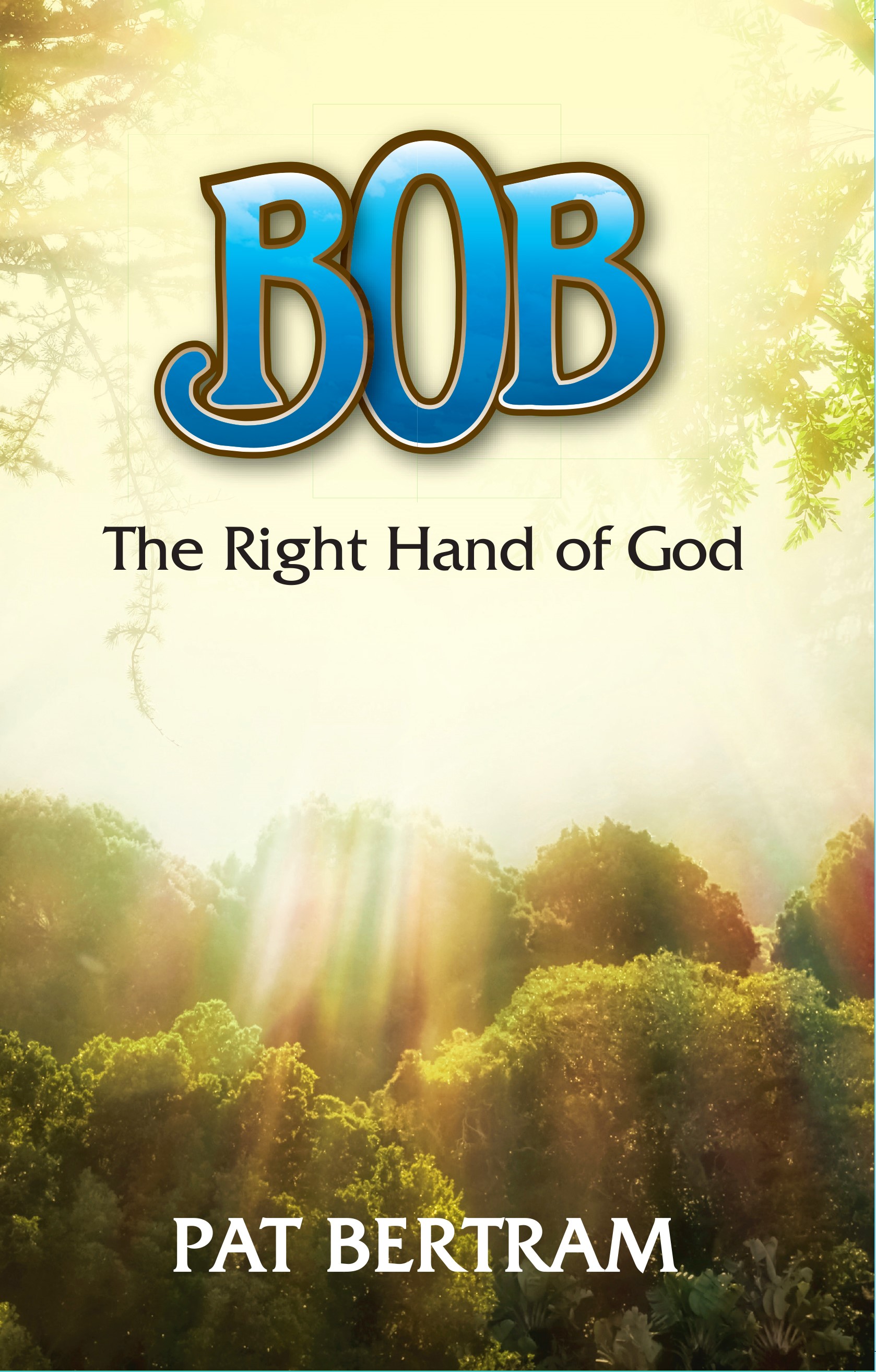
It’s only ten days until the publication of my new novel, which will be published on October 20, 2020. If you would like to be notified by email when the book is available, click here: Bob, The Right Hand of God, sign up for email notifications, and Amazon will let you know the minute it is for sale. Meantime, here are a couple of brief excerpts to whet your interest:

The screen went black.

“Something must be wrong with the cable,” Isabel said. “I’ll call them tomorrow.”

After thirty seconds of whistles, hums, and buzzes, the picture came back on. Instead of the anchorperson, the head of a gnomish man with a round, bespectacled face, a bald pate, and a receding chin filled the screen.

“I am Bob, the Right Hand of God. As part of the galactic renewal program, God has accepted an offer from a development company on the planet Xerxes to turn Earth into a theme park. Not even God can stop progress, but to tell the truth, He’s glad of the change. He’s never been satisfied with Earth. For one thing, there are too many humans on it. He’s decided to eliminate anyone who isn’t nice, and because He’s God, He knows who you are; you can’t talk your way out of it as you humans normally do. For another thing—”

Isabel clicked off the television and stood up. “We must have missed the news.”

Clutching the remote, she stalked to the guestroom and shut the door.

Chet continued to stare at the darkened screen. He would have liked to see more of Bob—looked like it could have been an interesting science fiction movie—but dealing with Isabel exhausted him. He didn’t have the energy to get up and manually turn the television back on.

[The next day, John the butcher stopped by Chet’s pet store with entrails and such for the reptiles. They talked for a bit, then John started to leave, hesitated, and turned back.]

“Does it feel a little strange to you today?”

“Strange how?”

“I don’t know. Just a creepy feeling I have, like a storm’s coming.” John twitched his shoulders. “Probably nothing. Maybe I let that Bob thing get to me.”

“What Bob thing?” Chet asked.

“Some guy pulled an April Fool’s prank last night. Hacked into the television signal. Claimed he was The Right Hand of God. Silly, but I’ve been feeling creepy all day.”

“I thought it was a movie.”

“Nope. A friend of mine at Channel Ten told me they lost the signal for about five minutes.”

Chet shivered. “Now I’ve got the creeps. Thanks a lot.”

And so the saga begins . . .

***

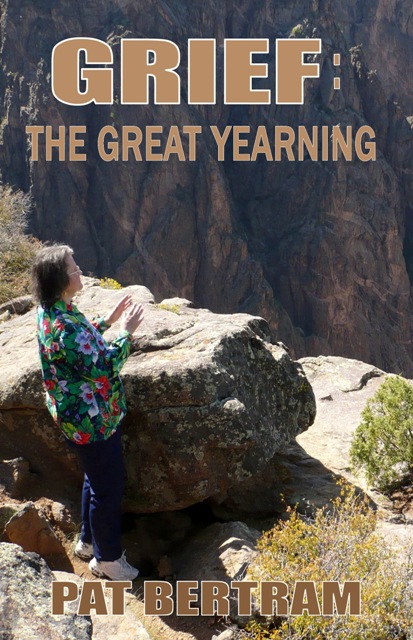
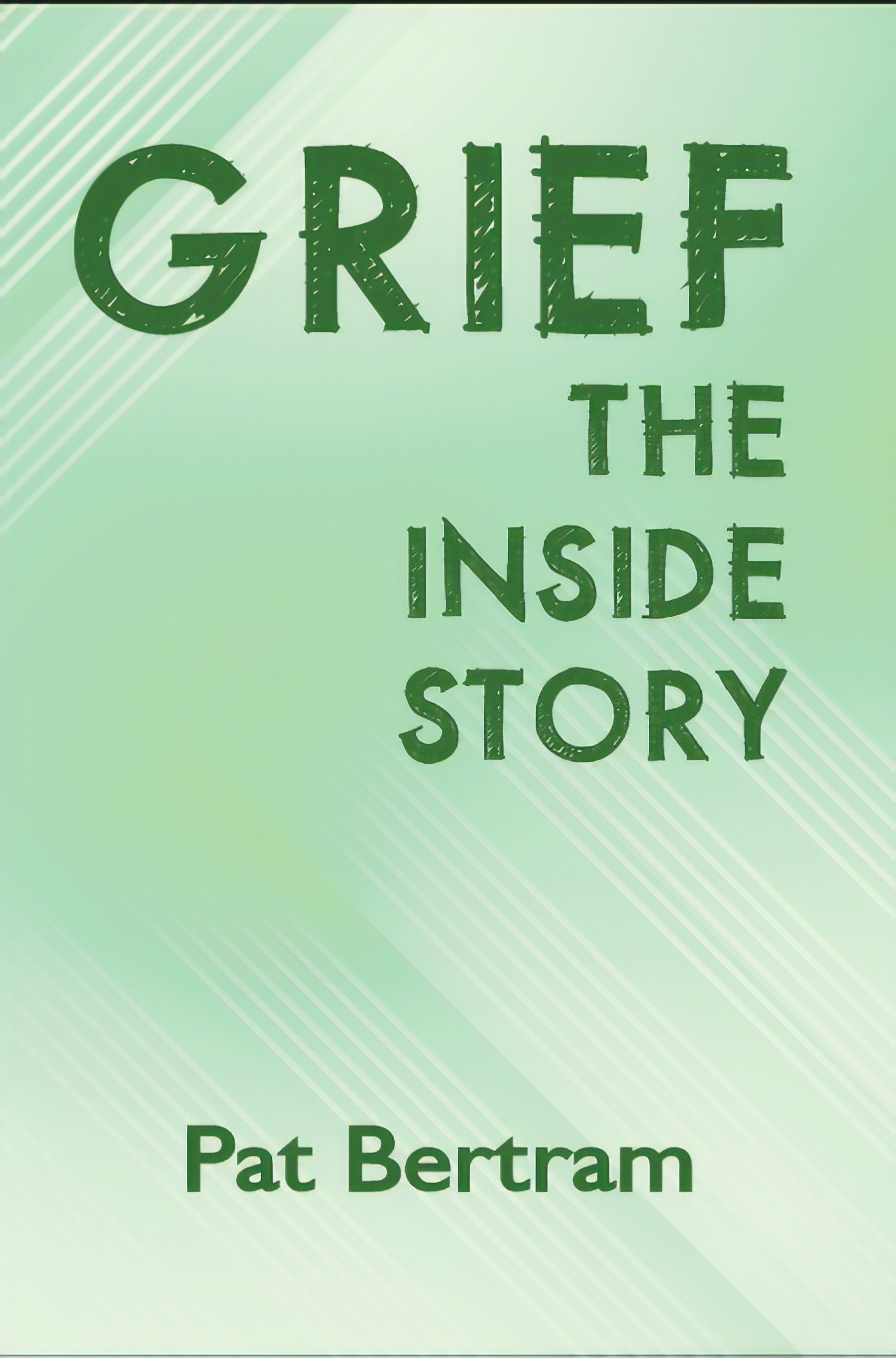
Pat Bertram is the author of Grief: The Inside Story – A Guide to Surviving the Loss of a Loved One. “Grief: The Inside Story is perfect and that is not hyperbole! It is exactly what folk who are grieving need to read.” –Leesa Healy, RN, GDAS GDAT, Emotional/Mental Health Therapist & Educator

Oh, Look! My Book!

My new novel will be published on October 20, 2020. If you’d like to be notified by email when it’s available, click here: Bob, The Right Hand of God, sign up for email notifications, and Amazon will let you know the minute it is available.

All Chet Thomlin wants is to be left alone to care for the abandoned and neglected animals at his store, Used Pets, but his obnoxious customers and clinging mother make life miserable. And nothing ever seems to change.

On April Fool’s day, a gnome-like little man appears on television. He introduces himself as Bob, the Right Hand of God, and says that as part of the galactic renewal program, God has accepted an offer from a development company on the planet Xerxes to turn Earth into a theme park.

Chet laughs at the prank, but then bizarre things happen. Carrier pigeons return, millions of them, darkening the sky as they hadn’t done for over a hundred years. His mother and her entire subdivision are wiped off the face of the earth. And his friends disappear.

On Easter Sunday, a bright light appears, and Bob tells the remaining population of Denver that if they enter the light, they will be safe from the reconstruction zone. Chet watches people enter one by one, but he refuses to step forward, thinking that he’d rather have his freedom than to be in a dubiously safe place.

The light fades, and Chet gets what he wanted. He is left alone. Well, except for Bob. Bob won’t let him be. Bob calls Chet on his now defunct cellphone, taunts him, plays with his senses. Being chosen by The Right Hand of God is no fun!

Even worse, Chet gets more change than he can handle. Plumbing and all other signs of civilization vanish. Denver becomes a prairie of blue flowers that sweep into an inland sea where a prehistoric monster lives. Volcanoes grow at his feet.

And Chet has become prey.

Maybe going into that mysterious light wouldn’t be so bad after all . . .

***

Pat Bertram is the author of Grief: The Inside Story – A Guide to Surviving the Loss of a Loved One. “Grief: The Inside Story is perfect and that is not hyperbole! It is exactly what folk who are grieving need to read.” –Leesa Healy, RN, GDAS GDAT, Emotional/Mental Health Therapist & Educator

Men’s Romance Novels

Sometimes I think best-selling authors have no idea what makes their books sellable. I’m sure they figure they can throw anything out there, and their name will do the rest, which, truthfully, is often the case. But until they get to where their name is the selling point? Not a clue.

I’m reading a whole library’s worth of books by a guy who wrote adventure novels. The adventures are all thrilling, of course, and there is always a matter of heroics — generally a last-minute saving of the world from some calamity that will wipe us all out. The glue that holds all these books together is the romance. Not the male/female sexual romance, but the male bonding sort of romance. I understand that men — and men writers — don’t think this bonding has anything to do with romance, but it is a special sort of romance, often deeper and more meaningful than the romances conceived by women. The relationships in women’s books so often revolve around passion, feelings, family, while the relationships in men’s books revolve around loyalty, commitment, connection. Men might call it bonding, but it’s really a sort of romance.

These men characters respect each other, rely on each other, save each other’s lives and are more involved with their quest (and hence each other) than with the women they meet. I used to think the dismissal of women as secondary characters was a sort of dismissiveness of women in general, when in fact, it’s all about the romance of the men. The bonding. The adventures they share.

It’s this romance — not just the romance of the adventure, but the romance of the shared bonds — that make such books enduring (and perhaps even endearing).

But what is foremost in the author’s mind, and maybe even readers’ is the thrill of the adventure, and though they might feel the “glue” of romance that holds the story together, they don’t stop to dwell on it. (Unless you’re a person who’s isolated from the world because of a pandemic, and the library is closed, and all the person has to read are these books borrowed from another reader.)

So, moving on to a new adventure series by the same author, an adventure that should be romantic, involving as it does a loving married couple, but falls short of romance and adventure. The deep loyalty is missing. The unswerving trust is gone. (The husband always tells the wife to “wait here,” and after a bit of back and forth, he gives in. You’d think after years together, the automatic trust, commitment, and wordless communication would be there.) Even worse, the underlying importance of the adventure is gone.

In the first series, as I said, the adventurers were always on a quest to save the world from some enormity, and so any shenanigans, such as burglary and abduction and murder are minor infractions by comparison, and are usually done as a reaction to what the evildoers have done to them. But in the second series, the couple are merely curious. There’s no reason for them to burgle or kill except for their own ends. Nor is there any reason for them to be the instigators of such crimes. It helps no one, saves no one, and is only justified in the story because the victim is even worse than they are. (Though any money made from the treasures is donated to a worthy cause.)

The second series might sell well — after all, there is that famous name, even though it seems that most of the books were written by someone else — but they fall flat. Luckily, I have only two of these books and am almost through with the second. Whew!

I keep calling this the second series, though it might be the third or fourth. Apparently, the author, although now deceased, has a whole industry going with all sorts of people writing his books. But none seem to have the power and romance of the first series. Does anyone else notice? Probably not.

Would anyone else call them men’s romance novels? I doubt it. But that’s what they are.

***

Pat Bertram is the author of Grief: The Inside Story – A Guide to Surviving the Loss of a Loved One. “Grief: The Inside Story is perfect and that is not hyperbole! It is exactly what folk who are grieving need to read.” –Leesa Healy, RN, GDAS GDAT, Emotional/Mental Health Therapist & Educator

Skullduggery

I’ve been reading a series of spy/crime/adventure thrillers. Many of the novels revolve around a race for finding treasure, and all of them incorporate plot devices such as torture, murder, and theft on a grand scale.

While reading this latest book that involves discovery and theft of Incan artifacts going back to Francis Drake days, it suddenly dawned on me that I can’t relate to these folks at all. It might make me seem incredibly naïve, but I simply don’t understand them and their need — their greed — to take things for themselves that belong to others. To steal from a museum so that only they can see the priceless artifact. To kill people if necessary, in order to possess something no one can ever know they own.

I realize there are such people in the so-called real world. In fact, most of the great fortunes were founded by those who became known as “robber barons,” emphasis on “robber.” Even today, no one can make a huge fortune without some sort of skullduggery that skirts legality. Lesser fortunes also often come from some sort of crime before the owners of the fortune go legitimate. It must take an incredibly narcissistic person, as well a sociopathic personality to see nothing, to feel nothing but one’s own desires.

I truly cannot relate to such self-absorption and criminal tendencies, though without ever condoning the crimes, I can sort of understand those who steal on a very small scale.

Supposedly there have been several break-ins and some theft a few blocks from here. The discussion of these break-ins revolves around the myriad pot shops in town (some people say the shops contribute to crime, others say they don’t, though I have a hunch what side of the issue a person is on depends on whether or not the person partakes of the product.) Other people blame the nearby coalition for the homeless where people from all over the state (and even other parts of the country) come to get off whatever substance they are on and find a way back to the homed population. This facility has a distinct effect on the town because people who can’t or don’t want to stick with the program wander away and instead of going back where they come from, they hang around here and add to the problems of this already beleaguered town. Not only do they contribute to the crime rate, but they are also a drag on the city’s limited resources.

These people are desperate for food or a fix, and they are looking for something to sell to sate their elemental needs. Although I’ve never been in that situation, I can understand. Sort of.

I don’t understand, can’t understand, using force to take what one wants, on any sort of scale, especially when it comes to being held up at gunpoint, as happened to me once.

People always say that our differences are what make life interesting, but I don’t agree when those differences revolve around criminal behavior. I think life would be plenty interesting without greed and murder and theft and even unkindness, though I suppose, for most readers, thrillers would be a lot less interesting without skullduggery.

***

Pat Bertram is the author of Grief: The Inside Story – A Guide to Surviving the Loss of a Loved One. “Grief: The Inside Story is perfect and that is not hyperbole! It is exactly what folk who are grieving need to read.” –Leesa Healy, RN, GDAS GDAT, Emotional/Mental Health Therapist & Educator

Big Excitement for the Day

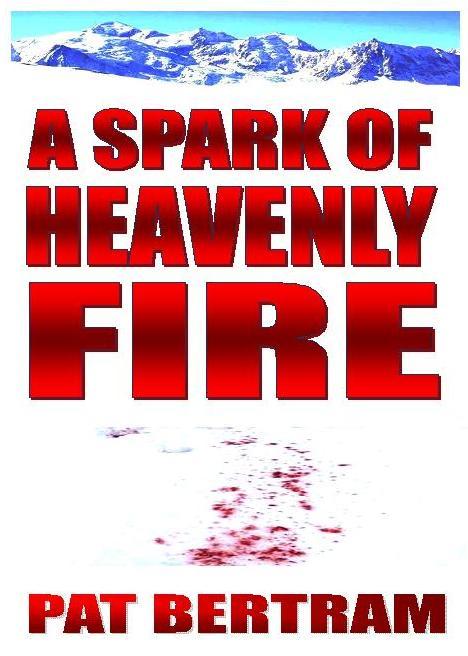
I’m reading a book about a consortium that is about to release a virus that kills with acute respiratory distress. The victims gush blood and die. I was thinking about this book in relation to what is going on today, but it sounds a lot like my own novel, A Spark of Heavenly Fire, which was published the year before this one.

In my book, the disease is full-blown, and Colorado — where the disease originated — is quarantined to keep the pandemic in check. In the book I’m reading, there have only been a few test cases, and the consortium has yet to unleash the virus on the world. They’ve been working for the past ten years on a cure, and after releasing the virus into the general population, they are planning on holding the cure hostage until their demands are met. Or maybe they’ll just spring into action with a cure, which would then afford them millions in sales and stock. Either way, it’s a planned pandemic for money.

A couple things about the book interest me more than the possibility of that scenario being played out in the world today. One, the book is a Robert Ludlum book, which is why I started reading it. Not that I like his books. The truth is, I’ve never been able to get past the first chapter or two of any of his books, but I figured this was a good time to struggle through one of his books since I have nothing better to read. Only it’s not a Robert Ludlum book. Oh, it has his name on the cover, but it was written eight or nine years after his death. A true ghost writer!

The other thing that interests me is the hero took a transport from Andrews Air Force Base that landed in the Southern California Logistical Airport near Victorville before taking a helicopter to Ft. Irwin.

So many books, movies, television shows take place in Southern California or touch on the area in some way, and now, having lived there for so many years, I know what these places are. I remember watching a CSI show many years ago, and somehow the Las Vegas crew ended up in Victorville. I’d never heard of the town, hadn’t a clue where it was, and then, in a strange twist of fate, there I was. Well, not Victorville itself, but the Victor Valley area.

And several times I happened to drive the Air Expressway that took me past the turn-off to the Southern California Logistical Airport.

Not that it matters — I have read thousands upon thousands of novels where I couldn’t correctly place the story (and didn’t care) but still, it’s fun to know where places are. And for some reason, Victorville shows up a lot in stories — perhaps because of the nearness to the desert wilderness where bodies can disappear forever. But then, how to explain Bear Lake? That’s another place that often shows up in books. In fact, it was mentioned in the book I just finished, whatever that was. (Obviously, the story was utterly unmemorable. See why I was willing to take a chance on a Ludlum book?)

So, that’s the big excitement for the day — coming across “Southern California Logistical Airport” in a terrible book by a writer who is published under the name of a dead author I never liked.

***

Pat Bertram is the author of Grief: The Inside Story – A Guide to Surviving the Loss of a Loved One. “Grief: The Inside Story is perfect and that is not hyperbole! It is exactly what folk who are grieving need to read.” –Leesa Healy, RN, GDAS GDAT, Emotional/Mental Health Therapist & Educator

Maybe Rereading “Dune”

I’m rereading Dune. At least, I think I’m rereading it. I’m beginning to wonder if I ever read it at all until now.

I remember thinking I liking the book when I was young, and several times over the intervening years I’d end up with a copy and try to reread it, but I could never get into the story again. Admittedly, when I was young, I had a lot more patience for books that were mostly descriptions of day-to-day living, whether on this planet or another (the first 150 pages of Dune seem more like setting the scene than the beginning of a book) and I lost that patience in later years. It’s also harder to keep whole books in my head now, so that adds to my impatience with dragginess.

It’s possible the book gets better (I’m not even halfway through), and it’s possible it has a great ending that would make me feel good about the book. And it’s possible that something in the latter half will strike a chord of memory, but so far, there isn’t so much as a ding. Even if I can’t remember books I read decades ago, if they impressed me in some way, I have some sort of lingering impression of them. Most books, of course, leave no impression — there is simply no “there” there. I’m not sure where Dune would fit in the book spectrum because it is different enough that I should remember something or hear a faint echo of recognition in the back of my mind. But nope. Nothing. I can’t even figure out why I would have read it. I have never liked authors who have to create incomprehensible names for people, things, and places. The strange spellings seem to take up space in my brain that would normally be used for following the story.

Even more confusing, I see the cover in my mind’s eye — a reddish cover with a fellow trudging across a wide expanse of dunes. I spent some time looking at Dune covers today, and there is not a single one of them that looks familiar. (Except for the one I bought at a library book sale a while back and redonated unread.)

It makes me wonder what book I did read. It’s possible I read some other book and misremembered it as Dune. It’s possible I misremembered the cover. (If there even was a cover image. It could have been a rebound book from the library.) And I could have found the book completely unmemorable.

Too bad there’s no way to rewind a memory to see the truth of it.

What I am seeing is a lot of similarity to The Wheel of Time series, at least in small things — the witches, the truthsayers, the uncanny powers, the manipulation of people and events. Of course, these are all fairly common archetypes and scenarios for the hero/savior story, but people often compare The Wheel of Time world to The Lord of the Rings, and I don’t see it at all. (But then, that’s another iconic series I haven’t been able to slog through, so I could have missed any similarity.)

One thing that amused me — in a book that uses so many strange-sounding names and words, at one point, Frank Herbert describes someone as having olive skin. Couldn’t he have come up with a more interesting word? I have always hated “olive” applied to skin because it takes me out of the story and makes me wonder what color the character is. I still remember the first time I came across that descriptive word. I couldn’t figure out if the character had green skin or black. It took years before I realized the word referred to the color of the inside of a black olive.

So, I can remember being puzzled by olive skin, but I can’t remember anything about a book I thought I read and thought I liked.

The life of a reader does get bizarre at times.

***

Pat Bertram is the author of Grief: The Inside Story – A Guide to Surviving the Loss of a Loved One. “Grief: The Inside Story is perfect and that is not hyperbole! It is exactly what folk who are grieving need to read.” –Leesa Healy, RN, GDAS GDAT, Emotional/Mental Health Therapist & Educator

The Wheel of Time

Since I finished reading all my emergency books, I’m reduced to reading the books in my Nook, books I’ve already read. Although I don’t generally like rereading books, Robert Jordan’s massive Wheel of Time series seems to be the perfect place to go to hide from The Bob.

The books in the series are not stand alone books — you cannot understand one book without the previous books — which means that in effect the WOT series is single novel of over four million words broken up into fifteen parts. In fact, the series itself is not stand alone — there are all sorts of books, blogs, discussion forums comprising billions of words where readers try to figure out the truth of the story.

Not only is the scope of WOT almost impossible to fathom, but Jordan had a bad habit of putting in bits of deus ex machina that he refused to elucidate in the work itself, companion books, or even interviews. Perhaps he himself did not know what those bits meant or maybe he simply wanted to be mysterious for mysterious’s sake, to create a legacy of people debating worthless points. Which they do. Ad infinitum. Jordan also refused to explain what to him were obvious story points, such as who killed a certain bad-guy-turned-maybe-good-guy, but again, dozens of forums present various theories because that obvious point was obvious only to he who created it. At least in this particular case, the murderer was revealed in an appendix several books after the fact. Jordan also spent thousands upon thousands of words on red herrings and subplots that go nowhere, but sometimes used a single sentence buried in huge blocks of description to bring out a major point. Yikes.

And wow, is there description. Tons of description. Whenever food is mentioned, I find myself skipping a paragraph or two. When clothes are mentioned, I skip a couple of pages. And sometimes, when there is zero action or character development, such as in a few very clean bathing scenes, I skip the whole dang chapter.

I also tend to skip over some of the women’s parts. Although Jordan mostly develops his three main male characters into individual heroes, each with his own mythic journey, he turns his three main women characters into insufferable caricatures, indistinguishable from one another except for a few annoying character tics. At first I thought he had a problem with women, but his secondary and tertiary female characters are often well-defined or at least not brats and prigs who believe, without giving a single shred of thought to the forces the other characters face, that they know the best for everyone.

Even after investing so much time in reading and rereading the books, I’m still not sure I like the series — although the theme seems to be about the importance of having choices, most of the characters, both good and evil, go out of their way to force others to their will. Too much torture and punishment for my taste. It seems to me that in a world where everyone is free to choose (or at least what the pattern created by the wheel of time allows them to choose), it’s just as easy to find someone to willingly do your bidding as to waste the effort forcing someone to do it. (Oddly, the three main males do turn others to their will, but without wanting to or without even trying.)

But despite my ambivalence, I keep rereading. The scope of the story is utterly astounding. In the story, during the so-called age of legends, people wielding the power that turns the wheel of time, broke the world. Mountains grew where no mountains had been, waters flooded lands, green spaces became deserts. And humans started over. Again.

Interestingly, breaking the world is exactly what Robert Jordon did when he wrote his series — he smashed our world into bits, mixed it all up — legends and traditions; countries and races, clothes and customs; myths and mysteries, religions and philosophies — and put it all back together into his own creation.

I wonder what it would be like to create such a massive fiction world, a world that reflects our world but not. A world that reflects our values but not. A world that exists only in our minds but not. Or, rather, maybe not. If it exists in our minds, it’s possible Jordan’s world exists for real, sort of dream world we all created together, just as philosophers and physicists say we do with the real world.

Assuming there is a real world.

Maybe we’re all writing the story of our world as we live it, creating with our hive mind the very fact of our existence. If we all stopped believing in it, would it disappear as if we were closing the cover of a novel? Would we disappear if we stopped believing all the things we see and hear except with our own eyes or ears? Would we be different if we simply refused to accept the role that has been forced on us?

Maybe, as I study Jordan’s world, I’ll learn how to help build a better version of our own — how to write it or right it, either one.

Meanwhile, the wheels of time keeps turning . . .

***

Pat Bertram is the author of Grief: The Inside Story – A Guide to Surviving the Loss of a Loved One. “Grief: The Inside Story is perfect and that is not hyperbole! It is exactly what folk who are grieving need to read.” –Leesa Healy, RN, GDAS GDAT, Emotional/Mental Health Therapist & Educator.

Free E-Book!

For the next month, A Spark of Heavenly Fire will be available as a free download from Smashwords in all ebook formats. You can find the book here: https://www.smashwords.com/books/view/1842. Be sure to use the coupon code WN85X when purchasing.

I figure that by the time the world gets back to normal — or as normal as it will ever get — people will be sick of the very word “quarantine,” and won’t want to have anything to do with novel diseases or diseases in a novel, which is why I giving it away now. I hope I’m wrong about people not wanting to read about devastating diseases after this is all through because A Spark of Heavenly Fire is more than a story about a pandemic — it’s the story of survival in the face of brutality, government cover-up, and public hysteria. It is also a story of love: lost, found and fulfilled.

Washington Irving wrote: “There is in every true woman’s heart a spark of heavenly fire, which lies dormant in the broad daylight of prosperity; but which kindles up, and beams and blazes in the dark hour of adversity.” As I read these words several years ago, I could see her, a drab woman, defeated by life, dragging herself through her days in the normal world, but in an abnormal world of strife and danger, she would come alive and inspire others. And so Kate Cummings, the hero of my novel A Spark of Heavenly Fire was born. But born into what world?
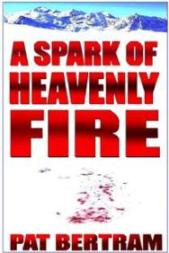
I didn’t want to write a book about war, which is a common setting for such a character-driven story, so I created the red death, an unstoppable, bio-engineered disease that ravages the world, but mostly Colorado where the disease originated. Martial law is declared, rationing is put into effect, and the entire state is quarantined. During this time when so many are dying, Kate comes alive and gradually pulls others into her sphere of kindness and generosity. First enters Dee Allenby, another woman defeated by normal life, then enter the homeless — the group hardest hit by the militated restrictions. Finally, enters Greg Pullman, a movie-star-handsome reporter who is determined to find out who created the red death and why they did it.

Kate and her friends build a new world, a new normal, to help one another survive, but other characters, such as Jeremy King, a world-class actor who gets caught in the quarantine, and Pippi O’Brien, a local weather girl, think of only of their own survival, and they are determined to leave the state even if it kills them.

The world of the red death brings out the worst in some characters while bringing out the best in others. Most of all, the prism of death and survival reflects what each values most. Kate values love. Dee values purpose. Greg values truth. Jeremy values freedom. Pippi, who values nothing, learns to value herself.

It sounds like us, today — the crisis crystalizing our lives and showing us what we value most.

Click here to get your free ebook: https://www.smashwords.com/books/view/1842. Be sure to use the coupon code WN85X when purchasing.

Below is the video trailer for A Spark of Heavenly Fire.

***

Pat Bertram is the author of Grief: The Inside Story – A Guide to Surviving the Loss of a Loved One. “Grief: The Inside Story is perfect and that is not hyperbole! It is exactly what folk who are grieving need to read.” –Leesa Healy, RN, GDAS GDAT, Emotional/Mental Health Therapist & Educator.

The Bob

In the following scene from A Spark of Heavenly Fire, my novel about a novel disease, investigative reporter Greg and his editor Olaf are talking about an article on the pandemic Greg is hoping to write.

—-

“How’s the research coming, Greg?” Olaf asked, a shade too heartily.

“I feel as if I’m drowning in paper.”

“So I see,” Olaf said, laying a hand on the stack of articles. “Mind if I look?”

“Help yourself. They belong to the newspaper.”

Olaf settled himself in his customary chair with a handful of the papers. A minute later, he raised his head.

“How do these guys get anything printed? If my reporters turned in work as incomprehensible as this, they’d be out of here so fast they’d think they were flying.” He glanced at the papers and shook his head. “Even the titles are incomprehensible. ‘Imitating Organic Morphology in Micro-fabrication.’ I don’t even know what that means.”

“Me neither,” Greg said, thinking if he had to wade through this sort of stuff to learn about the red death, the earth would fall into the sun long before he read half of it.

Olaf tossed the sheaf of papers back onto Greg’s desk. “Better you than me.”

“What do these guys do?” Greg asked. “Take a course in obfuscation?”

“Probably. Convoluted writing and obscure terms are a way of intimidating the uninitiated, keeping the profession closed to non-scientists, and adding to the scientific mystique. Just think, if diseases had names like Bob and Carol and Ted and Alice, doctors wouldn’t make anywhere near the amount of money they do now.”

Greg laughed. “That’s an idea. They do it for hurricanes, why not everything else?” He mimed seizing the phone and dialing. “Mr. Olaf? I can’t come in today. I’ve got the Bob.” He hung up his imaginary receiver and looked inquiringly at his boss.

Olaf nodded. “Works for me.”

—–

And it works for me. From now on, I’m going to call this current novel virus “The Bob.” No insult meant to any Bob living or dead, but I need a different name to call this disease because I am already sick of seeing its name wherever I go on the internet and hearing it out in public. And anyway, I named the disease many years ago back when I didn’t know any Bobs.

***

Pat Bertram is the author of Grief: The Inside Story – A Guide to Surviving the Loss of a Loved One. “Grief: The Inside Story is perfect and that is not hyperbole! It is exactly what folk who are grieving need to read.” –Leesa Healy, RN, GDAS GDAT, Emotional/Mental Health Therapist & Educator.