Being

Do not adjust your screens. This is not a test. I am really here. Well, virtually here. As much as I used to enjoy blogging every day, I now enjoy not blogging. I like not having to pay attention to all the thoughts parading through my mind, like not having to pick the most salient one or the most provoking one or the most emotionally driven one to explore in a blog post. I’m just letting the thoughts go without worrying about developing them into something worth writing about. I’ve even stopped looking for answers to life’s big questions (and small ones), stopped looking for a better way to be or directions of where to go from here. I am just being here.

I am just . . . being.

Socrates was wrong, at least for me. The unexamined life is worth living. It might not be an exciting or challenging or even worthwhile way to live, but it’s working. I certainly have had enough trauma in the past couple of decades to last me a lifetime. In a way, the hits keep coming – death has recently claimed good friends (and acquaintances who were on their way to being good friends) — but these losses pale in comparison to the devasting grief I experienced after Jeff died. Nothing compares to that, which makes it easier to accept what comes — and goes — in my life.

On a completely different scale of losses, my sodded lawn died this summer. Even though temperatures were five to ten degrees cooler than normal, the sun was actually more scorching, and it burned plants that normally do well here, like the new England asters. My poor grass didn’t stand a chance. For some reason (good luck, perhaps) I did well — and was well — this summer, so I was able to work two or three hours a day digging up the dead lawn and the Bermuda grass that grew in its place.

It was good to have the work, because the summer was hard. Too many insect invasions — miller moths, mosquitoes, grasshoppers that gnawed all the leaves and even some branches off a couple of my young trees and old bushes. Too many wind and hailstorms, one that destroyed most of my flowers.

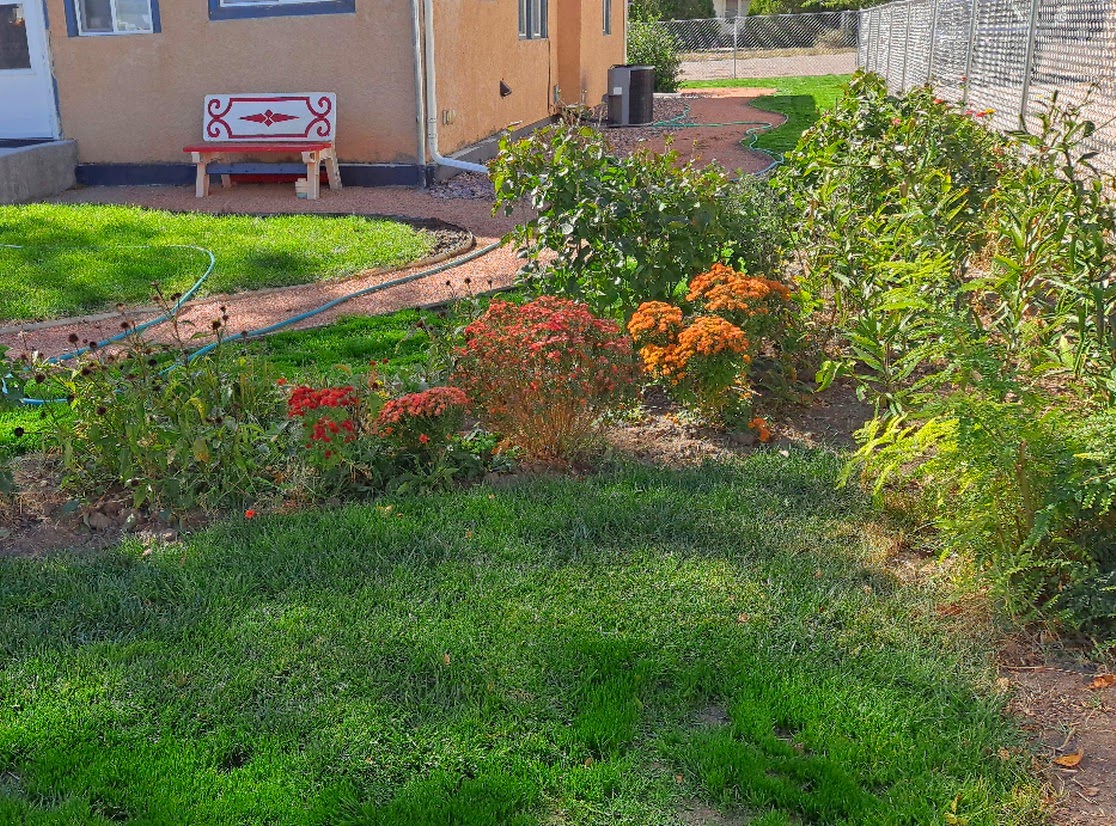
But now we are into fall. I have learned over these years of trying to turn my yard into a mini park, that of all the various seasonal gardens — from the first tulips in spring to the wild growth of weeds in summer to the colorful fall flowers — I prefer the fall garden. Nothing of course, beats the hopeful sign of those early spring blooms, but by fall, weeds that have been cleared out have stopped growing back, mounds of chrysanthemum greenery have become lush mounds of color, the grass (what there is of it) is still green. The air is still, the threat of devastating hailstorms is past, and the skies are a deep, deep blue. Even better, though hordes of grasshoppers are still here, they have stopped eating everything in sight.

I seem to have a lot of extra time right now — the new grass I planted is looking good, all the plants that needed to be transplanted have been taken care of, and it’s too early to sow wildflower seeds — so I am not spending much time in the garden and have not yet developed a new routine. But there are always books to fill in the time, as well as an occasional movie or a more than occasional game on the internet.

The housework I neglected all summer has even been done. The place is clean! Yay!

And, luckily, I am still doing well. I hope you are too.

***

Pat Bertram is the author of Grief: The Inside Story – A Guide to Surviving the Loss of a Loved One. “Grief: The Inside Story is perfect and that is not hyperbole! It is exactly what folk who are grieving need to read.” –Leesa Healy, RN, GDAS GDAT, Emotional/Mental Health Therapist & Educator.

Digging This Summer

The slang term “to dig” means to understand, approve of, or enjoy something, with the connotation that one is really into whatever it is that one is digging.

The title of this piece might make it seem as if I am really into this summer, really enjoying it, but that perception is far from the truth. Although for the most part, this summer has been cooler than the past few summers by about five degrees or so, it is still horrendously hot, with high temperatures hovering around 99 degrees. Despite that, it’s been harder keeping things alive this year — the sunlight seems even more piercing than normal, searing skin and grass and plants and anything else it happens to fall upon, even some normally sun-loving weeds.

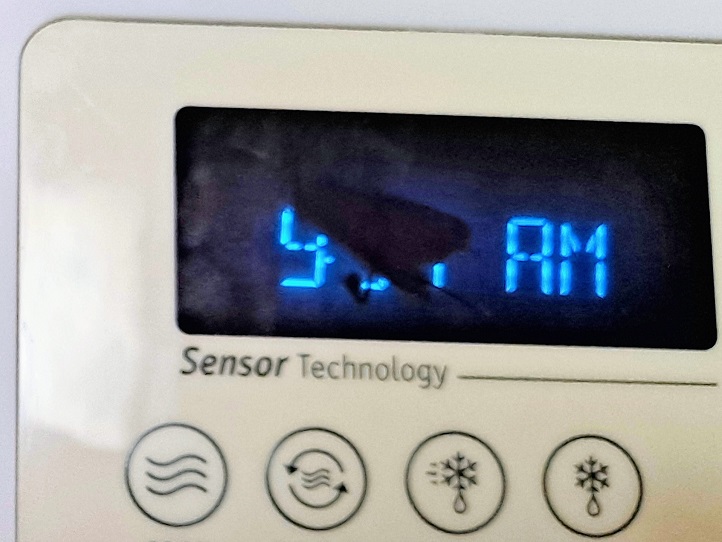
The scourge of insects has been as bad as the heat. First there was the miller moth invasion, where hundreds of moths descended on my yard and made their way into house. Luckily, most of those inside moths were imprisoned in the basement, but a few still made their way into my living space. The weirdest moth incursion was into the screen on my microwave. How it got inside there, I don’t know, but it sure spooked me when I realized that’s what had darkened the viewing screen.

Next came clouds of mosquitoes. Despite mosquito repellent clothes and mosquito repellent spray for my skin, I managed to get several bites every day. I was so not digging that!

And then the grasshopper horde showed up, eating things that I planted specifically because these predators have left them alone in the past, like lilacs and zinnias. That’s not so bad because the lilacs will survive and the zinnias are annuals and so would be gone anyway, but those voracious eaters pretty much ate my greengage plum trees. There is still a bit of the skeletons left, so perhaps the trees will come back next year, but I am not counting on it, especially since there are still weeks of summer left for those critters to continue munching.

We also had three devastating hailstorms. Luckily, they didn’t do any damage to the house or garage, but parts of my garden were decimated.

The most disheartening aspect of this summer has been the death of my expensively sodded lawn. They put in a grass that is geared for both sun and shade, and since most of my yard gets absolutely no shade and around fifteen hours of direct sun — searing sun — every day in the summer, the grass didn’t stand a chance. Even worse, the devil grass took over, destroying any possibility for simply overseeding the lawn.

So, no, I did not slangily dig this summer, but I did literally dig this summer, spending two or three hours every morning for the past couple of months digging up the dead grass and the live devil grass.

As hard as it is to do the work, it keeps me focused on what I can do rather than focused on things I can do nothing about. Because of that, until this past week, I wasn’t even that upset about the guys that sold me the wrong grass, but suddenly, the job overwhelmed me, and I was a bit peeved at the whole thing. I think if I believed the extreme heat tolerant grass seed I got would work out okay, it might not have bothered me, but I am to the point I’m not sure that anything I am doing is making a difference. Or that it’s worth it.

Still, I have to do something. I do like the look of the bare ground (and the gardening dream it brings of what could be), but unfortunately, I can’t leave the ground as is. Grasshoppers love bare ground to lay their nests, and next year their population would be incredibly dense if I don’t disturb the ground and plant something. Besides, weeds and the devil grass would take over, and I have no intention of ever doing this sort of digging again. Frankly, I’m astounded I could do it at all. Three years ago, my knees were so bad I could barely walk, and this year so far I’ve dug up about 1,000 square feet of weeds and grass. Makes me sore just thinking about it.

This isn’t the end, of course. After the digging comes the raking and then comes the seeding. And after all that comes daily (or even twice daily) watering until the grass comes up. (Despite my discouraging words a couple of paragraphs ago, I have to believe the grass will sprout and grow.) And then, whatever happens, happens.

Luckily, in just about four weeks, autumn will be here and put an end to this summer, whether I dig it or not.

***

Pat Bertram is the author of Grief: The Inside Story – A Guide to Surviving the Loss of a Loved One. “Grief: The Inside Story is perfect and that is not hyperbole! It is exactly what folk who are grieving need to read.” –Leesa Healy, RN, GDAS GDAT, Emotional/Mental Health Therapist & Educator.

To Dig and To Dream

It seems odd to me that for so many years I blogged every day, and yet now I barely make it once a month. I suppose that’s a good thing — it means I’m not conflicted or obsessing or outraged about anything. What unpleasantries that assail me are noted and forgotten as much as possible. Mosquito bites, obviously, are not forgotten because that dang itch is always there as a reminder, but even that, for the most part, I’m able to note and then let go.

It’s good not to have something on my mind that I need to write about to clear my head, but on the other hand, nothing to blog about means nothing noteworthy is happening. Just life as it comes.

It’s been hot, of course, but while other places have been dealing with record-breaking heat, we’ve been five to ten degrees cooler than normal. No major forays into the 100-degree range, luckily, though high nineties is plenty hot enough. In fact, what grass was left is slowly succumbing to the unrelenting heat. I certainly never expected for the grass to continue to die — not only has it been a bit cooler than last year, we’ve been getting twice as much rain as normal.

That’s just life as it comes, I guess.

My gardening stint each morning is spent digging up the old grass in preparation for planting seed next month. This seed is supposed to be extreme heat tolerant, and it might be so. The patch I planted last fall has survived so far, and looks good. The patch I planted in the spring never did well — weeds grew faster than whatever seeds were left after the birds feasted, and now the devil grass is taking over.

Sometimes I wonder why I’m doing all this work. It seems silly to be spending so much time on the yard, and silliest to be digging up a lawn that was sodded only a couple of years ago, but if the grass can’t survive, it’s no good to me. I considered other options for a ground cover, but what it comes down to is a proper grass for the area is still the best bet. Seed is relatively cheap, can be walked on without damage, and once established needs no more work than the rest of the yard. (Surprisingly, the supposedly care-free ornamental rock and gravel areas are the hardest to take care of — there is always tree detritus clogging the rocks such as leaves and seeds and tiny twigs that can’t be cleaned off with a leaf blower. Even worse, with all the rain we’ve been having, weeds grow rampantly among the rocks and in the pathways.)

There will come a time when I can’t do the work I am doing in now. In fact, I’m surprised I can work as hard as I do — just a couple of years ago, it took me forever to get things done because my knees weren’t cooperating. So, silly or not, I’m grateful to be able to do anything physical. Besides, working in the yard gives me something different to focus on. And — sometimes — it seems worth it. So many of my flowers had been decimated by the hailstorms we had as well as by grasshopper hordes, but the annuals seem to be recuperating, the perennials are hanging in there, and the lilac bushes are doing well.

Because of my concentration on the grass, other parts of the yard might have to wait until next year to be taken care of, but who knows. I do manage to sneak in other chores between the digging. One thing I discovered quite by accident is that any part of the ice plant can be planted. (I’d picked a flower to show a neighbor, and then stuck it back in the ground to see what would happen, and it grew!) So any of plant that gets pulled up as I weed gets pushed back into the ground. Because of this, and some transplanting, I’m able to get the ice plant to spread out even more.

Someday, perhaps, I will have a gorgeous yard that’s easy to take care of, but for now, it’s enough just to dig and to dream.

***

Pat Bertram is the author of Grief: The Inside Story – A Guide to Surviving the Loss of a Loved One. “Grief: The Inside Story is perfect and that is not hyperbole! It is exactly what folk who are grieving need to read.” –Leesa Healy, RN, GDAS GDAT, Emotional/Mental Health Therapist & Educator.

Heartbreaking?

For about three weeks, ever since my S.A.D. times passed, I’d been getting back into the feel of gardening. I’ve had more flowers this year than ever before, and they were doing well. I especially enjoyed the variation on a theme that was going on in my wildflower garden.

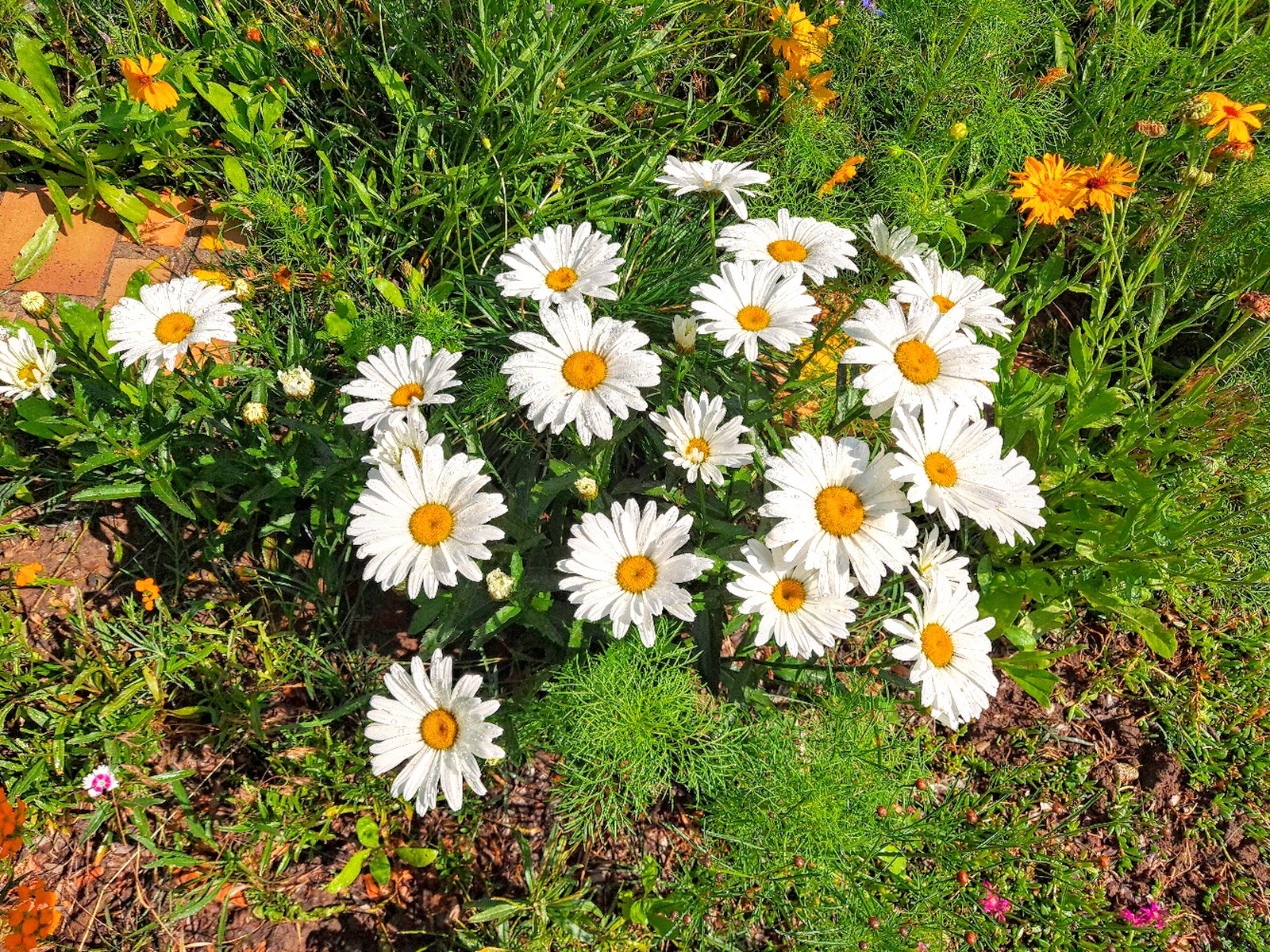
Daisies.

Cosmos.

Chamomile.

Zinnia.

I suppose it makes sense. All four of those flowers are members of the Asteraceae family, along with marigolds, sunflowers, dandelions, and lettuce.

Despite my ongoing frustration with trying to keep my lawn alive, I’d actually been having fun. I’ve been digging up a weed patch to extend my garden as well as digging up the swath were the grass died last year. I’d even cleaned up all the mess in the gravel and rock areas. (People always talk about ornamental rock as being a care-free landscape, but I find it even more troublesome than a lawn. I can’t use the leaf blower to blow the leaves and such off the gravel because the tool blows the rocks around rather than the leaves, and weeds are rampant because of all the rain we had this spring.)

And then came the night before last. Oh, my. Ferocious winds with a tornado-like swirl came charging in, bringing marble-size hail. Because of the swirling pattern, the storm hung around longer than such storms normally do.

When I got up the next morning, I was greeted by an immense mess. Plants were shredded, flowers destroyed, and the ground was covered with leaves and seeds and twigs from my neighbors’ trees. It was utterly heartbreaking.

At least, that’s what went through my mind at the time, but I quickly caught myself. Heartbreak was Jeff’s illness and his dying. Heartbreak was my brother’s struggles for mental stability and finally his death. Heartbreak was losing parents and friends and a way of life.

The damage to my yard was disappointing, of course, and frustrating. It’s also exhausting just thinking of all the cleanup work. But heartbreaking? No. In fact, I’m lucky — my house is fine and the windows are all intact, which can’t be said for everyone who endured the same storm.

On a rather ironic note, I’d been trying to figure out the best time to break up and transplant some of the clumps of daylilies. Apparently, the best time is whenever the flowers are finished blooming, and most of the flowers are gone now, the buds destroyed before they ever managed to bloom. Although I could transplant them now, it’s not a primary concern at the moment.

And on a happy note — the zinnias managed to survive quite nicely. A couple of flowers broke off, but the rest are growing cheerfully.

***

Pat Bertram is the author of Grief: The Inside Story – A Guide to Surviving the Loss of a Loved One. “Grief: The Inside Story is perfect and that is not hyperbole! It is exactly what folk who are grieving need to read.” –Leesa Healy, RN, GDAS GDAT, Emotional/Mental Health Therapist & Educator.

Blog Update

If you haven’t received a notification about a new blog from me in a while, it’s not because of an issue with your email. It’s that I haven’t done an update recently. I have no real excuse, just laziness, I suppose, though truly, I’ve been anything but lazy. Now that the rains have passed, the days are brighter, and the temperatures are drifting closer to the 100˚ mark, I’ve been able to set aside the Seasonal Affective Disorder that had me dragging for several weeks and enjoy working in my yard again.

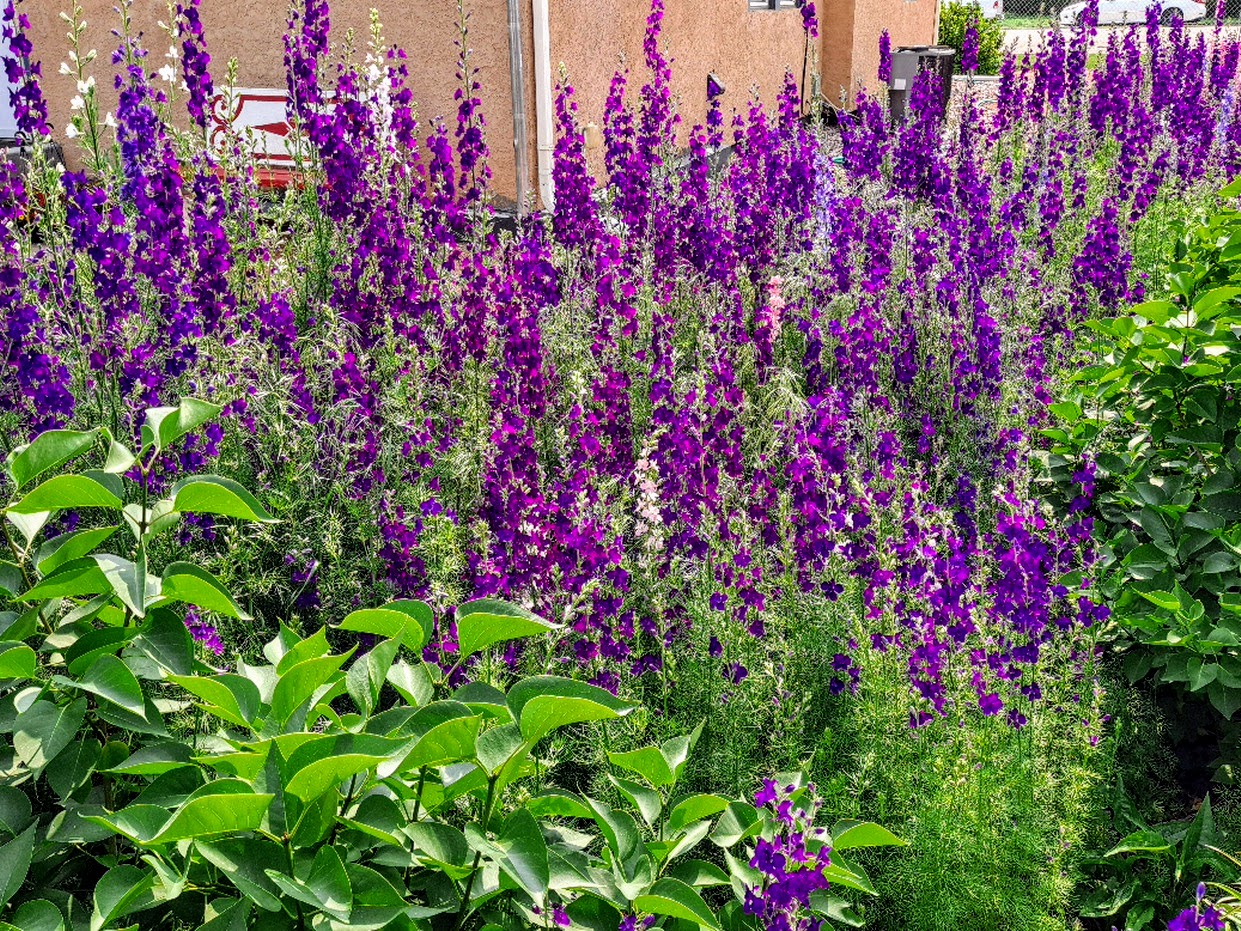
The larkspur that had so intimidated me went to seed, and I’ve been spending hours every day harvesting the seeds and pulling up the dead stems.

So instead of this:

I now have this:

The cleaned-up garden is not as dramatic perhaps, but lovely nevertheless.

I’m spending way too much time babying my lawn, but I have a hunch that will always be an ongoing process. I’d give it up, but I do so love the green. And besides, what else would I do? I’m already reading more than I want, and although I’m still playing games on the computer, I’ve cut way back. A few weeks ago when I lost the internet for a week, it got me out of the habit of spending hours and hours on the computer. Now I do other things, like paint-by-number or watch movies, both rather mindless activities. And, as I said, I spend a lot of time outside.

I wonder at times if I have too much invested in my yard, not just money but emotions and work and thought, but when I’m not dealing with S.A.D., I do find gardening worthwhile. So many pretty things to see!

Daisies.

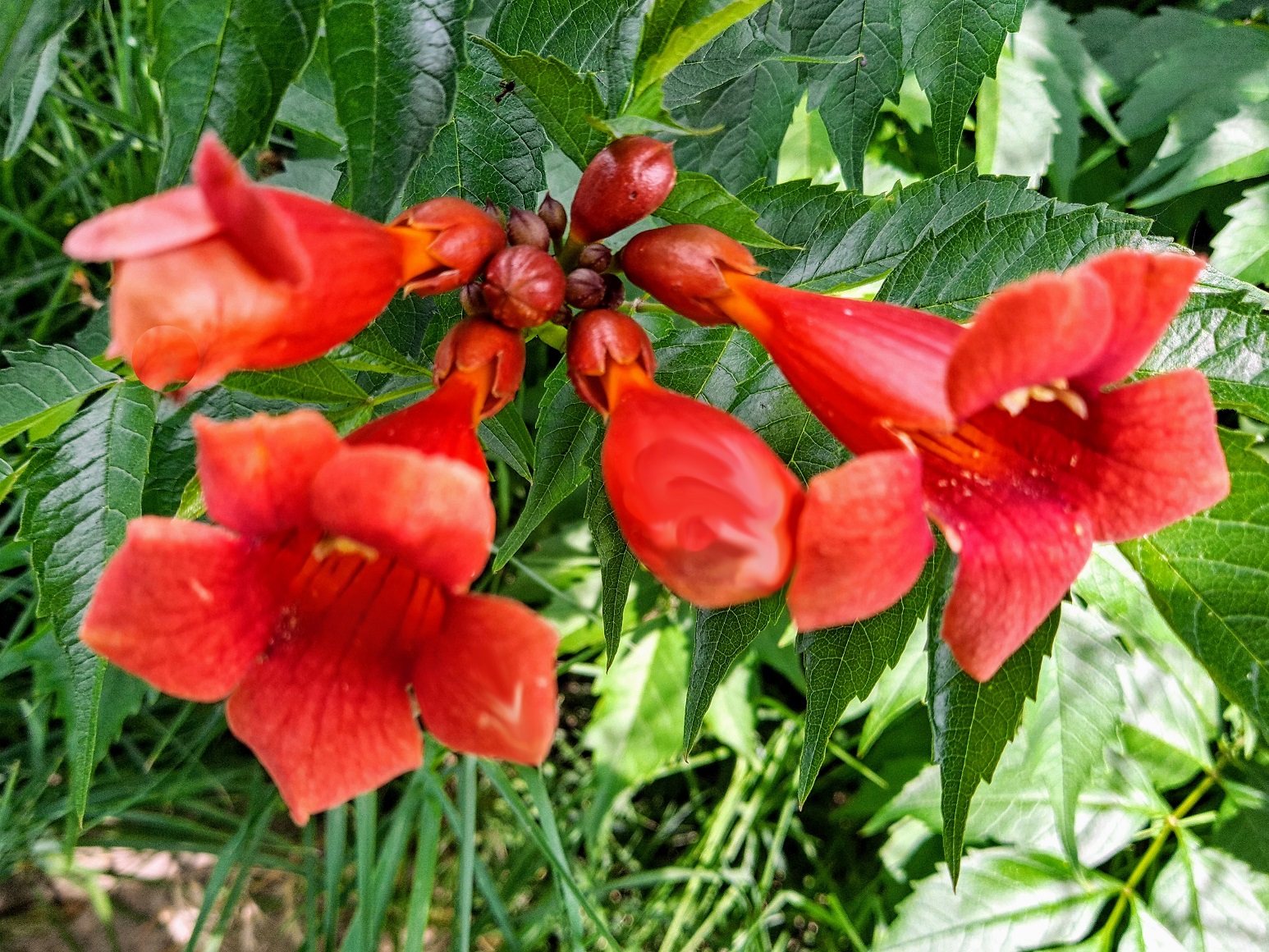
Trumpet vines.

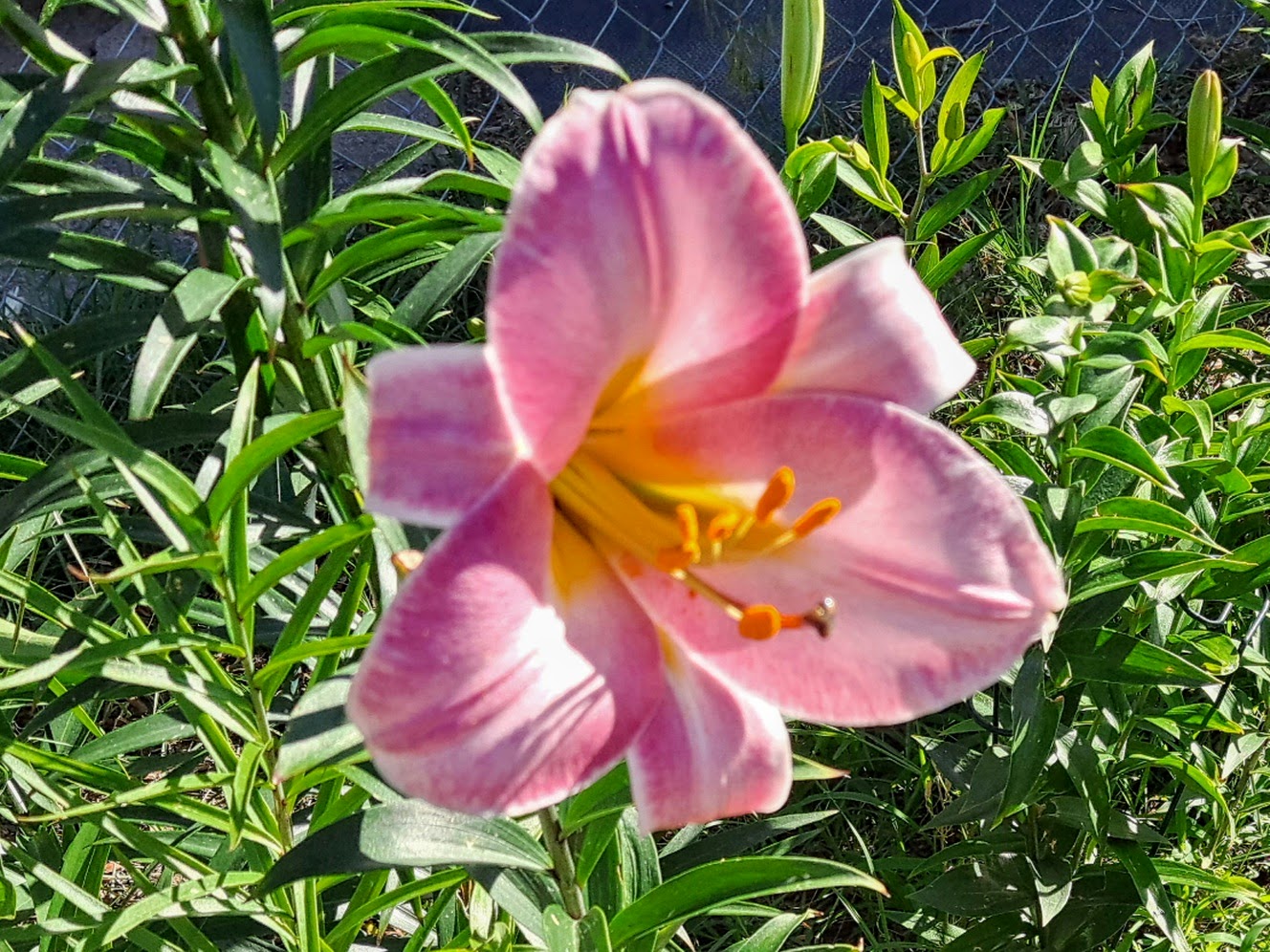
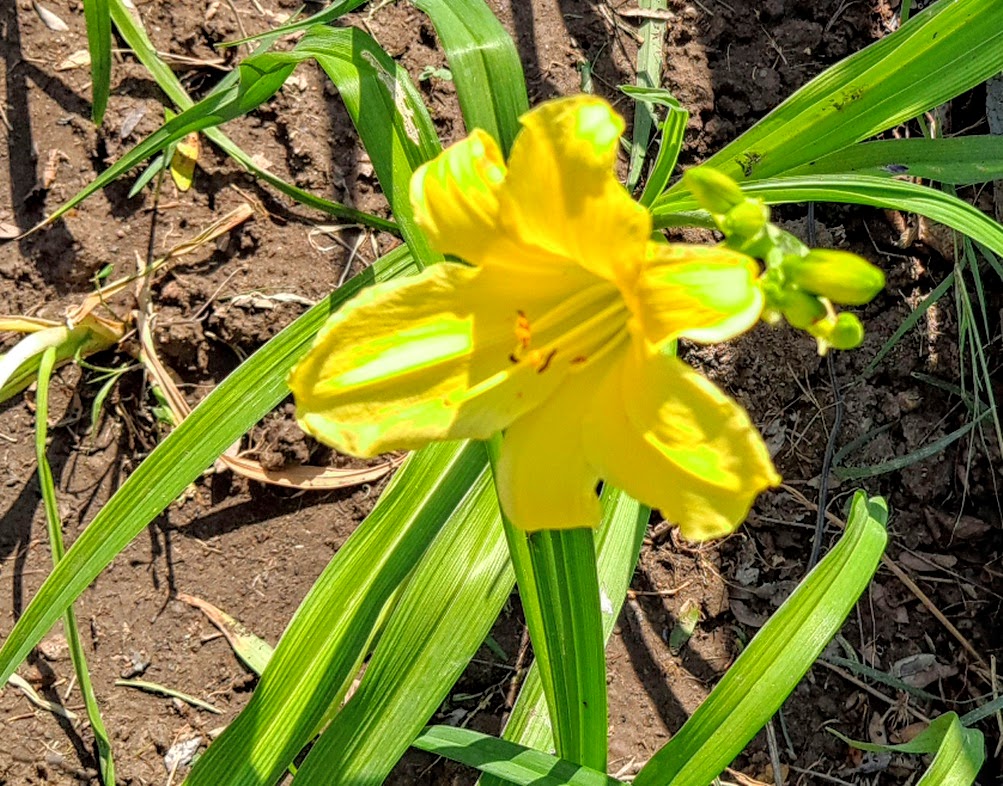
Daylilies.

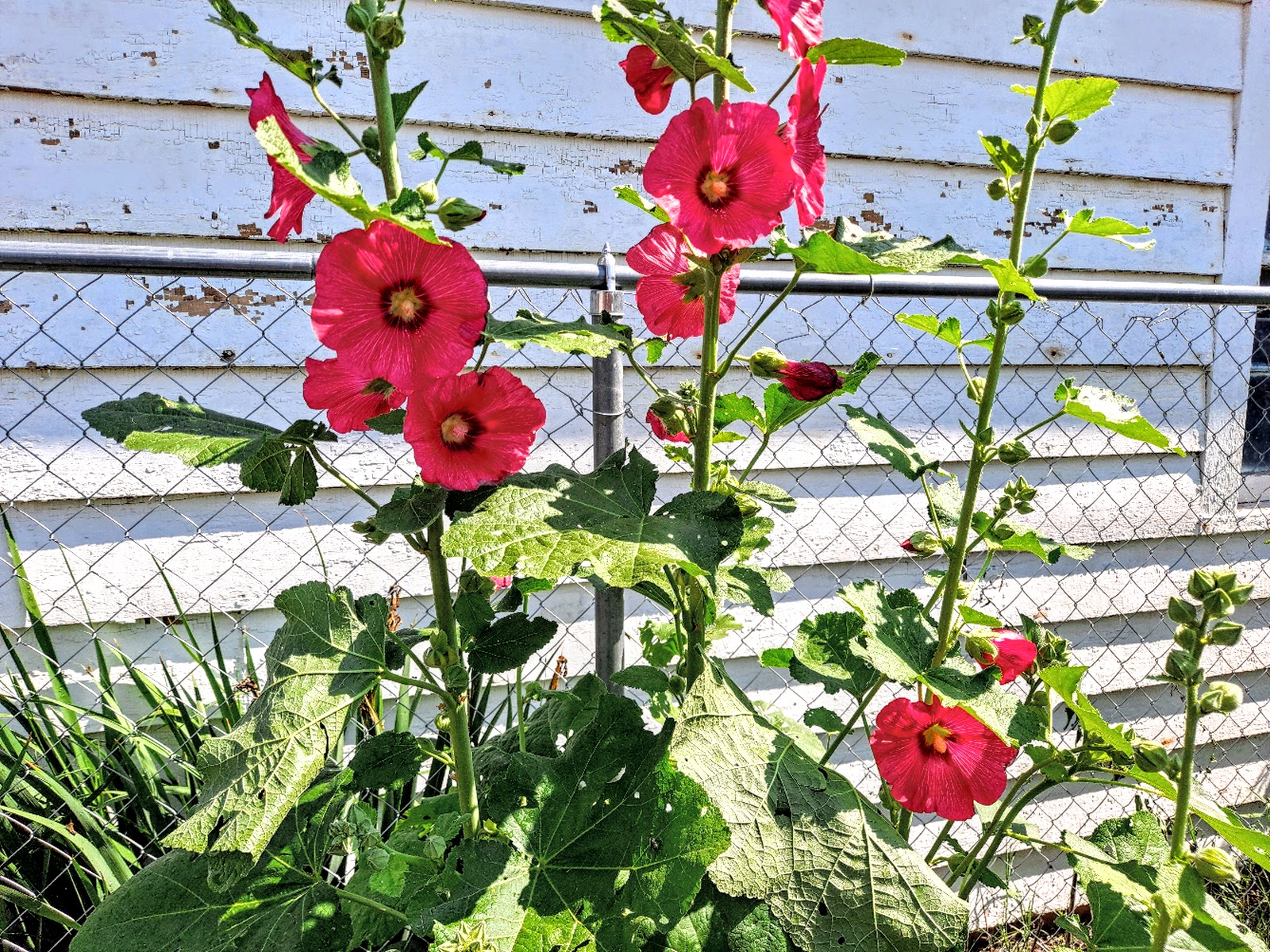
Hollyhocks.

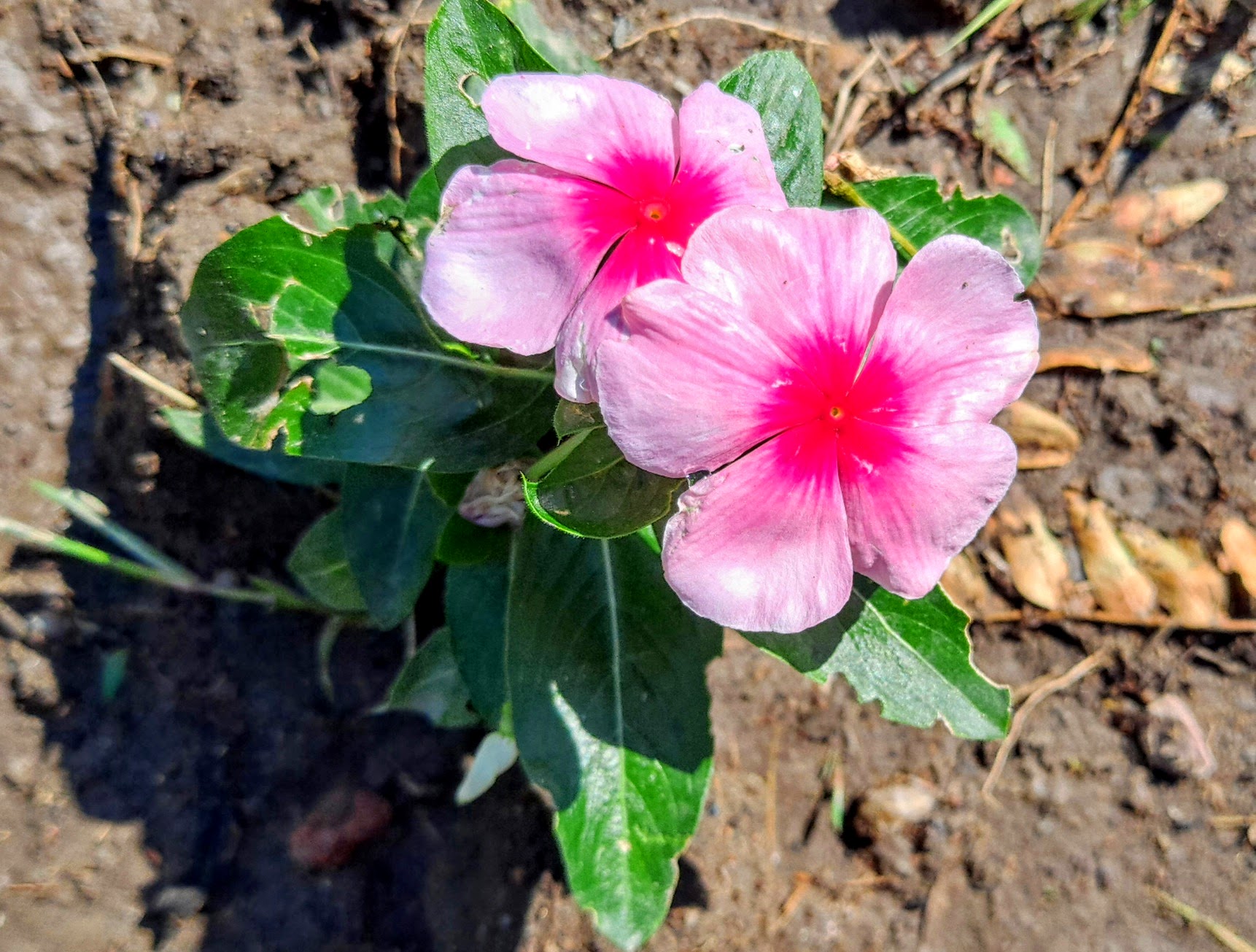
Madagascar periwinkle.

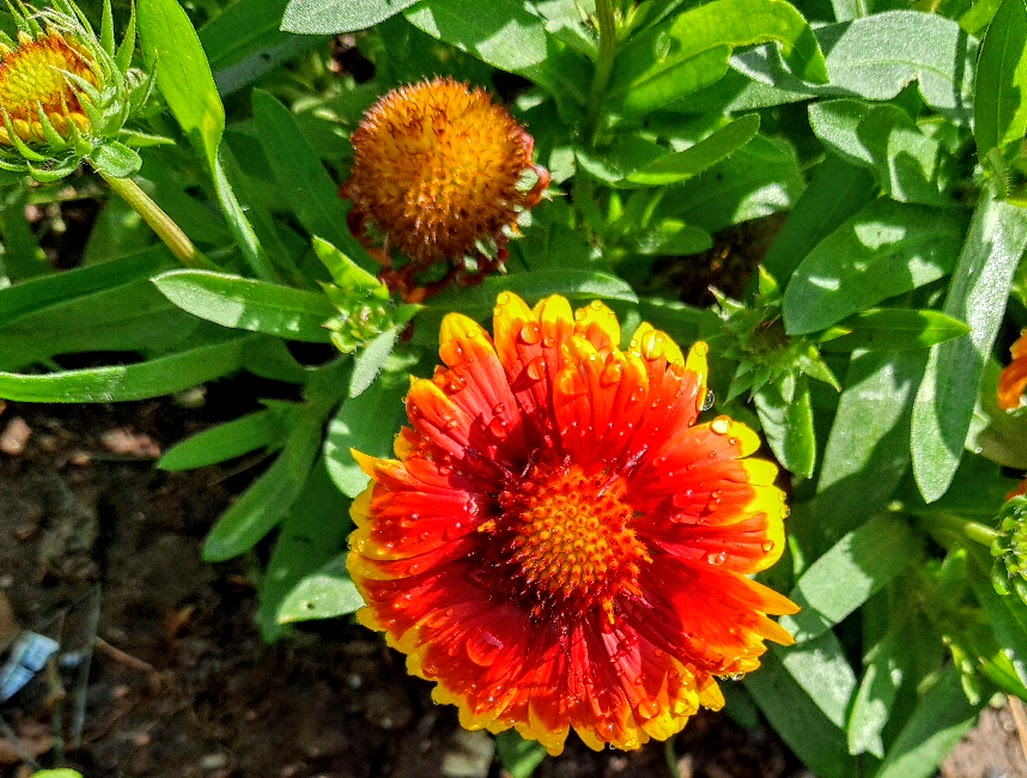
Blanket flower.

If things go as planned, I should have flowers of some sort from now until the first frost and perhaps even beyond. I’m becoming rather fond of fall bloomers — the foliage is pretty in the summer, and then when other flowers have died out, the chrysanthemums and New England asters take over.

I’ve done all the planting I’m going to do this year, so now my time will be spent weeding, cleaning up all the detritus from nearby trees that has blown into my yard, as well and continuing to expand my garden. There’s still rather a large swath that has never been touched, so I have to dig up all the weeds and other unsightly vegetation so I can plant . . . hmm. Maybe more wildflowers.

***

Pat Bertram is the author of Grief: The Inside Story – A Guide to Surviving the Loss of a Loved One. “Grief: The Inside Story is perfect and that is not hyperbole! It is exactly what folk who are grieving need to read.” –Leesa Healy, RN, GDAS GDAT, Emotional/Mental Health Therapist & Educator.

S.A.D. Times

I’m not having all that much fun with gardening this year, at least not so far. It’s too muggy, too buggy, too . . . everything. Normally, this is the sort of spring I like — cool, occasional rain, cloudy days — but this year, because of the rain, the gardening work is overwhelming. Plants that are used to hotter, drier days, are growing out of control. Weeds are growing thickly. And mosquitoes are voracious.

This is the first year that my mosquito repellent clothes aren’t working. I decided to make use of this cool, fairly dry day to work outside, and now I’m covered in mosquito bites in places that are normally covered by those clothes.

Well, now you get a hint of why I haven’t been keeping up with this blog. I don’t like to make a habit of complaining, and I’ve been having a hard time finding delight in much of anything. I have a hunch I have a touch of Seasonal Affective Disorder. I usually have to deal with S.A.D. in winter; having to cope with it in a spring is a first for me, but also understandable. With storms passing us by so frequently (even if we don’t get rain, we still get the clouds), the days are darker than are healthy for my mental state.

There is a change coming — after all, summer will be here in six days, and it won’t be long before I’m complaining about the heat. Also, the larkspur are finally going to seed, so I’ll be able to pull them up to expose the plants — both ornamental and weedy — that have been hidden thus far. It should help me feel less claustrophobic. Although I normally enjoy the larkspur, they grew so densely and so tall they formed an intimidating wall along my pathways.

One thing that has pleased me is that my wildflower garden is really taking off. Some of the perennials that never came up finally did, and many of the annuals seeded themselves and are filling in the area with color.

I also found an unusual stray, this dwarf evening primrose.

It was in the batch of wildflowers I planted a couple of years ago, but this is the first one I ever saw.

And then there was this unusual plant that popped up in one of my garden areas.

It took a long time to trace it — most plant identifier apps didn’t know what it was. But I think I finally discovered its name: bitter candytuft. It’s from the mustard family, which makes sense — all the wild mustard weeds seem to like it in this area.

As it turns out, it’s a good thing I got some work done earlier — I can hear the thunder of an approaching rainstorm, and the morning is growing darker. Yep. S.A.D. times.

***

Pat Bertram is the author of Grief: The Inside Story – A Guide to Surviving the Loss of a Loved One. “Grief: The Inside Story is perfect and that is not hyperbole! It is exactly what folk who are grieving need to read.” –Leesa Healy, RN, GDAS GDAT, Emotional/Mental Health Therapist & Educator.

Spring of Excess

This spring seems a season of excess. There are way too many bad air days due to wildfire smoke migrating down from Canada, and there is an invasion of miller months because they aren’t migrating. (They are being slowed down by the smoke.) There are hundreds of the moths in my yard, dozens in my garage and basement, but luckily only a few in the house itself. I try to tolerate them because they are pollinators (and because they are pollinators, they are a protected species in Colorado), but I can’t find it in myself to like them, especially not in such vast numbers. Not only do they spook me when they come flying at me out of nowhere, but they are such messy critters, leaving their effluvia on windows, curtains, and anywhere else they happen to land.

There is also an excess of mosquitoes. To me, even a single mosquito is too much, but this year there are clouds of them. Normally, I am fairly safe in the heat of the early afternoon, since they are most active in the early morning and evening, but a short foray outside a couple of days ago netted me over a dozen bites. Luckily, my gardening clothes are mosquito-repellent, so as long as I am careful to wear those clothes when I am outside, I am fine.

I’m not sure why this year is different, but there is an excess of stuff (for lack of a better word) falling from trees. I do know the neighbor’s locust trees are raining flowers (miniscule greenish things that don’t resemble flowers at all), but I don’t know what the slim green things from my other neighbor’s tree are. Perhaps seeds. I don’t remember seeing them before, but this morning they are everywhere. Where’s a good wind when you need it? Oops. I shouldn’t say that — we’ve had way too much wind this spring (my hanging plants spend more time on the ground, safe from the winds, than they do hanging), so a calm morning is welcome.

We’ve had a lot of rain this spring, not an excess, exactly, but enough to make flowers and weeds grow profusely. I would have thought that I’d be appreciative of the floral largess, but to be honest, I find it a bit overwhelming. The larkspur, which is usually about knee-high, is almost as tall as I am. It’s growing thickly, especially where the grass died, making it impossible for me to access the garden bed and the plants that are buried in the larkspur forest.

I am the only one who is less than impressed with the growth. Butterflies love it.

Bees love it.

And visitors are awed. But not me. Oh, I do appreciate the beauty, but I find it unsettling. It’s . . . too much.

It’s not just the larkspur that grew more than expected. The lilac bushes doubled in size, and seeds are wildly sprouting. Normally, I have little luck with seeds, so I tend to plant more than is called for in the hope that some will take hold. Well, the zinnia seeds I planted must have had an extraordinary germination rate or they like the weather or something, because almost all of them managed to sprout. So I’ve been thinning the zinnia bed and transplanting the seedlings elsewhere in my yard; although I’ve moved half the seedlings, the bed is still too thickly planted. I have never had such a problem before, but then, I’ve never lived through a season such as this one, either.

On an amusing note, this fecundity has created an almost magical soil. I wanted to see if my neighbor wanted any of my ice plant.

I pinched off a flower to show her. Afterward, instead of tossing the sample away, I stuck in in the ground, and it’s growing. For all I know, if things continue the way they are, the plant could take over the yard.

It won’t be long before summer is here, forcing all my plants and flowers — and me! — to struggle with heat and aridity, but for now, I’m continuing to be overwhelmed by this spring of excess.

***

Pat Bertram is the author of Grief: The Inside Story – A Guide to Surviving the Loss of a Loved One. “Grief: The Inside Story is perfect and that is not hyperbole! It is exactly what folk who are grieving need to read.” –Leesa Healy, RN, GDAS GDAT, Emotional/Mental Health Therapist & Educator.

A Real Garden

During the past three or four years, I’ve often posted photos of the flowers in my yard, which made it seem as if I had a real garden rather than the truth — that those flowers were the totality of my garden. A couple of days ago, as I was showing an acquaintance around my yard, it occurred to me that this year, I actually had a real garden. There is so much to see! The wall of larkspur, of course, that planted itself where the grass died and that mesmerizes everyone who sees it.

Siberian wallflowers have made a big presence in one of my garden areas, though I’m not sure where they came from. There were a few seeds in a wildflower mix I threw out there a few years ago, but this was the first time I’d seen any of flowers. They are such a vibrant color! The pink flowers are cottage pinks, returning from last year’s planting.

At the forefront of the wallflowers are coreopsis, also returning from last year.

My yellow iris are beautiful this year.

Although they’ve been coming up each spring, they never seemed healthy, but this year, they are doing exceptionally well.

The wild roses always do well, both the yellow

and the red. Unfortunately, the flowers don’t last long, but that makes me more appreciative of them when they are in bloom.

I always try to create whimsical vignettes, such as my miniature gnome house,

and corners that come as a surprise. Gardens that can be seen at a glance are beautiful, of course, but I wanted to be able to see different things as I wandered around my yard. One of my favorite corners this year is the flamingo corner. The flamingo was a gift from a friend, and though I didn’t purposely choose colors of petunias for the planters to match the flamingo, they turned out to be the perfect choice.

In another couple of weeks, the spring flowers will all be gone, but then there will be summer flowers coming into bloom, and if not, well, there are always seeds I can plant or seedlings to purchase at the local hardware store.

It’s amazing how with a bit of persistence and a lot of luck, all of a sudden one day, a person can end up with a real garden.

***

Pat Bertram is the author of Grief: The Inside Story – A Guide to Surviving the Loss of a Loved One. “Grief: The Inside Story is perfect and that is not hyperbole! It is exactly what folk who are grieving need to read.” –Leesa Healy, RN, GDAS GDAT, Emotional/Mental Health Therapist & Educator.

What a Difference a Month Makes

Sometimes, in life, a month — or even a year — seems to bring no changes; it’s only in retrospect that we can look back and see the difference in our lives. In gardening, however, a month can bring dramatic changes. For example, in this photo, taken a month ago, spring is just making itself known. The lighter green along the right side of the path are larkspur that planted themselves where the grass died last year. The grass I planted (the blue seed) to start replacing some of the grass that died, hasn’t begun to sprout. The greengage plum (the tree in the foreground) is still dormant, and the lilacs (the bushes to the right of the path) are just beginning to green up.

A month later, things are completely different. As you can see from the following photo, many of the grass seeds took hold, and grass has greened up nicely. The tree has leafed out. The lilacs grew more in the past month than they have the past couple of years. And the larkspur have pretty much invaded not just along the path where the grass died, but the whole rest of the garden, too. I had to wade through the larkspur to find some of the plants I put in last fall, such as lilies and chrysanthemums, and clear a space around them to give them room to grow.

This is a sideview of the garden. Look at all those larkspur! To think that all that came from the half dozen or so plants I transplanted from my neighbor’s yard (with his permission, of course). I thought they were a low-growing flower, because that’s how they grew in his unkempt yard, but apparently, when given a bit of care, larkspur grow to monstrous heights. Some of these stalks are shoulder height. And such a lovely sight.

In another month, things will be different again. The larkspur will be gone — after they go to seed I pull up the dead stalks, leaving plenty of room in the garden for the perennials to grow. If there are big spaces left behind in the garden, I plant other annual seeds, such as zinnias. And since I will be able to get to the dead grass, I’ll start clearing the way for replanting the grass this fall. Or I might even plant some zinnias there, too. Since I have not yet learned how to take a photo of something that will happen in the future, obviously, I can’t show you what the area will look like then, but I imagine, at least for a while, it will look very similar to the way it looked a month ago.

And then a month after that, it will all be different again. Because when it comes to gardening, a month makes a huge difference.

***

Pat Bertram is the author of Grief: The Inside Story – A Guide to Surviving the Loss of a Loved One. “Grief: The Inside Story is perfect and that is not hyperbole! It is exactly what folk who are grieving need to read.” –Leesa Healy, RN, GDAS GDAT, Emotional/Mental Health Therapist & Educator.

Internet Restored!

My internet has been restored. You’ll never guess what was wrong, so I’ll just go ahead and tell you — it was in a car accident. Yep. That’s right. A car accident.

Unlike most of my friends who have switched to a localized internet company that uses fiber optics, I still have the internet I started with. The cable is adequate for my needs — just about the only thing that might suffer a bit from the slower internet speed is the hidden object game I play, but even that’s not an issue since I’m getting a bit bored with it. Anyway, that doesn’t have anything to do with my outage except to explain how a car could destroy my internet connection — this company still has the green cable utility box in the alley, and apparently, someone ran into it and destroyed it.

Since I am the only one who was affected, it leads me to believe that most people on this block who have internet have gone with the fiber optic choice, but I intend to continue dealing with the original company, as annoying as they are. My rate is locked in for as long as I live here, and since I don’t intend to move until I’m dragged out, I figure that static price will be a good revenge for any problems. Not that I have many problems — this is the first real outage I’ve experienced in the past four years.

When they told me it would be a week before they could restore service, I panicked because I spend (waste) a lot of time on the internet, and I had no idea what I would do with all that extra time. As it turns out, it wasn’t a problem at all. I mowed my lawn, did some gardening, gave my house a good cleaning, read books, watched movies on DVDs friends had passed on to me that I never watched (I hadn’t watched a movie in years), did one of the paint-by-number pictures I’d been given as a gift, walked some, exercised some. And then suddenly, here I am, with the internet again.

When I was without service, I discovered that one of the reasons I was online so much was that I’d get bored and restless when I read too much, and it was just habit to go on the internet to play games or look up gardening information or whatever. So now I have other options. Well, I always had those other options, I just didn’t make use of them. Chances are, I’ll go back to my old habits, but for now, it’s nice to be offline most of the time.
***

Pat Bertram is the author of Grief: The Inside Story – A Guide to Surviving the Loss of a Loved One. “Grief: The Inside Story is perfect and that is not hyperbole! It is exactly what folk who are grieving need to read.” –Leesa Healy, RN, GDAS GDAT, Emotional/Mental Health Therapist & Educator.