Lily Tree Forest

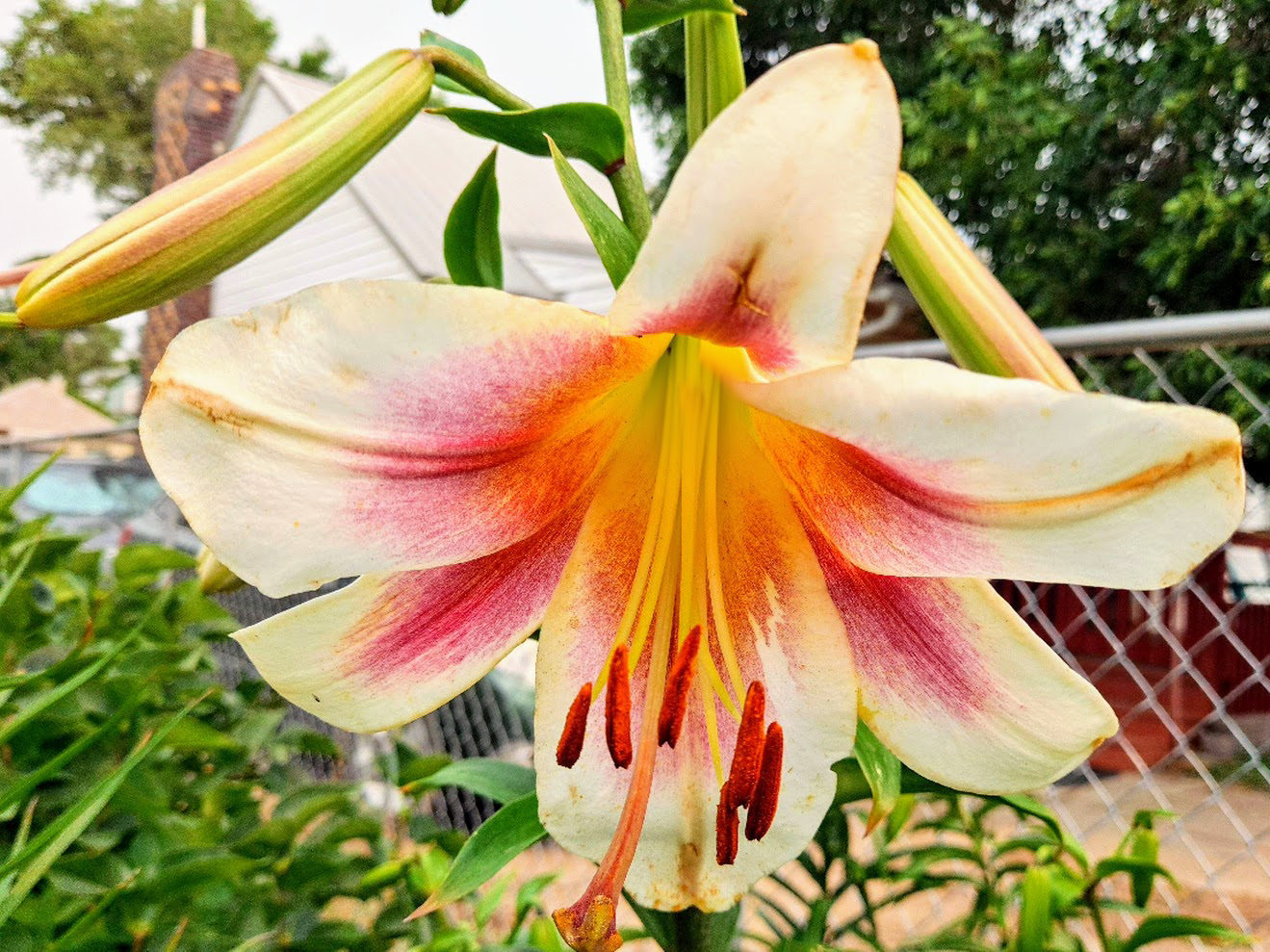
When I first started thinking about a garden, I came across photos of a luscious flower called a tree lily, a hybrid between an Oriental lily and a trumpet lily. (For obvious reasons, they’re also known as Orienpet lilies.) I’d always thought lilies were a rarified flower that only professional gardeners could grow, but apparently not. I loved the idea of a lily tree forest, so I decided to take a chance, even though the bulbs aren’t cheap.
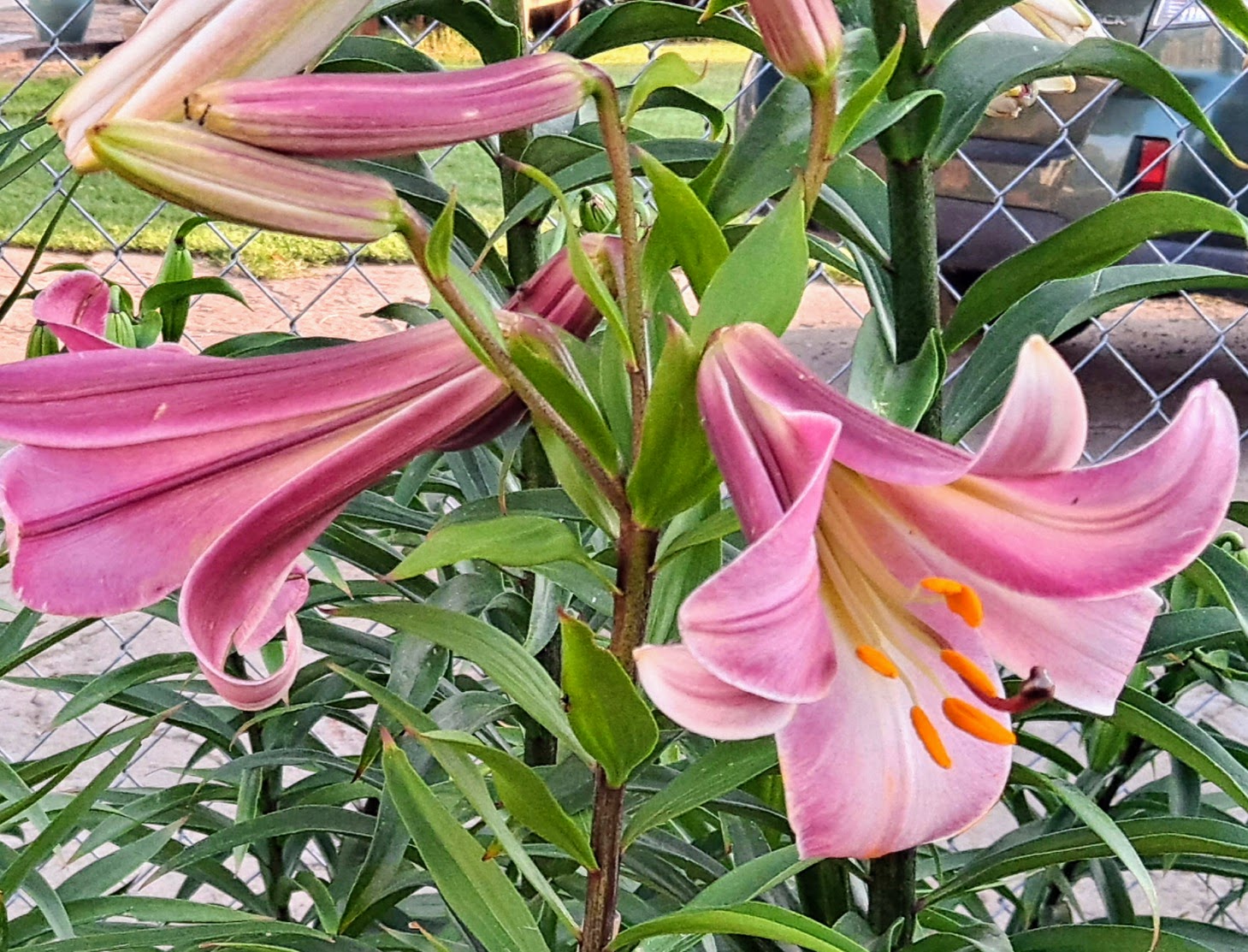
Some of the original bulbs never came up, so the next year I planted a few more. And a few more after that. A couple of years ago, the lilies started to grow tall and to bloom. And oh, how lovely those lilies are! Large than my hand, on stalks taller than I am, they manage to deal with the weather extremes of this area very well. Even the late frost didn’t do much damage.
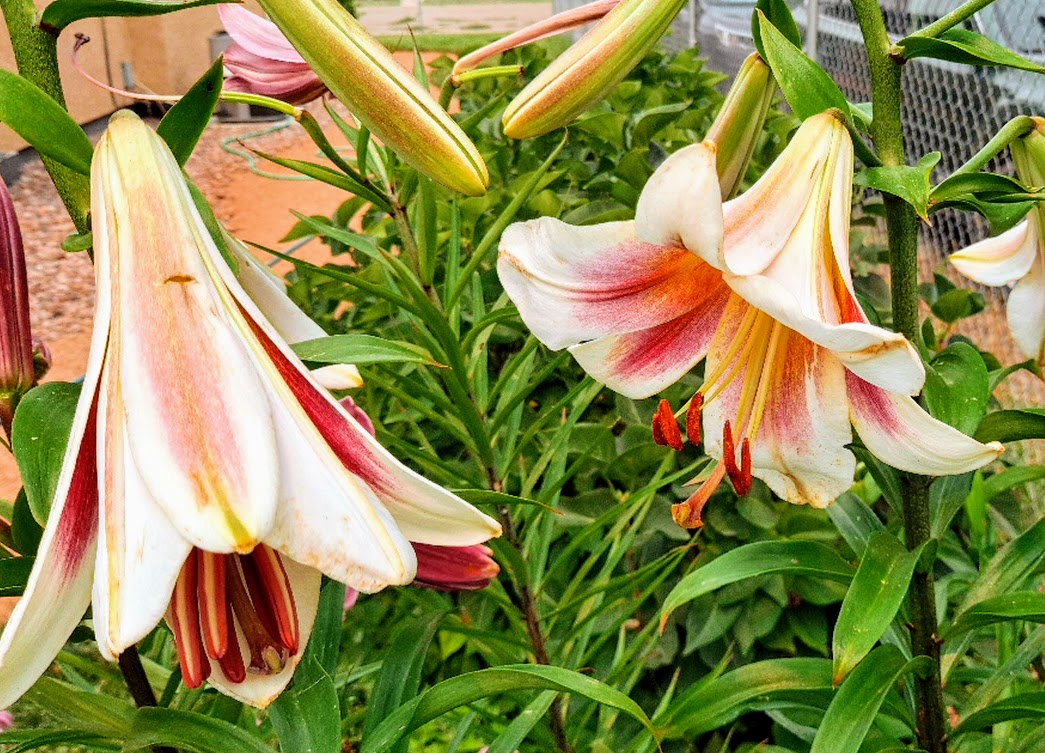
My one nitpick with the plants is that they need to be staked to keep them from growing in crookedly, but how does one stake a six- or seven-foot plant? I do fine when they’re young with my 2-foot metal stakes and the three-foot bamboo stakes, but after that, they’re on their own. I could tie them to the fence, but it would take a lot of plant ties or twine, and I’m afraid I’d forget it was there and trip on it or decapitate myself. Well, not decapite, of course, but something unpleasant anyway.
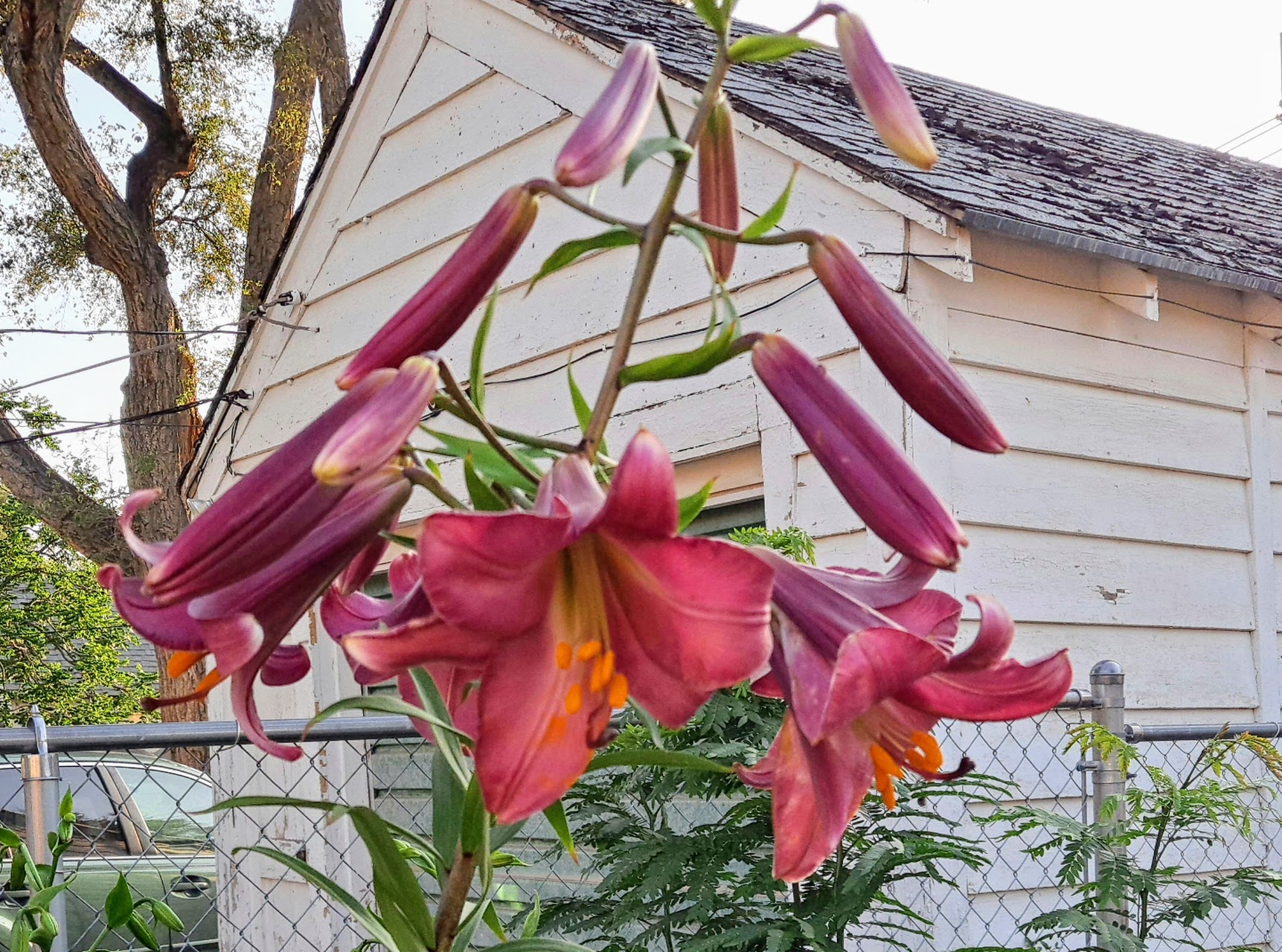
Although the forest looks as if it’s a narrow swath, the tallest lily and the one most needing to be staked is six feet from the fence. Still, leaning or not, my lily forest is awesome. The plants are just starting to bloom, and since each has multiple flowers that bloom at different times, I will have lilies to enjoy for over a month. (The flowers on the lower left-hand side of the photo are purple magnus echinacea.)
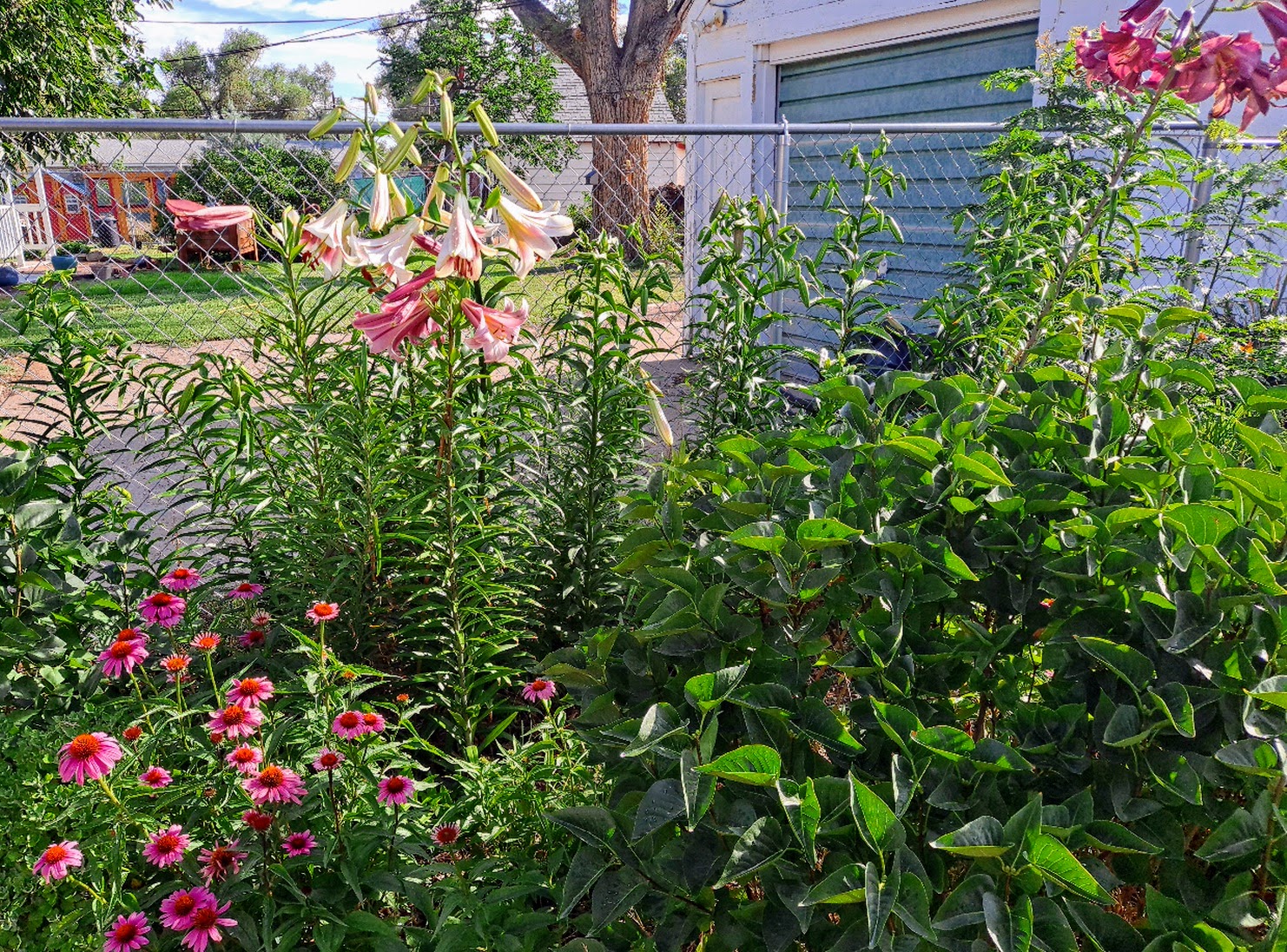
It’s amazing what an amateur gardener can do with no expertise but a head full of hopes. I’m still an amateur, of course, but after five years of gardening, I do know a few things, such as water them, remove weeds and weedy grasses, and let them do what they want to do.

Luckily for me, what they want to do is . . . bloom.
***

Pat Bertram is the author of Grief: The Inside Story – A Guide to Surviving the Loss of a Loved One

Where I Want to Live

Daily writing prompt
If you could live anywhere in the world, where would it be?

Ha! I bet you can guess my answer to this blog prompt!

Yep, it’s true. If I could live anywhere in the world, I would choose to live exactly where I am living now — in this tiny forgotten town, in my own house with my own yard and my own flowers, and friends that I seldom make the effort to see but know they are always there for me.

It’s taken me decades to get to this point, decades of uncertainty, sorrow, and fear of not being able to afford to live anywhere. This last is not an uncommon fear among women — even those with financial security worry about becoming a bag lady. In my case, the fear was exacerbated by the growing requirement of being able to pass a credit check when renting, and with my lack of any sort of credit rating, I simply did not know how I was going to navigate that morass. Assuming, of course, I wasn’t priced out of the market.

Exactly ten years ago today, I was feeling rootless, feeling suspended over an abyss with nothing to hang onto, worried as always about my uncertain future. At the time, I’d just returned from my cross-country trip and was staying in a fleabag motel. (Actually, it was a mosquito-bag motel. Eek.) I had no real reason to go back to that town, other than friends and dance class, but I had no place else to go. As I wrote back then: “I have looked at tiny windowless rooms scarcely larger than closets with a higher rent than the three-bedroom house Jeff and I lived in, gated communities that are merely fenced rooming houses, apartments with incredibly stringent requirements. . . . Maybe I don’t belong here in the desert. Maybe I don’t belong anywhere. But then what?”

A few years later, through a series of unexpected events, including an unasked-for email from Zillow showing me a place they said I might like though it was far from that desert town, I found my “then what.” Now here I am, living in the very house Zillow picked out for me, a house I once dreamed up.

I’m sure there are many wonderful places to live, places I might even like to live, but my days of looking beyond the perimeter of my own yard for something more are long gone. With any luck, this is where I will live out my years, with even greater luck, I might even be able to continue taking care of the place. (I still find it humorous that my goal when I got here was to have a care-free yard, and what I ended up with was a mini park that requires several hours of work each week.)

If I could tweak one tiny thing, it would be to have a wilderness walking trail nearby, but considering that I’m not as fanatical about walking as I once was (in fact, I seldom walk at all anymore), that missing trail isn’t as much of a lack as it used to be. The truth is, any outdoor time is spent in my yard. Just this morning, I went out for a quick tour to see how everything was holding up in this heat, and ended up trimming a bush, cutting back leggy yarrow, lopping the tops off New England asters to keep them from browning out, staking the tomato plant, and various other small chores.

Since I wasn’t planning on doing the work, I hadn’t doused myself with mosquito repellant, so I ended up with several new bites, but it’s all good. It’s all part of being at home in my own place, insects and all.

***

Pat Bertram is the author of Grief: The Inside Story – A Guide to Surviving the Loss of a Loved One

Orange You Glad

When my little brother was small, three or four maybe, he was annoyingly smart. He’d ask if I wanted to play a particular game, and if I said no, he’d say, “I’ll let you win.” That’s how smart he was — he knew how to beat me (even though I was more than a decade older than he was) as well as figure out how to let me win. He also had an infectious laugh. He used to tell one of those knock knocks that kept repeating the refrain, and when he got to the punchline, he’d just laugh and laugh. I’d have to laugh with him, even though by the time he finished, I was sick of “bananas.”

You know the joke:

Knock, knock. Who’s there? Banana. Banana who? Knock, knock. Who’s there? Banana. Banana who? Knock, knock. Who’s there? Orange. Orange who? Orange you glad I didn’t say banana again?

As I was sorting through the photos I took for today’s blog, I noticed that they were mostly yellow and orange, and it reminded me of that joke.

The flowers are no joke of course — they are a delight to the eye. My eye, anyway.

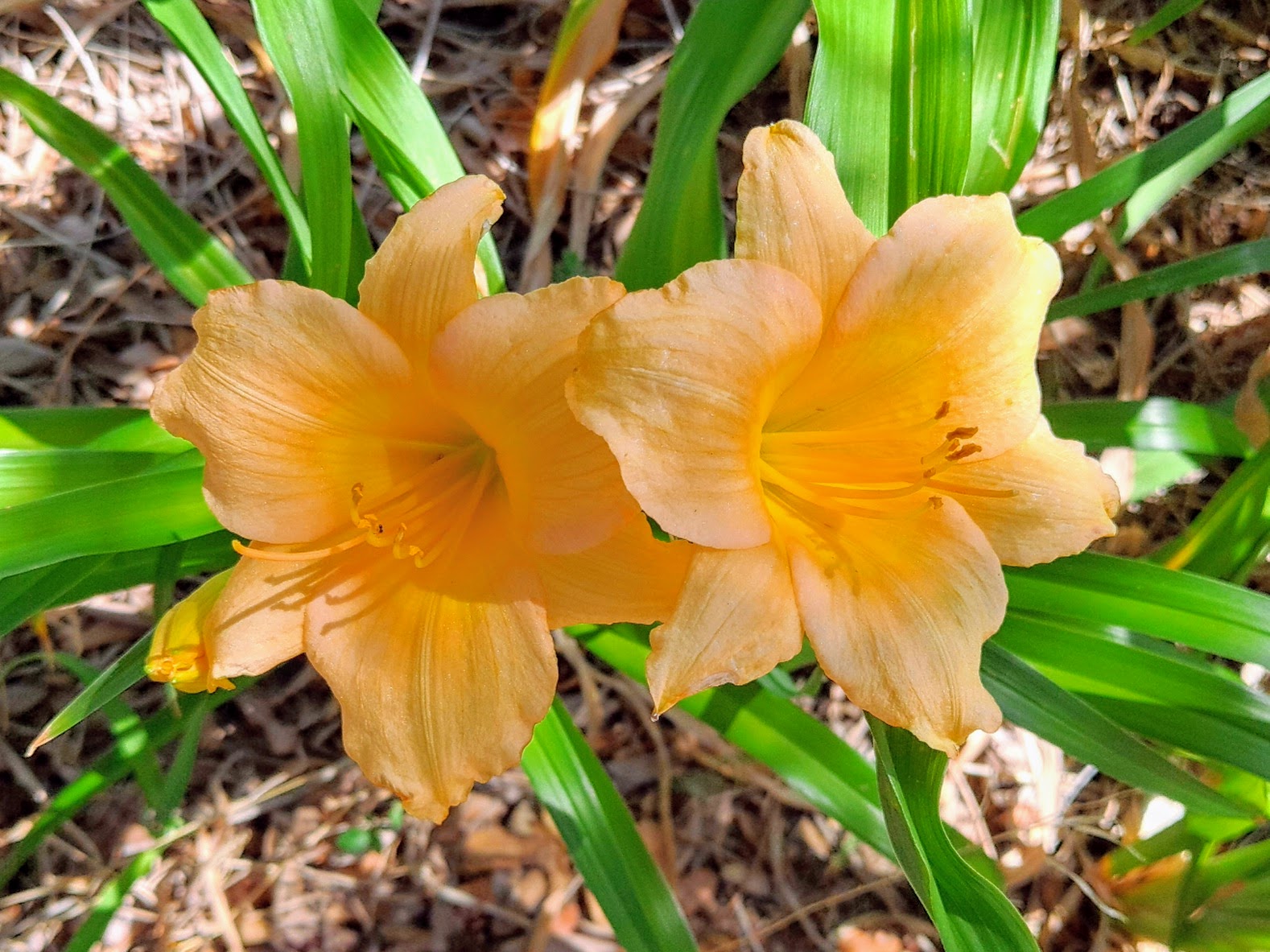
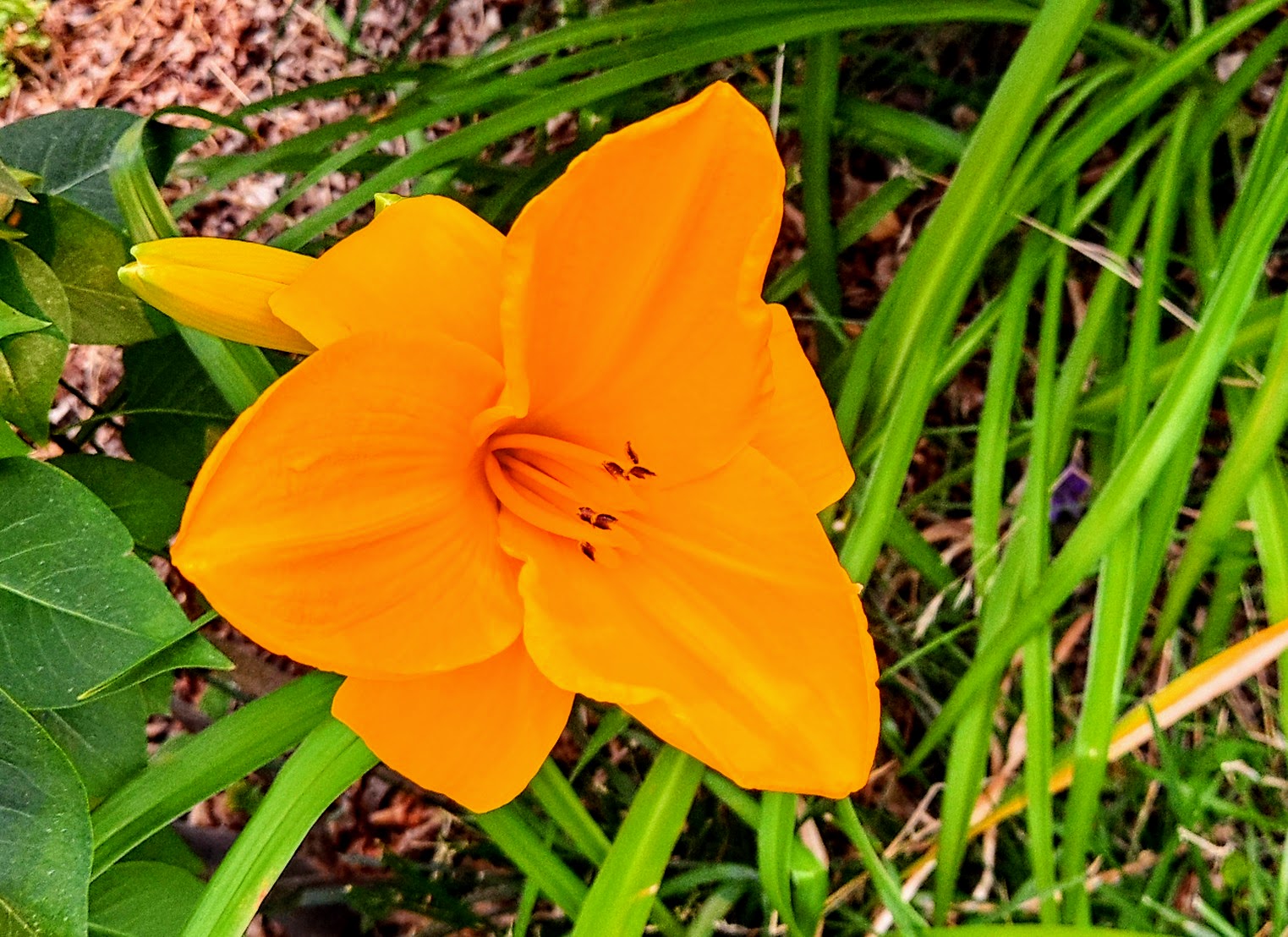
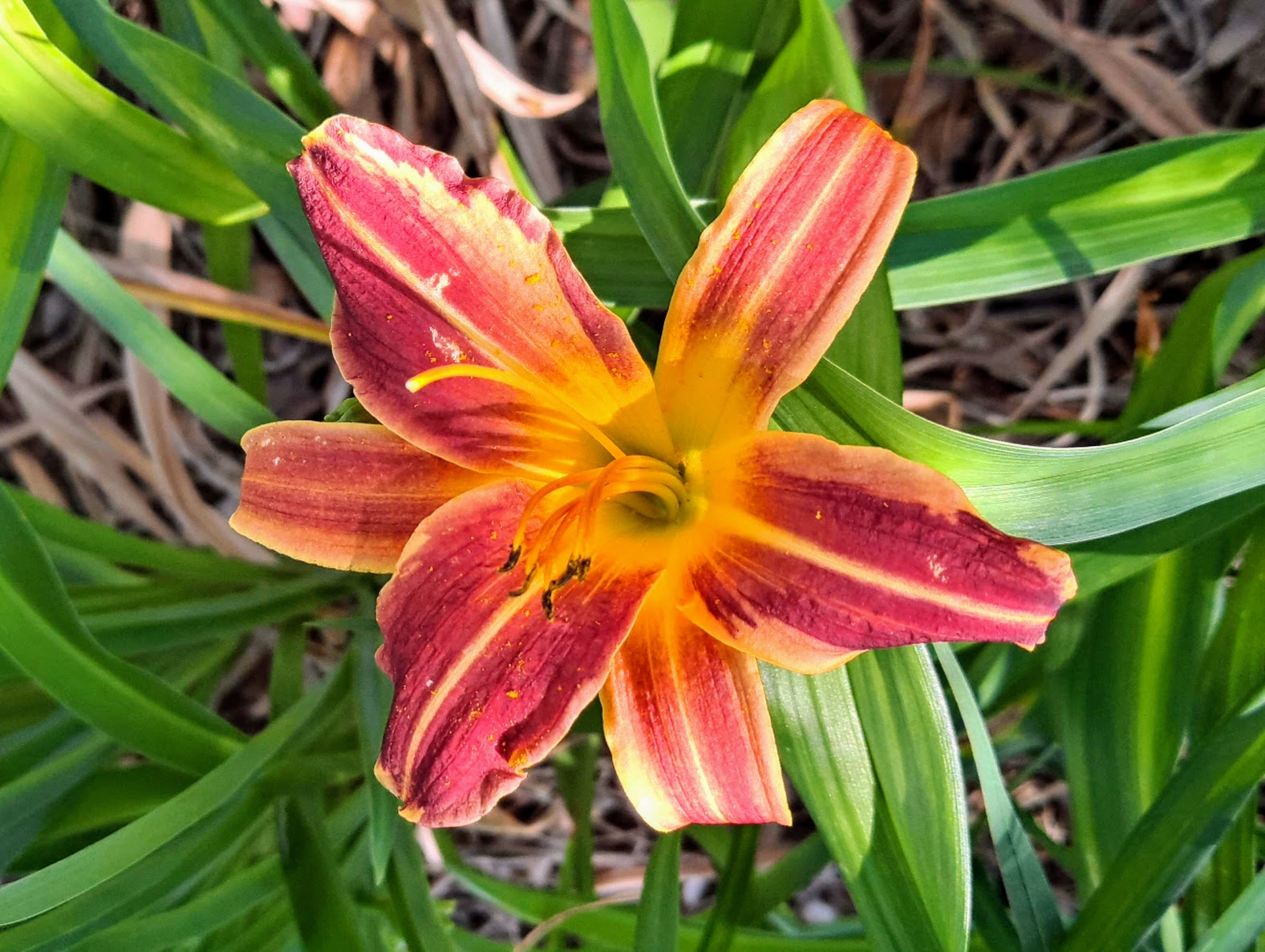
Although the spring flowers are gone, and the few summer flowers I planted — wildflower and dwarf zinnias — haven’t yet come in, there are a few flowers showing their colors.

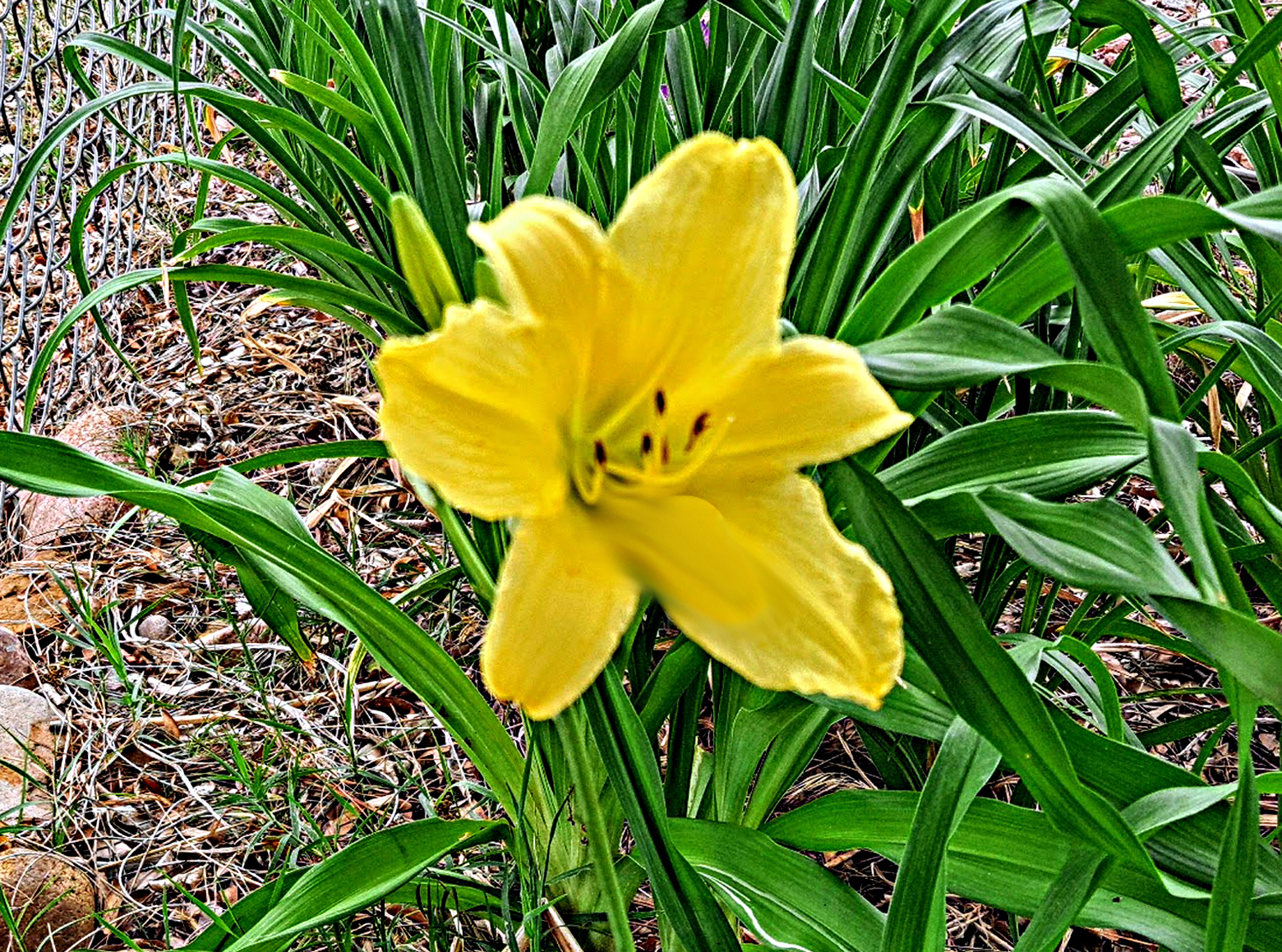
Daylilies.

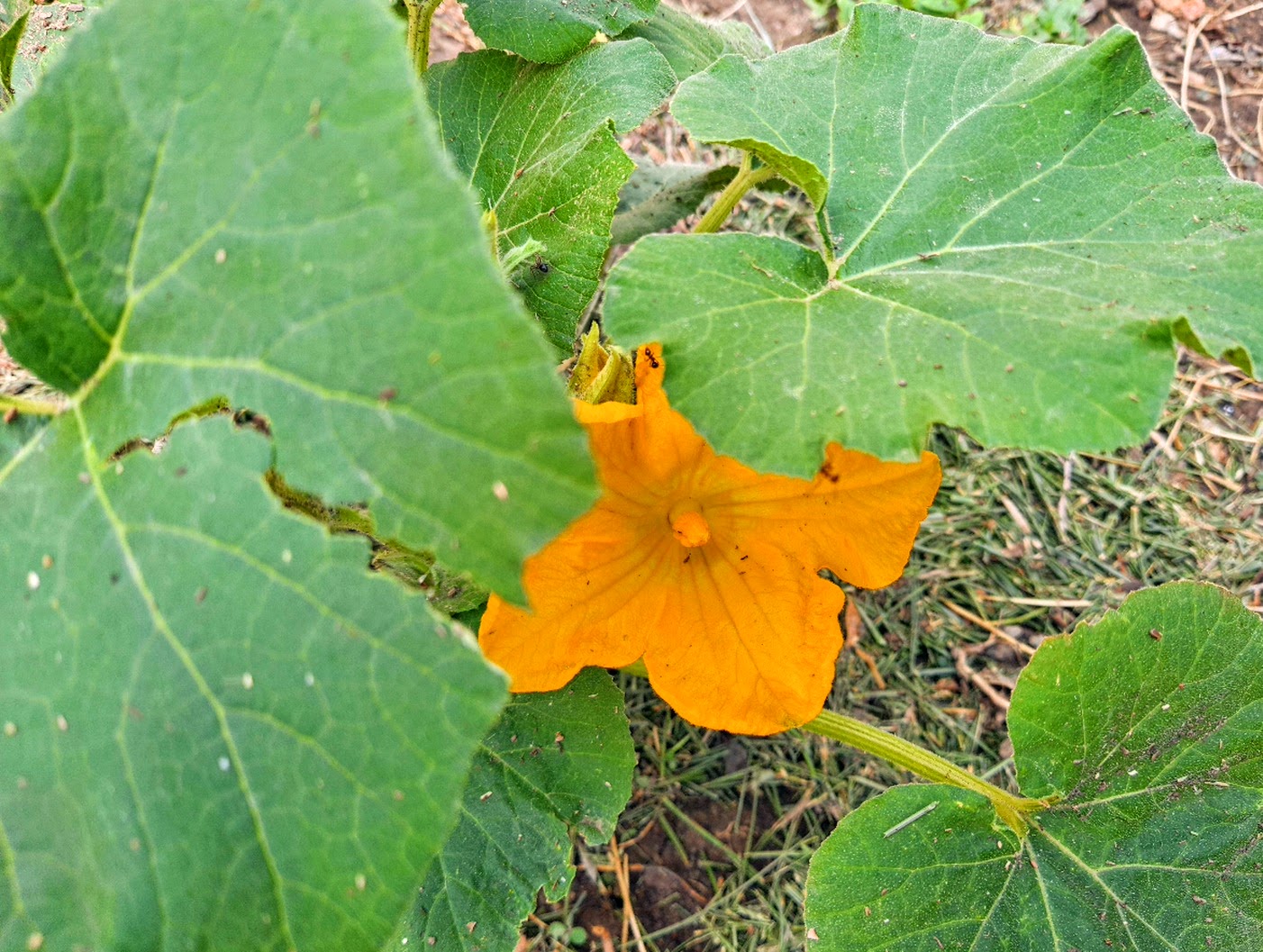
This shy pumpkin blossom.

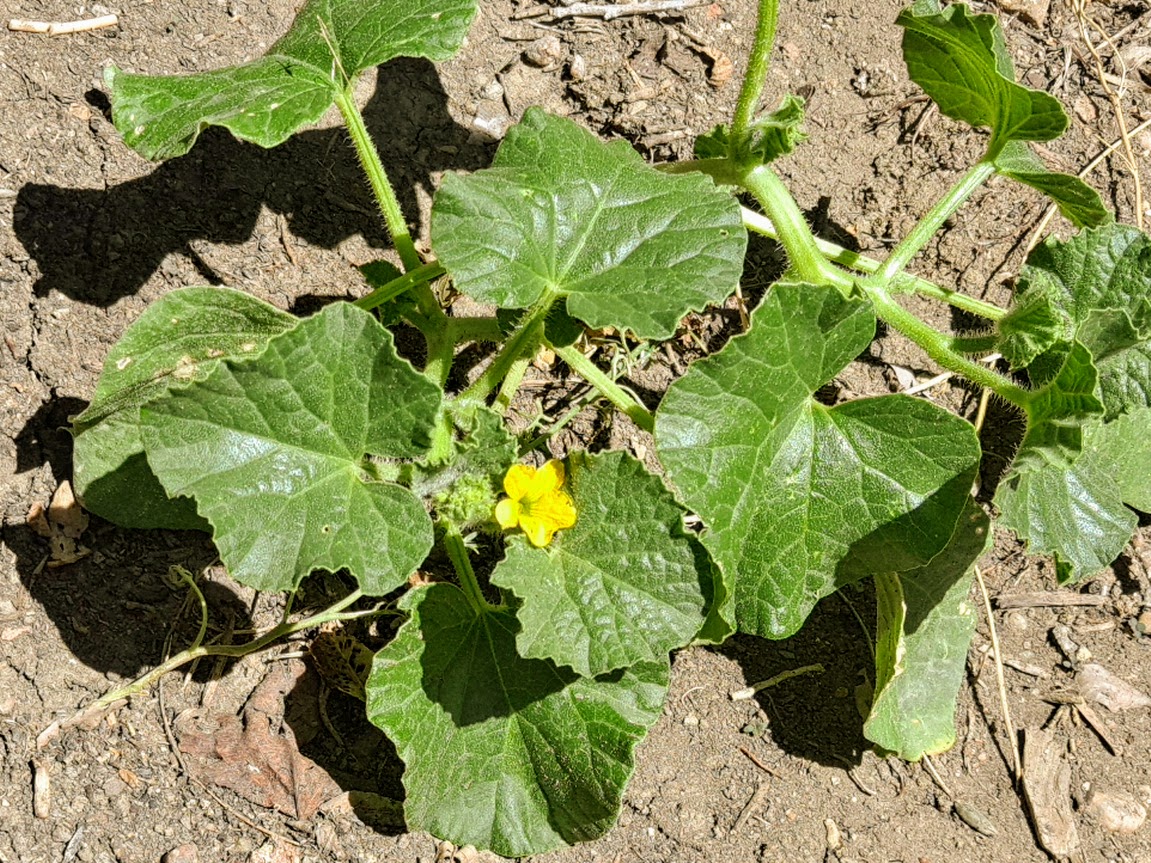
A dainty cantaloupe blossom.

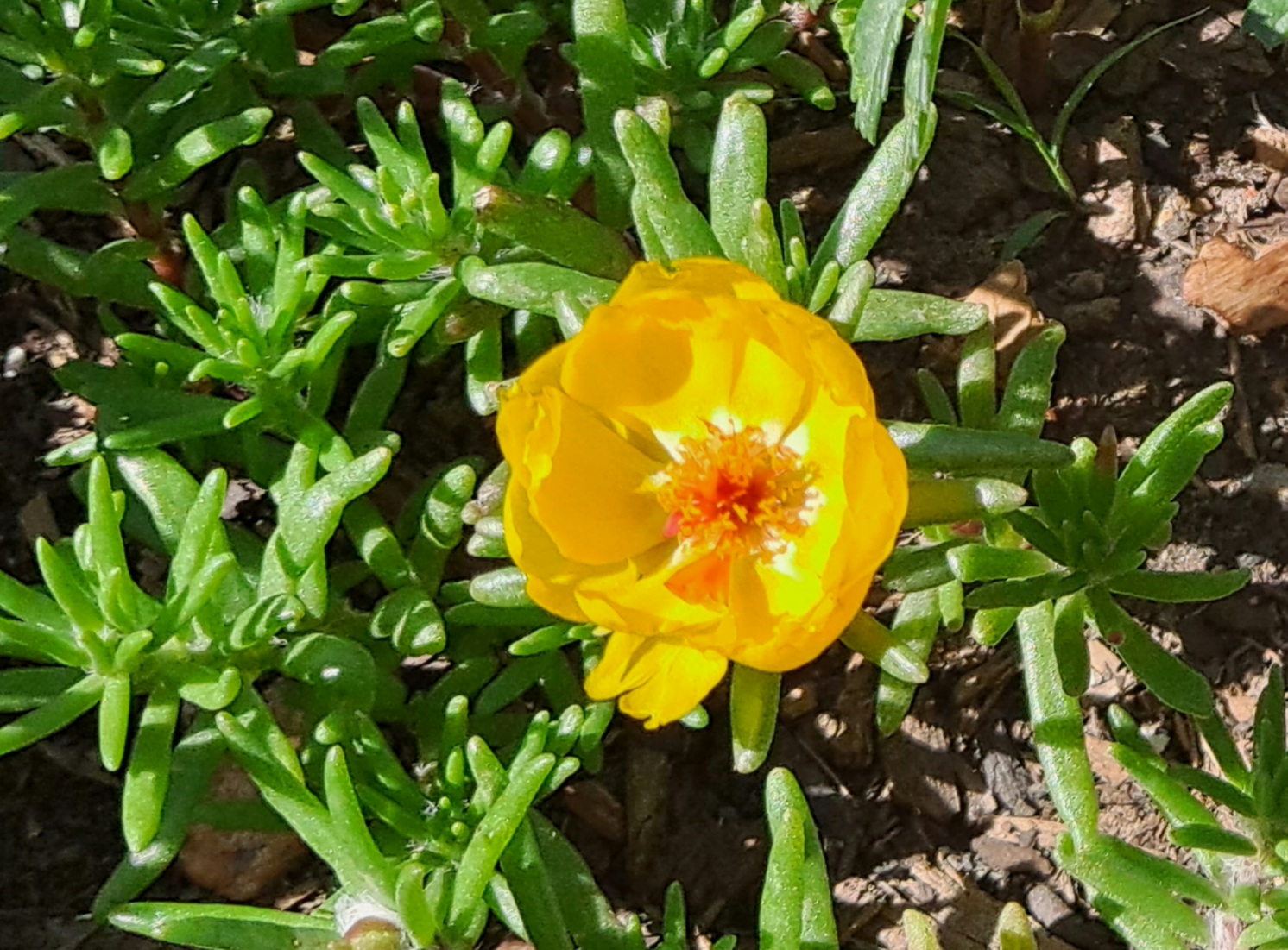
The first moss rose. My raised garden is filled with the greenery of flowers that planted themselves, but so far, there’s only this one yellow rose.

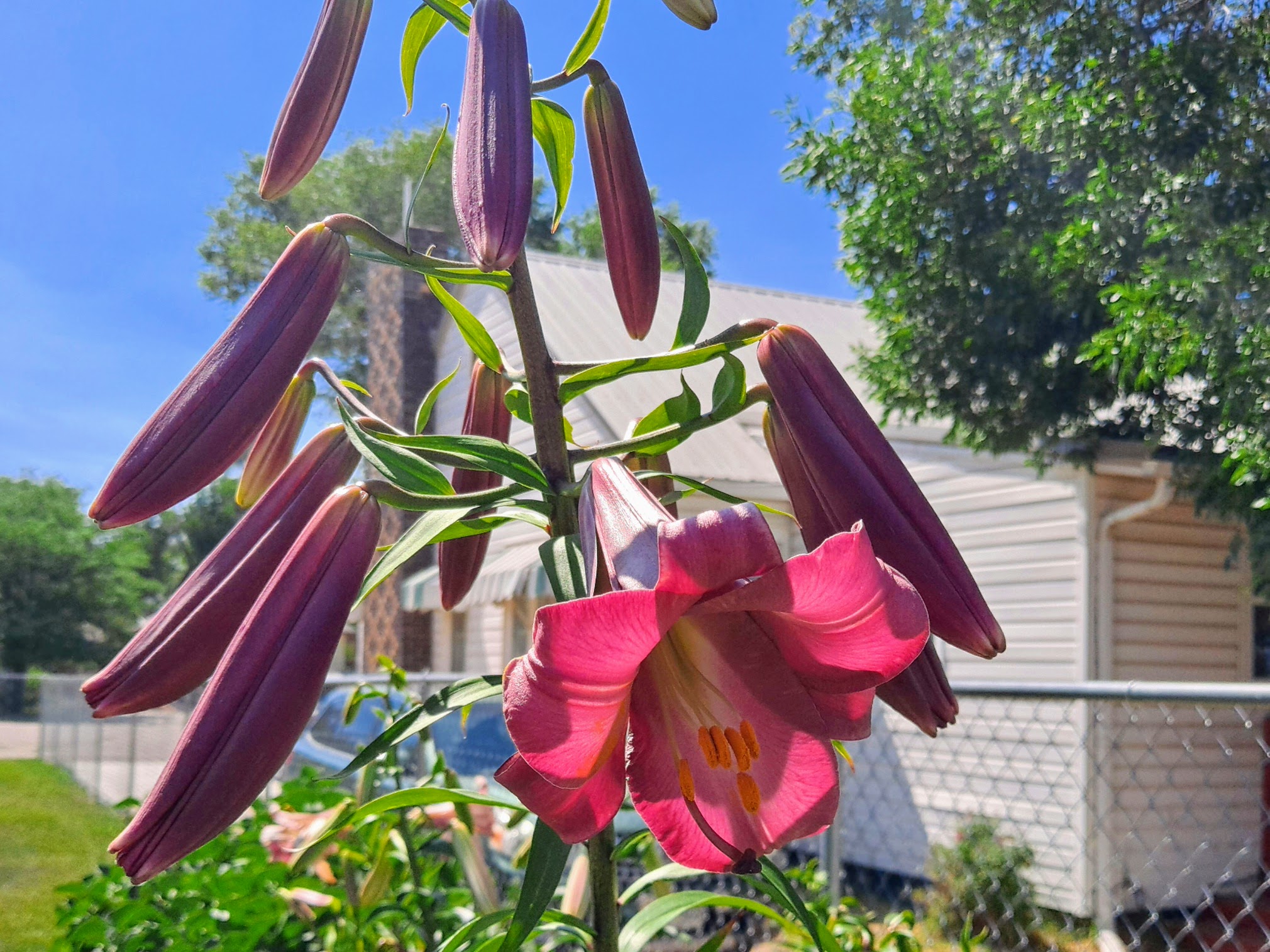
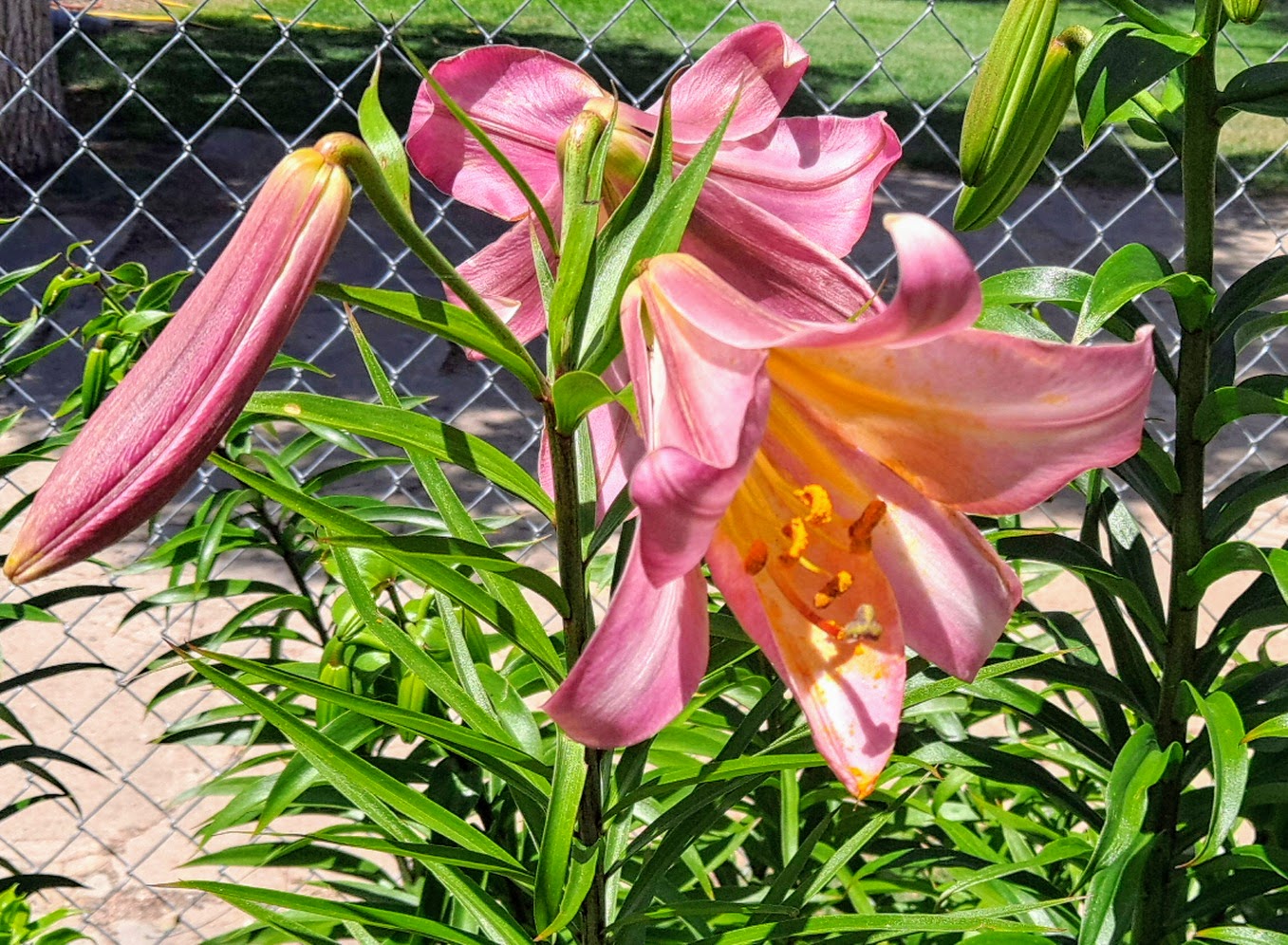
And then there’s this tree lily flower. I always thought lilies were an exotic flower, only able to be grown in special circumstances, so I was delighted when I found out I would be able to grow a forest of lily trees. (Lily trees are a hybrid of oriental and trumpet lilies, enormous flowers sitting stalks that grow to six feet or even more, and I have dozens of them yet to blossom!)

I realize this pink lily doesn’t fit with the color scheme of the rest of the blog, but orange you glad I posted it anyway?

***

Pat Bertram is the author of Grief: The Inside Story – A Guide to Surviving the Loss of a Loved One.

Lesson Learned. Maybe.

Daily writing prompt
What’s a lesson you’ve learned recently that shifted your perspective?

The most recent thing I learned is that you can’t transplant flowers when it’s 103 degrees and expect them to live.

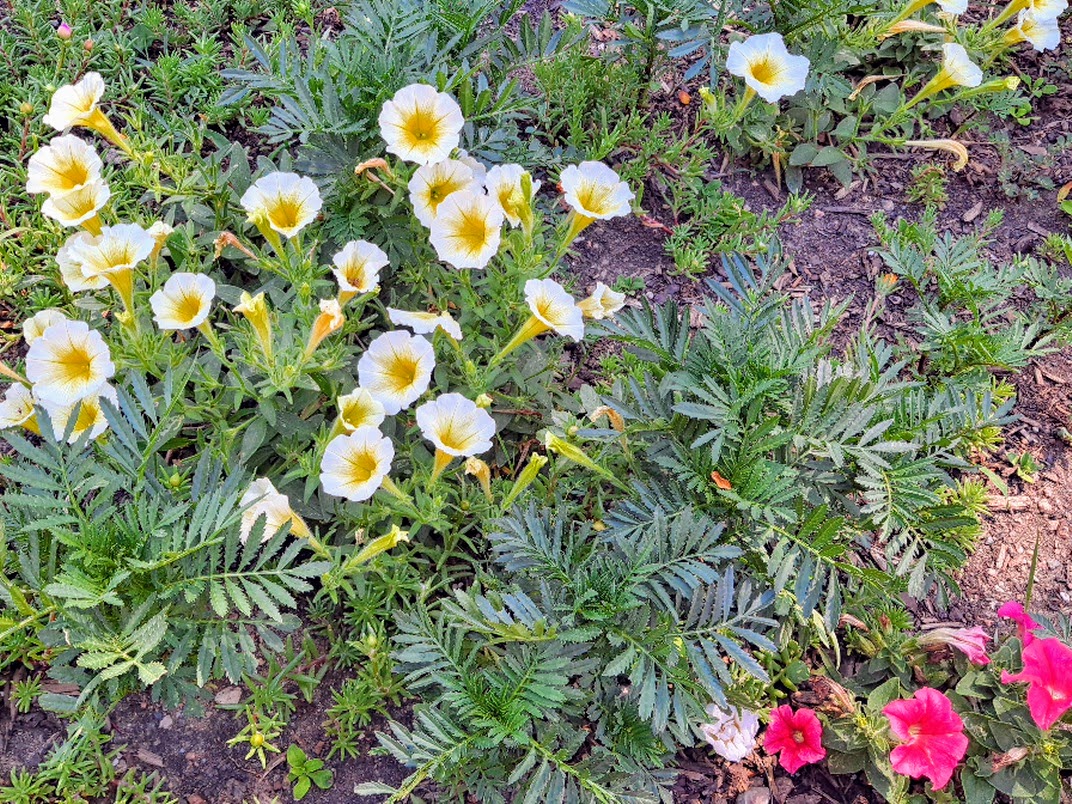
A month ago, I planted petunias in my raised garden (center of the photo), but the area is being taken over by the marigolds that planted themselves.

I’d been transplanting a few marigolds at a time, mostly to plant in my what I laughingly call my farmer’s garden, which consists of a single pumpkin plant, a single tomato plant, a single cantaloupe plant, and single watermelon plant. Fortunately (or unfortunately — I don’t know which), the marigolds remaining in the raised garden are doing so well I had a choice to let them do what they want, thin them, or transplant them.

Obviously, I went the transplanting route, otherwise I wouldn’t be writing about learning that you can’t transplant flowers in the heat.

I suppose, in a roundabout way, I merely thinned them since I don’t know if I can keep the transplants alive, though I just took a quick break to water them again in a half-hearted attempt to give them a bit better chance at surviving.

If it were only the temperature I had to concerned about, I might not worry so much, but it’s windy, the sun out here on the plains is incredibly intense, and the humidity is only 11%. Eek. Doesn’t sound like a temperature anything or anyone would like. I sure didn’t! I gave those poor plants a quick squirt and scurried back inside.

So that’s the lesson I learned. Maybe.

Did this lesson shift my perspective any? I doubt it. When/if the marigolds I transplanted don’t make it, I’ll probably try again or else run the risk of having them overshadow the petunias and moss rose that need to share space with those marigolds. (In the photo below, the marigold plants are those with the slightly bluish-green palm-like foliage.)

Although this lesson might not have shifted my perspective, for sure it reminded me to stay in out of the sun. And that’s a lesson I intend to take to heart.

***

Pat Bertram is the author of Grief: The Inside Story – A Guide to Surviving the Loss of a Loved One

Growing

Daily writing prompt
What is one way you have grown this year?

One way I have grown this year? Older. I’ve grown older. I don’t really feel any older than I did a year ago, but there is one indication of that growth: some things don’t heal as fast as they once did. Well, one thing — sinus congestion. So far, I’ve tried just about every possibility, both medical and natural, and still, I have that sinus pressure and post-nasal drip. I’m waiting it out now, hoping it will cure itself. It did once upon a time — when I was young, I had allergies so bad I was almost comatose, but for some reason, I got over it. Maybe I will again.

Maybe not.

That acceptance of what life deals out is part of growth, I suppose, though such acceptance isn’t a recent growth experience for me — it came from years of grief over my various losses and all the living that followed.

I’m sure this blog prompt is about personal growth, though I tend to think I’ve grown up as much as I am going to get. I’m not even sure I want to develop further. At this point, will any sort of growth make my life better? I suppose it’s possible, but I also suppose it’s possible that a period of de-growth will be coming as I continue to age. I hope not — I appreciate the lessons I’ve learned in life, and I hang on to whatever wisdom I gleaned from them. I’d hate to think I’d forget those lessons and have to learn them again. It was painful enough the first time!

Personal growth supposedly contributes to fulfillment, self-awareness, mindfulness, well-being and happiness, which I’m all for when it comes to younger people, and was all for when I was young. But me now? I’m as self-aware as I want to be (any more awareness would turn me too far inward); I try to be mindful whatever I am doing for safety’s sake if nothing else; I have as much fulfillment as I can handle; and my sense of well-being is doing as well as can be expected. Does that sound smug? I don’t mean to be. I am grateful for where I am in life.

Gratitude. Acceptance. Mindfulness. Those are all lessons I’ve learned, things I practice. That seems enough. For now, anyway.

As it is, the only growth I celebrate is what is in my garden. That sort of growth I can get behind!

***

Pat Bertram is the author of Grief: The Inside Story – A Guide to Surviving the Loss of a Loved One
True Magic

I mentioned yesterday that it had suddenly struck me with amazement — again — that I was living in such a beautiful place.

And the same feeling struck me again today.

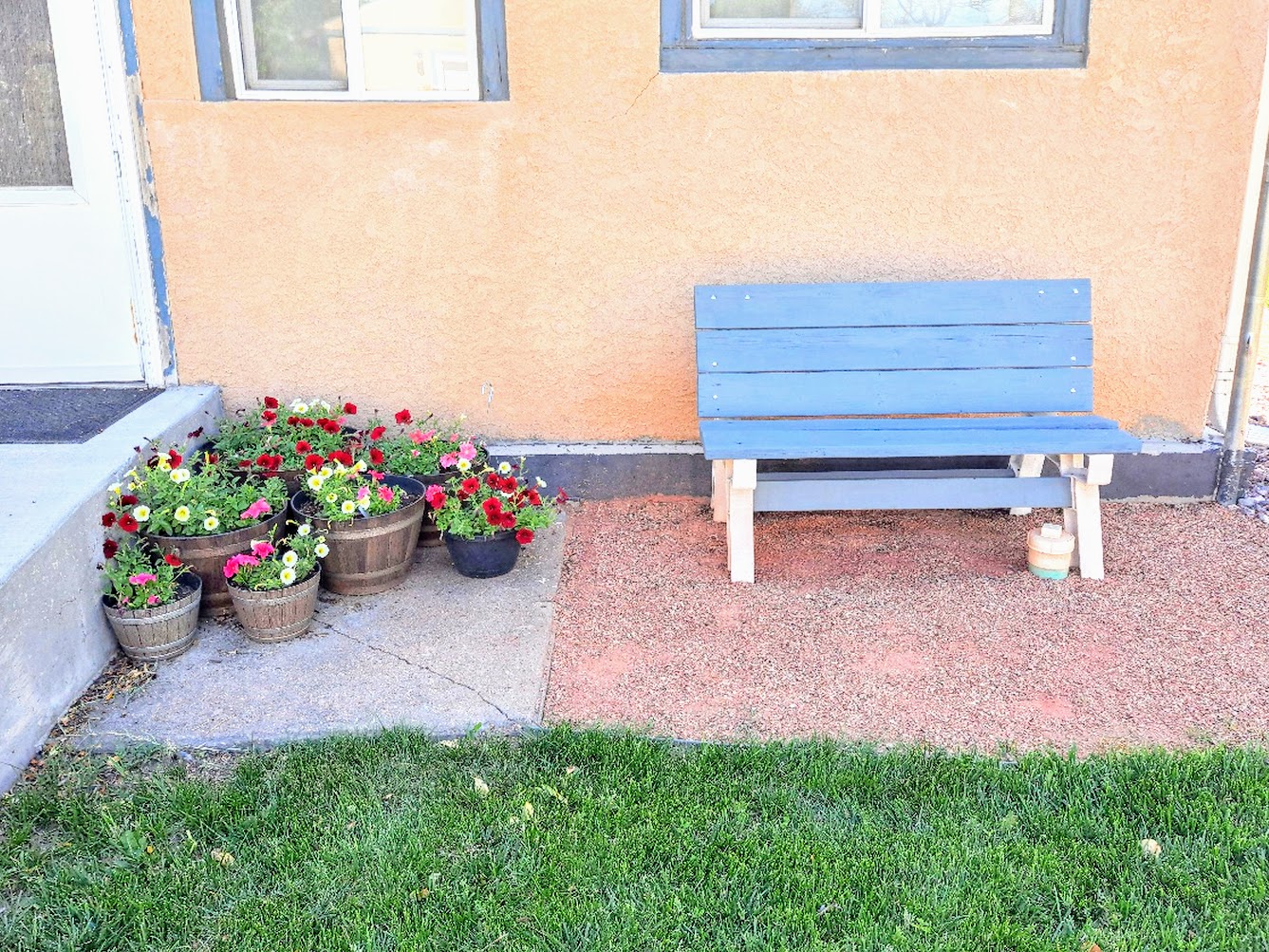
It makes sense why I feel so grateful and so blessed; I live in a truly magical place. I was out working in the yard today — overdoing it as usual — and for a change, I stopped to rest on my pretty bench because I was too tired to drag myself to a chair under the gazebo.

I sat there musing about my magic place. A few seeds, a few plants, some water, and suddenly, there it is — a magnificent yard, with views on every side. (Not suddenly, not really, but as the saying goes, nothing happens then everything happens.)

I’m not being ingenuous. When I moved here, there wasn’t much but weeds, dirt, and a rotting garage, so obviously I did a lot of work, but still, isn’t it magic? I didn’t really have anything to do with the plants sprouting from seed and then growing and having babies, and all of them showing off for me. I gave them the space and opportunity to do what they needed to do, but the rest was them. All the intelligence they needed to know what to do was in them, packed in a tiny kernel of information. I could only marvel at their cleverness at being able to do all the real work.

It’s a good thing they know how to come to life because I don’t. Putting the seeds and started plants in soil and watering what doesn’t die is about all I know how to do.

And apparently, it’s enough. Because sitting there, I saw a whole lot of beauty.

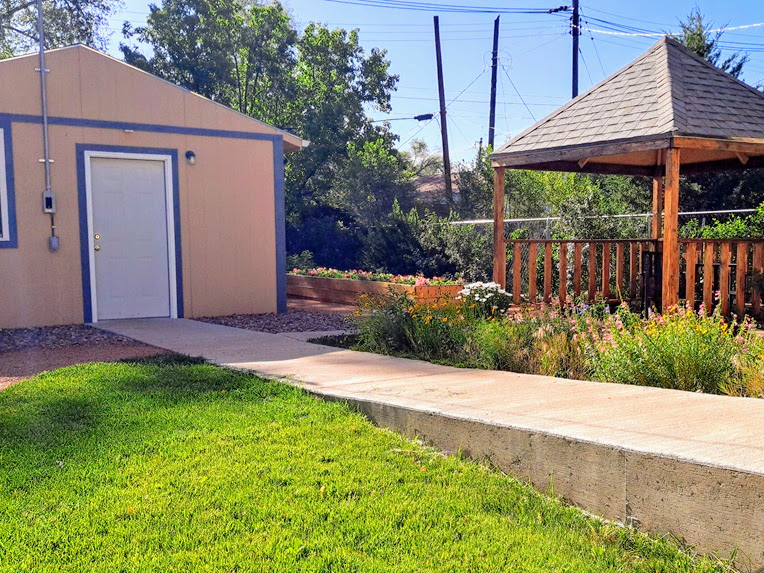
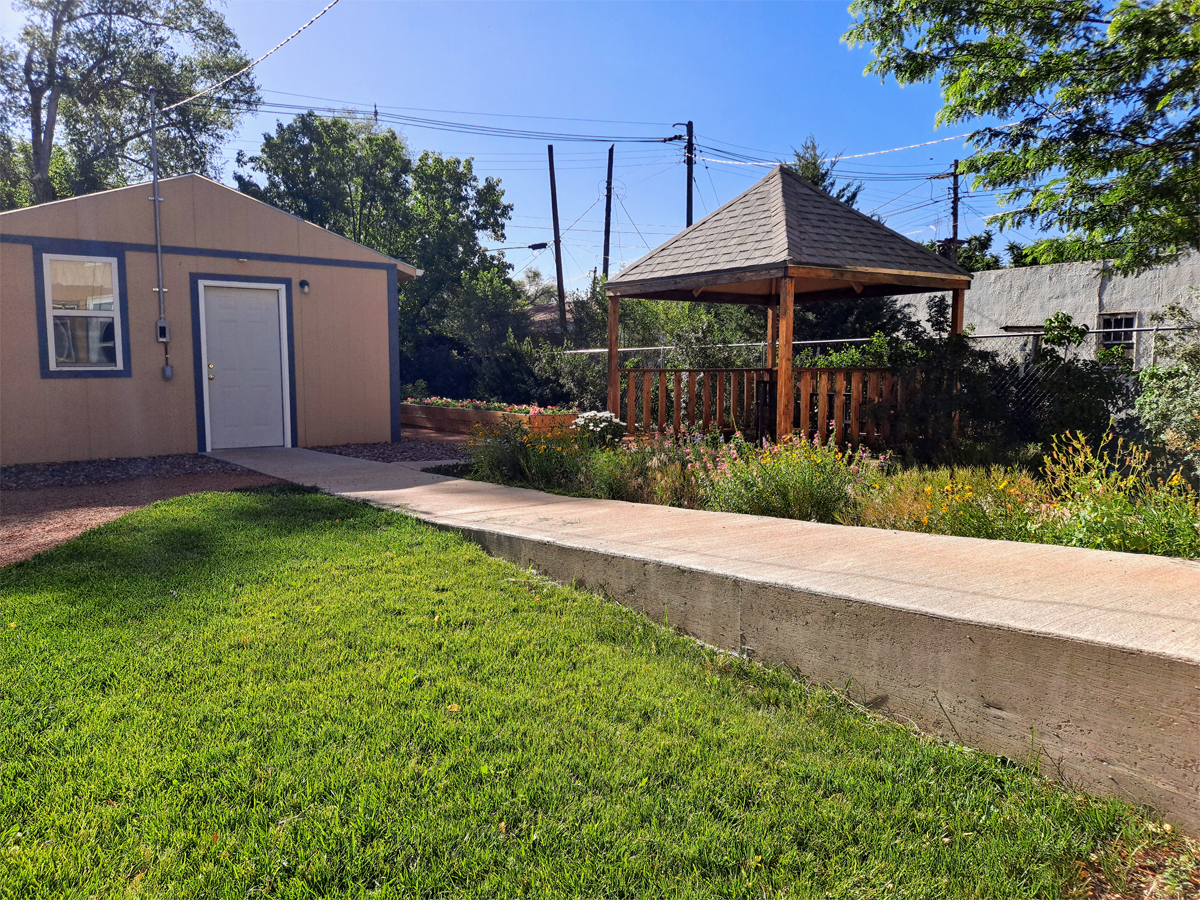
To the right of the garage is the gazebo, of course, and the raised garden, filled with petunias and a whole lot of moss rose that planted itself. There are also dozens of marigolds that decided they wanted to join the petunias and moss rose, but I am thinning those and transplanting them elsewhere.

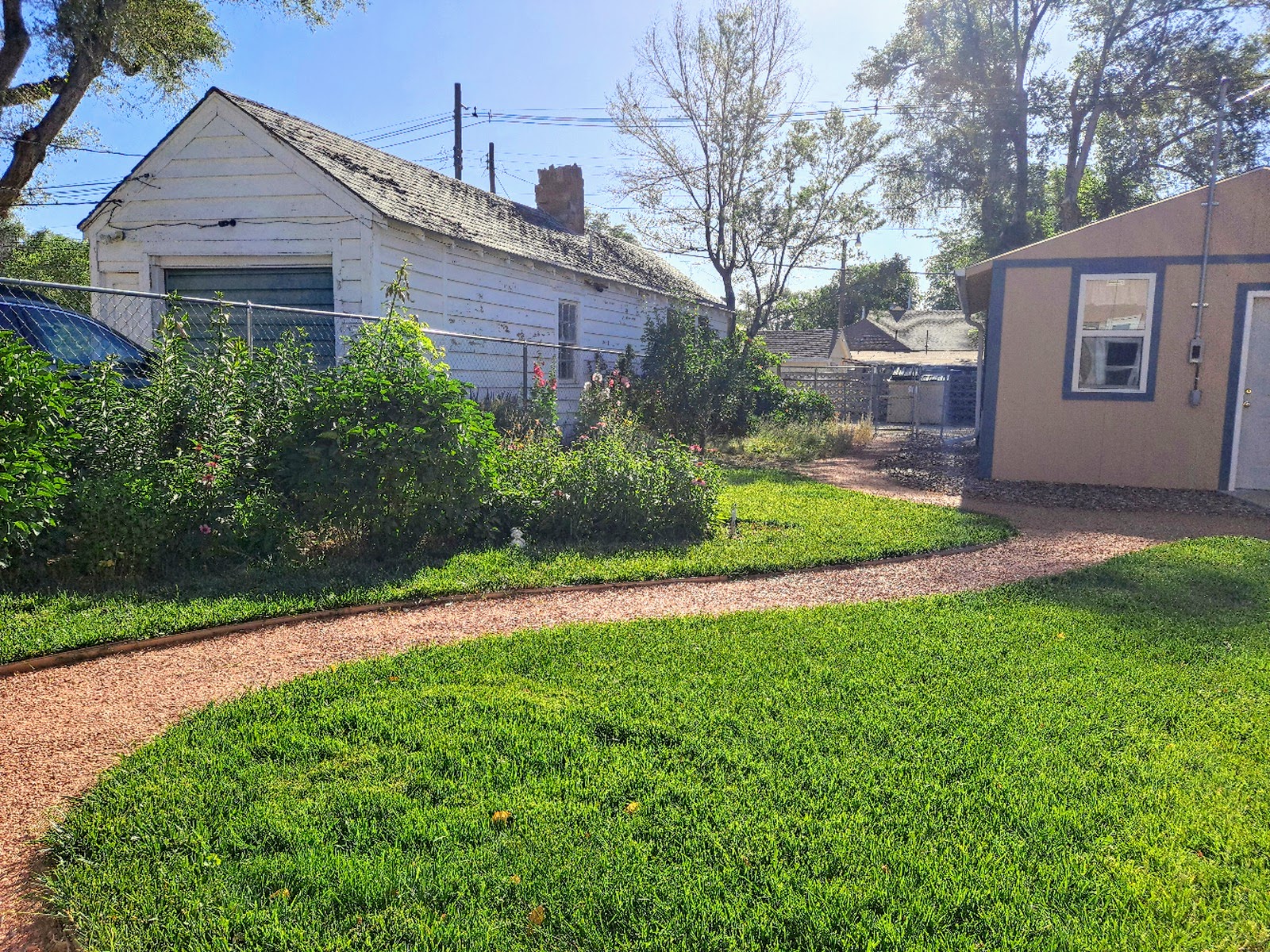
In front of the bench where I am sitting and to the left of the garage is . . . well, all I can call it is a mini park. Toward the back are the four food plants I just put into the ground as well as a patch of wildflower seeds. Behind the bushes, the lily forest is growing so very tall. One lily towers over me! With any luck, I’ll be seeing flowers in a couple of weeks.

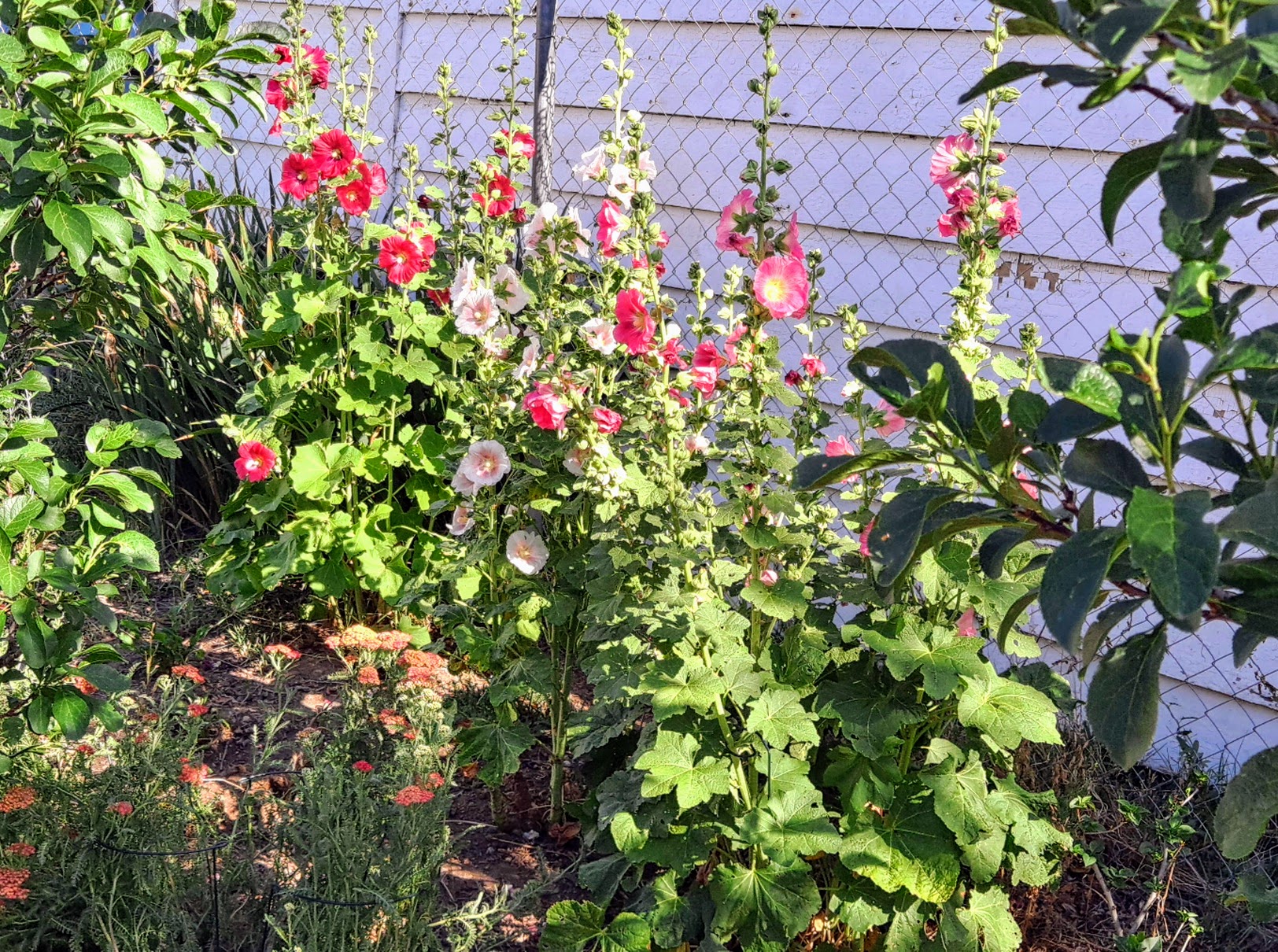
And peeking from behind the bushes, along the fence, are the hollyhocks that planted themselves.

True magic.

***

Pat Bertram is the author of Grief: The Inside Story – A Guide to Surviving the Loss of a Loved One
 

My June 10 History

I keep getting notices here on this blog about articles I posted on that same day during the previous ten years. I was going to opt out of the notifications, but somehow I never have. (Though I’m sure if those notices included my grief years, I would have opted out immediately.) It’s interesting to see where I was and what I was thinking previously on this date, and interesting, too, to see how much I’ve forgotten. Apparently, once I’ve posted something, it was out of my mind, which, come to think of it, was the point. I never purposely went back and read what I wrote, which considering how long I’ve been doing this blog, could take months, but now I peek at what shows up in my notifications.

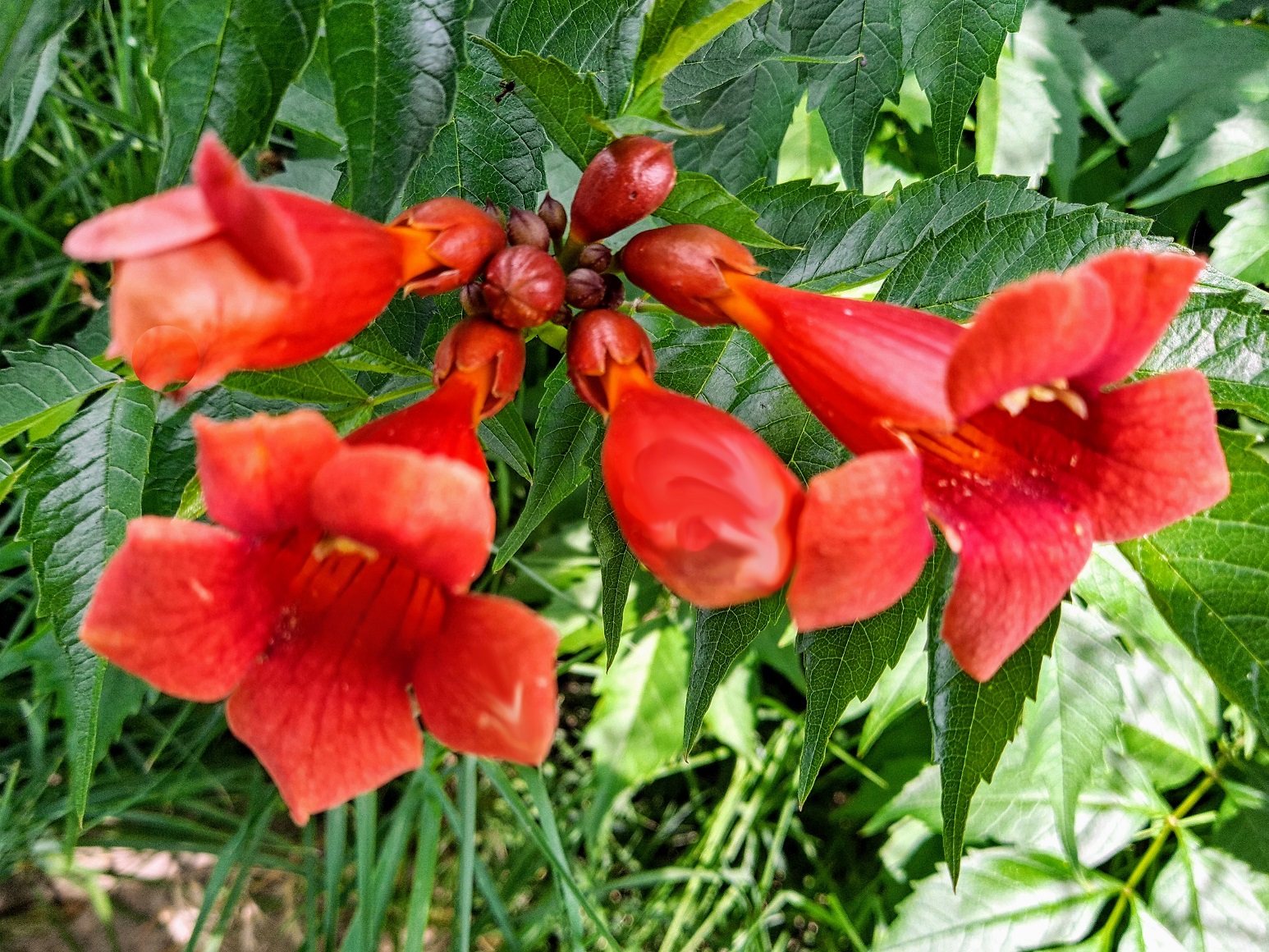
Six years ago on June 10, I lamented my lack of a garden. What I mostly had back then was dirt, dead weeds, some newly planted lilac bushes, and a few flowering plants that were here before me. Like the trumpet vine. In previous places I lived, I tried to grow trumpet vines, hoping for a bit of color, but they never managed to thrive. But here, they do. In fact, I have a hard time keeping them in check — I find starter plants all over the place. I dig them up and plant them where they would better serve me, and though slow to grow, most are still alive.

The old vines are blooming cheerily right now, which adds even more color to the garden I never thought I’d have. I remember back then telling a neighbor that in ten years I should have a beautiful yard, and I was partly right. I do have a beautiful yard, but it only took six years to get to this point.

It’s funny, too, that in that six-year-old post I mentioned how bad the winds were, and oh, we’ve been having terrible winds! I wonder what it is about this day and winds? Well, it is southeastern Colorado, which means we almost always have winds.

In 2022, on this day, I wrote about waking up every morning amazed that I am living in such a house on a beautiful mini estate. How very strange it is that I stood outside my house just today, thinking that very same thing — how amazed I am (and so very grateful) to be living here. Perhaps, like the winds, that isn’t a coincidence since I often feel gratitude for this turn my life took, but today it truly did strike me anew how very blessed I am.

Last year, on this day, I wrote about feeling detached from the garden that five years previously I’d wished for. I just didn’t care. (I didn’t need that blog to remind me. I remember how I felt) Oh, I did the necessary work last year, but beyond that, I didn’t take many photos, seldom blogged, and just felt as if it weren’t worth the effort because the intense sun just burned everything.

Whatever struggles I had last year — both with my attitude and the garden itself — didn’t destroy anything permanently. The garden is going well this year, I’m actually enjoying doing the work, and yes, I am still appreciating my cheery trumpet vines.

***

Pat Bertram is the author of Grief: The Inside Story – A Guide to Surviving the Loss of a Loved One
Being Snippy

I took a day off to recuperate from working too long in my yard two days running, but I went to town with a friend and ended up buying more plants, mostly plants for my “farm” garden rather than my flower garden, though I did buy one dianthus to fill in a blank space in one garden.

So, of course I spent yesterday planting all those new starts, not just the dianthus, but one pumpkin, one tomato, one watermelon, one cantaloupe. Sounds silly written out like that, but I don’t eat much of any of those things so one plant each should do it. Besides, the main reason to get those particular plants is that they take up a lot of room, and I have a back section of my yard that screams for green. I want to see if those vines with their pretty flowers will fill the area as I hope. And who knows, I might get an edible treat or two out of the deal.

There are several plants, mostly the cottage pinks, that are overgrown, and I’ve just let them go. I have a really hard time gathering the ruthlessness necessary to do such hatchet jobs, so I wait until I have a lot of aggression I want to bleed out. Well, yesterday I was feeling snippy in the meaning of short-tempered and irritable, so I got out my pruning shears and, closing my ears to their silent screams, snipped away as much of those poor plants as I could. I was going to wait until they went to seed, but apparently yesterday was the day I needed to get rid of some aggression.

I’m not sure why I was so disgruntled — well, I certainly spend too much time paying attention to what’s going on in the world as if it were a thriller I was reading in real time, and that makes me worry too much about things I have no control over, and for sure I’ve been stiff and sore after working so much.

Apparently, my revenge on my poor body for giving me grief is to give it even more grief because yesterday, once again, I overdid it. With any luck (and a bit of discipline) I might manage to take it easy today, only watering my newly planted gardens and closing my eyes to the work still to be done.

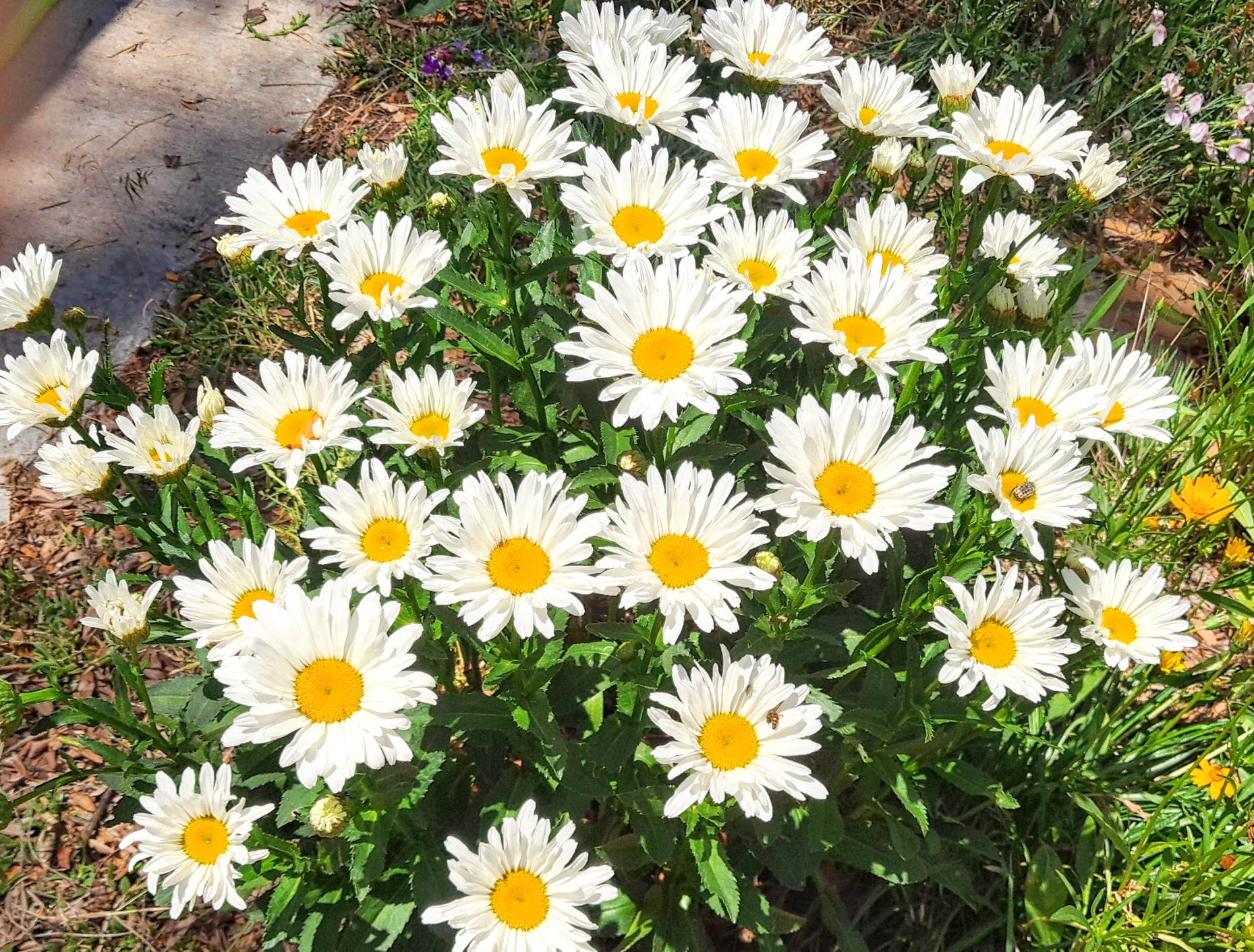
One benefit of having been so ruthless yesterday is that I was able to clear out around the daisies. And oh, aren’t they glorious! I might even snip off a flower or two to liven my kitchen.

Sometimes being snippy is a good thing.

***

Pat Bertram is the author of Grief: The Inside Story – A Guide to Surviving the Loss of a Loved One
 

Overdone

Every year I tell myself I won’t overdo the work in my yard. Last year, I wasn’t all that interested in the garden, so I seldom worked too hard, but this year, I’m back to my old tricks. Because I tend to be goal-oriented and because unfinished tasks irk me, it’s hard to do just part of the work and let the rest go for another day. A couple of days ago, I cleared out a patch of the spent larkspur to create a space for some wildflower seeds I’d been gifted. (Since the giftee is coming to visit in a few months, I thought I should at least make an effort at growing the seeds.)

I did overdo, but I got the job done.

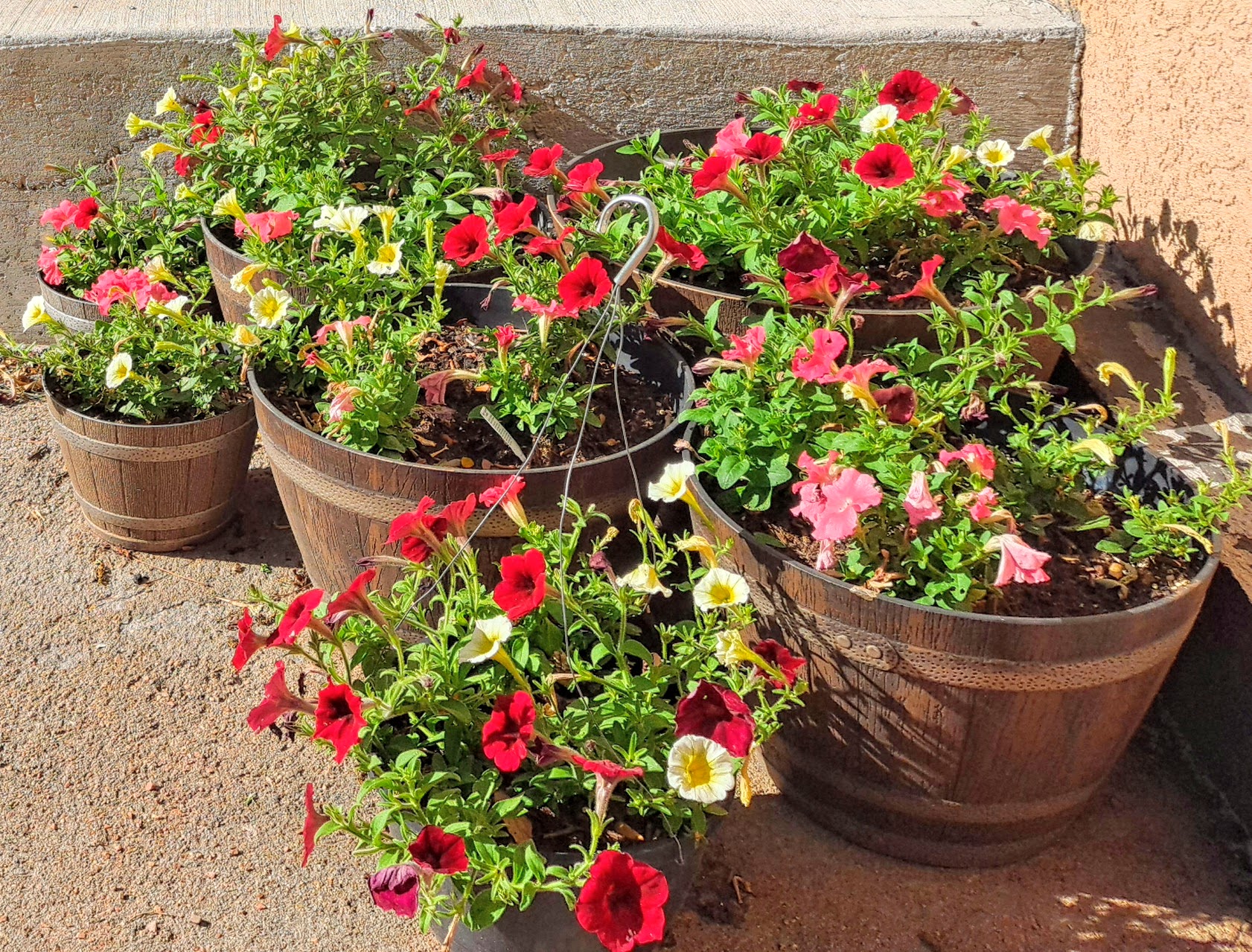
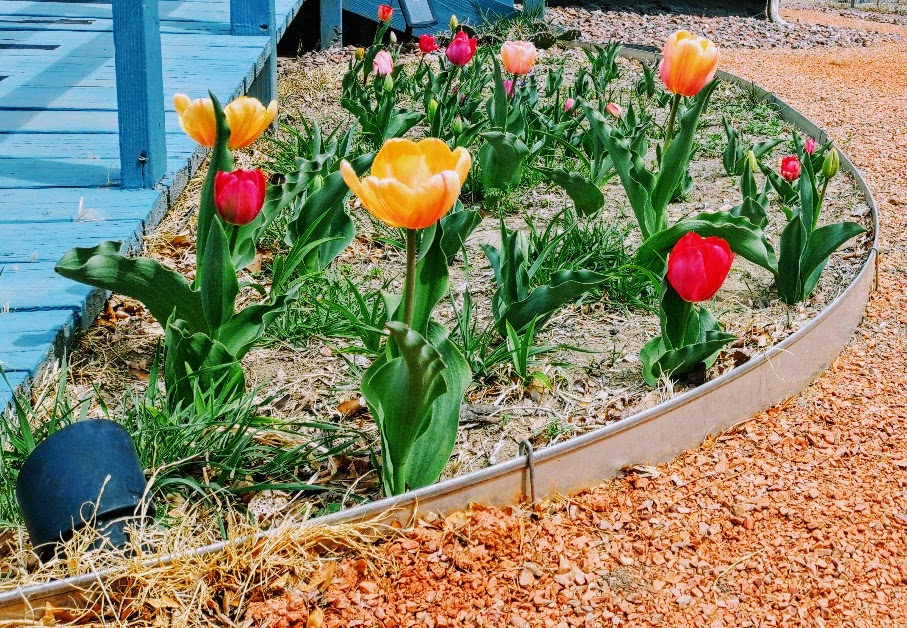
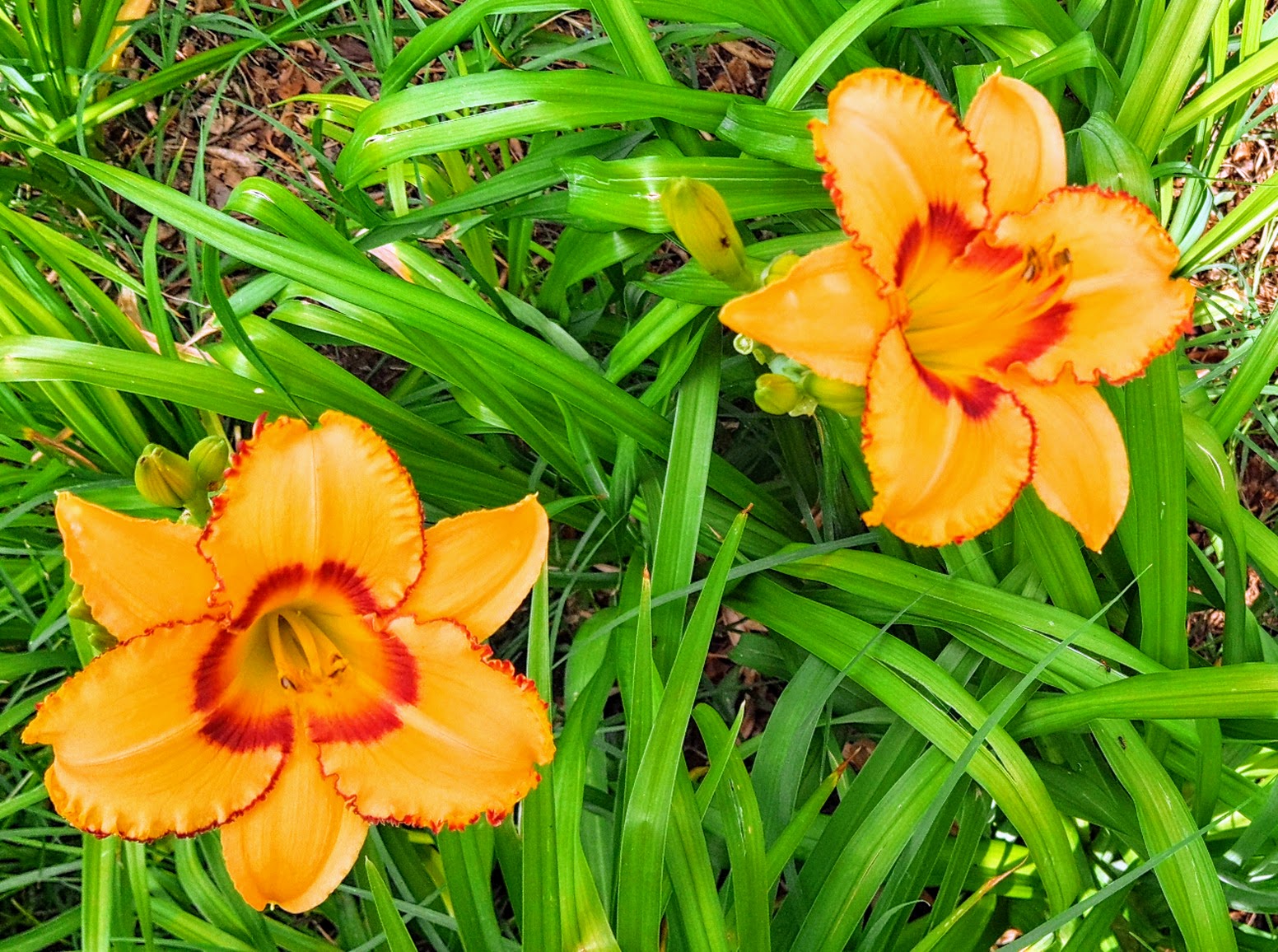
If that was all I was going to do for a while, I would have been fine, but then yesterday I decided to start clearing out the tulip gardens. Despite what the photo accompanying this post shows, the tulips are long gone — in fact, all that was left were the half-rotted leaves. After the tulips came the larkspur. (I was going to post the photo of the larkspur in full bloom, but I’m getting a bit leery of posting photos of my house, even though I’ve done so before.) And then the larkspur died off for the season.

So, yesterday, I started to clear out those two semi-circular beds, one on either side of the ramp. I figured to do a little and then a little more another day, but I started on one side, and then, determined to finish, did the other side. Yikes! Talk about overdoing! Although those garden areas look small, they loom large when one has to do the work. (Each semi-circle is about 15 ft by 5, so that isn’t all that small.)

After I cleared, hoed, raked, I planted dwarf zinnia seeds. So now it’s just a matter of watering them and keeping my fingers crossed.

I’m rather stiff today, totally overdone to be honest, so for sure I am going to take it easy. And as for the rest of the after-spring clean-up? I’ll take it nice and slow.

At least, that’s the plan. Who knows what I will actually end up doing, though chances are, as usual, I will overdo.

***

Pat Bertram is the author of Grief: The Inside Story – A Guide to Surviving the Loss of a Loved One
 

Note to Self

Note to self: Do not wear a fuzzy sweater when going out to walk around the yard.

Actually, it wasn’t the plush sweater that was the issue; it’s what I did once outside that instigated this note.

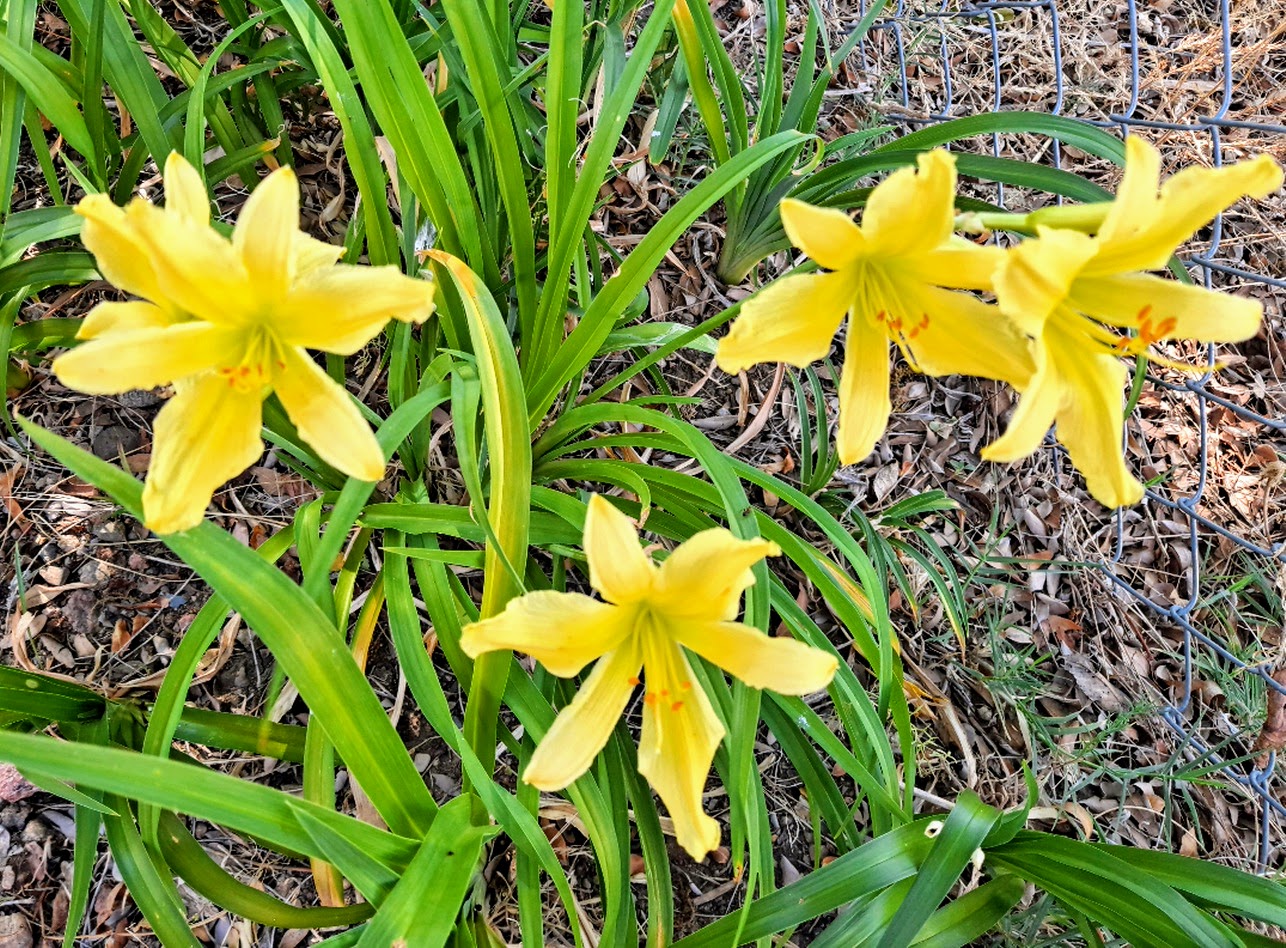
I was taking my daily stroll around my garden just to see what’s new, and I came across a couple of hollyhock seedlings in one of my daylily patches. I always have a hard time getting rid of desirable plants, misplaced though they might be, because these volunteers are often sturdier and easier to take care of than the ones I purposely planted. I also figure that anything wanting to live that badly deserves a chance. But hollyhocks in my daylilies? Nope, sorry. Because of their size and the thickness of their stalks, hollyhocks can take over an area, which wouldn’t be so bad, but since they are biennials, living for a year or two and then dying, I would eventually end up with neither hollyhocks nor daylilies.

So, much as it pained me, I dug up those hollyhocks. (I tried to simply pick them as if they were weeds, but the thick roots were already five or six inches deep.) Since I was already calf-deep in that garden plot, I stayed and pulled up a tub’s worth of dead larkspur, creeping Charlie, a couple of leafy spurge plants, and a whole lot of foxtail grasses that had gone to seed. Now those scraggly invaded daylilies have a chance.

I did temporarily leave a couple of other hollyhock babies since I’m not sure if they will be troubling any nearby plants. The New England asters in the area never do well, so perhaps it would be a good time to replant them.

Or not. I’ll have to wait to see how I feel when it comes time to do the larkspur cleanup in that area.

All that was great. No problem. (Surprisingly so since I’d slipped into a pair of sandals to go outside for what was supposed to be a brief gander at the yard — not the best footwear for a sustained bit of work.) I didn’t discover the real issue until I got inside and found my poor sweater covered in long barbed grass seeds that had managed to imbed themselves into the fabric. So, I had to spend as much time cleaning up the garment as I did cleaning up the garden.

Such is the life of a spontaneous gardener!

But still, it would behoove me to pay attention to what I wear outside or else pay attention to what I do outside when I am wearing whatever it is I am wearing.

***

Pat Bertram is the author of Grief: The Inside Story – A Guide to Surviving the Loss of a Loved One