A Grass-Filled Day

I experienced a bit of a dichotomy today. I spent the first couple of hours in my yard planting grass, and the second couple of hours pulling up grass.

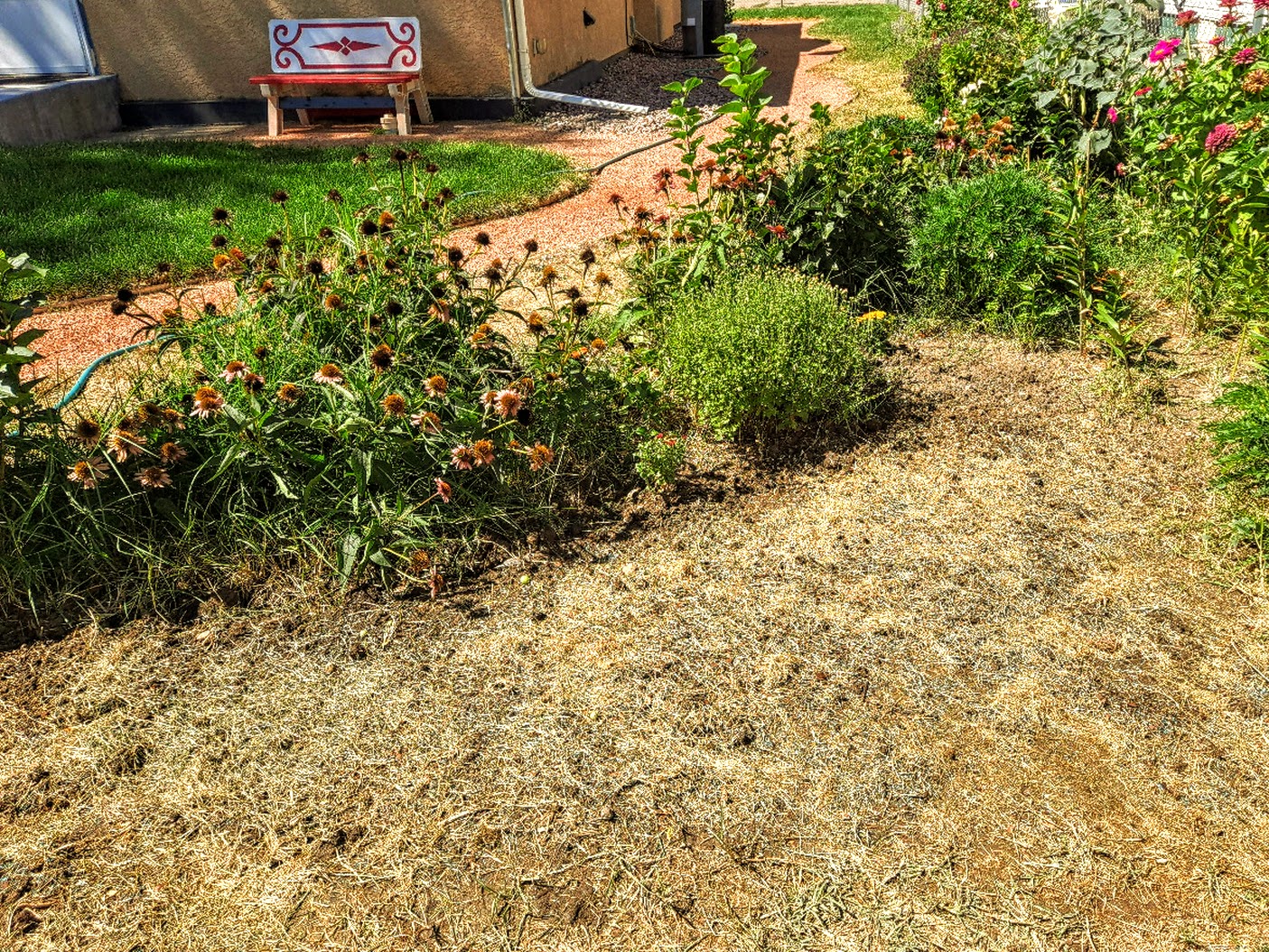
I suppose it’s not as bad as it sounds, or as bad as it felt while I was doing these two tasks because I was working in two separate gardens, and the grasses were completely different from one another — one was a turf grass and the others were weedy grasses. I might not have paid attention to the weedy grasses but the recent chill as well as a mist of rain and high humidity made all those grasses go to seed. Not only was it unsightly, but I certainly don’t want to deal with even more weedy grasses next year. So I took the time to pull up the grass.

This problem I have with weedy grass is a good example of what happens when you remove one type of organism or organic material from an ecological niche. Last year, this island garden (as I call the strip of ground surrounded by sidewalks) was inundated with Bermuda grass. I managed to dig up most of it, thinking that would be the end of the problem, but no. Immediately other grasses rushed in to fill the niche.

Oddly, when I could have used all these grasses to create a semblance of a lawn, none were around. All I had were small patches of Bermuda grass and a whole lot of tall weeds like ragweed, kochia, and wild mustard.

Oh, well. The work keeps me busy and gives me an excuse to be outside. It’s supposed to be healthy — being outside — but even if it isn’t, I like expanding my reach and making use of the whole property, not just the house. It makes me feel . . . rich.

Now it’s just a matter of waiting to see if the turf grass grows as well as the weedy grass does. I’m having a lot of problem with the Bermuda grass encroaching on my lawn, but I’m not sure I care if the same thing happens in the area I planted today. I just need a way to access the back of the garden, it shouldn’t encroach on my expensive grass, and no matter what grass ends up there, it will all mow the same.

I hope you’re not as bored with this post as I am, but as always, I write about what’s on my mind, and today was a grass-filled day.

***

Pat Bertram is the author of Grief: The Inside Story – A Guide to Surviving the Loss of a Loved One. “Grief: The Inside Story is perfect and that is not hyperbole! It is exactly what folk who are grieving need to read.” –Leesa Healy, RN, GDAS GDAT, Emotional/Mental Health Therapist & Educator.

Unscheduled Hours

It’s amazing how many hours there are in a day when you don’t spend four hours working in the yard in the morning and four hours caregiving in the late afternoon.

Well, actually, there are the same number of hours in a day no matter what you are doing, but without all those hours of scheduled activity, there are a lot of free hours.

Normally, I’d be working outside doing something — cleaning out my overgrown gardens, for example — but it’s a cold, dark day and I don’t have to go to my job, so after a short walk, I’ve been treating myself to an entire day inside. So many hours to do nothing! Not that I do nothing, you understand, it’s that I could if I wanted to. Mostly I’ve been reading and relaxing and looking out the window, planning my next gardening project.

What struck me today is how, of all my creative endeavors over the years, gardening seems to be the most multi-faceted. Painters use their minds and eyes and hands to create their art. Writers use their minds and hands (or mouth if using speech-to-text software) to create their art. But gardeners use minds, eyes, hands, and bodies. (Sculpting is also physical, but since I’ve never sculpted, my premise can still stand. And anyway, a garden is a type of sculpture — a living sculpture.)

Where many artists and writers rely on their own knowledge and inspiration, letting paint or words flow from within, as a new gardener, I can’t do that since I have no “within” — no intrinsic knowledge of gardening. So in addition to the other facets of landscaping as an artform I’ve already listed, I’d have to add research. Lots of research. Not only do I need to learn what plants will work in this climate and in this soil, I have to learn how to care for them. Admittedly, I often get the plants or seeds first and then figure out what to do with them, but now that I’m becoming more familiar with this artform, I’m doing more preparation and planning.

Also, I am paying more attention to the aesthetics of my garden plots and the yard as a whole rather than just concentrating on each individual plant. Because of this, I’ve been doing more to sculpt the shape of the gardens and create a more pleasing balance, such as replacing low-lying plants with taller ones or vice versa. And standing at the window, looking out, gives me a broader view of the yard and a better sense of what I can do in the future.

So, even though I’m treating myself to a rare day inside, apparently, my thoughts are still outside.

But that’s okay. There are a lot of unscheduled hours in this chilly day to use however I wish.

***

What if God decided S/He didn’t like how the world turned out, and turned it over to a development company from the planet Xerxes for re-creation? Would you survive? Could you survive?

A fun book for not-so-fun times.

Click here to buy Bob, The Right Hand of God.

There Will be Hope

There’s something very hopeful about preparing a new garden bed, not just the hope for new flowers, but hope for the future — hope that there will be a future. That hope keeps me going despite the hard work, and it is hard, even if the plot is only about 25-square feet. That’s a lot of digging, especially if what’s beneath the soil is a tangle of Bermuda grass roots as well as a tree root or two. (From a tree that was cut down years ago.)

I enjoy looking at that bare ground (well, bare except for the bits of vegetation that resist being raked up) and thinking about what I will plant. I know one thing I will plant are New England asters. When I first mentioned those plants years ago, a blog reader warned me that they tend to spread and even take over. In my smugness as a new gardener, I responded that I liked plants that spread because they save me from planting more. And I do like them. The problem is that the single stem I started with grew into a mass with several stems, so I divided them and replanted, and now each of those stems has become a clump of several stems. So now I need to figure out what to do with them all. A gardener friend wants some, so that’s a start. I know where I want a few more, so that’s good. In the end, I think, I’ll plant what’s left in my uncultivated area and let them take over. I bet they would lovely in a large mass!

Part of my newly cultivated area will be planted with grass — I need an area I can mow to give me access to the back of the garden. With no access, I ended up with a whole lot of weeds and weedy grasses. The lilies that were planted in that area rose above the weeds, and were lovely, but I want to give them less competition — except, of course, from the additional lilies I ordered a couple of days ago. Luckily, lilies don’t mind being crowded, so if my lilies — new and old — ever decide to multiply, I won’t have to divide them as I do with the asters. I’m still hoping for a lily forest. Apparently, it takes years for lilies to reach their full height, but a clearing in front of the lilies will help them and will help me help them.

As for what else I will plant — I’m not sure. I might just wait until spring and see if anything volunteers to grow in the area. Volunteers are those plants that grow on their own, sometimes seemingly appearing out of nowhere, though chances are they were seeds blown in on the wind or dropped from birds.

My favorite of these volunteers this summer has been the aptly-named heavenly blue morning glory. There have been one or two blooms every day for a couple of weeks now. I’m thinking of getting seeds and planting some on purpose next year, but sometimes, for me, the on-purpose plants don’t always grow as well as the volunteers.

Still, no matter what will go in the area I cleared today, there will be hope.

***

Pat Bertram is the author of Grief: The Inside Story – A Guide to Surviving the Loss of a Loved One. “Grief: The Inside Story is perfect and that is not hyperbole! It is exactly what folk who are grieving need to read.” –Leesa Healy, RN, GDAS GDAT, Emotional/Mental Health Therapist & Educator.

Treating Myself

Major doings today! A friend and I treated ourselves to a trip to the big city for a shopping spree, though to be honest, it’s only a big city in comparison to this tiny burg, and the shopping spree was merely to stock up on groceries.

Well, groceries and chrysanthemums in my case. The flowers weren’t a spur of the moment thing — I’d actually planned to buy a mum or two for my garden. They are such a nice addition — adding mounds of greenery during the summer, and copious flowers in the fall. Even better, they come in a variety of colors. A blog reader once sent me a photo of a park that has many mounds of mums with many colors, and I fell in love with the look. The plant already in the ground (bought last year) as well as the three starter plants I got today are a step in the right direction.

My friend teased me about buying more plants when she saw the mums in my cart, but I told her there is no such thing as too many plants, and that’s true, especially when it comes to perennials. More than half of the plants in my various gardens right now are annuals that will need to be replaced (unless, of course, they reseed themselves, which they might).

So, a nice drive, groceries to fill my empty refrigerator, chrysanthemums to plant — but wait, there’s more! After we finished shopping, we had lunch at an Asian restaurant. Pho for her, kung pao chicken for me. Imagine that — not just a treat, but a meal I didn’t have to prepare for myself.

Now I’m hiding inside. Outside temperatures are just shy of 100 degrees Fahrenheit (an interesting side affect of having international readers is that I finally learned how to spell Fahrenheit without the help of spellcheck), and even briefly stepping outside is enough to fry my skin. People always say, “but it’s a dry heat.” I do know firsthand that a humid heat makes people feel as if they are smothered in a hot, heavy, wet blanket, but dry heat sears. So basically, there is no such thing as a comfortable 100-degree day.

Tomorrow will be about twenty degrees cooler, and Saturday will be twenty degrees cooler than Friday, so that will be a big treat. (Lots of talk of treats today!)

I’m purposely not looking beyond Monday’s weather because Tuesday will be back in the nineties, yikes. Though maybe after a few cooler days, the heat will be a treat. But I doubt it.

Now that I’ve finished my blog stint for the day, I’ll be heading to the couch to read, and that, too is a treat — a comfortable perch, a book, and air-conditioning. Lovely.

I hope you managed to treat yourself today, too.

***

What if God decided S/He didn’t like how the world turned out, and turned it over to a development company from the planet Xerxes for re-creation? Would you survive? Could you survive?

A fun book for not-so-fun times.

Click here to buy Bob, The Right Hand of God.
Suffering for Art

I’ve never been one to believe in suffering for my art. Not that “my art” is actually art — it’s more in the line of pretty photos I’ve taken to memorialize some flowers I’ve grown. And if art isn’t worth suffering for, then pretty photos — no matter how attractive — definitely are not worth suffering for.

Actually, there wasn’t much pain or suffering involved, and it was a silly thing anyway that’s not much to talk about. And yet, here it is . . .

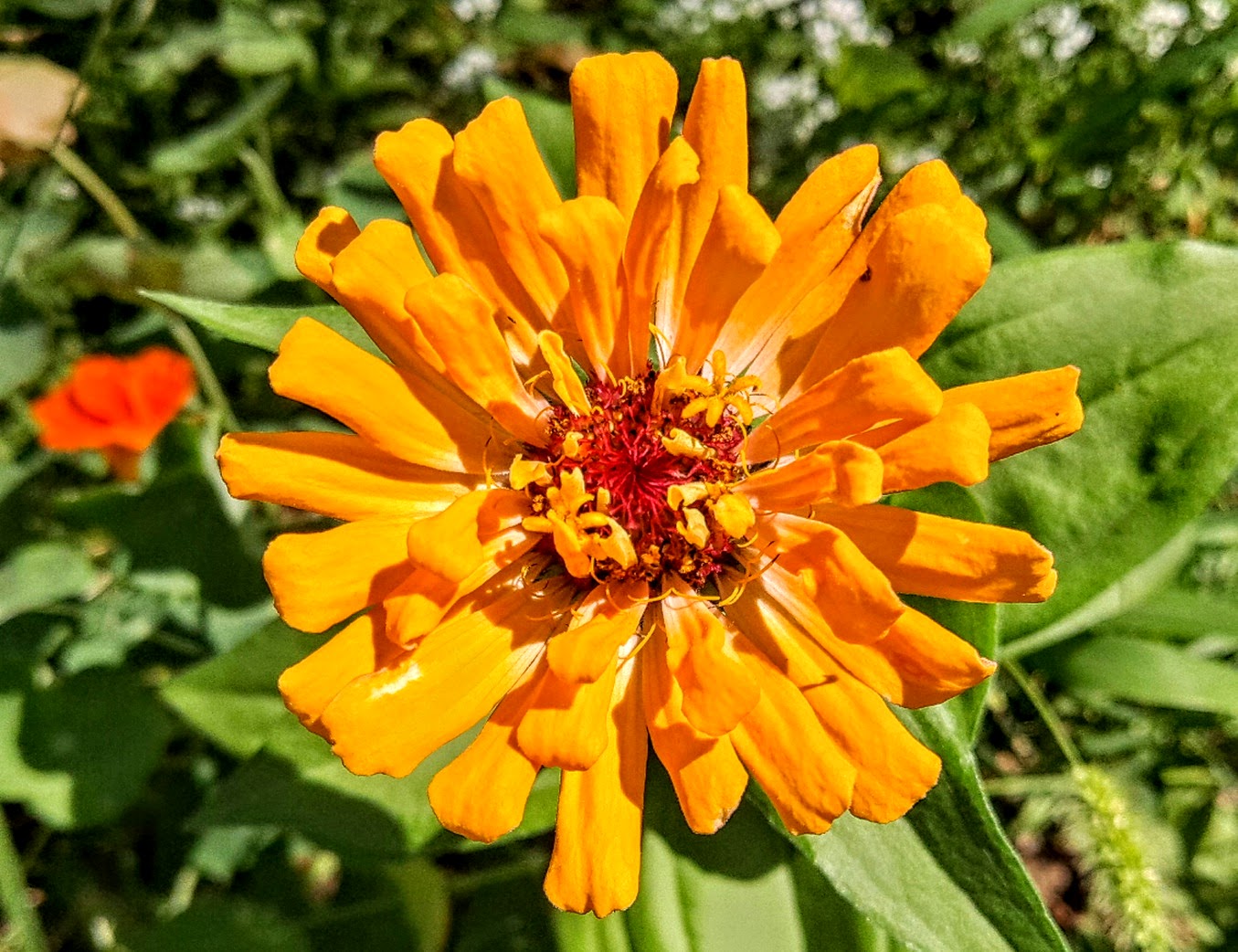
Last evening, when I got home from work, I noticed this bright orange zinnia, and wanted a photo.

It was a couple of feet into the garden, so I used my walking stick for balance as I leaned over to get a photo, and the walking stick slipped on the foliage, making me lose my balance, and I went down. Sort of ironic, really — if I hadn’t been using the stick for balance, I wouldn’t have fallen. Luckily, I wasn’t hurt except for a small scratch on my arm. Even more luckily, I was able to get up without any trouble.

So that’s a good thing, I suppose — not the fall but learning that I can still get up. I’ve been wondering about that, but I’ve been hesitant to sit on the ground to test myself in case I couldn’t get back on my feet. So I passed the impromptu test and got up with very little trouble. Whew!

It’s been a while — years, maybe — since I’ve fallen, and hopefully it will be a long while before I fall again. I am very careful about such things because I’ve known too many older people whose lives as they knew them came to an end after a fall. (Not because of the fall itself, of course, but because of the injuries the fall caused.)

If ever I need another photo in a hard-to-reach place, I won’t try to balance myself as I lean over to get a close up — I’ll just step right into the garden, and the heck with any damage. One footstep would for sure cause a lot less damage to the garden than an entire falling body. Or I could simply pull out the plants that are in my way. (That’s why the reach was so great to get the photo — the garden had grown out of its bounds.)

I won’t have that same problem next year — that particular garden spot might be mostly empty. Although it’s on the north side of the house, it turns out the be the sunniest (and hottest) place on the property, which is probably why my cool-season grass browned out along there, so it will be the perfect place to plant the desert wildflower seeds I received yesterday. Because it might take a year for the plants to germinate, it’s possible there will be only dirt (and weeds, of course) in that spot.

But for now, there are still some pretty flowers for me to photograph.

***

Pat Bertram is the author of Grief: The Inside Story – A Guide to Surviving the Loss of a Loved One. “Grief: The Inside Story is perfect and that is not hyperbole! It is exactly what folk who are grieving need to read.” –Leesa Healy, RN, GDAS GDAT, Emotional/Mental Health Therapist & Educator.

Variety

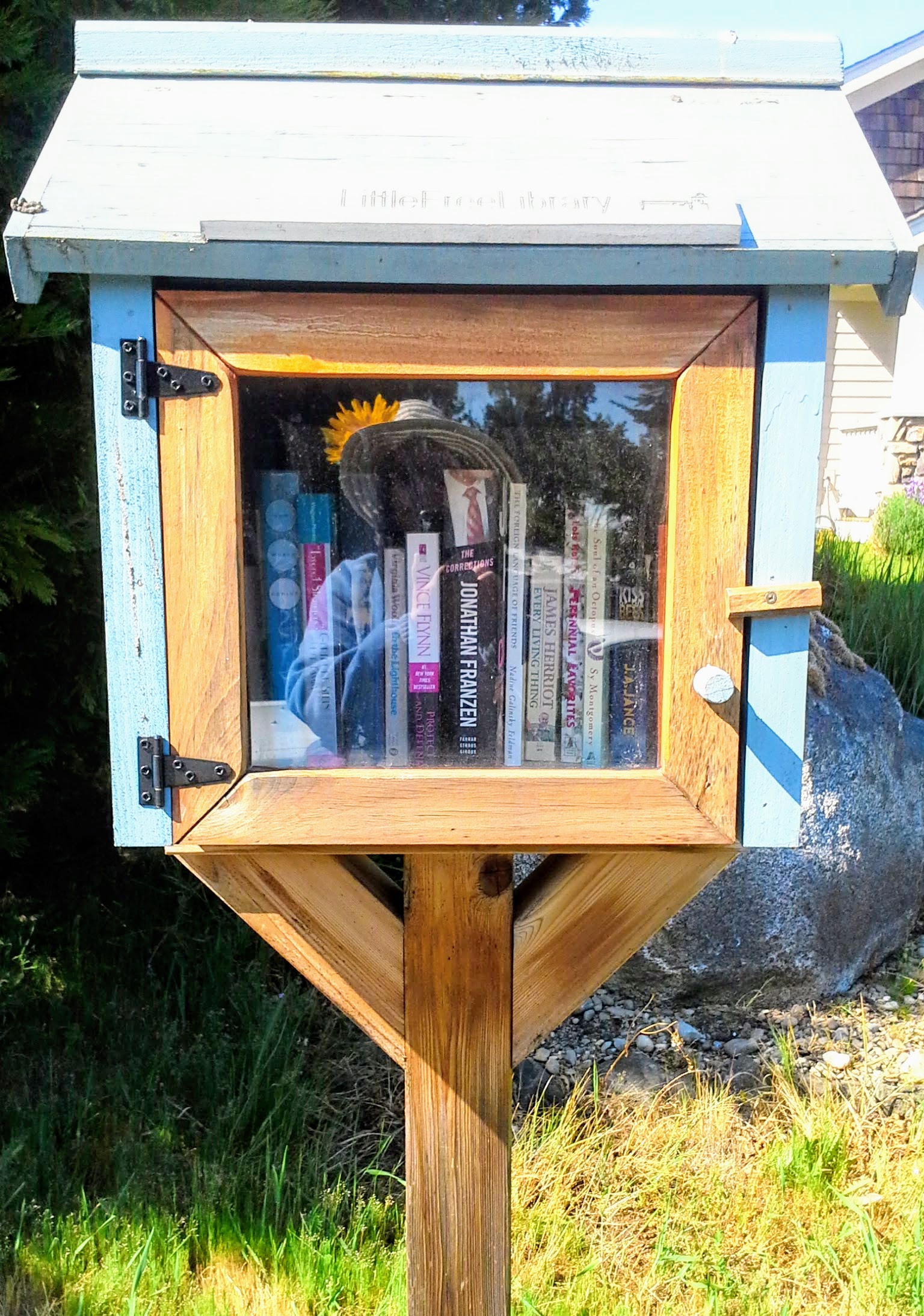
At the library today, I found a notice that our county library district is bringing the Little Free Library program to town. I’ve visited these wonderful mini libraries when I was traveling and was delighted to see it coming here because it’s a great program for a reader. Then I realized I don’t need a little free library — I have a big free library that’s closer to me than any of the little libraries will be.

Still, those little libraries will give me an incentive to walk. I’ve noticed that as I become more settled into home ownership and garden caregivership (no one really owns a garden, one only takes care of it), I have a harder time walking simply to walk. I need a reason and a destination, and visiting a variety of little libraries will give me both of those nudges to get out and walk. That’s my hope, anyway.

After I picked up my books at the library, I bought a variety of items at the variety store. That’s what we called places like dollar stores back in my day, and sheesh. I can’t believe I used such an old-person cliché as “in my day.” Considering that I am still alive, all days are my days.

As I was wandering around the store, I had a brief episode of disorientation. It wasn’t a physical problem but a temporal one — I saw a few Christmas things and for a moment, I had no idea what time of year this is. Christmas? Already? What happened to Autumn? Halloween? Thanksgiving?

I suppose I shouldn’t make disparaging comments about seasons. After all, my Christmas stocking is up, though in my case, it’s not a matter of rushing the season but of forgetting to put the stocking away with the rest of my Christmas things last year, and then being too lazy to drag out the Christmas decoration box again to stow the stocking. This particular stocking was a special gift and is not the sort of thing I can just stuff in anywhere, so I left it hanging. I’ve enjoyed having it up, and anyway, who says a stocking is just for Christmas? This one is beautiful any time of year.

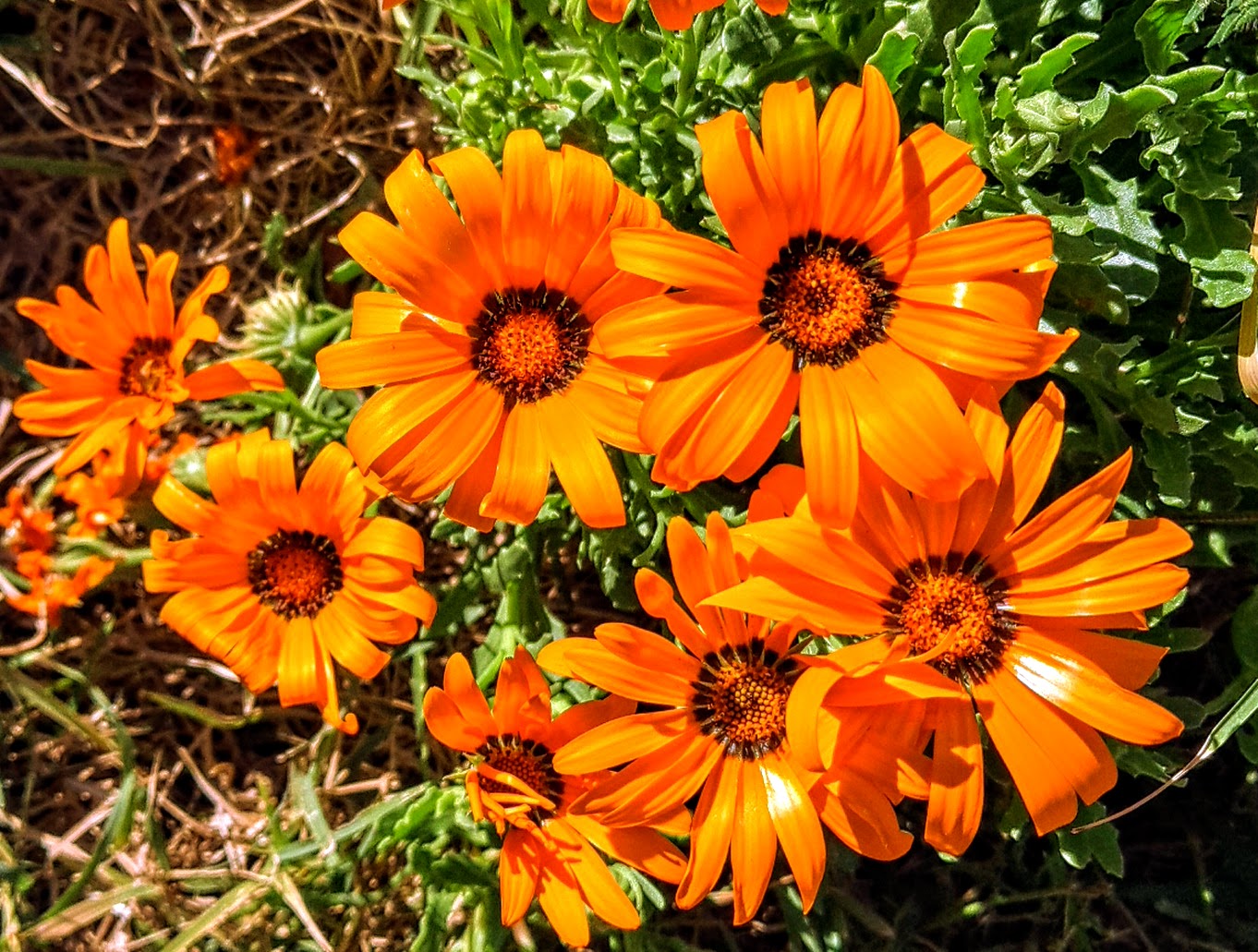
Keeping with the Christmas theme, when I got home and checked my mail, I discovered a wonderful present — wildflower seeds! A variety of seeds are included in each packet: globemallow, desert marigold, brittlebush, chocolate flower, firecracker penstemon, Arizona milkweed and rush milkweed — all perennials. Considering that these are desert plants needing little water and lots of sun (and might take a year to germinate), it will be a whole new gardening experience for me. Luckily, I was gifted with several packets of this wildflower mixture, so I’m set in case of mishaps. Even better, I have the perfect area to plant these seeds — one of the still uncultivated places in my yard. I hesitated to put anything there because I don’t much feel like adding any more time to my watering schedule, so these plants will be great once I get them started.

Whew! Lots of variety, today. And it’s early enough for even more variety to come.

***

What if God decided S/He didn’t like how the world turned out, and turned it over to a development company from the planet Xerxes for re-creation? Would you survive? Could you survive?

A fun book for not-so-fun times.

Click here to buy Bob, The Right Hand of God.

Garden of Weedin’

I was outside this morning clearing out weeds and dead annuals and digging up Bermuda grass in preparation for fall planting (lilies and chrysanthemums) and transplanting (New England Asters), when I happened to look up and actually see the garden I was working on. I do see my various gardens, of course, but I tend to focus on what I need to do or what I am actually doing — focusing on the not-so-pretty things, in other words — rather than the gardens as a whole.

It could be that this morning I was looking at the garden from a different angle than I normally do because I was standing in the middle of what was, just a couple of weeks ago, a mishmash of dense grass, weeds, and wildflowers. But whatever the reason, today I really looked and it astounded me to notice that this particular area is becoming something of a garden of Eden instead of the garden of weedin’ that I’ve been dealing with.

I wasn’t the only creature out and about this morning, enjoying the lovely day and the lovely view — a black swallowtail butterfly flitted from flower to flower, so focused on drinking nectar that it didn’t even seem to mind that I was standing there taking pictures.

There seems to be a dearth of butterflies in this area of Colorado, so seeing one is a special joy. It also makes all the effort to create a garden even more worthwhile — not just something for me to do, not just an excuse for me to go outside, not just something to look beautiful, but also something that is worthwhile to other creatures, too. (Though to be honest, I could do without the grasshoppers. Prejudice on my part? Perhaps, but the truth is, they are extremely destructive beasts, eating 50% of their body weight every day. They supposedly eat 25% of available forage in the western USA. And, in fact, they ate absolutely everything Jeff and I ever planted except lilacs and Siberian elms; they even ate entire three- and four-foot saplings, bark and all.)

But this is supposed to be a post celebrating the positive aspects of my garden, not the negative ones. And there is much to celebrate today.

***

Pat Bertram is the author of intriguing fiction and insightful works of grief.

A Dream of the Future

I came across a Buddhist quote this morning: “Do not dwell on the past, do not dream of the future, concentrate the mind on the present moment.”

Normally I would agree that this is a good philosophy (one, moreover, that worked well for me while I was dealing with grief), especially since all we have is the present moment, an eternal now. Though come to think of it, I’m not sure that’s true. By the time you’ve said or thought “now,” that particular now — that moment — is already in the past. I suppose the secret is to forget “now.” To just be. Though I wouldn’t know either the truth of that or how to do it now that I’m identifying as a gardener. Or landscaper. Or whatever.

For example, this morning when I was out digging up Bermuda grass and other weedy vegetation, I also tried to figure out what else I need to do now to prepare for the garden I hope to have next spring. Prepare the ground, of course, to extend a grassy area into the garden area so I can more easily get to the back of the garden to take care of those distant plants. Decide what to plant in areas denuded by the removal of dead annuals, or perhaps decide not to plant and simply wait until next spring and see if any of those annuals reseed themselves. Also decide where to move plants that need to be divided, such as the New England aster, which are growing rapidly this year. (I started out with one stalk three years ago. It grew to seven stalks last year, so I divided them and thought I was set for another couple of years, but now each of those seven stalks has spawned at least an additional seven stalks.) Since the asters won’t divide and replant themselves, I have to decide where to put them.

Admittedly, this transplanting won’t need to happen for another month or so, but meantime, I need to get an idea of where to put them and to prepare the ground if they are to be planted in what are now uncultivated areas.

All of this takes planning because all of this takes a lot of work, and I have to pace myself to make sure I can do the work despite an aging body and diminishing reserves.

So, is planning part of the present moment? Obviously, one can only think in the present moment because you can’t think today’s thoughts yesterday or yesterday’s thoughts tomorrow, but all that planning is for the future.

And a garden is, almost by definition, a dream of the future.

Dwelling on the past is also something that is necessary when it comes to a garden. You have to pay attention to what thrived and what didn’t, what you did that you might not want to do again, what you didn’t do that you should have done. (I’m still trying to figure out what I could have done differently to keep swaths of my newly sodded lawn from dying, because until I can figure that out, any reseeded grass would surely end up with the same fate.)

There are, of course, those times in the garden that one does what one does — planting, weeding, watering — without thinking of . . . well, without thinking of anything. Much of gardening is mindless work where nothing exists beyond the work itself. So that part might live up to the Buddhist ideal, but the rest of it? Not so much.

It’s a good thing, then, that I’m not Buddhist.

***

Pat Bertram is the author of Grief: The Inside Story – A Guide to Surviving the Loss of a Loved One. “Grief: The Inside Story is perfect and that is not hyperbole! It is exactly what folk who are grieving need to read.” –Leesa Healy, RN, GDAS GDAT, Emotional/Mental Health Therapist & Educator.

What’s to Come

We had a lot of rain Wednesday night, so yesterday morning I took the opportunity to start clearing out some flower beds in preparation for fall and winter. The lilac garden particularly needed work because the tomato plants I’d planted in the large space in front of the bushes went wild and completely buried the still-small lilac bushes. I trimmed back the cherry tomato plants, and then spent an hour or so untangling the bindweed from the lilacs, which I hadn’t been able to do because of the tomato forest.

Surprisingly, despite the neglect and competition, the lilacs are all doing well. I’d planned to plant the tomatoes in my raised garden next year, but now I’m thinking I will plant cherry tomatoes in pots to keep them from taking over the flower beds. Better yet, considering the long, ropy branches, maybe I’ll plant them in hanging pots.

This morning, the ground was still damp enough that I decided to continue my pre-fall cleanup. I hadn’t been able to get to my lilies to weed them because of all the wildflowers that grew in that area, but with most of the flowers spent, I was able to do a lot of clean up — pulling weeds, weedy grasses, and of course, the dying wildflowers.

I need to get grass seed to fill in the spots in the lawn that seem to be dead. There should be plenty of seed left to extend the lawn into the flower bed so that it will be easier to get to the lilies. Since that area is toward the back of the yard, I won’t mind as much if the weedy grasses encroach on the expensive grass — either way, I will be able to mow the area, making it easier to work that flower bed. (And end up with a few fewer feet of ground to weed!)

As I water and weed, I spend a lot of time looking at the garden, trying to figure out what works best for me and what doesn’t, and from a weed-pulling standpoint, I enjoy the bushy flowers like echinacea more than the single-stemmed varieties because they don’t seem to get as weedy as other plants. I must admit, though, that I did enjoy the wildflower gardens and the ever-changing blooms. My problem with the wildflowers was the difficulty in weeding as well as trying to control the foxtail grass that seemed to grow even better than the wildflowers, so perhaps the wildflowers would be best in the raised garden.

And oh, the wild four o’clocks. They never did well, never got the mounds of flowers they were supposed to, but I just found out they didn’t need to be watered much. I was going to move them to a place where they wouldn’t get watered when I watered my grass, but apparently, they don’t do well as a transplant. Considering that the plant went dormant for a couple of years, I’m not sure it’s something to worry about.

I also don’t think I’ll have to worry about planting more Love Lies Bleeding amaranth — apparently, it readily seeds itself. I like it, at least sometimes, when the garden itself decides what to grow. It saves me a lot of trouble.

I’d also considered not planting more moonflowers, but they do well here, and since it’s next to the fence, and since my neighbor likes it, it seems a good thing to replant, though it, too, might reseed itself, saving me the trouble. (Though, truly, it was no trouble at all to throw a few seeds on the ground and give them a bit of water.)

I realize there’s nothing particularly interesting in this post. It’s mainly for me, reminders of what’s to come in future seasons and what I need to do to ensure that coming.

***

What if God decided S/He didn’t like how the world turned out, and turned it over to a development company from the planet Xerxes for re-creation? Would you survive? Could you survive?

A fun book for not-so-fun times.

Click here to buy Bob, The Right Hand of God.

Thinking Things into Futility

I’ve spent an interesting hour or so online looking for a word to describe one who tends to think things into futility. I started with “fatalist,” which sounds like it should be a word for a “futilist,” but only the end result of the philosophy is the same. Fatalists believe all is fated, all is destined to happen, which can leave them feeling resigned about life since they believe they are powerless to change anything, and in the end, that powerless can lead to feelings of life being futile.

Fatalism led me to nihilism, because apparently, the two are intertwined on the internet if nowhere else.

Nihilists believe there is no underlying grand meaning (or grand being) behind life and human existence, and that belief, too, can lead to feeling of life being futile since many nihilists believe that in the absence of inherent meaning, human existence has no particular value.

So although both fatalism and nihilism can lead to a feeling of futility, they start from completely different points of view.

Mostly, a search for a name for someone who tends to think things into futility led me to a plethora of mental health sites, as if a person who tends to think about meaning and meaninglessness has a mental health issue when in fact, such people (according to a different plethora of sites) tend to be intelligent and realistic.

The best thing I found about a person thinking things into futility is a quote from Alan Watts, a writer and speaker who translated Asian wisdom into plain English. He said, “A person who thinks all the time has nothing to think about except thoughts. So, he loses touch with reality and lives in a world of illusions.”

He makes an interesting point, though I’m not sure if it fits the premise I’m developing for this blog post. In my case, I tend to think that by thinking about thoughts, I get pulled out of the world of illusions, and that by not thinking, I am lulled into a world of illusion.

But this isn’t supposed to be an essay about illusion; it’s about my tendency toward “futilism”.

I’ve recently mentioned that I’ve been trying to look at gardening as a game, which helps me keep on doing the best I can with my yard, otherwise, I tend to think to much about what I am doing, and the work begins to seem futile. Which, in the grand scheme of things, it is . . . futile, I mean. A hundred years from now (heck ten years from now!) who will even care? The land will be here no matter what is on it and how much work was done.

Even on a daily basis, gardening seems futile (if I think about it). Life so often does what it wants. Some plants that shouldn’t live in this climate do well; others that should do well don’t. Sometimes watering is the right thing; sometimes, it isn’t. Which means, that if I want to keep up with my yard, to continue my creative endeavors on such a large scale, I have to stop thinking so much about what I am doing and why I am doing it, and just play the “game.” Thinking about what works and doesn’t work in the garden — strategy — is all part of the game. Wondering about the purpose of it all is not part of the game, and in fact, is an unnecessary complication because a game is its own reason for being.

This tendency of mine to think things into futility is not just about gardening, but about almost anything. To keep up with this blog and to write a blog post a day, I have to focus on what I am going to say and then say it, because when I start thinking too much about what I am doing here on this blog and why I’m doing it — other than as a writing discipline — the concept of blogging turns to dust in my hands, and it seems futile to continue.

I read the same way I breathe — I just do it without thinking. But when an author makes a serious mistake, it thrusts me out of the story and makes me think, which is not a good thing. In the book I just started reading, for example, the character got a phone call from a call box, the last old-fashioned coin-operated phone left in town. Okay, as unrealistic as that may be, I can accept it. But when the author goes on to explain that the phone booth is outside the drugstore, in the alley by the dumpster — that did me in. For decades that phone has been hanging on a wall in an alley, and no one ever vandalized it? How am I supposed to believe that? So, since there can’t be a phone, there can’t be a call, and if there can’t be a call, there can be no story and continuing to read the book becomes futile.

Yep — thinking my way into futility again.

It does make me wonder, though: if “not thinking” seems to give me a sense of meaningfulness and “thinking” seems to give me a sense of meaninglessness, of futility, what does that say about me? Or thinking? Or meaning? Or anything, for that matter.

Hmmm. I think I just proved my point.

***

What if God decided S/He didn’t like how the world turned out, and turned it over to a development company from the planet Xerxes for re-creation? Would you survive? Could you survive?

A fun book for not-so-fun times.

Click here to buy Bob, The Right Hand of God.