Someone Who Understands

I made a pastor cry today. Or maybe it was just that I offered him the opportunity. But still . . .

A local church had a potato bar and pie auction for a fundraiser, and I went. Interestingly, I’ve spent more time in various churches during the past few months than I have in decades; all of my new friends are religious, and each of them attends a different church. Since all the churches seem to work together for various activities, I see these people at many functions.

And I see new people. As I was leaving at the end of the auction, someone I’d never seen before came up to me and asked me why people called me Pat in the Hat. She said that when I came in, she heard people saying, “Here’s Pat in the Hat.” I pointed to the hat I was wearing. Yep. That’s my claim to fame. Always with a hat.

Today was an especially fun event until I ruined it with my talk of grief. The pastor auctioned off the pies, and he was so persuasive and so utterly charming and amusing, it was hard not to participate. Afterward, a friend introduced us and mentioned I was a writer. He asked what I wrote, and I said mostly mysteries but I had also written a couple of books on grief. So of course, I started expounding about grief, what I’ve learned, and what I’ve been doing to pass my experiences and expertise on to others.

He seemed impressed that I had such a mission. We talked about how so many grief counselors hadn’t experienced profound grief themselves, and how it skewed the help they were able to offer.

Then I noticed he had tears in his eyes. “Who did you lose?” I asked quietly. “Your wife?” He couldn’t respond right away. Finally he said, “Not wife. Children.” I hugged him, and said I was so very sorry. He nodded at that, and said, “You do know the right thing to say.” (So yes, I was right with my post a couple of days ago about saying “I’m Sorry.”)

I didn’t ask particulars about the deaths — it seemed too intrusive — but we talked a few more minutes about grief and loss and emptiness. He thanked me for participating in the auction, and for being such a good sport. Then we parted.

It still holds true after all these years, that grief can quickly bind two people in a profound moment of sharing. Neither of our losses are recent, but both have left holes in us that nothing can fill. Although his faith is strong, and he believes he will see his children again, he still sorrows. He never got to see them grow up. Never got to see the adults they could have become.

It’s hard to lose part of oneself like that. It’s hard to live with it. But he does.

We all do.

We always feel their absence.

And we always feel the grief that connects us to someone who understands.

***

Pat Bertram is the author of Grief: The Inside Story – A Guide to Surviving the Loss of a Loved One. “Grief: The Inside Story is perfect and that is not hyperbole! It is exactly what folk who are grieving need to read.” –Leesa Healy, RN, GDAS GDAT, Emotional/Mental Health Therapist & Educator.

I’m Sorry

People often ask me what’s the best thing to say to comfort someone who is grieving. My response is that nothing we can say can comfort someone who has lost their spouse or income or health or whatever it is they are grieving. We still need to say something, though (unless we are in the griever’s presence, then a hug is often better than any word). We can’t just ignore a friend’s pain.

Oddly, despite all my various losses, and despite all my writing about grief, I still feel helpless and tongue-tied in the presence of other people’s sorrow.

Several friends are going through devastating times right now, either death of their spouse, an imminent breakup, loss of income, severe health issues.

All I can think to say to these grievers is a simple, “I’m sorry.”

Although most people think “I’m sorry” connotes an apology, the first definition of “sorry” is: “feeling distress, especially through sympathy with someone else’s misfortune.” Which is exactly what we want to say to someone who is hurting.

The only problem with “I’m sorry” is when you add “for your loss.”

Not only is “I’m sorry for your loss,” too rote, too insensitive, too bureaucratic, it also seems a bit too distancing. The first two words express distress and sympathy, a reaching out; the last two words seem to repudiate the outreach, making it clear the distress is the griever’s alone. Although the agony and angst of grief does belong to the griever, each person’s death diminishes us all. And that loss of light in the world should be acknowledged.

Even more than that, it’s not just the loss we are sorry for. We’re also sorry for everything else that comes along with that major loss: the chaotic emotions, the feeling of amputation, the lifestyle change, the lessening of income, the brain fog, the hardships of growing old alone, the loss of the person we were with our deceased loved one, the increased death rate, the horrendous stress.

Most people don’t have an inkling of the scope of grief that the death of a loved one or a devastating divorce or a financial trauma can bring, so they distance themselves. I can’t blame people for not wanting to know the truth.

But I do have an inkling.

And I’m sorry for all that you are going through, so very sorry.

***

Pat Bertram is the author of Grief: The Inside Story – A Guide to Surviving the Loss of a Loved One. “Grief: The Inside Story is perfect and that is not hyperbole! It is exactly what folk who are grieving need to read.” –Leesa Healy, RN, GDAS GDAT, Emotional/Mental Health Therapist & Educator.

What Did You Do When You Were Dead?

I saw an appalling movie last night — the 2004 film Birth with Nicole Kidman.

The premise is a perennially interesting one: a reincarnated soul remembers who he’d been and tries to reconnect with his old life. In this case, though, the premise is the only thing that was interesting. The movie tried to be a thriller (I think), and to the extent that it was a perfect example of a folie a deux (where two people share a delusion, and in the end they make each other crazier), it succeeded. It also tried to be uber mysterious and only managed to be annoying, especially with the long, long, long close-ups of alternately Kidman and the kid. The movie might have been fun if the kid had been charming, but he came across as an incipient serial killer. Which, I’m sure, was intended.

But none of that is important to this blog except as an introduction to the question the movie poses: what would happen if a ten-year-old boy showed up at your door and claimed to be your dead husband?

What struck me is that the kid, even if he were the husband reincarnated, would not still be the husband. Do the words, “To death do us part” ring a bell? And he’s a ten-year old kid. He might have memories of being someone else, but in the end, he’s only ten, and still needs his mommy.

If this kid came to my door claiming to be Jeff, I’d probably be interested, but in no way would we be able to continue the relationship we once had. He’d be ten years old, for cripes sake. He might have the memories of being Jeff, but he wouldn’t be the man I loved — wouldn’t have the same mind, the same smile, the same thoughts and inclinations. He wouldn’t be the mature, even-tempered man I knew. He wouldn’t be an adult, and by the time he was, I’d probably know first hand what it was like to be dead.

For sure, he wouldn’t be someone I could be the old “me” with. He might be resurrected, but the part of me that died with him would still be dead.

If he truly was Jeff, we would sit down and reminisce a bit, maybe catch up on what we’ve been doing the past ten years. “Hey, Jeff. What did you do when you were dead? How did death treat you? How did it feel? Did you have fun? Did you learn anything? Did my grief bother you?” But, wait — he’s ten years old, which means he’d have been immediately reincarnated. He wouldn’t have had a whole lot of experience being dead, which wouldn’t leave us much to talk about since I wouldn’t particularly care about his experiences in the womb or being a small child, or his problems as a young boy (except to hope that this childhood was more pleasant than his previous one).

If he were Jeff, he’d be glad to know I was doing okay, but he wouldn’t put me in the position of being responsible for him. He wouldn’t stalk me. Or make me crazy. There’d be no thriller, no chiller, no folie a deux in our reunion. Definitely there’d be no creepy bathtub scene. I don’t have a bathtub, and even if I did, it wouldn’t matter. Taking off his clothes and getting in the tub with me would be the last thing on his mind.

We’d just talk, and when we finished our chat, he’d wish me well, tell me he loved me, and then he’d let me go.

***

Pat Bertram is the author of Grief: The Inside Story – A Guide to Surviving the Loss of a Loved One. “Grief: The Inside Story is perfect and that is not hyperbole! It is exactly what folk who are grieving need to read.” –Leesa Healy, RN, GDAS GDAT, Emotional/Mental Health Therapist & Educator.

Press Release for Grief: The Inside Story

I’m trying to write a press release. Grief: The Inside Story is an important book that has helped many people, but it needs to find a wider readership. To that end, I’d like to send out a press release.

A press release sometimes prompts newspapers to contact the author for more information. Sometimes the newspaper will print the item as a whole if they need a filler. Either way, the release needs to be compelling. Short, but compelling.

Since I am not well known, the press release has to depend on factors other than name-recognition to make it newsworthy. This is what I have so far:

Death is No Longer a Fact of Life

Death used to be a fact of everyday life. Today, however, the average American has a life expectancy almost a decade longer than it was in the 1970s. That’s great news, but as Toby Scott, head of communications at Hospice UK, a charity for end-of-life care says: “It is rare now for anyone to experience being with someone who they know is dying let alone anyone who has recently died.”

For the boomer generation, often the first time they experience death is when their parents begin to fade. It’s no wonder that few people understand grief, know what to expect, have the skills to cope with the emotional upheaval.

Not only do boomers have little firsthand experience of death to prepare them for the many ways grief affects them, but the complex and painful experience of grief for a spouse, life mate, soul mate is not something people regularly see on television shows, in movies, or read about in novels. So, like others of her generation, when author Pat Bertram lost her husband, the very presence of grief shocked her.

In the United States a death occurs approximately every twelve seconds. And almost every one of those deaths leaves someone behind who is shocked and bewildered by what they are feeling.

How long does grief last? What can I do to help myself? Are there really five stages of grief? Why can’t other people understand how I feel? Will I ever be happy again?

In Grief: The Inside Story, Pat Bertram, author and grief survivor, answers these and other big questions in a straightforward manner. Bertram acknowledges the pain that others so often try to hide, shows how important grieving is, and gives hope that yes, there is happiness on the other side of grief.

Grief the Inside Story by Pat Bertram is available on Amazon (www.amazon.com/dp/0368039668), and through all good bookstores.

Any comments? Suggestions?

***

Pat Bertram is the author of Grief: The Inside Story – A Guide to Surviving the Loss of a Loved One. “Grief: The Inside Story is perfect and that is not hyperbole! It is exactly what folk who are grieving need to read.” –Leesa Healy, RN, GDAS GDAT, Emotional/Mental Health Therapist & Educator.

Happy Twelfth Bloggiversary to Me!

I created this blog exactly twelve years ago today, back when I hadn’t yet become a published author, back when I had just acquired my first computer and didn’t even know what a blog was. I had read how important blogging was for authors, both as a way of getting known and as a way of connecting with readers, so I decided to “act as if” I were going to be published in the hopes of making it happen. I had nothing to say, no one to say it to, no reason to say anything, but I didn’t let that stop me. I started blogging on September 24, 2007, and haven’t stopped since, though admittedly, I don’t post as much as I once did.

Did acting as if I were going to get published work? Perhaps, though there is no direct connection that I know of. Still, one and a half years after starting this blog, my first two books were published. I now have eight books available: five suspense novels, one mystery, and two non-fiction books about grief.

Nine and a half years ago, my life mate/soul mate died, and his death catapulted me into a world of such pain that it bled over into my posts. This blog became a place where I could try to make sense of what I was going through, to offer comfort and be comforted, to find my way to renewed life. This blog sustained me during the years I cared for my father, and it gave me a place to rest after my father died, when I was thrown out into the world, alone and orphaned. And this blog offered me a place to call home when I set out alone on a five-month, 12,000 mile cross-country road trip, gave me a place where I could talk about all the wonders I was seeing. Often on that trip, when I was between visits with online friends, I thought of William Cowper’s words: How sweet, how passing sweet, is solitude! But grant me still a friend in my retreat, whom I may whisper, solitude is sweet. And this blog became a place where I could whisper, “Solitude is sweet.”

Currently, as I am settling into a home of my own, it’s nice to know that whatever life throws at me, whatever problems I encounter, whatever challenges and adventures — and joys — come my way, this blog will be here for me.

Although I’d planned to post every day when I started blogging, during the first four years I only managed to blog three or four times a week, but exactly eight years ago today, I made a 100-day commitment to post a daily blog, and once that initial commitment was fulfilled, I continued to post every day for four and a half years. I probably would still be blogging every day except I got out of the habit of daily posts while on my great adventure because so often on the road, I had no internet connection, not even with my phone. And now that I am embarking on the new adventure of homeownership, complete with internet, I have few internal (or external) conflicts to give me blog topics.

But still, the blog is here, always welcoming me when I do find something to say, generally once or twice a month, but perhaps, when I get tired of my new offline world, I’ll be back here every day.

During the past twelve years, I have written 2,480 blogs, received 17,489 comments, and garnered 780,711 views. It amazes me that anyone wants to read anything that I write here. This is so much a place for just letting my thoughts roam, for thinking through problems, and (I admit it) for pontificating a bit. It’s been a kick, writing this blog, and I want to thank all of you for indulging my whims and whimsys.

Thank you for reading. Thank you all for your comments, your likes, your support. They have meant more to me (especially this past nine and a half years) than you can ever imagine.

***

Pat Bertram is the author of Grief: The Inside Story – A Guide to Surviving the Loss of a Loved One. “Grief: The Inside Story is perfect and that is not hyperbole! It is exactly what folk who are grieving need to read.” –Leesa Healy, RN, GDAS GDAT, Emotional/Mental Health Therapist & Educator.
Handling Someone Else’s Grief

In the book I am currently reading, a thirty-year-old woman lost her 5-month old baby to crib death, and now, nine months later, she is still grieving, still depressed. Because of a divorce, she and the baby had been living with her parents, and since they can no longer handle her grief — they feel as if they’d lost her as well as their grandchild — they ship her off to her godmother. The godmother is freaking out because she doesn’t know how to help the bereft woman, doesn’t know how to bring her out of her depression, and the godmother is emoting through many pages about her inability to cope.

This sort of story — this attitude — makes me so very frustrated!! It’s not enough that we (they) lost someone intrinsic to our lives, we have to deal with people’s need to help.

Here’s a clue, folks. For all of you who have asked me over the years how to help someone who is grieving: don’t help.

Let them grieve. So what if you can’t handle their pain. It is their pain. Sometimes love means letting your loved one hurt, letting them nurse their pain. Grief is how a person becomes someone who can handle the loss. You do not go from being an ecstatic mother to being a happy non-mother in a few months. It is not possible. Grief takes you where you need to go, takes you to a happy-but-sad (sad-but-happy?) place, though it takes way more — years more — than a mere nine months.

Nine months is nothing when it comes to the loss of a life. Sure, the baby had only lived a few months, but what the mother grieves along with the loss of those few months, are the young girl, the young woman, the happy wife, the radiant mother, the grateful grandmother the baby would have been. That is a whole lot of grief to deal with.

If you can’t handle a griever’s pain, realize that what they are feeling is a thousand times worse than what you are feeling. Have empathy. Swallow your pain and let them talk about their loss and sorrow. Prepare food for them if you must, but don’t guilt them into eating it.

Grief is in control. Not the griever. Not you.

It is their grief. Whether it takes nine months or nine years, it is none of your business. Sorry to sound harsh, but it isn’t. Grievers go through more than you can ever imagine, more than can ever be expressed in one silly story about helping someone overcoming the loss of their baby. So let them get on with their grieving.

You can and should be there (and still love them) when the grievers become someone you don’t know. Because they will become such a person. It is the nature of grief. And you cannot hurry grief.

It is this sort of simplistic view of grief that made me write about grief from the very beginning. It’s important for people to know the truth. It’s not the griever who has to change their attitude toward grief. It is the friends and families of grievers who must accommodate their loved one as grief takes the bereft where they need to go.

***

Pat Bertram is the author of Grief: The Inside Story – A Guide to Surviving the Loss of a Loved One. “Grief: The Inside Story is perfect and that is not hyperbole! It is exactly what folk who are grieving need to read.” –Leesa Healy, RN, GDAS GDAT, Emotional/Mental Health Therapist & Educator.

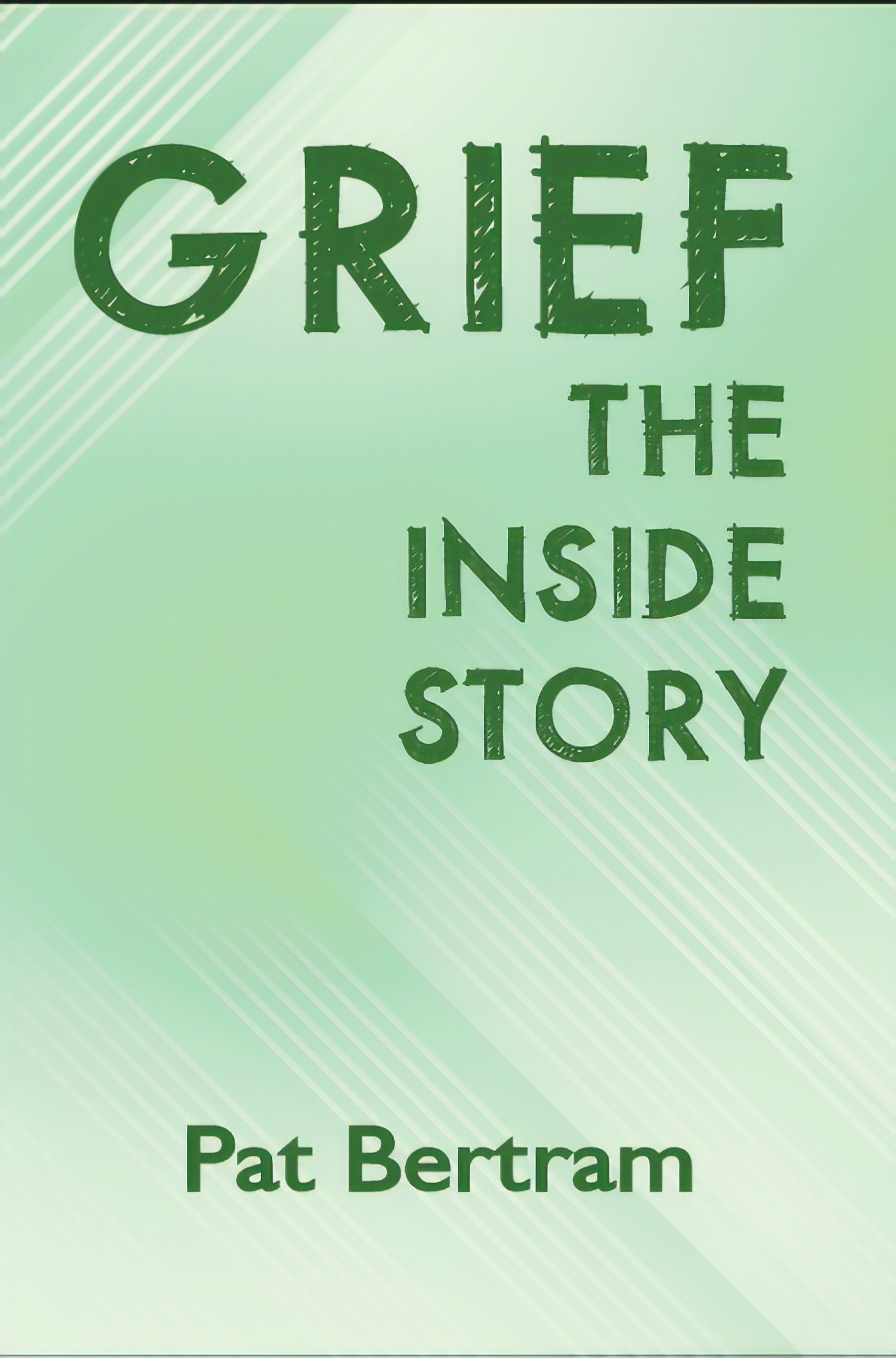
Grief: The Inside Story

One common challenge facing all of us — grievers, friends of grievers, and health care professionals — is how to help those who are experiencing grief after bereavement.

Coping with the death of a loved one can be the most traumatic and stressful situation most people ever deal with — and the practical and emotional help available to the bereaved is often very poor. I found this to be true as I recovered from the loss of my life partner.

How long does grief last? What can I do to help myself? Are there really five stages of grief? Why can’t other people understand how I feel? Will I ever be happy again? Questions like these aren’t easily dealt with, and much of the literature aimed at the bereaved can read either like a medical textbook.

My new book Grief – The Inside Story: A Guide to Surviving the loss of a Loved One aims to answer these big questions in a straightforward way, and it may be of help to you or someone you know.  If you would like to know more a free easily-downloadable sample of the book, and a complete and detailed listing of its contents, is available here: https://www.docdroid.net/klBIjLB/grief-by-pat-bertram.pdf

The book trailer is here: https://www.youtube.com/watch?v=CtLwOpGpm_w

Grief – The Inside Story is now available from Amazon (www.amazon.com/dp/0368039668), and all good bookstores. If you have any questions I’d love to hear from you.

In the Past? Or Still to Come?

Now that I’m getting settled in my new place, I seem to be reverting to the life I lived before I met Jeff — reading, a few chores, an occasional meeting with acquaintances. I don’t spend much time on the computer (except for solitaire, of course). Don’t use my phone much at all except for an occasional call. Haven’t been promoting my grief book like I should. Haven’t even been writing.

Such a simple, unconnected life it was back then and so it is again.

This feeling of reliving the distant past is so strong that strangely, I find myself looking forward to when I will be meeting Jeff — not in an afterlife, but in this life. As if he’s waiting for me to find him. As if we will be starting our life together. As if what I thought was in the past might instead still be to come.

I don’t know where this feeling originates, but somedays it is very strong. And, as always, when the truth hits — that he is truly gone from this Earth and anything else is just make believe — I can’t breathe, can’t help getting teary.

I seldom look at the photo of him I have by my bed, though it is often in my periphery, just as he is in my periphery. I still have his ashes, though I’d forgotten about them until I noticed them in my car the other day. (They’re waiting, I suppose, until I go back to the north fork of the Gunnison where we used to live.)

And I get caught up in this new single life of mine.

So I’m not sitting around bemoaning my loss.

But somewhere inside, I always know he’s gone. I still don’t know how that can be — even after all these years, his utter goneness makes no sense to me. We’re supposed to be preparing for our old age together. We were supposed to beat the odds, and find health and happiness and vitality together in our final years.

No matter where this feeling of the past being the future comes from, I know the truth of it. I’m preparing for my own old age, not ours.

And yet, and yet . . . in my heart, I can’t help thinking that someday I will walk into a store, just as I did all those years ago, and there he will be, behind the counter, happy and healthy and waiting for me.

***

Pat Bertram is the author of Grief: The Inside Story – A Guide to Surviving the Loss of a Loved One. “Grief: The Inside Story is perfect and that is not hyperbole! It is exactly what folk who are grieving need to read.” –Leesa Healy, RN, GDAS GDAT, Emotional/Mental Health Therapist & Educator.

Playing House

When I was little, I wanted a playhouse. It seemed the ultimate fantasy to me — to have a tiny house of my very own to play in.

A few years ago, thinking about a nomadic life, I looked at tiny houses, campers, gypsy wagons — grown-up playhouses, in other words. As it turned out, hauling around a tiny house of any kind would be more than my ancient car could handle, so I’d not only have to buy the house, but a heavy-duty truck, too, which made that idea unfeasible.

I’m still not quite sure how it happened, but here I am with my own little house. It’s stationary, not something I could haul around, but that’s okay. I like having a plot of land with its dreams of future flowers. And I like having a playhouse. I was never one for housework — it was too energy consuming and there were always other things more important to spend my energy on. But today’s cleaning tools make housework seem so easy. Dusters that pick up the dust instead of pushing it around. Sweepers that dry mop the floor swifterly. A kitchen with a place for everything.

There’s no drudgery when you’re playing house!

The things that need fixing around the property are still not getting fixed, but I have a hunch one of these days everything will happen at once. Then I’ll wonder what hit me. For the most part, though, waiting is not a problem. I’m used to waiting, and besides, I’m getting to know the house and the town. In some respects, it’s as if I’ve lived here a very long time — I’ve made some good friends, and I feel at home here.

On a more serious note, it’s odd to think of all the deaths and traumas that led directly and indirectly to my having a home of my own — odd because I don’t really feel those deaths anymore, not even Jeff’s. It’s been too long since I was with Jeff, and I’ve become so different that I have few tears left in me. It’s hard to believe I was ever that woman, or rather those women. The one who loved with her whole being, the one who numbly kept a death vigil for many years, the one who screamed her grief to the uncaring winds. All of those women are gone. The woman I am today is both less and more than they were. “Less” because I seem to have burned out all my deep-seated emotions and come to a time of lowered expectations; “more” because I have reached a place of peace and perhaps even joy.

(I sometimes fear that I am getting so far from my grief that if a new friend loses a spouse, I will shrug it off with a private feeling of “been there, done that.” But that’s a worry for another time.)

I’m still not back to writing, though I have come upon a couple of more bits for a possible mystery. I found a remnant of fabric in the grass, and when I couldn’t simply pick it up, I got out the shovel. Turns someone had buried a red-spattered shirt. The red was part of the shirt design, but it could easily have been something more sinister. And then there was the baby photo hidden in the basement . . .

Not everything is hunky-dory, of course — it never is. My bugaboo is literally a bug. Or rather, lots of bugs. Mosquitos, spiders, monstrous beetles. But we’re reaching an accommodation of sorts. I leave them alone if they leave me alone, but they take their life in their mandibles if they get into the house. It’s a playhouse, after all, not a bug house!

***

Pat Bertram is the author of Grief: The Inside Story – A Guide to Surviving the Loss of a Loved One. “Grief: The Inside Story is perfect and that is not hyperbole! It is exactly what folk who are grieving need to read.” –Leesa Healy, RN, GDAS GDAT, Emotional/Mental Health Therapist & Educator.