Driving My Grief

It might seem as if I am making zero progress or even backsliding with this upsurge in grief blogs, but writing my book on grief is bringing it back.

Do you want to know the sum total of all I have learned in the fourteen months and fourteen days since my life mate died? Here it is: you can get through grief. You can learn to live without him. You can find happiness again by living one day at a time. But the dead are still dead, and nothing you do can ever change that.

That is what drives my grief. Not the self-pity that sometimes breaks through my wall of courage, not the sustained note of sadness that keens beneath my consciousness, but the awareness that he is gone. He no longer cares that he suffered for years with an ailment the doctors couldn’t diagnose until it was too late. He no longer cares that he will never again watch any of his favorite movies or read a book. He no longer cares that he will never go on another road trip. He no longer cares that he will never again walk or talk or eat or smile. But I care.

Perhaps it is foolish of me still to care for and about someone who is beyond caring, but I cared immensely for him while he was alive, so why would I stop now that he is dead? He may no longer have feelings, but I do. Once he was alive and now he is not. Why shouldn’t I care about that?

There are many books on the market about how to get through grief quickly, how to get your life back on track, how to put the dead out of your head and take what you can from life. I know there is an element of self-pity when it comes to grief, and those books address that issue. But self-pity is not all there is to grief. Grief is a vast network of emotional, spiritual, and physical reactions, and part of that is sorrow on behalf of the one who died.

If grief is just about me (and perhaps someday I’ll get to the point where it is only about me), then it’s not my place to care about my life mate being gone from this earth. But if life is worth living, how can I not care that it is being denied him?

The corollary is, if he is the one who got the better end of the deal, if he truly is in a better place, then why am I still here? But I’d just as soon not dwell on that.

Surviving a New Stage of Grief

I’ve been working on my grief book, typing what I wrote immediately after the death of my soul mate. Suddenly it seems as if the past sixty-two weeks have melted into oblivion and I’m back there again, newly bereft, wandering in a fog of pain, wondering how to cope with the massive changes in my life. I know I have come a long way because the revisited pain seems bewildering to me. Did I really feel all that? Did I really survive such a terrible time? Apparently I did, because here I am, mostly back to normal. I’m still lonely, though, and the loneliness surges unbearably at times.

Loneliness is the newest stage of my grief, as it is for so many who are coming out of the first numbing months of grief. I don’t know how to cope with this vast loneliness, but I didn’t know how to cope with any of the other stages of grief, either. I just embraced the pain, the anger, the sorrow, and waited for a gentler time. So that’s what I will do with the loneliness. Embrace it and wait for it to subside. Waiting is not all I’ve been doing, though. I’ve been making an effort to be with people, which helps, and so does writing. I’d forgotten how quickly the hours go when one is immersed in words.

I still wonder if anyone will want to read this grief book when it is published. It is so intensely personal. And painful. Yet people who have read my blog posts about grief have found some comfort in them, so perhaps this book will serve the same function. Even if no one is interested in reading my daily struggles to come to terms with the death of my mate of thirty-four years, the book is important to me. It’s a way of binding my grief into a neat bundle so I can get on with my life, though I have been told one never truly gets over such a loss. But we do survive, and that is ultimately what my book is about — surviving grief.

I Am a Fourteen-Month Grief Survivor

Fourteen months sounds like a long time, doesn’t it? Plenty of time to get over the death of one’s lifemate/soulmate/best friend. And yet, those who have been where I am today know you don’t ever truly get over it. You deal with it, you get on with your life, but there is always that niggling feeling of something being not quite right.

I still feel bad for him that he’s gone, that he suffered so much, that he died too young, that he is no longer here to enjoy something as simple as eating a bowl of his chili. (Though the batch I made today in his honor wasn’t worth coming back from the dead for. The kidney beans were overcooked, the onions undercooked.)

I still feel sad for me, that I’ll never get to see him again in this lifetime, that we’ll never get to do all the things we planned, that his smile exists only in my memory, that I’m alone. I’m glad we had all those years together, but that doesn’t ease the loneliness he left behind. It is odd, but for some reason I never expected to be lonely. I’m used to spending time alone, I know how to entertain myself, and I’m quite capable of taking care of myself (though the thought of growing old alone makes me panic at times). I also have more friends now than I’ve had in many years. But still, I’m lonely — lonely for him specifically, and lonely in general. Perhaps my loneliness is another stage of grief rather than a character flaw. Perhaps someday it, too, will pass, as have other manifestations of my grief.

One stage of grief I am clinging to is anger. Not rage, just a quiet pilot light of anger. I accept that he is dead in the sense that I know he will never be coming back (though I still long desperately to go home to him, still yearn to see him one more time). But I cannot accept the rightness of his death. It seems so terribly wrong that death was the only resolution of his illness, the only solution to his pain. And that does anger me. Anger is generally considered to be a negative emotion, but during the past few months I’ve found that in small doses, anger is a positive thing. Anger can give us the strength to survive. Anger can give us the energy to do things we couldn’t do under normal circumstances. Anger can give us a feeling of control in uncertain times. Anger can keep us going when we want to give up. Anger can give us the courage to live with the injustice of death. Anger can motivate us to find solutions to problems, can motivate us to undertake dreaded tasks, can motivate us to change our lives. So, yes, I’m clinging to whatever vestige of anger I can. It’s the only way I can get through these lonely days.

I am now more aware of the years looming in front of me than the years behind me, those years we shared. I’ve been saying that I don’t know who I am now that he’s gone, but I do — I’m still me. Still the person I’ve always been, just older and sadder. I’ve mostly untwinned our lives, no longer see me as half of a couple. And yet, something is missing. I don’t cry much any more, but sometimes I find myself crying for . . . I don’t know what.

It’s a relief to be telling the truth. I’ve been keeping upbeat the past few weeks — preparing for my presentation at the writers’ conference, traveling, being around people who only know me as an author, posting photos of my adventures. It was wonderful, but it’s only half my story. The adventure ended, and now here I here I am. Fourteen months of missing him, and still counting.

Grief Update: Looking For Adventure and Whatever Comes My Way

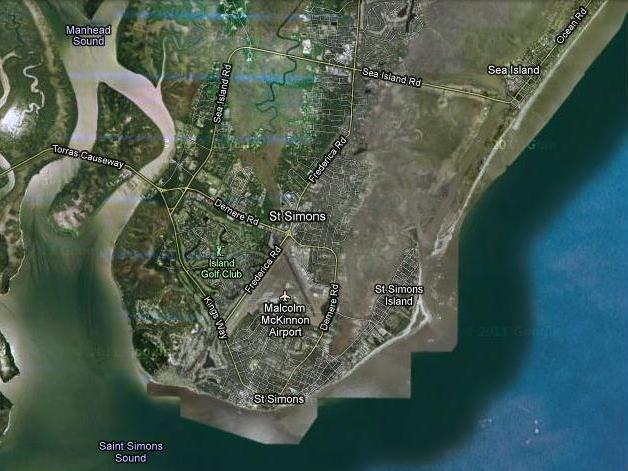
In exactly one week, I will be on my way to St. Simon’s Island, GA to speak at the Scribbler’s Retreat Writers’ Conference. It’s been a long time coming — I was originally scheduled for last August, but I had to postpone due to the illness and then the death of my life mate. These past months I’ve been looking to this conference as a borderline of sorts, a life-changing experience, maybe because it’s something concrete to plan for rather than a hazy future of aloneness to drift into.

And now the conference is only a few days away.

Several people asked me recently if I’m excited, others asked if I’m scared, but the truth is, I’m just tired. I’m tired of grieving, tired of trying to make sense of life, and most of all, I’m tired of shopping.

Shopping? Yep. Of all the subjects I never expected to discuss on this blog, shopping would head the list. I’ve never liked shopping for clothes, and the truth is, I never had to. When one is a virtual hermit, one doesn’t need very much. But a world-class author (according to the Scribbler’s Retreat people, anyway) does need more than a simple top to throw over comfortable slacks when she is being introduced at a banquet, giving a presentation, attending a reception. I’ve been lucky in that a couple of weeks ago, two friends took me shopping to pick out the clothes they think I look best in, and then this past week, my sister came and picked the things she liked on me. This leaves me with a wardrobe that is not me. Or at least not the pre-death me. Perhaps it’s who I’ll become — a bit classy, a bit dramatic, a bit arty. Not a bad image if I can pull it off. And there’s no reason I can’t. I’ve survived fifty-eight weeks of grief. I can do anything.

It’s strange to think I’m going somewhere my life mate never visited, stranger to think I’m going without a single article of clothing he ever saw. There will be nothing on this trip (except my lingering sadness) to remind me of what I lost. There will be just me, heading out on an adventure, accepting whatever comes my way.

I Am a Thirteen-Month Grief Survivor

Yesterday at my grief support group we were asked to complete the sentence, “After he died, I was surprised that . . .” Everything that happened in the thirteen months since the death of my life mate — my soul mate — has surprised me. No, not surprised me. Shocked me.

I was shocked that the end came so quickly. He’d been sick such a very long time, his health fading slowly, that his dying became our way of life. When he was finally diagnosed with inoperable kidney cancer, we were told he had three to six months to live. He had only three weeks. And those weeks seemed to evaporate in just a few hours.

After he died, I was shocked by the very presence of grief. My brother died four and a half years ago, and my mother died a year later. I handled both deaths well, so I thought I could cope with the death of my mate. I didn’t know, had no way of knowing, that one didn’t grieve the same for every loss. I didn’t know, had no way of knowing, that there was a physical component to the death of a long time mate, that it would feel like an amputation.

After he died, I was shocked by the depth and breadth of my feelings. During the last year of his life, and especially the last six months, he’d begun withdrawing from the world and from me. This withdrawal, this lessening of a need to be with others is a natural part of dying, and my response to his withdrawal was just as natural — an increased determination to live. He might be dying but I wasn’t, and I had to untangle our lives, find a way to survive his dying and his death. I thought I had successfully completed this task, but his death rocked me to the core of my being.

After his death, I was shocked by his sheer goneness. Because I’d spent so much time alone that last year, I thought life without him would feel much the same, but it isn’t like he is in another room or another city or another country — it’s like nothing I’d ever experienced before. I still have no words to describe the finality, the undoableness, the vacuum of death. He was part of my life for thirty-four years. We breathed the same air. We were connected by our thoughts, our shared experiences, the zillion words we’d spoken to each other. And then he was gone from this earth. Erased. Deleted. I still can’t wrap my mind around that.

After his death, I was shocked that I felt so shattered. So broken. And I am shocked that I still feel that way at times. I am shocked that no matter how strong you are, how well you are healing, grief can slam into you at any time, especially after a good day when you’re not expecting it, and the pain feels as raw as it was at the beginning.

After his death, I was shocked by the scope of grief. You grieve for the one who died and you grieve for yourself because you have to live without him. You grieve for all the things you did and the things you didn’t do. You grieve for what went wrong in your shared life and what went right. You grieve for the past and you grieve for the lost future. You grieve for all the hopes and dreams and possibilities that died with him. It’s amazing that anyone can survive all that pain, but we do, and that shocks me, too.

After his death, I was shocked by how complicated human emotions can be. You can feel sad and unsad at the same time. You can be determined to live, yet not care if you live or die. You can know in your depths he’s gone, but still listen for him, still yearn for him, still worry about him.

Mostly I’m shocked that I am still the same person I was before he died. Such emotional trauma should have changed me, made me stronger and wiser perhaps, yet I’m still just me. Sadder, but still recognizably me. Well, there is one change. I’ve always been a worrier, but now I try not to fret about the future, try not to wonder how I’m going to cope with growing old alone. After his death, I am no longer shocked that life can remain the same year after year. Nor am I shocked that it can change in an instant.

Grief: Blindsided by Lilacs

Who knew I would find lilacs in this desert community?

My life mate — my soul mate — loved lilacs. We once saw a house with lilacs lining the long driveway, and he wanted to live there, but we couldn’t afford such luxury. Shortly after we moved to the house where we were to spend the rest of his life, we dug up the lilacs that blocked a gate and replanted them around the perimeter of the yard. When we moved to that house, it was like living in an aquarium — there was absolutely no privacy. By the time he died, it was such a lush environment, it was like living in a terrarium — and there was total privacy. And the gate was once again blocked with lilacs. Apparently, we’d left just enough rootstock that the bushes grew back.

We planted all sorts of bushes and trees in addition to those lilacs, and the thrill of watching our seedlings grow to adulthood was another thing we shared in a twinned life that was all about sharing. It should have been hard leaving the place, but I was in such grief over his death that one more loss didn’t really make much difference to my sorrow.

I still don’t miss the place, or not that much. A place is just a place. I am homesick, but homesick for him. He was home. I miss him. I miss our life together. If he were to call and tell me he was waiting for me, I’d go to him wherever he was — mountains or desert, city or country, there I would be. But he’s never going to call. For months after I came here to the desert to try to figure out what comes next, I’d listen for the phone, hoping he would call and tell me that he was well and I could come home. That feeling is finally fading, but the loss of that feeling just makes me sadder — he is gone and I have to deal with the vicissitudes of life by myself.

I have minor upsurges of grief a couple of times a day, but I try to be upbeat. I have a new book published. I am getting new clothes, trying to reinvent myself from the outside in. I have made new friends (mostly people who have lost their mates. It’s amazing how quickly you can get to know someone when you cry together). I’ve been handling myself well.

And then . . .

Today, strolling around the neighborhood (it was too windy to walk in the desert), I happened to smell lilacs, and instantly, I was back in full-fledged grief mode. People keep telling me one never gets over grief, you just learn to live with it, and that appears to be true. Grief seems to lurk in dark places, ready to gush forth when one is least expecting it. And I was not expecting it today. How could I have known I would encounter lilacs growing in this desert community?

Grief Update: A Yearning as Deep as the Black Canyon

I haven’t been writing much about grief lately. Partly I’ve been trying to keep an upbeat attitude so I can focus on promoting my new book, Light Bringer, which was published on the anniversary of my soul mate’s death, and partly I haven’t wanted to admit how much his being gone still hurts. It seems a bit pathetic since there are so many earthshaking and earthquaking events happening in the world today, and it has been more than a year since he died (a year and fifteen days to be exact). I am doing okay, but I still feel his absence from the earth, still miss him, still yearn for one more word or one more smile.

Fridays and Saturdays are particularly hard. He died at 1:40 am on a Friday night (which made the actually date a Saturday) and my body can’t decide which day is the right time to mourn, so my upsurge of grief spans both days. I say my body can’t decide, because there is an element of physicality to grief, especially when it comes to the death of someone who shared more than three decades of your life. You feel his absence in your cells, in your marrow, in your blood. I can sometimes feel (or imagine I feel) his vibes still surrounding the things he used, the things we shared. I find myself stupidly hugging a dish before I use it, remembering him eating off that plate.

Most of our stuff is packed away because of my temporary living arrangements. Yesterday, I felt a moment of panic when I realized that eventually I would unpack and begin using our household goods, and I would feel his energy permeating them. Usage will dissipate that energy, but for now, it’s still there. Perhaps when I need those items, the psychic remnants of him will bring me comfort, the way using a few of our things bring me comfort now, but it could just as easily set off a whole new strata of pain.

But I won’t — can’t — think of that. It still takes almost everything I have just to get through the days, to concentrate on this day. I can live today. What is one day without him when we had so many? I am most at peace when I forget that he is dead, when somewhere in the far reaches of my mind I feel that he is back in the house we shared, waiting for me. It’s not that I can’t live without him. I can. It’s that the world is such an alien place now that he is gone. I still remember how right the world felt when I met him. I had no expectations of having any more of him than that first relationship of customer (me) and storeowner (him), but back then, just knowing a person such as he existed made the world a more radiant place. When he died, he took the radiance with him.

It’s sort of odd, but I can’t identify that specific quality of radiance he brought to my life. He was sick for so very long, we gradually untwinned our lives, he to dying, me to aloneness. And yet, that connection, that depth, that radiance remained until the end. In his last weeks we even found a renewed closeness, a renewed commitment, but before that, we endured months, maybe years of unhappiness.

And, childishly, I am still unhappy. I want what I cannot have. I try to find in myself the radiance (the center? the heart? the home? — whatever it was that he gave me). I will need that to keep me going through the coming decades, and I fear I am not enough. At times, I think I have depths enough to plumb, other times those depths seem an illusion, an opaqueness that masks my shallows.

But what isn’t shallow is how much I miss him. That yearning is as deep as the Black Canyon.

I Am a Twelve-Month Grief Survivor

Twelve months.

One full year.

It seems impossible that my life mate — my soul mate — has been gone for so long. It seems even more impossible that I’ve survived.

His death came as no surprise. I’d seen all the end signs: his unending restlessness, his inability to swallow, his disorientation, his wasting away to nothing, the change in his breathing. Nor did my reaction come as a surprise. I was relieved he’d finally been able to let go and that his suffering (and the indignities of dying) had stopped. I was relieved his worst fear (lingering or a long time as a helpless invalid) had not had a chance to materialize. What did come as a surprise was my grief. I’d had years to come to terms with his dying. I’d gone through all the stages of grief, so I thought the only thing left was to get on with my life. And yet . . . there it was. His death seemed to have created a rupture in the very fabric of my being — a soulquake. The world felt skewed with him gone, and I had a hard time gaining my balance. Even now, I sometimes experience a moment of panic, as if I am setting a foot onto empty space when I expected solid ground.

I have no idea how I survived the first month, the second, the twelfth. All I know is that I did survive. I’m even healing. I used to think “healing” was an odd word to use in conjunction with grief since grief is not an illness, but I have learned that what needs to heal is that rupture — one cannot continue to live for very long with a bloody psyche. The rupture caused by his dying doesn’t yawn as wide as it once did, and the raw edges are finally scarring over. I don’t steel myself against the pain of living as I had been. I’m even looking forward, curious to what the future holds in store for me.

Strangely, I am not ashamed of all the tears I’ve shed this past year, nor am I ashamed of making it known how much I’ve mourned. The tears themselves are simply a way of easing the terrible stress of grief, a way of releasing chemicals that built because of the stress. And by making my grief public, I’ve met so many wonderful people who are also undertaking this journey.

I’ve been saying all along that I’d be okay eventually, but the truth is, despite the lingering sorrow, my yearning for him, and the upsurges in grief, I am doing okay now.

I expected this to be a day of sadness, but it is one of gladness. I am glad he shared his life (and his death) with me. Glad we had so many years together. Glad we managed to say everything that was necessary while we still had time. Tomorrow will be soon enough to try to figure out what I am going to do now that my first year of mourning is behind me. Today I am going to watch one of his favorite movies, eat a bowl of his chili (his because he created the recipe, his because he was the one who always fixed it), and celebrate his life.

Keeping Vigil

I’m continuing my anniversary vigil, reliving the days that led up to the death of my life mate, my soul mate. This vigil is not so much conscious as subconscious, a feeling that the events of a year ago are happening again. Part of me seems to think I really am there at his deathbed — when I was out walking in the desert today, I found myself wailing, “Don’t go! Please don’t leave me!”

This is so different from last year’s reality. Then, I was concentrating on him, on his suffering, on his need to let go of life, and I never once thought of asking him to stay for me. Would never have subjected him to more pain and suffering. Would never have wished him more days as a helpless invalid. And yet, here I am, today, begging him not to leave me.

Such is grief — a place where time goes backward and forward, stands still and zips ahead.

Perhaps when this first terrible year is finished, when I have experienced this reprise of his death from my point of view rather than his, I will be able to put a lot of my grief behind me and go forward with my life. Though I still don’t know what that life is, where it will take me, or if it will take me anywhere at all. Perhaps all that is necessary is to experience life, and if that is true, well, I have certainly lived this past year.

It’s strange looking back to the long years of his dying. I thought I was ready to leave the emotional burdens and the financial constraints of his illness behind. I thought I was ready to live out my life alone. I even looked forward to the challenges, especially since he told me that when he was gone, things would come together for me. He was a bit of a seer (though he mostly saw doom) so I believed him. But neither of us expected the toll grief would take. (Well, he might have suspected. He was very concerned about me.) I knew I’d be okay, and I am, but I didn’t understand what grief was. (I’d already lost a brother and my mother, but that was not the same as losing my cosmic twin, the person who shared my thoughts and dreams, who lived in the same world I did.) I never expected the sheer physicality of grief, the physical wrenching, the feeling of amputation, the feeling of psychic starvation, the feeling of imbalance in the world, the sheer goneness of him.

Nor did I expect to still be worrying about him. Is he okay? Is his suffering really over?

His death was not a silent one. He moaned for days, though the nurses assured me he was feeling no pain, that he was sighing, that it was a common reaction for those who were dying. I remember standing there, exactly one year ago tonight, listening to him, worrying that he was suffering, and then one of his “sighs” became lyrical, almost like a note from a song, and I knew he was telling me he was all right.

I keep listening for some sound, looking for some sign that he is okay, but today all I hear is silence.

Grief: Counting Down to the First Anniversary

In three days it will be a year since the death of my life mate — my soul mate. I’ve been counting down the days with tears. I would have thought I’d have finished my weeping months ago, and for the most part I have, but here it comes again. I’ve been keeping busy, not wanting to drown in sorrow. In fact, I’ll be leaving in a few minutes to have lunch with friends. Like me, they lost their mates, and so their presence is a comfort. We’ll laugh and talk, and that will keep the tears at bay, but when I get back to the house, I’ll probably be sad again. And that’s okay. I’m finding that now, after a wave of intense grief, there is a backwash of peace.

The anniversary itself was supposed to have been a good day for me, not a celebration so much as an acknowledgement that I survived the year. And perhaps it will be a good day despite the upsurge in sorrow. My latest book, Light Bringer — the last one he helped me research and edit, the last one I read to him as I was writing it — will be published on his death day as a memorial to him (though the book itself won’t be available for another week or so). The book is his epitaph, his tombstone, the final resting place for our joint efforts. (There is one more book he influenced, but that book is only half finished, and I haven’t had the heart to work on it.)

During all this year, I haven’t been able to eat the foods we fixed together (with the exception of salads. Those I still can eat, though why, I don’t know since salads were a major component of our meals). So I thought a good sign of my healing would be to fix one of those meals I haven’t been able to eat. Today I am going to get the ingredients for his chili, and on the anniversary, I will cook a batch in his honor. I will probably watch a movie that he taped for us, which is what we always did on special occasions.

He would have enjoyed such a day. I wish with everything I have that he were here, but of course, if he were here, there would be no such anniversary to endure, to acknowledge, yes, even to celebrate.