Conspiracy Theories Coming True

I came across a quote the other day: “I need new conspiracy theories. All my old ones are coming true.” I had to laugh because it sure seems to be right on.

When I was twelve or thirteen, I discovered the book, The Annotated Alice, which decoded the puzzles, wordplay and obscure Victorian references in both The Adventures of Alice in Wonderland and Through the Looking Glass. Around the same time, I discovered The Annotated Mother Goose, which gave the hidden truths behind familiar nursery rhymes. It astonished and delighted me to discover that there were secrets not commonly known to everyone, and that led me to a lifetime of trying to discover more secrets hidden in books.

My first discoveries were rather unimportant in the long run, such as the idea that the continents were all one land mass. At the time I found this theory, it was still controversial and ridiculed by scientists. Years later, in a science book I was reading, I came across the same idea, though by then, it was not a theory but an accepted fact. Shocked me, for sure! That, I think was my first acquaintance with a so-called “conspiracy theory” coming true.

As I discovered, there were — and are — many conspiracies in the world that form our lives. These aren’t theories so much as things “important” people do and enact without our knowledge. Sometimes the acts are benign, sometimes not. To keep the non-benign conspiracies from coming to light, people who find hints of these conspiracies are called “conspiracy theorists,” which is — in the minds of the conspirators — a way of diminishing the conspiracy hunters.

During research on such behind-the-scenes machinations, I saw the phrase “The New World Order” — the idea that an elite group was trying to steer the world toward a one-world economy, ideology, and ultimately government. Those words have been around for centuries (I came across the phrase in financial histories of the 1600s when the first central bank was established), but it was always a hush-hush idea, one that was consistently denigrated and denied. Denied, that is, until George W. Bush actually used the phrase in a speech. Shocked the heck out of me because I wasn’t sure I believed anything I’d read about that theory, but still, it was another example of a “conspiracy theory” coming true. (Despite Bush’s use of the phrase, “new world order” still seems to have connotations of conspiracy theory, though the term “world order” is commonly used now, which should tell us something.)

Sometimes those conspiracy writers are not at all the fringe lunatics they are portrayed to be. In fact, Antony C. Sutton, one of the first in modern times (if the 1970s are still considered modern times rather than ancient history) to write about those secret machinations was a graduate of the University of London, a well-respected economist, an Assistant Professor of Economics at California State College, and later a Research Fellow at the Hoover Institution on War, Revolution and Peace, at Stanford University. Some people think his books about the international corporate elites that were behind much of the events of the cold war were well researched, but scholars never went for the books because they didn’t believe his idea of a global plot by a rich few; to them, it seemed his books were geared too much to the conspiracy crowd. And yet, here we are today, with words like “globalism,” “global elite,” and “the agenda of the liberal globalists” being bandied about as if they were sweets for the children. Shocking, but another conspiracy theory coming real.

It’s no secret anymore that world players have probably always used the world as their playground, but there are still some things that mystify me, such as the following:

In a single decade, 1861 to 1871, the United States fought the Civil War, the serfs were emancipated in Russia, Italy was unified, Canada was unified, the German Empire was proclaimed, the Austria-Hungary Dual Monarchy was established, Thailand was reorganized, the Meiji Restoration in Japan gave power to a western oligarchy, and Das Kapital, a philosophy for the New World Order, was published. It seems too much of a coincidence that global movements of such magnitude would rise independently of one another. Did someone, or a group of someones, rebuild Europe along with large chunks of the rest of the world? Could there be some sort of elite group that’s above even the globalists of today, someone or some assembly that they get their orders from? Now I’m being silly. Or am I?

With all the conspiracy theories coming true, why not this one, too.


***

Pat Bertram is the author of Grief: The Inside Story – A Guide to Surviving the Loss of a Loved One.

 

Choosing Peace

Dean Koontz often used a dog as a major character in his books, whether as a naturally superior intelligence, an enhanced intelligence, an alien from another planet, or even as an angel. Those books were not among my favorites because I couldn’t really relate to those dog characters. Although I seldom admit it, because in today’s world not being a dog afficionado is almost a sacrilege, I don’t connect to animals the way other people do. Of course, I don’t connect to many humans, either, but that’s beside the point.

As I’ve been watching dozens and dozens of video clips of the monks on their walk for peace, accompanied by their dog Aloka, I can’t help but think of Koontz. Although his dog characters are always golden retrievers and Aloka is an Indian Pariah dog, a street dog from India, I see a strong correlation between Koontz’s almost-an-angel dogs and Aloka.

In his own way, it seems, Aloka is bringing peace to the multitudes that pause in the strife of their daily lives to watch the monks and their dog pass by. The dog seems as happy and as calm and as peaceful as his companions, just going about his day walking, being mindful of his surroundings. What’s interesting to me, and what is so Koontz-y is that Aloka chose the monks. He started following them in 2022 during a 100+ day peace walk in India. Many other dogs also followed, but Aloka stayed, a quiet companion to the walkers, as if he knew what they were about and wanted to be a part of it.

When the monks decided to make their next walk here in the United States, they brought Aloka with them. And together, they fulfill their mission. No big pronouncements. No noise. Just walk. Be present. Be at peace. Aloka seems to have an additional job or two, showing absolute loyalty, and even though he is recovering from a January surgery, he seems to still take his job as protectant seriously, staying focused and watching over the monks from a support vehicle.

Apparently, some people follow Aloka more than the monks, but that, too, seems part of this incredible journey.

I came late to the walk for peace because I don’t really like videos, and besides, the first videos I saw were of various preachers trying to convert the monks, which seemed . . . inappropriate. But now I’m as mesmerized as everyone else.

Until I gave up consistent blogging, I used to participate in a blog-for-peace project every November 4th. Although I didn’t believe world peace was possible (because whatever the world leaders say, they really don’t want it), I thought it was important to stress that peace starts with us. The monks’ walk (and Aloka’s) reminds me so much of what the peace bloggers wanted — just to show that peace is possible.

And apparently, peace is possible. It is all in our minds, especially when we live in the present moment. Like Aloka, we just have to choose it. My wish for us is the same one the monks have left for us: “May we all find our way back to the present moment.”

***

Pat Bertram is the author of Grief: The Inside Story – A Guide to Surviving the Loss of a Loved One.

Holding the World Together

Daily writing prompt
The most important invention in your lifetime is…

The most important invention in my lifetime? That would be easy if it weren’t a toss-up between duct tape and twist ties. Still, together they make up the most important invention because between the two of them, you can fix just about anything.

A broken tool handle? Duct tape! A hose that’s sprung a leak? Duct tape! A quick fly trap? Duct tape! Blisters when hiking? Duct tape! A tear in your slippers? Duct tape! No packing tape? Duct tape!

I am using the name “duct tape” here, which is supposedly the correct term, though one use for duct tape that is not recommended is sealing ducts since the adhesive can come loose with heat. The name by all rights should be “duck tape” since the original cloth-backed tape was made with duck fabric — a heavy-duty cotton cloth. Either way, duct tape or duck tape, that ubiquitous product has many uses. People used it in crafts so often that now it comes in a multitude of colors or patterns. But I stick with the gray. It’s easy to use and so cheap I can keep one roll in the house and one in the garage.

As for twist ties? Again, a multitude of uses.

Need to stake plants? Twist ties! Electric cords a mess? Twist ties! Zipper pull broken off? Twist ties! Not enough tree ornament hangers? Twist ties! Cables and charger cords unorganized? Twist ties! No binder for loose leaf paper? Twist ties! Twist ties tangled? Twist ties!

I’m sure there are plenty of important inventions in my life time, but these are the two holding the world together.

Oops. I did a bit of research and discovered that both were invented earlier than I thought, though the form of those inventions we use today was developed during my lifetime

Duck tape (the original tape using army-green duck fabric) was invented during World War Two as a way of sealing ammunition boxes to prevent moisture. However, in my lifetime, the green duck became the grey duct that we are all so familiar with.

Twist ties — paper-wrapped wire pieces — were invented in the 1920s and patented in the 1930s, but it wasn’t until the 1960s that a specific twist-tie machine was invented to create the better design that we use today.

Still, whatever their history, I stand by my premise that without these two inventions, our world would fall apart.

***

Pat Bertram is the author of Grief: The Inside Story – A Guide to Surviving the Loss of a Loved One.

Figuring Out the End of The Wheel of Time

Yesterday I wrote about parts of the Wheel of Time that should have been edited out or at least shortened considerably.

One of those story lines involved the hero rescuing a nation from an evil king who’d usurped the throne while the daughter heir was off doing other things. In addition, the hero twice conquered another nation. He intended both countries to be ruled by the daughter heir who would have been the rightful heir under normal circumstances. But because he said he was “giving” her those thrones, there was a huge furor since she claimed they were hers by right. Except they weren’t hers by right any longer. He’d conquered both nations. He could have put anyone in charge as he did with other nations where he defeated the evil rulers. But she was angry at him because of that word: give. Sure, she didn’t want people to think she was his puppet and so she needed to gain the crown on her own by having the ladies and lords vote for her. But there they were, on the brink of a cosmic catastrophe, and she worried about them thinking she was a puppet? It seems to me that if all existence were at stake, that would be a minor issue. Certainly not one worth tens of thousands of words.

What makes the whole thing even sillier is that the city, Caemlyn, was a Camelot equivalent. (In the King Arthur Legend, The Battle of Camlaan was the climax to his rule.) So it might have made sense, perhaps, to waste time on a plotline that went nowhere if only to establish the importance of that city, except that the very first casualty of the cosmic battle was Caemlyn. So at that point it mattered not who ruled.

It surprises me that I ever bothered to read these books in the first place, and I probably never would have if I hadn’t been laid up at the time and desperately needed something to read. Then, when I realized what the books were with all their real-world references, not just homages to previous series, like The Lord of the Rings, but a retelling of the King Arthur tale as well as dozens of other myths and legends from around the world, I got interested in finding all the subtext. Then, when I found out how terrible the ending was, I decided to try to figure out the real ending. Which is where I am now. But sheesh. All that verbiage! Luckily, I know how to skim, and I am not at all adverse to skipping huge sections. (The seventh book took me two or three days to read. The eighth took me two or three hours.)

I am finding bits, though, that would have made the ending more interesting. The most obvious would be to have accepted that most of the characters had already reached the end of their arc and were ready for the last battle. In one case, the substitute author repeated an entire character arc. In another case, he simply undid the arc, erased the character’s growth and his acceptance of responsibility, and returned him back to his immature ways with no further development.

Another thing that should have been addressed is that at one point, the kings and queens of the northern nations all decided to head south with their armies. They did not like what the hero was doing to the southern nations, not realizing he was rescuing those nations from the forces of the Dark One, and they didn’t want the same thing to happen to them. So they decided to do something about it. The subtext (and even Robert Jordan alluded to it) was that this displacement was part of the dark side’s plan, and was helping to further disrupt the forces of the light. This coalition was going after the hero, and the whole thing was so hush-hush, that they were ready to kill anyone who found out or who got in their way. Not exactly a peaceful mission. By this time in the books, it’s obvious that nothing happens by coincidence, and yet combined, this northern coalition ended up with thirteen Aes Sedai (the women power wielders, who some called witches). And thirteen Aes Sedai, when linked could destroy the hero, no matter how strong he was against them individually.

And yet, despite this, the rather weak reason given during the substitute ending was that they were there to test the hero to see if it was okay for him to fight the Last Battle. Um, yeah. If this were true, all they’d have to do was send an envoy, asking for an audience. Instead, they took a force of 200,000 as well as all those Aes Sedai to deal with him. And if they found him unworthy and killed him, they would have doomed the entire cosmos to the dark side. Definitely sounds like a plan made by the evil ones.

Even sillier, they were acting on a so-called prophesy that had been handed down by word of mouth for 3,000 years, negating one of Robert Jordan’s themes, which is based on the game of Whisper, or Telephone, or Gossip, whatever it was called in your part of the country. In the game, someone passes a secret to the next person, who passes on what they heard to the next person, and in the end, what results is generally nothing much like what was originally said. His point was that things change over the centuries, that stories change, that names change. So the chance that this prophesy, passed down orally through the millennium, would be the same at the end as at the beginning isn’t that great.

Even worse, though this army that had been manipulated by the dark side to leave their lands could have become a great disrupter at the last battle, instead the substitute author brought in a devil-ex-machina — an entire hitherto unknown army of dark friends.

I’m thinking I’ll eventually give up my idea of figuring out the real ending (for me just to decipher, not to write). Until then, it is rather an interesting puzzle. If I can get through all the scenes that should have been edited out, that is.

***

Pat Bertram is the author of Grief: The Inside Story – A Guide to Surviving the Loss of a Loved One.

Pat In the Hat

Daily writing prompt
Write about your first name: its meaning, significance, etymology, etc.

A patrician during the Roman Empire was a person of noble birth, an aristocrat who had high social standing and owned a significant portion of wealth and land.

A plebian was everyone else — the ninety-five percent who did the work: farmers, merchants, laborers, crafts people, who had no rights and could not own land.

Eventually, the plebians managed to attain equal rights through protests and walkouts because a city could not survive, nor could a non-working aristocratic class survive when there were no workers to do the necessary tasks of keeping the armies marching, the cities clean, and the citizenry fed.

Still, throughout the centuries, those two words have held some sort of power. Although I was named after the patricians, I never felt “patrician.” I always considered myself to be plebian and my name ironic, though I am glad of the name “Pat.” I would not like being called “Plebe.”

Actually, I never really liked the name “Pat,” though I took that version of my name as an author name since it seemed to have a nice strong sound and connotation. I also used the name to introduce myself to new acquaintances, partly to help them find me online but mostly because I didn’t like giving my real name to strangers. (It felt as if I were giving too much of myself to people I didn’t know and perhaps would never see again.) When I was mostly nomadic, this pseudo-name didn’t matter. It only became a problem when strangers became friends, or when online connections became offline friends, and by then it was too late to change names.

My writing career, such as it was, has all but disappeared, so what I call myself doesn’t really matter, but it was the name I’d used for so long, that it seems convenient to keep it. The truth is, I no longer know what my real name is. Or if I have one. I spend so much time by myself, that there’s no need of a name. I just . . . am. (I once wanted to learn the names of birds; then it dawned on me that the names of birds were names we gave them, not the names they gave themselves, so it seemed rather a silly project. If you can’t learn the truth from the inside out, then looking from the outside in didn’t seem to gain much.)

A week or so ago, when I had just loaded groceries in my car, I heard someone call out, “Pat!” Since I didn’t associate the name with myself, it took me a moment to realize that a good friend was calling me from across the parking lot. (I recognized her voice before I realized who she was talking to.)

So, until I discover my real name, “Pat” is fine. Besides, to distinguish me from all the other Pats in this town — at least a half dozen of us — people identify me as “Pat in the Hat,” which is kind of cute. And accurate.

***

Pat Bertram is the author of Grief: The Inside Story – A Guide to Surviving the Loss of a Loved One.

Steeped in Symbols

I have never paid much attention to iconography since I have no real feel for art or imagery. I think in words, process emotions in words, and come to terms with life and the world by way of words. In fact, until this very moment, I’d never even used the word “iconography.” I do know what it means, of course — the interpretation of the symbols in art, images that tell a story, especially religious symbols. It comes from eikon a Greek word meaning “image,” and graphe a Greek word meaning “writing.” Such “image writing” was the earliest form of writing. From what I’ve managed to glean, a pictograph is a simpler version of a icon, something with a single, specific meaning, whereas an icon is a symbol with a broader, more artistic meaning that generally needs to be interpreted in cultural context. (Oddly — odd to me, anyway — iconography is not the study of iconographs — iconographs are pictures formed of words.)

Not only had I never paid much attention to iconography, I’d never really paid much attention to the symbols and images that we are all familiar with until recently. I play one of those hidden images games, though for some reason I’m embarrassed to admit it. Still, I do spend time on the game, going from location to location to find the objects.

These locations are completely different from one another, and each is instantly recognizable. For example, a Christmas scene is obviously Christmas themed, a Chinese New Year scene is obviously Chinese themed, a haunted house is obviously Halloween themed. There are a vast array of images that evoke Christmas — stockings, trees, reindeer, cookies, wreaths, stars, snowflakes, candy, the colors red and green. (There are just as many images of a religious nature, such as nativity scenes, but those aren’t used in the Christmas scenes in this game.) Many recognizable Chinese images, such as lanterns, storks, conical hats, fans, and dragons. And many images that evoke a spooky feel — bats, gargoyles, brooms, witch’s hats, toads, tarot cards, wands.

The locations in the game don’t all revolve around holiday themes. For example, there is a laboratory, with images such as telescopes, magnets, funnels, bellows, oil lamp, and a medical mask; a train station with luggage, cameras, books, pigeons, and pith helmet; a seaside bungalow with mermaids, pirate hat, barometer, boat, toucan, books, and sandcastle.

None of these locations can be confused with any other, which has led to me to this reflection upon the images of our lives. We are steeped in symbols, way more than I ever imagined. This game reflects many of the cultural symbols of our lives, but there are all sorts of symbols. Religious symbols. Musical symbols. Occult symbols. Political symbols. And each of these symbols calls forth some sort of emotion. The news media in particular uses images to convey messages, and many of those images have become part of our heritage, such as Kennedy’s Texas motorcade, Nixon’s outstretched arms, the little Napalm girl.

I don’t know what any of this means — it’s just something I’ve been thinking about. But it does show me that as sophisticated and advanced as we think we are, our basic form of communication still seems to be the pictograph just as it was so many thousands of years ago.

***

Pat Bertram is the author of Grief: The Inside Story – A Guide to Surviving the Loss of a Loved One. “Grief: The Inside Story is perfect and that is not hyperbole! It is exactly what folk who are grieving need to read.” –Leesa Healy, RN, GDAS GDAT, Emotional/Mental Health Therapist & Educator.

It’s Groundhog Day!

Is it still Groundhog Day when you live in an area where there are no groundhogs? When there is no creature to determine how much of winter is left?

The superstition is that if the groundhog sees its shadow, there will be at least six more weeks of winter, which is a sure bet since this year there are six and a half weeks between February 2 and March 20, the official first day of spring. If the groundhog doesn’t see its shadow, there will still be six and a half weeks until spring, though supposedly, the temperatures will be a bit milder.

But what if there is no groundhog? Will there be six more weeks of winter? It’s still a sure bet!

Groundhogs, also known as woodchucks, are flatlanders and live in the eastern portion of the United States. Here in Colorado, we have yellow-bellied marmots, also known as rock chucks or whistle pigs, and they prefer higher elevations. Although groundhogs and marmots are not the same thing, they are both rodents of the squirrel family. The scientific name of the groundhog is Marmota monax. The name of the yellow-bellied marmot is Marmota flaviventris. So technically, the name of this day should be Marmot Day.

But either way, no matter what sort of creature you use to foretell the demise of winter and the coming of spring, a wood chuck, a rock chuck, or a chuckleheaded weather person, it still comes down to the same thing — six and a half more weeks of winter.

To be honest, here in Colorado, that’s a good thing. Too often we get early spring weather and then — so much fun! — we get a late-season Indian Winter. (Oops. Can’t say that. Indian Summer is now called Second Summer, so Indian Winter would be called Second Winter.) The problem with that upsurge of winter once spring has started to make itself felt is that new buds are “nipped” by the late freeze, damaging crops, preventing fruit trees from producing, and decimating or delaying spring flowers.

Luckily, despite what all those seer of seers, prognosticator of prognosticators say, spring will be here in a matter of 46 days.

Happy Marmot Day!

***

Pat Bertram is the author of Grief: The Inside Story – A Guide to Surviving the Loss of a Loved One. “Grief: The Inside Story is perfect and that is not hyperbole! It is exactly what folk who are grieving need to read.” –Leesa Healy, RN, GDAS GDAT, Emotional/Mental Health Therapist & Educator.
What Is Your Spirit Animal?

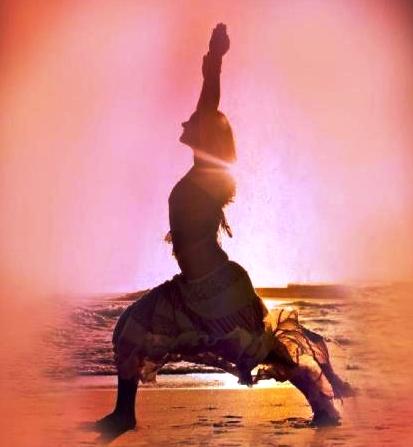
Do you have a spirit animal? That’s the blog prompt for today: “What is your spirit animal?” I have no idea how to figure out what mine is. Aboriginal Americans found their spirit animal through a vision quest, some spiritualists find theirs through a dream, other people are lucky enough to have their spirit animal find them.

Me? As far as I know, I don’t have such a guide, and if I do, it hasn’t made itself known to me. At one time I wanted to do a long-trail hike, thinking it would also work as a vision quest, but that didn’t work out. I did try to do some of those quizzes that supposedly introduce you to your spirit animal, but the very first question on a few of them stymied me: “What is your favorite element — water, earth, air, fire, wood, space?” How the heck does one answer that? I mean, you need those to live. Without wood (trees) there would be no breathable air. Without space, there would be no Earth. Without water, earth, air, fire (energy) there would be no life.

I did manage to find one quiz that asked different questions, but most of the questions did not pertain to me, such as what sort of television programs I watch — news, reality TV, documentaries, and a few others. Since I don’t watch television, it was a bogus question, as were several others. Still I did stumble through the quiz, and according to them, my spirit animal is a raccoon. Supposedly, the racoon embodies creativity, discretion, and keeping your ideas close to your chest until you’re ready to unveil them. Sounds feeble enough to apply to almost anyone.

I also found a site that linked spirit animals to one’s birthday, so depending on what culture I espouse — Western, Chinese, Native American, Celtic — my various spirit animals are fish, rabbit, wolf, snake. Not exactly a unanimous consensus, or even a general consensus!

The only dreams I ever had that could possibly be considered a vision quest or a way for my spirit animal to make itself known were both white dreams. In the first, I was walking in the white sands of the desert, with a white sky above me and a white path stretching before me. As I walked, three white horses sped across my path, then four white bunnies in a bunch, then two small white squarish creatures I could not identify, and finally, one immense white owl. For sure a mystical dream! All of those creatures are powerful totem animals, except perhaps for the small squarish animals. Another time I dreamt of a white tiger, a spirit animal that is drawn to a soul with inner strength.

So there you have it — all I know about me and my spirit animals. Since there is such a plethora of them, it could mean I need a whole lot of help. It could also mean that at different times, I was influenced by different manifestations of spirit. Or it could mean nothing at all, which, to be honest, is what I tend to believe.

***

Pat Bertram is the author of Grief: The Inside Story – A Guide to Surviving the Loss of a Loved One. “Grief: The Inside Story is perfect and that is not hyperbole! It is exactly what folk who are grieving need to read.” –Leesa Healy, RN, GDAS GDAT, Emotional/Mental Health Therapist & Educator.

Celebrating the Chinese New Year

When was the last time you did something for the first time?

As a person gets older, the first times dissipate. At the beginning, of course, everything is a first — first step, first word, first tooth, first birthday, first day of school, first night away from home, first date, first kiss, first job, first apartment. When the obvious firsts are gone, there are others to look for, such as first overnight hike, first cross-country trip, first mortgage. And then there are the other firsts that no one should ever have to deal with yet all of us do, such as the death of a loved one.

After the firsts come the seconds and thirds and the ho-hum of having done everything so many times before, that it seems as if there are no firsts left. And yet there are more firsts — at least I hope there are.

What made me think about all this is that just yesterday was the last time I did something for the first time — I celebrated the Chinese New Year.

This Asian holiday is something I’ve never before celebrated, never even considered celebrating. After all, I’m not Chinese or from Chinese ancestry, so it didn’t seem right to be glomming on to another culture’s traditions, but yesterday I was invited to join the celebration by my friend who does have a Chinese heritage. We didn’t do much, just dressed in red and went to a Chinese restaurant, but that seems to be the main way of celebrating — family, friends, and food.

To make sure I didn’t commit any major faux pas, I looked up Chinese New Year and found that the Chinese don’t call this holiday “Chinese New Year,” which makes sense. That’s like us calling our January 1st celebration “American New Year.” They simply call it New Year or Spring Festival. The problem with calling this Lunar New Year a Chinese New Year is that many other Asian countries also celebrate a lunar new year. Luckily, since my friend is of Chinese heritage, my calling it the Chinese New Year (as she did) didn’t offend her.

Anyway, it was nice starting this particular new year by doing something new, and it was it was especially nice celebrating the newness with good friends and good food.

***

Pat Bertram is the author of Grief: The Inside Story – A Guide to Surviving the Loss of a Loved One. “Grief: The Inside Story is perfect and that is not hyperbole! It is exactly what folk who are grieving need to read.” –Leesa Healy, RN, GDAS GDAT, Emotional/Mental Health Therapist & Educator.

Nice Day of a Different Sort

Yesterday was a lovely winter day here in southeastern Colorado — plenty of sun, still air, dry streets, highs in the forties — though elsewhere in Colorado people were digging out from the heavy snows that had been dumped Wednesday night. Because of the nice day we experienced in my corner of the state, I went for a couple of rambles around town, once by myself and once with a friend. Interestingly, everyone we met mentioned the coming storm.

According to the weather forecast on my phone, there is only a 48% chance of snow today, though they also say there could be an accumulation of five to six inches. I thought it was another of those taunts that the forecasters deal out — too often, there is no snow despite their predictions. In fact, the only real snowstorm we got this winter was supposed to have left behind a mere drifting of flakes. But then today I got an email from the regional energy supplier reminding us customers to take safety precautions because “Winter Storm Iggy” is going to bring heavy snows to this area.

Perhaps that’s true. After all, despite the sun that’s shining right now, it’s supposed to get cloudy with conditions that are right for snowfall, but what I really got focused on was the whole “Iggy” thing. What the heck is a Winter Storm Iggy? When did they start naming storms? They’ve named hurricanes and other tropical storms for decades, but this was the first I’ve heard of an intracontinental (rather than a coastal) storm being named. But what do I know? I don’t watch television or listen to the news or visit any of the online sites where people share news, fake and otherwise.

So I do what I always do — turned to Google. And I’m still confused. Is Iggy the name of this particular storm? Or is it a type of storm? Last year in February, there was an Iggy in Australia. And an Izzy in the United States.

As it turns out, it’s no wonder I’m not familiar with names of storms since it’s strictly a television phenomenon. The National Weather Service does not recognize names for winter storms. Nor do they have any plans to do so. It was The Weather Channel that started naming storms a decade ago, and these names have become part of the vernacular.

Sheesh. It’s bad enough trying to keep up with weather without having to try to remember what storms have names and what don’t. I certainly don’t want to clutter my mind with television idiocies especially since I can barely remember the names of people to whom I’ve been introduced and whose names I need to know.

I’m getting off the track here. Or maybe not. Maybe there isn’t a track. All I know is that yesterday was a nice day, and today will be a nice day of a different sort, snow or no snow.

***

Pat Bertram is the author of Grief: The Inside Story – A Guide to Surviving the Loss of a Loved One. “Grief: The Inside Story is perfect and that is not hyperbole! It is exactly what folk who are grieving need to read.” –Leesa Healy, RN, GDAS GDAT, Emotional/Mental Health Therapist & Educator.




