Who gave you the best writing advice you ever received and what was it?

The best writing advice I ever received I read in an old book called The Practical Stylist by Sheridan Baker: “Clarity is the first aim; economy the second; grace the third; dignity the fourth. Our writing should be a little strange, a little out of the ordinary, a little beautiful with words and phrases not met everyday, but seeming as right and natural as grass.”

Isn’t that beautiful? I paid particular attention to that advice when writing Light Bringer. I wanted the style itself to show that the characters were a little strange, a little out of the ordinary, a little beautiful. For example, “And then there it was, spread out before her in a shallow thirty-foot bowl. A lake of flowers — chrysanthemums and tulips, daisies and daffodils, lilies and columbines and fuchsia — all blooming brightly, all singing their song of welcome.”

Here are some responses from other authors about how the best writing advice they ever received. The comments are taken from interviews posted at Pat Bertram Introduces . . .

From an interview with Sheila Deeth, Author of “Flower Child”

I met Jane Kirkpatrick shortly after we moved to Oregon. She told me to keep writing. In fact, she’s told me several times to keep writing. It’s probably the most valuable piece of advice I’ve had.

From an interview with Eric Wasserman, Author of Celluloid Strangers

Frederick Reiken’s literature course on the short story was my very first graduate school class. The very first thing he said to all of us was, “If you’re not willing to submerge yourself in the world of reading fiction, give up now on being a serious writer of fiction.” I wrote this down the moment he said it, went back to my dingy Boston studio apartment that evening, and taped it across the screen of my TV.

From an interview with Sandra Shwayder Sanchez, Author of “The Nun”

The best advice I ever received was from J.R. Salamanca (Lilith, A Sea Change, Embarkation, Southern Light and more) who said the permanence of the written word has more influence on readers than spoken words and to take that influence seriously and try to create a good influence and that is the advice I would give aspiring writers.

What about you? Who gave you the best writing advice you ever received, and what was it?

(If you’d like me to interview you, please check out my author questionnaire http://patbertram.wordpress.com/author-questionnaire/ and follow the instruction.)

I’m going to Blog for Peace. Will You?

On Sunday, November 4, people all over the planet blog for peace. This year, I’m going to join the the Blog Blast for Peace, and you can join the movement, too. You make your own peace globe/statement or simply choose one pre-made at blogblastforpeace.com, and become – a peace blogger. http://goo.gl/wOaGs

Peace bloggers believe that words are powerful, and that this matters. http://goo.gl/b01KH

So, check out the website or check it out on Facebook.

How To Blog For Peace The short version:

1. Choose any graphic on this page. http://goo.gl/4xepL Right click and Save. Decorate it and sign it, or leave as is.

2. Send the finished globe to blogblast4peace@yahoo.com

3. Post it anywhere online November 4 and title your post Dona Nobis Pacem (Latin for Grant us Peace)

Sounds cool, doesn’t it?

Feeding the Facebook Beast

Yesterday, I talked about how Facebook is not the great promotional tool we authors had been led to believe, and yet some people do exceedingly well on the site. The truth is, Facebook is a beast that feeds on content. It needs a never-ending source of funny, inspiring, informative, controversial, topical, and brief posts that engage users and keeps them liking, sharing, and commenting. The more a post is shared, liked, and commented on, the more visible the post becomes. (Facebook uses something called EdgeRank to keep track of all this, which seems similar to Amazon’s algorithms. Amazon, like Facebook, rewards those who are doing well with additional visibility. In the same way, rich celebrities who already have everything they need, get free perks just because they are rich celebrities.)

When someone interacts in any way with a post on a fan page, for example, it shows up the feed of their friends, but the originator of the content gets the credit. And so the content provider gets more reach, and because they get more reach, Facebook will ensure that this continues by letting more and more fans see the posts, which increases the page reach of the content provider. Because, of course, without content, FB will starve since its users will go where they can find funny inspiring, informative, controversial, topical, and brief posts — places such as Twitter, Tumblr, Pinterest, or whatever the next big thing will be.

If you don’t have such engaging posts, then even if you have 1500 fans, only about 1% will ever see what you post. If you want to know what attracts attention, look no further than your own feed. What do you see that has been shared a hundred times, a thousand times? What have you laughed at, commented on, shared? Photos with funny, inspiring, informative, controversial, topical, and brief commentary, that’s what. (Well, you do unless you’re a curmudgeon like me, and then such content simply annoys you. If I see one more animal with baby-talk captions, acting like a human, I will probably scream so loud, it will reverberate through the center of the earth and cause earthquakes on the other side of the world.)

All this research the past couple of days into the workings of Facebook has given me a few ideas of what to do with my fan page — contests, questions, quotes from my books, even . .  gasp . . . photos with captions.

A Credo to Live By

Several years ago I created a credo defining how to live my life. I started with three points, gradually added the next four, and I thought the credo was finished. Recent exchanges on this blog reminded me of other prompts I need to add, such as being more playful and looking for my inner wild woman, and I ended up with eleven points. Eleven is an odd number, but I thought each item was an important one, and didn’t want to subtract one simply for the sake of satisfying my need for symmetry. Besides, my life is just beginning, or rather, beginning again, so chances are I’ll find more goals and reminders that I want to add.

Hey! What do you know! I just found number 12. Now I can have my credo and symmetry too.

My credo:

  1. Believe in yourself.
  2. Expect the best.
  3. Have a vision of victory and abundance.
  4. Don’t settle for a life of mediocrity.
  5. There is adventure waiting for you. Run to it. Explore.
  6. Be bold and brave.
  7. Live the life that only you can live.
  8. Be playful.
  9. Strive for spontaneity.
  10. Find your inner wild woman.
  11. Accept that you are where you are supposed to be.
  12. Embrace your destiny. It belongs to you alone.

Some of the points are easy, such as not being mediocre. Some are almost impossible for me, such as having a vision of victory and abundance since I don’t even know how to do envision those things. Some are wishful thinking, such as embracing my destiny. But . . . if I can learn to follow most of these exhortations, I could live a spectacular life.

Do you have a credo you live by?

Learning to Use Beats in Dialogue

One of the hardest techniques for new writers to handle is dialogue. When I first started out, my characters never just said something. They agreed, cautioned, reminded, mimicked, answered, contributed, guessed, explained, responded, admonished, confessed, encouraged, clarified, blurted, pointed, winced, replied, corrected, acknowledged, returned, laughed, challenged, chided, objected, contested, quipped, offered, moaned, complained, repeated, stammered, pleaded, inquired, mumbled, interrupted, confirmed, addressed, countered, advised, completed, allowed, supplied, ordered, asked, continued, chided, answered, whispered, teased, requested, hollered, echoed, declared, informed, spoke, bellowed, spit out, thundered, hissed. All within a few pages. Whew!

Even worse, I would sit and agonize over the way my characters spoke. “He responded sparingly.” “She informed him haughtily.” He mumbled sadly.” Ouch.

It was a joy to discover that modern dialogue relies primarily on “said,” such a common word, the reader’s gaze glides over it as if it were invisible. It was even more of a joy to discover that adverbs were frowned on. The dialogue itself, or the beat — the bit of action accompanying the dialogue — should show the character’s emotion. “I hate you”, she said angrily tells us what the character is feeling. She picked up a rock and threw it at him. “I hate you!” shows us what she is feeling, allowing us to become intimately involved with the character. The only time an adverb is necessary is when the character’s words are at odds with his mood, such as: “I had a great time,” he said sadly. You can also use an occasional “ly”adverb to describe the tonal quality of the character’s voice. “I hate you,” he said softly.

Besides helping identify who is speaking, beats help set the stage, tell us about the character’s personality, and vary the rhythm of the dialogue. Overdone, the beats are as distracting as any other speaker attribute, so the secret is to pay attention to the flow. Do you want short snappy dialogue? Don’t use beats. Do you want to slow things down a bit, keep the dialogue from seeming too disembodied? Use a few beats.

It’s hard to write crowd scenes and keep each character identified without resorting to copious “said”s, but beats keep the scene moving and, if you use beats that are specific to your character, you make the various characters come alive.

This excerpt from my novel Daughter Am I shows the use of beats. The scene is between my hero Mary, a young woman in search of her grandparents’ murderer, and a group of feisty octogenarians who are trying to help.

*     *     *

The man stopped bouncing and let his arms drop to his sides. Now that he stood relatively still, Mary could see he was skinnier than she’d first thought. A gray slouch hat tilted toward one eye, but the baggy pants cinched high above his waist and the bright flowery shirt several sizes too large marred the jaunty effect. His hands shook uncontrollably. Parkinson’s disease?

“You must be Happy,” she said.

Frowning, Happy patted his torso. “Must I be happy?” His voice deepened to what Mary assumed was his normal tone. “Can I be happy? Can anyone truly be happy?”

“His name is Barry Hapworth,” Kid Rags said, flicking a bit of lint off his navy pinstriped suit jacket. “For several obvious reasons, everyone calls him Happy.”

Mary glanced from the bus to Happy. “Were you driving this thing?”

Happy puffed out his meager chest. “Sure was.”

“And did you almost run over Mrs. Werner’s cat?”

“I’ll take the fifth.” Happy paused for a fraction of a second. “A fifth of bourbon.”

“Did someone say bourbon?” Kid Rags removed the flask from his hip pocket, took a swig, and passed it around.

“Who are all these people?” Bill asked from behind Mary.

Mary turned, wondering how she could explain the situation to her fiancé, but Teach saved her the trouble and made the introductions. Arms still folded across his chest, Crunchy nodded to Bill, then stepped close to Mary. Happy punched the air, but stopped when Bill showed no inclination to fight.

Kid Rags shook Bill’s hand. “You’re a lucky man.”

“What are you all doing here?” Mary asked. “I was supposed to pick you up. And why is Happy here?”

“Happy is a friend of Kid Rags,” Teach began, but Kid Rags interrupted him, saying hastily, “Not a friend. Just a fellow I know.”

“Happy knows someone who knows Iron Sam,” Teach continued, “and since we knew your car wasn’t big enough for all of us, we accepted Happy’s offer to drive us in his bus.”

“Who’s Iron Sam?” Bill asked, sounding plaintive.

“Butcher Boy,” Kid Rags said.

Bill’s eyebrows drew together. “Butcher Boy? Mary, are you sure you know what you’re doing?”

Mary laughed, suddenly feeling lighthearted and carefree. “I haven’t a clue.”


How To Do an Online Interview

I have a couple of blogs where I promote other authors, and so few authors follow the directions, I’ve become convinced writers have no idea how to read. Or perhaps they believe the directions don’t apply to them? Even so, bloggers cannot post what they do not have. So, for all you authors out there who are promoting your books, if you wish to be a guest on someone else’s blog, please follow the bloggers’ directions. The directions are there for a reason, partly to make it easier for the blogger, but mostly to make the interview or guest post as pleasing and compelling as possible to attract readers for your books.

If bloggers ask for a link to your book cover, please provide one. You have posted your book cover somewhere on the internet, right? So, provide that link. (For example, I have posted all of my book covers on the right sidebar of this blog and on my website, so I could provide either link.) If bloggers are going out of their way to promote you and your book, don’t make it harder by making them search for a photo or a link because generally, they won’t take the time. And, as I said, bloggers cannot post what they do not have.

If the blogger gives you an option where you can choose from a list of questions, please choose questions to which you can give full answers. Responding, “I don’t know” to a question is a waste of your time, the blogger’s time, and the reader’s time. If you don’t know, pick a question to which you do know the answer. Giving monosyllabic responses is just as bad. You’re a writer, right? Supposedly you know how to hook readers. So hook them. Tell them something interesting. Most writers say they have no message in their books, that they just want to entertain, so be entertaining.

Almost as bad as “I don’t know” is saying “It’s difficult to describe.” You’re a writer. Take the time to find the necessary words. And please, do not respond to a question with, “You’ll have to read the book.” There are 130,000,000 published book as of this very moment, so people have plenty of options. They don’t have to read your book. You have to make them want to read your book.

For my Author Questionnaire, I begin with the question, “What is your book about?” It’s the hook, the reason why we are all at the blog — to know about your book. So, please, don’t start your interview with boring questions like, “Is this your first book?” Why would the reader care if it’s your first book if they don’t know what it is about? And please give the title of your book. If you’ve done your job right, people are going to want to learn more about your book, but if you haven’t provided a title, how will readers know what it is?

Proof your interview or guest post. If your interview is full of typos, people will assume that your book is full of typos. If your grammar is sadly lacking, people will assume your book is as ungrammatical. And if your interview is boring, people will assume your book is also boring. So please, spend time on your presentations. It does you no good to carelessly throw together an interview, guest post, or excerpt, and expect readers to instantly fall in love with you and your work.

But most of all, follow the directions. I ask people to submit their interview as a comment reply on the blog, yet every day I get a message from someone asking for my email address so they can send me their interview. Um. No. If I wanted it sent via email, I would have provided the address.

Only about 10% of the people who do interviews for me provide everything I ask, which is why I am writing this blog. It’s a way of getting rid of my frustration and at the same time remind people to FOLLOW DIRECTIONS!

(If I haven’t scared you off, click here to find the directions for my Author Questionnaire.
Click here to find the directions for my Character Questionnaire.
And click here to Let me post your excerpt!)

What challenges did you face when writing your novel?

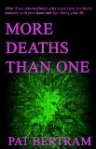
For More Deaths Than One, my first finished novel, the biggest challenge was learning how to write. Yikes. The original draft was laughably terrible. But I kept reading books on how to write, and I kept rewriting my novel, and eventually I got it right.

For A Spark of Heavenly Fire, my biggest challenge was finding the beginning of the story. I liked the story, and I kept telling myself that if people could just get through the first fifty pages they would like the story, too. Then one day it dawned on me that the solution of getting readers to see the story beyond the less than sparkling beginning was to get rid of the first fifty pages. So I junked those early chapters, wrote a new beginning, and then the real challenge began — getting it published. After two hundred rejections, I finally found a publisher, Second Wind Publishing, who loved the book.

For Daughter Am I, I had one great obstacle — me! The story came to me all in one day. Even the biggest story problem — why the gold was buried — was resolved that very night when I read a book about the war on gold. Still, even though I knew the story, it took me eleven months to write the first draft. Words come slowly to me. I’m not one who can sit down and just write what comes to mind. I have to dredge the words from somewhere deep inside.

For Light Bringer, my biggest challenge was figuring out who my not-quite-human characters were and where they came from. It was the first of my published novels to be started and the last to be finished. It took that long to discover the truth of the characters.

Here are some responses from others authors about the challenges they faced when writing their book. The comments are taken from interviews posted at Pat Bertram Introduces . . .

From an interview with: Jeffrey Siger, Author of “Target: Tinos”

I always like to immerse my characters in what I see as significant looming issues, but  the book originally planned for a 2012 release was scooped by world events thereby requiring me to scrap it and write an entirely new one. That experience left me a bit gun shy about picking another issue to wrap my story line around. But as I’m sure happens to so many writers, when you relax and just let the keyboard pull you up, voila, magic happens.

From an interview with: Anne Lyken-Garner, Author of “Sunday’s Child”

The obvious challenge was exposing my life story. It’s not and will never be a comfortable thing to do. Once it’s out there, it can be perused by anyone and be open to mockery, disdain etc. People can judge you because they think they can analyse you now that they know so much about your life – even if they’ve never judged you in the past.

From an interview with: Sherrie Hansen, Author of Merry Go Round

The only struggle I seem to face with my writing these days is finding enough hours in the day to sit down and write. I own and operate a bed and breakfast and tea house and am a pastor’s wife. I maintain four houses. It’s a good, but very busy life, and when the day is done, I am often too exhausted to think.

From an interview with: T. C. Isbell, Author of “Southern Cross”

I’m a retired engineer. My first challenge was to learn how to not write like an engineer. My second challenge was to learn everything I missed while staring out the window during my high school English classes.

From an interview with: Linda Nance, Author of “Journey Home”

Life got in the way. When you are raising a family there are many things that make writing the book less of a priority. An almost fatal accident made existance difficult and the idea of finishing the book only a distant dream. I did not give up but when I had the story completed I could see it was still not finished. It needed more. It needed more than I could give.

I enrolled in a class at Arkansas State University and doors opened giving me a new enthusiasm I had never felt with the feeling that I could . . . I could do it. They taught me so much and they helped me to learn to learn. I have always believed that we should learn in everyday and all that we do. The class helped me to view things in more than one way and to use that in what I was working on.

So, what challenges did you face when writing your novel?

(If you’d like me to interview you, please check out my author questionnaire http://patbertram.wordpress.com/author-questionnaire/ and follow the instruction.)

Writing Worth Reading

In a world where anyone can write a book and get it published regardless of  its merit or readability, authors have come to believe they can write however they wish. And of course, they can. Who is going to stop them? There are no longer any gatekeepers to the world of publishing. But still, writing is about communicating. If a writer cannot communicate what he or she wants to say so that another person can follow the story or article without sorting through typos, unruly punctuation, or poor sentence structure, then the writer has failed.

Whether we are bloggers, content producers for various websites, novelists, these are all tenets we must heed:

1. Use dynamic verbs and concrete nouns, and keep adjectives and adverbs to a minimum. Watch for word qualifiers such as “a little,” “quite,” “somewhat.” They undermine our authority and make our writing seem indecisive.

2. Action first; reaction second. Cause first, effect second. “He finished smoking his cigar, then he aired out the room.” Not: “He aired out the room after he finished smoking his cigar.” When we don’t use the proper sequence, our writing seems unfocused.

3. Use active voice; too much use of passive makes our writing seem muffled.

4. Don’t be clever just for the sake of cleverness, don’t complicate the obvious, and don’t be unconventional for the sake of being exotic; ultimately, our readers will feel used or confused, and we will lose them.

5. Punctuation, spelling, and grammar do count. Content is important, but what good is all our wisdom if we come across as dolts?

6. Strive for clarity, economy, grace, and dignity. We can string words together, but without at least a couple of these particular elements, our writing will not be worth reading.

Untaming Me and Embracing My Inner Savage

I watched The Sleeping Dictionary the other night, or at least as much of it as I have on tape. My life mate/soul mate recorded movies that he liked and often ended them before things got ugly, turning a painful movie into a touching one, so in my version, the story ends when John and Selima profess their love. (I had become so tuned to death and disappointment during his last years that I could not bear stories with unhappy endings or characters who fought instead of appreciating what they had. Watching his movies, I now understand he’d developed that same sensitivity. His version of Braveheart, for example, ends before William Wallace is tortured and killed.)

But I digress.

When the young headhunter first appeared on the scene in The Sleeping Dictionary, I was struck by his savagery. I don’t mean his cruelty — though today “savage” is synonymous with brutality, it originally came from a word that means “woods.” I’m referring to his elemental nature, his primal being, his untameness.

I am a highly civilized person. For the most part, I am considerate of others. I am never intentionally rude or bad mannered or insulting. I am not uncouth. I don’t make scenes in public (or private, for that matter). I seldom raise my voice. I listen more than I talk. I dress modestly. I use correct English and am not given to crudeties or foul language. If it’s in my power and nature, I almost always do what others ask. I try to be helpful. In other words, I am tame.

As I watched the movie, I wondered if the time had come to untame me, to embrace my inner primitive. I don’t know what or how to do that, but it’s something worth thinking about. I know your first thought — tattoos. Nope. Today tattoos are not a matter of primalness but of fad, and fad is the epitome of civilization.

It would be interesting to have totems, rituals, amulets that meant something to me and my life, that would help me connect to life or at least remind me of that connection. To find or develop such primal symbols, however, I would first need to know who I am, to know what meaning life has for me, but the death of my life mate/soul mate so devastated me that I no longer know who I am or how I connect to anything.

Now, as I write this, I realize that I don’t need to start a search for my inner primitive. I am already on that quest.

I walk in the desert (as primeval a place as there is around here) and pay attention to how my body and mind join to the earth. I feel how my feet connect with the ground (well, how my shoes connect. I am not so savage as to be willing to walk in rattlesnake country unshod). I feel the air coursing through my lungs, and the breezes touching my skin. I feel the heat of the sun and the coolness of my evaporating perspiration. I open my mind and feel new ideas flowing in and old ideas flowing out.

Maybe someday I will untame me — find out who I am at rock bottom and live according to my truth. And maybe I am living that way now.

Purposely-Flawed Characters. Or Not.

Interesting characters make interesting stories, not the other way around. An author develops interesting characters by putting them under pressure, giving them much to lose, and letting them change because of their experiences. And the author makes these characters at least a bit larger than life. Who wants to read about characters who sit around watching television all the time or who repeatedly have the same tiresome argument with their children or who can’t resolve their problems? We deal with that every day. We don’t need to read about it. On the other hand, if the traits are too idealized, characters come across as comic book silly.

Depth of character is revealed in the choices a character makes while at risk. Without the element of risk, there is no real story, only a string of episodes. Think what Superman would be like without Kryptonite — totally uninteresting and flawed in his perfection. But Kryptonite is a purposeful flaw, put there to make Superman more interesting, which makes him seem even more of a comic book character. Oh, wait. He’s supposed to be a comic book character!

To offset the problem of idealized characters, many writers try to create a purposely-flawed character, such as a boozing cop or a mother who can’t communicate with her teenager, but this seems an unnecessary distraction unless, of course, it is a vital part of the character’s motivation. So many flawed characters, particularly the hero with a drinking problem, have been done to death. I know there is a long tradition of hard-drinking detectives, but there has to be a more creative way of giving characters flaws. Or not.  Writers are so enthralled with the idea of flawed heroes, that they are missing the point. They don’t have to give their heroes obvious flaws. Writers are flawed. By making their heroes realistic, the heroes are automatically flawed.

A character must lose occasionally or make mistakes. Where is the suspense if every time a character attempts to do something she succeeds? And in that loss is a shadow of the flaw, because the setback must be realistic. Did the character lose because of arrogance, assuming she knew what to do when she didn’t? Did the character lose because she wasn’t physically fit or knowledgeable enough? Did the character lose because she didn’t plan correctly, because she was unfocused, because of her inner conflicts? Such losses force a fully realized character to change so in the end she can succeed.

In the beginning of Daughter Am I, twenty-five-year-old Mary Stuart has no real direction, no purpose, but when she learns she inherited a farm from her recently murdered grandparents — grandparents her father claimed had died before she was born — she becomes obsessed with finding out who they were and why someone wanted them dead. She drives halfway across the country with a feisty crew of octogenarians, friends of her grandparents, and even though she discovers they all had ties to the mob, she doesn’t let her good sense override her obsession. This understandable obsession is her flaw (though I did not write her to be a flawed charater), and if she doesn’t grow during the course of the story, if she doesn’t learn from her setbacks, the obsession could become a fatal flaw. Fatal or not, flaw or not, Mary’s obsession makes her real, makes her a bit larger than life, and makes her interesting.