How To Keep From Having Too Much Exposition in Your Novel

In an online discussion today, a writer asked what was the best way to keep from having too much exposition in your fiction, and how to insert it if necessary. Apparently, her character spends a lot of time alone, and she needed to know how to insert exposition during the long scenes when he is by himself.

That is a tough situation. Characters alone are hard to write. They need someone to butt heads with, they need to show readers who they are through comparison or contrast with other characters, and they need allies and enemies. When a character is around others, tension is inevitable, so conflict comes naturally. When a character is by himself, he has perhaps less interesting conflicts — the environment, his own nature, personal disasters. A lot of books are based on such non-human antagonists or inner demons, but readers like to see characters acting and reacting with other characters.

In scenes with only one character, it’s best to keep exposition to a bare minimum and focus on the action. One character alone for long periods of time without another character to butt heads with gets boring for readers, and exposition only exacerbates the problem. Feed the exposition into the story bit by bit as you need it, and refrain from long exposition dumps.

My novel Light Bringer, available from Second Wind Pubishing, is based on myth, both Sumerian myths and modern conspiracy theories, and all of that background information had to be presented to show the sweep of history. I created a discussion group among several colorful characters, each with his or her own take on the situation, then used the various conspiracy theories to help create the the characters and show their differences, which became a lively and painless way of dealing with the exposition. In addition, I ended up with a cast of ready-made characters I could pull from whenever I needed a minor character to fulfill a role.

The best way to insert exposition, though, is to make one character desperate to get the information, that way readers will want it, too. I used that technique in A Spark of Heavenly Fire, also available from Second Wind Publishing. The thriller required a lot of background information about biological warfare. I made one character desperate to hear the information, but I parceled it out bit by bit to make his desperation for the truth grow stronger while he became increasingly sickened by what he learned.

But you can’t use that particular technique with a single character, unless perhaps he is ransacking someone’s files, all the while fearful of being discovered. With a single character, it’s best to keep with action. Exposition slows the pace of the book, so does a single character unless he is dealing with a lot of external conflict.

Exposition can also be used to give readers a breather between fast-paced scenes, but even so, information dumps seldom add to the excitement of a story, so they have to be used sparingly. Exposition is best spread throughout a book, feeding readers only that which they need to know in order to understand the current scene.

A common mistake beginning writers make is to think that readers need to know the entire backstory before they can get involved with the characters, and so first chapters are generally exposition-heavy. I have a great fix for that — leave everything as is until the book is completely finished, then cut out the first chapter. (Which is what I did for A Spark of Heavenly Fire.) You will be amazed at how much of that first information dump is spread delicately throughout the book when needed, making the first chapter redundant. Of course, if there is a bit of necessary information in the deleted chapter that does not appear in the remaining chapters, it’s easy enough to find the proper place to insert it. The first chapter of a book should begin in the middle of the action, not before the action even begins. And speaking of first chapters, please, don’t ever use flashbacks in the opening scenes. Establish your  story, and then, if necessary, use flashbacks judiciously.  By definition, flashbacks lack the immediacy of present action.

Building Better Plots

In Building Better Plots, Robert Kernen provides a quick quiz to help you decide if your subject matter is strong enough to sustain a novel. I thought these questions were interesting enough to pass along:

Does your concept create obstacles that effectively challenge the characters? If so, which specific elements will be the source of that challenge?

Does your concept provide a strong backdrop for exploring the strengths and limitations and psychology of your characters? What specific elements does the plot have that provide vivid comparisons and contrasts that will delineate your character in intriguing ways?

Does your concept provide a strong environment for the messages and themes you want to explore? What metaphors and motifs grown naturally out of that environment will illuminate those themes and messages?

Does your concept provide any realistic hooks that will make it easy for the audience to relate to? What elements will they relate to? Even if you are writing science fiction or fantasy, you will want to give your audience some element to which they can connect their sympathy.

Does your concept provide enough tension to hold the audience’s interest? What are those sources of tension?

The questions seem a bit complicated to help create a story — by the time you’ve answered them all, you’d be sick of the story — but it seems they would be ideal as a tool to help clarify a muddy middle.

How Did You Do the Research for Your Novel?

I researched my novel Daughter Am I for two years, but I also had help from a historian friend, and in fact, he was the one who inspired me to write the book. He used to regale me with tales of gangsters. It got to the point where I couldn’t watch a gangster film with him because he’d keep up a running commentary about all the things the filmmaker got wrong, and I’d miss half the story. I did a lot of research myself, though, and it was a special joy when I discovered something he didn’t know! Most of the information isn’t on the internet, but resides in . . . gasp! . . . books.

Here are a few ways other authors did research for their books. The comments are taken from interviews posted at Pat Bertram Introduces . . .

From an interview by Deborah J Ledford, Author of Snare and Staccato

I’m part Eastern Band Cherokee and knew that I wanted the Native American element to be instrumental for SNARE. Once I decided on the Tribe to focus on I came into contact with the communications director on the Taos Pueblo in New Mexico. Floyd “Mountain Walking Cane” Gomez read every word of the manuscript as I composed each draft. He either approved scenes, characters and elements, or told me flat out “No, you cannot use this.” (he told me this quite often!) Elements Floyd wasn’t sure about were cleared by elders and the Taos Pueblo Tribal Council.

From an interview by T. C. Isbell, Author of “Southern Cross”

I spent a great deal of time researching my book. I used period magazines like Post, Life, and National Geographic. Some research was accomplished using old books and the Internet. However, information on the Internet has to be approached with a grain of salt.

From an interview by Polly Iyer, Author of “Hooked”

You’d be surprised how many upscale women write about their adventures as a call girl. Like Tawny, these are smart women who think why not get paid for something they’re giving away free. The top women go places with exciting, rich men and make big bucks to do it. Just click on Google, and there they are, telling all.

From an interview with Bonnie Toews, Author of “The Consummate Traitor”

I do intense research so that my facts are as realistic as can be in a fictional setting. I scour libraries, Google, read travelogues of areas I have not visited so that my descriptions are as true to life as possible, either today or in the time of the book’s setting. For that I interview people who lived and endured during the period. One interview for The Consummate Traitor was with an actual German aerocraft designer Canada protected so he could work on our Avro jet. He began as a fanatical NAZI with access to Hitler’s inner circle (He hated Goring) but by the end of the war, was so disillusioned that he ended up with a disassociated personality. During our interview he split from one to the other depending on what I described that triggered him to relive the past. I gained amazing insight from that interview and gave his hands to my NAZI villain. I have never seen hands like his — his finger tips were square, not rounded, and his shoulders were so slumped that his arms seem to hang too long for his body. I could picture him in an SS uniform with the shoulder paddings squaring off his body. He died a few years ago. He had Parkinson’s.

What about you? How did you do the research for your novel?

Meeting the Challenges of the Second Year of Grief

A couple of weeks ago I talked about The Five Major Challenges We Face During the Second Year of Grief:

1. Trying to understand where he went.
2. Living without him
3. Dealing with continued grief bursts.
4. Finding something to look forward to rather than simply existing.
5. Handling the yearning.

There are other challenges, of course, some unique to each individual, but all the challenges are dealt with the same way: By continuing to feel the pain when it erupts rather than turning away from it to satisfy the concerns of those who don’t understand; by taking care of ourselves even when we don’t see the point; by trying new things.

In other words, we meet the challenges of the second year by living. It sounds simple, but nothing about grief for a life mate/soul mate is simple. By living, we begin to move away from our pain, but we also move away from the person we loved more than any other. For some bereft, this feels like a betrayal of their love — how can you continue to live when life on this earth is denied him? For others, it seems like a betrayal of themselves — how can you become the person you need to be without betraying the person you once were?

It seems an impossible situation, yet life does continue whether we will it or not.

In my case, I’ve been meeting the challenges of the second year the same way I met the horrendous challenges of the first year. I take long walks almost every day, I exercise (stretching, weight-lifting) two or three times a week. I dance to a couple of songs most days, hoping to train myself to feel lighter in spirit and maybe even learn to have fun — whatever that is. I also try to eat a salad every day and stay away from sugar. At least, that’s the goal. I’m very disciplined for several days, following everything on this list, and then I decide the heck with the list — treating myself is more important than doing the right thing.

Either way, I am moving away from the life we once shared. And I am living.

I Wish I Was, I Wish I Were

I’m implementing the edits to Grief: The Great Yearning my last couple of readers suggested, and I was doing fine until I hit this passage:

I’m trying to find comfort in knowing he is no longer suffering, and for a moment yesterday I even envied him. I wish my pain were over, too.

Both readers said “were” should be “was.” Since they are readers, not editors or grammarians, I ignored the suggestion, especially since MS Word grammar check agrees with me. Still, something niggled at me, so I spent an hour online reading various articles comparing I wish it were vs. I wish it was. And this is what I found:

http://www.grammar.net/iwishiwere says: “Was” is used in situations where the statement might once have been or could be a reality. This verb mood is called “indicative”. These subtle differences once enabled a speaker to “indicate” something without using more words to spell it out.

“If I was home, I would be sitting on the couch eating chips.” The speaker indicates with subtlety that he intends to go home, and potato chips will be involved.

“Frank’s not here yet, but if he was, that blueberry pie would be gone.” Because “was” is used, even if it read, “If Frank was here, that pie would be gone,” readers can assume that Frank will show up eventually, and the pie is in danger.

In an unknown situation, it is admissible to use “was”.

“If Betty was smart, she’d go hide that pie.” Even if there is proof that Betty is NOT smart, it is certainly more polite to indicate she might be!

“If it was Friday, I don’t blame her for taking a short lunch.” “Was” is intended to emphasize “Friday” and that it was a fact.

How fun it is that certain things can be hinted at, if the listener can catch the subtleties. Can you think of any other words or parts of speech that change only slightly but definitely alter meaning?

I thought that was the solution to my quandary, change were to was. When I wrote the sentence twenty-one months ago, I deliberately used were. I thought it impossible that the pain of those early days would ever diminish. And yet, though I still have bouts of pain at his being dead, I don’t feel the total and constant agony I felt in the beginning. So if  was connoted hope rather than futility, it would be the better choice.

Unfortunately, wishes always take “were”s. When making a statement that is not factual, the verb is in the subjunctive mood, and the subjuctive of verb “to be” is “were” in the past tense, regardless of what the subject is.

So, despite my change in attitude, the sentence needs to remain as I originally wrote it.

I’m trying to find comfort in knowing he is no longer suffering, and for a moment yesterday I even envied him. I wish my pain was over, too.

Someday, perhaps, it will be.

How to Make Transitions From Scene to Scene in Fiction

At it’s most simplistic, a scene is an action sequence that begins with a character trying to attain a goal, is further developed when someone or something tries to prevent the character from attaining the goal, and ends when either the goal is reached or disaster ensues. Either way, we should learn something new about the character by the end of the scene.

A novel is a seamless flow of story from scene to scene without interruption. At least it should appear that way. In actuality, time sometimes passes between one scene and the next, and it’s the way the writer handles transitions that makes the story flow.

Authors used to write long pieces of narrative and exposition linking scenes, but that isn’t necessary, and in today’s fast-paced world is a serious drawback. Readers want to plunge immediately into a new scene without being distracted by boring discourses.

One of the easiest and perhaps most effective ways of making a scene transition is simply to skip a space and start the new scene. (Or rather, start in an interesting place in a new scene.) “I’m dead,” Scott said. He lay in bed under the blue patchwork comforter Gracie had made him, his head turned toward the window.

Another easy way is to start with the grandmother of all scene transitions: Later. Just that one word. Or you can add a bit of time, A month later, Scott fell from a high beam.

Another good transition word is After. For example: After Scott had been pronounced dead, after he had been cleaned and shrouded in a white blanket, after he’d been hauled away in a purple body bag like so much garbage, the hospice nurse remained to comfort Gracie.

Or you can use seasons: In the spring, she buried Scott’s ashes beneath the dead willow.

On Facebook, a writer asked if it was okay to jump forward six months in a novel. My response: ‘It’s perfectly acceptable to jump ahead, and in a lot of cases, it’s the best thing for the book as long as you do the transition right. That way you keep hitting the high points of the story. If nothing significant happens in those six months (and you need the time to pass) then it’s better to jump ahead rather than bore your readers to death with unimportant events and dialogue. It’s easy enough to do — just start the chapter with “Six months have passed since such and such happened, and now, etc.” Might not be elegant, but it gets the point across.’

Other authors disagreed with my transition suggestion, saying it was too much author intrusion, that it would pull people out of the story, but I do know it wouldn’t pull people out of the story as much as six months worth of nothing happening.

This isn’t the exact wording as my inelegant response, but it’s basically the same thing: During the following spring, as the second anniversary of Scott’s death drew near, Gracie realized . . . again . . . he would never come back. He was gone forever, and since grief hadn’t killed her, much to her shock, she knew she’d have to do something to get her life back.

These are just a few ways I made the transition from scene to scene in a short story I recently wrote for an anthology that Second Wind Publishing will release this spring. Since my 2,100-word story spanned twenty-five years, I needed a lot of transitions. Without the transitions taking me from scene to scene, all I would have had is a long, boring narration of an uneventful marriage that ended in death.

So let’s talk about scenes and transitions from scene to scene. How do you personally write scenes and make transitions?

It Makes It Seem as if It has too Many Its

“It” is an invisible word. We use it so frequently and are so used to seeing it, that we barely notice its use when we read it or write it. It takes a good editor to look beyond the expected to what is and find the “it”s that make our writing so hazy. See all my “it”s? Makes me seem like a lazy writer, and normally that would be true, but it was very difficult using so many “it”s in such a short time, but I needed all these “it”s to make a point. “It” has its place, but most often, a more specific word would make the writing come alive.

I wrote a short story for Change is in the Wind, the Second Wind Publishing anthology that will be released this spring. I write so little fiction now that I expected red marks to litter the pages when I got the draft back from my editor, but surprisingly, the story worked. Or the piece would have worked except for those annoying “it”s.

For example, I wrote, Unshed tears filled her chest and lungs. For a few seconds she thought she’d die, right there in her kitchen, leaning against the granite counter. She finally managed to draw first one breath, then another, but it hurt so horribly it didn’t seem worth the effort. And Scott wasn’t there to comfort her.

These sentences show a grieving woman, and there is nothing wrong with them, but the description of her pain is so much better when detailed words replace the “it”s. Unshed tears filled her chest and lungs. For a few seconds she thought she’d die, right there in her kitchen, leaning against the granite counter. She finally managed to draw first one breath, then another, but her chest hurt so horribly, the inhalations didn’t seem worth the effort. And Scott wasn’t there to comfort her.

There’s not a lot of difference between the two examples, but in a short story, where every word counts, precise words are better than place-holding pronouns such as “it.”

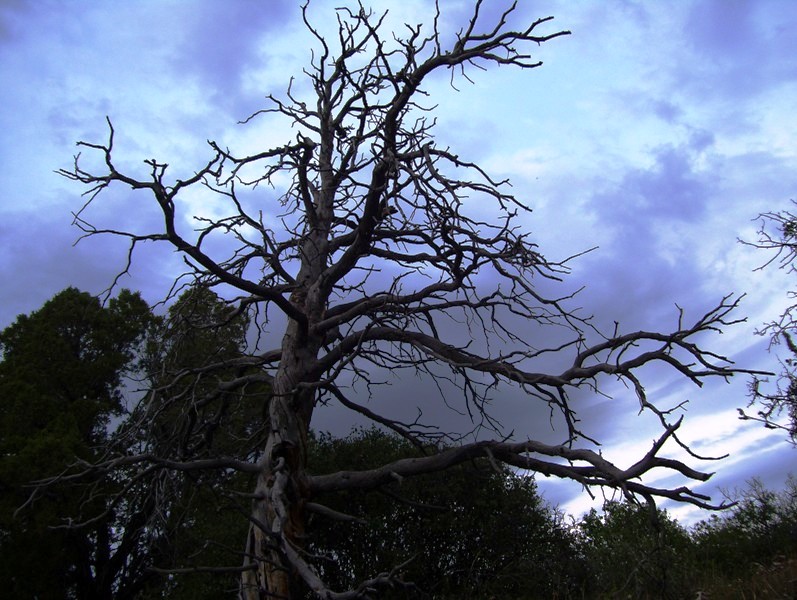
On another page I wrote: A touch of green against the dry brown of the tree trunk caught her attention. She went still. Could that really be what it looked like? She leaned closer to the tree and studied the willow shoot sprouting out of the base of the trunk.

And this is the final version: A touch of green against the dry brown of the tree trunk caught her attention. She went still. Could she really be seeing a renewal? She leaned closer to the tree and studied the willow shoot sprouting out of the base of the trunk.

A single word-change made this climactic scene pop. And that’s the point of paying attention to vague words like “it” and replacing them with more exacting words. Details make good writing burst into life.

The Gift of the Bonsai

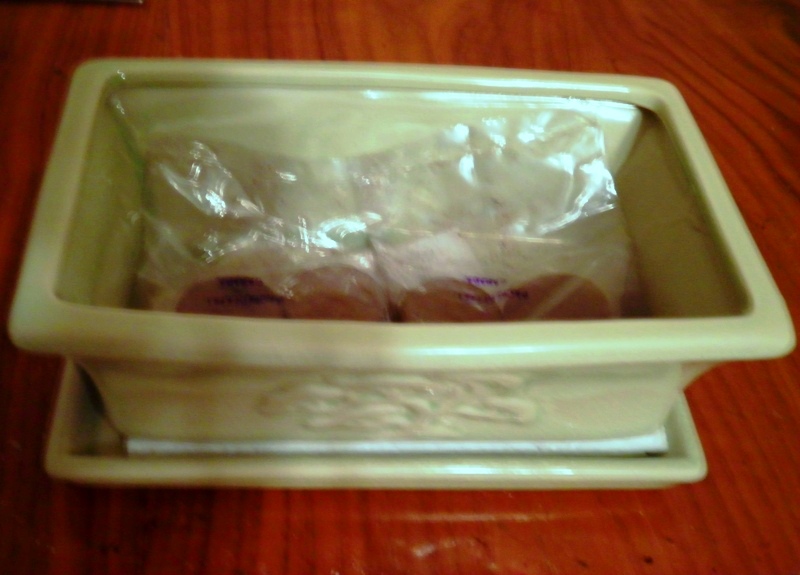
My brother gave me a bonsai kit, which was a wonderful and thoughtful gift because I’ve always been fascinated with the little potted trees (that’s what bonsai means — a potted tree). But  . . . (there’s always a “but” somewhere, isn’t there?) I have a brown thumb. Have never been able to keep a houseplant alive. Never.

Still, I’m game for anything new right now, so I decided to plant my tree and see what happens. I got as far as opening the box and reading the “complete” instructions. They said to cover with the seeds “with a light sprinkling of soil, moisten the soil, and cover the pot with plastic wrap. This will create a mini greenhouse and no further watering will be necessary until the seeds sprout. Once the seeds have sprouted, remove the plastic wrap from the pot.” End of instructions.

And then what? These complete instructions are missing the “complete” part. How does one care for the seedlings? What do you do with the plants as they grow? The kit includes four cakes of “growing medium,” but what does one do with this medium? The cakes don’t break up easily, and you can’t exactly sprinkle these chocolate mint-sized cakes over the seeds. And anyway, even if I pulverized the cakes, they would barely cover the bottom of the planter.

So, I began googling.  Bonsai kit.  Garden at Home (the brand) bonsai kit. Black pine bonsai seeds. I found a query about a bonsai kit that sounded like like mine. She didn’t know what to do with the cakes, either. The response that woman was given? Buy a ready grown bonsai and maintain it since growing a black pine bonsai will take years.

Years? How many years? My life is in a state of flux. I can’t count on next week let alone next year or the year after.

More googling. On  the site: Training Black Pine for Bonsai I found this by Brent Walston: I consider the training of black pines, Pinus thunbergii, to be one of the most difficult aspects of bonsai, as well as one of the slowest goals to achieve. After over fifteen years of playing with them, I am only now beginning to get to the ramification stage, and I emphasize ‘beginning’. Of course I am not talking about one inch trunk Shohin here, but full blown three inch trunk monsters like you see in the books. Most of the finest ones I have had the privilege to see have been in training for approximately fifty years or more. This seems to be the general minimum age for really fine trees.

Fifty years to grow a single plant!!!! Ouch. I think the longest I ever kept a house plant alive was one month.

In another article, Brent Walston said: I discourage beginners from working with Black Pine, Pinus thunbergii, because it takes so long, and you need to know so much just to begin. I started with Black Pine, ignorant of this fact and massacred a lot of plants learning how, even with John Naka’s book, Bonsai Techniques I. I bought about 100 of them in one gallon cans, old root bound plants that appeared to have potential. Some of them have turned out to be really nice trees, but ten years later, the best are still several years away from being finished bonsai. Not a subject for the impatient. So when beginners ask me what to do with this seedling pine they just bought, I just roll my eyes and try to talk them into a nice deciduous tree.

And my black pine isn’t even a seedling. It’s merely a seed.

So, I decided I need to find out how to grow a black pine from a seed, and this is what I found at http://www.bonsai4me.com: Though seed is very cheap and easy to obtain, it does have some drawbacks when propagating plants. It is a very slow process; seeds can take many months to germinate, some species can take a number of seasons for their seed to germinate and many species need exacting conditions to begin the process of germination. Many types of seed require periods of cold or mild temperatures or wet weather before they will begin the process of germination.

It might take many months just to germinate my seed? Eek.

A ready-grown Bonsai, or at least one that’s had a few years under its skin, started to look like a fine idea. I found a few, but they cost more than my car is worth. $6,750.00. $5,400.00. $3,700.00. Yikes. Even the cheapest ones cost hundreds of dollars. Did I mention my brown thumb? Inability to keep a plant alive?

Maybe what I need is an artificial bonsai for my planter. Sprinkle it with pine oil. Do you think my brother would notice?

Letter to Book Reviewers

Dear Book Reviewers:

I love your enthusiasm for my books, I appreciate your support, and I’m especially thankful you took the time out of your busy day to review the books and post the reviews, but . . . must you give away so much of the plot? A review is not a synopsis and readers do not need you to reveal every major plot point of the book. And they especially do not need (or want) you to tell them how it ends. What people want is a reason to read the book, and if you tell them too much, you have taken away any reason for them to read it, in which case you have done us all a disservice. And I am sure that was never your intention.

I don’t mean to sound harsh or ungrateful, but I spend a lot of time mapping my books, slowly revealing the truth, each new revelation dependant on the one that comes before, so that by the end of the book, people end up believing (at least for the moment) that the story is true. If surprises are revealed out of sequence, it breaks the chain of evidence. So not only will readers know what to expect, they will be robbed of the unique experience of believing something foreign to their everyday lives.

As a general rule, if you must, you can mention things that happen in the first fourth of the book, and for sure you can hint at what will happen in later chapters without mentioning specific events, but anything beyond that is a spoiler and should be noted at the beginning of the review. (For example: “This review contains spoilers.”) Those who don’t like surprises will continue reading your review. Those who do like surprises can choose not to read it.

Recently I’ve asked a couple of you to remove spoilers from your reviews, and you kindly and graciously agreed, and for that, I thank you. Others of you refused to change a word, saying you stand by what you said. I did not ask you to change your opinion. I merely asked you to remove the spoilers, which did not merit the abusive reply.

For those of you who don’t like my books, that’s fine, but please don’t write a dismissive review based on what the books are not. My books are not romances, (though all contain a romance of sorts) so do not expect them to follow the genre conventions for romance novels. My books are not apocalyptic, so do not expect them to follow the conventions for such stories. If you need a tag for the novels, call them thrillers, call them suspense, call them conspiracy novels, or you can call them “typical Bertram.”

As Malcolm Campbell said of Light Bringer, it is “typical Bertram: plots within plots, multiple characters with multiple agendas, fast moving, more than enough mystery and intrigue for everyone.”

Respectfully,

Pat Bertram
author of Light BringerMore Deaths Than One, A Spark of Heavenly Fireand Daughter Am I. All are available for Kindle on Amazon.

What Do You Say to Someone Who is Grieving at Christmas?

Christmas is a hard time of year for those who are grieving. Not only does the festivity of the season remind the bereft of all they have lost, but it’s a time for getting together with loved ones, and the goneness of that one special person seems even more unfathomable when you are alone or alone in a crowd.

Grief makes everyone uneasy. It’s a reminder how vulnerable we really are. How, despite our beliefs, we know so very little of life and death. Even well-meaning people stumble around the bereft, suddenly clumsy in the face of grief, and this unnatural behavior makes the griever feel even more alone. Some people give looks of speculation, as if you are diseased and they’re wondering if they should step away so they don’t catch your illness. Or else they give you wrinkled-forehead looks of sympathy that make you feel even worse.

Shortly after the death of my life mate/soul mate, I noticed how uncomfortable people were around me, and how they wanted to say the right thing but didn’t know what the right thing was, so I offered suggestions in What to Say to Someone Who is Grieving. I can see there might be a special concern about saying the right thing at Christmas, but the truth is, there is no right thing. Nothing you can ever say will bring the bereft what they most need: life to make sense once more. (That might not be what we most want, but it is what we most need.)

If you know the person huggingly well, the best thing is a hug. If you knew the deceased, share a story. “I remember how Bob loved (or hated) Christmas.” Don’t assume that by ignoring the dead you are making things easier for the bereft. We remember, and it’s nice to know that others remember, too. One thing to never say is, “I know how you feel.” You don’t. You can’t. Even if you had a similar loss, everyone’s grief is different, every person is different, and by telling them you know how they feel, you are diminishing the truth of their grief. Also, don’t pressure them to tell you how they feel. Grief encompasses so many different emotions, it’s almost impossible to know how one feels. All you know is that you are in pain.

It seems such an emotional minefield, doesn’t it? But, whether you are family, good friends, or casual aquaintances, there is something you can say, something that is so common and almost rote that no one stops to analyze the words. And still these words manage to convey exactly what you want to say. (In fact, leaving off these words may make the person even worse since they will know how uncomfortable you are with their grief.)

So, what do you say to someone who is grieving at Christmas?

You say, “Merry Christmas.”

***

Pat Bertram is the author of Grief: The Inside Story – A Guide to Surviving the Loss of a Loved One. “Grief: The Inside Story is perfect and that is not hyperbole! It is exactly what folk who are grieving need to read.” –Leesa Healy, RN, GDAS GDAT, Emotional/Mental Health Therapist & Educator.