It Makes It Seem as if It has too Many Its

“It” is an invisible word. We use it so frequently and are so used to seeing it, that we barely notice its use when we read it or write it. It takes a good editor to look beyond the expected to what is and find the “it”s that make our writing so hazy. See all my “it”s? Makes me seem like a lazy writer, and normally that would be true, but it was very difficult using so many “it”s in such a short time, but I needed all these “it”s to make a point. “It” has its place, but most often, a more specific word would make the writing come alive.

I wrote a short story for Change is in the Wind, the Second Wind Publishing anthology that will be released this spring. I write so little fiction now that I expected red marks to litter the pages when I got the draft back from my editor, but surprisingly, the story worked. Or the piece would have worked except for those annoying “it”s.

For example, I wrote, Unshed tears filled her chest and lungs. For a few seconds she thought she’d die, right there in her kitchen, leaning against the granite counter. She finally managed to draw first one breath, then another, but it hurt so horribly it didn’t seem worth the effort. And Scott wasn’t there to comfort her.

These sentences show a grieving woman, and there is nothing wrong with them, but the description of her pain is so much better when detailed words replace the “it”s. Unshed tears filled her chest and lungs. For a few seconds she thought she’d die, right there in her kitchen, leaning against the granite counter. She finally managed to draw first one breath, then another, but her chest hurt so horribly, the inhalations didn’t seem worth the effort. And Scott wasn’t there to comfort her.

There’s not a lot of difference between the two examples, but in a short story, where every word counts, precise words are better than place-holding pronouns such as “it.”

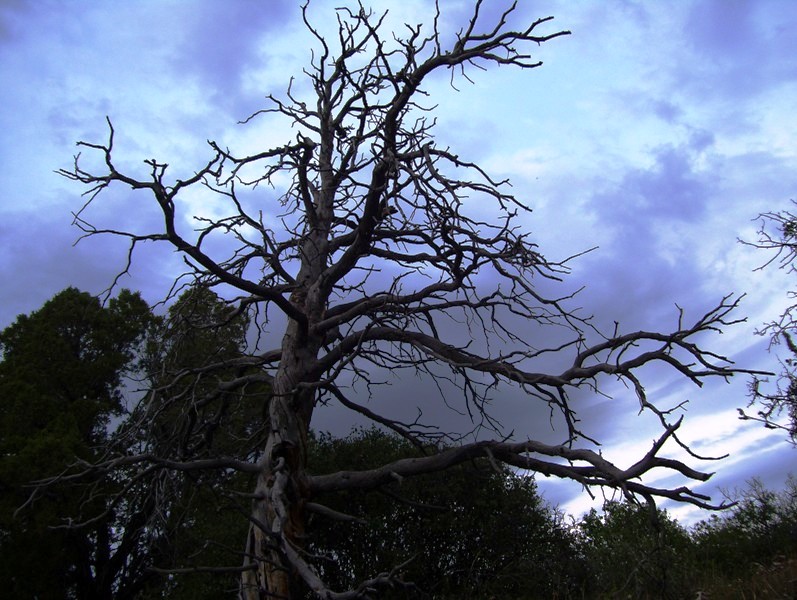
On another page I wrote: A touch of green against the dry brown of the tree trunk caught her attention. She went still. Could that really be what it looked like? She leaned closer to the tree and studied the willow shoot sprouting out of the base of the trunk.

And this is the final version: A touch of green against the dry brown of the tree trunk caught her attention. She went still. Could she really be seeing a renewal? She leaned closer to the tree and studied the willow shoot sprouting out of the base of the trunk.

A single word-change made this climactic scene pop. And that’s the point of paying attention to vague words like “it” and replacing them with more exacting words. Details make good writing burst into life.

The Gift of the Bonsai

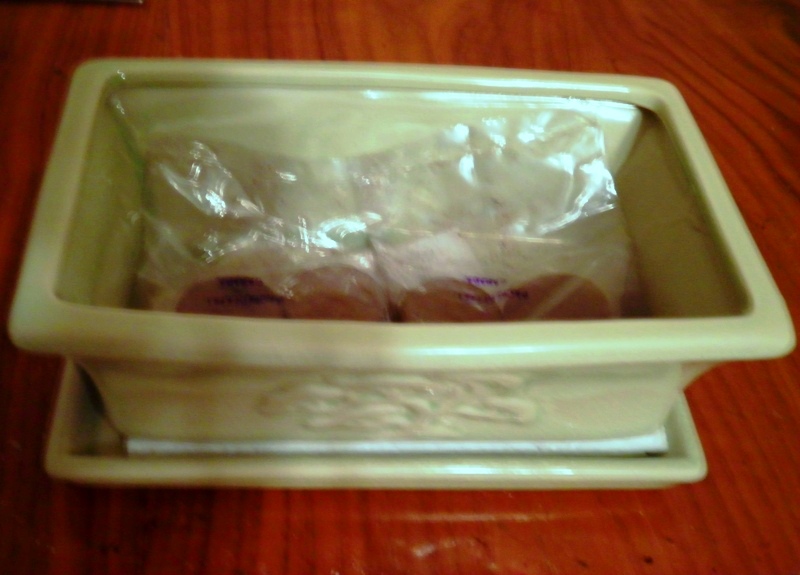
My brother gave me a bonsai kit, which was a wonderful and thoughtful gift because I’ve always been fascinated with the little potted trees (that’s what bonsai means — a potted tree). But  . . . (there’s always a “but” somewhere, isn’t there?) I have a brown thumb. Have never been able to keep a houseplant alive. Never.

Still, I’m game for anything new right now, so I decided to plant my tree and see what happens. I got as far as opening the box and reading the “complete” instructions. They said to cover with the seeds “with a light sprinkling of soil, moisten the soil, and cover the pot with plastic wrap. This will create a mini greenhouse and no further watering will be necessary until the seeds sprout. Once the seeds have sprouted, remove the plastic wrap from the pot.” End of instructions.

And then what? These complete instructions are missing the “complete” part. How does one care for the seedlings? What do you do with the plants as they grow? The kit includes four cakes of “growing medium,” but what does one do with this medium? The cakes don’t break up easily, and you can’t exactly sprinkle these chocolate mint-sized cakes over the seeds. And anyway, even if I pulverized the cakes, they would barely cover the bottom of the planter.

So, I began googling.  Bonsai kit.  Garden at Home (the brand) bonsai kit. Black pine bonsai seeds. I found a query about a bonsai kit that sounded like like mine. She didn’t know what to do with the cakes, either. The response that woman was given? Buy a ready grown bonsai and maintain it since growing a black pine bonsai will take years.

Years? How many years? My life is in a state of flux. I can’t count on next week let alone next year or the year after.

More googling. On  the site: Training Black Pine for Bonsai I found this by Brent Walston: I consider the training of black pines, Pinus thunbergii, to be one of the most difficult aspects of bonsai, as well as one of the slowest goals to achieve. After over fifteen years of playing with them, I am only now beginning to get to the ramification stage, and I emphasize ‘beginning’. Of course I am not talking about one inch trunk Shohin here, but full blown three inch trunk monsters like you see in the books. Most of the finest ones I have had the privilege to see have been in training for approximately fifty years or more. This seems to be the general minimum age for really fine trees.

Fifty years to grow a single plant!!!! Ouch. I think the longest I ever kept a house plant alive was one month.

In another article, Brent Walston said: I discourage beginners from working with Black Pine, Pinus thunbergii, because it takes so long, and you need to know so much just to begin. I started with Black Pine, ignorant of this fact and massacred a lot of plants learning how, even with John Naka’s book, Bonsai Techniques I. I bought about 100 of them in one gallon cans, old root bound plants that appeared to have potential. Some of them have turned out to be really nice trees, but ten years later, the best are still several years away from being finished bonsai. Not a subject for the impatient. So when beginners ask me what to do with this seedling pine they just bought, I just roll my eyes and try to talk them into a nice deciduous tree.

And my black pine isn’t even a seedling. It’s merely a seed.

So, I decided I need to find out how to grow a black pine from a seed, and this is what I found at http://www.bonsai4me.com: Though seed is very cheap and easy to obtain, it does have some drawbacks when propagating plants. It is a very slow process; seeds can take many months to germinate, some species can take a number of seasons for their seed to germinate and many species need exacting conditions to begin the process of germination. Many types of seed require periods of cold or mild temperatures or wet weather before they will begin the process of germination.

It might take many months just to germinate my seed? Eek.

A ready-grown Bonsai, or at least one that’s had a few years under its skin, started to look like a fine idea. I found a few, but they cost more than my car is worth. $6,750.00. $5,400.00. $3,700.00. Yikes. Even the cheapest ones cost hundreds of dollars. Did I mention my brown thumb? Inability to keep a plant alive?

Maybe what I need is an artificial bonsai for my planter. Sprinkle it with pine oil. Do you think my brother would notice?

Letter to Book Reviewers

Dear Book Reviewers:

I love your enthusiasm for my books, I appreciate your support, and I’m especially thankful you took the time out of your busy day to review the books and post the reviews, but . . . must you give away so much of the plot? A review is not a synopsis and readers do not need you to reveal every major plot point of the book. And they especially do not need (or want) you to tell them how it ends. What people want is a reason to read the book, and if you tell them too much, you have taken away any reason for them to read it, in which case you have done us all a disservice. And I am sure that was never your intention.

I don’t mean to sound harsh or ungrateful, but I spend a lot of time mapping my books, slowly revealing the truth, each new revelation dependant on the one that comes before, so that by the end of the book, people end up believing (at least for the moment) that the story is true. If surprises are revealed out of sequence, it breaks the chain of evidence. So not only will readers know what to expect, they will be robbed of the unique experience of believing something foreign to their everyday lives.

As a general rule, if you must, you can mention things that happen in the first fourth of the book, and for sure you can hint at what will happen in later chapters without mentioning specific events, but anything beyond that is a spoiler and should be noted at the beginning of the review. (For example: “This review contains spoilers.”) Those who don’t like surprises will continue reading your review. Those who do like surprises can choose not to read it.

Recently I’ve asked a couple of you to remove spoilers from your reviews, and you kindly and graciously agreed, and for that, I thank you. Others of you refused to change a word, saying you stand by what you said. I did not ask you to change your opinion. I merely asked you to remove the spoilers, which did not merit the abusive reply.

For those of you who don’t like my books, that’s fine, but please don’t write a dismissive review based on what the books are not. My books are not romances, (though all contain a romance of sorts) so do not expect them to follow the genre conventions for romance novels. My books are not apocalyptic, so do not expect them to follow the conventions for such stories. If you need a tag for the novels, call them thrillers, call them suspense, call them conspiracy novels, or you can call them “typical Bertram.”

As Malcolm Campbell said of Light Bringer, it is “typical Bertram: plots within plots, multiple characters with multiple agendas, fast moving, more than enough mystery and intrigue for everyone.”

Respectfully,

Pat Bertram
author of Light BringerMore Deaths Than One, A Spark of Heavenly Fireand Daughter Am I. All are available for Kindle on Amazon.

What Do You Say to Someone Who is Grieving at Christmas?

Christmas is a hard time of year for those who are grieving. Not only does the festivity of the season remind the bereft of all they have lost, but it’s a time for getting together with loved ones, and the goneness of that one special person seems even more unfathomable when you are alone or alone in a crowd.

Grief makes everyone uneasy. It’s a reminder how vulnerable we really are. How, despite our beliefs, we know so very little of life and death. Even well-meaning people stumble around the bereft, suddenly clumsy in the face of grief, and this unnatural behavior makes the griever feel even more alone. Some people give looks of speculation, as if you are diseased and they’re wondering if they should step away so they don’t catch your illness. Or else they give you wrinkled-forehead looks of sympathy that make you feel even worse.

Shortly after the death of my life mate/soul mate, I noticed how uncomfortable people were around me, and how they wanted to say the right thing but didn’t know what the right thing was, so I offered suggestions in What to Say to Someone Who is Grieving. I can see there might be a special concern about saying the right thing at Christmas, but the truth is, there is no right thing. Nothing you can ever say will bring the bereft what they most need: life to make sense once more. (That might not be what we most want, but it is what we most need.)

If you know the person huggingly well, the best thing is a hug. If you knew the deceased, share a story. “I remember how Bob loved (or hated) Christmas.” Don’t assume that by ignoring the dead you are making things easier for the bereft. We remember, and it’s nice to know that others remember, too. One thing to never say is, “I know how you feel.” You don’t. You can’t. Even if you had a similar loss, everyone’s grief is different, every person is different, and by telling them you know how they feel, you are diminishing the truth of their grief. Also, don’t pressure them to tell you how they feel. Grief encompasses so many different emotions, it’s almost impossible to know how one feels. All you know is that you are in pain.

It seems such an emotional minefield, doesn’t it? But, whether you are family, good friends, or casual aquaintances, there is something you can say, something that is so common and almost rote that no one stops to analyze the words. And still these words manage to convey exactly what you want to say. (In fact, leaving off these words may make the person even worse since they will know how uncomfortable you are with their grief.)

So, what do you say to someone who is grieving at Christmas?

You say, “Merry Christmas.”

***

Pat Bertram is the author of Grief: The Inside Story – A Guide to Surviving the Loss of a Loved One. “Grief: The Inside Story is perfect and that is not hyperbole! It is exactly what folk who are grieving need to read.” –Leesa Healy, RN, GDAS GDAT, Emotional/Mental Health Therapist & Educator.

Make Every Character Count by Dave Ebright

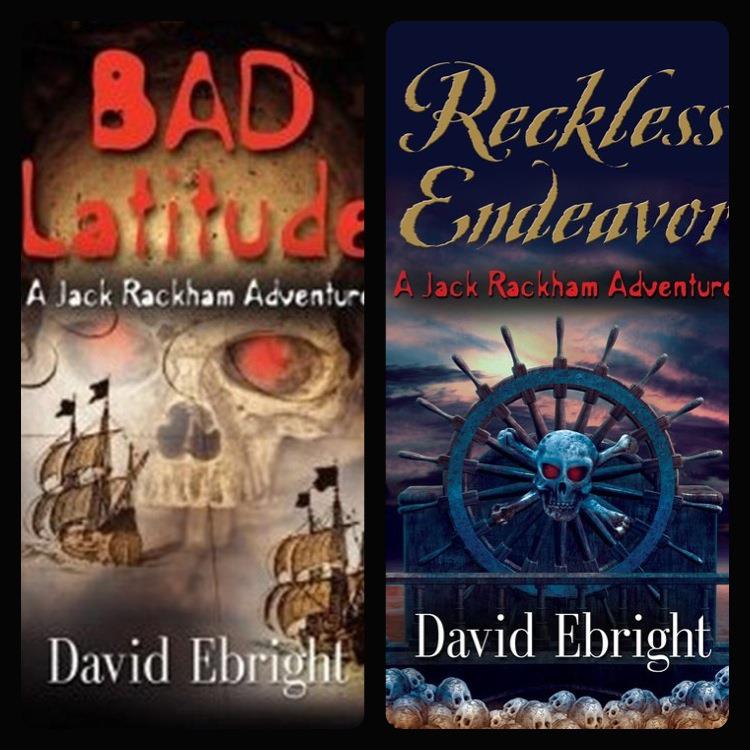
Tonight I’m posting an article by an author friend of mine. I don’t know where I met him — perhaps here on this blog — but now we’re connected at various sites. He’s quite a character, this Dave Ebright, and he penned an award-winning pirate story for young adults called Bad Latitude. (Even the title cracks me up.) Dave’s second YA novel, Reckless Endeavor is on its way to me right now, probably spending the night in a lonely USPS outpost somewhere. I can hardly wait to read it! Adventure, the haunted town of St Augustine, and dead pirates. What’s not to like?  Here is what Dave has to say:

I was participating the other night on Pat’s forum at GATHER, No Whine, Just Champagne (which is a very worthwhile place to hang out & chat about the craft of writing on Thursday nights at 9PM EST — not a paid commercial message) & made a comment that got me in deep trouble with my friend & our awesome moderator. So here I am, making amends & torturing Pat’s readers with … gulp … an opinion. Here’s how it all started (unedited):

(ME) “I actually wrote a blog post on a writerly topic about making every character count — then I realized — Who the heck am I to be writing something about writing? — so I deleted it.

(PAT) “Um . . . Dave? What are you talking about? Why shouldn’t you write about a writerly topic? If you’ve seen half the crap out there about writing that I have, you’d understand that you have more right than most. Did you save any of the post about making every character count? If not, can you rewrite it? I’d love to post it on my blog if you don’t want to post it on yours.

So, here is my writerly blog post.

_________________________________________________________________________

Make Every Character Count by Dave Ebright:

Google the phrase “Make every word count.” Writers & teachers use it repeatedly in articles, on blogs, in classrooms & as part of ‘how to’ seminars. Great advice but there could be a Part B which should read – make every character count.

Recently, while reading a bestseller’s novel, the need for another form of economy in writing all but screamed from the pages. The book contained so many characters it needed an accompanying playbill for reference. It was difficult to follow & by the mid-point, the slog was on. The plot faltered, confusion set in & my interest waned.

I have written two books, both part of a YA series, with another on the way. As most writers discover (& hopefully strive for), the writing improves from one effort to the next. Word economy can be one result, as well as the decision-making. There are twenty-four characters in my first book. Five of them make only minor contributions to the story. The second book has but fifteen & all play vital roles, affecting the action, enhancing the humor or taking center stage for relevant scenes. Limiting the number of characters was intentional, the result of lessons learned, but I was determined that every character would serve a purpose.

Now forget the “writerly” approach, I’m not comfortable with it anyway. Try this.

The characters are part of your book’s team. You want to pick the best players to participate. You coach & develop them via edits & rewrites to become interesting, memorable, funny or evil. Since it’s your team (book), you decide on who gets the playing (plot) time. Anyone given the privilege to make your team has to contribute or they’re benched, or jettisoned to the bilge of a pirate ship. Whew! Now that sounds more like me.

Writing for only four years hardly qualifies me as an expert but as an avid reader who happens to write, character fillers performing busy work are distractions. Sure, make every word count, but take the same approach with your characters.

Okay – I’m gettin’ back to doin’ what I do best now.

Feel free to chop, edit or delete altogether, Pat – no hard feelings.

I didn’t chop, edit or delete a single word. I was right — this writerly discourse by Dave Ebright deserved a better fate than ending up in the recycle bin. Dave made a good point, one that is often overlooked: make each character count. He made another good point: No Whine, Just Champagne is a great place to hang out on Thursday nights. We’ve been having some wonderful chats about writing and the writing life. Here is a link to the most recent discussion, the one that inspired this post, Maximum Capacity — No Whine, Just Champagne Writing Discussion #170

Is There too Much Promotion on Facebook?

I got a message from a woman on Facebook the other day asking if I’d be willing to write a post about too much promotion on sites like Facebook. At first, I thought this would be an easy task. I detest all the self-promotion that goes on at the site, especially in the groups.

Some promotion is understandable. Pages, of course, are all about “soft sell” promotion, and so any promotion that goes on there is part of the package.  Mostly I use my fan page for announcements, such as kindle sales, and for discussions. (You can find the current discussion here: Do your characters always act at maximum capacity? Should they?)

What people post on their own profile, of course, is up to them. Self-promotion is sometimes the least offensive thing they post on their profiles. How many times can the same dang too-annoyingly-cute-for-words animal video or cloyingly sweet sentimental photo/saying be shared? Sometimes the same thing shows up in the feed day after day after day after day. . . But I digress.

I thought I did a lot of promoting on my profile, in which case I would be the last person to talk about too much promotion on Facebook, but here is a list of the last twelve things I posted on my Facebook profile:

  • Two posts were about Malcolm’s Book Bits and Notions, a great compendium of links to publishing/writing/book news, which everyone in the industry should subscribe to.
  • Two posts were brags — 1) I just posted my 700th blog post!!! and 2) My blog is ranked 177,350 of all blogs and websites in the United States. People stay an average of 4 minutes. And based on internet averages, ptbertram.wordpress.com is visited more frequently by females who are graduate school educated and browse this site from work. At least according to Alexa.com
  • Two posts were pithy observations: 1) At the grocery store today, I saw a book written by someone I met here on facebook when they were first starting out. An odd commentary of our times when hitting the grocery store endstacks means hitting the big time. 2) I doubled my memory!! Facebook works faster now. I don’t.
  • One was an announcement for my live chat on gather.com: Maximum Capacity — No Whine, Just Champagne… | Gather (Same discussion as on my facebook page, but with different participants, and different comments and conclusions)
  • One was an announcement of an article (written by me) that was published in Angie’s Diary: Rhythm in Writing | Angie’s DIARY
  • One was an announcement of the Second Wind Publishing Short Story contest: Short Story Contest. No Entry Fee!
  • The remaining three were links to my blog posts.

Does any of that constitute promotion? In some respects, all of it does, but it’s not blatant. At least I don’t think it is. Maybe you have a different opinion on the matter.

Nor do I promote in the groups I moderate. I post links to interviews I do with other other authors, I welcome new members to the group, and sometimes I post questions to get people to talk. Mostly what I do as moderator is delete everyone’s promotions. The group decided to ban self-promotion except on Saturday because they were sick of it, but apparently everyone assumes that self-promotion is what everyone else does, not what they themselves do. So they continue to post links to their books, links to reviews of their books, requests to “like” their page, and all the other blatantly self-promoting things that we all do on occasion but hate when anyone else does.  Instead of just turning everyone loose on Saturday, I’ve turned Saturday into a self-promotion extravaganza, which has become a lot of fun, and maybe people sell a few books from it, but still, it’s promoting to other authors. We need to be promoting to readers, not each other. This is a concept many authors don’t seem to get. Nor do they seem to understand that being generous and promoting other authors does not take sales away from themselves. I keep plugging away, though, trying to build a kinder, more giving group, one that is not so deep into self-centered promotion.

So, when the woman asked me to write an aritcle, I thought I knew what to say: that there was too much self-promotion on Facebook. Anything interesting gets buried beneath the constant barrage of “Look at me! Buy my book!” But . . . and here’s the sad truth . . . for some people, this constant self-promotion is catapulting them into star status on Amazon. Just because I think there is too much promotion on Facebook, doesn’t mean that there is too much from other people’s points of view.

Recently I’ve been reading a lot of articles about promoting on Facebook, looking for the magic ingredient that I seem to be missing. The only thing I can see that I am missing is a willingness to constantly and blatantly plug my books. One guy maxed out five profiles and made a fortune.  (Of course, that fortune came from the money he made off his book telling how to max out your profile, but it was still a fortune.) I was near maximum capacity on my profile once, but didn’t want to have to switch solely to a page — I like the interaction on the profile — so I unfriended all the blatant promoters such as the multi-level marketers, the people trying to sell me self-improvement books, people urging me to buy their book that will tell me how to make money on facebook, the people who had maxed out their profiles or were about to, and I was left with about 2,000 friends. I’m trying to make friends with my friends, to see if in the long run that will help sell books. And if it doesn’t? I’ve still gained a lot of online friends.

This has turned out to be a rather lengthy post when in fact all I wanted was to get your opinion. Do you think there is too much promotion on Facebook? What would an acceptable form of promotion be? Do you mind all the promotion? Do you do a bit (or a lot) of promotion yourself? If so, what do you do to promote yourself?

The Man Who Married a Bridge

Imagine my surprise when I came to the end of a romantic story (not my normal reading choice, but the book was free and so was I. What else need I say?) and found this paragraph:

Few present had ever seen anyone so radiant, they declared, and they may even have been right. Certainly her new husband thought so. He seldom took his eyes from her, it was almost as if he didn’t quite believe in her presence, so that he had to keep looking back to assure himself she was real. But then, few bridges had such creamy ivory skin to complement a creamy silk gown, and few still had such luxuriant midnight-black hair. 

Hmmm. An odd-looking bridge she was, to be sure. No wonder the groom had to keep looking back to assure himself she was real.

For the most part I am indulgent of an error or two or ten in a book. It’s the norm now in a publishing world where the bottom line is more important than the written line, and I know how hard it is to check every single word, but this typo was such a doozy it rated a comment. To be fair, the misspelled word was on the second to last line of the page, and was the last word in the line, and those are notoriously hard places to check. When you copy edit, as when you read, your eyes focus on the center of the page, so any words around the edges (the first and last lines, the first and last words in a line), end up in the hazy field of peripheral vision.

So, if you’re copy editing your manuscript or proofing a book, make a special trip around the edges of your pages, looking for misplaced brides and other anomalies.

Another way to check for typos is to temporarily reset the margins or type size so that the words that would normally appear at the top or bottom of the page end up in the middle. It gives you an entirely new perspective of your book. On the other hand, perhaps you like your grooms marrying bridges. I must admit, it does have an interesting ring to it. (Yeah, I know. Bad pun. But I couldn’t resist.)

The Editor’s Blog — A Remarkable Resource for All Writers

I’m almost hesitant to post this, because once you have found this remarkable resource for writers, you won’t need me anymore. (Well, except for friendship, of course!) Beth Hill, who maintains this blog is both writer and editor. Her editing focus is on long fiction, primarily novels. Beth says, “I love the written word, the ability we have to create worlds and emotions with well-chosen phrases. It’s my intention to share tips and insights and encouragement with writers at all levels, to help you craft  stories that will entertain and satisfy your readers. That will help satisfy you as writer as well.”

So, be sure to bookmark her blog, The Editor’s Blog, where you will find everything you need to know about writing and writing well. Here is the current list of her articles:

What To Do When One of Your Beloved Pieces of Art Glass or Pottery Gets Broken

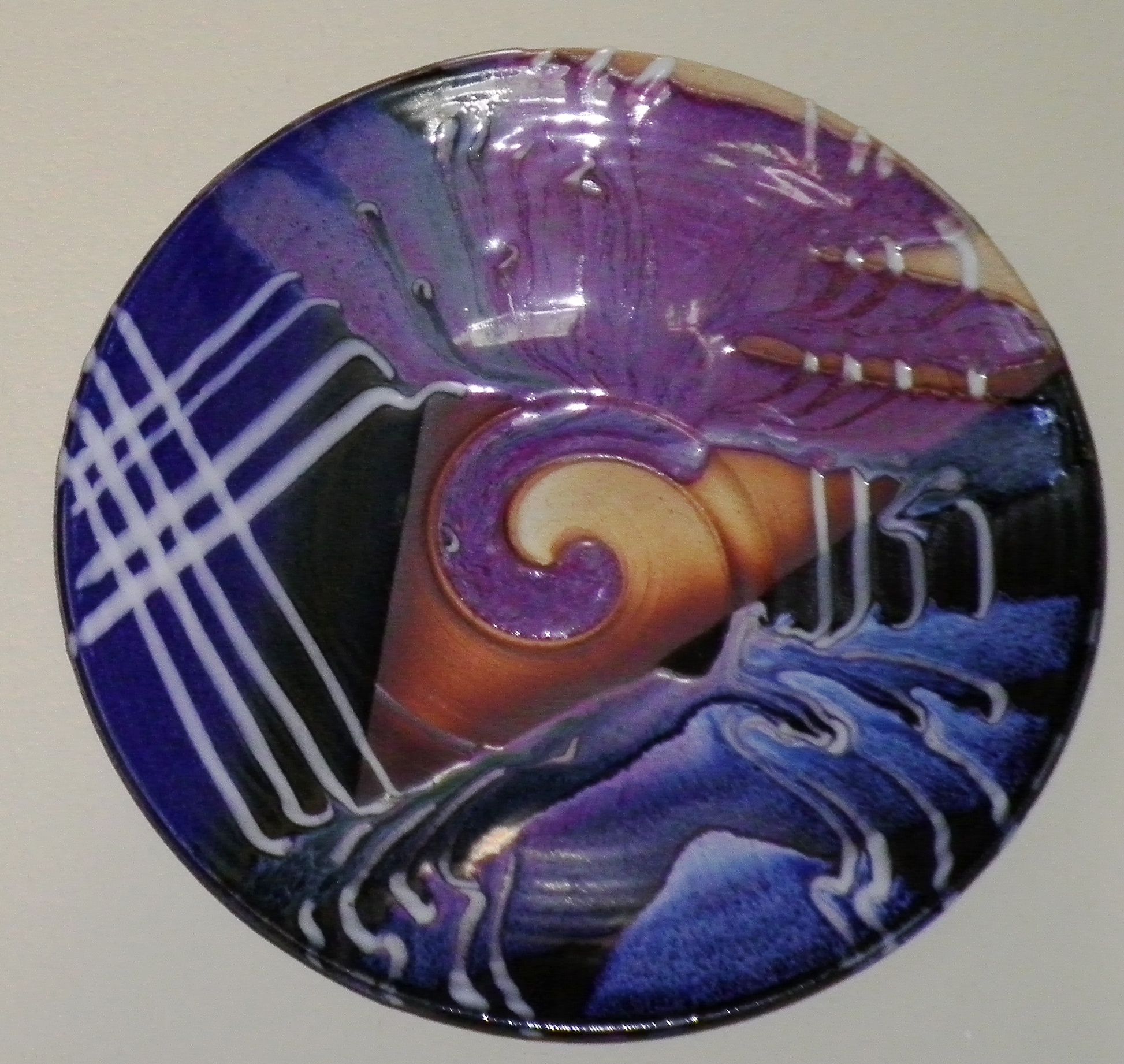
What do you do when one of your beloved pieces of art glass or pottery gets broken?

It breaks your heart to have to throw it away, but what else can you do with it?

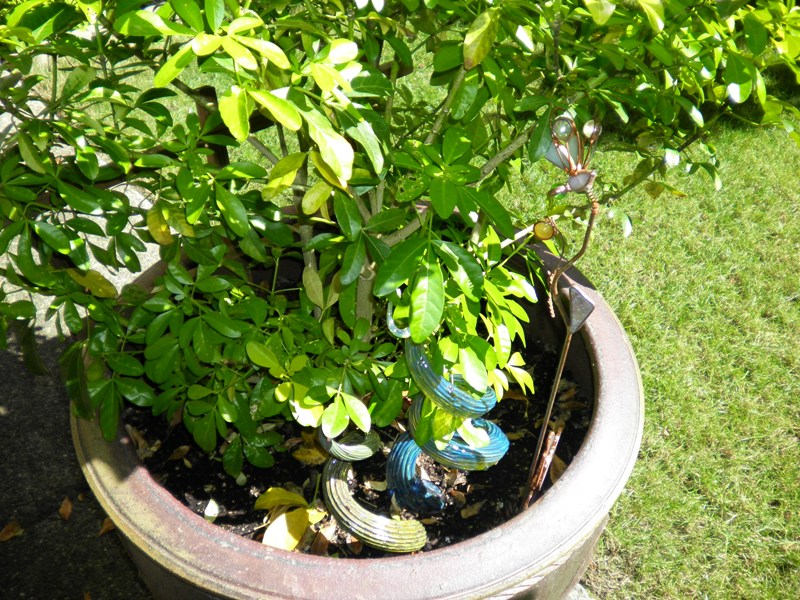
Don’t throw it away!! Plant it in your garden.

They make wonderful accent pieces. And you can continue to enjoy their beauty.

I wish this had been my idea, but I’m only passing it along.

The glassware collection and the idea of planting broken pieces of art glass and pottery are my sister’s.
I’m only posting the photos I took in the hopes that you enjoy her pottery garden as much as I did.

Learning How To Occupy Myself

One of the hardest things to accept after losing one’s life partner is that, no matter how unfair or unwelcome, life does go on. It’s been eighteen month since my life mate died, and here I still am. I always thought we’d go at the same time, that our connection was so great that the one who was left behind would be pulled into death along with the one who died. As romantic as that notion is, it didn’t happen (though the death rate for the remaining partner of a couple is exceptionally high, so I suppose, in some cases it does occur).

So much of these past months seem to have been wasted on grief, but now that I see light rising on the horizon, I realize these months were not a waste. In their own way, they were a celebration of life — both his and mine. I gave myself over to the experience, felt every nuance of his goneness, every tug of separation, every heartache and heartbreak. I gave myself over to tears, let them fall hotly and unchecked.

I felt, and in that feeling was life.

Ironically, another thing that is hard to accept after such a loss is the fact of your own mortality. When you accept that your partner is gone from this world forever, the realization that one day you will be also be dead hits you deep in your gut. I can feel the first (and second) twinges of age creeping up on me, but for now, I am still alive, still occupying this body/mind. It seems a waste of his life for me to waste what is left of mine, so I’ve been trying to occupy myself fully.

I dance in my room to celebrate this body, to feel movement and rhythm. I am writing nonsensical bits of prose — just random words, really — to celebrate this mind. I’m exercising so as to use my muscles, to celebrate that I have strength to lift more than a few pounds and to walk more than a couple of miles. I am celebrating the use of my hands, the way my feet connect to the ground, the pull of air into my lungs, the feel of the breeze on my face, the sights that pass in front of my eyes, the sounds of the city that assail my ears and the silence of the desert that brings respite. I am feeling the connectedness of things and people, both in the real world and the virtual world of the internet.

I am being, and being alive.

I am occupying myself.