The Editor’s Blog — A Remarkable Resource for All Writers

I’m almost hesitant to post this, because once you have found this remarkable resource for writers, you won’t need me anymore. (Well, except for friendship, of course!) Beth Hill, who maintains this blog is both writer and editor. Her editing focus is on long fiction, primarily novels. Beth says, “I love the written word, the ability we have to create worlds and emotions with well-chosen phrases. It’s my intention to share tips and insights and encouragement with writers at all levels, to help you craft  stories that will entertain and satisfy your readers. That will help satisfy you as writer as well.”

So, be sure to bookmark her blog, The Editor’s Blog, where you will find everything you need to know about writing and writing well. Here is the current list of her articles:

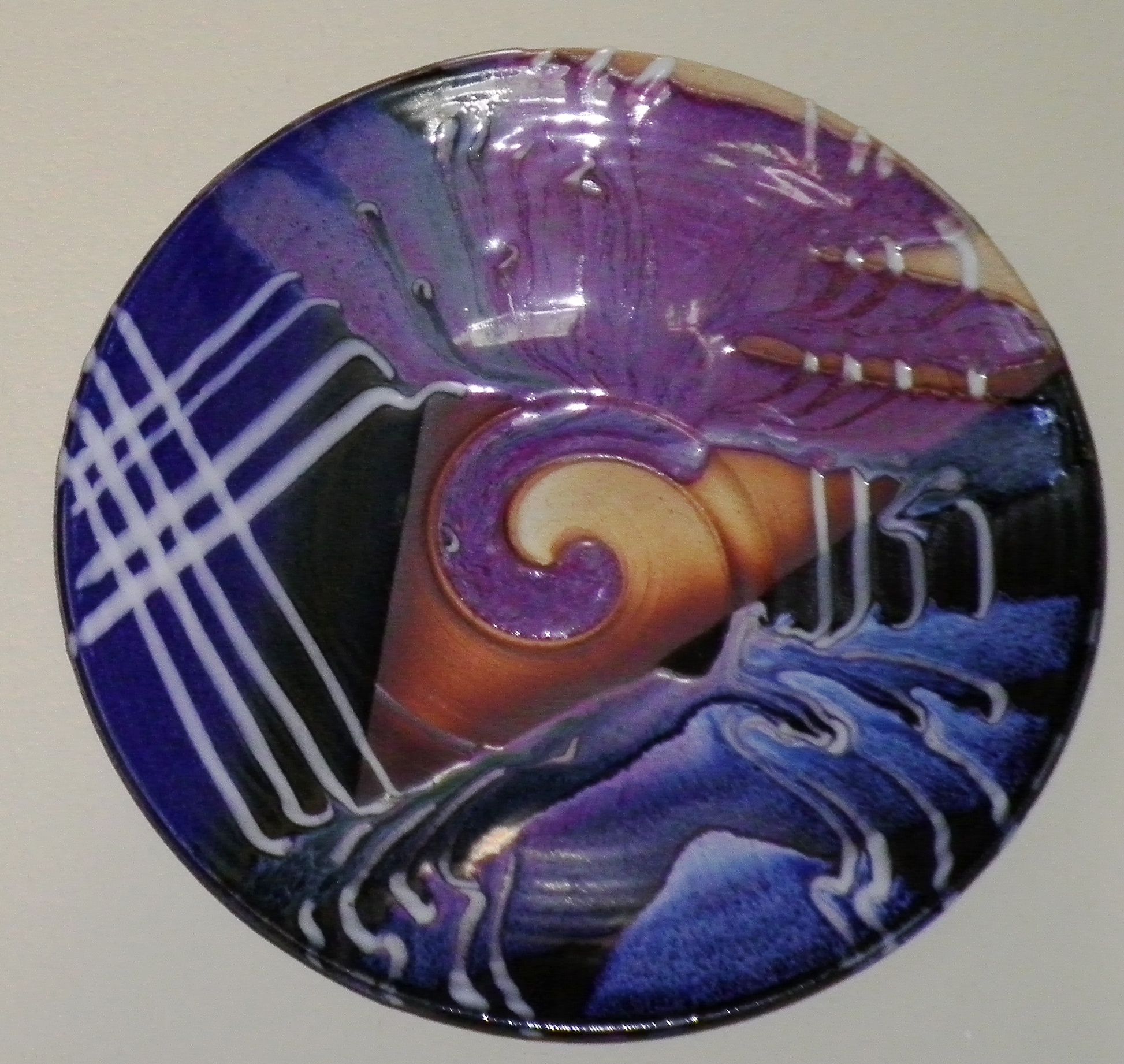
What To Do When One of Your Beloved Pieces of Art Glass or Pottery Gets Broken

What do you do when one of your beloved pieces of art glass or pottery gets broken?

It breaks your heart to have to throw it away, but what else can you do with it?

Don’t throw it away!! Plant it in your garden.

They make wonderful accent pieces. And you can continue to enjoy their beauty.

I wish this had been my idea, but I’m only passing it along.

The glassware collection and the idea of planting broken pieces of art glass and pottery are my sister’s.
I’m only posting the photos I took in the hopes that you enjoy her pottery garden as much as I did.

Learning How To Occupy Myself

One of the hardest things to accept after losing one’s life partner is that, no matter how unfair or unwelcome, life does go on. It’s been eighteen month since my life mate died, and here I still am. I always thought we’d go at the same time, that our connection was so great that the one who was left behind would be pulled into death along with the one who died. As romantic as that notion is, it didn’t happen (though the death rate for the remaining partner of a couple is exceptionally high, so I suppose, in some cases it does occur).

So much of these past months seem to have been wasted on grief, but now that I see light rising on the horizon, I realize these months were not a waste. In their own way, they were a celebration of life — both his and mine. I gave myself over to the experience, felt every nuance of his goneness, every tug of separation, every heartache and heartbreak. I gave myself over to tears, let them fall hotly and unchecked.

I felt, and in that feeling was life.

Ironically, another thing that is hard to accept after such a loss is the fact of your own mortality. When you accept that your partner is gone from this world forever, the realization that one day you will be also be dead hits you deep in your gut. I can feel the first (and second) twinges of age creeping up on me, but for now, I am still alive, still occupying this body/mind. It seems a waste of his life for me to waste what is left of mine, so I’ve been trying to occupy myself fully.

I dance in my room to celebrate this body, to feel movement and rhythm. I am writing nonsensical bits of prose — just random words, really — to celebrate this mind. I’m exercising so as to use my muscles, to celebrate that I have strength to lift more than a few pounds and to walk more than a couple of miles. I am celebrating the use of my hands, the way my feet connect to the ground, the pull of air into my lungs, the feel of the breeze on my face, the sights that pass in front of my eyes, the sounds of the city that assail my ears and the silence of the desert that brings respite. I am feeling the connectedness of things and people, both in the real world and the virtual world of the internet.

I am being, and being alive.

I am occupying myself.

‘The Top 5 Mistakes I Find as an Editor’ by Smoky Trudeau Zeidel

Please welcome today’s guest. Smoky Trudeau Zeidel is the author of two novels, On the Choptank Shores and The Cabin. She is also author of Observations of an Earth Mage, a photo/essay collection; and two books about writing. You can find Smoky and her three blogs at www.SmokyZeidel.wordpress.com. Smoky writes:

As an editor and as an avid reader, I see a lot of mistakes make their way into print. Many, if not all, of them could be avoided by having a professional edit your manuscript before submitting it to your publisher, or putting it up on Smashwords or Kindle if you ePublish on your own.

You might think you don’t need an editor, because your next door neighbor/best friend/Aunt Thelma offered to do it for free, or because you’ve read and re-read your manuscript a hundred times and just know it’s perfect.

You’d be wrong. First, your neighbor/best friend/Aunt Thelma may spell great, but do they know all the rules of punctuation and style? I doubt it. The Chicago Manual of Style, the go-to book for American publishers for punctuation and style issues, is more than 900 pages long and two inches thick. I doubt your beta readers have that thing memorized. I refer to it frequently, and I am a professional editor.

Second, as the book’s creator, finding your own mistakes is hard. That’s because you see what you thought you wrote, rather than what you actually wrote. Even though I’m an editor, I don’t edit my own stuff. I have my best friend do it—but hold on, before you protest, let me say that my best friend is a professional editor, so she is exempt from the best friend rule.

That said, I know a lot of writers won’t hire an editor. And this really isn’t a pitch to get your business (although, of course, I am always open to that). So since you probably won’t hire me or any of my editor cohorts, I’m going to share with you a list of the five biggest mistakes I see in manuscripts, so you can watch for them, and fix them, yourself.

Mistake #1: Writers don’t place a comma between independent clauses separated with a conjunction. Independent clauses are clauses that can stand on their own as sentences, e.g., “He took the 405 freeway to work, and he exited at the Getty Museum.” Because both “He took the 405 freeway to work” and “he exited at the Getty Museum” are independent clauses—meaning they can stand alone as sentences, you must, must, place a comma before the conjunction, “and.” This is probably the biggest, most common mistake I find in manuscripts and books. Don’t make it. It’s a very easy punctuation rule to remember.

Mistake #2: Writers place commas between independent clauses and dependent clauses. This is probably the second most common mistake I see. A dependent clause is one that cannot stand on its own as a sentence. Let’s take the above example, and change it just a little: “He took the 405 freeway to work and exited at the Getty Museum.” I took the second “he” out. That makes the clause after “and” a dependent clause, because “exited at the Getty Museum” cannot stand alone as a sentence. It is dependent upon the first clause to be understood; thus, no comma should precede the “and.”

Of course, there are other places you need—and don’t need—commas, but this isn’t meant to be a comprehensive study of the comma. If in doubt, look up comma placement in The Chicago Manual of Style or other style manual.

Mistake #3: Writers don’t know their homonyms. In just the last few weeks alone, I’ve seen characters who were unphased, waiving to people, and peaking out windows. The writer’s spellchecker should have alerted her to the fact that “unphased” isn’t even a word. She meant “unfazed.” To waive means to relinquish, to set aside. The word this author wanted was “waving.” And a peak is the highest point of something; one peeks, not peaks, out a window.

Please, unless you are 100 percent sure you are using the right homonym, look it up. The wrong choice could have your characters doing some pretty strange things!

Mistake #4: Writers rely on their spellcheckers. This is a big no-no. If ewe think you’re spellchecker will fined awl yore miss steaks, your wrong. That sentence went through my spellchecker just fine, and there are no less than eight errors in it (“ewe” should be “you”; “you’re” should be “your”; “fined” should be “find”; “awl” should be “all”; “yore” should be “your”; “miss” and “steaks” should be “mistakes”: and finally, “your” should be “you’re”). Homonym spelling errors are the most common type of spelling error I find. Do not rely on your spellchecker. It will let you down every time.

Mistake #5: Writers who make errors in syntax. For example, look at this sentence: “I saw a deer driving to work today.” Uh, no—you didn’t, unless there are some very talented deer in your neighborhood! The correct sentence structure is, “I saw a deer while driving to work today,” or, “While driving to work today, I saw a deer.” Please, don’t put the deer in the driver’s seat!

Here’s another example: “If your toddler won’t drink milk, warm it in the microwave for a few moments.” Warm what in the microwave? You’ve got a choice of antecedents here. Heaven help the toddler if you make the wrong choice! The correct structure would read, “If your toddler won’t drink milk, warm the milk in the microwave for a few moments.”

Of course, if you and I were having a conversation, we’d probably understand each other if we made these syntax errors. But you can’t count on that when people are reading your words. Make sure you have them in the correct order so your meaning cannot be misconstrued.

I cannot list every error I run across while editing manuscripts. To do so would fill a book. But if you watch for these top five mistakes in your writing, your manuscript will be a lot more polished, and you can be more confident about submitting it to your publisher.

Good luck, and happy righting . . . er, happy writing!

***

Click here to read an excerpt from: On the Choptank Shores

Click here for an interview with: Smoky Trudeau Zeidel

Click here for an interview with: Grace Harmon Singer, Hero of On the Choptank Shores by Smoky Trudeau Zeidel

How to Respond to “How Are You?”

A month or so ago, a Facebook friend, another woman who lost her mate, suggested I write a blog on what to say when people ask a griever, “How are you?” When I first realized that people were losing interest in my sad tale, I asked a bereavement counselor that very question. She said a good response is, “I’m coping,” which is the response I used for a few months. Now I just say, “I’m okay.” Even if I’m not okay, I tell people I’m okay. Or if I’m being polite, I say, “I’m fine, how are you?” There is nothing wrong with that — it’s a rote response to a rote question. Most people who ask how you are do not especially want to know. It’s an accepted conversation starter, a way for people to show token interest so they can move on to more exciting topics — themselves, for example.

Someone who comes back at you with, “No, really, how are you?” is someone who deserves no response at all, especially if they add, “this is me, remember?” If they need to remind you who they are, you don’t know them well enough to tell the truth. Besides, if you wanted to tell the person how you really were, you would have already done so.

People who truly care will ask a more specific question: “Did you sleep well,” for example, or  . . . I don’t know. Any question that shows genuine interest will suffice, and those you can respond to honestly if you wish. Or not. In the end, your grief is your business. People do not need to know you are still crying yourself to sleep every night, or that you miss him so much you can feel it like an ache in your bones, or that the world feels as if it’s aslant now that he is gone. Unless you want them to know, that is.

Even at the best of times, “How are you?” is a question without any response except “I’m fine,” or “I’m okay.” It always makes me wonder, “how am I in relation to what?” Are they asking about my health, my state of mind, my finances? With grief added into the equation, I wonder if they are asking how I am in relation to the way I was before he died, in relation to the way I felt immediately after his death, or in relation to nothing at all.

I have to admit, like everyone else, I usually ask the question, but as a part of the greeting, “Hi! How are you?” I don’t mind if someone comes back at me with, “I’m fine, how are you?” because that is the ritual. Once that is out of the way, we can settle down to a serious discussion. If the person is another griever, I don’t expect an in-depth response, I know how they are doing.

So, to recap a rather wordy and convoluted post, if someone asks how you are, “fine” is fine.

What to Say to Someone Who is Grieving

I mentioned to a friend that, after receiving notification of my mate’s death, few people from a certain online group sent an acknowledgement, and she said perhaps it was because they did not know what to say. This is probably true. Most comments posted to me on the various threads began with: “I don’t know what to say.”  Of course, being writers, these people followed that statement with very touching responses, but I also received touching remarks from non-writers. To be honest, all responses mean a lot to me video[7]— grief is such an isolating experience, that any indication of concern helps remind me that people do care, that perhaps I’m not totally alone after all.

If you cannot think of anything eloquent to say in the face of another’s grief, say something simple. Say, “I’m sorry.” Say, “I’m thinking about you.” Say, “My heart goes out to you.” Say, “I shed tears for you.” And there is always the standard, “My thoughts and prayers are with you.”

If you knew the deceased, talk about him. The bereaved (a terrible word, so namby-pamby and doesn’t really connote how truly bereft one is  after such a loss) will find comfort in your memories. If you didn’t know him, you can talk about your own experiences with the death of a loved one, though be aware that grief piled upon grief might be a bit overwhelming for the one left behind. Despite that, the stories people share with me make me realize that though the pain seems impossible to live through, it will eventually become tolerable. At least, I hope it will.

Many people told me to “hang in there,” but although well-meaning it is not, perhaps, the best thing to say to someone who is grieving. Depression is a part of the process, and “hanging in there” makes one wonder “hanging from what? And where?” (If you are one of those who used this expression, I hope I’m not hurting your feelings. Rest assured I took your words in the spirit offered, and was pleased that you thought of me.)

If you truly cannot find words of your own, share a poem that helped you get through your grief. Although grief is such a personal experience, the emotions portrayed in poetry are universal.

If you can’t think of something to say immediately, but eventually think of the perfect thing, say it then. It is never too late. Grief lasts a very long time. As the days, weeks, months pass, others forget, but the person who is grieving doesn’t. Any indication that you are thinking of her in her sorrow is comforting.

In the end, it doesn’t really matter what you say. Extending a bit of comfort, showing that you haven’t forgotten, showing that you care — those are the important things.

***

Pat Bertram is the author of Grief: The Inside Story – A Guide to Surviving the Loss of a Loved One. “Grief: The Inside Story is perfect and that is not hyperbole! It is exactly what folk who are grieving need to read.” –Leesa Healy, RN, GDAS GDAT, Emotional/Mental Health Therapist & Educator.

Like Pat on Facebook.

Surviving Facebook

Social networking is now touted as one of the best ways for authors to promote themselves, and perhaps it’s true. If most of us primarily sell books to friends, it makes sense, and sometimes even cents, that the more friends we have, the more books we will sell. So we sign up for MySpace and Goodreads, Twitter and Facebook and start collecting friends like so many stamps. If a thousand friends are good, then two thousand are even better. If two thousand are good, then let’s aim for ten thousand.

While frantically collecting friends, we forget two things. First, social networking is about being social. It does no good to have connections if, to them, we are merely a nameless face, or worse, a faceless name. Too many people use their book cover for an icon, though it seems to me it defeats the purpose. How does one make friends with a book cover? You are, or should be, aiming for long-term relationships. You don’t have to waste your time playing games with your connections, but you can comment on their status updates and photos, you can post interesting links and notes on your profile, you can participate in discussions.

Second, we forget that these online sites, especially Facebook and Goodreads, were set up for real-life friends to interact. They were not set up for promotion.

Goodreads automatically limits your activity, so it’s hard to abuse their system, but Facebook is a different matter. Several of my friends have had their Facebook accounts disabled because of “abusive” behavior, though they were doing what we all do — making connections with strangers. I have become good friends with many of the strangers to whom I sent friend requests, so by limiting myself to people I know would have greatly limited my Facebook experience. Still, Facebook says they aspire to be an environment where people can interact safely with their friends and people they know. Accordingly, they expect accounts to reflect mainly “real-world contacts.” They do not endorse contacting strangers through unsolicited friend requests as such requests may be considered annoying or abusive.

To prevent this type of behavior, Facebook has limits in place that restrict the rate at which you can use certain features on the site. Your account can be disabled if Facebook determines that you were going too fast when sending friend requests despite being warned to slow down, or because your friend requests were being rejected at a high rate. Your account can be disabled if you send too many of the same message, post too often to other people’s profile, or indulge in repetitive, promotional activities.

The problem is that Facebook does not tell you ahead of time what their limits are, so it’s a matter of guessing.

So far, I have survived Facebook. I have over 4, 000 friends. I administer one group and co-administer three others. I send weekly group messages informing people of the featured discussion. I have a fan page. I post daily status updates, feed my blog into my profile page, post links to sites where I am a guest.

So, how did I do it?

Every day, I added ten to fifteen friends — no more. When I reached 2500 friends, I stopped sending requests. The rest of the connections came from my accepting others’ requests. At the beginning, I accepted everyone, but now that I am nearing the limit Facebook allows, I am a bit more careful whom I accept. For example, I won’t accept requests from icon-less people unless I know them personally. (Here is the dichotomy of Facebook. You are allowed 5,000 friends, who are supposed to be people you know personally, but who in the offline world has that many friends and connections?)

Although it’s one of the things marketing coaches recommend, I never thanked people for accepting my friend request. Besides emphasizing that you’re not friends, the comment can trigger a warning from Facebook, especially if you post too many similar comments in one day. You can post almost anything you want on your own profile, but you are constrained by Facebook’s unwritten rules as to what you can post on other people’s profiles.

The best thing I can tell you about surviving Facebook is this: if you get a warning, stop. Do not use Facebook for at least a week. If you don’t heed this advice, and you get another warning within that time, your account will be disabled, and all your work will be wasted.

add to del.icio.us : Add to Blinkslist : add to furl : Digg it : Stumble It! : add to simpy : seed the vine : : : TailRank : post to facebook

Frivolous Post Month

Writers have NaNoWriMo, bloggers have NaBloWriMo (National Blog Writing Month), which is also known as frivolous post month. Since I was going to post most of the month anyway because of my blog tour, I signed up for NaBloWriMo, though I haven’t had time to participate in the forums. Getting the articles posted every day was enough of a challenge! Today is the second to last day of the month, and I almost reneged. I’ve got nothing to say (though that hasn’t stopped me before!) Anyway, that’s why it’s called frivolous post month — because of all the people who have nothing to say but say it anyway.

Oh, wait! I do have something to say. I’ve been meaning to tell you about a way cool WordPress tip that you might not have heard of. You know how on the sidebar, there is a monthly archive? Doesn’t do much good, because if you or your readers are looking for a particular post, chances are you haven’t a clue as the the date you wrote it. Well, WordPress has a shortcode for an archive that lists all your articles. See the page here on my blog entitled “Archives — All My Posts”? It lists the title and link to every single one of my blog posts. Bet you thought it was difficult. Nope. All I had to do was start a new page, title it,  and put the word archives in brackets [ ] in the body. That’s it. Magic! 

So perhaps this wasn’t such a frivolous post after all!

I tried to put archives in the brackets to show you how it was done, and ended up with my archives in the body of  this post, so I had to remove it. If you need any further information, check out the wordpress article: Archives Shortcode.

Questions About Writing Stories

I received an email the other day from someone who wanted to interview me for a class project. I think he’s for real, but some of the requests I have been getting recently are questionable, so I thought I’d post my responses here to stake my claim. Feel free to respond to any of the questions. If the interviewer does, in fact, read my blog as he said he did, I’m sure he’ll be glad of the additional input.

What, in your opinion, are the essential qualities of a good story?

The most essential quality of a good story is the ability to take readers somewhere else and make them glad they went. It’s also important to make the writing easy to read, which means the writing must be grammatically correct. Nothing takes a reader out of a story faster than having to decipher convoluted sentences with improper punctuation. Ideally, a story should leave readers a bit better off than they were before, either because of what they learned about the world and themselves, or because of the respite from their everyday lives.

Do you keep those qualities in mind while you write?

The only one of these qualities that I keep in mind while writing is to make sure what I write is readable. Other than that, I focus on the story, setting the scene then developing plot and characters into a cohesive whole.

Which of those qualities do you think is the most important, if there is a ‘most important’ one?

Some people think character is most important, others think plot is the most important, but you really can’t separate the two. Plot is what happens to a character, what a character does, or both. You cannot have a character without a plot. To show who or what a character is, you need to show the character acting, and that is plot. You also cannot have a plot without a character. If an asteroid falls to Earth, that might be newsworthy, but it’s not a story until you have characters interacting with the asteroid. Who found it? What did they do with it? What happened to them as a consequence of their actions? That’s what makes a story.

How much of a story do you have in your head before you start writing it?

I know the main characters, I know the beginning of the story, I know the end of the story, and I know how I want the characters to develop, but I don’t flesh out the individual scenes until I start writing them.

Do you do any research for your writing? If so, how do you do it? (searching Internet, magazines, other books, etc.)

The research for Light Bringer, which will be published mid 2010, took me approximately twenty years. The research for my other novels took two to five years each. Sometimes I consulted maps or guidebooks, sometimes people told me what they knew, but mostly I read books on the various subjects.

How do you prefer to start a novel? For instance, do you try to start it out with a ‘bang’, or do you prefer to start out with a low point?

I start with a good hook, sort of a small bang, and I work up to a bigger bang.

How (or when) do you decide that you are done writing a story?

A story is done when it is published. Otherwise, it is never finished. The more one writes, the more one learns, and the more one learns, the more one sees how earlier works can be improved. The only thing that stops this cycle of learning and rewriting is getting published.

Do you have any specific pattern of writing, however subtle it may be, when you write? (Using specific plot devices consistently, for instance)

The only device I use now (though I did not do it in the beginning) is a theme. If I know the theme of a story, I can keep focused on the main concept and not go off on tangents. A story needs to be tightly constructed without extraneous scenes or exposition. If not tightly constructed, a story loses its power and impact, sort of like a comedian who tells a rambling joke without a punch line.

The term ‘well developed characters’ is extremely vague and the definition differs depending on who is asked. What, in your opinion, does it mean?

A well-developed character gives readers a sense of that character’s personality, feelings, and struggles. A well-developed character changes and matures as a result of all that the character experiences during the course of the story.

What is your goal for the story to be when you write? That is, how do you want your stories to say what they say?

My only goal is to write the stories I want to read. If my books do have a message, it’s that nothing is as it seems. We are not necessarily who we think we are, history did not necessarily happen the way we think it did, and what we see is not necessarily the truth. But all that is more of a side effect. Mostly I just want to write good stories with good characters.

Why Mistakes Happen

I worked hard to make More Deaths Than One typo-free, but there are at least two errors in the published novel.

        “I’m Kerry. Kerry Casillas.” She eyed the obit-
ary. “How many of those children are yours?
Bob massaged the back of his neck. “None.”

And:

“I thought you were in the jungle of your nightmares.”
Bob laid a had on top of hers. “I was.”
“Then let’s get you out of there. Finish the story.”

Errors in copyediting are easy to make. One website, Regret the Error: Mistakes Happen, capitalizes on this, chronicling the editing mistakes and corrections in newspapers around the world. If professional proofreaders and editors have such a hard time, what hope is there for the rest of us? Perhaps not much. And it’s not due to carelessness so much as the way we are made.

According to Joseph T. Hallinan, author of Why We Make Mistakes, we have a very narrow angle of good vision, perhaps a thumb’s worth, which is why our eyes constantly flicker back and forth — they are trying to focus on a larger area. What this means for us is that we see the beginnings of words, pick up clues, and automatically fill in the rest —  such as the e at the end of the. Hallinan writes, “people were asked to read a text and cross out the letter e every time they saw it. It turned out that the later the e appeared in a word, the more likely it was to remain undetected. Not only that, the e in the word the was very likely to be missed — 32 percent of the time.”

I also know from doing puzzles such as Word Finds that we tend to see the middle of the page more than the top and bottom lines, and we tend not to see the far sides of the text. If ever I can’t find a word, I know to look at the periphery of the puzzle. More often than not, that’s where I find the missing word. (I seldom do such puzzles any more. They’ve lost their allure after all the copyediting I’ve done this past year.) And this is where the typos in More Deaths Than One are. The first error occurs on the periphery of the page, the other error occurs in the second line from the top. (It’s easy to see here, because it occurs in the very middle of the excerpt.)

We also see what we expect to see, and the better we are at something, the more likely we are to skim. Hallinan tells the story of a distinguished piano teacher and sight reader, Boris Goldovsky, who “discovered an misprint in a much-used edition of a Brahms capriccio — but only after a relatively poor pupil played the printed note at a lesson.” Since the kid didn’t know how the piece was supposed to be played, she played it the way it was printed, not the way the experts misread it.

So what does this mean for us amateur copy editors? Go slowly, word by word. Resist the urge to skim. Double-check the first couple of lines on a page and the last couple of lines. Check the far sides of the text. And if all else fails, have your kid proofread the book for you.

***

(Pat Bertram is the author of the suspense novels Light Bringer, More Deaths Than One, A Spark of Heavenly Fire, and Daughter Am I. Bertram is also the author of Grief: The Great Yearning, “an exquisite book, wrenching to read, and at the same time full of profound truths.”)