You Are Invited to Participate in a Blog Chain — “The Next Big Thing”

I accepted an invitation to participate in a blog chain called “The Next Big Thing,” and since I don’t like to artbitrarily tag people, I’m extending an invitation to anyone who would lke to participate.

The idea is to answer 10 questions about your WIP or a new project and in turn “tag” 5 other writers who will write posts on their blogs.

My post will be up on this blog during the week of 11/26 – 12/02, so yours (which I’d link to) would be any time the following week, 12/03 – 12/09. You’d then invite 5 authors to do the same thing you’re doing, & link to their blogs, as well as back to mine (as the one who invited you to partake). Obviously, I’ll be linking to your blogs rather than the specific posts since those won’t be up yet when I post mine.

In step form:

1. I write a blog answering the interview questions, and put links to your blog (and 4 others whom I invite). I also credit the blogger who invited me.

2. You write a blog answering those questions and put links to 5 others of your choice, as well as linking back to my blog. (All our blogs will follow the same format, so when mine is posted, you will be able to see how to format yours.)

You are now finished!

3. The 5 authors you invite answer the questions; each one puts that blog up the week after yours goes up (yours would post the week of 12/03 – 12/09; theirs go up the following week) and each one credits you as the inviter & puts a link to your blog.

4. They in turn, tag 5 other authors, & the cycle continues.

So, you’re done once you put your own blog up and list your 5 authors.

The idea is that each person gets shouted out a) as an invited author, and then b) 5 times as the one who invited.

Would you be interested in taking part? The questions are below.

Ten Interview Questions for the Next Big Thing:

What is your working title of your book?
Where did the idea come from for the book?
What genre does your book fall under?
Which actors would you choose to play your characters in a movie rendition?
What is the one-sentence synopsis of your book?
Will your book be self-published or represented by an agency?
How long did it take you to write the first draft of your manuscript?
What other books would you compare this story to within your genre?
Who or what inspired you to write this book?
What else about your book might pique the reader’s interest?

Leave a comment with your blog address if you’d like to take part in this blog chain. Nothing dire will happen to you if you don’t participate, of course, since this isn’t anything like a chain letter, but saying yes might get you a few new readers.

***

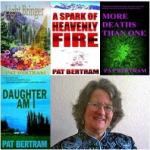
Pat Bertram is the author of the conspiracy novels Light Bringer, More Deaths Than One, A Spark of Heavenly Fire, and Daughter Am I. Bertram is also the author of Grief: The Great Yearning, “an exquisite book, wrenching to read, and at the same time full of profound truths.” Connect with

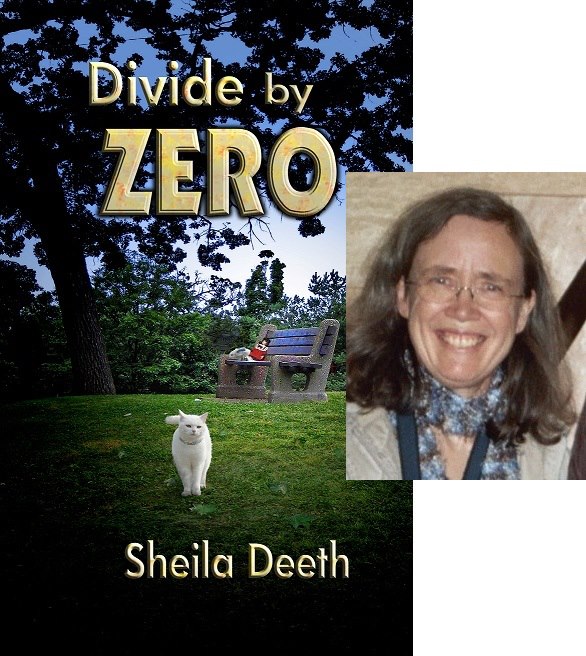
Introducing Mike Pettit, Author Extraordinaire

One of the most fascinating people I have met online is Mike Pettit. His  nightly “Goodnight America” is worth waiting for. His books covers are wonderfully nostalgic, reminding us of an earlier age of publishing. His  comments are a bit too amusing to be truthful (except for his political  comments, which are a bit too truthful to be amusing.) I’ve wanted to interview Mike for a long time for my interview blog, and he has finally agreed to answer some of my questions. Below is an excerpt from the interview, outlining Mike’s Three P Plan for selling books. (You can find the entire interview here: Mike Pettit, Bestselling Author of “The Key West Smackdown.” I hope you stop by to read the interview. You won’t be sorry you did.)
PB. Do you ever feel like you are lost among the thousands of other Kindle authors?

MP. Absolutely not. I treat my writing as a business. Here are my steps to selling books. I call it the Three P Plan (I should publish this and make a fortune…oh wait, that’s been done).

PRODUCT: Write the best book you can, edit the best you can, have the best cover you can.

I consider myself a good storyteller, but I am not a five star writer. If stars were grade averages I would be a C+ or B- writer, and that‘s OK. So, be realistic with your expectations. Average authors sell books, trust me.

I use the Flisch-Kinkaid comprehension scoring method to determine my writing / reader comprehension. I write to a reading audience at the 8th to 10th grade level of comprehension. This by the way is what the F-K scoring states as the reading level of most fiction-reading adults in America today. As a comparison, Obama’s State of the Union address was written to the 7th grade level of comprehension, The Wall Street Journal just dropped their Comprehension level from 12th grade to 10th grade level.

It might make you feel better knowing this the next time someone writes a bad review on your baby and gives it a two-star D rating. This does not mean you did badly. It means the reader should have read something on a higher comprehension level. That’s why I say you must know your audience …and write to them.

PRICING: To thine own self be true. You must price your book at a reasonable price. The big guys that work for the Big Six publishing houses command $25.00 and up per pop. That’s nuts, but they get it.

E publishing is growing with more and more readers coming over to the light, soon the big publishing houses and agents will be begging for us little guys to sign up with them.

My strategy is that I write and price my books to fit my audience. I am not greedy nor am I swollen headed. I know that I am a C+ writer and what I have to offer is a damn good quick read for a couple of bucks. The reader is happy with the read and the price and he’ll come back for more. You’ll make your money on volume sales

PUBLIC RELATIONS / MARKETING: Never stop pushing your book. I sell on Kindle and Nook. I use every social network platform I can find. I have Face Book, Twitter, Google +, a large FB and Twitter friend base. Look for “Friends that fit your target audience and talk to them…constantly.

This is just me, but I don’t spend a lot of time talking with other authors. If you aren’t talking to your customers, someone else is.

***

Mike Pettit’s newest book is The Key West Bounce. Check out Mike on Amazon, Facebook, and his action/mystery blog.

I am a Victim of Content Scraping

I’d never even heard of content scraping until yesterday when I found my article Why I Write About My Grief posted on two other blogs. The other blogs did not quote the article, nor did they reblog it. (When an article is reblogged, only the first paragraph or so shows up on another blog, with a link back to the original blog.) They stole the entire thing. One of the blogs was hosted by WordPress, so WordPress suspended the blog for violation of services. The other blog was not hosted by WordPress (it’s a self-hosted blog powered by WordPress, which is a completely different matter) so I have no recourse except legal means. Sometimes courts will take action against a “scraper,” but more often than not, if it is an automated theft by special programs rather than copy and paste by humans, there’s not much that can be done since the site will simply disappear and reappear under another name.

Apparently, search engines cannot distinguish between scraped content and original content, so the plagiarized content (let’s call it by it’s real name) shows up first in search results since it is the newer content, which makes the theft even more of a problem. If you are the victim of scrapers, there are some things you can do to fight back. First, take the steps outlined in this article from WordPress Support: Content Theft – What to Do. Second, you can follow the suggestions in this article: Content Scrapers – How to Find Out Who is Stealing Your Content & What to Do About It. Third, ignore the situation but take steps to make sure you get the credit.

If you decide on the third option, the easiest way to get at least partial credit for future plagiarized material is to use a link to your own site in your content, such as the link to my grief in article in the first sentence of this blog. Even better, add a promo to the bottom of the blog so that no matter where the article appears, information about you as the author will go along with it. That’s what I decided to do: add a promo to the bottom of my blogs. Regular readers will forgive the intrusion (I hope), new readers will learn a bit about me, and any bot that steals my content will also spread the word about me and my books.

***

Pat Bertram is the author of the conspiracy novels Light Bringer, More Deaths Than One, A Spark of Heavenly Fire, and Daughter Am I. Bertram is also the author of Grief: The Great Yearning, “an exquisite book, wrenching to read, and at the same time full of profound truths.” All Bertram’s books are available both in print and in ebook format. You can get them online at Second Wind Publishing, Amazon, B&N and Smashwords. At Smashwords, the books are available in all ebook formats including palm reading devices, and you can download the first 20-30% free. Print books can also be ordered from your favorite bookstore.

Should You Spend More Time Writing or More Time Promoting?

A few month ago, The Taleist Survey of 1007, a survey of 1007 self-published authors made the rounds. That survey tried to explain why some self-publishers make a living by writing and how they do it, but the survey only complicates matters.

The survey says that 2/3 of the top earners (those who make a living by writing, which, incidentally, was less than 10% of the total), are women, leaving the impression that women were better at self-publishing than men, but the truth is, women write romance more than men do, and romance sells more than mystery and science fiction and way more than literary fiction.

It also says that “respondents who’d had their work rejected by traditional publishing and then opted to self-publish it were among the lowest earners,” but that “32% of the top Earners tried and failed to get a traditional publishing deal before self-publishing, but now make a living from selling their work.” Huh? What’s the difference between being rejected and failing to get a traditional publishing deal? Even more confusing, 29% of the top earners had an agent. Why? I thought the point of self-publishing was to bypass the traditional route. Or maybe they hope the agent will get them a traditional publishing contract? If so, then apparently, the top earners still aren’t earning enough.

The report also said that the average top earner spent 69% more time writing than the average author outside of the top earners group. The top earners group spent more time writing than they did marketing, and those in the group who spent the least time marketing were making the most money. Out of all respondents, those who spent the most time marketing earned the least.

Bewildering, isn’t it? The survey leaves out a lot of important information, such as: did the top earners promote at the beginning, and once their careers took off, stop promoting in favor of writing? And if they never promoted, how did they sell books without marketing? The only self-publishers I have met who managed to get on the bestsellers lists without doing any promotion at all (they just posted their ebooks on Amazon and waited for sales) were romance writers and some mystery series writers. Romance readers seem to be voracious consumers of books, and the more they buy, the more Amazon will recommend. And it stands to reason that the more books you write the more you will sell.

Once you get in the Amazon loop, you can spend your time writing and let Amazon take care of your marketing, but those writers who don’t hit that particular jackpot have no other option but to promote. Some writers who eschew marketing in favor of writing are publishing more books but still not making money.

So yes, the top earners spend more time writing, but that does not mean that if you spend more time writing you will earn more.

The survey also says that those who get reviews from top reviewers on Amazon make more money than those who don’t get such reviews, but the top reviewers seldom review newly self-published books from unknowns, so again, the question is, which came first — the financial success or the reviews?

Although I am not a self-published writer, such matters interest me. Those of us who are published by small presses have many of the same concerns as the self-published since for the most part neither group has a has a publicity departments helping us get better known. But this survey has no answers for us, just more questions.

Should we spend more time writing and less time promoting? Or do we need to spend more time promoting and less time writing? Or maybe we should simply spend less time reading such surveys.

Thank You for Five Incredible Blog Years

Five years ago today I started this blog. I’d only been on the internet a few months (four months to be exact), had no idea what a blog was but knew enough about book promotion to know that I needed one to help establish my online presence. I spent a few days researching the various blogging platforms and ended up here on WordPress.

My first post was tentative, a mere dipping of my pen in the metaphorical ink of the blogosphere. All that post said was:

Am I an aspiring writer? I have written 4 books, rewritten them, and will continue rewriting them until they are perfected.

No. I am not an aspiring writer. I am aspiring to be a published writer.

Not a bad statement of intent for a new blogger. In the beginning I wrote about my struggles to find an agent or a publisher, my attempts to learn all I could about how to become a bestselling author (still don’t know — drats!), my efforts at establishing my online presence. In the beginning, I used no photo of me, just an initial. I still hadn’t decided if I wanted to use a male pseudonym or any pseudonym at all. I’d also started writing a new novel that I now call my work-in-pause since it’s been sitting there, half-finished for almost five years.

Much has happened to me since I started this blog. I entered a couple of writing contests and made it to the semi-finals in both, (one was the very first ABNA contest). My mother died. I found a publisher. My father had quadruple bypass surgery. My life mate/soul mate got sicker and sicker. And throughout those two and a half years of turmoil, this blog sustained me. It gave me a place to escape from my daily life, a place I could count on.

And then, two and a half years ago, my soul mate died. His death catapulted me into a world of such pain, that it bled over into this blog. My posts became not so much a way to escape, but a place to try to make sense of what I was going through, to offer comfort and be comforted, to find my way to renewed life.

This blog also helped me to re-establish my life as a writer because, after all, blogging is writing, too. A year ago, I made a commitment to blog every day for 100 days, and somehow I never stopped. And today marks an entire year, 366 days of blogging every single day. (Leap year, in case you’re wondering why 366 instead of 365.) I recently recommitted to another 100-day challenge. It’s nice to know that whatever life throws at me, whatever problems I encounter, whatever challenges come my way, this blog will be here for me.

I started with meager aspirations, hoping for the seemingly unrealistic goal of 12,000 views a year, and as of right now, this blog has had 215,817 all time views. On my busiest day, I had 3,542 people stopping by. I’ve been Freshly-pressed three times, written 1,003 posts (including this one), received 7,159 comments and almost 3000 likes and shares. My best ranking on Alexa.com was 607,198 out of 350 million websites. Quite an achievement for someone who, five years ago, did not even know what a blog was.

I never told you how much your reading my posts has meant to me, so I want to do so now. Thank you all for your comments, your likes, your support. They have meant more to me (especially this past two and a half years) than you can ever imagine.

My 1000th Blog Post!!!!

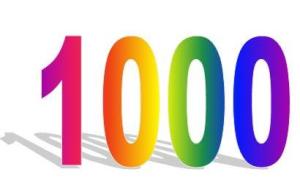
This is my 1000th blog post for this blog, and what do you know. I haven’t a thing to say. You’d think after writing 1000 articles on subjects that range from reading to writing, from being in grief to being in the moment, from social networking to socializing, I’d be able to come up with a few pithy words to celebrate the occasion,  but here I am, at a loss for ideas.

You’re probably curious how I managed to write all those articles — well, it took five years, one topic at a time, one word, at a time. You can see all the posts here: Archives — All My Posts.

Here are are a few of my favorite posts, though to be honest, a list of my favorites would include either my entire ouevre or merely the last one I wrote. I enjoyed writing all of them, and at the time of writing, each was my absolute favorite. Life changes, though, and so does perspective; what once seemed profound later seems merely mundane.

The Slang Game
Write Lofty and Carry a Big Chisel
How Often Has This Happened To You? (Close Encounters Of the Buffalo Kind)
What Kind of Blogger Are You?
Sports As Story
A Terrible Writing Accident
The Living Language of Dying
Pat Bertram And Lazarus Barnhill Discuss Writing as Destiny
Waiting For an April Time
Self-Editing — The List From Hell
Creatures of the Corn
On Writing: Looking Up
Free Exclamation Points for Everyone!!!
The Slamming of the Doors

These posts are all from my first couple of years of blogging. I don’t remember why I wrote some of them, such as The Slamming of the Doors, perhaps as a writing prompt. Others I had fun creating, such as my list of bloggers in What Kind of Blogger Are You? and my quiz The Slang Game, and I was disappointed at how few people ever saw the posts.

Thank you, everyone, who has read any of my posts or commented on them. It’s been a pleasure blogging with you.

Using Twitter the Wrong Way

People tell me I tweet wrong. I use Twitter.com like a bulletin board, mostly posting links to my blogs, sometimes retweeting my publisher’s book links, and occasionally posting links to samples of my books. All that is considered spam, though what I post is closer to ham than spam — it has a bit of meat to it. But of course, it’s all in how you look at it. (Are unwanted posts really spam, though? When you are spammed in your email, you often have no recourse, but if someone posts things you are not interested in at a social networking site, you can unfollow or unfriend.)

Most people seem to post the same sort of things I do, though some are heavy on quotes, some are heavy on retweeting, and others push their agendas (and books) incessantly, posting every few minutes. Yikes.

I once participated in a reciprocal promotion where each of us authors agreed to tweet everyone else’s book links several times a day every day for two weeks. Now that embarrassed me. I felt like a shill, particularly since I had no interest in the books. Still, I try to follow through on my promises, so I tweeted and tweeted and tweeted until I discovered that most of the others weren’t doing anything at all. That was the last time I ever did anything of the sort.

I’ve tried to do different things on Twitter, commenting on other people’s posts, joining in on discussions or starting discussions of my own, but I don’t see the fun in it, especially since few people ever respond. Those who do respond generally know me from Facebook, so it seems a duplication of effort.

So, if I’m using Twitter the wrong way, what is the right way? According to Twitter help, they are an information network, andreading Tweets and discovering new information whenever you check in on your Twitter timeline is where you’ll find the most value on Twitter. Some people find it useful to contribute their own Tweets, but the real magic of Twitter lies in absorbing real-time information that matters to you.” They also suggest that you retweet and reply to other people’s tweets rather than tweet your own, especially those of celebrities you admire.

Truth be told, I often unfollow those who use Twitter “correctly.” I have no interest in “news” in 140 characters. For all the talk about grassroots news and news from the people themselves, most of the news articles that get retweeted into virality originate from the major media.

I also have no interest in celebrities, in pithy sayings, or one-liners. And I certainly am not interested in following private conversations. (Some people use twitter to keep in touch with their friends and families rather than text. Reading those texts makes me feel as if I am at a party where I know no one and no one knows me. Do people have no sense of privacy anymore?)

Hmm. Doesn’t leave much, does it?

I guess I’ll continue to use Twitter wrongly. After all, if anyone doesn’t like what I tweet, they are free to unfollow.

I’m going to Blog for Peace. Will You?

On Sunday, November 4, people all over the planet blog for peace. This year, I’m going to join the the Blog Blast for Peace, and you can join the movement, too. You make your own peace globe/statement or simply choose one pre-made at blogblastforpeace.com, and become – a peace blogger. http://goo.gl/wOaGs

Peace bloggers believe that words are powerful, and that this matters. http://goo.gl/b01KH

So, check out the website or check it out on Facebook.

How To Blog For Peace The short version:

1. Choose any graphic on this page. http://goo.gl/4xepL Right click and Save. Decorate it and sign it, or leave as is.

2. Send the finished globe to blogblast4peace@yahoo.com

3. Post it anywhere online November 4 and title your post Dona Nobis Pacem (Latin for Grant us Peace)

Sounds cool, doesn’t it?

Putting a Good Face on Facebook

Apparently, this is Facebook Week on Bertram’s Blog. This is the fifth in a series of posts I’ve written while trying to make sense of the clamor called Facebook. If you’ve read any of the previous posts (Why Facebook is Not the Great Promotional Tool It Once Was, Feeding the Facebook Beast, Trying to Be Heard Above the Facebook Noise, Unfriending Facebook Un-Friends), you might think I hate Facebook. The truth is, I am fascinated by the site. What I don’t like is how I’ve used it, in the beginning by sending friend requests to strangers and then later by accepting all friend requests indiscriminately and now having to fix the unwieldy mess by unfriending those who don’t engage with me. (I worry about offending people, but truly, if they have 5,000 friends, will they even notice I am gone?)

In a perfect world, being connected to what amounts to the entire population of a small town should create book sales, but it doesn’t. Just like with any town, most people you’re connected to don’t know who you are. I once lived in a town with a population of five thousand people, and after living there a couple of years, there were only a few people who even knew my name.

Being connected to so many thousands of people should create a community of people who are truly connected to each other, supporting each other through good times and bad, but it doesn’t. In fact, FB often works to isolate people. If you’ve lost your spouse, for example, seeing a constant stream of anniversary announcements, photos of happy couples, and travel plans for romantic getaways makes you feel even more isolated than you already do.

Being connected to so many people should help dispel loneliness, but it doesn’t. For the most part, facebook is about being upbeat, about bragging of all the good things that come your way, (one person’s “sharing” is another person’s “bragging”), about putting on a good face. (Well, of course. It is Facebook, after all.) But if your life isn’t going great, if you’re experiencing loss or failure, then you feel doubly alone.

Still, Facebook is a microcosm of life (though to be honest it more often resembles the worst of high school). Voltaire wrote, “Each player must accept the cards life deals him or her, but once they are in hand, he or she alone must decide how to play the cards in order to win the game.”

Like life, Facebook deals out a lot of cards everyone rails against, such as adding features we don’t want and taking away features we do. If we stay on the site, we have to accept those “cards,” but it is our choice how to play them. Like life, we reap the effects of bad choices made on Facebook (such as my indiscriminate “friending”). Like life, we have to deal with knowing we have unintentionally hurt some people. (Such as the guy who blocked me because I said something he took to be an insult, when the comment had nothing to do with him and everything to do with my philosophy of writing. See? High school.) Like life, we have to take responsibility for moments of tactlessness, and either repair the damage or take our lumps and move on. No matter how much we want everyone to like us, there will always be those who don’t.

But . . . and this is the key. Our life is our life to do with as we wish within certain parameters, and our Facebook is our Facebook to do with as we wish within the site’s parameters. With life, we have to decide what game we are playing so we know how to play our cards. With Facebook, we also have to decide what we want with the site and play our hand accordingly.

And me — I’m still trying to figure out what the game is, both with life and Facebook.

Unfriending Facebook Un-Friends

I’ve been doing a series of posts on the effectiveness of Facebook as a promotion tool for authors, based on my research and my experiences. Some people have taken these as complaints and negativity, but I’m just trying to make sense of a confusing world.

There are four billion users on Facebook, yet most authors seem to be shunted off into a corner of the FB world with other writers. While I’ve gotten to know a lot of great authors this way, I’ve found few readers, which makes sense when you think of it. Authors want something — readers — so we frantically add friends in an effort to reach readers. Readers, on the other hand, don’t frantically friend unknown authors. Most readers stick with previously read authors, or find books by word of mouth, blog reviews and book websites, local bookstores, online stores, the library. (This information is from an informal poll I once did: How Do You Choose the Books You Want to Read?)

When I first joined Facebook, I was guilty of adding as many friends as I could since I thought that was the purpose of social networking. In fact, I almost reached the cut-off point of 5,000 friends. (I’m sure you’ve noticed that some people have more than 5,000 friends. That’s probably because of inactive accounts. I go through my friend list periodically and delete inactive accounts. The only serve to swell numbers and make FB even more unwieldy than it already is.)

When I realized that social networking is about being social, I stopped sending friend requests, and started trying to get to know the people I am connected to. In the process, I am gradually culling my friend list. If someone has four or five thousand friends and has never once bothered to respond to anything I have done on Facebook, I unfriend them. If someone whose friend request I have accepted (I have not sent a friend request to a stranger in over three years, so I know that any friends made in those years are at their behest) spams me or ignores me, I unfriend them. If they are multi-level marketers or any other such blatant scammers, I unfriend them.

This sounds harsh, doesn’t it? But if Facebook hasn’t created a mass of readers for me, then it’s mostly for fun, and if it’s mostly for fun, there is no point in being connected to people who do not enrich my life. (I hope you don’t think I am unfriending everyone. I still have almost 2,000 friends, a good percentage of whom I actually talk to.)

Of course, some people think unfriending is silly, because what difference does it make how many friends you have, especially since you see so few of them anyway, but it does make a difference. When I had close to 5,000 friends, every time I tried to individually invite friends to an event, it crashed my computer. (Except for the Suspense/Thriller Writers Self-Promotion Extravaganzas on Saturday, I don’t bother to do events any more. Where hundreds of people used to respond, now only a handful do.)

Also, too many friends clogs the news feed with posts I have no interest in. It is possible to hide those posters from my newsfeed, but if I have no interest in people’s posts, why am I connected to these un-friends? Why not just unfriend them? So I do.

People do the same to me. One woman told me she unfriended me because I never participated in any of her events. It was a valid observation. At the time, I had 4,000 friends, and couldn’t keep track of them all. All I did on Facebook at the time was keep my writing discussion going, so the people I was most interested in were the people who participated in my discussions. (I hate to admit it, but I still don’t participate in other people’s events; there are simply too many. And anyway, I still prefer to spend most of my time with my discussion group. It’s a small space of sanity in the choatic FB world.)

Perhaps none of this matters. Perhaps unfriending is just a game or a phase I am going through. But the truth is . . . hmmm. I don’t know what the truth is. Maybe I don’t like being ignored. Or maybe I have had a surfeit of inanity and negativity. (What many people consider as positive thinking, I often see as inane, and inanity feels to me like negativity.) Or maybe I’m fighting a system I have no way of beating. Or maybe I’m getting curmudgeonly. Or maybe I’m trying to do FB over, and do it right this time. Or maybe, just maybe, I’m positioning myself for success, making room for the thousands of new friends I am going to make through my writing.