Facebook Makes Us … (Fill In the Blank)

Facebook has become an icon, a symbol for our times. We are lonelier than ever — disconnected from family and friends in offline life — yet at the same time we are more connected online. Various recent articles have suggested that Facebook makes us sick, narcissistic, depressed, lonely, and anxious, partly because of the shallowness of Facebook relationships. But honestly, does anyone consider “liking” a comment an actual relationship? I doubt it.

Facebook is good or bad depending on how you use it. An article in The Atlantic that suggested Facebook makes us lonely used Yvette Vickers, a former Playboy playmate and B-movie star (best known for her role in Attack of the 50 Foot Woman) as an example. Apparently, the actress had been dead for almost a year before anyone realized she was gone. (This is hard for me to believe. Perhaps all her bills were automatically paid out of her bank account every month, but what about taxes? Wouldn’t someone from any of the various tax collecting bureaucracies have noticed her delinquency?)

Still, the story goes that a neighbor found her and was so concerned about Yvette’s ignominious end that she scanned Yvette’s phone records and discovered that the former actress’s last calls were to old fans who found her via Facebook. Ignoring the neighbor’s decided lack of concern for the actress while the woman was alive, what business was it of hers how Yvette spent her last days? What business is it of ours? There is no way of knowing how Yvette felt. Perhaps it made her happy to connect with her past, to remember that she once had a life, to know that she once touched people. Perhaps everyone she knew and loved had died, and she needed to reach out and connect somehow. We don’t know the truth. We can never know another’s truth. The story is only pathetic because of our own fears of ending up alone.

Facebook doesn’t create loneliness. It might exacerbate a loneliness that already exists, (and face it, if we really had full offline lives, would we be spending so much time online?), but it also gives us the opportunity to connect with our past and maybe our future. I know several people who fell in love online, and the connection continues offline even now.

Facebook makes us informed. If it weren’t for Facebook, I would never have seen the above-mentioned articles, hence I would never have known about the deleterious effects of Facebook. Nor would I have seen these incredible before and after photos of Nagasaki.

Facebook makes us humble. You’re feeling thrilled that you sold ten books that day and then someone boasts they sold 10,000. Brings you down a peg, that’s for sure. Is humility such a bad thing? In a world that seems to revere aggrandizement, a bit of modesty is good for one’s soul.

Facebook makes us grateful. Mixed in with all the brags and too-cute animal photos are the heartbreaking posts. People talking about how their chemo is going, sharing their angst at the death of a loved one, giving updates on their hospital stays, telling us about the traumas their children and aged parents are facing. Such posts make us realize that no matter how bad things are for us, someone has it worse.

Facebook makes us aware of community. Or at least that’s the goal of my various groups. In the Suspense/Thriller Writers Group, I’m trying to keep writers focused on the craft of writing, on helping each other attain our writing goals. Perhaps together we can do what each of us can’t do alone.

In other words, Facebook doesn’t make us do anything. We make of it whatever we can.
There Really Is Life Offline — If You’re a Goose

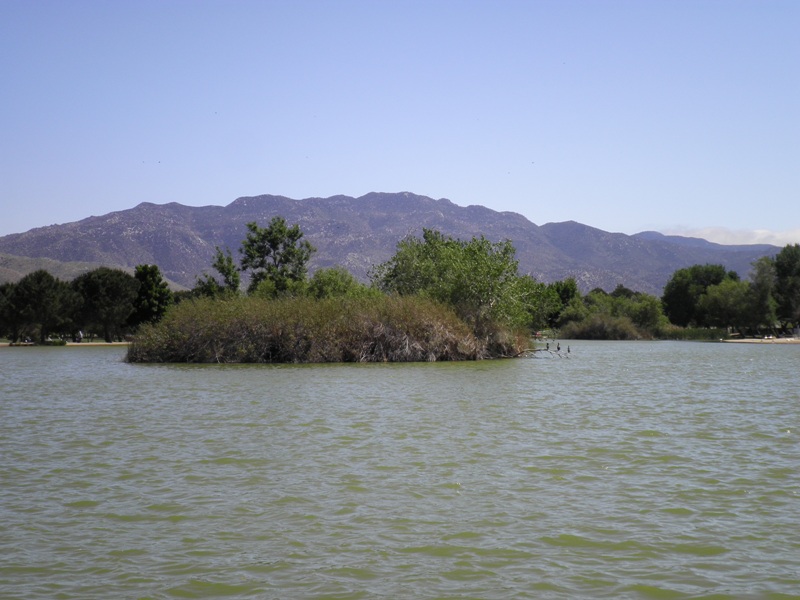
It seems as if my entire life is lived online now,  and as enticing as it is to visit friends on facebook, talk about writing in one of my discussion groups, check my various email addresses for the hundredth time, even I need a break. So, yesterday I went for a picnic at a nearby lake.

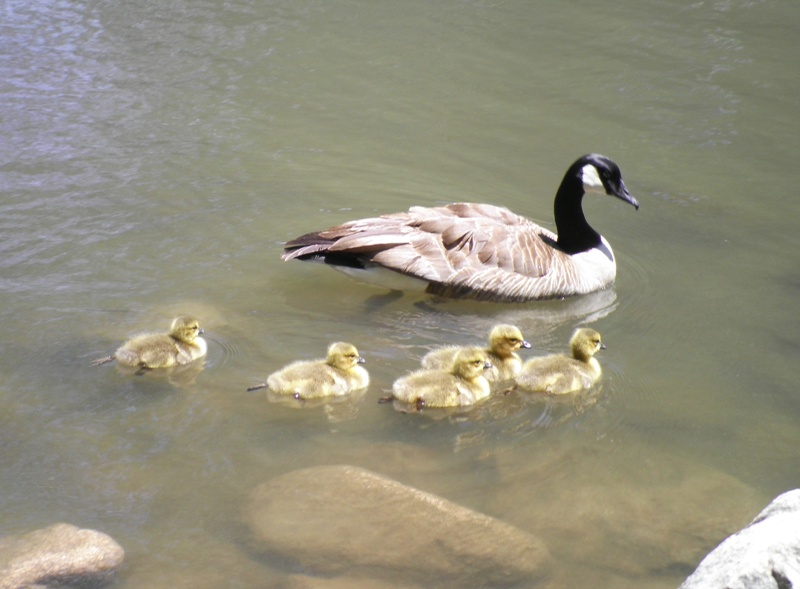
This lake seems to be sort of an unofficial wildlife preserve. It’s one of the few bodies of water in the vicinity and it is a popular spot for waterfowl to stop by and rest during their migrations. For us humans, there is always something new to see (or feed). I’ve seen lots of coots, mallards, a few wood ducks, a blue-billed duck, egrets, swans, herons, and geese.

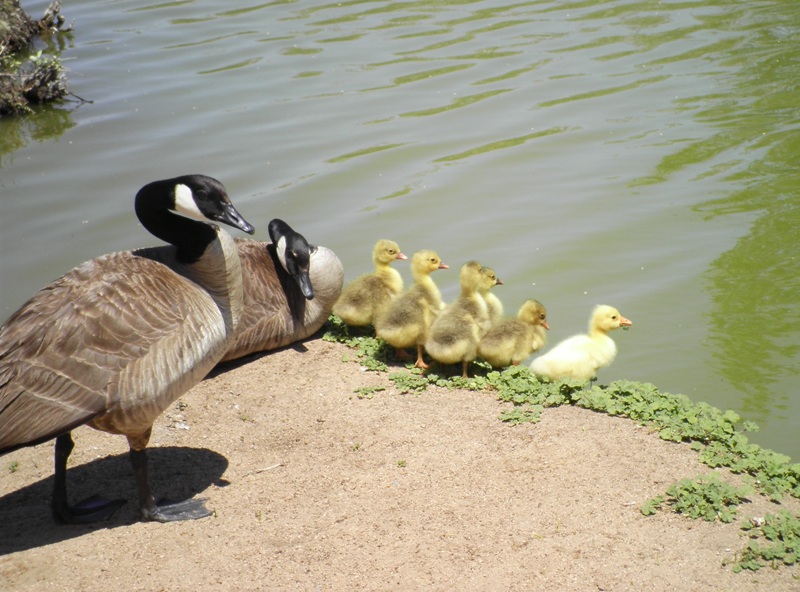
I counted at least six different geese families yesterday, but this particular family (blelow) stood out because of the blonde baby. Maybe geese aren’t as monogamous as they are made out to be!

Seems like an ideal life, doesn’t it? A summer home, a winter home, and swimming in between. There is only one drawback to beeing a goose — no internet.

Gather ‘Round and You Shall Hear . . . The Story of My Online Life

In October 2007, I entered a contest on gather.com — Court TV Search for the Next Great Crime Writer contest. The winner of the contest would win a $5,000 advance and a publishing contract. My entry, More Deaths Than One, was not a detective story, and it certainly is not a cozy mystery, but it is the story of a crime: identity theft. This theft is an actual theft of a man’s identity, not a paper one. So it did fit with the contest, though from reading the first chapter (all that was posted online for the contest), many people assumed it was a supernatural tale — as the blurb says, When Bob Stark returns home after spending eighteen years in Southeast Asia, he discovers that his mother Lydia Loretta Stark is dead again. When he attends her second funeral, he sees his brother, his college girlfriend, and . . . himself.

I did very well in that contest, too. As of November 17, 2007, I was ranked number one, but I finished up about sixth or seventh. (I could tell you it was because my mother died and I had to go to California for her funeral and I broke my ankle while there and was off the internet for a week so I couldn’t solicit votes, but the truth is . . . come to think of it, I don’t know what the truth is.)

The contest started out being great fun but devolved into all sorts of infighting, faked votes, and terrible reviews that were posted for no other reason than meanness. Still, it turned out to be a pivotal point in my online life and my writing career.

I became friends with many of the contestants, and casual acquaintances with others. (As Jeffrey Siger, one of the contestants said, it’s “sort of like the camaraderie born of battle or surviving a natural disaster: never to be taken as an endorsement of the event that engendered such strong ties among the the participants.”)

I met the group The Writin’ Wombats on Gather because of the contest, and ended up hanging around with them for all these years. Because of the contest, I eventually found a publisher. The link to the publisher’s website was posted on a Wombat thread, and since I was in querying mode, I immediately shot off a query letter. He loved my book A Spark of Heavenly Fire, and sent me a contract. Turns out, I already knew him through the contest, and he asked if More Deaths Than One was still available. It was. Second Wind Publishing has now published five of my books — four novels and one non-fiction book, Grief: The Great Yearning.

Until the crime writer contest, my online presence had been confined to my blog (I’d only had a computer and the internet a few months) but after the contest I posted articles on Gather, and I also migrated to other sites, such as Facebook, Goodreads, and Twitter. I mostly hang around Facebook now because of my discussion groups there, but I always return to Gather, especially on Thursday evening when I do a live chat with my No Whine, Just Champagne discussion group. I started out knowing only a few people online, now I know hundreds.

And all because of a contest.

So, what was the pivotal point of your online life?

Comment Spam

Sometimes the most amusing comments that are posted on the internet are the mangled bits of spam that clog the blogoshere. Here the most current ones that graced this blog:

1.Definitely believe that that you said. Your favourite justification seemed to be on the internet the easiest thing to understand of. I say to you, I definitely get irked while other folks consider worries that they plainly do not know about. You managed to hit the nail upon the highest and defined out the whole thing with no need side effect , people can take a signal. Will probably be again to get more. Thank you!

2. I was studying some of your content on this site and I believe this web site is very informative ! Continue putting up.

3. I merely needed to appreciate you once more. I do not know that the things that I would have done without the actual ways documented by you directly on such area of interest. It truly was the fearsome condition in my circumstances, in spite of this , looking up a skilled form you treated it forced me to weep with delight. I am grateful for this support and in addition have high hopes you have been aware of the great job you are carrying out educating quite a lot of people all through your blog. I identify that you haven’t got to recognize all of us.

4. A person essentially help to make critically articles I would state. This is the first time I frequented your website page and thus far? I surprised with the research you made to create this particular put up extraordinary. Magnificent job!

5. Its such as you learn my mind! You seem to grasp so much approximately this, such as you wrote the e-book in it or something. I think that you just can do with some % to force the message house a bit, but instead of that, this is great blog. An excellent read. I will certainly be back.

This last one actually makes sense, but then it would have to since it’s promoting a site called “genius love” (a site so dangerous, my internet protection wouldn’t let me check it out):

6. The difficulties you meet will resolve themselves as you advance. Proceed, and light will dawn, and shine with increasing clearness on your path.

Finding Time to Write

I’ve been trying to get back into writing, but I never seem to able to find the time. There are always so many things that need to be done. Take yesterday, for example. I started out the morning answering emails. I don’t get as many emails as most people, but still, writing responses to the ones that required my attention took me over an hour.

Then I wrote a simple blog post. It was a recap of on online discussion, so it shouldn’t have taken me long, but it did. I’ve heard that people should allocate twenty minutes to updating their blogs, but somehow, my twenty-minute blogs end up taking hours. Writing is how I think, and sometimes it takes a while for the thoughts to coalesce. Sometimes it takes a while to find the right words to express the thoughts. And sometimes it takes a while to edit and copyedit the article to make sure it’s readable and that my point is clear. All those “a while”s added up to three hours yesterday.

When I finally posted the blog, I took time out for a walk and a meal, then I returned to the computer and had an email conversation with a friend who had also suffered the loss of her mate. Since she seems to have reached a place of peace, I wanted to know how she did it. I know I can go on alone since I am doing it, but the thing that still makes me feel as if I’m about to fall off the earth is that he is dead. No matter how well I do, no matter how much peace I attain, he will always be dead. Of course she had no answers for me — one person’s way of learning to live without is not the same as another’s — but she did say something that struck a chord: “the world comes back.” This was an important conversation for me, and I’m glad I had the time to spend, but still, writing my side of the exchange took a couple of hours.

I love comments on my blog, and always enjoy communicating with those who do comment, but that takes time. Yesterday evening, it took me almost an hour to write my responses.

And finally, Facebook. Need I say more? Well, maybe I do. I had several messages that required replies, discussions that needed input, updates that cried out for comments. In all, that added a couple more hours of writing to my writing time.

That’s when I realized why I have no time to write — I spend all my time writing! So, to find time to write, all I need to do is stop writing.

I am Being Interviewed on Blog Talk Radio this Evening

The title says it all. There’s not much more to add. I am being interviewed on Blog Talk Radio this evening. Well, it will be evening if you are on the east coast since the show goes live at 7:00 pm ET, but if you are on the west coast, it will be 4:00 in the afternoon.

Possible topics are:

What kind of books do you write?

Why did you write a book about grief?

Why is your book “Grief: The Great Yearning” important?

Does your past play much of a role in your writing?

How do you help other writers?

Where can people find out more about your books?

(Thank you to everyone who helped me compile this list.)

You can find the show here: Page Turners with Hosts Meg Collins and Nancy Duci DenofioI will be on for an hour, so if you get a chance, feel free to call in. The number to call is: 1-646-595-4478. If you can’t listen to the show live, it will be archived so you can hear it any time.

Surveillance: Poisoning the Soul of a Nation

The National Security Agency was created on November 4, 1952 under Harry S. Truman. For twenty-five years, only the people involved knew of the existence of this secret agency. In fact, the NSA was so secret even the name was classified — most of the people working for the agency didn’t even know the name of the organization that employed them. Now, of course, the NSA is a staple for conspiracy buffs and thriller writers, though the truth is even spookier than fiction.

In 1980, way before computer usage was common, way before surveillance devices had become as sophisticated as they presently are, the NSA monitored 400,000 calls a day. 146,000,000 calls a year. And that was thirty-two years ago. Today, there are no limits to what the NSA knows or can track

Although their activities might still be secret, the NSA is now far from being a secret organization. They almost seem to delight in showing us their strength as witnessed by the two billion dollar facility they are building in Bluffdale, Utah. This Utah Data Center will be fully operational before the end of 2013, and then the last vestige of our privacy will be gone.

John W. Whitehead of The Rutherford Institute says: “At five times the size of the U.S. Capitol, the UDC will be a clearing house and a depository for every imaginable kind of information — whether innocent or not, private or public — including communications, transactions and the like. Anything and everything you’ve ever said or done, from the trivial to the damning — phone calls, Facebook posts, emails, bookstore and grocery store purchases, bank statements, commuter toll records, etc. — will be tracked, collected, catalogued and analyzed by the UDC’s supercomputers and teams of government agents. In this way, by sifting through the detritus of your once private life, the government will come to its own conclusion about who you are, where you fit in, and how best to deal with you should the need arise.”

It’s possible that the mass of information itself will protect us. One piece of information is worthless. When there are trillions and trillions of bits and bytes out there, why single out one from another? A collection of information, however, could be damning, depending on what light the NSA chooses to view it under. What if they put the pieces together and came up with a version of you that simply isn’t true?

(Incidentally, that originally was the premise of Light Bringer, but the book metamorphosed away from the NSA and their supposed interest in poor Philip’s life, and focused instead on an international organization’s global agenda.)

Have you ever wondered why your attention is kept focused on such unimportant matters as what outrageous thing today’s celebrity-of-choice is doing, what wonderful new gadget is on the market, what the fashion gurus are presenting, what foolish thing the president said or did? It’s sleight of hand to keep you focused on the trivial while the world as you think you know it slips away from you.

Even worse, as Whitehead says, “Whether or not the surveillance is undertaken for innocent reasons, does not surveillance of all citizens gradually poison the soul of a nation?”

And you thought Facebook was bad.

How Many Books Are Going to be Published in 2012? (Prepare for a Shock)

I hadn’t planned to write any more about the book world. For one, it’s too depressing, and for another, I’m getting to where I’m okay with it. I’ve never had much use for 99.99% of books published anyway, so it doesn’t really matter if the world is being overrun with terrible books. It always has been. And, truth be told, I don’t enjoy reading much any more. After having read more than 20,000 books, I’m way past the first flush of enthusiasm when it comes to new books. (Okay, I admit it, I’m jaded.) When people start writing before they have read thousands of books, they don’t know that the story they are telling has been written a zillion times before. Nor do their equally unread readers know or care. It’s new and fresh to them. So, perhaps I should leave the book world to those who still embrace it.

So why am I writing about the book world again? I came across a statistic tonight that totally staggered me (All information comes from Bowkers, the company in the U.S. who issues ISBN numbers).

300,000 books were published in the U.S. 2003.

411,422 books were published in the U.S. in 2007.

1,052,803 books were published in the U.S. 2009.

Approximately 3,000,000 books were published in the U.S. in 2011.

And . . . drum roll, please . . . in an online interview, Seth Godin suggests that 15,000, 000 books will be published in 2012.

15,000,000. Yikes.

Google estimates that as of August 2010, there were 129,864,880 books in existence. Which means that the total number of books that could be published in 2012 is more than 1/10 of all the books in existence. That is an unfathomable jump, a 500% increase in a single year. (That is correct, right? 3,000,000 times 500% = 15,000,000.) Unbelievable.

I got an email from a book marketer today, wanting me to write an article about what the publishing landscape will look like in 2016. I cannot imagine what it will look like. Even if the number of books published returns to the more typical 200% increase per year, by the year 2016, we will have doubled all the books that were in existence in 2011.

Who is going to read all those books? Who is going to buy them?

What To Do (And What Not to Do) When Someone is Grieving

Every few weeks I decide to stop posting articles about grief and my grieving process. When one talks, the words dissipate into the atmosphere and are soon forgotten. When one writes, the words last until the paper is lost or destroyed. But when one posts to a blog on the internet, the words are eternal. And I’m not sure showing such vulnerability forever is healthy. As I gather strength and courage to face the challenges of my new life as a woman alone, as I change and grow into the person I will need to become, the vulnerable me of these grieving years will still exist in cyberspace. I don’t know how much this ever-living past will shadow my future; at the very least, it will be a perpetual reminder of a very dark time.

But life doesn’t seem to want me to give up these posts quite yet. Today’s decision to stop posting was forestalled by an email from a grieving friend who thanked me for voicing what she could no longer say. Any mention of her grief worried her family, and they suggested therapy so often, she now hides her grief from them. And if she writes about grief, relatives call up with advice about moving on or looking for someone new.

People often worry about what to say to someone who is grieving, but they should be more worried about what not to say. Saying almost any heartfelt words will do. We bereft see beyond the sometimes bumbling, often touching attempts to breach the grief gap, and we appreciate the effort.

What we don’t appreciate and have no use for is advice. Generally, the people who offer advice have not a clue what we are going through, so it seems to them a simple matter of just moving on, and they are quite free with suggestions of how to accomplish this. (I cannot think of a single instance where someone who suffered a grievous loss offered me advice, probably because they know how unwelcome and unproductive it would be.)

When I started writing about grief, the whole point was just to say how I felt so others would know that what they are feeling isn’t abnormal even though it feels dreadfully abnormal. I never asked for advice. I never wanted advice. I simply laid out my feelings. And yet I got advice. I tried to be kind and understanding, realizing that the advice-givers felt helpless and wanted to do something to ease my pain, but the truth is, advice does more damage than good. As with my grieving friend, so often the only way we bereft have of staving off advice is to hide our grief, and that is not healthy for anyone.

So, what can you do to help when someone you knows loses a spouse or a child to death?

1. Do something tangible. Offer to clean the house, take care of the kids, take the bereft to lunch, go grocery shopping. Almost as useless as advice is the typical, “Call me if you need help.” How is a person who is totally devastated by grief supposed to find the energy to call? You call. Don’t leave it up to them. And don’t leave it open ended with a “Let me know what I can do.” Be specific. “I’m going to the grocery store. Do you need anything? Milk? Coffee?” or “You’ve had a lot of people tramping through your house. Can I help clean up?” The best thing anyone did for me was clean the house before I moved. I will never forget that, will appreciate it as long as I live.

2. Let the person talk. Don’t try to make it better. Don’t offer advice. Simply listen. A woman I knew casually invited me to lunch, and she asked questions about him, let me talk, listened. It made me feel less alone, less of a pariah.

3. After the first month, the thing that helped me most was sharing stories with other bereft. (In the beginning, the whole thing was so overwhelming, I couldn’t deal with anyone else’s pain; I couldn’t even deal with my own.) As depressing as it was to find out that people still had occasional grief upsurges after ten years or that they never stopped missing their loved one, it helped knowing that others had gone through the same thing I was experiencing, and it helped knowing what I was up against. But if you haven’t suffered a similar loss, please do not talk about the death of your 100-year-old grandmother, or your dog, or your cousin. Even though these losses are important to you, they don’t offer any comfort to someone who has just lost the love of her life, especially if he died at a relatively young age.

4. Always, a shoulder to cry on and a comforting hug are welcome, and are worth a million times more than advice. Even better, cry with us. A few days after my life mate/soul mate died, I stopped by the grocery store where he and I shopped. The clerk asked where he was, and when I told her, she hugged me and cried with me. Not enough tears had been shed for him — no amount of tears will ever be enough—so those tears gave me comfort. His life — and death — shouldn’t pass lightly. No one’s should.

Introducing the Best Multi-Author Blog in the Blogosphere

Have you checked out the Second Wind Publishing blog lately? If not you’re missing a treat. It’s turning out to be one of the best blogs around, certainly the best multi-author blog and the most multi-talented.

Today’s feature is the brilliant and vastly amusing Pet Fashion Faux Paws by Mickey Hoffman, author of School of Lies and Deadly Traffic:

“Next we have the Sex Kitten look. Unfortunately (or conversely if you’re so inclined) this section does not describe feline sex. If you want to hear about that, kitties, you’ll have to read a different publication. The Delta Pet Inquirer is a family-friendly magazine! Anyway, ruched lace, chiffon and sequins are not alluring when draped on a fur coat.  From our research we’ve come to understand that the entire purpose of a lace nightie is to show bare skin and unless you’re a member of the hairless cat breed, that’s not going to happen” [Click here to read the whole post.]

Noah Baird, author of Donations to Clarity, gives us an irreverent but hilarious look at the Easter Bunny and various other goodies in You Don’t Know Easter:

“So, why the egg? I tell my kids the rock used to cover JC’s tomb happened to be shaped like an egg. Presto! Tradition! The reality is more mundane. Christians didn’t eat meat or dairy during Lent. Back in JC’s day, eggs were considered . . . dairy. Dairy was any animal-derived foodstuffs rendered from an animal without shedding its blood. This is way before we had a FDA or a congress to tell us what food is. Considering congress classified pizza sauce as a vegetable, things haven’t improved much.” [Click here to read the whole post.]

Coho Ihle, author of She Had to Know, talks about her The Rude Awakening when she discovered that a friend had skin cancer.

“Since I was an entertainer much of my adult life, I did a lot of sunbathing both in the sun and in tanning booths. I can remember being a bit reckless about wearing sunscreen, too. Witnessing this experience sent me directly to my dermatologist for a skin cancer screening for the first time. I can’t believe I’d never had that done before. I came out just fine, but I implore all you out there who think you are immortal, like I did, PLEASE go for a screening right away. It could save your life.” [Click here to read the whole post.]

Sherrie Hansen, author of Night and Day and the Maple Valley trilogy, explains why becoming a writer after the age fifty has it’s advantages in What Story Is Your Life Telling?

“I was recently approached about answering some questions for an article because I was an author who was over 50, a writer whose career as an author didn’t begin until I was past 50 years old.  The question’s implication resulted in a lot of things floating through my evidently half-addled, 55 year old brain: What does she think I am, older than dirt? That it’s a miracle I can still write, old as I am? Once I got over my indignation, however, I started to think about what it is really like being 55, and how life is different now than when I was 25, 35 or even 45.” [Click here to read the whole post.]

JJ Dare, author of False Positive and False World talks about expecting one thing and getting another in Southern Heat and Naked Books.

“ ‘Never judge a book by its cover’ takes on new meaning when you realize that the cover is more than the jacket. It’s everything. The promotion and hype, author appearances, and interviews are parts of the cover. While the overall “cover” of the book can increase its popularity, the true test comes once the naked story is laid bare.” [Click here to read the whole post.]