We Are Not All Created Equal

Despite what the U.S. Declaration of Independence states, all men are not created equal. Nor are all women. Ideally, people are equal under the law, but even that is a specious claim since so often rich folk who can hire high-priced attorneys with dozens of partners and associates are more equal than those who have to make do with overworked public defenders.

But this bloggery isn’t about such grand matters. It’s more about the little things that makes us so very different from one another.

People who love Mexican food are often perplexed by my dislike of cilantro. “How can you not like cilantro?” a friend asked me in accusatory tones, as if she thought I were being contrary by choosing to dislike something most people loved. I retaliated by asking her what cilantro tasted like to her. She said it tasted citrusy, slightly bitter and very refreshing. But that is not how it tastes to me. To me, it tastes like soap. Cilantro contains chemical compounds called aldehydes, which are also present in soaps and other cleaning agents, and apparently I don’t have the enzyme that breaks down the soap-like compounds of the herb into a tasty seasoning, so I get the full soap taste.

Regardless of what she seemed to think, I was not being contrary. Just unequal.

A similar situation happened when I drove a friend to her mountain home this weekend. In a couple of instances, I had to drive down very steep roads that made me feel as if I were free falling down an elevator shaft. She made a few comments about my nervousness, and she didn’t seem to believe me when I told her I wasn’t nervous, that it was a physical reaction. I explained it using the example of a level. Some people are born with something similar to the bubble in their center, so they always know where they are in relation to the earth. These people can turn cartwheels, ride roller coasters, descend steep slopes, and never lose their equilibrium. I on the other hand, have no bubble, so I never know where I am in relation to the earth. (It’s an inner ear thing, or so I have heard.) I remember once as a very small child, maybe 5 or 6, I took tumbling lessons, and I couldn’t do what the other kids did. I got too disoriented, and feared I would break my neck. (They always say kids that young don’t know there is such a thing as necks breaking, but I bet others who lack an inborn plumb bubble also were aware of the possibility.)

Again, I wasn’t being contrary by repudiating her calling me nervous, I was simply explaining our inequalities. Some things I can do, others can’t, and some things others can do, I can’t. It’s that simple.

I’m not sure that being equal is an important matter, anyway. We all wish to be treated the same as others in similar circumstances, and we should be. But other than that, it’s the ways we are unequal that make us who we are, and that is something to celebrate.

***
Pat Bertram is the author of the suspense novels Light Bringer, More Deaths Than One, A Spark of Heavenly Fireand Daughter Am I. Bertram is also the author of Grief: The Great Yearning, “an exquisite book, wrenching to read, and at the same time full of profound truths.” Connect with Pat on Google+. Like Pat on Facebook.

My Iconic Car

SI am not at all sentimental — I am too practical for that, though sometimes the things I do seem sentimental to others. For example, I keep scrapbooks, not out of sentimentality but for a very strange and practical reason. After Jeff died, I started the books for the old woman I will become. I wanted her to be able to see where her life went. I wanted her to know that even though she lost her soul mate, she didn’t waste the years she lived alone, that she experienced a full life after his death. Other people don’t have to think of such things. My parents, for example, celebrated their 60th wedding anniversary a few months before my mother died. She never had to worry about perhaps living decades with no one to share her memories. The old woman I become may not care, but I want to make sure she knows someone was thinking of her and sharing her memories, if only her younger self.

And then there is my Beetle. I have had the thing for 43 years. It’s the only car I have ever owned, and I am the only owner it ever had, which is something very few people can say. I am hesitant about giving it up, though not for sentimental reasons. (Well, except for my not wanting anyone else to have the car. Some people believe our things become steeped with our spirits, and after so many years, there is a lot of my spirit in the bug. But that’s not strictly sentimentality. It’s more mysticism. I wish I could bury this particular thing when I sign its do-not-resuscitate order.)

On the practical side, the yearly upkeep including repairs, is a lot cheaper than the increase in insurance rates and tags would be if I got a more modern car. Not that I’m against a new vehicle — I will happily get one when/if I decide what sort of life the vehicle will need to support. If I decide to live on the road, maybe a nicely outfitted camper would be more apropos than a city car. Or maybe some sort of small commercial van would be more practical than either. A new car would be nice, but if I wanted any other sort of vehicle, I’d have to buy a used one. (New van conversion campers are as expensive as some houses.) Lots of things to think about. Luckily, I don’t have to act on any of them now, because I do have a car that works (most of the time, anyway).

Then there is another practicality — if I got a new vehicle today, while my old car is still running, then five years from now, I will be driving a used vehicle. On the other hand, if I waited to buy until five years from now and continued to use my old bug in the meantime, then five years from now I’d be driving a new vehicle. (Go ahead, laugh. I don’t mind. Everyone else finds my reasoning risible.)

Although I don’t particularly like the car (I truly am surprised it lasted this long — when I first got it, I thought it was a lemon because too many things were wrong with it), I do like that other people like the car. Such an iconic car is a conversation starter. I don’t know how to strike up conversations with strangers, but I don’t have to know — the car does it for me since everyone has a nostalgic VW story they are eager to share. (Oddly, as little as my father understood me, he did understand this. “It’s like your hats,” he told me shortly before he died. “It’s part of your persona.”)

Everyone has an opinion about my bug. Some people worry for my safety and think I should get rid of it. Some people think I’m wasting my money on such an old vehicle. Some people think I should keep it, especially those who once owned a Beetle themselves. A few people have suggested that I keep it but buy a new car, but what’s the point of that? I can only drive one car at a time, and the truth is, I don’t particularly like driving any sort of vehicle. Some car guys think I should donate it to them so they can restore it — for themselves of course.

A friend told me the other day that I will cry when I finally replace this thing that has been with me almost 2/3 of my life. I have cried for many reasons the past five years, but I doubt I will cry when it’s gone. I am not very sentimental, and after all, it is just a beat-up old car.

***

Pat Bertram is the author of the suspense novels Light Bringer, More Deaths Than One, A Spark of Heavenly Fireand Daughter Am I. Bertram is also the author of Grief: The Great Yearning, “an exquisite book, wrenching to read, and at the same time full of profound truths.” Connect with Pat on Google+. Like Pat on Facebook.

Either Things Will Work Out Or They Won’t

Quite unexpectedly, I seem to have developed a new attitude.

A couple of days ago when I told someone about my father’s death and his house going on the market soon, she kept asking, “What are you going to do?” Either to calm her or more probably to calm myself since her feigned concern was getting on my nerves, I kept answering “I don’t know. Either things will work out or they won’t.” After about the third repetition, it hit me — that is exactly how I feel. I’m not particularly worried about what I am going to do or what is going to happen to me. Either things will work out or they won’t. If they work out, then there is no point in worrying. If they don’t work out, then I’ll figure something out based on my circumstances at the time.

Of course, it could be that I’m stressed beyond all caring, but for now I like not feeling any need to worry about anything. I do think of possibilities, of course, and try to imagine what I might like to do, but it’s nice not knowing what the future holds. Right now, today, I have a place to stay, and today is all any of us have.

This attitude seems to be bleeding over into other areas of my life. I drive a vintage vehicle — I’m being kind. The thing is simply old. Very old. It’s the only car I ever had, and I’ve had it 43 years. (It’s so weird the way life works. I certainly never planned to keep it this long. It just kept chugging along. I guess that’s how I got so old, too. I just kept chugging along.) Lately, I’ve been having problems with the car — and with my mechanic. They lost their VW specialist, and no one there knows how to fix it. Or maybe it’s just that they can’t get parts for it any more.

Yesterday, on my way back from driving a friend to her house in the mountains, the poor car sputtered and backfired and stopped dead. This is the fourth time it happened, so when I called the emergency road service, I asked them to tow it to a different mechanic, one that specializes in Volkswagens. (Actually, it wasn’t that simple. My phone had died, too, but someone stopped and let me use their phone.) I would have had a ten mile walk back to the house since obviously I wouldn’t have been able to call anyone and ask them to pick me up, but I figured well, I’ve been wanting an epic walk and that seemed pretty epic to me!

As it turns out, the tow driver couldn’t tow the car to the new mechanic — that place is closed on Sunday, and the property is fenced in so there was no place to leave the vehicle. We ended up taking it to my old mechanic’s place.

Walking back to my dad’s house, I thought how nice it was not to have a car, which is probably a good thing since there is no telling when/if I will get it back. Still, there’s no need to worry — either things will work out or they won’t.

***

Pat Bertram is the author of the suspense novels Light Bringer, More Deaths Than One, A Spark of Heavenly Fireand Daughter Am I. Bertram is also the author of Grief: The Great Yearning, “an exquisite book, wrenching to read, and at the same time full of profound truths.” Connect with Pat on Google+. Like Pat on Facebook.

I Am Truly Blessed

As I was setting up for my party last night, cooking the various taco fillings, chopping the many garnishes, and arranging everything in a pleasing and practical manner, I thought about all the people I had invited, and what they meant to me.

First were the people from my grief group. When I came here after the death of my life mate/soul mate, I joined a grief group to be with others in the same hideous and incomprehensible situation, and they helped me get through that awful time. I’m still friends with some of those folks, though I don’t see them very often, and it was nice to think of seeing them again.

Then there was the group I went walking with. Through the hugs we shared and the stories we exchanged during the three-mile walks, these friends helped see me through the torments of dealing with my dysfunctional brother and dying father.

And finally, the dance group, especially our teacher, who helped me see that life was still worth living, that there were still things to be learned and much joy to be experienced.

Although I hadn’t planned the party to be anything other than a simple get-together with friends, it turned out to be more than that — a chance for me to say thank you and to let everyone know how much they meant to me.

While I was making my little speech to my guests, I realized the truth: that although the past five years as I lived them seemed to be one trauma after another, in retrospect, because of these people, those years seem pretty damn wonderful.

I am truly blessed.

???????????????????????????????

***

Pat Bertram is the author of the suspense novels Light Bringer, More Deaths Than One, A Spark of Heavenly Fire,and Daughter Am I. Bertram is also the author of Grief: The Great Yearning, “an exquisite book, wrenching to read, and at the same time full of profound truths.” Connect with Pat on Google+. Like Pat on Facebook.

Pre-Probate Party

There is a probate hearing next week to rule on the administration of my father’s will. Since this is the last weekend I know for sure I have a place to stay (though I guess I’ll be here at least another month), I am celebrating with a pre-probate party. Nothing fancy, just a taco bar with three kinds of taco shells, three kinds of filling (one vegan, all gluten free), all sorts of toppings and garnishes, and homemade brownies made with butter and extra chocolate for desert. Alas, the brownies are neither vegan nor gluten-free, so those with special needs will have to choose between fruit or ice cream.

If you are in the high desert area, you are invited! Just let me know. Should be fun. I know that a least a few people will be here (maybe more!), so that is a big step above the last party I gave where no one showed up. (But that was so long ago, I’m not sure it even counts.)

balloons1

***

Pat Bertram is the author of the suspense novels Light Bringer, More Deaths Than One, A Spark of Heavenly Fire,andDaughter Am I. Bertram is also the author of Grief: The Great Yearning, “an exquisite book, wrenching to read, and at the same time full of profound truths.” Connect with Pat on Google+. Like Pat on Facebook.

Phones and Other Connections

When did talking to someone on the phone become something that people did while doing something else?

I have a friend who calls me only while she is walking. I have another friend who calls me only when driving. I just talked to someone who put me on the speaker so she could make her bed while we chatted. I know several people who play computer games while on the phone. In other words, no one really talks to anyone anymore. They justphone seem to be filling in what might otherwise be almost-empty time.

I no longer feel slighted by this disregard as I once did, but I am egotistical enough to want people to want to talk to me, to want them to want to connect on a more personal level rather than using me to keep from being boring by mundane activities. (Or — perish the thought!! Could they be doing those other things to keep from being bored by me?)

I do realize time is at a premium in this insanely busy world, that sometimes people can only converse during barely-used moments, but still, it would be nice to feel as if what I have to say — or what people have to say to me — is important enough to experience unaccompanied by the huffs and puffs of the walkers, by muttered comments to other drivers, by computer beeps and dings.

We’ve come a long way from the days of being tethered to stationary phones, but still, it seems as if we’ve gone too far. Just because we can drive and talk on the phone, or walk and talk on the phone, play games or do housework and talk on the phone, it doesn’t mean that we should.

Or maybe I’m being too unrealistic and should be grateful for any moment of another person’s attention, no matter how divided.

***

Pat Bertram is the author of the suspense novels Light Bringer, More Deaths Than One, A Spark of Heavenly Fire, and Daughter Am I. Bertram is also the author of Grief: The Great Yearning, “an exquisite book, wrenching to read, and at the same time full of profound truths.” Connect with Pat on Google+. Like Pat on Facebook.

Happy National Hat Day!

Ever since I came to stay in this dusty desert community, I’ve worn hats to ward off the glare and to protect myself from the ravages of the sun. When my old straw hat wore out, all I could find was a hat that looked like a gardener’s hat, so I spruced it up with a fancy ribbon that had once adorned a gift. Realizing how fun it was to wear lavish hats, I’ve become somewhat of a collector — not just of hats, but hat trimmings. For example, my basic black indestructible hat is currently bedecked with the ribbon from the gift basket I received this Christmas.

????????????????????

Usually I try to match the decoration to my outfit (I hesitated over the choice of the word since what I wear can’t actually be called an “outfit.” If I’m walking to or from dance class, I generally wear black leggings, a black t-shirt and some sort of bright scarf to add color, otherwise I wear whatever is handy.)

Sometimes, if I feel a need for a bit of silliness in my life, I don a quirky hat, such as this crown of crows, though I have to admit, I usually wear a single crow because two is just a tad too zany even for me.

zany hat

This lovely, very expensive chapeau seems to suit me — sedate and whimsical all at once — though I seldom wear it. It seems more fitting for soirees and teas than for cutting through empty lots on the way to dance class. Besides, it’s so light, I’m afraid it would blow away in the frequent winds .

Pat Bertram

I also have a couple of very broad-brimmed hats, a cowboy hat and a wool Irish walking hat that used to belong to Jeff, a cotton hat that used to be my father’s, two cowgirl hats, an assortment of insignia-less ball caps, a red stocking cap so long it wraps around my neck, and various other hats.

So, what hat did I wear on this day set aside to celebrate hats?

None. I drove to the dance studio because I had to run an errand afterward, and since I didn’t need to worry about protecting myself from the sun, I left my hat behind.

***

Pat Bertram is the author of the suspense novels Light Bringer, More Deaths Than One, A Spark of Heavenly Fire, andDaughter Am I. Bertram is also the author of Grief: The Great Yearning, “an exquisite book, wrenching to read, and at the same time full of profound truths.” Connect with Pat on Google+. Like Pat on Facebook.

As Long As We Are Alive, We Are Alive

During the last months of my life mate/soul mate’s life, his brain was so riddled with cancer, he lost the ability to hold a thought long to enough to have a conversation, so his communications seemed more like lectures than exchanges. I remember bristling during those lectures — gritting my teeth and clenching my fists. It seemed as if he were being paternalistic, as if he didn’t trust me to take care of myself.

I knew he was ill, of course, though at the time, I didn’t know how bad off he really was. He’d been ailing for so long, I thought that’s the way it would always be, his getting weaker and weaker, maybe for many more years. But he died, shocking me to my core. And then guilt and regret descended on me. How could I not have listened to every single word he spoke during the time of his dying? How could I not have treasured his concern for me? How could I have been so impatient, so irritable, so resistant to what he had to say?

In the five years since Jeff’s death, I’ve worked through my guilt and regrets, even came to the realization that it wasn’t he I was resisting but his dying. Still, it wasn’t until my father’s death when my personal history repeated itself that I truly understood the dynamics of what had happened between Jeff and me. (In the case of my father’s last days, he wasn’t lecturing me so much as expecting to be waited on, and I simply did not want to do for him what he could do for himself.)

In my writing, I’ve been calling the last months of both men’s lives “the time of his dying,” but it was only their “dying” in retrospect. It was actually still a time of living for them, which makes my less than perfect behavior understandable. We were still involved in our relationships and roles, and it was only death that made my reactions seem horrific. If they both had continued to live, of course I could not have tolerated spending many years being lectured to or being expected to wait on someone who was able to do things for himself. These are just normal conflicts of living. And though they dying, they were still alive. Still living. And so was I.

I remember crying to the hospice social worker after Jeff died, lamenting his ill health. “He never had much of a life,” I wailed. She said, “He had a life. Being sick was his life.”

It seemed like such a terrible thing to say, but now I understand what she meant — that he was alive until he wasn’t.

This is one case where understanding can’t change anything. If I am ever thrust into such a situation again, I’d still do the same thing — carry on as if the person were alive and going to be alive for a long time. The one change will be that I won’t have regrets. Although my regrets over Jeff loomed large, I have no regrets over anything I did or did not do for my father. We were involved in playing out our roles the best way we could up to the end. And there is nothing to regret in that, nothing to feel guilty about.

I did learn something from both men, though, and that is to live until the very end. As long as we are alive, we are alive.

***

Pat Bertram is the author of the suspense novels Light Bringer, More Deaths Than One, A Spark of Heavenly Fire, and Daughter Am I. Bertram is also the author of Grief: The Great Yearning, “an exquisite book, wrenching to read, and at the same time full of profound truths.” Connect with Pat on Google+. Like Pat on Facebook.

Stepping From The Known Into The Unknown

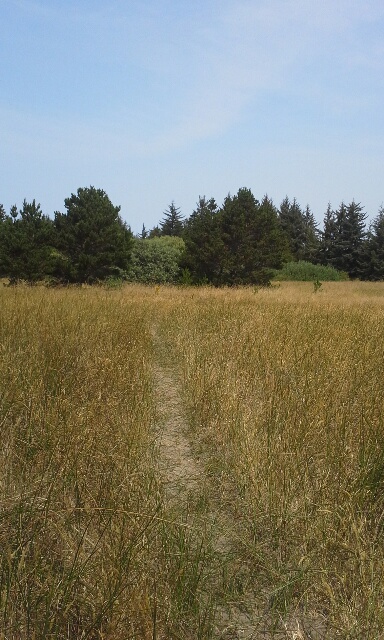
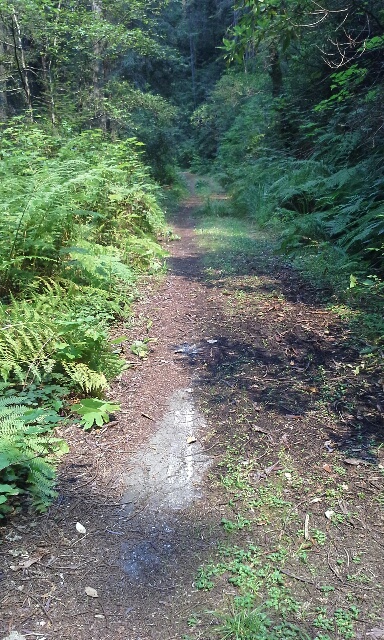
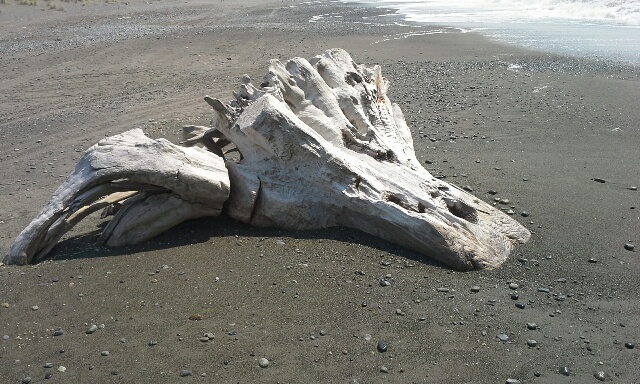
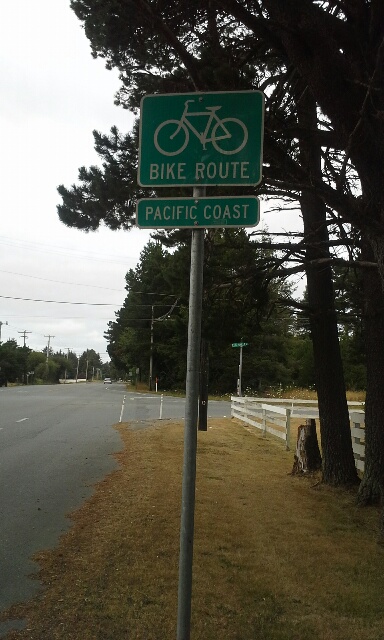
Ever since I came to look after my nonagenarian father after the death of my life mate/soul mate, I’ve been looking forward to a time when I would be free of all responsibility and would be able to do whatever I wanted (within the bounds of my meager resources). I’ve daydreamed about living a nomadic life, traveling around in some sort of camper or van or even a car with a comfortable back seat. I’ve daydreamed about epic walks, imagining myself thru-hiking the Pacific Crest Trail, the California/Oregon/Washington coastal trails, the breadth of the USA. I’ve daydreamed about just heading out and letting the path form before my feet as I journeyed into the unknown.

Ventura Pier at SunsetNow that my father is gone and I’m on the brink of that new life, I’ve been trying to figure out what exactly I expect to gain from an adventurous life (particularly since I am anything but adventurous). It wasn’t until a mentor left a comment on my A Little of a Lot of Things blog post that I realized what I wanted.

She wrote: Listing priorities is something you’ll be doing the rest of your life. You have plenty of time. Beginning with familiar things is a good step, as it’s always easier to step from the known into the unknown than to springboard into a whole life of new things all at once. You’re doing fine. Trust your instincts.

I realized I don’t want to start with familiar things. I want to jump off the precipice of the known and land gently in the middle of a whole new life filled with amazement, joy, and wonderful new things.

Such a childish wish! Not easy to do and probably not feasible, either. I know we take ourselves with us wherever we go, but I’d hoped an epic journey with all its challenges would change me into something . . . other. Other than what I am now, I mean. Other than a sad woman who has endured too much loss too fast. Other than a lonely woman who is neither jaded nor bored, just . . . tired. Other than an earth-bound woman who seems to have misplaced her power of uplift.

But life doesn’t work that way. We are always who we are. I’ve lived a creative life and lived life creatively. That will never change. But I’d like to be uplifted, amazed, excited, entranced by life once more. Cripes, it sounds like I want to be young again, doesn’t it? But I don’t. I just seem to have lost the power to feel the daily miracles. I can still be appreciative, still be grateful, but how many times can one feel totally uplifted and awed by a sunset before it becomes ordinary? A hundred? A thousand? Ten thousand? How many times can one feel the new grass beneath her toes and feel the wonder of being on this earth? After a while, it simply feels like . . . grass.

The older we get, the quicker things go from awesome and new to comfortable and familiar, from comfortable and familiar to entropy and stagnation. I’m sure my efforts at living creatively will stave off both entropy and stagnation, but I want more than a life spent staving.

The alternative to springboarding into a completely new life would be to take things one step at a time, savoring each new step into the unknown until it becomes comfortable, then taking another step into a  new unknown. And that is doable.

Today marks the beginning of a new year. Think about it, and you’ll realize it’s true. The calendar might not change, the year number might have already changed, but this is the beginning of the year 1/13/15 to 1/12/16.

So happy new year! Wishing all our dreams begin to come true, one step at a time.

***

Pat Bertram is the author of the suspense novels Light Bringer, More Deaths Than One, A Spark of Heavenly Fire, andDaughter Am I. Bertram is also the author of Grief: The Great Yearning, “an exquisite book, wrenching to read, and at the same time full of profound truths.” Connect with Pat on Google+. Like Pat on Facebook.

We Are Not Our Stuff

Strange day today. I packed what was left of Jeff’s things, both the items he asked me to save and the items I still can’t get rid of such as the sweater he was wearing when we met and his “new” jacket. I’ve had his antique perpetual perpetual calendarcalendar and several of the smaller items on my dresser ever since I got here to my father’s house. They brought me comfort then, and I thought I would feel sad now that they are packed away, but it just seems part of the process of my moving on.

Only two things caught me off guard. I have two original copies of his death certificate, and I opened the envelope to pull out one so I could put it with my papers to make it more accessible if I need it, and in the envelope I found the certificate of cremation. Did I ever read it? Did I ever know it was there? I can’t remember, but oh, the pain when I read those stark words today. “This is to certify that the remains of ____________ were cremated by authority of Pat Bertram.” Cripes. Even worse was the label they gave me to put on the urn if I ever traveled with those remains: This package contains the remains of _______________ whose body was cremated on March 31, 2010. Apparently, it’s illegal to travel with unmarked human remains. Well, that’s just too bad. One of these days, I will figure out what to do with those remains, and I sincerely doubt I will be labeling him (it? them?) like a commonplace parcel. (Unless you are on the human remains regulatory committee, then of course I will be labeling them.)

But the pain of dealing with his remains is reserved for another day. Today, after I packed up what is left of his possessions, I hesitated, not sure how to label the box. If he were alive, of course, I’d just put his name on the carton, but I didn’t want it to seem (even to me) as if he were inside that box. We are not our stuff. In the end, I just wrote, “J’s things.”

One amusing note (amusing to me, anyway). When I came here after Jeff’s death, a local mover gave me a great rate since his driver was going to be passing this town, and he had empty space in his moving van. I asked him if he would come pick the stuff up when I was ready to leave, and mentioned that there would be less to move back. He laughed and said, “That’s what everyone says, that they are going to get rid of things, but they always end up with more.” Not me. I have done a good job of getting rid of stuff. By the time I figure out where I want the stuff moved, I hope I will have gotten rid of even more.

***

Pat Bertram is the author of the suspense novels Light Bringer, More Deaths Than One, A Spark of Heavenly Fire, andDaughter Am I. Bertram is also the author of Grief: The Great Yearning, “an exquisite book, wrenching to read, and at the same time full of profound truths.” Connect with Pat on Google+. Like Pat on Facebook.