When it comes to life the critical thing is whether you take things for granted or take them with gratitude. ~~ G. K. Chesterton
For the rest of November, I’m going to take for gratitude some of those things I often take for granted — an entire alphabet’s worth! Since today is the thirteenth day of this surge of gratitude, I am giving thanks for “M” things.
I am especially grateful for:
Memory. We take our memories for granted since we remember what we remember and don’t remember that we don’t remember what we no longer remember. The continuity of our very being depends on memory. We define ourselves by what we have done or thought, who we have loved, who has loved us. If we had to approach each moment as if it were fresh with no past, who would we be? Would we still be us? Of course we would still be us, but we might not feel like us. We’d feel . . . fragmented, adrift, alone. Memory connects us not just to our pasts but to each other, and it connects us to those who are no longer with us here on earth. Today I will be taking memory for gratitude, and give thanks that I can remember everything I remember.
Moon. Moons go through cycles, from full moons to gibbous moons to crescent moons to new moons and back through the cycle night after night across the eons. Ancient lore speaks of a time when there was no moon, before the earth captured this satellite into its orbit, but whether the moon has always been a companion to earth or is a relative newcomer, the fact is that the moon now affects us more than we ever know. As an interesting coincidence, tonight is the full moon. According to Mystic Mamma, “The Full Moon in Taurus suggests relaxing and being present with sensations and the sensual delights such as delicious organic foods, drinks, fragrance and the 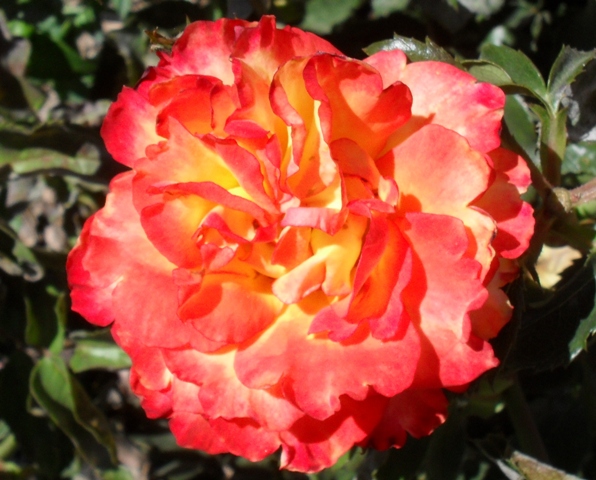 atmosphere which evokes a mood of gratitude for what and who is in your life that is valuable.” The bold highlight is theirs. Seems fitting that this month (this moon) I am evoking a mood of gratitude for the moon and for everything in my life that is valuable.
Miracles. We take life’s little miracles for granted. This has been a warm November, even for the desert, and today I happened to notice a both a white iris in bloom and a fiery red rose, which reminded me that we often can’t predict the joys that life will bring or when life will bring them. Even if these flowers bloomed because of turmoil in the earth’s ecosystem, they are still miracles. Other miracles are the connections we feel when we exchange smiles or laughter; the miracle of reading — we can read the strange symbols called the alphabet, and understand what is in a writer’s mind; the miracle of the internet. What I write here, people all over the world can read. Truly a miracle! So today I will be taking for gratitude life’s little miracles (though truly, is there such a thing as a little miracle?).
So, what “M” things are you taking for gratitude today?
***
See also:
Taking “A” Things With Gratitude, Taking “B” Things With Gratitude, Taking “C” Things With Gratitude,Taking “D” Things With Gratitude, Taking “E” Things With Gratitude, Taking “F” Things With Gratitude, Taking “G” Things With Gratitude, Taking “H” Things With Gratitude, Taking “I” Things With Gratitude, Taking “J” Things With Gratitude,Taking “K” Things With Gratitude, Taking “L” Things With Gratitude
***
Pat Bertram is the author of the suspense novels Light Bringer, More Deaths Than One, A Spark of Heavenly Fire, and Daughter Am I. Bertram is also the author of Grief: The Great Yearning, “an exquisite book, wrenching to read, and at the same time full of profound truths.” Connect with Pat on Google+. Like Pat on Facebook.

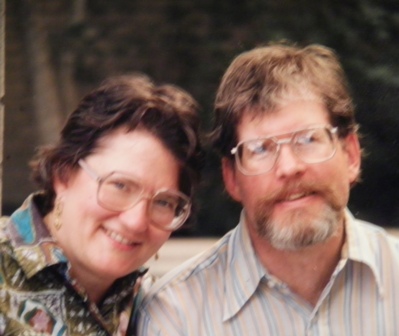
 Jeff. Although I never took Jeff — my life mate/soul mate — for granted, somehow I always took for granted that we’d be together. Even while he was dying, I took for granted that such was the way things always would be — he dying, me struggling to live. And even at the end, I took for granted that somehow he’d still be in my life, as if he would be in another room, perhaps. After he took his last breath, I was stunned by the absolute feeling of “goneness” I felt. It wasn’t as if he were in another room. It was as if an immense crater had been dug out of my life, my heart, my soul, leaving behind . . . nothing.