Pricked Conscience

Thank you for all your prayers, thoughts, concern, love.

After I abandoned my dysfunctional brother on the streets of Fort Collins and drove the 1000 miles back to where I am caring for my 97-year-old father, all I could do was weep. I felt terrible that no one cared. I wondered how it was possible in a world of 7,184, 285,500 people, my brother could be so unloved. And then I realized the truth. I cared, and so did all of you. Not that it makes any difference to him (at least as far as I know), but it makes a difference to me.

Even though he ended up angry, abusive, demanding, it wasn’t always so. He’d been in my life from the moment I was born, and I’d looked up to him. I remember him as a radiant and charming child. A brilliant youth. A teenager who refused to let himself be beaten (with a belt, no less) into submission. A young man who felt at home no matter where he roamed. A middle-aged man who struggled with problems greater than his ability to solve.
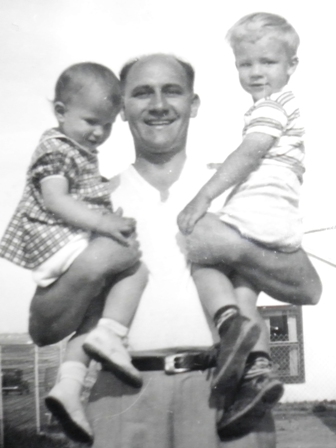
I thought I wanted him out of my life, and I do. For the past fifteen months, he hounded me relentlessly, wanting more from me than I could ever have given him, though to be honest, I’m not exactly sure what he wanted. He settled for a place to camp in the garage and an occasional bag of groceries, but I knew that wasn’t enough. (As much as I hate to admit it, I can’t even solve my own problems, let alone his.)

At the end of the road in Colorado, as he stood there by the car drinking his bribe and exchanging a last few words, I mentioned that he always wanted one more thing from me but he never gave me anything.

“Yes, I did,” he responded. “I pricked your conscience.”

I didn’t think of that remark again until this morning when I got out of a safe and comfortable bed and remembered his saying he needed to find a place to camp by the railroad tracks. I flushed the toilet and remembered that he had to find a place to relieve himself out in the open. I took a cold drink from the refrigerator and remembered that his beverages could only be the temperature of the outside world. I fixed something to eat and remembered the dumpster he pulled his dinner from last night. I drove to the store and remembered how painful it was for him to walk because of his sciatica.

He used to scream, “You’re living like a millionaire while I have to live like a dog, and you don’t even appreciate it.” I always responded that millionaires didn’t have people knocking on their windows for attention dozens of times a night. But the truth is, he is right. I am living like a millionaire — warm bed, hot food, cold drinks, pristine toilet, kitchen, safety, comfort, and friends who care about me.

So thank you, all of you. You mean more to me than you will ever know.

***

Pat Bertram is the author of the suspense novels Light Bringer, More Deaths Than One, A Spark of Heavenly Fire, and Daughter Am I. Bertram is also the author of Grief: The Great Yearning, “an exquisite book, wrenching to read, and at the same time full of profound truths.” Connect with Pat on Google+. Like Pat on Facebook.

1000 Miles of Tears

tomWe coerced my dysfunctional, alcoholic brother into going back to Colorado. He’d kicked in the door between the house and the garage, and we had the cops threaten to put him in jail if he didn’t leave. We packed his stuff, didn’t even let him take the time to do it himself. I drove off at one o’clock in the morning, and drove straight through. It was a horrible, horrifying, and heartbreaking trip, even worse than I feared. But we got there safely, though I have several painful bruises that he had no memory of inflicting. (He’d never hit me before, though I had hit him, I’m ashamed to admit. I’m not violent, and hadn’t hit anyone since childhood until he came here with his multiple problems and no sense of boundaries.)

When we arrived, I spent the night in a motel. He slept in the car, but he was able to get a shower and put on clean clothes that morning. We unloaded his stuff and packed it in his storage unit (a unit that he may or may not still have access to. The owner said he wasn’t to go there any more, though my brother has a note from the owner’s wife that he has access every morning). Then we drove around, doing “just one more thing,” “just five more minutes,” “just one more stop.” My brother always pushes things, and that “one more thing” ended up being several hours of driving around. During the last couple of hours, he refused to leave the car. He was afraid of being homeless again. He begged me to get a motel room so he could get one more night of civilization and a shower. I refused. (I’d promised to get him a motel room for a week, but there is a law in that town that no one can rent a room for another person. The homeless shelter is pitifully under-bedded, and there was no mental health place to leave him.) I knew that staying a second night would result in another day of “just one more stop”s.

In the end, I had to bribe him with the promise of a six-pack of beer to get him to leave the car. After I bought the beer, he wanted us to go get something to eat, but I was tired. Sick of the whole mess. Had no appetite. Just wanted to leave.

We talked for a while, then he told me I shouldn’t drive far before getting a room, that he was worried about my falling asleep. This concern for me, the first he had shown in the fourteen months we were together, broke me. I started to cry. Then he told me several sights I should be sure to see, and I cried harder. “Do you think this is a fun trip for me?” I said. “It’s killing me. I don’t want to leave you here on the streets.” (Sort of egotistic of me, isn’t it, to expect him to care about my feelings when he was the one being abandoned?) He touched my hand, and my tears dripped like a desert rain. He expressed surprise that I cared, and I explained that of course I cared. I’d spent the past fourteen months trying to keep him off the streets, which is why I’d lobbied for his camping out in the garage.

I really had no other choice but to take him to Colorado. My father needed my sister to help take care of him since I couldn’t do it by myself, and her presence escalated my brother’s psychoses beyond anything I could handle. Besides, if my father continues to decline, my brother would have to leave soon any way. (Or so I told myself to justify my actions.)

I reached out for my brother’s hand, needing that one final touch, but he turned and walked away, tears of his own in his eyes.

I expected to be relieved when I finally drove off, but my tears continued to fall. I cried the entire 1000 miles back, thinking that as abusive as he’d been, he was my brother.  (“Was,” not “is,” as if he’d died or were about to die.) You’ll be horrified to learn that I drove straight back with but a two-hour stopover at a rest area. I didn’t see the point of getting a room for the night because I wouldn’t sleep, and besides, it felt wrong since he would be sleeping outside by the railroad tracks.

My bruises tell me I did the right thing, and yet I know that every time I go into the garage, I will be reminded of my brother living on the streets, reminded that I didn’t even stay to have a final meal with him.

Not my finest hour.

***

Pat Bertram is the author of the suspense novels Light Bringer, More Deaths Than One, A Spark of Heavenly Fire, and Daughter Am I. Bertram is also the author of Grief: The Great Yearning, “an exquisite book, wrenching to read, and at the same time full of profound truths.” Connect with Pat on Google+. Like Pat on Facebook.


Help Please!

I am driving my brother to Colorado.  We left just after midnight (too long a story to tell pecking out on my phone) and I am driving straight through. Am in Colorado now and need to drive across the state. This has been a horrifying and heartbreaking trip. To make things worse,  I’m not sure he’ll let me leave him here since he’s afraid of being on the streets again.

If you are prayerful, please say a prayer for both of us. If not, please send good thoughts and wishes for . . . I don’t know. Maybe for  courage.

A House of Ghosts

An online friend, someone who only knows me through my blog posts, emails, and projects we have worked on together, made an astute remark.

She said, in response to my blog about the double rainbow, “I do think you are more perceptible to the outside world and that life is moving forward when you get out of the house. You won’t find any possibilities in the house — you have to be able to get out when you can.” I found that comment interesting because I hadn’t noticed the deadness of this the house until the last few days. It’s always been a place of dying and grief, paranoia and imprisonment. I first visited this house to help with my dying mother. I came to stay after the death of my life mate/soul mate to help my elderly father and to get through my shockingly painful grief. For the first three years I was here, my father would set the burglar alarm around 7:00pm and he didn’t give me the alarm code, so I was basically a prisoner of his paranoia, and now my brother is making me a prisoner of his paranoia and psychoses.

ThiStarss deadness was especially apparent to me this morning. I went to pick up a rental vehicle to take my brother back to Colorado (a foolish waste of money, since he insists he doesn’t have time to get ready) and while I was sitting in that sparse office, I could feel my spirits rise. Since my brother refuses to go tomorrow, that means I have the vehicle for my own use, and I could go . . . wherever. During the long ride back here, I felt that optimism, and even after a confrontation with my brother, who claimed the SUV was too small, he couldn’t be ready, and various other ranting objections, I kept that feeling of optimism. But now that I’ve been back in the house a couple of hours, I feel the cement hardening around my feet and my heart, and I can barely muster the energy to . . . well, to do anything.

I never had much belief in ghosts, but this place does seem haunted, if only by my own unhappiness.

I don’t really have anywhere I want to go, but I think I’ll head out on the highway for a couple of hours, and see what I can see — maybe some stars. It’s supposed to be a good night for stargazing.

***

Pat Bertram is the author of the suspense novels Light Bringer, More Deaths Than One, A Spark of Heavenly Fire, and Daughter Am I. Bertram is also the author of Grief: The Great Yearning, “an exquisite book, wrenching to read, and at the same time full of profound truths.” Connect with Pat on Google+. Like Pat on Facebook.
Crazy?

I wonder if it’s possible to be crazy and not know it. I think I am a caring person, but considering all the arguments I’ve been getting in lately with my siblings, I’m beginning to wonder if I’m the one who isn’t tracking on all synapses.

I don’t, of course, really think I’m crazy, evil, manipulative, contrary, witchy, or any of the other things people have accused me of being recently, but I have to concede the possibility. My theory has always been that people project their own characteristics onto others, and so whatever people tell me I am, it gives me an idea of who they are. And yet . . . how well do we really know ourselves?

witchI’ve been polling people to see if they think I could be certifiable, and of course, my friends think I’m wonderful. But family is something else again.

I’ve been trying to get my problem brother back to Colorado because the sister who has come to help with my father insists that he goes or she goes. I cannot take care of the elderly man by myself, and so I am conceding to her wishes that my brother leaves. Most of my family want him gone, not just out of this house but out of their lives. Some think he is the source of all the contention in the family, and perhaps it’s true. It’s also possible my brother holds us together because he is the universal scapegoat.

None of my siblings care that he is being forced back onto the street in this hellishly hot place. But I do. I know there will never be a good place for him, not here, not anywhere, but he should at least be with his things that are stored in Colorado. But he is resisting my efforts — he thinks I am manipulative and only want to see him dead.

I am under a deadline (not the lethal kind) to get him out of here before my sister puts a restraining order in place with the help of a social worker, and yet she claims I want him out of here for me, not her. I don’t get how she thinks, and so I wonder if I’m crazy. I suppose getting him back to Colorado is for me in a way — I cannot bear to simply throw him out like so much garbage. Despite his nastiness, schizophrenia, alcoholism, he is a person. Are we only to try to help those who are worthy of our help? I am tired of his abuse, but after fourteen months, I can wait another week or two or three. But she can’t.

And so tomorrow I pick up a rental car big enough for him and his stuff, though I have no real hope of his ever making the effort to finish packing and letting me take him to the cooler (yet no more comforting) streets of northern Colorado. It will be wasted money, and I will find no comfort in the thought that at least I tried.

***

Pat Bertram is the author of the suspense novels Light Bringer, More Deaths Than One, A Spark of Heavenly Fire, and Daughter Am I. Bertram is also the author of Grief: The Great Yearning, “an exquisite book, wrenching to read, and at the same time full of profound truths.” Connect with Pat on Google+. Like Pat on Facebook.

Grief Update: Four Years and Four Months

It’s been four years and four months since Jeff — my life mate/soul mate — died. These have been rough years, first dealing with the heartbreak of his death, then dealing with the agony and the void of his being gone, now dealing with the trauma and drama of my father’s dying, my brother’s dysfunction, my sister’s presence.

I’ve shed a few tears today, but I don’t think they are for my lost love. They seem more self-pitying than that, perhaps tears of exhaustion from trying to rectify a situation I cannot settle — everyone is pushing/pulling me, and it’s impossible to resolve the matter in any way that will satisfy or even half-satisfy everyone. Despite my efforts to help, I know that there is no resolution. Even if it’s not this week, my father’s end is nigh. Even if it’s not this week, my homeless brother will be forced back onto the streets. Even if it’s not this week, my sister will still have to deal with whatever comes, as will I.

The truth is, I can barely remember my life with Jeff. It’s so far away in time, place, emotion, that his being gone seems to have no impact any more, and yet his death defines my life. If he hadn’t died, I wouldn’t be here in this house of horrors, wouldn’t have gone through unimaginable grief, wouldn’t be drifting in this transitional state, waiting for my “real” life to begin. (Silly to think that — as John Lennon supposedly said, “life is what happens while you are busy making other plans.” On the other hand, it’s horrific to think that this is my life. Ouch.)

If he hadn’t died, I wouldn’t have wondered for thousands of hours in the desert. (I meant wandered, of course, but I’m leaving the typo because it is actually truer than what I’d intended to write. I did wonder as I wandered. Wondered about life, death, his current whereabouts, my future, the meaning of it all.) If he hadn’t died, I wouldn’t have made so many wonderful friends. Wouldn’t have found dance (my redemption, my joy, my life).

I miss Jeff, but it’s with the dull ache of a half-remembered dream. I know he was real — he was the most real person I ever met — and yet, though he used to be “my North, my South, my East and West, / My working week and my Sunday rest, / My noon, my midnight, my talk, my song,” he no longer has any substantial reality in my life. I talked to him when I was out walking in the desert today, but I had no feeling of connection. It was just me, the heat, the restless air, the sandy soil, the oppressive low-lying clouds, and perhaps a lizard or two.

I keep a photo of Jeff — the one photo I have — where I can see it to remind me that this was not always my life. Once I loved deeply, so deeply that I still felt shattered years after his death, so deeply that I could only scream the pain of my loss to the uncaring winds.

I still have his ashes, but one day soon I will have to figure out what to do with them. When my father is gone, I’m going to have to put my stuff in storage, and though there is nothing left of Jeff in his “cremains,” I cannot see storing them as if they were just more detritus of my life. And I still have many of Jeff’s things to dispose of, things that once I couldn’t bear to part with because he might need them. Now I know the truth — feel the truth — he will never need them. I will never be taking them home to him. I will never be going home to him. Will never talk with him again.

It’s been four years and four months and six days since Jeff and I talked. Tomorrow it will be four years and four months and seven days.

And so the days pass.

***

Pat Bertram is the author of the suspense novels Light Bringer, More Deaths Than One, A Spark of Heavenly Fire, and Daughter Am I. Bertram is also the author of Grief: The Great Yearning, “an exquisite book, wrenching to read, and at the same time full of profound truths.” Connect with Pat on Google+. Like Pat on Facebook.

The Joy That Is To Come

One of my online friends once told me about an old woman she knew, the most joyful person she’d ever met. The woman had lost everyone who had ever mattered to her, and yet somehow she exuded joy.

We marveled at the woman and wondered how she could find joy in the midst of life’s sorrow. And oh, my. There is so much sorrow. My friend had lost two of her children (lost to death, that is, not misplaced them.) I’d lost my life mate/soul mate who was also my best friend, my home, my constant companion. My friend and I were drowning in grief and anger, unable to find a way back to life. I’m now 1000 miles away from my controlled and coupled life, dealing with the chaos of a dying father and a schizoaffective, alcoholic brother. And yet, and yet . . . sometimes I catch glimpses of the joy that is to come and I understand the old woman’s bright outlook.

This morning I took my father his meager meal and kept him company while he ate. He is nothing but bones wrapped in a sack of skin and body fluids, and it seems as if his whole life now revolves around the management of those fluids. Mucus. Saliva. Urine. Feces. Blood. As I sat there, recognizing that this was the same man who sometimes terrorized me as a child, often ignored me, and occasionally showed me he cared, something shifted in my mind, and I saw life at a different slant.

afternoon teaIf this is what it all comes down to in the end, ingesting, digesting, and egesting, then there is no reason to be anything but joyful. The dramas and traumas of our life are eliminated just as surely as the food we eat or the liquids we drink. Sitting here, I can feel joy creeping through the cracks in my life, and I welcome it. My joy does not in any way affect my father, does not make his end days any easier or harder. My joy does not in any way change my brother’s situation. He got screwed in life’s lottery, ending up with problems I can’t imagine and even if I could imagine them, I can do nothing to help besides an offer of life’s necessities.

During the past four years, I have heard many horrific stories, stories of people’s grief, stories of people’s dealings with schizophrenic sons, narcissistic mates, abusive parents. At times I felt as if the whole world was created out of tragedy and pain, and yet, without in any way diminishing those traumas, I now understand that those tragedies are not mine. I can sympathize, empathize, listen with care, but I cannot spend my life bleeding for all the wrongs of the world, though once I thought it was the soulful way to live.

Now my idea of a soulful way to live is to embrace joy. It might be naïve of me to think so, but for now, I am Visualizing a Life of Joy.

***

Pat Bertram is the author of the suspense novels Light Bringer, More Deaths Than One, A Spark of Heavenly Fire, and Daughter Am I. Bertram is also the author of Grief: The Great Yearning, “an exquisite book, wrenching to read, and at the same time full of profound truths.” Connect with Pat on Google+. Like Pat on Facebook.

Summer of Relentlessness

re·lent·less /riˈlentləs/ adjective — oppressively constant; incessant; inflexible; unyieldingly severe, strict, or harsh; steady and persistent; unremitting.

This is a summer of relentlessness: the relentless heat, the relentless wind, the relentlessly oppressive air; my relentless exhaustion; my father’s relentless decline and his relentless needs, my brother’s relentless onslaught of verbal abuse, paranoia, and demands.

We are trying to get my brother out of here, but there seems to be no real help from the “authorities” whoever they may be. The cops have been here several times and have done nothing, only explained why they could do nothing. The social worker from my father’s nursing service has done nothing. My efforts to cajole my brother to leave by offering to drive him back to his home state have come to naught. My efforts at offering incentives have only incited more relentlessness.

fireTo be honest, I never cared whether my brother was here as long as he left me alone. I still don’t care. The trouble is he won’t leave me alone and I need peace, so I try to go along with the advice of others on how to get him to leave. Complicating matters, I don’t want him in jail just to get him off the streets. Don’t want him on the streets around here where he can still inflict his relentlessness on me. Don’t want to be constantly arguing with others about the best way to deal with him. There is no best way. Maybe there is no way. I don’t know.

Even without my brother’s presence, this situation would be hard to handle. People who are trying to help add their own relentlessnesses, whether offering advice or expressing frustration at my inability to take their advice. I grew up in a large family, but I never did learn how to deal with conflicting and relentless needs. The swirling relentlessness of it all confuses me, so although I’m doing the best I can, my best isn’t good enough.

This relentlessness is teaching me one thing, though — the power of letting go. There is nothing one can do to stop the unyielding, unremitting, incessant onrush of unpleasantness. That is the very definition of relentless. If relentlessness could relent, it wouldn’t be relentless. And if there is nothing one can do, one can only let go of any hopes for a resolution and simply accept what comes.

And so it goes, this summer of relentlessness.

***

Pat Bertram is the author of the suspense novels Light Bringer, More Deaths Than One, A Spark of Heavenly Fire, and Daughter Am I. Bertram is also the author of Grief: The Great Yearning, “an exquisite book, wrenching to read, and at the same time full of profound truths.” Connect with Pat on Google+. Like Pat on Facebook.
Putting My Brain in a Box

Talking to my homeless, schizoaffective, and alcoholic brother is an exercise in futility. He bellows, doesn’t listen, is relentlessly and terrifyingly angry. I wouldn’t talk to him, but I’m trying to get him out of here, back to a place where maybe he can get a pension along with food stamps and Medicaid in a state where the pot he needs to help him sleep and to keep his psychosis at bay is legal.

The worsspeedt problem for me (besides his continued presence) is not letting his anger affect me. Sometimes when I am listening to his incessant nastiness and feel his fury coursing through me, I have to clench my fists to keep from beating him into silence. I believe this reaction is the accumulation of his fury assaulting my psyche rather than any innate violence, particularly since the moment I remove myself from his presence, my own anger disappears. I have to make sure I am more than arm’s length from him, because the closer he is, the more I feel the effects. Of course, my backing away infuriates him, so he advances, and we do a strange sort of dance.

The other day I tried to calm myself by doing the port de bras I learned in ballet class, bringing my arms into a circle over my head, opening them to shoulder height, turning my palms to the floor, and letting my arms gently float to my side. It did help me keep my calm, but my movements, which I’d intended to also calm him, only infuriated him further. He seemed to think I was doing some sort of clumsy Tai Chi or Yoga.

Today a friend told me another way of maintain equanamity — put my brain in a box. She counseled me to mentally construct a box. (Mine looks like a treasure chest with red plush lining.) Then open my head, gently lift out my brain, put it in the box, close my head, close the box. Finally, put the box in a closet and shut the door. That way I can get through times of pain or anger or aggravation without feeling anything because, of course, my brain is in the box.

Seems to work. After I put my brain in the closet, I was able to deal with my brother, my father’s needs, some siblings’ requests for information, the plumber, phone calls, and various and sundry other frustrations.

Maybe I’ll leave my brain where it is temporarily. It seems to be resting peacefully.

***

Pat Bertram is the author of the suspense novels Light Bringer, More Deaths Than One, A Spark of Heavenly Fire, and Daughter Am I. Bertram is also the author of Grief: The Great Yearning, “an exquisite book, wrenching to read, and at the same time full of profound truths.” Connect with Pat on Google+. Like Pat on Facebook.

Becoming Matriarch

My father once teased me by calling me the matriarch of the family since I am the oldest living female. (I had to stop here to think. Am I? I’m still in middle age though I am sliding down the banister into the early years of old age, so it seems impossible that there is no older female, but I can’t think of any except some distant relatives.)

Today, however, I feel as if I have graduated into matriarch-ness. My father finally conceded (at least for the moment, anyway) that he can no longer do his accounts, pay the bills, keep up with house repairs and everything else that needs doing to make sure everyone is comfortable, so he “passed the torch” to me. (Those are the words he used.) I told him I’d continue doing everything his way, but he said as long as the accounts were understandable to the executor of his estate, he didn’t care how I did things.

spiderSo here I am, matriarch of our dysfunctional little family — one elderly father who seldom leaves his bed, one dysfunctional brother who refuses to leave the area, one sister who has come to help and leaves whenever she is free, and me who sometimes dreams of leaving and sometimes dreads it. Besides that, the house is so big that something always needs to be repaired. I feel like a black widow spider, sitting in the middle of my poorly-spun web, but instead of me twanging the web to attract insects, the insects twang me, keeping me trapped in the center of it all.

There are others in the family, far-flung siblings that I used to keep informed when my father was ailing, but for some reason, during the past couple of weeks I haven’t felt like sending out my usual emails, maybe because no one is contacting me to see how he is doing. The truth is, I wouldn’t know what to say even if they did. He is definitely declining at an ever-rapid rate, but he is peaceful in his isolation. If anyone wanted to come, of course I as matriarch would give permission even if he were not so disposed, but for now we’re just letting the days slip away, one after the other, taking each minute as it comes.

I’ve played many different roles in my life. Some roles, like daughter and sister, have been with me from the moment I was born, but this new role of matriarch will not be long-lived. When my father is gone, probably within a few months, I will slip off the mantel, turn everything over to the executor, and head out on my own, unencumbered by any responsibility. For now, however, here I am, doing the best I can in a strange and bewildering situation.

***

Pat Bertram is the author of the suspense novels Light Bringer, More Deaths Than One, A Spark of Heavenly Fire, and Daughter Am I. Bertram is also the author of Grief: The Great Yearning, “an exquisite book, wrenching to read, and at the same time full of profound truths.” Connect with Pat on Google+. Like Pat on Facebook.




