We Can Never Know What Life Will Bring Us

My life is slowly winding down . . . Hmmm. That sounds ominous. Let me rephrase the sentence. The dramas and traumas of my life are slowly winding down — my life itself is going strong.

My brother is gone from the area, my father is sleeping most of the time, my sinus infection is mostly healed, my sister is trying to decide if she wants to continue catering to my father’s whims and needs or if she wants to head out. And I’m left wondering what the heck happened during the past fifteen months.

Fifteen months ago, I was mostly housebound. My father set the burglar alarm when he went to bed somewhere been 7 and 9 pm, and he wouldn’t give me the alarm code. (His compromised health made him even more paranoid than normal. I have no idea what he thought I’d do while he was asleep. Debauched parties, maybe.) Such imprisonment seems barbaric to me now, but at the time, I was still struggling to find a way out of grief for my life mate/soul mate, and nothing really mattered. Even worse, my then ninety-six-year-old father was ill, had just been released from the hospital, and I wasn’t sure he’d make it. I was waiting on him, doing whatever he wanted because he claimed he was too ill even to walk to the kitchen to get food for himself (afterward he said he thought I liked doing it, as if by letting me wait on him, he was granting me a favor). Hanging around all yinyangday and nursing him was making me feel even more imprisoned.

And then my homeless brother, who had long been estranged from my father, showed up to try to make amends. Within the month, my father came alive, shouting at my brother for innocuous little offenses that my brother couldn’t even understand. (Like being too quiet. Like eating food that had been purchased for my father. Like interrupting the old man while he was praying.) Things got worse, and finally, against my wishes, my father kicked my brother out of the house, just as he had done when my brother was sixteen.

This isn’t meant to be about my father and brother, though my father’s actions toward my brother precipitated the hell my life became. It’s about me. How my father’s resurrection angered me and allowed me to take my life back. If he had energy enough for tantrums and fights, why the heck was I catering to his every need as if he were an invalid? And so, when I found a nearby dance studio, I signed up for lessons, more for something to do than anything else, and I fell in love with dance. The very same day I took my first dance class, I also discovered the Sierra Club walk, and so my life opened up even more. I came alive.

We are gradually ending back where we started, with just me and my father. But those fifteen months are still to be reckoned with. They were some of the most horrific months of my life, dealing with both my father and dysfunctional brother. But they were also some of the most wonderful months of my life, learning to dance and making new friends.

I don’t know if I’ll ever make sense of it all, but what I am left with is the feeling that no matter how we plan, no matter how much we think we are in control, we can never know what life will bring us. Fifteen months ago, I could never have conceived of the abuse from my schizoaffective brother, never have conceived of the heartbreak of saying goodbye, maybe forever. (The brother I knew is gone. I don’t know who that tormented and tormenting stranger is.) Fifteen months ago, my grief group friends were scattering to new lives and new loves, and I was mostly alone. I couldn’t have conceived of making so many delightful new friends. Fifteen months ago, I had absolutely no interest in dance, couldn’t even have conceived of the importance it could have in my life. And all those things happened without my making a single plan.

Of course, I will continue to plan — that is my nature. But I will also be aware that plans are simply that: plans. They aren’t life. They don’t have reality. Reality shows up all on its own.

***

Pat Bertram is the author of the suspense novels Light Bringer, More Deaths Than One, A Spark of Heavenly Fire, and Daughter Am I. Bertram is also the author of Grief: The Great Yearning, “an exquisite book, wrenching to read, and at the same time full of profound truths.” Connect with Pat on Google+. Like Pat on Facebook.

Rockin’ Pneumonia and the Boogie Woogie Flu

Well, no, I don’t have pneumonia or the flu. Nor do I feel much feel much like rockin’ since I have a sinus infection that has laid me low. (I always get sick when I travel, which makes my idea of going on the road after my father is gone a bit foolish.)

This infection has made me concentrate on myself and is helping me forget my brother. I tend to worry about him, though there’s nothing I can do for him. I tried to get him help while he was here, which came to nothing. I tried to protect him as much as I could, but only put myself in danger. Now that he’s back in his home state and on his own, he will have to take care of naphimself as best as he can.

When he was younger, the whole world was his backyard. He seemed to be able to live anywhere until he got the hoarder’s disease and became tied to “stuff.” (A lesson to me to get rid of even more of my stuff, though I doubt I will ever be able to do what my sister did — get rid of everything that didn’t fit in her car.) But now that he is older and developing physical problems as well as mental issues, the world seems alien to him. He says it’s changed, and that it scares him.

Still, he did want to go back to Colorado. If he can hold himself together long enough to make the rounds of social services, he will be okay. Could even end up with a small pension. He admitted he didn’t want to be here, that he got stuck, and perhaps in the end, I did for him what he couldn’t do for himself — get him out of here. (At least that’s what I tell myself, and for all I know, it might even be true.)

One of the reasons we needed him to go was that my father was rapidly declining. We didn’t think the old man had long to live, and the house couldn’t be put on the market with my brother living in the garage. But my father is doing better, so much so that he can be left alone some of the time. My sister, who came to help and who precipitated the exit of my brother, is thinking of leaving, and so once again it will be just me and my father in this house of ghosts.

Since my father needs to use a walker (though most of the time he carries it), he won’t be able to fix his meager meal (and if he could fix them, he wouldn’t be able to carry them), so I can fix his food before I leave for dance classes. (I’ve missed too many classes as it is, and will be missing more because of my sinus infection, and dancing holds me together.)

Mostly I’m just listening to old movies (watching them with my eyes closed, and dozing off periodically), drinking tea, and trying not to think of the next step, either the continued care of father, or what is in store for me when he is gone.

Thank you again for all your prayers, support, well wishes, thoughts, and comments during this trying time. You helped me in more ways than even I know.

***

Pat Bertram is the author of the suspense novels Light Bringer, More Deaths Than One, A Spark of Heavenly Fire, and Daughter Am I. Bertram is also the author of Grief: The Great Yearning, “an exquisite book, wrenching to read, and at the same time full of profound truths.” Connect with Pat on Google+. Like Pat on Facebook.

Wishing I Weren’t Sensitive

I wish I knew how to be insensitive, knew how to put matters out of my head and go on with my life as if nothing happened, but I don’t seem to be able to do that. Even after enduring months of being relentlessly hounded by my dysfunctional brother, even after I took him back to Colorado, I worry about him, worry about his well-being, wonder who he is aggravating, wonder what trouble his mouth is getting him into. There’s nothing I can do though, so worrying is foolish. I can’t control his behavior for him — no one can control another person’s behavior. I remember as a child wondering why he argued with my father since he knew it always got him a beating. I didn’t understand why he couldn’t keep his mouth shut as I did. It wasn’t until my mother was dying that I ever stood up to my father or broke one of his unwritten rules. (I did for her what she could never do for me — stood up to him — which seemed to connect some sort of karmic circle and brought me peace when she died.)

My family was a pool of unwritten rules. Somehow I could understand those rules while other of my siblings couldn’t. Even now, when we are all getting old, those rules still dominate. I guess those rules are why I was “allowed” to stay here to look after my father. I knew never to disturb him when he was praying or reading or doing anything, actually. I knew not to open the windows when the air conditioning was on. I knew not to eat his food, read his newspaper before he did, disturb his paperwork. Most of my siblings knew I was here to shield my father from the world (though we didn’t use those words), but my dysfunctional brother couldn’t understand. I didn’t even know there were all these unwritten rules until he started screaming about my changing “the rules.”

[Oddly, my sister who is here helping has broken many of the same “rules” that got my brother kicked out of the house, which is one of the things that sent him into emotional overdrive. He said it was unfair, and he was right.]

I came here to look after my father partly because I had nowhere else to go after the death of my life mate/soul mate (and when my father is gone, I will again have nowhere to go). But mostly I came to see if I could unwind my ties to the past so that after my father is gone, I wouldn’t still be whining over my unhappy childhood. It’s working, I suppose. I just never expected to be buffeted by such emotional storms, never expected my brother to come and shake things up even more, never expected a lot of what has happened, such as finding a nearby dance studio and taking dance classes.

I hoped that by doing for my father what he could never do for me (I pay attention to his needs though he had always been unable to pay attention to my mine) that a karmic circle would be closed when he was gone and I could finish out my life strong and wise and bold and ready for whatever happens.

But all I seem to do is cry, which is so not my idea of a strong woman, or a wise one, or a bold and independent one.

I thought my brother’s coming here fifteen months ago was a portent of my father’s passing, but although at the time father seemed near to death, my brother’s presence, however unwelcome, stimulated him and brought him to life. (Which is one reason I endured his presence all these months — there was something powerful going on beneath the surface I could feel but couldn’t understand.)

My father seems to be recovering from his most recent hospital stay. With my future on hold once again, there is a chance I can still accomplish whatever it is I need to accomplish by being here. I just wish I knew what it was. Perhaps it’s one of those unwritten rules even I am not sensitive enough to read.

***

Pat Bertram is the author of the suspense novels Light Bringer, More Deaths Than One, A Spark of Heavenly Fire, and Daughter Am I. Bertram is also the author of Grief: The Great Yearning, “an exquisite book, wrenching to read, and at the same time full of profound truths.” Connect with Pat on Google+. Like Pat on Facebook.

No Hero’s Journey

I cannot even begin to make sense of the events of the last week, let alone the last year. It will take me a long time, if ever, to process the horror, heartbreak, grief of dealing with my dysfunctional brother’s presence, the trip to take him back to Colorado, and now his absence.

I do not miss him, of course, he was too abusive (when I heard a noise outside my window last night, I got scared thinking he’d returned), but he was such a major part of my life for the past fifteen months that his absence looms large. I don’t understand how I reconnected with him, don’t understand why he treated me so badly, don’t understand why I thought it important for him and his father to forgive each other. (Except that for my entire life, the two of them have used me as the rope in their tug of war, and I needed to be done with both of them.)

I don’t even understand how I became the one to take him back to Colorado. I don’t remember the sequence of events leading up to the trip, though I do know I refused to let my siblings just toss him on the streets of this dusty, windy, and hellishly hot town. (Partly because I knew he wouldn’t stay away.) I also refused to let them get him thrown in jail where he certainly wouldn’t get help for his many mental disorders.

And so, somewhere along the line, I agreed to take him and the stuff he’d collected back to Colorado. It’s odd that I did so. The very thought of the trip terrified me. I didn’t know if I could put up with his relentlessness and nonstop abuse for all those miles and hours. Knowing how violent my reaction to his verbal abuse was, I feared me as much as I feared him, and I didn’t think we’d survive it. The trip was almost as bad as I thought it would be, and though we came close to an accident several times, we both did survive, probably because of all the prayers and well wishes people sent our way.

He kept opening the door to the car while I was driving (I think he thought he was opening the window, though I don’t really know). One time he climbed into the back seat to sleep on top of all of his stuff, and when he climbed back into the front, he climbed over me, making it impossible for me to see. I pulled over, and helped him get untangled. Because I had to push his foot, it seemed as if I pushed him out the door, and so he refused to get back in the car. He stared at me for a few minutes, then went into a field and fell asleep. I finally got him back in the car, but when he left the moving car a little later, I took off without waiting for him, thinking maybe it would scare him enough to behave.

When I went back, I found him with rescue workers from the fire department, screaming for water. Apparently, he’d fallen asleep by the side of the road while he waited for me. They wanted to arrest him, said a police car was on its way, but I begged and pleaded for them to let me take him to Fort Collins. (A repeat of the night before when I had to beg the cops to let me take him away rather than arrest him. I’d said the car was all packed; just let us go. And finally they did.) The fire folk expressed concern for me, and I told them I’d be fine, that I’d been dealing with him for the past fifteen months. And they too let me go.

My brother demanded that we stop so he could get cold water, and when I did so and gave him the bottle, he clubbed me with it. (I don’t know why, and later, when I told him what he had done, he didn’t know either. He didn’t believe he’d done it, not even when I showed him the huge bruises on my upper arm.) I wanted so much to leave him there, and even planned to call the police to come get him, but I reminded myself to keep focused on my goal. And so, we continued the terrible trip.

The only way I can make sense of any of this trauma is to think in terms of “The Hero’s Journey” with him playing all the roles except hero. His moods change so rapidly, it would have to be a fantasy story, where sometimes the hero is driving a dragon, sometimes a little boy, sometimes a lost soul.

But I am no hero. Heroes don’t cry all the way home.

People think it strange that I cried. Well, so do I — I figured I’d be relieved to be done with him, but he was once my brother. I know some of the tears were simply a way of washing away all the emotions I’d felt, both his and mine. Some of the tears were pure grief since my brother is lost to me — I don’t know who that stranger is. And some of the tears were just plain sorrow for our unsolvable problems, both his and mine.

***

Pat Bertram is the author of the suspense novels Light Bringer, More Deaths Than One, A Spark of Heavenly Fire, and Daughter Am I. Bertram is also the author of Grief: The Great Yearning, “an exquisite book, wrenching to read, and at the same time full of profound truths.” Connect with Pat on Google+. Like Pat on Facebook.
Pricked Conscience

Thank you for all your prayers, thoughts, concern, love.

After I abandoned my dysfunctional brother on the streets of Fort Collins and drove the 1000 miles back to where I am caring for my 97-year-old father, all I could do was weep. I felt terrible that no one cared. I wondered how it was possible in a world of 7,184, 285,500 people, my brother could be so unloved. And then I realized the truth. I cared, and so did all of you. Not that it makes any difference to him (at least as far as I know), but it makes a difference to me.

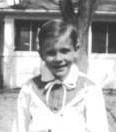
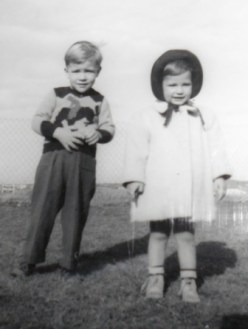
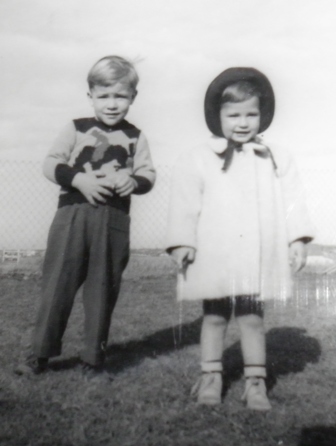
Even though he ended up angry, abusive, demanding, it wasn’t always so. He’d been in my life from the moment I was born, and I’d looked up to him. I remember him as a radiant and charming child. A brilliant youth. A teenager who refused to let himself be beaten (with a belt, no less) into submission. A young man who felt at home no matter where he roamed. A middle-aged man who struggled with problems greater than his ability to solve.

I thought I wanted him out of my life, and I do. For the past fifteen months, he hounded me relentlessly, wanting more from me than I could ever have given him, though to be honest, I’m not exactly sure what he wanted. He settled for a place to camp in the garage and an occasional bag of groceries, but I knew that wasn’t enough. (As much as I hate to admit it, I can’t even solve my own problems, let alone his.)

At the end of the road in Colorado, as he stood there by the car drinking his bribe and exchanging a last few words, I mentioned that he always wanted one more thing from me but he never gave me anything.

“Yes, I did,” he responded. “I pricked your conscience.”

I didn’t think of that remark again until this morning when I got out of a safe and comfortable bed and remembered his saying he needed to find a place to camp by the railroad tracks. I flushed the toilet and remembered that he had to find a place to relieve himself out in the open. I took a cold drink from the refrigerator and remembered that his beverages could only be the temperature of the outside world. I fixed something to eat and remembered the dumpster he pulled his dinner from last night. I drove to the store and remembered how painful it was for him to walk because of his sciatica.

He used to scream, “You’re living like a millionaire while I have to live like a dog, and you don’t even appreciate it.” I always responded that millionaires didn’t have people knocking on their windows for attention dozens of times a night. But the truth is, he is right. I am living like a millionaire — warm bed, hot food, cold drinks, pristine toilet, kitchen, safety, comfort, and friends who care about me.

So thank you, all of you. You mean more to me than you will ever know.

***

Pat Bertram is the author of the suspense novels Light Bringer, More Deaths Than One, A Spark of Heavenly Fire, and Daughter Am I. Bertram is also the author of Grief: The Great Yearning, “an exquisite book, wrenching to read, and at the same time full of profound truths.” Connect with Pat on Google+. Like Pat on Facebook.
1000 Miles of Tears

tomWe coerced my dysfunctional, alcoholic brother into going back to Colorado. He’d kicked in the door between the house and the garage, and we had the cops threaten to put him in jail if he didn’t leave. We packed his stuff, didn’t even let him take the time to do it himself. I drove off at one o’clock in the morning, and drove straight through. It was a horrible, horrifying, and heartbreaking trip, even worse than I feared. But we got there safely, though I have several painful bruises that he had no memory of inflicting. (He’d never hit me before, though I had hit him, I’m ashamed to admit. I’m not violent, and hadn’t hit anyone since childhood until he came here with his multiple problems and no sense of boundaries.)

When we arrived, I spent the night in a motel. He slept in the car, but he was able to get a shower and put on clean clothes that morning. We unloaded his stuff and packed it in his storage unit (a unit that he may or may not still have access to. The owner said he wasn’t to go there any more, though my brother has a note from the owner’s wife that he has access every morning). Then we drove around, doing “just one more thing,” “just five more minutes,” “just one more stop.” My brother always pushes things, and that “one more thing” ended up being several hours of driving around. During the last couple of hours, he refused to leave the car. He was afraid of being homeless again. He begged me to get a motel room so he could get one more night of civilization and a shower. I refused. (I’d promised to get him a motel room for a week, but there is a law in that town that no one can rent a room for another person. The homeless shelter is pitifully under-bedded, and there was no mental health place to leave him.) I knew that staying a second night would result in another day of “just one more stop”s.

In the end, I had to bribe him with the promise of a six-pack of beer to get him to leave the car. After I bought the beer, he wanted us to go get something to eat, but I was tired. Sick of the whole mess. Had no appetite. Just wanted to leave.

We talked for a while, then he told me I shouldn’t drive far before getting a room, that he was worried about my falling asleep. This concern for me, the first he had shown in the fourteen months we were together, broke me. I started to cry. Then he told me several sights I should be sure to see, and I cried harder. “Do you think this is a fun trip for me?” I said. “It’s killing me. I don’t want to leave you here on the streets.” (Sort of egotistic of me, isn’t it, to expect him to care about my feelings when he was the one being abandoned?) He touched my hand, and my tears dripped like a desert rain. He expressed surprise that I cared, and I explained that of course I cared. I’d spent the past fourteen months trying to keep him off the streets, which is why I’d lobbied for his camping out in the garage.

I really had no other choice but to take him to Colorado. My father needed my sister to help take care of him since I couldn’t do it by myself, and her presence escalated my brother’s psychoses beyond anything I could handle. Besides, if my father continues to decline, my brother would have to leave soon any way. (Or so I told myself to justify my actions.)

I reached out for my brother’s hand, needing that one final touch, but he turned and walked away, tears of his own in his eyes.

I expected to be relieved when I finally drove off, but my tears continued to fall. I cried the entire 1000 miles back, thinking that as abusive as he’d been, he was my brother.  (“Was,” not “is,” as if he’d died or were about to die.) You’ll be horrified to learn that I drove straight back with but a two-hour stopover at a rest area. I didn’t see the point of getting a room for the night because I wouldn’t sleep, and besides, it felt wrong since he would be sleeping outside by the railroad tracks.

My bruises tell me I did the right thing, and yet I know that every time I go into the garage, I will be reminded of my brother living on the streets, reminded that I didn’t even stay to have a final meal with him.

Not my finest hour.

***

Pat Bertram is the author of the suspense novels Light Bringer, More Deaths Than One, A Spark of Heavenly Fire, and Daughter Am I. Bertram is also the author of Grief: The Great Yearning, “an exquisite book, wrenching to read, and at the same time full of profound truths.” Connect with Pat on Google+. Like Pat on Facebook.


Help Please!

I am driving my brother to Colorado.  We left just after midnight (too long a story to tell pecking out on my phone) and I am driving straight through. Am in Colorado now and need to drive across the state. This has been a horrifying and heartbreaking trip. To make things worse,  I’m not sure he’ll let me leave him here since he’s afraid of being on the streets again.

If you are prayerful, please say a prayer for both of us. If not, please send good thoughts and wishes for . . . I don’t know. Maybe for  courage.

A House of Ghosts

An online friend, someone who only knows me through my blog posts, emails, and projects we have worked on together, made an astute remark.

She said, in response to my blog about the double rainbow, “I do think you are more perceptible to the outside world and that life is moving forward when you get out of the house. You won’t find any possibilities in the house — you have to be able to get out when you can.” I found that comment interesting because I hadn’t noticed the deadness of this the house until the last few days. It’s always been a place of dying and grief, paranoia and imprisonment. I first visited this house to help with my dying mother. I came to stay after the death of my life mate/soul mate to help my elderly father and to get through my shockingly painful grief. For the first three years I was here, my father would set the burglar alarm around 7:00pm and he didn’t give me the alarm code, so I was basically a prisoner of his paranoia, and now my brother is making me a prisoner of his paranoia and psychoses.

ThiStarss deadness was especially apparent to me this morning. I went to pick up a rental vehicle to take my brother back to Colorado (a foolish waste of money, since he insists he doesn’t have time to get ready) and while I was sitting in that sparse office, I could feel my spirits rise. Since my brother refuses to go tomorrow, that means I have the vehicle for my own use, and I could go . . . wherever. During the long ride back here, I felt that optimism, and even after a confrontation with my brother, who claimed the SUV was too small, he couldn’t be ready, and various other ranting objections, I kept that feeling of optimism. But now that I’ve been back in the house a couple of hours, I feel the cement hardening around my feet and my heart, and I can barely muster the energy to . . . well, to do anything.

I never had much belief in ghosts, but this place does seem haunted, if only by my own unhappiness.

I don’t really have anywhere I want to go, but I think I’ll head out on the highway for a couple of hours, and see what I can see — maybe some stars. It’s supposed to be a good night for stargazing.

***

Pat Bertram is the author of the suspense novels Light Bringer, More Deaths Than One, A Spark of Heavenly Fire, and Daughter Am I. Bertram is also the author of Grief: The Great Yearning, “an exquisite book, wrenching to read, and at the same time full of profound truths.” Connect with Pat on Google+. Like Pat on Facebook.

Crazy?

I wonder if it’s possible to be crazy and not know it. I think I am a caring person, but considering all the arguments I’ve been getting in lately with my siblings, I’m beginning to wonder if I’m the one who isn’t tracking on all synapses.

I don’t, of course, really think I’m crazy, evil, manipulative, contrary, witchy, or any of the other things people have accused me of being recently, but I have to concede the possibility. My theory has always been that people project their own characteristics onto others, and so whatever people tell me I am, it gives me an idea of who they are. And yet . . . how well do we really know ourselves?

witchI’ve been polling people to see if they think I could be certifiable, and of course, my friends think I’m wonderful. But family is something else again.

I’ve been trying to get my problem brother back to Colorado because the sister who has come to help with my father insists that he goes or she goes. I cannot take care of the elderly man by myself, and so I am conceding to her wishes that my brother leaves. Most of my family want him gone, not just out of this house but out of their lives. Some think he is the source of all the contention in the family, and perhaps it’s true. It’s also possible my brother holds us together because he is the universal scapegoat.

None of my siblings care that he is being forced back onto the street in this hellishly hot place. But I do. I know there will never be a good place for him, not here, not anywhere, but he should at least be with his things that are stored in Colorado. But he is resisting my efforts — he thinks I am manipulative and only want to see him dead.

I am under a deadline (not the lethal kind) to get him out of here before my sister puts a restraining order in place with the help of a social worker, and yet she claims I want him out of here for me, not her. I don’t get how she thinks, and so I wonder if I’m crazy. I suppose getting him back to Colorado is for me in a way — I cannot bear to simply throw him out like so much garbage. Despite his nastiness, schizophrenia, alcoholism, he is a person. Are we only to try to help those who are worthy of our help? I am tired of his abuse, but after fourteen months, I can wait another week or two or three. But she can’t.

And so tomorrow I pick up a rental car big enough for him and his stuff, though I have no real hope of his ever making the effort to finish packing and letting me take him to the cooler (yet no more comforting) streets of northern Colorado. It will be wasted money, and I will find no comfort in the thought that at least I tried.

***

Pat Bertram is the author of the suspense novels Light Bringer, More Deaths Than One, A Spark of Heavenly Fire, and Daughter Am I. Bertram is also the author of Grief: The Great Yearning, “an exquisite book, wrenching to read, and at the same time full of profound truths.” Connect with Pat on Google+. Like Pat on Facebook.

Grief Update: Four Years and Four Months

It’s been four years and four months since Jeff — my life mate/soul mate — died. These have been rough years, first dealing with the heartbreak of his death, then dealing with the agony and the void of his being gone, now dealing with the trauma and drama of my father’s dying, my brother’s dysfunction, my sister’s presence.

I’ve shed a few tears today, but I don’t think they are for my lost love. They seem more self-pitying than that, perhaps tears of exhaustion from trying to rectify a situation I cannot settle — everyone is pushing/pulling me, and it’s impossible to resolve the matter in any way that will satisfy or even half-satisfy everyone. Despite my efforts to help, I know that there is no resolution. Even if it’s not this week, my father’s end is nigh. Even if it’s not this week, my homeless brother will be forced back onto the streets. Even if it’s not this week, my sister will still have to deal with whatever comes, as will I.

The truth is, I can barely remember my life with Jeff. It’s so far away in time, place, emotion, that his being gone seems to have no impact any more, and yet his death defines my life. If he hadn’t died, I wouldn’t be here in this house of horrors, wouldn’t have gone through unimaginable grief, wouldn’t be drifting in this transitional state, waiting for my “real” life to begin. (Silly to think that — as John Lennon supposedly said, “life is what happens while you are busy making other plans.” On the other hand, it’s horrific to think that this is my life. Ouch.)

If he hadn’t died, I wouldn’t have wondered for thousands of hours in the desert. (I meant wandered, of course, but I’m leaving the typo because it is actually truer than what I’d intended to write. I did wonder as I wandered. Wondered about life, death, his current whereabouts, my future, the meaning of it all.) If he hadn’t died, I wouldn’t have made so many wonderful friends. Wouldn’t have found dance (my redemption, my joy, my life).

I miss Jeff, but it’s with the dull ache of a half-remembered dream. I know he was real — he was the most real person I ever met — and yet, though he used to be “my North, my South, my East and West, / My working week and my Sunday rest, / My noon, my midnight, my talk, my song,” he no longer has any substantial reality in my life. I talked to him when I was out walking in the desert today, but I had no feeling of connection. It was just me, the heat, the restless air, the sandy soil, the oppressive low-lying clouds, and perhaps a lizard or two.

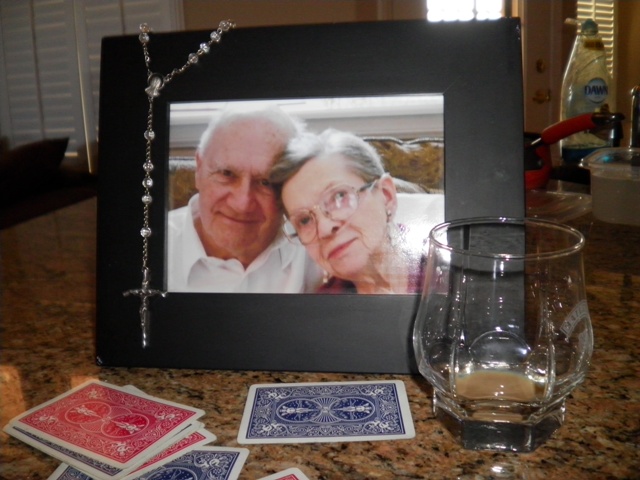
I keep a photo of Jeff — the one photo I have — where I can see it to remind me that this was not always my life. Once I loved deeply, so deeply that I still felt shattered years after his death, so deeply that I could only scream the pain of my loss to the uncaring winds.

I still have his ashes, but one day soon I will have to figure out what to do with them. When my father is gone, I’m going to have to put my stuff in storage, and though there is nothing left of Jeff in his “cremains,” I cannot see storing them as if they were just more detritus of my life. And I still have many of Jeff’s things to dispose of, things that once I couldn’t bear to part with because he might need them. Now I know the truth — feel the truth — he will never need them. I will never be taking them home to him. I will never be going home to him. Will never talk with him again.

It’s been four years and four months and six days since Jeff and I talked. Tomorrow it will be four years and four months and seven days.

And so the days pass.

***

Pat Bertram is the author of the suspense novels Light Bringer, More Deaths Than One, A Spark of Heavenly Fire, and Daughter Am I. Bertram is also the author of Grief: The Great Yearning, “an exquisite book, wrenching to read, and at the same time full of profound truths.” Connect with Pat on Google+. Like Pat on Facebook.