Walk Away From All The Drama And People Who Create It?

I find it interesting that the day after I wrote about trying to disconnect emotionally from my brother, I found this quote by José N. Harris from his book Mi Vida: A Story of Faith, Hope and Love posted all over Facebook:

“There comes a time in your life, when you walk away from all the drama and people who create it. You surround yourself with people who make you laugh. Forget the bad, and focus on the good. Love the people who treat you right, pray for the ones who don’t. Life is too short to be anything but happy. Falling down is a part of life, getting back up is living.”

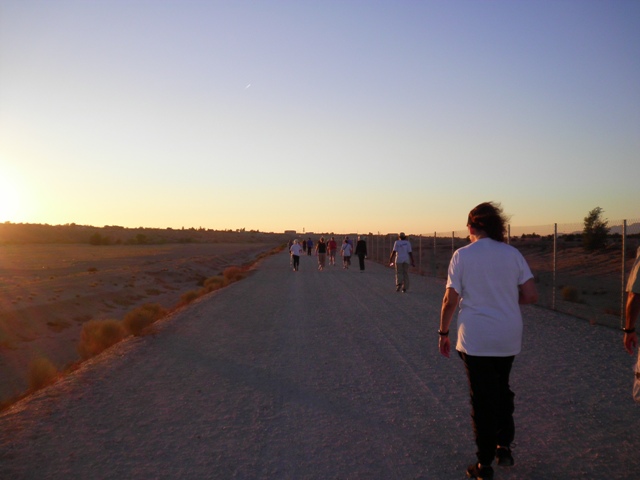
Sierra Club conditioning walkIt sounds wonderful — just walk away from everything bad in your life and be happy. Maybe it works for some people, but I have never been able to do it. I couldn’t walk away from the end of life drama when my mother was dying, and believe me, there was plenty of drama. (At one point I did walk out, but there were others around to take care of her, and I did eventually go back.) I didn’t walk away from the end of life drama when my life mate/soul mate was dying. I just sort of folded into myself and endured the horror of his long illness as best as I could. I can’t walk away from the drama of my father’s old age. Even though he is but a month shy of his 97th birthday and is growing feeble and hard of hearing, he is as strong willed as ever, and that in itself creates drama. Nor can I walk away from my brother, at least not yet. His problems and the drama that surrounds him are not in my power to solve, so after my father is gone and I am free to find whatever it is that I want to find, I will probably drive away and not look back.

Still, for now, I am learning a lot from all this drama. Compassion. Patience. Understanding — specifically, how to put aside my idea of what someone needs and try to understand what they truly need.

In my brother’s case, some needs are simple, such as showers. Although he is homeless, he is fastidious. He’d planned to camp out in the wilderness, but there are no showers in the desert. (It makes me wonder if, in all the rhetoric of helping the homeless, anyone ever went and asked them what they needed. I bet whatever it is they need, it isn’t what the politicians think it is.) My father doesn’t want my brother in the house, but I sneak him in two or three days a week to take a shower. It seems the humane thing to do. And I’m sure my father wouldn’t object if he knew after the fact. He just doesn’t want to have to deal with my brother’s dramas.

Other of my brother’s needs are beyond my comprehension because they are not my needs. And like all of us, he is a mass of contradictions that make him even more incomprehensible. He has no objection to eating pizza from a dumpster, for example, but he won’t eat anything I have touched.

I have walked away from the drama that erstwhile friends created, since they no longer added anything to my life, but is it admirable to walk away from everything that is bad in one’s life? Sometimes I feel like just taking off, leaving my father and brother to fend for themselves, and yet, and yet . . .

Perhaps I am where I am supposed to be. Perhaps I still have lessons to learn, such as how to be happy and at peace even when all around me is a storm of chaos. Perhaps I can make their lives better, even if in a small way.

And then again, maybe I’m fooling myself. But if I am, would I know?

***

Pat Bertram is the author of the suspense novels Light Bringer, More Deaths Than One, A Spark of Heavenly Fire, and Daughter Am I. Bertram is also the author of Grief: The Great Yearning, “an exquisite book, wrenching to read, and at the same time full of profound truths.” Follow Pat on Google+. Like Pat on Facebook.

Applying the Lessons of Grief

Yesterday I talked about disconnecting yourself from a defunct relationship, one where there is no hope of ever reconciling and yet you still feel a sense of connection to your loved one. I said:

To a certain extent, time disconnects us from our past relationships — the longer we are separated, unless we cling hold on to the past, the weaker the connection. Simply living helps us disconnect — the more we live, the more new, unshared memories we make, the more the connection recedes. Going back to where we were before we made the original connection also helps.

This was good advice as far as it goes. My situation was the opposite. After the death of my life mate/soul mate, I couldn’t feel any sort of connection, just a vast emptiness where he used to be, a terrible goneness. Time didn’t make any difference, at least not by itself. The truth is, if we don’t do what we can to heal those wounds ourselves, time doesn’t do much of anything except perhaps offer a different perspective. As Rose Kennedy wrote, “It has been said, ‘time heals all wounds.’ I do not agree. The wounds remain. In time, the mind, protecting its sanity, covers them with scar tissue and the pain lessens. But it is never gone.”

In my case, the person I needed to disconnect from was . . . me. The coupled me. My shared life was defunct, so I did what I could to develop memories of my new life alone. Since I can’t physically go back to where I was, I’ve tried to go there mentally. Remembering who I was before him has helped tremendously in moving past him. I had a life before our shared life, and I have one afterward — it’s just a matter of connecting those two lives with the best of both. and to pick up the pieces of me when I was alone.

My problem now is that I need to disconnect from another person, one with whom I have an ongoing relationship, and I don’t know how to do it, don’t know if it’s possible or even if it’s even a charitable thing to do.

A have a problematic sibling who is depressed, possibly bi-polar, probably an alcoholic, verbally abusive, full of fury, manipulative, desperately needy, and relentless in pursuit those needs. (He’s also brilliant and exceedingly creative, and spent most of his life composing music and writing songs that have never been sung.) He has been nearby for several months, and therein lies the problem since his anger now seems to be focused on me. (He thinks I have it easy being here looking after my father, and doesn’t see how stressful it is being torn between the two of them, as I have been my whole life.) If I could find out what he wanted, perhaps I could help, but he ischange cagy (paranoid is more like it) and talks around his needs. (He hates being a charity case, hates when people do things for him, and hates even more when people don’t.) He won’t go for treatment, blames everyone else for his problems, and doesn’t know how to take care of himself. Mostly, it seems as if he is lost inside a whirlwind of unfocused energy.

I’m trying to disconnect mentally from him so that his words don’t wound. I’m trying to disconnect emotionally from his problems, because I can’t see the situation clearly if I am bleeding for him. I’m trying to disconnect from his anger, because if I don’t, I absorb that anger and . . . well, let’s just say I don’t want to spend the rest of my life in prison for manslaughter.

I do okay most of the time, juggling his needs and my father’s. Physical activity and outings with friends help dissipate my stress, and if those don’t work, short bursts of tears do. I can’t go back to where I was before he came into my life, because he has always been there. I used to think I’d never be free until he was dead, and maybe that’s true, but it’s not how I want to live my life — wishing someone were dead so I could live free. What I really wish, though, is that he were strong, healthy, happy, and somewhere else.

I am taking the lessons I learned from grief and applying them to this situation as well as I can. Despite our shared genetics, I tell myself he is a separate person with his own journey. (I wrote “his own demons” but replaced it with “journey” since I know nothing about demons, not even the euphemistic kind.) He is not me. His anger is not mine. Just because he says something, his words don’t make it so. His problems are not of my making, even though he likes to tell me they are. My solutions are not necessarily his solutions.

Although I’ve talked around this situation before, alluding to a family problem with roots going back to childhood, I haven’t talked specifically about it out of loyalty to him. But blogging is the best way I have of putting things into perspective, and my writing about this situation now is a way of distancing myself from him even further, since I know how irate he would be to have me mentioning him. But as Anne Lamott said, “You own everything that happened to you. Tell your stories. If people wanted you to write warmly about them, they should’ve behaved better.”

***

Pat Bertram is the author of the suspense novels Light Bringer, More Deaths Than One, A Spark of Heavenly Fire, and Daughter Am I. Bertram is also the author of Grief: The Great Yearning, “an exquisite book, wrenching to read, and at the same time full of profound truths.” Follow Pat on Google+. Like Pat on Facebook.

Online Dating: Shopping For Men

You can shop for anything on the internet nowadays, even a relationship. In the pre-electronic days, you met someone, fell in love, and hoped that your lifestyles, wants, and needs would somehow mesh or that you’d be able to compromise enough to find a mutually satisfying life. With online dating, you can bypass all that and look for someone to fit your lifestyle.

massesThe problem with shopping for a relationship when you are no longer young is that not only do you already have a lifestyle that works for you, you also have a lot of baggage — family, children, pets, and especially highly individual and possibly eccentric opinions or preferences. These things are a problem even if you’re not looking for a serious relationship.

In my case, I don’t have much baggage except for my 97-year-old father, but I do have a lot of crotchets. I cannot tolerate smokers (I am allergic to smoke.) Unpleasant odors make me nauseous. I have never owned either a pair of high heels or jeans. (This normally wouldn’t be an issue, but a surprising number of men want women who are as comfortable in heels as they are in jeans.) And I’m not fond of dogs. (There, I said it. It’s probably un-American, but it’s the truth.)

Even more problematic are all my dichotomies. Like most women, I appreciate men who make me laugh, but I seldom find self-professed funny guys to be funny. I have no interest in discussing politics — most men who discuss such things seem naïve at best, boring at worst — and yet I like people who look beyond themselves.  I like people who can write or at least express themselves well, but I don’t necessarily like writers. (But of course, I would never correct bad grammar. A friend once sent a love letter to her fiancé oversees, and he returned it with corrections in red. They still got married, but it didn’t last long.) I like people who are intelligent and think of more than their motorcycles or other toys, but I don’t particularly want to have deep conversations with them. I don’t like perfectly toned people (I actually find six-packs unattractive, which isn’t a problem since so few men of my age — or any age — have them), but I don’t like huge bellies, either.

Worst of all, when I am with someone, I like to be the center of their attention (and make them the center of my attention). I don’t like competing with pets and children, phones and televisions. This might seem selfish of me, but it’s not much of a relationship if one of the people can’t find time to pay attention to the other. The problem is that it’s almost impossible any more to find people who can focus their attention, and I don’t want to waste a minute of my life dumbly watching my companion having a relationship with a smartphone.

I suppose it’s no surprise that I’m sitting here alone tonight, but the truth is, I’m way past the stage of wanting to compromise. One woman I know who joined a dating site at an advanced aged could only get dates if she downplayed her intelligence, lopped a few years off her age, and posted a younger photo of herself. (Sheesh. We haven’t come far at all if women still have to play the “stupid” game to keep from intimidating the men.)

I suppose, if I really wanted to meet someone, I could fudge my statistics, but I am what I am, or rather, what I am becoming, and there’s no reason to hide it.

Besides, I don’t particularly like shopping for anything on the internet.

***

Pat Bertram is the author of the suspense novels Light Bringer, More Deaths Than One, A Spark of Heavenly Fire, and Daughter Am I. Bertram is also the author of Grief: The Great Yearning, “an exquisite book, wrenching to read, and at the same time full of profound truths.” Connect with Pat on Google+. Like Pat on Facebook.
Wise Women of Cyberspace

I’ve met many wise and wonderful women online while struggling to find my way through grief, women who gave me the courage to do what was necessary — accept the pain, feel each emotion as it arose, and somehow find a way to live with it. One such woman and I would talk on Facebook about grief now and again — she was three years ahead of me in the process, and had found a new direction in her life, which gave me hope that someday, I too, would manage to find peace and even renewed life.

She posted one of her comments from our conversation on her blog today, Patience, Wallowing and Defragmentation, and explained how the lessons she learned while dealing with grief have helped her in dealing with health issues.

The conversation she referred to in her blog took place two years ago, but that wasn’t the end of our discussions. Just a couple of months ago I wrote: “It is sinking in that I couldn’t make him well when he was alive, and I can’t keep him with me now that he’s dead. As much as I hate his being dead, in a way, it has nothing to do with me.”

She responded:”That’s the toughest part — realizing that their death has nothing to do with us and that we are all, while connected through a web of energy, uniquely created beings following our own individual path. Regardless of how connected we are to some people in some ways, their path is theirs and ours is ours.”

It’s this knowledge that his death belongs to him and my life belongs to me that has helped me move beyond my mourning. My grief for him cannot make him alive once more, cannot change one facet of his life or his death. Of course, I had little choice in my grief — it came from somewhere so deep inside that I’d never know such a place existed. Grief still wells up on its own now and again, but I don’t try to hold on to it, don’t try to hold on to the past, don’t try to hold on to him. And perhaps, that takes the most courage of all — letting him go.

Lucky for me, I had such a wise woman giving me counsel.

***

Pat Bertram is the author of the suspense novels Light Bringer, More Deaths Than One, A Spark of Heavenly Fire, and Daughter Am I. Bertram is also the author of Grief: The Great Yearning, “an exquisite book, wrenching to read, and at the same time full of profound truths.” Connect with Pat on Google+. Like Pat on Facebook.

Look Out Life, Here I Come!

I gave up dating when I was nineteen. It was too much like trying to slog my way through a pool of molasses without any of the sweetness to make the experience palatable. I remember once the boy took me to a nice restaurant, and then sat there like a lump. Perhaps he figured that since he was paying for the meal I had to entertain him, but if I said something, his eyes would glaze over or he’d shift his gaze away to look at anything but me. If I asked a question about him, he’d respond in as few words as possible, then lapse into shifty silence again. It was like dropping a pebble into the sand. No ripples of conversation. Just a few dull words plunked on the table between us. If it was only him this happened with, I might not have been so quick to exit the dating scene, but it was typical of ripplesall my dates. Which was okay. I didn’t want to fall in love, didn’t want to spend my life with anyone, didn’t want to be tied down.

Because of this dating experience, my meeting Jeff — the man I would spend thirty-four years of my life with — came as a total shock. I stopped into his health food store one day and happened to drop a few verbal pebbles. He took those pebbles, skimmed them across the space between us, creating ripples galore. Then he tossed more pebbles into the conversational waters while I was skimming those pebbles back to him. All those ripples caused a tide pool that kept me connected to him until he died. (I was an hour late for work that day we met, and when I told my boss and co-workers why, they laughed, thinking I was making a joke since they knew my history with the opposite sex.)

For the past few months, a friend has been trying to talk me into joining an online dating site, and I finally succumbed. I don’t want another lifelong relationship. I don’t even want to fall in love. But it would be nice to have someone to do things with. Go out to lunch once in a while. Maybe go bowling or to the beach. Something.

My friend has been finding matches for me, so I’ve been writing to her choices as well as the site’s matches. Only three people responded, and oh, man. Talk about regressing back to adolescence. Conversational pebbles plunking into the sand. No ripples. Just dead end thuds.

Don’t people know how to converse, in person or online? It’s simple. I say/write something, expressing an interest in you, then you say/write something, expressing an interest in me.

I wrote charming notes to dozens of prospects, referring to things they posted on their profiles and ending with a pertinent question to get the conversational ripples going. The three who responded answered the question in monosyllables, and that was it. When I responded to their response, I got even fewer syllables. No show of interest in me or in anything, actually.

One of the three claimed to be funny, to love jokes and all kinds of humor. I thought we might have a few laughs, but he found my attempt at humor insulting, and I found him pedantic. One guy claimed to love words, but when I offered a bit of word play and the link to a cool word site, he merely thanked me. Plunk.

I thought this would be hard because of my not being ready, but it’s hard in a way I never even imagined. Like reliving adolescence. Still, I didn’t really expect anything from the site. Signing up was mostly a symbolic way of throwing myself into the future. A way of saying, “Look out life, here I come!”

***

Pat Bertram is the author of the suspense novels Light Bringer, More Deaths Than One, A Spark of Heavenly Fire, and Daughter Am I. Bertram is also the author of Grief: The Great Yearning, “an exquisite book, wrenching to read, and at the same time full of profound truths.” Connect with Pat on Google+. Like Pat on Facebook.

Life After the Death of a Soul Mate

What I love most about blogging is that sometimes when I start writing a post, new or buried thoughts percolate to the surface, ending up on the page and surprising me with insights. Yesterday, when I wrote Living Offline, I had no idea I was starting to look forward to the rest of my life. I’ve kept my head down, plodding along, trying new things, meeting new people, visiting new places, and apparently, somewhere along the line, I went through a renewal of sorts.

Many people who had gone through a grievous loss have told me that it takes three to five years to find a renewed interest in life, and so it is with me. In just a few days, it will be three years and seven months since the death of my life mate/soul mate, and I find myself involved deeply in life, not just with such difficult matters as looking out for my 96-year-old father and dealing with problematic family members, but also with taking care of myself and my well-being.

Sierra Club conditioning walkI’m physically active, eat right, and have accidentally become part of an intelligent and talented coterie. I say “accidentally” because when I joined a group of walkers, I didn’t expect to end up going to art shows that feature members’ work, hearing one member in a choir of madrigal singers, and seeing others dance. Because of these people, I’ve also learned not to fear old age. Although people of all ages walk with us, some of the most active members could be considered elderly, but I can barely keep up with those in their seventies. I have no idea what life has is in store for me, of course, but I do know that getting older doesn’t necessarily mean getting feeble. It just takes a bit of luck and a lot of physical activity and mental stimulation.

Grief goes in cycles, so chances are I will still be experiencing occasional grief surges (especially on the weekends when I can’t feast on the endorphins and friendship of the group walk), but now I know the truth: there is life after the death of the person who connected you to the world. There is even laughter. Maybe even joy.

***

Pat Bertram is the author of the suspense novels Light Bringer, More Deaths Than One, A Spark of Heavenly Fire, and Daughter Am I. Bertram is also the author of Grief: The Great Yearning, “an exquisite book, wrenching to read, and at the same time full of profound truths.” Connect with Pat on Google+. Like Pat on Facebook.
It’s In the Cards

This is going to be a tough weekend for me, a convergence of people and events and influences from the past that I would just as soon not cope with. I wanted to run away but couldn’t find anywhere to run (except for a long solitary hike in the desert), and anyway, the situation has to be dealt with.

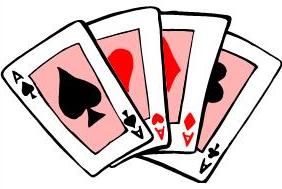
cardsNormally, I don’t put much faith in prognostications, but since I’ve been nervous about how I will handle the situation, I asked my sister to do a Tarot reading for me. (Strange, until recently, I didn’t even know she knew how to do a reading.)

Apparently, the cards say that I’m going to be fine. They say I have the strength and courage to do this, it’s something that needs to happen, and I have the skills and abilities to handle it. I hadn’t expected to feel anything but a vague amusement at the ways of the cards, but instead I felt relieved by the assurance that I’ll be able to handle what is coming. (I knew it anyway. I just got nervous.)

One odd thing — apparently, this weekend I will see myself as working with others, yet others will see me as being on a solitary quest. Something to think about.

If you’re interested, this is the layout of the cards, which seems to accurately describe the situation, my hopes and fears for the outcome. If you find a different, more disturbing meaning, I don’t want to know!

Celtic cross spread:

Card 1: The card in this position represents you. (VII Chariot): In control, confident, connected to the power of the world. Able to triumph over obstacles, achieve victory by focusing intent and will. Self-assured, assuming reins of power.

Card 2: The card in this position is about what the conflict is. (XV The Devil): This card is about losing independence, becoming enslaved, having limited options, feeling desolate, but choosing to stay in the dark. Needing to break free.

Card 3: This card represents the foundation or basis of the situation. (Ace of Wands): Having grounded energy and enough self-assurance to rise to the occasion; accept this as an opportunity, a challenge. The spark has been lit!

Card 4: Influences of the past affecting the situation. (Seven of Wands): Being trapped, in conflict, defending others against harm, evil. Having the strength and fortitude to take a stand, defend what you believe in. Having the faith and courage to face difficulties.

Card 5: What is likely to happen in the immediate future. (King of Swords): Contemplation, solitude, patience, wise understanding, compassion. Understanding that all aspects and needs of people must be balanced.

Card 6: The outcome you most desire. (Queen of Wands): Calm assured confident. Can handle anyone and anything- this is not arrogance, but understanding your skills and abilities. Dedicated, engaging, wanting peace, harmony.

Card 7: Your self-image, how you see yourself in this situation. (3 pentacles): Working with others, compromise, cooperation.

Card 8: Influence of those around you/ how others see you in this situation. (8 Cups): On a solitary quest. Relinquishing the material world to seek answers from the depths, the underworld. Maybe upsetting the balance in order to achieve something greater- a more lasting connection or peace.

Card 9: What you hope or fear the most. (4 cups): Getting lost in yourself, not belonging, loneliness, boredom. Being too self-absorbed, introspective, seeking too deep into own concerns, lost in reverie.

Card 10: Outcome. What is most likely to come of it all if nothing much changes between now and then. (3cups): Coming together, creating something together, celebration, friendship, relying on others. Some sense of community, working things out together.

***

Pat Bertram is the author of the suspense novels Light Bringer, More Deaths Than One, A Spark of Heavenly Fire, and Daughter Am I. Bertram is also the author of Grief: The Great Yearning, “an exquisite book, wrenching to read, and at the same time full of profound truths.” Connect with Pat on Google+. Like Pat on Facebook.

Do the Dead Miss Us?

I had an odd dream last night. The setting wasn’t very detailed — just a simple bed in the middle of an empty white room that my waking self doesn’t recognize. I was lying in the bed, the white sheet pulled up to my chest. My deceased life mate/soul mate walked into the room wearing only white underwear. I got the impression he was coming from somewhere else or someone else, and that we weren’t still together. He stopped by my feet, gave them an affectionate rub, then came around to the empty side of the bed. He bedlay on the bed on top of the sheet, cuddled up close to me, and said softly, “I miss you.”

I woke, and tears came to my eyes. I’ve been keeping myself busy lately, and haven’t been thinking about him much, and the dream reminded me how much I missed him. I lay in bed waiting for a full-blown grief upsurge, but after a minute or two, I simply went back to sleep.

This is the closest I’ve ever had to what I would consider a “visitation” dream, and it’s left wondering if it was some sort of real encounter.

In various updates about grief on this blog, I mention that I talk to him, and I always make a facetious remark about his silence, such as this comment in a letter to him I posted a few days ago: so far you’ve been mum about your situation. Just one more thing to hate—the silence of the grave. (Well, the silence of the funerary urn.)

Could the dream have been an attempt to contact me? I don’t really believe it, but still, this is the first of the handful of dreams I’ve had about him in the past three and a half years that ever mentioned how he might be feeling. Could it be that the dead miss us as much as we miss them? Could they be feeling as amputated as we do?

Whatever the truth of the dream, it adds one more facet to this strange and incomprehensible state we call grief.

***

Pat Bertram is the author of the suspense novels Light Bringer, More Deaths Than One, A Spark of Heavenly Fire, and Daughter Am I. Bertram is also the author of Grief: The Great Yearning, “an exquisite book, wrenching to read, and at the same time full of profound truths.” Connect with Pat on Google+. Like Pat on Facebook.

Are You Your Brother’s Keeper?

I went to lunch with a few friends today. One is dealing with an aged mother who seems to either be bipolar or downright evil, jealous of her own daughter and unable to say a single nice thing to her. Another woman had such a mother, and the mother’s death set her free.

desert knollsWhen it comes to a parent, I can see that perhaps you have no choice but to deal with her (or him) as best as you can, but how much responsibility does one grown sibling have for another? If the sibling has some sort of mood disorder (undiagnosed and untreated), are you obligated to put up with their invectives and haranguing? And if so, how do you deal with it without being destroyed in the process?

If the mood-disordered sibling is also homeless, are you obligated to give that sibling a home? If you’re not in a position to give the sibling a home, what then are you supposed to do? Is it ever okay to walk away and leave the sibling to deal with life as best as possible on the streets? What if the sibling is suffering  with once broken bones that were never set and other painful issues because of a lack of insurance? And what if the sibling is also an alcoholic? How much responsibility do you have then, especially if the sibling doesn’t want to hear anything you have to say and misinterprets even the smallest gesture of kindness, such as the offer of a bit of food?

Is one ever free from the situation? If you walk away, how do you keep your heart from breaking? If you stay in contact, being subjected to so much anger and hatred, how do you keep your spirit from breaking?

***

Pat Bertram is the author of the suspense novels Light Bringer, More Deaths Than One, A Spark of Heavenly Fire, and Daughter Am I. Bertram is also the author of Grief: The Great Yearning, “an exquisite book, wrenching to read, and at the same time full of profound truths.” Connect with Pat on Google+. Like Pat on Facebook.

In the Company of Married Women

I had lunch with some friends today, which would have been nice though not particularly significant if it weren’t that all the women were married. Since the death of my life mate/soul mate, most of my friends have been my fellow bereft — my sisters in sorrow — but gradually I’ve been meeting women who are still coupled. Today was the first time I found myself in the company of only married women.

I was actually okay — no tears — but it did make me sad to listen to these women talk about their husbands’ irritating qualities. Although I sympathized, I wanted to cry out to them to treasure every momenluncht, even the most exasperating incidences, because in the end, every moment spent with the person you love (or once loved) is a golden moment.

But I kept my mouth shut. Anything I said — even a gentle request to give their husbands an extra hug that night — would have seemed as if I were chastising them, and if my words didn’t strike such a note, I would still have turned the focus of the conversation from them and their comfortable confidences to me and my uncomfortable realities. Besides, until you have lost your mate, you simply cannot understand how precious every moment is. You’re caught up in the daily struggle to maintain your autonomy in the face of someone else’s wishes, the struggle to get all of the day’s chores finished, the struggle to find a harmonious balance between aging bodies and youthful spirits. You don’t have the energy to focus on distant tragedy.

So, I’m telling you what I would have liked to say to them. Smile at your mate instead of ignoring or arguing with him. Give him an extra hug and maybe a kiss. Thank whatever powers you believe in that no matter how irritating he might be, you have him for one more day. This is an incredible gift I am giving you — a memory to treasure if ever you should become one of us bereft.

***

Pat Bertram is the author of the suspense novels Light Bringer, More Deaths Than One, A Spark of Heavenly Fire, and Daughter Am I. Bertram is also the author of Grief: The Great Yearning, “an exquisite book, wrenching to read, and at the same time full of profound truths.” Connect with Pat on Google+. Like Pat on Facebook.



