Grief and the Empty Timeline of Death

Route 66My life mate/soul mate died 33 months ago. He was 63 at the time, a few months shy of his 64th birthday. Today, his mother called and during the conversation she mentioned that he would now be 66. This revelation stopped me in my mental tracks. 66?

During all these months, not once have I ever stopped to calculate what his age would have been had he lived. It felt as if time stopped when he died — not all time, just his time. And yet, his time continues. The timeline that began with his birth is still going on. When she mentioned his age, I got the mental image of a shadow of his ghost continuing to ride that timeline. Not him, not his spirit (because if he does still exist somewhere, he is outside of time) but simply the shadow of what might have been.

Normally such a thought would have swept me back into grief, but this image (at least for now) has me befuddled.

I’ve been thinking of him as 63 years old. As such, he is still older than I am, but I’ve been wondering how I will feel when I get to the age he was when he died, or later, when I grow older than he ever did. Will I feel foolish as a raddled 86-year-old, still yearning for such youthful-looking man? (The only photo I have of him was taken when he was not yet 50. And as my memories fade, that will be the only image I remember him by.)

And yet, there is his continuing timeline. What is growing older? Well, me, of course. I am aware that I will continue to age, but he will be forever a relatively young 63. Yet something — some shadow of him or his life — continues to grow older.

Or is his just an empty timeline now?

I spent most of last night learning how to use Microsoft Movie Maker and putting together a video blurb of Grief: The Great Yearning. The music piece was supposed to be thirty seconds, and it was, but there were also seven blank seconds on the end of the music clip, so that when the video finished playing, the timeline continued blankly for another seven seconds.

Perhaps it’s the coincidence of the two blank timelines that unsettles me, but I truly do not know how to grasp the concept of his empty timeline. He can’t continue to age, and yet his birthdays will come, year after year.

The emptiness of it all makes me want to weep; yet strangely, I am dry-eyed.

***

Pat Bertram is the author of the suspense novels Light Bringer, More Deaths Than One, A Spark of Heavenly Fire, and Daughter Am I. Bertram is also the author of Grief: The Great Yearning, “an exquisite book, wrenching to read, and at the same time full of profound truths.” Connect with Pat on Google+

Christmas Traditions by Default

????????????????????For people in my “grief age,” those who are coming up on the third anniversary of grief, this Christmas wasn’t as hard as the previous two. All firsts are hard but that first Christmas was doubly painful because we were still steeped in new grief. The second Christmas was hard because we were reminded once again that we are without the one person who connected us to the world and to our traditions, and it set off an upsurge of grief. This year was difficult in yet another way — not as sad as the first two, perhaps, but more bewildering. Our loved ones have been gone a long time, and life is starting to close the gap where they were ripped from our lives.

It doesn’t seem possible that life can go on without them. It doesn’t seem possible that we can go on without them. And yet, here we are. Another Christmas without.

My upsurges of grief the first two years took me by surprise. We didn’t celebrate Christmas, so there didn’t seem to be any reason for the holiday to affect me, and yet the day itself creates traditions even in those who don’t celebrate it. We couldn’t treat it like any other day because it’s a day out of the normal routine for most people in this country —- no mail deliveries, no businesses operating, few stores open. We usually spent the day just lounging around, watching our favorite movies, and eating finger foods (meat, cheese, fruit slices) — creating a tradition by default.

Yesterday, my grief was momentary and had nothing to do with Christmas, just one of those normal touches of sadness that I have come to accept as homage to him and our life together. I no longer feed my grief by holding tightly to thoughts of him. Such reminiscences don’t make me feel connected to him, don’t make me feel better about his being gone, so when the inevitable thoughts flow through my mind, creating sadness and bringing on tears, I let them pass. I used to worry that if I didn’t hold on to those thoughts that I was somehow negating him. If he only exists in memory, and I don’t remember him, then he is truly gone.

But he is gone from this earth whether I remember him or not. He is gone from my life whether I remember him or not. Nothing I do or think can ever change that. I still miss him. Always will. But as with yesterday, my missing him probably won’t have anything to do with Christmas memories or traditions, not even the tradition we created by default.

***

Pat Bertram is the author of the suspense novels Light Bringer, More Deaths Than One, A Spark of Heavenly Fire, and Daughter Am I. Bertram is also the author of Grief: The Great Yearning, “an exquisite book, wrenching to read, and at the same time full of profound truths.” Connect with Pat on Google+

1000 Days of Grief

S1000 days have passed since the death of my life mate/soul mate.
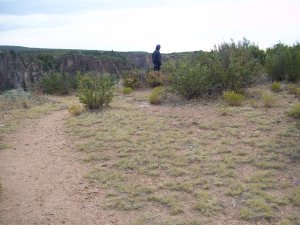
1000 days. An incomprehensible number. At the beginning, I could not imagine living one more hour let alone one more day in such pain. And yet now 1000 of those days have passed and I don’t know where they went or how I survived them.

Even more incomprehensible, while I remember being in absolute agony those early months, beset by panic attacks, gut spasms, loss of breath, inability to grip things and hundreds of other physical and emotional affects, there is an element of blank to the memories, as if it were someone else in such distress. I remember screaming to the winds, though I can’t exactly recall what it felt like to be so stressed that only screaming could relieve the pain. I remember feeling as if I would die if I did not hear his voice, see his smile, feel his arms around me one more time. I remember the horrible feeling of goneness I was left with, as if half my soul had been wrenched from my body leaving an immeasurable void, but now I am bewildered by it all. Was that really me — staid, stoic me — lost in such an emotional maelstrom?

Most incomprehensible of all, as recently as a month or two ago, I was still subject to occasional flashes of raw agony, but even those seem far removed now. I still have times of tears, and probably always will have. How could I not? Someone whose very breath meant more to me than my own is gone — gone where, I do not know. But I no longer feel as if half of me has been amputated. I am just me now, not a shattered, left-behind half of a couple. Or maybe I have simply become used to this new state, as if this is the way my life has always been.

I still hate that he’s dead, but I’m also aware that his death has set me free. I spent many years watching him waste away, numbing myself to his pain, waking every morning to the possibility that he hadn’t lasted the night, dreading the end, worrying if I were up to the task of fulfilling his final wishes. All that is gone now, though the feelings of dread and worry and doubt inexplicably lasted way into this third year of grief. I used to think that grief was his final gift to me — despite the angst and agony, I embraced grief like a friend. I knew instinctively it would take me where I needed to go.

But now I know freedom was his final gift, though it was as unwanted and as unasked for as the grief. I haven’t learned yet what to do with this freedom. Perhaps if I embrace it as I did my grief, it will also take me where I need to go.

I’m still so very sad, though I am more at peace than I have been for a long time. In fact, the same photo of him that was too painful for me even to peek at for more than eighteen months after his death, now sometimes makes me smile. It might take me the rest of my life to puzzle out the meaning of our shared life, our incredibly bond, his death — if in fact there is a meaning — but what I’m left with right now is the knowledge that for whatever reason, he shared his life with me. He shared his dying. And then he set me free.

***

Pat Bertram is the author of the suspense novels Light Bringer, More Deaths Than One, A Spark of Heavenly Fire, and Daughter Am I. Bertram is also the author of Grief: The Great Yearning, “an exquisite book, wrenching to read, and at the same time full of profound truths.” Connect with Pat on Google+

Celebrating Life and Offbeat Occasions

photobI like to celebrate offbeat occasions, or at least acknowledge them. For example, I celebrate the anniversary of my connection to the internet with a sacrifice to the online gods to ensure the safety of my travels in cyberspace. In other words, that’s the day I renew my virus protection. It’s also the day I celebrate the birthday of my online persona, “Pat Bertram.” (The persona I established then has now become the real me. Odd that. The name, of course, has always mine, or at least a version of it.)

And just few days ago I celebrated my father’s 35,000th day.

Years before these celebrations were other offbeat parties. One of the most fun was the long ago day my best friend and I had a birthday party for a tree. There is (or was, anyway. I don’t know if it is still there) a stunning elm in the corner of Denver’s City Park at Colorado Boulevard and Seventeenth Street. A plaque beneath the tree said “Shakespeare Elm: The scion from which this tree was grown was taken from the tree at Shakespeare’s grave at Stratford-on-Avon.” The plaque also noted that the tree was planted on April 23, 1916, which is exactly 300 years after Shakespeare’s birthday. (April 23, 1616).

How could such a momentous occasion not be celebrated? So my friend and I baked elm tree cookies, made a “pin the leaf on the tree” game, stirred up gallons of green punch, even baked a tree shaped cake with candles. We sent hundreds of invitations to friends, family, Denver notables, the media, but on April 23, only family and friends showed up. And two cops.

The cops stood apart from all of us, though they did nibble on cookies and take tentative sips of punch. At one point, one of the cops turned to the other and said in amazement, “They really are having a birthday party for this tree.” Apparently they had been dispatched to the site in case we were staging a drug rendezvous or some such. As it turns out, it was lucky that no one showed up. Since it ended up being simply a family picnic, we weren’t fined for putting on a public event without a license. Whew!

Another idea my friend and I had was for a restaurant in the mountains. I don’t remember much of those elaborate plans, but I do remember that the menu was going to feature Alferd Packer pancakes and democratic sausages. That still cracks me up.

Well, life had its own plans, and when we grew up, it flung us separate ways. Over the years I looked for her, but it wasn’t until recently, thanks to the internet, that we reconnected. (See why I celebrate my connection day? What a wondrous thing the internet is!) And now we are planning to meet in person next year.

I wonder if she still has that creative mind and wacky sense of fun? I wonder if I do?

At the very least, it should be a great celebration.

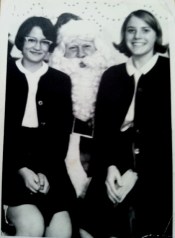
(BTW, I am on the left in the photo. My friend is on the right.)

***

Pat Bertram is the author of the suspense novels Light Bringer, More Deaths Than One, A Spark of Heavenly Fire, and Daughter Am I. Bertram is also the author of Grief: The Great Yearning, “an exquisite book, wrenching to read, and at the same time full of profound truths.” Connect with Pat on Google+

In Memory of My Mother

021 copyMy mother died  five years ago today, almost exactly a year after my brother. (This is the last photo of the two of them together.) To understand the sly humor rather than the pathos behind that sentence, I’ll have to tell you a bit about my mother. She spoke with perfect diction, in unstilted, unaccented English, and she loved words and word games, especially the kind of game where you take a word or phrase and find as many smaller words as possible. For example: in “almost exactly,” you can find most, call, cell, yell, exact, alas, and so on (Me? I hate that game, perhaps because I could never win when I played with her.).

It came as a shock to me when I realized as an adult that my mother was a first generation American who grew up speaking a language other than English. I always knew that, of course, but as a child you accept your mother for who she is without seeing her in the broader context of life. We often think of first generation Americans as people who have a rough time speaking English (or who speak rough English), but neither she nor any of her siblings had a hint of that other language in their voices.

She raised her family with a respect for language. No slang at our house. No “ain’t” or “we got no” or any other example of language slippage. My parents were strict, and we children seldom talked back,  but there was one thing we all argued about with Mother: “almost exactly.” She claimed “exactly” had no degrees. A thing was either exact or almost. The rest of us knew the truth: there is a world of difference between almost and exact. (My brother who is gone was the one who argued most vociferously with her, but of course, he argued vociferously with everyone. He was a bull of a boy and then a man, but never a bully, just strong and adamant about his beliefs.)

Though occasionally I use “almost exactly” in speech, I try not to use it in my writing. It’s one thing to use such a construction when talking and something else entirely to commit it to the permanency of writing, and I don’t want to meet her on a cloud in some afterlife and have her start in on that old argument with me again.

On the other hand, it might be nice.

***

Pat Bertram is the author of the suspense novels Light Bringer, More Deaths Than One, A Spark of Heavenly Fire, and Daughter Am I. Bertram is also the author of Grief: The Great Yearning, “an exquisite book, wrenching to read, and at the same time full of profound truths.” Connect with Pat on Google+

The One and Only 35,000-Day Celebration

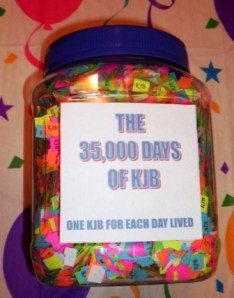
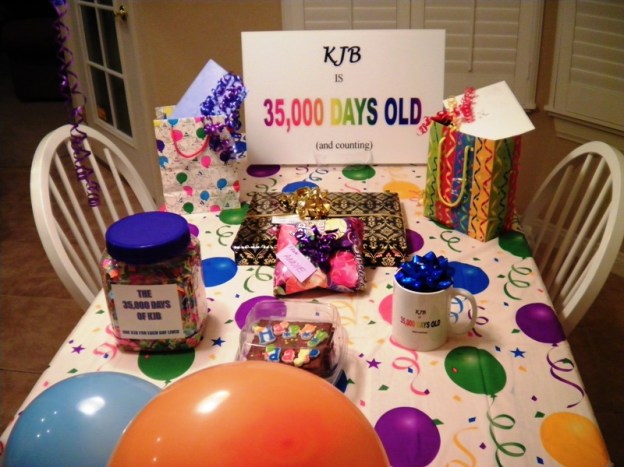
In a previous post, I talked what I could do to celebrate my father’s 35,000th day because truly, such an astonishing number should not go unacknowledged. I finally decided on 35,000 KJBs (his initials), one to represent each of his days. Took me twelve hours to cut them out, but it was worth it to see a visual representation of all those days.

S

Other gifts were 35,000 “I love you”s from my sister, and 35,000 sequins to add sparkle to the day from my brother. (I covet those sequins. They are all different shapes and sizes, such as butterflies, flowers, stars, and teardrops, and definitely should add plenty of sparkle to . . . whatever. Any suggestions?)

More than anything, I got a kick out of making a deal over the day. I mean, really . . . how many 35,000-day celebrations have you attended? I have a hunch this was the one and only such party.

party


If you’d like to know how many days old you are, you can calculate it here: Decimal Birthday.

***

Pat Bertram is the author of the suspense novels Light Bringer, More Deaths Than One, A Spark of Heavenly Fire, and Daughter Am I. Bertram is also the author of Grief: The Great Yearning, “an exquisite book, wrenching to read, and at the same time full of profound truths.” Connect with Pat on Google+

Living Each Day We Are Given

SI’m noticing a change in my attitude lately — more cynical perhaps, and at the same time more optimistic about the future. This change showed itself to me in my reaction to a news story that is going around about a couple who holds the record for the longest marriage — 86 years. The story purported to tell the secrets of how they stayed together for so long, and my first thought was, “Because one of them didn’t die.” No matter how much they love each other, no matter how well they get along, if one of them had died, that would have been the end of their being together.

Immediately following my cynical thought was a moment of horror at the idea of being stuck in the same sort of life for all those years. She married very young, so what did she know of life (or herself) before making her vows? And she’ll never have a chance of exploring what she could have been on her own. The universal reaction to the story seemed to be “Oh, how sweet,” so the horror I felt must not reflect their situation but my own changing attitude.

My soul mate and I always thought we would die together since our bond was so strong, and yet, here I am and he is not. The pain of our separation was almost more than I could bear at times, and in fact, sometimes the only way I could get through another minute of continued life was to scream my pain into the wind.

Now, as I pass through to the other side of grief, continuing to process all the various emotions, fears, regrets, guilts, I sense that a new life awaits me, a life of possibilities, maybe even adventure. I don’t know what form this life will take, whether it will entail geographical travels or spiritual travels, new activities or new perspectives, broadening my horizons or only broadening my mind. But a new life is surely coming, and sometimes my heart leaps ahead of me at the thought of such freedom.

I’m not yet at that place of freedom. I still have many concerns to deal with first. Since I am looking after my 96-year-old father, that is my prime concern, but there are also personal concerns such as my continued awareness of my mate’s death. I know he would be the first to applaud my coming adventures — he felt bad that the constraints of his illness and the life we were forced to live destroyed my spontaneity, but the truth is, he gave me the courage to be spontaneous in the first place. And now I’ll have to find the courage to be spontaneous on my own.

It’s a difficult line to walk — being glad of a chance at a different sort of life while at the same time not being glad of the death that will allow such a life, being glad of one more day of life while being aware that such a day was denied him. But I will find a way to handle it as I have handled every step of this grief journey.

Maybe the secret isn’t how to stay together, but how we live each day we are given, whether with someone or alone.

***

Pat Bertram is the author of the conspiracy novels Light Bringer, More Deaths Than One, A Spark of Heavenly Fire, and Daughter Am I. Bertram is also the author of Grief: The Great Yearning, “an exquisite book, wrenching to read, and at the same time full of profound truths.” Connect with Pat on Google+

Death and Dying: Good-bye Experiences

70During the past thirty-two months since the death of my life mate/soul mate, I have shared my grief, and in turn others have shared their grief with me, telling me stories they never told anyone else. I have heard incredible tales of signs and dreams and feelings of connection to the one who has left earthly life behind, which makes me realize that something is going on beneath the surface of earthly life, though I don’t know what.

Although I concede that near death experiences exist, I do not believe that NDEs are necessarily an encounter with those who are dead. We humans are so incredibly complex, that these experiences could be an as yet unknown state of consciousness, such as a dream state, or maybe even a dip into the collective consciousness. I’ve heard of too many people who saw the white light, saw their loved ones begin to draw near and then immediately recede as the nearly dead person returned to consciousness. It seems peculiar to me that the dead have nothing better to do than wait for someone to begin to die, to hurry and don their earthly bodies to rally round on the off chance that the person will die, and then shrug off their earthly personas and go back to doing whatever their disembodied selves were doing before being called to reception duty.

On the other hand, there have been an incredible number of instances of people saying good-bye before they left the earth for good.

Sometimes the good-byes were said while the people were still alive. I’ve heard many stories of perfectly healthy people who visited and called family and friends they hadn’t seen in a while, and then a few days later they had an accident or a heart attack and died. It was as if part of them knew they were going to leave this earth, and they were saying good-bye even though they didn’t consciously realize that is what they were doing.

Sometimes the good-byes were said after the people were dead. A boy’s grandmother stopped by to tell him that she would be okay and not to spend his life in sadness. A woman whose husband died in an accident never got a chance to say good-bye before the hospital removed his body, but that night, she felt a kiss on her cheek and his whispered words that it didn’t matter, that he’d already been dead when he reached the hospital. A woman who swam too far out into the ocean and was floundering in panic heard her mother tell her to relax, that she would be okay, and later found that her mother had died at that very moment. A woman who lost her husband had incredibly rich and coincidental experiences every Monday during the first six months after he died. She could even feel his anger, but now, eighteen months later, he is finally leaving her alone to find her own way.

And sometimes the messages come in dreams. One daughter planned to move in with her mother, and that night her father visited her in a dream and said he was glad, that her mother needed her. (The daughter told her mother to tell her father to stay out of her dreams.)

Even I had a good-bye experience. Two of them, actually.

For the last year of his life, my love and I argued about what I would do afterward. He thought I should go stay with my father where I would be safe and warm and fed, but I could not bear the thought of doing so. I’d just finished caring for one dying man, and I didn’t want to look after another. While he was in a coma during his last days, however, I finally decided to follow his wishes and come stay with my dad, and I told him so. Just a few hours later, he died.

At the moment of his death (or rather, when his breathing and his heart stopped), I did not feel anything except a moment of relief that his suffering was over. I watched the nurses clean his body and shroud it in a blanket, then I waited numbly for the funeral director. After she took away his body (in a black SUV, not a hearse), I left. The highway was dry, but about halfway home, my car suddenly went careening, around and around, back and forth, totally out of control. (I assumed I hit a patch of black ice, but that was such a peculiar night, I can’t say for sure.) I thought I was going to die, but oddly, I never left the road. The car finally came to a halt facing the wrong way on the highway. I was fine. So was the car. As I sat there gripping the wheel, I wondered if he had stopped by on his way out of this world to save me, to leave me a final reminder to be careful, or maybe give a shake of his ghostly head at this evidence of my carelessness. (He always worried that I wasn’t careful enough.) I remember feeling him leaving this earth — like a breath passing over head — but to be honest, I don’t know if I really felt his leaving at the time or if the impression was something my mind created later to explain the bewildering event. It was after this particular near death experience (as out of control as the car was, it truly is amazing that I survived intact), that the feeling of his goneness slammed into me, and I never again have had any sense of his presence in my life.

What was he doing for those hours before he left this earth? Finishing his dying, possibly. Closing down systems of the body and brain that have yet to be discovered. From grief, I have learned the power of our lizard brain, learned that there is way more to the brain — and human biology, psychology, and consciousness — than is in our textbooks.

So what does all this mean? I don’t know, and that’s the truth of it.

***

Pat Bertram is the author of the conspiracy novels Light Bringer, More Deaths Than One, A Spark of Heavenly Fire, and Daughter Am I. Bertram is also the author of Grief: The Great Yearning, “an exquisite book, wrenching to read, and at the same time full of profound truths.” Connect with Pat on Google+

UnSocial Networking

I’m starting to play rough with Facebook, unfriending people with the same abandon I once friended them — sort of reverse social networking. (Would this be called Unsocial Networking or Social UnNetworking?) Start with 5000 people at random, and then one by one, remove the annoying ones. You know the people I mean:

1. The authors who send you one message after another asking you to like their FB page, download their book, check out their website, read their blog. I’m not talking about notifications or the posts that show up in your feed, but repeated private messages. I now have a new policy: if you spam me once, I might let it go if I know you or if I’m in a good mood, but if you send the same spam message a second time, I will unfriend you. Friends don’t spam friends.

2. The rabid political lobbyists, those who are always lobbying for their party, their agendas, their preferred candidates, their right or left wing propaganda. These people aren’t interested in being friends. They want power, even if at one remove.

3. The uncompromising religious folk, those who never acknowledge that another person’s religious beliefs might be as sacred as their own. These people remind me of the folk in Emo Phillips joke. This joke was voted the best God joke ever, but was not credited to Emo Phillips, and truly, it’s such a classic, he needs to be acknowledged as the author. I don’t remember many comedians, but I do remember the delightfully waifish Emo telling this story:

Once I saw this guy on a bridge about to jump. I said, “Don’t do it!” He said, “Nobody loves me.” I said, “God loves you. Do you believe in God?”

He said, “Yes.” I said, “Are you a Christian or a Jew?” He said, “A Christian.” I said, “Me, too! Protestant or Catholic?” He said, “Protestant.” I said, “Me, too! What franchise?” He said, “Baptist.” I said, “Me, too! Northern Baptist or Southern Baptist?” He said, “Northern Baptist.” I said, “Me, too! Northern Conservative Baptist or Northern Liberal Baptist?”

He said, “Northern Conservative Baptist.” I said, “Me, too! Northern Conservative Baptist Great Lakes Region, or Northern Conservative Baptist Eastern Region?” He said, “Northern Conservative Baptist Great Lakes Region.” I said, “Me, too!”

Northern Conservative†Baptist Great Lakes Region Council of 1879, or Northern Conservative Baptist Great Lakes Region Council of 1912?” He said, “Northern Conservative Baptist Great Lakes Region Council of 1912.” I said, “Die, heretic!” And I pushed him over.

I’m now down to about 1650 friends on Facebook, and who knows, at the rate I’m pushing people off the bridge, I might end up with only one or two hundred connections, but those will be real friends — people I enjoy following, whose blogs I read, and whose opinions I respect. And never, ever, do they spam me or lobby me or disrespect my beliefs or unbeliefs.

***

Pat Bertram is the author of the conspiracy novels Light Bringer, More Deaths Than One, A Spark of Heavenly Fire, and Daughter Am I. Bertram is also the author of Grief: The Great Yearning, “an exquisite book, wrenching to read, and at the same time full of profound truths.” Connect with Pat on Google+

Thirty-Two Months of Grief

I haven’t been writing much about grief lately. It’s been thirty-two months — 977 days — since my life mate/soul mate died. In that time, many others have suffered grievous losses, and to continue mentioning my grief seems like all I’m doing is whining. Still, this is my loss, and what other people experience, no matter how horrific, doesn’t lessen my sorrow. I don’t have the same sort of raw pain that I did at the beginning, of course, nor do I have the gut-wrenching angst that so often bedeviled me during those first months, but I do experience bouts of sadness and yearning.

My emotions are on a slow Ferris wheel ride, usually sliding down into sadness on Saturdays, the day he died — a day that apparently is etched in my very psyche — and then a gradual climb to hope and possibility on Monday and Tuesday.

Even when Saturday’s sorrow is fleeting, as it often is now, I find that I am at my most vulnerable then, and any hurtful word, thoughtlessness, or setback can send me spiraling down into grief. Without him to talk to, without my being able to casually mention the slights and so slough them off, the unkindnesses take hold and remind me that I am alone. Which reminds me that he is dead. Which makes me grieve.

I can handle being alone. I can even handle his being out of my life. What I can’t handle is his being dead. It’s possible he still exists somewhere, perhaps lolling on the shores of some cosmic sea, a cat purring in his arms, but I have no way of knowing for sure. All I know is that he is out of this earthly life. Gone. Deleted. I still cannot wrap my mind around that. And I still can’t help feeling that he was cheated out of a couple of decades of life.

Sometimes I pretend to believe that he left so that I could experience life in a way we couldn’t experience together, but other times, especially on the day of the month that he died — such as today — I find it impossible to pretend that this new experience of life alone is a positive thing. And even if it is for the best, it comes at the cost of his life, and that is too big of a price to pay.

If I sound discouraged today, the truth is, I am dis-courage-d. Have lost my courage. Sometimes I am strong and forward looking, but on this 977th day of his goneness, I am unable to gather the courage to believe that any good will come from his being dead and my being alone. I’d give anything to see him one more time, to have him smile at me or say an encouraging word, but no matter how much I yearn for such an encounter, it’s not going to happen in this lifetime.

I am used to the ups and downs now, so I know all I have to do is hang on, and in a day or two, when I am less tired perhaps, I’ll find my courage again. And some day I might even come to believe that this new experience of life alone truly is a positive thing.

***

Pat Bertram is the author of the conspiracy novels Light Bringer, More Deaths Than One, A Spark of Heavenly Fire, and Daughter Am I. Bertram is also the author of Grief: The Great Yearning, “an exquisite book, wrenching to read, and at the same time full of profound truths.” Connect with Pat on Google+