Days Slipping By

The days slipped away without my paying attention, until suddenly, it’s not midsummer anymore, with its intensive heat and bright sunlight, but is now mid-November with its cool days, cold nights, and creeping darkness.

Even worse, I’m not snug in my insulated life, with no real knowledge of the world around me, but have been slammed into the middle of a lot of confusing issues.

It all started with Charlie Kirk’s assassination. Because of my mostly sequestered life (and even, admittedly, because of my age), I didn’t know who he was, so I started watching snippets of his talks. Which led me to more snippets of controversy. Which led to more snippets of life and how scary it is out there. No, not “out there” beyond Earth. Just “out there” beyond my own horizons.

Which has left me absolutely lost and confused and so very ready to go back to my cloistered life.

For example, there is a lot of talk about microplastics and how dangerous they are both to us individually and to the environment. The underlying message seems to be one of blame to us consumers, which is nuts. At least in my case, it is. Whenever there was a choice, I always bought products in glass jars or bottles. Not only did the food taste better since there was no leaching of plastic flavors or plastic particles, but the containers served as food storage containers, which cut down the use of even more plastics. But now almost everything comes in plastic. Whose fault is it that there are no glass containers anymore? Not mine, certainly, and yet there is that undercurrent of finger pointing. Well, point that finger elsewhere.

Then there are crises in energy, as well as crises in water management, with again, the undercurrent of blame on the consumer. If that were all, it would be understandable, but here’s the deal — one generative artificial intelligence data center uses as much electricity as a small city and millions (no, billions!) of gallons of water.

Climate change. Yep. That’s our problem, right? Yours and mine? We have to be economical and conserve water and power, even to the point at times of dealing with rolling brownouts and unpalatable water in our faucets. But oh, yes, those people foisting generative artificial intelligence on us (in many cases, the very people who are screaming about climate change) can do whatever they want, including building their data centers in fragile ecosystems like water-deprived deserts. (Although “water-deprived deserts” is redundant, because what makes a desert is water deprivation, I used the phrase to emphasize the stupidity of it all.)

And oh, yes. Artificial intelligence. For decades, we’ve been told that AI will remove the back-breaking and demeaning jobs leaving us time for creativity. You know, like writing, composing, and art-making. Yeah, right. Generative AI is making inroads into all those creative endeavors. In fact, using Gen AI you can write a book in just a few minutes! Yay! Well, not yay. I’m being sarcastic. The whole point of writing is to write what you need to write as a unique human being. The whole point of reading is to connect to the human experience via that author’s unique perspective. In no way does “artificial” enter into the process. (To be honest, going by a lot of new books on the market, there’s not a whole lot of intelligence entering into the process either.)

I’m sure there are other areas of confusion. Actually, I know there are, but I don’t want to go into the gaslighting that seems to hold true in today’s politics. Nor do I want to get into the whole indoctrination thing and the conformity of thought that seems so prevalent. (When people mention Orwell’s 1984, they always talk about “big brother” but more important are his ministries: the Ministry of Peace propagates war, the Ministry of Truth spreads lies, the Ministry of Love dispenses fear, and the Ministry of Plenty creates scarcity. Seem familiar to the shenanigans going on today?)

Of course, I could be wrong about all this. Maybe it’s only the contrast with my quasi-hermitage that makes the world and its inhabitants seem so insane. With any luck, by writing this, I have excised these dichotomous thoughts from my head, and can go back to my normal, so very quiet and unconfusing life where the days slip by unnoticed.

***

Pat Bertram is the author of Grief: The Inside Story – A Guide to Surviving the Loss of a Loved One.
Look What I Found!

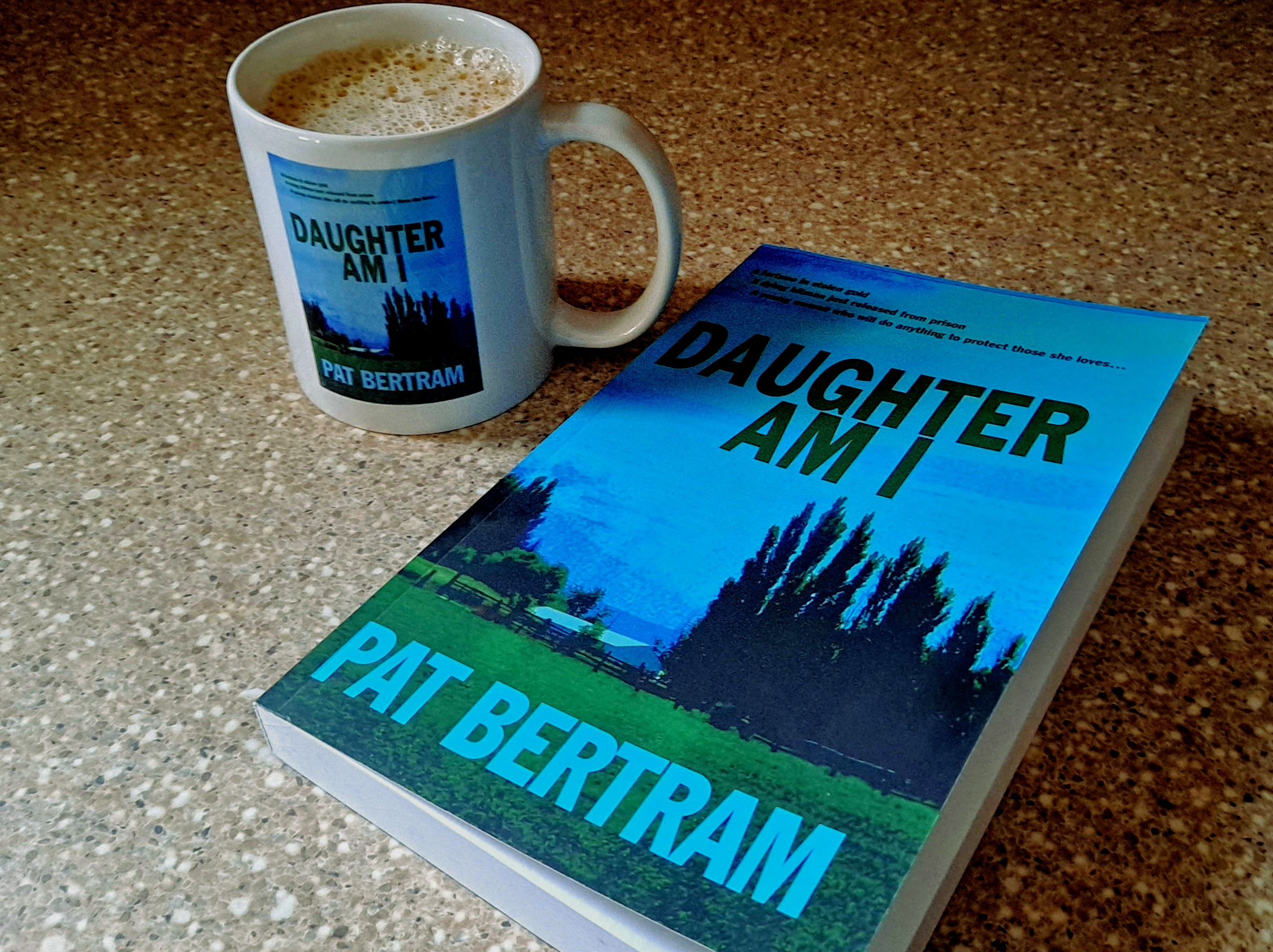
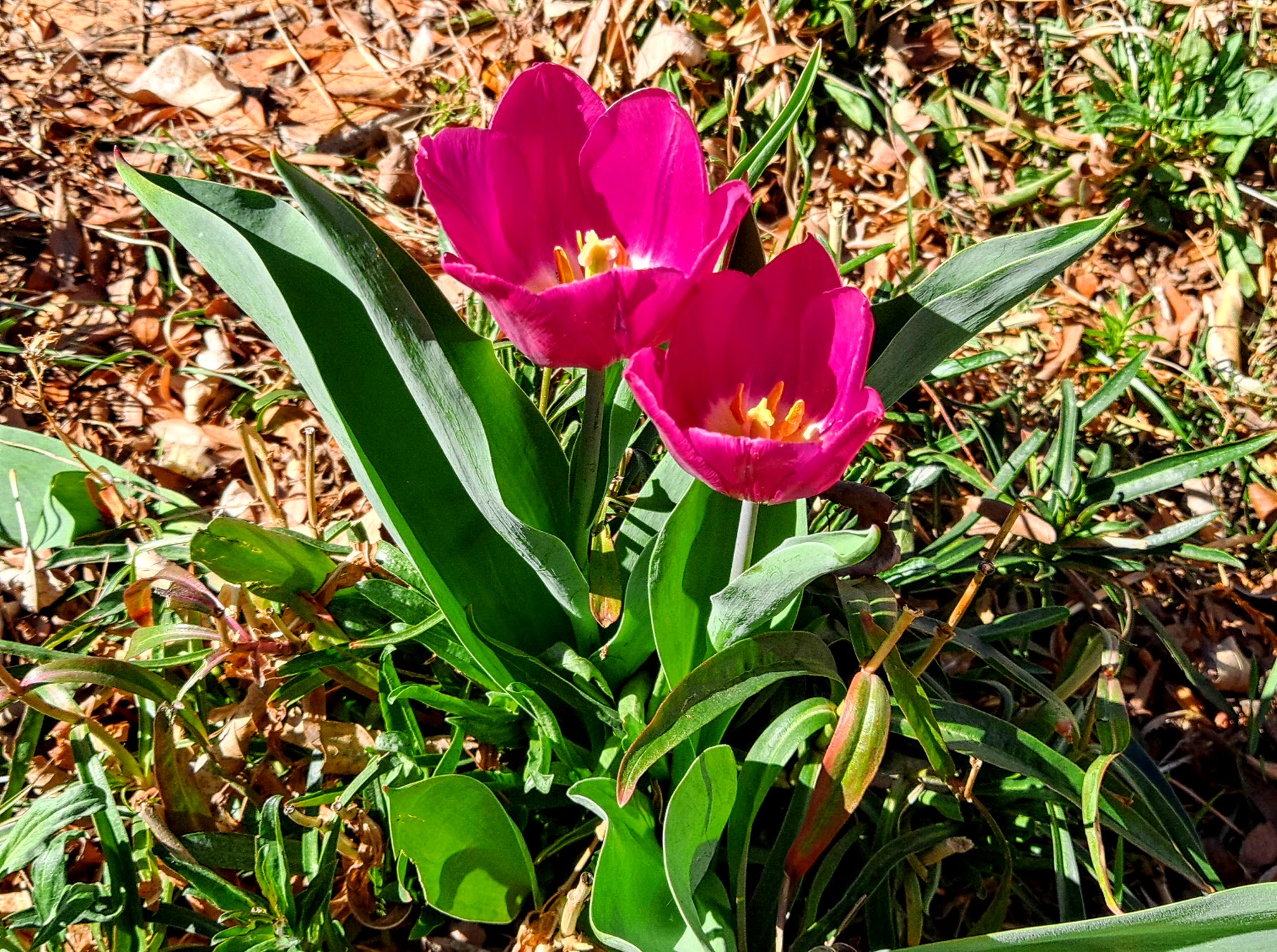
I was walking around my yard today, enjoying a bit of sunshine, and look what I found!

Such a glorious ending to a few not-so-pleasant days. Oh, I’m fine, there’s nothing really wrong, I’ve just had to deal with changing my primary email address as well as wherever I used that email for online sites. This change wasn’t by choice and I’m not happy about it, but it was necessary.

A few years ago, the free email that was provided by my website domain provider was changed to a paid Outlook account. I was so daunted by the idea of making the change, that when I got a good deal on Outlook, I went ahead and paid ahead for several years. (Money that is now wasted.) I’ve gradually been changing over as I open new accounts or lose friends or whatever, but last week Microsoft informed me I would have to download an authenticator to my phone so I can continue using the email account. The bizarre thing is that this particular email was never able to be downloaded to my phone, and the authenticator doesn’t work for PCs, so they were demanding something utterly unnecessary. I was supposed to have two weeks until the authenticator was mandatory, but since I knew how discouraging the whole process would be, I started immediately to do the work. Good thing. Instead of having two weeks, I ended up with a single week. Luckily, I think I got everything, and if I didn’t, I will just have to presume it’s not important.

Along the way, as I had to update accounts, I ended up deleting one or two. Pinterest, for example. I never did understand that site, and when I tried to update the email address, they wouldn’t do it unless I provided a date of birth. I gave a fake one, of course, then when I was finally able to access the site, I deleted the whole thing.

At least, that was easy. Worse, I found two places for my online banking where I needed to change the address but alerts still went to my old address. I had to call to the bank to get them find the third place. Both the gas company and the internet company had those same issues. One important account had nowhere to change the address, so another call. And then, of course, there were all those places where I used a different email address but used my primary one for backup.

With any luck, I made all the changes, but oh! What a mess!

Then, considering that Microsoft was the company that put me in this situation, I decided I needed to back up all my pictures and documents elsewhere in case they do the same thing with that email. I had used OneDrive to back up my previous computer just because it was an easy way to move them to my new computer. (Which, come to think of it, is now elderly in computer years.) And then, because I was in a snippy mood, I ended up deleting photos and documents I haven’t looked at in years. (Snippy meaning not happy, snippy meaning feeling like snipping things away.)

So, finding those sunny crocus faces beaming at me this morning sure made my day brighter.

***

Pat Bertram is the author of Grief: The Inside Story – A Guide to Surviving the Loss of a Loved One.
Whatever Comes to Mind

I’m trying to get back into blogging, starting with perhaps one blog a month, but the problem is the same one I’ve had ever since I stopped blogging every day — nothing to say. That didn’t stop me all those years of being a dedicated blogger — I just wrote whatever came to mind.

And what’s coming to mind, after seeing those dashes in my first two sentences, is that supposedly, if you see a lot of dashes in text, it’s probably written by an artificial intelligence (though if it’s artificial, can it be intelligent? Doesn’t intelligence signify a mind or at least a brain?). I might not be an artificial intelligence (might not even be much of a natural intelligence anymore for that matter), but I do tend to use a lot of dashes. And parentheses.

To be honest, I don’t see the point of using computer “intelligence” programs to write. The point of writing is to be yourself, to dig the truth from somewhere deep inside, and it seems that using those programs buries the truth deeper. Besides, the point of reading is to meet mind to mind. It’s an utterly human ability — to perceive in one’s own mind via twenty-six symbols something that someone else conceived in their mind. Anything else is just . . . words. Drivel.

Even worse, as artificial intelligence works today, it’s basically a form of plagiarism. Of course, people can take that plagiarized writing and rework it so that it’s not exact, in which case it’s not legally plagiarism, but it’s still morally plagiarism.

I think about this a lot lately as I am re-re-re-re-rereading Wheel of Time books. There is no way that series could ever have been written by any an artificial intelligence, or even a minor natural intelligence. Written to appeal to the young readers of fantasy, Robert Jordan layers his story with so much depth that the series can be read and reread dozens of times and always a different tier of meaning can be found.

From my first reading, I’ve been ambivalent about the books. For one thing, I’m not a fan of fantasy. For another, a good number of those millions of words could be whittled away to make the story stronger. (That’s what happens when your editor is also your wife — too much dross is left intact.) A good number of scenes and even chapters could have been left off without any loss to the story. Or maybe not since readers seem to differ on what those unnecessary scenes are. Luckily, there is a thing call skimming text or even skipping chapters. But the bulk that is left intact, is sheer genius.

As I wrote before, the scope of the story is utterly astounding. In the story-world, during the so-called age of legends, people wielding the power that turns the wheel of time, broke the world. Mountains grew where no mountains had been, waters flooded lands, green spaces became deserts. And humans started over. Interestingly, breaking the world is exactly what Robert Jordon did when he wrote his series — he smashed our world into bits, mixed it all up — legends and traditions; countries and races, clothes and customs; myths and mysteries, religions and philosophies — and put it all back together into his own creation. Truly fascinating.

It’s because of these books that I know for a fact that Google’s experimental AI overview is not to be taken as truth. So often, if I have a question about the books, the overview is not accurate, probably because it forms answers from authoritative sources as well as opinions proffered in fan discussions — and there are a lot of those discussions. (As to why I have questions, it’s hard to keep track of a story that has maybe 2,782 named characters with 1,379 of those being point-of-view characters.)

I’m sure this essay doesn’t seem to tell you what’s going on in my life, though it really does. With winter limiting my choices, I spend my days with simple pursuits such as computer games, painting-by-numbers, reading (and this year, so far, what I’ve been reading is The Wheel of Time.)

I am lucky (and exceedingly grateful) there is nothing much to write about. I am as safe as possible, as healthy as possible, as happy (or at least as contented) as possible. I hope the same for you.

***

Pat Bertram is the author of Grief: The Inside Story – A Guide to Surviving the Loss of a Loved One.

Update

After an early heavy snow, followed by higher than average temperatures, we’re now in a deep freeze. Later in the week, the temperatures will get above freezing, although only fleetingly.

And then all too soon, it will be time to work out in my yard again.

I enjoy these months of respite from the struggle against weeds and sun-dried grass, but I miss the daily gifts — the flowers that come up despite this harsh climate, the volunteer plants that so tenaciously take a stand, the perennials that stretch their territory. I do get a flower fix with paint-by-number kits. It’s not the same as real gardening by any means, but it’s a real boon to someone without an artistic bone in her body.

Oddly, what I don’t miss is writing — about gardening or anything else, for that matter. For almost three decades, writing (and blogging) was my life. It kept me going during the long years of Jeff’s ill health and in the dark times after he died. It gave me a reason to get up in the morning, gave me a focus that I might not otherwise have had. In fact, because of this blog, I went on excursions and attended events I might have passed on, but I figured anything I did gave me a topic to write about.

So did my desire to stay at home squelch my desire to blog? Or did my lack of desire to blog squelch any desire for venturing out? Silly questions. Silly because the answers don’t matter. I’ve become a homebody, and that’s it. My being a homebody is not surprising since I’ve always had reclusive tendencies, but what is surprising is that I have a home. And a garden! It still astonishes me that this place is mine. In my restless years of grief and its aftermath, I spent a lot of mental energy trying to figure out what my unshared future would be like, and never once did I come close to imagining this reality.

I remember back then occasionally thinking that my future should be wonderful, because if the pain of grief was something I never knew existed, then there had to be some joy to come I also never knew existed.

And now here it is. And now here I am.

Of course, that raises a conundrum that I try not to consider: the only reason I’m living this particular good life is that Jeff is not here. Still, the last thing Jeff ever said to me was that everything would work out for me, so I know he’d be pleased for me. And yet, there’s that niggle in the back of my head that I try not to think about.

But those are thoughts for another time.

Today I’ll think good thoughts and be grateful for all I’ve been given.

***

Pat Bertram is the author of Grief: The Inside Story – A Guide to Surviving the Loss of a Loved One. “Grief: The Inside Story is perfect and that is not hyperbole! It is exactly what folk who are grieving need to read.” –Leesa Healy, RN, GDAS GDAT, Emotional/Mental Health Therapist & Educator.

Steeped in Symbols

I have never paid much attention to iconography since I have no real feel for art or imagery. I think in words, process emotions in words, and come to terms with life and the world by way of words. In fact, until this very moment, I’d never even used the word “iconography.” I do know what it means, of course — the interpretation of the symbols in art, images that tell a story, especially religious symbols. It comes from eikon a Greek word meaning “image,” and graphe a Greek word meaning “writing.” Such “image writing” was the earliest form of writing. From what I’ve managed to glean, a pictograph is a simpler version of a icon, something with a single, specific meaning, whereas an icon is a symbol with a broader, more artistic meaning that generally needs to be interpreted in cultural context. (Oddly — odd to me, anyway — iconography is not the study of iconographs — iconographs are pictures formed of words.)

Not only had I never paid much attention to iconography, I’d never really paid much attention to the symbols and images that we are all familiar with until recently. I play one of those hidden images games, though for some reason I’m embarrassed to admit it. Still, I do spend time on the game, going from location to location to find the objects.

These locations are completely different from one another, and each is instantly recognizable. For example, a Christmas scene is obviously Christmas themed, a Chinese New Year scene is obviously Chinese themed, a haunted house is obviously Halloween themed. There are a vast array of images that evoke Christmas — stockings, trees, reindeer, cookies, wreaths, stars, snowflakes, candy, the colors red and green. (There are just as many images of a religious nature, such as nativity scenes, but those aren’t used in the Christmas scenes in this game.) Many recognizable Chinese images, such as lanterns, storks, conical hats, fans, and dragons. And many images that evoke a spooky feel — bats, gargoyles, brooms, witch’s hats, toads, tarot cards, wands.

The locations in the game don’t all revolve around holiday themes. For example, there is a laboratory, with images such as telescopes, magnets, funnels, bellows, oil lamp, and a medical mask; a train station with luggage, cameras, books, pigeons, and pith helmet; a seaside bungalow with mermaids, pirate hat, barometer, boat, toucan, books, and sandcastle.

None of these locations can be confused with any other, which has led to me to this reflection upon the images of our lives. We are steeped in symbols, way more than I ever imagined. This game reflects many of the cultural symbols of our lives, but there are all sorts of symbols. Religious symbols. Musical symbols. Occult symbols. Political symbols. And each of these symbols calls forth some sort of emotion. The news media in particular uses images to convey messages, and many of those images have become part of our heritage, such as Kennedy’s Texas motorcade, Nixon’s outstretched arms, the little Napalm girl.

I don’t know what any of this means — it’s just something I’ve been thinking about. But it does show me that as sophisticated and advanced as we think we are, our basic form of communication still seems to be the pictograph just as it was so many thousands of years ago.

***

Pat Bertram is the author of Grief: The Inside Story – A Guide to Surviving the Loss of a Loved One. “Grief: The Inside Story is perfect and that is not hyperbole! It is exactly what folk who are grieving need to read.” –Leesa Healy, RN, GDAS GDAT, Emotional/Mental Health Therapist & Educator.

Pig

Yesterday I planned to write about all the things I’ve been thinking about that aren’t worth writing about. Aren’t worth thinking about, either.

I got as far as talking about my homeowner’s insurance before I’d used up my word allotment. Actually, there isn’t a word allotment, but few people want to slog through a long, boring piece about things that don’t really mean much.

Anyway, another thing I planned to mention was pork. Not pork as in pork barrel politics (politicians slipping funding for local projects into larger appropriations bills), but pork as in . . . pig.

A butcher friend sold me a portion of a pig that turned out to be tough. It was supposed to be a young pig, but he unknowingly (at least I hope it was unknowingly) ended up with a senior pig. In a way, that makes me feel better about eating the poor thing since its life was nearing an end anyway, but it sure makes for tough meat. The bacon, for example, tasted great, but it was truly as tough as shoe leather. Not that I’ve ever actually chewed on shoe leather, you understand, but in this case, the trite simile is apt. The stuff was inedible and unchewable. I gave the bacon back to the butcher, and for the rest of it, I’ve been trying to find ways to cook tough pork.

Normally, when I eat meat, which isn’t that often, I simply throw it into a pan and cook it, but that’s not possible in this case, so I’ve been researching ways of adding flavor back to slow-cooked chops and such. (I figure by the time I learn the various ways of tenderizing and seasoning this poor pig, it will be used up.) Normally, I write about the things I research, but recipes aren’t my favorite thing to write about. Still, I did manage to come up with some good flavors, such as an apple cider vinegar-based barbecue sauce that was truly tasty.

It’s amazing how much time it takes to research as well as think about flavors and ingredients for cooking. My latest project is to figure out good marinades and sauces for ham since the necessary long simmer leaches all the flavor out of the meat. One thought is to simmer the ham in green chai tea. Another is to marinade it in a vinegar and spice blend.

It’s a challenge, that’s for sure, and it does give me different flavors to sample as well as giving me something different to think about.

***

Pat Bertram is the author of Grief: The Inside Story – A Guide to Surviving the Loss of a Loved One. “Grief: The Inside Story is perfect and that is not hyperbole! It is exactly what folk who are grieving need to read.” –Leesa Healy, RN, GDAS GDAT, Emotional/Mental Health Therapist & Educator.
Sluggish Thinking

I had no idea it’s been so long since I wrote anything. Generally, I write to make sense of what I’ve been thinking, and there’s really no sense to make of many of my recent thoughts. My homeowner’s insurance increased by more than 50%, which stunned me. For most of my life — until just a few years ago, actually — I never wanted to own a house because of all the unforeseen expenses. Obviously, the insurance was not an unforeseen expense — I’d budgeted for it, and even budgeted for what I thought was a whopping increase, but the increase turned out to be more than I ever imagined, more than I can afford in the long run, even without increases in the coming years. (I’m fine for now, but yikes!) For the first time, I wondered if I had done the right thing by buying the house, but I do not want to even think about that. I know I did the right thing. So I’ve been trying to find a different insurance company.

One of the big issues in my case is that I have no credit rating, and insurance companies base their rates on your credit rating, which makes no sense to me. If a person doesn’t pay the insurance bill, the insurance is cancelled. Very simple. So what does my lack of credit have to do with insurance? I have no idea. They explained that people with a poor credit rating file more claims, but again, I don’t see what the problem is. If the claim is justified, they need to pay it. If not justified, turn it down.

One agent tried to explain to me that people with no credit are a poor risk because they don’t pay their bills, and she refused to listen when I explained I have no credit because I do pay my bills. I pay them as soon as I get them. No debts. Hence no credit. She didn’t care, and I can understand because it’s the company’s policy, not hers.

The company I’ve been dealing with used to be one that didn’t exorbitantly penalize people who had no credit, but I have a hunch the reason my bill went up so high is that they rethought that position. If I had a good credit rating, my insurance bill would be $1000 less a year.

(I did finally manage to get a credit card, but it will take years to build up any credit since I don’t buy much.)

My other issue with the original company is that although I have full coverage for rebuilding the house if anything were to happen, they lowballed the construction costs to keep the policy competitive. They were willing, however, to offer additional coverage for up to 25% more than costs indicated in the policy. So that means that total replacement coverage isn’t total replacement coverage.

As you can see, my thoughts have not been worth writing about. Truly, they haven’t even been worth thinking about. With any luck, I’ll be able to put this matter to rest for another year. I found a different company with much better coverage, but alas, only a few dollars cheaper. Now it’s just a matter of waiting for the new insurance people to come look at the place, take photos for their files, and tell me if there’s anything I need to do around the property. I do know they will say I need a railing on my back ramp, but that’s already been paid for; it’s just a matter of having the weather clear enough so that the workers can get it installed.

As for weather: just when the snow melted and I began to look for signs of spring, we got dumped on. It was pretty — huge flakes filling the air — but so very cold! Cold enough, in fact, to make thinking a sluggish business.

It’s a good thing, then, that I’ve finished thinking — finished thinking about insurance, anyway.

***

Pat Bertram is the author of Grief: The Inside Story – A Guide to Surviving the Loss of a Loved One. “Grief: The Inside Story is perfect and that is not hyperbole! It is exactly what folk who are grieving need to read.” –Leesa Healy, RN, GDAS GDAT, Emotional/Mental Health Therapist & Educator.
Just For Fun

Today’s blog prompt: List five things you do for fun.

Knowing me as well as you do, I’m sure you’ve figured out what the first thing I did was. Yep, I Googled, “What is fun?”

I had to research the word because the truth is, I don’t really know what “fun” is. To me it’s about doing something with pleasure or joy or playfulness or laughter or silliness, and very little of what I do includes those feelings. That kind of fun connotes fellowship of some sort, going outside of oneself. I mean, it’s hard to be silly and laugh when one is alone, especially someone like me who spends so much time inside herself. Admittedly, I do a lot of things to “spend” time, such as reading or blogging or playing a game on the computer, but there’s no real element of what I’d consider “fun” to any of those things. I just do them. Especially reading. Reading is as necessary to me as breathing, and I don’t consider breathing to be “fun.” It’s just something I do, something I need to do.

I enjoy the company of others (though preferably just one or two at a time). We talk and we often laugh, but despite the lightheartedness of many of our conversations, I don’t consider them “fun.” Being with people is about connecting, about creating a space for friendship, about feeding the soul, an experience that goes so much deeper than the easy entertainment and party atmosphere that “fun” connotes. If reading is akin to breathing, then friendship is akin to food, and while food can be considered “fun” at times, it’s too necessary to ever fall strictly into the category of “fun.”

Things like hiking and traveling weren’t strictly for fun, either. There was a deeper intent there — sort of a vision quest, or maybe even just a quest (though I was never sure for what I was “questing”).

Writing certainly isn’t fun for me — despite a playfulness that sometimes shows up in my books, writing is way too hard for me to classify it as fun. (And it goes back to the idea mentioned above of spending time within myself.) Gardening is the same — too hard to be fun, as well as serving to pull me deeper into myself.

As it turns out, my idea of fun (the word “fun,” that is) is pretty close to the mark. Various online definitions of fun include: “pleasure without purpose;” “lively, joyous play or playfulness;” “light-hearted pleasure, enjoyment, or amusement;” “boisterous joviality or merrymaking;” “hedonic engagement and a sense of liberation;” “diversion, amusement, mirthful sport;” “a cheat, trick, or hoax;” “foolishness, silliness.” Also “any activity on the positive side of valence” (whatever that means).

So what do I do for fun? I’ll have to get back to you on that — when and if I ever manage to think of something to do just for the fun of it.

***

Pat Bertram is the author of Grief: The Inside Story – A Guide to Surviving the Loss of a Loved One. “Grief: The Inside Story is perfect and that is not hyperbole! It is exactly what folk who are grieving need to read.” –Leesa Healy, RN, GDAS GDAT, Emotional/Mental Health Therapist & Educator.
What Is Your Spirit Animal?

Do you have a spirit animal? That’s the blog prompt for today: “What is your spirit animal?” I have no idea how to figure out what mine is. Aboriginal Americans found their spirit animal through a vision quest, some spiritualists find theirs through a dream, other people are lucky enough to have their spirit animal find them.

Me? As far as I know, I don’t have such a guide, and if I do, it hasn’t made itself known to me. At one time I wanted to do a long-trail hike, thinking it would also work as a vision quest, but that didn’t work out. I did try to do some of those quizzes that supposedly introduce you to your spirit animal, but the very first question on a few of them stymied me: “What is your favorite element — water, earth, air, fire, wood, space?” How the heck does one answer that? I mean, you need those to live. Without wood (trees) there would be no breathable air. Without space, there would be no Earth. Without water, earth, air, fire (energy) there would be no life.

I did manage to find one quiz that asked different questions, but most of the questions did not pertain to me, such as what sort of television programs I watch — news, reality TV, documentaries, and a few others. Since I don’t watch television, it was a bogus question, as were several others. Still I did stumble through the quiz, and according to them, my spirit animal is a raccoon. Supposedly, the racoon embodies creativity, discretion, and keeping your ideas close to your chest until you’re ready to unveil them. Sounds feeble enough to apply to almost anyone.

I also found a site that linked spirit animals to one’s birthday, so depending on what culture I espouse — Western, Chinese, Native American, Celtic — my various spirit animals are fish, rabbit, wolf, snake. Not exactly a unanimous consensus, or even a general consensus!

The only dreams I ever had that could possibly be considered a vision quest or a way for my spirit animal to make itself known were both white dreams. In the first, I was walking in the white sands of the desert, with a white sky above me and a white path stretching before me. As I walked, three white horses sped across my path, then four white bunnies in a bunch, then two small white squarish creatures I could not identify, and finally, one immense white owl. For sure a mystical dream! All of those creatures are powerful totem animals, except perhaps for the small squarish animals. Another time I dreamt of a white tiger, a spirit animal that is drawn to a soul with inner strength.

So there you have it — all I know about me and my spirit animals. Since there is such a plethora of them, it could mean I need a whole lot of help. It could also mean that at different times, I was influenced by different manifestations of spirit. Or it could mean nothing at all, which, to be honest, is what I tend to believe.

***

Pat Bertram is the author of Grief: The Inside Story – A Guide to Surviving the Loss of a Loved One. “Grief: The Inside Story is perfect and that is not hyperbole! It is exactly what folk who are grieving need to read.” –Leesa Healy, RN, GDAS GDAT, Emotional/Mental Health Therapist & Educator.
Where to Go from Here?

Lately I’ve been wondering where to go from here. I don’t mean geographically — I’m settled here in my house for the duration. It’s more about wondering what to do next with my life, if I want to keep doing what I’m doing, and if I need to do something more satisfying.

I am still blessed with a job that adds some structure to my life, and come spring and summer, of course, I’ll be spending a lot of time on my yard, an activity that makes me too tired to wonder if there is anything else for me.

But now, in the dead of winter, when I probably spend more time than is healthy inside — reading, playing games on the computer, and blogging a bit — I can’t help but question my life.

Reading is becoming problematic — too many novels are way over the top. Years ago, I used to enjoy Lee Child’s books, probably because contrary me had read a review that said women wouldn’t like the books, but also because Jack Reacher reminded me of a harder and less focused Kwai Chang Caine from the 1970’s television series Kung Fu. Whatever it was that appealed to me about Child’s character has completely disappeared. I’d given up reading the series long ago, but out of curiosity, I picked up the most recent book, and yikes. There is absolutely no redeeming virtue to either the badly written story or the character. Reacher has become a thug, pure and simple, a villain as bad or worse than any of those he tries to vanquish. The next book I read (by a different author) was just as bad, though in a different way. The characters’ actions seemed quixotic, unmotivated. They just did things, flashed back to the past way too often for any sense of story continuity, and yapped endlessly. Still, there are plenty of books that have enough of a plot to keep me reading, but it’s possible there will come a time that I give up reading again. Although reading often seems to be as necessary to me as breathing — and as effortless — I have gone through periods where I don’t read at all, once when I was young and depressed and books made me even more depressed, and again after Jeff died.

I could, of course, go back to writing my own fiction, but that is anything but effortless. Besides, I have yet to think of any characters that would keep me interested in their plight for the year or more it would take me to write the story. Oddly, although I am a writer, I have no real yen to write another book, probably because blogging scratches the writing itch and keeps me satisfied.

As for the game I got addicted to — I’m becoming unaddicted. It’s not as compelling as it was in the beginning, but I still play because it gives me a break from reading. And from thinking.

My knees are doing well, but not quite well enough to allow me to do the hours of roaming I used to do. I still have hope that my roaming days will return, but only locally. I used to spend a lot of time hiking, traveling or at least thinking about where I want to go, but my wanderlust, like my writinglust, seems to be sated.

Where I am falling short is on the social front. When I moved here, I jumped feet first into the social scene such as it is — going to the senior center for games and an occasional lunch, attending community dinners, joining various groups. When The Bob put a stop to all that, I reverted quite happily to my natural quasi-hermit state. Eventually, I started back in with one of the groups, but although I know I need the social interaction, I’m not sure I want to continue. The group is growing, which is good for them, but not so much for me. I get claustrophobic around too many people, and it takes all my energy to keep from running away. (The only reason I don’t is that generally I get a ride when the meeting is out of town and so have to wait until the end before I can leave.)

I am aware that my life is already too restricted, yet I’m secretly thinking of restricting it even more. Even if I don’t voluntarily make changes to restrict my activities, age and circumstances will eventually change things. For now, I am quite content with my quiet days, but it’s certainly not surprising that I’m wondering what’s next.

Luckily, it’s only two months until spring (though almost four months until spring planting), and then I’ll be too tired and too busy gardening and taking care of my yard to wonder where to go from here.

***

Pat Bertram is the author of Grief: The Inside Story – A Guide to Surviving the Loss of a Loved One. “Grief: The Inside Story is perfect and that is not hyperbole! It is exactly what folk who are grieving need to read.” –Leesa Healy, RN, GDAS GDAT, Emotional/Mental Health Therapist & Educator.