Writing, Blogging, Promoting — My Aha Moment

Fellow author Dale Cozort recently returned from agent Donald Maass’s High Tension Workshop. (Okay, it wasn’t recently —  it was back in April, but who’s counting?) Cozort reported that according to Maass, the keys to keeping modern readers’ interest are finding something fresh — a different way of looking at events — and finding ways of getting the reader to identify with the character or with the scene.

According to The Everything Blogging Book by Aliza Sherman Risdahl, the key to keeping blog readers’ interest is “Taking hobbies and interests and finding a different way of looking and talking about them.”

In a recent comment, blogger extraordinaire and my marketing guru Sia McKye wrote, “There’s only so many ways to market things. If you observe, market and promotion tend to follow certain patterns. That’s because those ways work.” This seems a bit depressing to me. If everyone is doing the same things, then how does anyone ever stand out in a crowd?

Then I had my aha moment. If the key to writing is to find a different way of looking at things, and if the key to blogging is to find a different way of looking at things, then obviously, the key to promotion is to find a different way of looking at things. I know this syllogism would never pass muster in a logic class, but there is little logic to be found in writing, blogging, and promotion. Hence, at least in my mind, the conclusion works.

I am aware that those of us who are published by small independent presses are at a disadvantage when it comes to selling books. The publishing corporations and the major independent publishers use resources to which we have no access. Still, I have never been one to let such minor considerations get in the way of my dreams, and I intend to do everything I can to become unobscure.

So the question arises — how does one find a different way of looking at those promotion and marketing patterns? I’m sure you will be as glad as I am when I hit upon the solution. At least you won’t have to listen to my constant yammering about finding ways to promote.

add to del.icio.us : Add to Blinkslist : add to furl : Digg it : Stumble It! : add to simpy : seed the vine : : : TailRank : post to facebook

More Blogs Than One

A year ago when I was waiting for my books to be published, I kept myself occupied with setting up a variety of blogs. I told myself I wanted to test blogging platforms so I could help my fellow authors pick the best one for their needs, but that wasn’t my excuse for setting up a bunch of WordPress blogs since I was already familiar with the site. The truth is, I became enamored with the custom colorizer, and ended up with five blogs, identical except for color.

The blue blog, this one — Bertram’s Blog — chronicles my struggles first to become a published writer and now to become a published selling writer. It was my original blog, and the one I still consider my blogging home.

The red blog, Pat Bertram Introduces, was intended to be an authors’ blog, where I introduced the writers I was coming to know via networking sites. When so many of them ignored my invitation to be a guest, I decided to turn it into a blog for interviewing my characters. (I’d forgotten that until just now. Never did introduce them!) To get the blog going, since at the time it was too soon to introduce my characters, I decided to introduce other writers’ characters. If you’d like me to introduce your character or characters, you can find the instructions on the Character Questionnaire page. At the very least, it’s a good way for you to get to know your own characters.

The purple blog, Book Marketing Floozy, was intended to be a blog to promote my books. I was talking (online, of course — that seems to be where my life is lived nowadays) to a fellow author about promotion, and she cautioned me against signing up for too many social networking sites. She said that I ran the risk of becoming a marketing floozy, just popping in to peddle my books, and then disappearing again. Since I’ve never been one to take advice, I signed up for several sites (though in the end, I did more or less take her advice — I spend most of my time on Facebook, Goodreads, and Gather.) And I started the Book Marketing Floozy blog — I decided that if I was going to be a book marketing floozy, then I should flaunt my flooziness. Again, since it was too early to start promoting my books, I started collecting articles about book marketing and promotion by different authors. The site is now indexed for easy reference, but there is no article about my books, though I did mention them in passing in one of the articles I wrote. Too bad. I did like the idea of being a book marketing floozy.

The yellow/orange blog, Dragon My Feet, was an import from Live Spaces. I set up a blog there using a gorgeous dragon template, and since I mostly talked about how I was procrastinating, I called it . . . You get the idea. So now I have a blog name that, while cute, really makes no sense. And the blog itself makes no sense. It’s become a dumping ground for any article that doesn’t fit with another of my blogs. I have guest articles that are too self-promotiony for Bertram’s Blog. I have a few of my attempts at reviewing books. I have photo essays. Checking out the blog just now, I notice that thirteen of the past fourteen posts are related to books in some way. Perhaps I should turn it into a book blog? But that would be work — finding guests, reading books and writing reviews — and I am inherently averse to work.

The green blog, Wayword Wind, is a poor, loveless thing that sits there getting greener by the moment because of all the moss it’s gathering. I have not posted a single bloggery because I have never quite figured out what to do with it. I planned to post articles about the various themes and research in my novels, but alas, I can’t think of anything to say that isn’t already in the books. I should have talked about the swine flu and how it tied into A Spark of Heavenly Fire, but I didn’t. I could talk about the twelfth planet and the various conspiracy theories I mention in my upcoming book Light Bringer, but I won’t. Been there. Done that. At one time I thought of posting quotes and then giving a commentary, but I really don’t have much to say on any subject except writing. I discovered this recently when I started yet another blog simply because I like the WordPress theme. (Do you see a pattern here?) I call it The Mind of Pat Bertram, but since I seldom post to it, you can see how little is actually on my mind. Then I thought of turning Wayword Wind into a blog for posting my progress with Julia Cameron’s The Artist’s Way program, but since I haven’t actually been doing the program, it fits more with Dragon My Feet. Because of the way I spelled wayword, it seems the blog should be about writing, but I already have a blog about writing.

So, here’s my conundrum. It’s not as crucial as the one that haunts me about how to promote my books, but it is a niggling one. I have a blank blog!!!!! What do I do with it?

(The title of this article was once used in reference to me by Lisa Brackmann, author of the soon-to-be-released Rock Paper Tiger.)

add to del.icio.us : Add to Blinkslist : add to furl : Digg it : Stumble It! : add to simpy : seed the vine : : : TailRank : post to facebook

Catapulting Me Into BetterSellerdom

In the past week, I received a couple of emails from people asking my advice on how to promote various online activities, I received an invitation to host a seminar on promotion, and I received an invitation to participate in a BlogTalkRadio discussion about creating a successful Facebook group. Apparently, I’m making a name for myself, (albeit slowly) but not as an author. Am I doing something right? Am I going about my self-promotion in the wrong way? I don’t know.

The interesting thing — to me, anyway — is that contrary to appearances, I still don’t know much about promotion. Sure, I am creating a presence on Facebook, I’m playing around with GoodReads, I blog and tweet. I’m even going to do a presentation at the local library about the brave new world of publishing. But those are the same things everyone else is doing, and I know that to be effective, promotion has to be creative, unique, and personal.

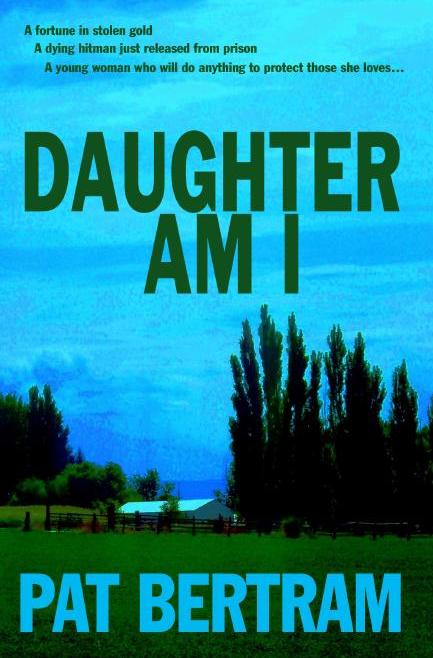
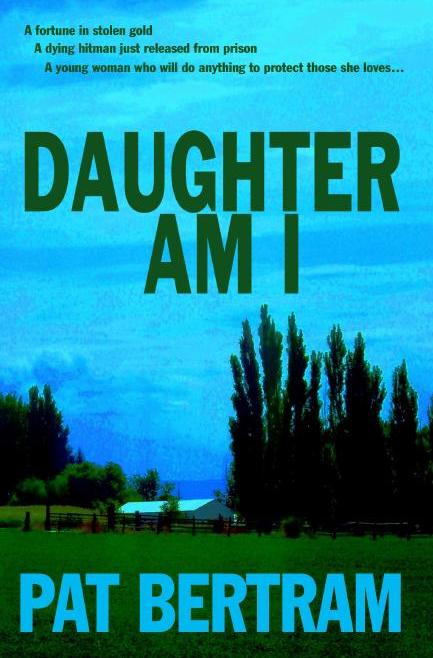
The odds of selling a truckload of books are miniscule to none, but I have never played the odds. I’m not giving up on my first books — A Spark of Heavenly Fire and More Deaths Than One — but in the next couple of weeks my third book — Daughter Am I — will be released, and I will need to figure out how to promote it. And who to promote it to.

When Mary Stuart, my twenty-five-year-old hero, discovers she inherited a farm from her murdered grandparents — grandparents her father claimed had died before she was born — she sets out on a journey to find out who they were and why someone wanted them dead. So is this a book that will appeal to readers in their twenties and thirties? Maybe. Along the way, Mary accumulates a crew of feisty octogenarians — former gangsters and friends of her grandfather. So is this a book that will appeal older readers? Perhaps. Mary also meets and falls in love with Tim Olson, whose grandfather shared a deadly secret with her great-grandfather. So is this a book that will appeal to romance readers? Probably not. There is no real romantic conflict in the book. The conflict belongs more in the mystery category, because Mary, Tim, and the octogenarians need to stay one step ahead of the killer who is desperate to dig up that secret. So is this a book that will appeal to mystery lovers? Could be.

If I had to do it over again, I would probably be more careful to write books that fit a particular genre to make them easier to promote. Oh, hell, who am I trying to kid. If I had to do it over, I’d write the exact same books. I like telling stories the way they should be told, without adhering to the boundaries of genre or niche marketing.

So, until I come up with a creative, unique, and personal idea of how to catapult me into bestsellerdom (or even bettersellerdom) it’s a matter of continuing to make a name for myself. Even if it is as a promoter.

If you want to know what I know about promotion, check out Book Marketing Floozy. Everything I know about marketing I got from there.

add to del.icio.us : Add to Blinkslist : add to furl : Digg it : Stumble It! : add to simpy : seed the vine : : : TailRank : post to facebook

It’s a Birthday Party!

No, it’s not my birthday, it’s the birthday of Second Wind Publishing, LLC. The first book was published exactly one year ago today, and now there are almost thirty, including two of mine (with a third on the way.)


I have no doubts of the success of Second Wind. Mike Simpson has the uncanny ability of getting his authors involved in the business, challenging us to expand our abilities beyond the scope of writing. He’s gotten die-hard thriller writers to edit romances. He’s gotten shy authors to do book signings. And somehow (still don’t know how) he’s gotten me to become Second Wind’s promotion co-ordinator. Okay, I do know how. He genuinely likes the books he publishes, and says the most wonderful things about them. In an introduction to my 100-word stories that were included in the romance anthology, Love is on the Wind, Mike wrote: “Pat Bertram, author of the newly released duo of suspense novels, More Deaths Than One and A Spark of Heavenly Fire, is a writer who defies categories, a literary maverick whose stories transcend genre and transport readers to beguiling worlds filled with compelling characters.”

So, stop by and join the celebration!

Ten Lessons I Learned (The Hard Way): A Publisher’s Reflections on the First Year
What Second Wind Book Do You Wish to Read? You Might Get Your Wish!
Introducing the authors of Second Wind!

add to del.icio.us : Add to Blinkslist : add to furl : Digg it : Stumble It! : add to simpy : seed the vine : : : TailRank : post to facebook

The Magic Of Mysteries: The Art (And Joy) Of Misdirection

Ian O’Neill, the one-time advertising copywriter turned award winning freelance journalist, is the author of Endo, a mystery/suspense novel set in Ontario, Canada. Ian has written for newspaper, magazine, radio, television and once wrote a dirty limerick on a dusty car but didn’t sign it. Ian writes:

I worked for Parks and Rec when I was younger and on a rainy day managed to bring in a magician to entertain the kids in our program. It was fascinating to not only watch him perform but also to see the looks of amazement on the kids’ faces. Like watching a magician, reading mysteries is one of those instances where we want to be misdirected. Let’s face it, if the clues are easy and laid out for us with bold, capitalized letters, there’d be little joy in reading the book.

I was certainly old enough when watching that magician to know that he was intentionally misdirecting us. He’d open a hand and hold it high in the air like he was trying to get a teacher’s attention. To ensure we were all looking at his raised hand he’d tell us to keep our eyes on the magical hand, or something to that effect. I didn’t watch his raised hand, I tried to watch his other hand, but there was no way I could because it was either behind his back or under a cloth or behind the volunteer he’d pulled from the audience. Even knowing that I was being mislead, I couldn’t see how.

That is writing a mystery story in a nutshell. A reader knows they’re going to be mislead and as the writer, you can’t let a reader feel like they’re being mislead. Readers will be watching your magic hand, but they know you’re up to something and you can’t let them know what it is until the end of the final act. If that isn’t magic, I don’t know what is.

Planning The Grand Illusion

You set the mystery with a criminal act like a murder, kidnapping, theft or some other problem that needs to be solved. This is the grand illusion of the story since whatever logical reason for the crime at its discovery made by your detective will likely change. If he/she nails the circumstances of the crime immediately, it would be like a magician explaining his illusion while performing the trick. Though the detective could be right but change their reasoning throughout the story only to come right back to their first conclusion. There are always options and nothing is static.

At this point I’d suggest reading my article, Games Have Rules, Writing Has Guidelines, on the so-called ‘rules’ of writing a mystery.

MacGuffin Is Not A County In Scotland

A Maltese Falcon, a very large diamond, a chalice, a massive shark, destiny, a ring (that rules all others)…all of these have something in common. They are all MacGuffins; an object, event, or character that serves to set and keep the plot in motion. Remember, though your major plot device may be the murder, kidnapping or other crime, it won’t necessarily be the MacGuffin. Consider the Da Vinci Code. The murder of the curator was the main plot device that started the entire journey, but the Holy Grail was the MacGuffin. The major plot device and MacGuffin are not always the same thing.

Once you have sorted out your MacGuffin and your major plot device you can move on to building your story to a satisfying solution. You’ll lead your reader on an adventure, not directly to the solution, but on a meandering path you must ensure is an enjoyable one for them.

There are those capable of writing on the fly, using few notes or plans. Others go through the outlining process and use the finished product as a sort of road map to help them stay on that meandering path. I need the outline. I never consider my outlines to be carved in stone. They are malleable and easily changed. An outline for a chapter can be a single word, sentence or paragraph. I wonder why anyone would write pages for the outline to a single chapter – save that for when you write the actual chapter.

An outline allows the writer to carefully craft the slights of hand and misdirection of the story. Readers are like detectives, registering information and filing some of it under clues. The crime scene will have its clues, what the protagonist sees and hears yields a fair share of clues, interviews will have an impact, actions of characters will give up clues as well. You need to have this straightforward, legitimate clues mixed in with false ones. All of these can be worked out in an outline, then flushed out in the writing.

The Planting Of Evidence – Slight of Hand

I must admit that building a mystery story was at times both enjoyable and excruciating. There is a lot of misdirecting going on and none more powerful than the creation of suspects. My novel is filled with interesting characters, unfortunately a great deal of them are less than admirable, at least on the surface. The victim has family, friends, co-workers, bosses, current or ex lovers, who are all potential enemies. As entertaining and enjoyable as it was to create these characters, it always turned into a precarious balancing act. If I reveal too much then a part of the illusion is revealed. Keep information too close to the chest and you eliminate a suspect crucial to maintaining the illusion. That was where the outline truly was a blessing in managing the balance.

Red Herrings – The Ultimate Misdirection

Though your readers are not bloodhounds and their quarry is not an escaped convict, nevertheless they must be thrown off the trail in order to maintain the illusion and to continue the enjoyable chase. Every writer will put their own stamp on this device.

Many stories revolve around characters who inevitably throughout their daily lives come in contact with many different people and places. Was the victim involved in criminal activity like selling drugs or stealing? Did he abuse his wife? Did she cheat on her husband? Was she blackmailing someone? So many questions surround a victim, the answers to which reveal facts and inevitably, red herrings. The reader, upon discovering the answers right along side the detective, is understanding of the misdirection and likely feels closer to the detective for having gone through the process with them.

Writers of mysteries and crime novels have to be careful with how often they use  any device. Readers will tire of them quickly if there are so many that they become easy to spot, redundant or just plain boring. In other words, be selective. As with the example above, use secondary characters to chase down leads and return with an answer. Yes, the questions should be followed up but the protagonist need not follow every lead in front of the readers’ eyes. Get creative and have the detective, or someone else, do some of the sleuthing off the page.

What’s Up Your Sleeve

Magicians and their assistants take oaths never to reveal how their magic works (under punishment of hanging upside-down in a straightjacket over a frozen lake). Readers need to know how all that evidence and all those clues worked to find the solution. It all must fit together like fantastical magic tricks. Once revealed, everything that lead the detective and reader to the solution must make perfect sense for if it doesn’t, the result could be disastrous to the relationship. Maybe not hanging upside-down in a straightjacket over a frozen lake, but something far worse – the loss of a reader.

Magicians practice for hours to perfect their magic. Writers should consider the rewrite their practice – time to hone their skills, the story right along with it, to the best they can possibly be. Write, rewrite and rewrite some more. Only then will you see the flaws in the illusion and be able to smooth them out. In the end, the mystery is indeed magic.

One lucky commenter, chosen at random from Ian’s two guest posts will receive a copy of Endo, which will arrive in an evidence bag with a toe tag, five fingerprint card strips and a few ‘crime scene tape‘ bandages.

Also see:
Never Be Afraid to Ask by Ian O’Neill
Keeping it Real in a Fabricated World

add to del.icio.us : Add to Blinkslist : add to furl : Digg it : Stumble It! : add to simpy : seed the vine : : : TailRank : post to facebook

Keeping It Real in a Fabricated World

Ian O’Neill, the one-time advertising copywriter turned award winning freelance journalist, is the author of Endo, a mystery/suspense novel set in Ontario, Canada. Ian has written for newspaper, magazine, radio, television and once wrote a dirty limerick on a dusty car but didn’t sign it. Ian writes:

Writing a fiction novel can be oxymoronic since we fill the fabricated story with facts. In my novel, Endo, I made up a detective, his life, the world around him, but added facts to keep the reader grounded. I used real towns and cities but fabricated the buildings and addresses he visited. I created numerous characters but gave them real jobs: park rangers, crime scene investigators, a coroner and most of all, police officers.

I didn’t kill anyone but I did research what happens after a body is discovered. In storytelling there needs to be a mix of truth amongst lies. It’s a delicate balance that keeps the reader walking a fine line between what is real and what isn’t. As writers, we must suspend our reader’s disbelief. To do that, we need to understand how far is too far. Sometimes we miss the mark and readers are more than pleased to point out the error of our good intentions.

I’m not the first writer to bend the truth to benefit his story and I know that all of the writers reading this piece will do the same. But, I caution you on just how far you’ll go to make a story plausible because too far means the reader will not believe. Even in genres where you’d think anything is acceptable, you still have to maintain the parameters that you set out in the story. So, in chapter two you introduce a woman who can read minds; any mind, anywhere, as long as the person she’s trying to read is in her sight. Then, chapter 29 rolls around and she is miraculously able to read the mind of a killer in a basement apartment in Arkansas when she’s in California. But it made the story plausible, right?

Our focus here is on crime and mystery novels and I’m not going to spend a lot of time on formula; suffice to say most mystery novels begin with a crime.

The usual suspects: murder, kidnapping, bank robbing, theft of some kind. Regardless of the crime you choose, it must be believable. If it begins with an outlandish crime then it’s your job to talk the reader into believing it could happen.

Writers have the best job in the world. We get to make stuff up for a living. We create the crime, make it seem implausible or difficult for anyone to accomplish. We throw in obstacle after obstacle in hopes of stopping our heroes from getting to a solution. We muddy the waters with all kinds of distractions including love, lust and greed to name a few. In all of that, our reader must never stop suspending their disbelief. It sounds like a very tall order and that’s because it is.

Cops and detectives are different in all parts of the world, each operating under a different set of rules and guidelines. It would be best to find out specific rules and laws in the country or area of the detectives, cops or P.I.s in your story. For the purposes of this article, let’s have our hero be a cop from the States.

A policeman being first to arrive at a crime scene acts in similar ways to a detective in the same situation. Their eyes are wide open to the possibility that the perpetrator is still at the scene. Once they check the scene and realize they are alone, what do they have at their disposal to take in the scene. Well, at first, as I said, their keen senses but eventually they’ll use what every person in law enforcement carries, a pad and pencil.

Mundane, yes, but a necessary tool not only for the cop in question, but also for the writer. Balance is key. It offers reality at a time when you’ve introduced a fake crime. Besides, the pen or pencil could be a weapon, right?

Detectives often draw out the scene as accurately as possible. Sound familiar? I’m not sure how many of the writers reading this article do this, but I draw out my main characters’ homes’ floor plans. Or, the floor plans to any buildings that appear frequently in the novel. Just as I can check back to ensure my accuracy and not test my memory, your detective can do the same.

The scene is secured. By that, the detective or policeman will ensure that no one enters the scene thereby contaminating evidence. Anyone already at the scene, including the first on the scene, will not smoke or use the sink or toilet. No one will touch anything at the scene. This is as real as it gets considering Locard’s exchange principle. Dr. Edmond Locard, considered to be the father of modern forensics, in 1910 opened the first forensics lab in Lyon, France. He postulated that a criminal would leave behind evidence and take evidence from the scene, therefore an exchange would occur. Today we call it trace evidence.

Can shit be traced?

When writing always remember that you must keep your reader’s belief suspended. It will impact every word you put on the page. I watched a show about real cops on a case and all were huddled around a door while a crime scene analyst (yeah, a CSA), took a shoe impression from a door. One of the lead detectives looked into the camera and with sarcasm dripping from every word said, “And now we’ll just enter this into the shoe database.”

This very scenario is believable if handled correctly. Remember, too, that readers want to believe. If a person’s stomach contents can tell investigators what the victim ate, they have a good chance of using that information in many ways. They can use it as a timeline or trace them to a location. This happens and is believable. A victim’s fecal-matter can be traced but you have to ask yourself if a reader wants to follow along with that lead?

I wrote a scene and posted it to my online writing group. It was in a courtroom during impact statements – when the victim’s loved ones, family and friends convey to the court how they have been effected by what the convicted person has done. These are usually part of a murder trial and my story was no different. I painted a picture of the courtroom and how, after one man had told the killer he would rot in hell and be damned forever for what he’d done, people applauded and cheered. One of my critics refused to believe this could happen. I never explained to them that I’d seen it happen a number of times in documentaries that followed murder cases to their conclusion. It wouldn’t have mattered. They had a right to not believe this situation. There is always a chance that some reader will no longer suspend their disbelief based on their own morals and sensibilities.

Situations are difficult to predict amongst readers, but using existing investigation tools and better, the personnel who perform them, will cement a reader’s belief. And, there are a lot of different experts one can draw on to balance out fiction with facts. Crime Scene Analysts are responsible for photographing a crime scene as well as recovering evidence and processing latent fingerprints. Document Examiners work mostly in a lab to examine documents and document-related evidence which includes handwriting, printing and signatures. There’s also a Firearms/Tool Mark Examiner who is responsible for performing scientific analysis on firearms and tool mark evidence. One of the least known jobs of this expert is to examine and compare footwear and tire tread evidence.

There are an abundance of individuals responsible for tracking and taking down criminals: Evidence Custodians, Criminalists, Photo Technicians, Lab Technicians and probably one of the most recognizable, Latent Fingerprint Examiner. Job descriptions are available on the internet for these positions or in several excellent books on forensics and criminology.

While crafting your mystery referring to these facts will enable you to suspend your reader’s disbelief – what could be the biggest fact about fiction.

One lucky commenter, chosen at random from Ian’s two guest posts, will receive a copy of Endo, which will arrive in an evidence bag with a toe tag, five fingerprint card strips and a few ‘crime scene tape‘ bandages.

Also see:
Never Be Afraid to Ask by Ian O’Neill
The Magic of Mysteries: The Art (and Joy) of Misdirection

add to del.icio.us : Add to Blinkslist : add to furl : Digg it : Stumble It! : add to simpy : seed the vine : : : TailRank : post to facebook

To Trust or Not to Trust?

I recently helped run a short story contest for Second Wind Publishing, LLC — the first contest that was sponsored solely by the company — and it went smoothly. Until last week. That’s when we found out one of the finalists had copied a story from another writer who had posted it on the Internet. Whoooo. So not the thing to do!

Deborah J Ledford, a friend and fellow author keeps warning me about posting my writing on the Internet since such episodes are not uncommon, but I still persist in posting just about everything I write except for my novels. And even then, I post the first chapters on various sites. It might be prudent to be careful of what I post, but I have only one way of selling my books — getting known. And the only way I have of getting known is to write articles, bloggeries, mini fiction (100 word stories), whatever my brain can conjure up in the hopes of attracting some attention.

The way I figure it, a person can decide to trust everyone and post at will or distrust everyone and never post. So far, it’s been worth the risk. One of my blog posts was copied once, but I notified Google, and they made the people remove it. More importantly, I have made many friends because of my posts. I’d hate to have to worry about posting what I write — what new friends might I end up not meeting if I curtailed my writing? Still, it’s something to be aware of.

See also:
Plagiarism by Mike Simpson, Second Wind publisher

add to del.icio.us : Add to Blinkslist : add to furl : Digg it : Stumble It! : add to simpy : seed the vine : : : TailRank : post to facebook

Something Ew and Different

So, did you miss me? I bet you didn’t even know I was gone. I went to Las Vegas to a surprise birthday party for my brother, and I couldn’t talk about it beforehand since I didn’t want to be the one to un-surprise him. It was fun, though the town is wasted on me — I forgot to gamble. I guess I’ll have to find another way to get rich. I know! I’ll write a book, become a bestselling author, and make millions. Are you laughing, too? It would have been better for me to be a bettor.

I was hoping that by leaving the promotion conundrum behind perhaps my subconscious would work out the problem for me, and I would suddenly know how to sell tons of books, but no enlightenment came my way. I did discover that I’m not as addicted to the internet as I thought I was. I didn’t even miss it.

What I didn’t miss this time were the sex scene fountains — I finally got a chance to see them. It was like meeting a celebrity since I’d seen them many times . . . in movies. (What Planet Are You From is the only one that comes to mind at the moment.) During the sex scenes, the director showed the fountains at the Bellagio climaxing instead of the couple, so I call them the sex scene fountains, though I don’t imagine the Bellagio publicity department would appreciate the moniker.

What else happened? I met some online friends, which was a kick. After about thirty seconds to readjust the mental image, it was as if we’d known each other for years. Which we had.

I also got reacquainted with a nephew who is studying visual arts, and we decided to collaborate on a graphic novel. I’ll do the writing, he’ll do the art. He doesn’t want me to research how to write a graphic novel because he says that way I’ll write something totally new and redefine the genre. We’ll see. Should be interesting since I’ve never even seen a graphic novel. So now I have two writing projects that I’m not working on. One of these days I’ll get busy. I promise.

Meantime, as a lesson in how important copyediting is, I took a photo of a sign at a restaurant. One letter does matter!

014a

add to del.icio.us : Add to Blinkslist : add to furl : Digg it : Stumble It! : add to simpy : seed the vine : : : TailRank : post to facebook

Is Anyone Really Writing the Great American Novel?

I still come across characters in books who want to write The Great American Novel, though in real life (or as real as it gets online) I don’t see people saying that. Has the desire to write The Great American Novel been superseded by the desire to write the next million-dollar bestseller? And is either goal realistic for most of us, or even worth pursuing?

Frankly, when I started writing this bloggery, I didn’t even know what The Great American Novel is, so I went trolling the Internet (so much more fun than actually sitting here writing!) to see what I could see. (Ah, the adventure of it all!)

(I don’t know why blogging brings out my desire to use parentheses — I seldom use them in my other writing, but there it is.)

Anyway, from what I gather, The Great American Novel shows the impact of American culture on the characters, shows the spirit of life in the United States at the time of publication, and is supposed to be a counterpart to the great English writers. Nothing in that definition precludes the novel being a bestseller, but it’s generally assumed that The Great American Novel is a literary novel rather than a commercial one. If the novel needs to show the spirit of life in the U.S. at the time of publication, then that means it needs to show today’s culture. Do we have a culture any more? I sure hate to think that fast food restaurants and blockbuster movies and and bestselling pap — books and music — are the only things that define us culturally. Though they certainly have had an impact on all our lives.

And why The Great American Novel? Why not the Great International Novel? The Great One-World Government Novel? The Great Earth Novel? Aren’t we supposed to be moving out of a parochial viewpoint into a global one? Either way, I am not writing an American novel, great or otherwise, even though my novels are set in Colorado. Perhaps Light Bringer, which will be published later this year can be considered a The Great Earth Novel since it strives to tell the history of humankind in a unique way. (Some people call it science fiction. Could be, I don’t know — I just told the story.)

What about you? Do you have any desire to write The Great American Novel? The Great Canadian Novel? The Great Global Novel? The next million-dollar bestseller?

add to del.icio.us : Add to Blinkslist : add to furl : Digg it : Stumble It! : add to simpy : seed the vine : : : TailRank : post to facebook

Words of Healing, Words of Fun

Tonight is No Whine, Just Champagne, my live discussion on Gather.com, and the host of the discussion chose to discuss — among other writing concerns — jingles, verses, word play, greeting card sentiments. It should be fun — I tend to take writing too seriously, but my love of writing started with a love of playing with words. Long before I started writing novels, I wrote snippets of poetry. I’d spend hours looking for the perfect word, for the perfect rhythm, the perfect innuendo. Some of those snippets fit nicely into tonight’s discussion, because they would make great greeting card sentiments . . . for a cynic. I’ve started posting these snippets on my Quantum (Uni)Verse blog, but here are a few that fit with tonight’s theme:

Quantum (Uni)Verse #1

I thought it was only a story
But now I find it’s true —
You smile at me and I’m happy;
You ignore me and I’m blue. 

Quantum (Uni)Verse #5

ours was no great love
but even so
whenever our eyes chanced to meet
we shared a sudden joy 

Quantum (Uni)Verse #18

of course
I want more
much much more
but even if I never saw you again
I’d still be content
with all that I’ve had
with everything you’ve given me 

Quantum (Uni)Verse #19

i want to tell you I love you
      but my heart gets all tongue-tied
              and the words just can’t get through . . .

It’s summertime, so let’s play . . . with words.

add to del.icio.us : Add to Blinkslist : add to furl : Digg it : Stumble It! : add to simpy : seed the vine : : : TailRank : post to facebook