I Received an Invitation to be a Speaker at a Writer’s Conference!

My fame is spreading! Well,  maybe it’s not my fame that’s spreading, maybe it’s just my name. Or perhaps they are the same? Yikes, writing like that would never get into one of my novels. Inadvertant rhymes? That won’t do! Still, the sentiment is true. Someone, somewhere has heard of me, because yesterday I received an invitation to be a speaker at a writer’s conference!

Scribblers’ Retreat Writers’ Conference would like to cordially invite Pat
Bertram to be a guest speaker for one of our four conferences in 2010. We
have ten speakers for each conference and four conferences annually.

Scribblers’ Retreat Writers’ Conference is an international, non-profit,
literary arts organization dedicated to bringing together “those who have
made it” to “those who want to”. By creating the most innovative,
educational, and dynamic symposiums composed of the literary elite, we offer
those attending a unique opportunity to learn from and socialize with the
people they admire. This is a way to impart your talents to the global
community; to make a difference.

The conferences are held on beautiful St. Simons Island, Georgia. You will
be able to take advantage of the tranquil atmosphere provided by live oaks
and beaches, the history and art, ghost and dolphin tours, or even climb the
old light house.

Please look at your calendar to see which dates would be more preferable and
browse our website below. Join us in this grand endeavor in literacy and in
fulfilling dreams of success.

To talk about writing in a gorgeous place? Sounds like a dream. I have to choose a single topic, though. Hmmm. Which should it be: Style and technique? Networking? Writing support groups and blogs? I’ll get back to you — and them — about that.

add to del.icio.us : Add to Blinkslist : add to furl : Digg it : Stumble It! : add to simpy : seed the vine : : : TailRank : post to facebook

Creatures of the Corn

When he entered the cornfield and saw the stalks closing in over his head, his heart beat faster and icy beads of sweat chilled his brow. He wiped his clammy hands on his pants and forced himself to relax.

He looked around. A wide path cut through the corn, and the tall stalks afforded some protection from the incessant wind.

He stopped short. What was that?

He listened, but did not hear anything out of the ordinary.

Man, you’ve got yourself spooked. Get your head straight!

As he hurried to catch up to Pippi, he heard the noise once more.

Was something shuffling through the corn?

He stopped.

Listened.

Heard only the wind rustling the dry corn stalks.

He started walking again. Straining his ears, he thought he could hear the sound of footsteps, not in sync with his but a fraction of a second later, like an echo.

Maybe it was an echo? It couldn’t be. He barely made any noise.

He moved faster; so did the furtive footsteps.

Pippi stopped and waited for him. “Did you hear something?” she asked. “I thought I heard footsteps.”

“Me too.”

She shivered. “It’s like The Children of the Corn.”

He heard a metallic thunk. A rifle being cocked?

Without warning, Pippi took off running.

He hesitated a moment, then he trotted after her.

 *    *   *

That is a scene from my novel A Spark of Heavenly Fire. I’ve been wondering if the characters’ fear was a bit over the top, because it is only a cornfield after all. But now I know I didn’t go far enough.

This year a cornfield has been planted across the lane from where I live, and the corn is tall and dense and very, very spooky. Yes, corn does rustle. And yes there are strange noises. And yes, creatures of all kinds live in the corn. Or at least visit it. I’ve seen deer come charging out of the corn and cross the lane in front of me. I’ve seen birds, cats, skunks. And, most astonishing of all, a fox. Never seen a fox before, but there it was, slinking out of a row of stalks. It started crossing the lane in front of me, stopped, stared at me, then streaked back into the corn. Within a second it had disappeared.

Just to show you how dense the cornfield is, here is a photo of me standing three feet inside the stalks. (I’m in the far left row. You can see the shadow of my head in the bottom left hand corner of the picture.) When I realized how impossible it would be for you to see me, I considered taking another photo. Then I remembered: Startled deer. Foxes. And who knows — maybe even another me.

100_1304c

add to del.icio.us : Add to Blinkslist : add to furl : Digg it : Stumble It! : add to simpy : seed the vine : : : TailRank : post to facebook

Claire Made Me Do It

I have a confession to make: I seldom leave comments on the blogs I visit. Mostly I don’t want to sound like an idiot (or a spammer) and say: Thanks for sharing, though sometimes that is exactly what I want to say — so many bloggers write fantastic and helpful articles.  Occasionally I don’t understand the repartee going on in the comments, so I skulk away without leaving my mark. And all too often I don’t have the time to come up with something witty, clever, or even passably intelligent to write. Every task on the Internet takes way more time than it should, so I always seem to be scurrying from one link to another, one discussion to another, one blog to another.

And I don’t always respond to comments left on my own blog, either. Some bloggers respond to every single remark. Some don’t respond to any. I fall in the middle. It’s a question of hospitality. As the host, do I let the guest have the last word? Or do I acknowledge their comment with one of my own?

Last night I was discussing blogging with a fellow author at Second Wind Publishing, LLC, one who has developed a blog following in a very short span of time. How did she do it? By finding humorous blogs she liked and leaving a trail of comments back to her own. Truth be told, she was a bit appalled when I told her that I don’t leave comments, and she strongly urged me to go through my blogroll and visit each blog. So I did. Read the articles I hadn’t yet taken a look at. Left a comment everywhere I went. 

If the comments aren’t intelligible, blame Claire. She made me do it.

add to del.icio.us : Add to Blinkslist : add to furl : Digg it : Stumble It! : add to simpy : seed the vine : : : TailRank : post to facebook

Sun-Warmed Apricots and A Court of Western Kingbirds

July is almost over. I could ask where the time has gone, but I know the answer to that one — it passed me by while I was paying attention to other things. No, writing is not one of those things, unless you call sending dozens of emails and posting several blog articles writing. Of course, those are writings, and they are creative, it’s just not the sort of writing that adds pages to a manuscript.

So what have I been paying attention to? Starting a new blog for Second Wind Publishing, as if one isn’t enough! Posting to my own blog. Editing my final manuscript. Editing a great thriller written by another Second Wind author. Cleaning house. Oops. That’s not strictly a writing-related activity, but it is something I’ve been putting off and putting off for . . . let’s just say I’ve been putting it off for way too long so that I can participate in writing-related activities.

I’ve also spent too much time emailing and IMing friends I’ve met online. Can’t seem to get it through my head that just because I’m online, it doesn’t mean I’m being productive. But writing isn’t always about being productive. Sometimes it’s just about living. Replenishing the creative wells. Treating the senses.

I had a bit of a sensory treat today. I was standing in a small clearing, watering my trees and bushes (planted hundreds of them, turned this acre of land into a miniature forest), when I heard Western Kingbirds — a whole court of them — in the leaves a few feet above my head. Though I looked, I never caught a glimpse of a single bird, but I feel privileged to have participated in the aviary world for a few minutes.

Actually, I had two sensory treats. Several apricot trees planted themselves among the other trees, and this year they produced a bit of fruit. So as I was watering, I plucked one of the apricots, warm from the sun, and ate it. Truly a taste to remember.

Both these experiences will wind up in a one of my books, but those upcoming scenes wouldn’t exist if I had been writing and not experiencing.

So, what are your writing concerns? What writing activities have you been involved with this week? Did you have any successes, breakthroughs, realizations? How have you replenished your creative wells? Did you treat your senses?

Let’s talk.

The group No Whine, Just Champagne will meet here: No Whine, Just Champagne Discussion #75  for a live discussion about **** on July 23, 2009 at 9:00pm ET. I hope you will stop by. At least you cannot use the excuse that we don’t talk about what you want to talk about! If you can’t make it, we can have a discussion here — just leave a comment.

**** Insert your choice of topic here.

add to del.icio.us : Add to Blinkslist : add to furl : Digg it : Stumble It! : add to simpy : seed the vine : : : TailRank : post to facebook

A Shocking (And Embarrassing) Reality

I received my second royalty check yesterday and was shocked (and a bit embarrassed) by how few books I had sold online in the past couple of months. I’ve been a big advocate of online promotion, and I’ve had a great time connecting with people on Facebook, Gather, Twitter, Goodreads, this blog, and other sites. Apparently, however, while I’ve been making friends, I haven’t been making sales. I realize the economy is bad, that people are spending money for vacations and back to school clothes, that many people are without work, but that can’t be the total answer since 30% of each of my books is available as a free download on Smashwords. And people aren’t downloading them.

I’ve been saying all along that I’m missing a piece of the on-line promotion puzzle, and this just proves that I am right. To be honest, I still don’t know what that missing piece is. I get dozens of emails from authors telling me about their books, giving a synopsis and a plea to buy. I won’t follow their example. Such emails might work — people are kind and often will follow through — but I find them intrusive. And annoying. So annoying that I don’t even bother to read them. Since I won’t do unto others what I won’t let them do unto me, emailing people is out.

I know many authors who continually speak and write of their books, cramming them down our gullets until we want to scream. We can’t scream, of course, because that book is gagging us. That’s why you never hear a protest against this sort of tactic.

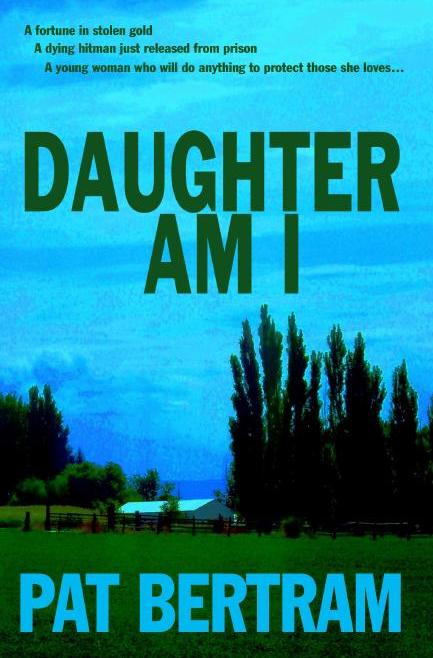
I could do what other authors are doing — give up on promotion to concentrate on writing another book that might be “the one.” The problem with this (for me, anyway) is that I already have two more books that will soon be published. Daughter Am I (sort of a gangsterish book with my own twist on the bootlegger story) will be published in August, and Light Bringer (sort of a science fiction, alternate history, retelling of human history novel, with my own twist on the past), will be published in November.

I can see one problem — I can’t write an elevator speech! After all this time, I still don’t know how to describe my books in a single sentence. Nor have I figured out my genre. One reader emailed me (yes, I do read and respond happily to emails from people who aren’t trying to sell me something unless it is one of those endlessly forwarded messages that no one ever reads). She commented: I now see what you mean about an unnamed genre. Kind of a big picture conspiracy, behind the scenes machinations and how that affects the little guy (or gal) on the street. (Thank you, Wanda!)

So, what’s the answer? I promise, when I figure it out, I will let you know. By November, I hope. Light Bringer is my magnum opus (of the four people who have read it, two called it brilliant; the other two merely said it was wonderful), but how magnum can an opus be if no one reads it?

Meantime, my fame, such as it is, is spreading. In the past few days, I found my name in four different blog posts and links to my blogs in a couple of surprising places:

Murder in the Wind — I won! Thank you! By Sheila Deeth

I blog, you blog, we all blog — Why? By Claire Collins

To Kindle or Not to Kindle by Norm Brown

Interview with Alan Baxter on Smashwords

Bookselling Links on the New Atlantic Independent Booksellers Association website

Yahoo Answers

It’s a good beginning.

add to del.icio.us : Add to Blinkslist : add to furl : Digg it : Stumble It! : add to simpy : seed the vine : : : TailRank : post to facebook

The Apollo Moon Landing, The Dish, and Me

I was taking a walk on earth forty years ago when men were walking on the moon. Unlike everyone else, it seems, I wasn’t sitting in front of a television. For one, we didn’t have a television, for another, the whole thing seemed rather ho-hum to an inveterate reader of science fiction. If we hadn’t been there in truth, we’d been there in stories, in imagination. So, oblivious to the excitement, I went for a walk.

The passing years — and all the movies and the books about the subject — didn’t change my mind. Perhaps it was as great an achievement as people seemed to think. Perhaps we had wasted our money in a moon race instead of solving our problems here on earth as many said. But the matter never caught my attention. Until . . . The Dish.

The Dish, a movie released in 2000, tells the story of the Australian participation in the 1969 moon landing. A dish, placed in the middle of a sheep paddock in Parkes, Australia, was to actually transmit the landing and moonwalk to the world.

Why did this movie about a little known aspect of the mission catch my attention? The characters. The quirky characters, their humor, and their excitement to be a part of this major undertaking made me experience, for the first time, the wonder of the achievement.

Thinking of the Apollo landing (now why would I be thinking about that today? Hmmmm) and subsequently The Dish, I was reminded that if we filter our stories through the eyes of our characters, if we make the characters excited about the events of our story worlds, if we make them want to know the facts of our worlds, then we will allow our readers to experience the excitement for themselves.

(What, you thought I’d pass on the chance for an object lesson about writing? Surely, you know me better than that by now!)

add to del.icio.us : Add to Blinkslist : add to furl : Digg it : Stumble It! : add to simpy : seed the vine : : : TailRank : post to facebook

Wringing the Ings From Our Things

I know you’re getting sick of hearing how much I hate copyediting, but it’s only my work I hate copyediting. I truly get a thrill out of reading a soon-to-be-published book that one day thousands of people might love. In addition, I get to mark up the manuscript. My suggestions probably won’t make any difference to the success of the work, but they might help keep future readers anchored in the story. It seems that nowadays most readers are also writers, and while we may be a forgiving lot, inconsistencies, word echoes, and improper phraseology easily jerk us out of the fictive dream.

One of the most common problems I’m finding is wrongly used participial phrases that end in ing. According to The Elements of Style by Strunk and White, a participial phrase at the beginning of a sentence must refer to the grammatical subject.

The example in the book is: Walking down the road, he saw a woman accompanied by two children. Who is walking? He is, of course, since he is the subject of the sentence, and the ing phrase always refers to the subject. If the woman is walking, you have to rephrase the sentence: He saw a woman, accompanied by two children, walking down the road. You, I’m sure, would never have to worry about who is walking because you’d never use such an ambiguous sentence in the first place!

The other examples of wrong phrases Strunk and White give are humorous and show why it’s important to follow the rule:

Being in dilapidated condition, I was able to buy the house cheap.
Wondering irresolutely what to do next, the clock struck twelve.
As a mother of five, with another on the way, the ironing board was always up.

In case you don’t know how to rephrase the above sentences, here are my quick efforts:

Because of the dilapidated condition of the house, I was able to buy the place cheap.
As I wondered what to do next, the clock struck twelve.
A mother of five, with another on the way, I was never able to put the ironing board away.

Another ing problem comes from simultaneous actions, when an author has a character do something that’s physically impossible. For example: Pulling out of the driveway, he drove down the street. He cannot be pulling out of the driveway at the same time he’s driving down the street. He pulled out of the driveway, then drove down the street.

I know you know all this, but such sentence structures do slip into our writing. It’s up to us to wring them out of our work.

add to del.icio.us : Add to Blinkslist : add to furl : Digg it : Stumble It! : add to simpy : seed the vine : : : TailRank : post to facebook

No Whine, Just Champagne Writing Discussion

Another week of summer has passed since my chat group No Whine, Just Champagne last met. Don’t know whether to be glad the heat is going to be leaving us, or whether to be sorry that winter is creeping up. There. Now don’t you feel just a trifle cooler imagining the coming snow? Lately, I’ve been thinking about how writing is a way of playing with our readers, making them worry about the outcome of the story, making them think one thing is going to happen and surprising them with another, making them feel what you want them to feel. Words are powerful tools, and writing is a wonderful way to use one’s time.

I’m in the midst of editing my final manuscript which means that this winter I will have no good excuse not to get back to writing. I’m sure my poor hero will be thrilled. I can’t remember if he’s still feeling angry under a blood-gushing red sun, or if he’s feeling playful under an orange one. Either way, it’s long past time for me to do some creative writing. And, for the first time in a very long time, I’m looking forward to getting back to my story world. I have learned a lot in these many months of editing, and I know one thing — I will not make the mistake of using too many wases. It’s agonizing — and time consuming — to get rid of them.

I’m also at a standstill with promotion. Don’t know where to go from here, so it’s just as well I have all these manuscripts to edit. 

So, that’s where I am in my writing life. Where are you in yours? Do you have any writing concerns you’d like to talk about? Anything new, such as a different direction you’d like to take or a technique you’ve learned? How have you been manipulating your reader? Have you learned the secret of promotion?

Let’s talk.

The group No Whine, Just Champagne will meet at the group Discussion #74  for a live discussion about **** on July 16, 2009 at 9:00pm ET. I hope you will stop by. At least this time you cannot use the excuse that we don’t talk about what you want to talk about.

**** Insert your choice of topic here. 

If you can’t make it to the live discussion, post your comments here. I’m listening.

add to del.icio.us : Add to Blinkslist : add to furl : Digg it : Stumble It! : add to simpy : seed the vine : : : TailRank : post to facebook

Sex SCENE not SEX Scene

One problem new writers have when they approach a sex scene is that they think of it as a SEX scene rather than a sex SCENE. Any effective scene — sex or not – serves multiple purposes. This is especially true of a sex scene, otherwise it will seem unconnected to the story, as if you just threw sex in the mix because you felt it was time to titillate your readers.

One good use of a sex scene is to show character. One of my favorite scenes in my novel A Spark of Heavenly Fire is when Jeremy King, a world famous actor, sleeps with a woman he just met in a bar.

The sound of weeping woke Jeremy. He turned his head toward his companion and saw one trembling shoulder and a tangle of gleaming hair.

He stretched luxuriously. The red hair hadn’t lied. The girl had been all fire, kindling a passion in him he hadn’t felt in years. The memory of it made him hard.

He reached over and pulled the girl into his arms. He smoothed back her hair and kissed away her tears, murmuring, “Honey,” and “Sweetheart,” and “Dear.”

“I’m such a terrible person,” she said, sobbing.

“Shh. Shh,” he whispered between tiny kisses.

Her arms stole around his neck, and her lips sought his. In a surprisingly short time she bucked beneath him, calling out his name.

You’ve still got it, King, he thought exultantly. Then, after one final thrust, he tumbled into oblivion.

I always liked that scene. It’s not very graphic, but it did what I wanted it to — define the characters

Another good use of a scene is to show the ebb and flow of human connection. For example, you could have three scenes spread throughout the story. In the first scene, perhaps, the man climaxes, feeling connected to the woman. When he immediately goes to sleep, she feels disconnected. In the second scene, perhaps he can’t get it up, leaving him feeling disconnected, but since he tries to make it up to her by cuddling her, she feels connected. In the third scene, they climax together, perhaps cuddle afterward, so they both feel connected.

In addition to the sex, then, you show a pattern of connection and disconnection between the couple (in other words, conflict), you show a whole new perspective of the characters, and you show a change in their relationship. You also end up with a subplot that adds to the overall richness of the story. In other words, you end up with a series of sex SCENES, not just SEX scenes.

add to del.icio.us : Add to Blinkslist : add to furl : Digg it : Stumble It! : add to simpy : seed the vine : : : TailRank : post to facebook

Sex Scenes: Self-Concept and Sex Concept

I just finished reading a book about how to get anyone to do anything, and the basic premise is that you figure out what a person’s self-concept is, and you play up to that. For example, if the person thinks of himself as a good father, you appeal to his father image: “If you help me, it will make a better world for your children.” If you go against a person’s self-concept, he will resist you and may end up disliking you. For example, asking the father to work on a night when he promised to be at his kid’s little league game is a sure way to lose his good will.

Since I have sex scenes on the brain — my last few posts focused on sex scenes — it occurred to me that one way to make a sex scene an important scene rather than just throwing it in because you felt it was time to add a sex scene, is to play on a character’s self-concept. What if a character were making love to a person other than a spouse? Would this lovemaking enhance his or her self-concept, or would it go against it? If the scene enhanced the character’s self-concept, we would learn more about the character. Perhaps she sees herself as a great lover, in which case nothing mattered except the lovemaking– not her marriage vows, not her husband, not her children — and so we know what kind of character she is. If the scene went against the character’s self-concept, then we have a character with inner conflicts. Perhaps the character sees herself as a faithful, till-death-do-us-part wife. In which case, no matter how exciting or tender the scene, it leaves her in turmoil.

I wonder if a character could have a sex concept that is the opposite of his self-concept — a great lover and a faithful spouse? In this case there would be no conflict if the character had an affair. Or would there?

I’m not sure what I’m trying to say—as usual, I am using this blog as a way of concentrating my thoughts. I guess the point I’m trying to make is that a sex scene is a good time to show a character confronting his essence. Without, of course, destroying the mood.

add to del.icio.us : Add to Blinkslist : add to furl : Digg it : Stumble It! : add to simpy : seed the vine : : : TailRank : post to facebook