The Limelight

I’ve never thought of myself as particularly conceited or self-absorbed beyond what is normal and healthy. In fact, I tend to be more self-effacing than is probably good for me and am seldom comfortable seeking the limelight.

[I had to pause here to look up “limelight.” Interesting to note that it actually was a “lime” light — a cylindrical piece of the mineral lime that when lit produced a bright white light that was used to light theater stages in the early l800s. By the late 1800s, “limelight” had already taken on its present meaning of being the center of attention.]

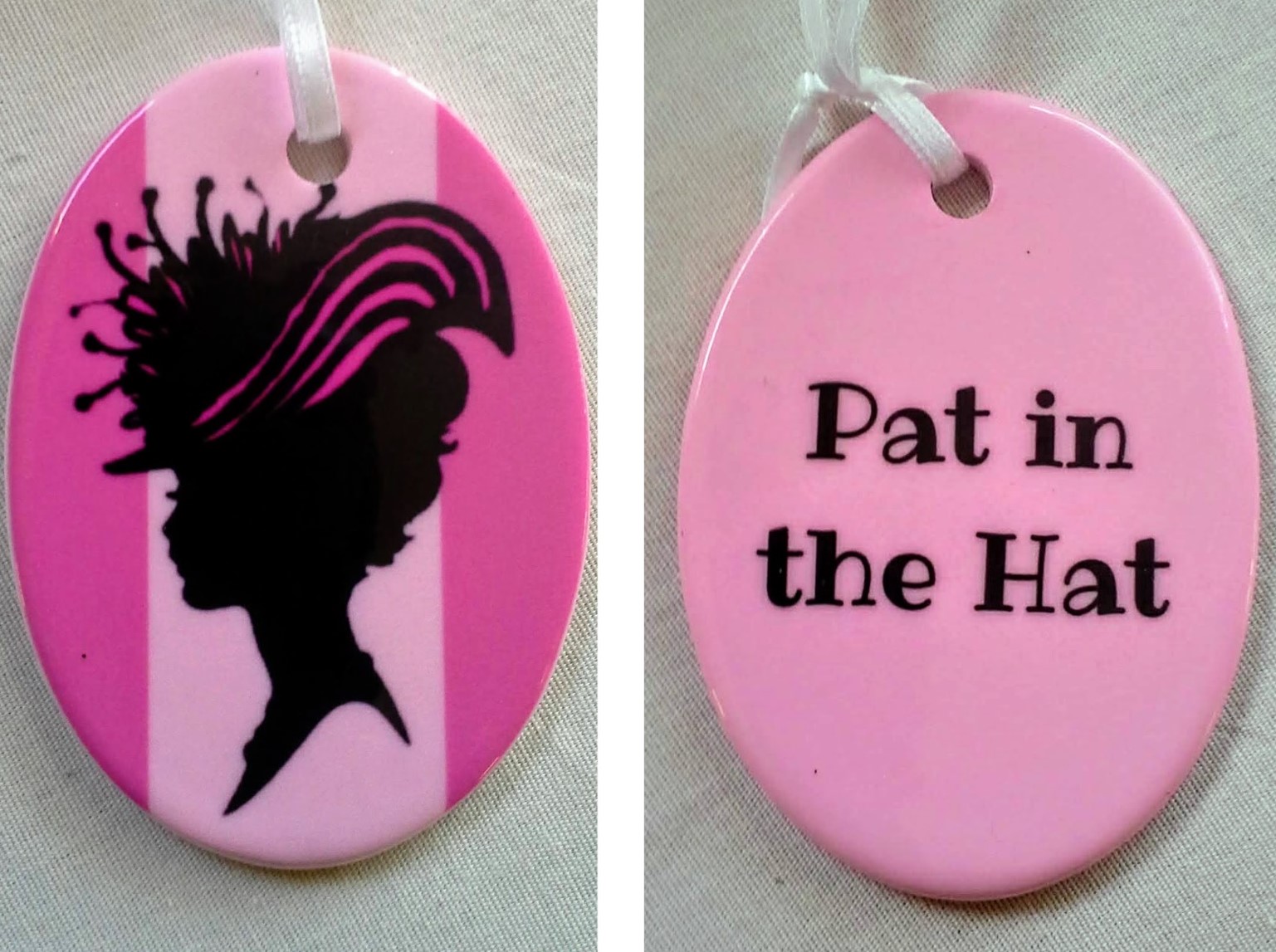
Despite my unease at being the center of attention, there are times that I enjoy being noticed, or should I say, there are things about me that I enjoy being noticed. For example, my car. When I took my various trips, from coast to coast and border to border, it thrilled me that so many people noticed and commented on my vintage VW. It’s the same with my hats — people notice me because of my fancy headgear (actually, it’s not me they notice but the hats. Without a hat on my head, I’m not sure as many people would recognize me).

And now, I have my grass. When I am out there watering, passersby all comment on my gorgeous lawn. The color is bright, for one thing, and for another, there I am, in the middle of November, watering the greenery when everyone else has let their grass turn brown. Of course, “everyone else” hasn’t recently spent a small fortune on their lawns, so it behooves me to take care of my investment.

[Yet another aside: my silly self is acting up, wondering if a horse can be said to be behooved.]

You’d think my books would be on that list of accoutrements that bring me notice, but although they originated with me, they’re not part of my personage. You can’t tell I’m a writer by looking at me the way you can tell that I am “Pat in the Hat.” In some way, my books don’t feel as if they are a part of me at all, though I do take the credit when someone tells me they like one or another of my tales. Now, if I were a recognized “name,” things might be different, and who knows, there still could come a time when I can test that theory.

But for now, I take my fame — and the limelight — where I can get it.
***

What if God decided S/He didn’t like how the world turned out, and turned it over to a development company from the planet Xerxes for re-creation? Would you survive? Could you survive?

A fun book for not-so-fun times.

Click here to buy Bob, The Right Hand of God.
Pointless and Plotless

I accidentally checked out a Christian novel at the library the last time I went. Normally I don’t care what I read because almost every book has passages and even pages that I skip, such as graphic sex in romance, over-the-top violence in thrillers, and gory scenes in horror stories, so it’s no problem to skip the proselytizing in books written for a religious-oriented readership.

But this book . . . ai-yai-yai. Not a page went by without a sermon, and most of those “sermons” were given by the loving husband, which if they were given to me, would have turned me against him and religion both. He wasn’t a preacher by trade, which would have made his preaching understandable. I think he was a fireman, but that bit of information was swallowed up in the excess of religious rhetoric, so I’m not even sure if that’s the truth. He wasn’t a dynamic character, that’s for sure!

I did like one point he made, though, that when Jesus calmed the waters, he not only saved his disciples, but also all the little boats that were in the turbulent sea at the same time. It’s always interesting to think about those who we might have influenced that we never knew about. (Although I looked, my name was not listed at the back of the book with all the folks who unwittingly influenced another person.)

Still, one point does not make a story, and the story in this particular book was a cheat, mostly because there was no plot. (And despite the preaching, there was no real point to the story, either.) No matter what happened, God saved the heroine. For example, she found out later in life that killers had been set upon her when she was young. When she finally met one of her nemeses and found out about the contract on her, she asked why he didn’t kill her as he’d been paid to do. He told her it was because of the ten armed bodyguards that always surrounded her. (Not bodyguards with ten arms like the goddess Durga, but ten bodyguards with guns.) Apparently, they weren’t bodyguards but angels. Still angels with guns? But that’s an issue for another time.

That wasn’t the only case of her being rescued by angels. Oddly, there was nothing in the book that made her so special that she was surrounded at all times by an army of angels, and why other characters were so unspecial they were left to their fate. But ignoring that whole issue and going strictly by a literary rather than religious perspective, where’s the suspense? What could have been chilling encounters ended up being . . . nothing. Because nothing happened. Basically, she did what she wanted, and everything turned out for her. The only conflict was of her own making, if the mild unease the character experienced from time to time could be called conflict.

Oh, well, I can’t say this is the worst book I ever read. Some well-respected works that won major awards I found even more ridiculous, but that’s the risk one takes when one grabs a handful of books without spending time vetting them.

***

What if God decided S/He didn’t like how the world turned out, and turned it over to a development company from the planet Xerxes for re-creation? Would you survive? Could you survive?

A fun book for not-so-fun times.

Click here to buy Bob, The Right Hand of God.
Creatures of Words

I’ve long thought that what makes us human — and what separates us from other creatures — is our ability to tell and appreciate stories. From the beginning, as early humans huddled around the fire, they exchanged stories, and the best storytellers were revered.

Stories are our foundation, as necessary to us as love and probably always have been. Stories help us figure out who we are as individuals, and who we are as a people. Stories take us away from our problems, yet they also help us solve them because we can learn how to cope with tragedy, for example, from the stories of those who have dealt with a similar tragedy.

With all our sophistication and technology today, we haven’t come far from our primitive beginnings. Where once we huddled as a group around flickering fires, we now huddle singly before our flickering screens, but the need, the basic human need for stories is the same.

Underlying all this storytelling is language. Without language, there would be no stories. Some people believe that without language, there wouldn’t even be any thought because we need words for thoughts. Making the situation circular, without thought to think up words, there would be no language, either. Did the capability for language evolve at the same time as language itself? Did language create us as we were creating it?

There had to have been a time in our early history where communication was done by gestures and grunts, where any story had to be a simple matter of show rather than show and tell, but it’s hard to imagine such a time.

In trying to perceive a world without words, it becomes understandable that people who have to deal with various forms of dementia where they lose the ability to process words become isolated not just from others but themselves because more important than the stories we tell others are the stories we tell ourselves — about what we are thinking and feeling, what we want, what we hope for, what we regret, what we grieve for.

Memories aren’t just pretty pictures in our minds; since they are often accompanied by words, they too become stories we tell ourselves. In fact, stream of consciousness is all about the story of us that we tell ourselves, and stream of consciousness is words. The reverse is true, too. Without memory, we have no story to tell ourselves.

Words help us define what we are feeling, help us connect to those feelings, and ultimately help us leave those feelings behind. Without words, a feeling is simply that . . . a feeling.

Words must have some sort of survival benefit, otherwise they probably would never have come about, but as I once wrote:

Is language a tool of human evolution, or is it a tool of devolution? Are words a way of dumbing us down while smartening us up? Words seem to keep us focused on the humanness of our world, keep us connected to each other both when we are together and when we are far apart. But are those very words keeping us from a greater connection? Some people believe Earth is a living, breathing creature. Some people think solar systems and galaxies are also alive. Some even believe the universe  — all that exists, ever existed, will ever exist  — is a living, sentient being. If this is true, are words filling our heads and airways with so much noise that we can no longer feel the breath of Mother Earth, can no longer hear the music of the spheres?

I don’t suppose any of this matters. We are creatures of words. Words create us, and we create them. And even in a world where the spoken word seems to be in danger of being displaced by the various tools at our disposal, those tools themselves — texts, emails, blogs — need words to work.

In other words, words — ever changing though they might be — are here to stay.

***

Pat Bertram is the author of Grief: The Inside Story – A Guide to Surviving the Loss of a Loved One. “Grief: The Inside Story is perfect and that is not hyperbole! It is exactly what folk who are grieving need to read.” –Leesa Healy, RN, GDAS GDAT, Emotional/Mental Health Therapist & Educator.

My Butterfly Mind

I read not simply for the story or context but also to give my conscious mind something to do while my subconscious does the work of processing the thoughts that flit like butterflies through my mind. The problem nowadays is that my shortest-term memory is shot, so as I watch those butterflies feast on each thought, if one catches my attention, a moment later, it’s gone, leaving me with the feeling that I was supposed to remember something that I forgot.

Usually the thoughts are not important. For example, the thought today that I sought to recapture and only remembered much later was to remember to take the vitamins and minerals that are supposed to boost the immune system. Actually, the stray thoughts are always relatively unimportant. If they were important, such as remembering that I have something cooking on the stove, then I immediately get up, forgetting the rest of my train of thought.

Hmm. Sounds as if I am mixing my metaphors, a butterfly mind with a train of thought, but I suppose a mixture is better than continuing to beat the first metaphor into redundancy. (Was that a third metaphor? Does it matter?)

You can tell that today was a relatively uneventful day since the only things on my mind are thoughts about thoughts. An uneventful day is good for me, though not so good for this blog. But then again, I am sure you are sick of my less-than-exciting treatises about my adventures in gardening.

I did speak to a couple of people today when I was out walking, making sure to keep my distance, so that was nice. It doesn’t take much to make me feel as if I am not totally alone. And I talked to a couple of people on the phone yesterday as well as received some texts. But still, I am mostly isolated with thoughts generated only by my own mind, and I follow along those thoughts as they flit about, gathering what nectar and nourishment they can, until . . .

Wait, what was that I just thought? I forgot, but I’m sure it was unimportant. Or not.

***

What if God decided S/He didn’t like how the world turned out, and turned it over to a development company from the planet Xerxes for re-creation? Would you survive? Could you survive?

A fun book for not-so-fun times.

Click here to buy Bob, The Right Hand of God.

Murder at the Museum Tonight

On the front page of the local paper, there is an article about the murder that is taking place tonight at the museum, and my name was listed as the writer of the mystery. There haven’t been too many times in my life when I’ve been mentioned in a newspaper article so that was nice. Of course, if the article was about my winning the Nobel Peace Prize or a Pulitzer Prize or something like that, it would have been much nicer. Or maybe not. Would I really like that sort of fame? Or any kind of fame? Luckily, this mention won’t change my life at all.

Being the writer of the mystery rather than an actor means I don’t have to attend the event, which is a good thing. I didn’t feel well last night and wasn’t doing much better when I woke up, so I slept most of the day. To be honest, not feeling well shocked me more than pained me because except for an occasional allergy flair up, I haven’t been sick at all since this whole Bob thing started. I haven’t been around people any more than I have the past eighteen months, so who knows where I got the stomach cramps and nausea. Maybe something I ate.

I was pleased with the mystery I wrote. I was even thrilled that I managed to come up with a few clues. A poster proved that a particular character was performing in another town on the day the sacred artifact was hidden in the hotel. A train stub proved that one suspect had come to town early enough that he could have checked into the room with hidden object if he had wanted to. A diary entry proved that two suspects had never been in that town before. A fingerprint proved nothing since it was a from a chambermaid who had an excuse for being in the room. And a guest register proved that the one person who had said she’d never been to the hotel had actually been a guest at the right time.

You can find the mystery here: Wow! What a Story!
And the characters here: A Murder of Crows

***

Pat Bertram is the author of Grief: The Inside Story – A Guide to Surviving the Loss of a Loved One. “Grief: The Inside Story is perfect and that is not hyperbole! It is exactly what folk who are grieving need to read.” –Leesa Healy, RN, GDAS GDAT, Emotional/Mental Health Therapist & Educator.

Gardening is Like Writing

I’ve heard it said that there are two kinds of writers, plotters and pantsters. Plotters outline, so before they sit down to write, they know exactly what they are going to say. Pantsters write by the seat of their pants, so when they sit down to write, they never know what they are going to say.

Me? I’m neither. I start with an idea, then add another idea, and keep adding ideas until I know where I am going to begin and where I am going to end. The middle part is a matter of finding ways to connect all my disparate ideas, so by the time the book is written, the story seems inevitable, as if had been written by a plotter.

As it turns out, I garden the same way. I started with a few lilac suckers from a neighbor’s lilac bush. At the time, I just planted them more or less at random because there was no order to the yard. The fence that was here at the beginning of my tenure enclosed only a small part of the back yard, which to me was a selling point because I didn’t want a huge yard to take care of. Between the fence and the alley was a carport, and next to the carport was a decrepit garage.

I had no plans for anything back then except to shore up the garage, but eventually a sibling talked me into fencing the property, which turned out to be a great idea, even though I ended up with a huge yard. The fence adds a modicum of safety, from marauding dogs if nothing else, and it defines the property. Eventually, old garage and carport were removed and a new garage built.

And during all these projects, I added a few more bushes. Then other plants. Then the pathways. Then the grass. Now I am filling in the gaps in the landscaping, and suddenly, the yard looks inevitable, as if it had been gardened by a plotter.

The truth is, I did everything wrong. The hardscaping is supposed to be done first before the first greenery is planted, but in my case, the hardscaping grew along with landscaping. And I planted by trial and error, which is a gardening faux pax, even though that’s how I do everything. (I’ve heard there are two kinds of geniuses — the early bloomers who are born super intelligent, and the late bloomers who learn a sort of genius through trial and error. I still have a long way to go to reach genius status, but through trial and error, I might get there someday.)

I suppose with gardening, like writing, rules don’t matter as long as what you do works and you end up with cohesive plot, whether a novel plot or a garden plot.

I will be interested to see what it all looks like next spring, though as long as nothing major occurs to destroy the grass and plants, it should be beautiful.

***

What if God decided S/He didn’t like how the world turned out, and turned it over to a development company from the planet Xerxes for re-creation? Would you survive? Could you survive?

A fun book for not-so-fun times.

Click here to buy Bob, The Right Hand of God.

Global Catastrophe

I recently came across another of those ubiquitous articles about what we can do to stop climate catastrophe. Those articles always amuse me because some of their suggestions are the same sort of things Americans were told to do in the depression, in the world wars, in the early days of the population explosion. In fact, they are the very things I have been doing my whole life, such as reducing food waste (what food waste? I have no food waste) and reducing water usage.

Other things, though, are about spending money. Lots of money. The article stressed weather-proofing one’s house, which is a good idea because it reduces energy bills. It also said to invest in energy-efficient appliances, but if you keep your use of appliances to a minimum, there’s no need to buy new appliances especially since the old ones are going to clog landfills. Same with vehicles. There’s no need to invest in an energy-efficient or expensive electric vehicle if you simply drive less. (In the past fifty years, I’ve driven fewer than 200,000 miles. Still way too much, but almost nothing compared to most people.) They conveniently forget to mention that the batteries on electric cars wear out and that they pose a hazard when they are dumped.

One thing they never, ever say anymore is to have fewer children. Back when I was child-bearing age, not having children was supposed to be good for the world and the environment to reduce the toll of overpopulation, a philosophy I adhered to. Unfortunately, most of those believers suddenly changed their minds when their biological clocks started ticking, so there was a bit of baby boom when those women who had put off having kids ended up having kids at the same time as the younger generation.

I know a woman my age who has 65 grandchildren, great-grandchildren and great-great-grandchildren. If she had not had any children, there would be 65 fewer people on the earth to contribute to any sort of global catastrophe. There would also be 65 fewer people to buy all those energy efficient appliances and electric vehicles, which is probably why the whole zero population growth movement died decades ago.

I suppose I should be less amused by the whole global warming thing, and I might be if it weren’t for the fact that the same panic mode has been touted my whole life while the subject of that panic has changed. And if there weren’t so much emphasis on spending money and making rich people richer. 

In thinking about all this, I considered writing a book about some catastrophe outside of our control that was about to descend on us, such as sun emissions or comets or aliens or whatever, and the whole climate change scenario was to keep us peons focused on our guilt while the power brokers raked in the cash until the catastrophe came so near that they couldn’t hide it any more.

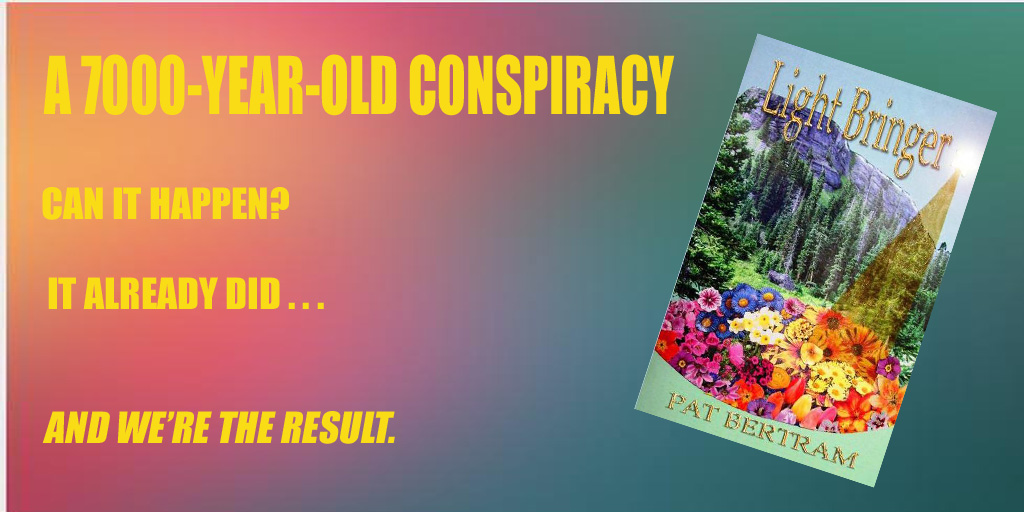
And then it dawned on me. I already wrote that book — Light Bringer. In the novel, the problems Earth is facing has to do with a tenth planet in our solar system, one with such a huge elliptical orbit that it returns to affect Earth every 3,600 years, as was explained in this brief excerpt:

Philip made a harsh sound that might have been laughter. “In the fifties and sixties, stories of alien encounters were about saving the earth from nuclear weapons. In the seventies, eighties, and nineties, they were about saving the earth from global warming. Today they’re about creating a one world government, warning us that if we don’t have a unified global agenda, we don’t get to join the galactic federation.”

“Those are nothing more than systems of myth that each generation accepts,” Teodora said. “What we are dealing with here is a real problem. There is a tenth planet in our solar system, and it is close enough that it is already having adverse affects on the earth. Besides the growing severity of all types of storms, during the twentieth century there has been an escalating number of major earthquakes of unexplained origin. The global warming you mentioned is also being caused by the nearing planet, and during the coming years things are going to get worse.”

It could be true. Who knows.

Fishing Peers

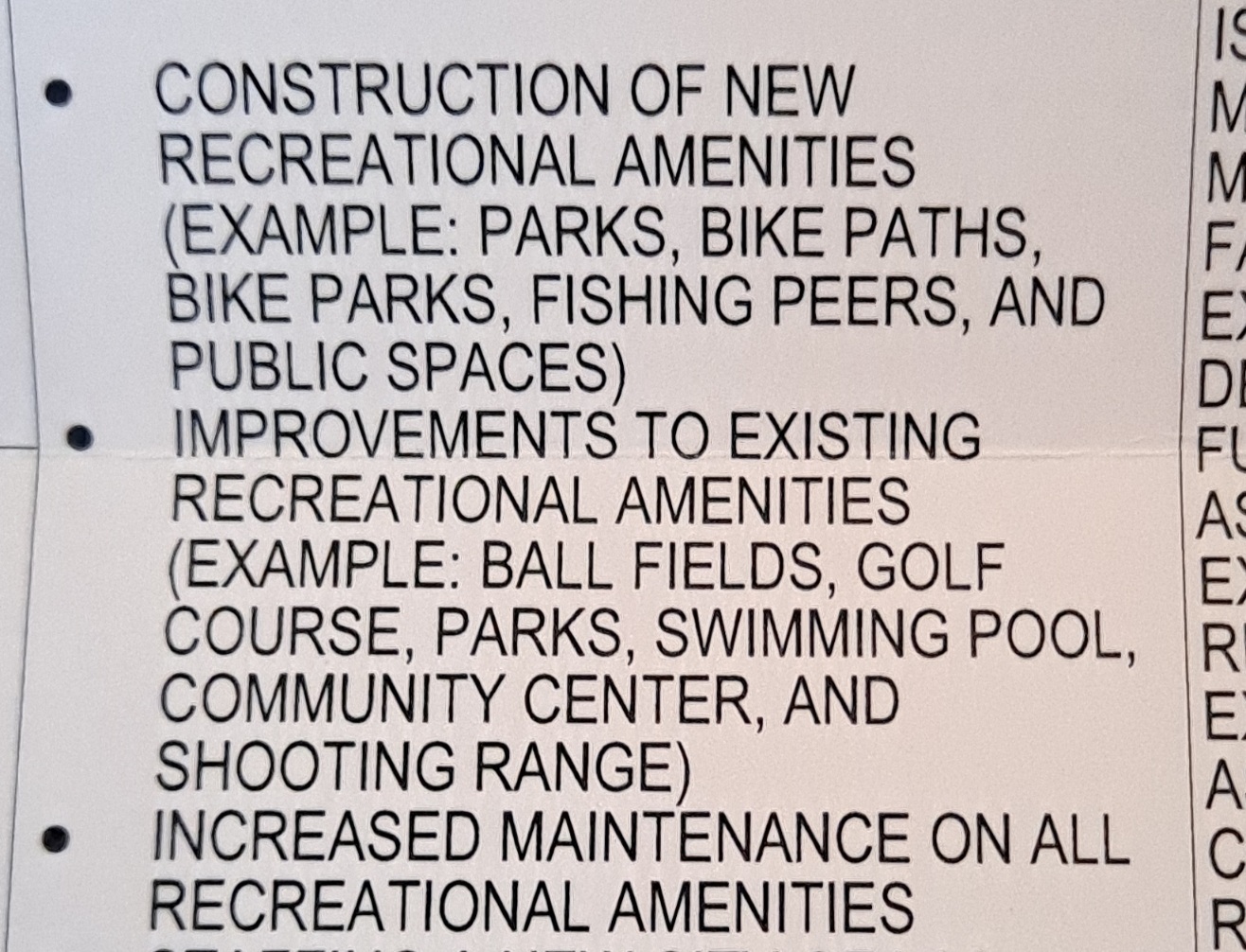
November elections are coming up, and mail-in ballots are being sent out. Locally, the city wants to raise the sales tax to fund recreational activities and improvements throughout town, as laid out in this photo of that part of the ballot:

Sounds good, especially the construction of new recreation amenities. Parks. Bike Paths. Bike Parks. Fishing Peers.

Wait. What? Fishing peers?

Does this mean that if the bill passes, the city will provide fishing buddies to anyone who wants one? Since they are going to construct the fishing peers, that must mean robots of some kind. Sounds very avante garde for this area of the country, but I suppose even rural areas need to get with the times.

There are no fishing holes in town, at least not that I am aware of, so perhaps the fishing experience will be an inland excursion of some sort, just our fishing peers and us hanging around, holding a fishing rod, and hoping for some flying fish to waltz on by.

Or not.

Since a shooting range might also be part of the package, it’s possible we and our fishing peers might be shooting fish in a barrel.

What can I say: It’s government. You never quite know what you’re going to end up with when you “cast” your vote.

***

What if God decided S/He didn’t like how the world turned out, and turned it over to a development company from the planet Xerxes for re-creation? Would you survive? Could you survive?

A fun book for not-so-fun times.

Click here to buy Bob, The Right Hand of God.
Ghosts Who Write

I got a book from the library written by what I thought was one author but it turned out to be written another author I’ve never heard of. So often, in these days when bestselling authors become brand names, after they are dead, their name lives on in the hands — and mind — of a different writer.

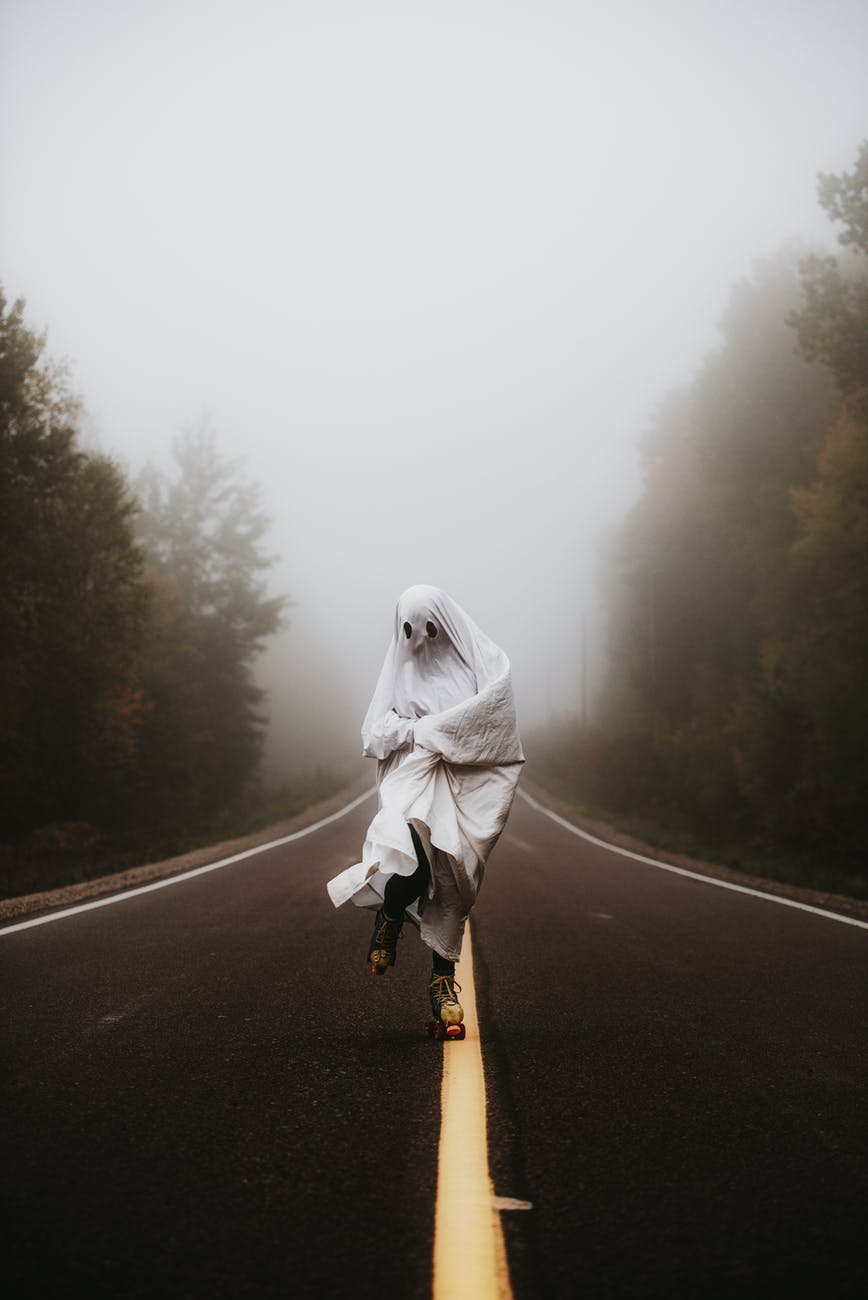
Which leads me to believe that old bestselling authors don’t die, they become ghost writers. (Though “writing ghosts” or “ghosts who write” might be more accurate.)

I got fed up with Sue Grafton and her characters long before she hit the middle of the alphabet, but I must admit I admire her for her stance on letting her series die with her. So Z really was for zero. (That was supposed to be the final book, Z is for Zero, but she never had a chance to start writing it.) Besides, once a new Sue Grafton writer finished with Z, so would the author be finished because there is no letter after Z. Unless, of course, her publishers started inventing new letters so that the series could continue indefinitely. (<~> is for <~>####, perhaps?) Luckily for us, Grafton put an end to that.

But other authors and publishers aren’t so kind. One author (who is still alive, by the way) has written and cowritten an estimated 278 books. (I think only 71 by himself, though such numbers are hard to find.) After he’s gone and each of those co-authors continue the brand, a thousand books — two thousand books — isn’t beyond possibility. According to one estimate, there are 26 new releases from this fellow. Some people only read books with his name on the cover, which is okay because I never do. His less than stellar writing does not appeal to me. What surprises me is that people don’t care about this particular book farm (where he raised books like cattle). They buy his books anyway.

But that’s not what this particular blog was supposed to be about. The whole purpose was to post my silly thought about dead authors being ghost writers.

My writings might continue to be read after I’m gone — after all, blogs are forever, and some of my books are on the Amazon treadmill (as long as people order them, they will be published) — but no one will continue writing in my name except by accident. (Mine is not a common name.)

I’m glad that I won’t be a writing ghost, though I would be just as glad (I think I would, anyway) if my books sold well enough for my name become a household brand.

***

What if God decided S/He didn’t like how the world turned out, and turned it over to a development company from the planet Xerxes for re-creation? Would you survive? Could you survive?

A fun book for not-so-fun times.

Click here to buy Bob, The Right Hand of God.

Lies I Tell Myself

I’ve been lolling around all day, reading and playing a game on the computer. I pretend my being lazy has to do with resting my knees, but the truth is . . . well, the truth is I really do need to rest them. I overdid on the digging, and I irritated my iliotibial band, a tendon that runs on the outside of the leg from the hip to below the knee.

Although I blame the digging for the problem, it actually stemmed from bending the knees over and over to pick up the clumps of grass roots and shake out the dirt. You’d think all that bending of the knees would make the muscles and hence the tendon stronger, but apparently not. Sitting at the computer doesn’t help, either, but instead exacerbates the problem with the iliotibial band.

I have been feeling elderly the past couple of weeks, as if I were ninety years old and barely able to walk or rise to my feet from a sitting position. I had worn a knee brace the last few times I was out working in the yard, as well as when I wasn’t, and that helped to a certain extent. But what really helps is being lazy and resting the leg.

When I look out the window, I see all that I still have to do, but I am so lazy even the itch to pull more weeds doesn’t get me out the door. To be honest, it’s better to wait until we get some rain to make it easier to dig, so that’s what I am waiting for — rain.

Or so I tell myself.

As you can see, I tell myself a lot of lies that are not really lies.

I do need to rest my knees, though. I am too young to be so old. (But also too old to even use the word “young” in any description of myself.)

I also need to add iliotibial band strengthening exercises to my knee exercise regime since both the joint and the tendon work together. Luckily, I won’t have to add too many new exercises. Some of the knee exercises I am doing are also good for the iliotibial band.

Now I just have to do the exercises. Some days I am lackadaisical (lazy) about doing the knee therapy even though I know it helps. Because of those exercises, the bad knee (the left knee) is now the good knee, while the good knee is the one that keeps buckling when the iliotibial band lets go. To make matters even more confusing, the right knee started out as the bad knee, but when the left knee went bad (not because of overdoing, you understand, but because I slept wrong), the right knee became the good knee.

I do think I’m young enough (there’s that “y” word again) that if I continue with my physical therapy, my knees — joints and tendons — should be able to recover.

I sure hope that’s the truth and not another lie I’m telling myself.

***

Pat Bertram is the author of Grief: The Inside Story – A Guide to Surviving the Loss of a Loved One. “Grief: The Inside Story is perfect and that is not hyperbole! It is exactly what folk who are grieving need to read.” –Leesa Healy, RN, GDAS GDAT, Emotional/Mental Health Therapist & Educator.