Verbosity

I hardly ever read a whole book anymore. Too many authors use too many point-of-view characters, which to me is sort of a cheat. I know it’s supposed to ramp up the suspense when the reader knows that the antagonist is doing but protagonist doesn’t. Knowing that doesn’t help since it works the opposite for me. It takes me out of the story and makes me forget why I am supposed to care about the hero. So what do I do? Follow along with the protagonist and skip the villain’s story. That way I don’t have to get in the mind of reprehensible characters, and I get to read a one-person story. In all the hundreds of books I’ve read this way, I think there might have been a single book where I had to go back and look for a point that I missed; in all other cases, I understood the entire story. Which means that most authors write a huge amount of redundancy.

I think the book I just finished was the worst — there were a couple of villains each with their own point of view, a couple of heroes each with their own point of view, and a couple undetermined characters. (One started out a villain and turned out to be a hero; the other started out a hero and turned out to be a villain.) After I got tired of the whiplash from changing points of view every couple of pages (short chapters!), I finally gave up and only read the series character’s point of view. (After all, that’s why I picked up the book — I wanted the series character’s story.) That made it a very short book, but way more interesting than all the flopping around. (The only good thing was that he flipped back to the past just a couple of times. Even more annoying that authors who switch frenetically between multiple POV are authors who keep taking the reader to earlier happenings when a sentence or two of flash back would have been sufficient. I don’t read those previous-time parts of books, either.)

As a novelist, if I can still call myself that after my long hiatus of not writing, I prefer writing from a single straightforward timeline and a single point of view, though I have written a couple of books from multiple points of views. In A Spark of Heavenly Fire, for example, I thought the story of the epidemic (which was the true antagonist of the book) needed to be seen through more than one pair of eyes. After having lived through The Bob, I’m sure you can understand that — everyone has had a different experience with the disease, from getting no vaccines and not getting ill to getting jabbed multiple times and getting sick multiple times despite the vaccine; from no problems to the worst problem of all — death; from “sheltering in place” with a house full of people to having to spend months at home alone with no one to talk to. If I told the story of The Bob from my point of view, nothing would ever happen. If I told the story from the point of view of people who are still fighting problems years after getting sick, that would be a completely different story. As would the tale told from the point of view of a doctor, nurse, hospital official, or politician.

As in the case of A Spark of Heavenly Fire, sometimes a story has so many sides it needs to be told by many characters, but there are very few such stories. Most of the horde of multiple point-of-view characters is simply author style and adds very little to the story.

Unfortunately, my reducing the length of any book I read to a single point-of-view character means that I go through more than one book a day. Which means more trips to the library. Come to think of it, I’m not sure that’s so unfortunate. It gives me a chance to sample the weather in all its variety, and gives me a chance to wander around the library and even speak a few words to a real person.

I suppose I should feel bad for reducing the author’s efforts to something akin to a novella or a pamphlet, but then, they should feel bad for subjecting me to their verbosity.

***

Pat Bertram is the author of Grief: The Inside Story – A Guide to Surviving the Loss of a Loved One. “Grief: The Inside Story is perfect and that is not hyperbole! It is exactly what folk who are grieving need to read.” –Leesa Healy, RN, GDAS GDAT, Emotional/Mental Health Therapist & Educator.

I Coulda Been a Contender

I was cleaning off my desk yesterday when I found notes for a blog post, including the famous line from On the Waterfront, “I coulda been a contender”. At first, I couldn’t figure out what I’d planned to say about that famous line, but eventually I remembered the circumstances and what I’d been thinking. Nothing inspiring, that’s for sure. In fact, the complete opposite.

For the past year or so, almost every night as I get ready for bed, I get hit with a sudden pang of loneliness. On one particular night, along with the loneliness came the feeling that I was wasting my life, that I wasn’t living up to my potential, and the words “I could have been a contender” kept playing in my head.

And then I had an even worse thought — what if I am living up to my potential? What if this is all there is to me? It made me wonder which was worse, knowing you could have been a contender, could have been someone if things had been different or knowing you never could have been a contender, that it simply wasn’t in you.

I really do tend to believe that we all do the best we can at any given moment, and if we feel as if we are slacking, then perhaps there are other factors at work besides a disinclination to do what we think we should be doing. I’ve often thought I was lazy, even back when I was a child. I remember being sick once, and not wanting to go to school. I was out for a long time because I kept “playing hooky.” I stayed in bed and read, and was quite content. I don’t know what made me finally agree to go back to school; the only other part of that episode I remember was that I didn’t get a report card because I’d been out of school for so long. Years later, I mentioned this to my mother. She looked at me in astonishment and said, “You weren’t faking. You really were sick.” I don’t know what I had — maybe a cold. When I get sick, even with something minor, it tends to linger for weeks or even months, which is why I try to stay away from potential risks.

In a way, what I was feeling a couple of weeks ago is similar. Obviously, if I really had been sick when I was a kid, I couldn’t have gone to school even if I wanted to. And now, at my age and with my knees, there are a lot of things I couldn’t do even if I wanted to, like hiking great distances (or even short distances on treacherous ground). Even more unfortunately, I never could find a way to become a bestselling writer — I am not a salesperson, and despite my best attempts, I have never been successful at selling my books.

Looking back a few weeks to when I was feeling bad about being — or not being — a contender, I now realize it was in the middle of December during the bleak time of frigid temperatures and little sun. Because I didn’t really feel depressed (despite the depressing thoughts), it never occurred to me that I was having my usual winter bout of Seasonal Affective Disorder.

Luckily for my peace of mind, the feeling of wasting my life passed. Oh, it’s possible I really am not making full use of my life, but the sun is out, and we are back to our usual winter temperatures (highs in the forties, lows in the high teens and twenties), so it no longer seems to matter.

***

Pat Bertram is the author of Grief: The Inside Story – A Guide to Surviving the Loss of a Loved One. “Grief: The Inside Story is perfect and that is not hyperbole! It is exactly what folk who are grieving need to read.” –Leesa Healy, RN, GDAS GDAT, Emotional/Mental Health Therapist & Educator.
Through an Author’s Eye

In yesterday’s post, “Body Image vs. Self-Image,” I touched on some of the difficulties in describing characters realistically. For example, if you are writing about ordinary characters and mention that they are overweight and out of shape, you’ve already lost your audience. Even in non-romance genres, such as thrillers and suspense, readers want the fairy tale of beautiful heroine/princesses finding their hero/prince.

To that end, writers are limited in how they describe a character. Characteristics that in the real world have no meaning but are merely the luck of the genetic draw, become destiny in fiction. For example, a weak chin denotes a wimpy character, though in actual fact, it means nothing of the sort. Thin lips, while common in the real world and say nothing about the person, seem to denote a strait-laced character who looks at the world with disapproval. A receding hairline, which means nothing in real life except perhaps an excess of testosterone, makes a male character seem less than manly. Likewise, thin hair on women characters makes them seem ungenerous, though luxurious locks certainly don’t indicate generosity.

Eye spacing is also part of the genetic crap shoot, though wide-spaced eyes are used to show innocence and narrow-spaced eyes to show deviousness.

A character past their youth can have laugh lines, which makes them seem pleasant. But crow’s feet or marionette lines seem to indicate not someone who is simply getting older, but someone who is not taking care of themselves as they are getting older.

I’ve learned to stay away from describing characters other than perhaps mentioning eye-color, hair-color, and a ready smile, and leave the judgement to another character. Although a character — like a real person — might not be all that attractive, they can be beautiful when seen through the eyes of love. Evil characters who might be considered attractive under other circumstances could be seen as ugly from the point of view of the character who is caught in their clutches.

It’s not just body parts that hint perhaps erroneously at character that has turned me away from giving more than cursory descriptions of my characters (more than three attributes is unnecessary in any case) it’s that too many authors who write that their character is beautiful then go on to describe facial characteristics that other people obviously find attractive, but that I don’t, such as pillowy lips, high cheekbones, and a narrow nose. In fact, because of this, I never read descriptions of characters any more — or settings, either for that matter.

It’s a good thing that in real life we have photographs that might tell the truth of how we look (I say “might” because as far as I know, no one’s driver’s license photo looks like them). If we had to describe our thin hair, thin lips, lumpy bodies, to people who have not yet seen us, no one would ever want to meet anyone.

Thinking about this and how we become fast friends with people who would never physically meet the standards of a literary protagonist, it makes me wonder if in real life we ever do see the physical person or if the body is sort of a mirage pasted over the truth of the person, as if we are seeing each other through the mind’s eye. If so, how lucky we are to see each other that way rather than through an author’s eye.

***

Pat Bertram is the author of Grief: The Inside Story – A Guide to Surviving the Loss of a Loved One. “Grief: The Inside Story is perfect and that is not hyperbole! It is exactly what folk who are grieving need to read.” –Leesa Healy, RN, GDAS GDAT, Emotional/Mental Health Therapist & Educator.

Doing the Best We Can

I was talking to my sister the other day and I mentioned that the sum total of all that I have learned in my many years of living is that no one is just one thing and that we are all doing the best we can.

Well, except for me. Somehow I don’t include myself in that “doing the best we can.” I’ve been noticing lately how negative I am about myself and how much I beat myself up for not doing what I think I should be doing. For example, the pendulum of my lifestyle swings slowly from doing all I know how to do to be healthy to not doing anything to promote my health. At the moment, I am at the far reaches of the arc — exercising very little and eating very much the wrong thing.

Every night as I review my day, I castigate myself for my stupidity of falling into the sugar trap. After all, if you know the right thing to do to promote health and don’t do it, you are either lacking in discipline or not very intelligent. Or both. Still, it doesn’t help the situation to berate myself for my foolishness. In fact, it exacerbates the problem because it underlines the situation and makes it even harder to rectify the matter.

I’ve been trying to work on this — not being so negative about myself, not judging my actions, believing that I really did do the best I could that day even if it was far from my ideal. More than that, I’m trying to get away from the habit of reviewing my day. (It’s a fairly recent habit and I have no idea how it came about except that perhaps it started when I began to talk to Jeff’s picture when I was getting ready for bed to help relieve the onset of late night loneliness, which is also a fairly recent phenomenon.)

It seems to me that the very act of reviewing one’s actions is a judgement and that an active acceptance of one’s actions is a sneaky way of judging without judging, which is why I want to get away from the habit of reviewing my day. Whatever I did or didn’t do each day should be left in the past and truthfully, everything is in the past. Obviously, as soon as something has been done, it’s already part of the past and not the present. (Which leads me to question if one can ever actually live in the moment since the moment is thinner than a knife edge and by the time one has acknowledged the moment, it’s already in the past.)

Even though this negativity about myself is something I’ve been struggling with, I haven’t wanted to write about it because it would seem to contribute to the whole concept of beating myself up, but lately I’ve come to realize that this is a fairly common problem. So many of us hold ourselves to a higher standard than we do others. (Or do I mean a lower standard?) It makes sense when you think about it — our most intimate relationship is with ourselves. No matter where we go, there we are. We are witness to our most base body functions, our ignoble thoughts, our failures and foibles. I think it’s hard to accept all that as “doing the best we can.” We could probably do better and probably have at some time or other, but on any given day, I tend to think that perhaps we really are doing the best we can. (In this case I am including me in the “we.”)

I doubt making this effort will change my life in any significant manner, but if it helps bring me peace, then it’s all to the good.

***

Pat Bertram is the author of Grief: The Inside Story – A Guide to Surviving the Loss of a Loved One. “Grief: The Inside Story is perfect and that is not hyperbole! It is exactly what folk who are grieving need to read.” –Leesa Healy, RN, GDAS GDAT, Emotional/Mental Health Therapist & Educator.
Writing For Fun

Several years ago, I participated in a round-robin writing project where everyone took turns adding to the story. It frustrated me because it seemed as if many, if not most, of the writers made a point of changing characters or adding ridiculous elements, making it impossible to create a cohesive story. So I got the idea of doing a project like that, but each person got to create their own character and no one could change it without their permission.

Getting people to agree to participate was fairly easy. Back then, there was a site similar to Facebook, but for writers, so everyone I knew online was interested in writing. Getting them to follow through, however, was a completely different story. Even before we started, people wanted to change things.

My idea was that a horrendous crime was committed in the neighborhood, and I wanted to show how everyone was affected, but oh, no. That would be a boring story. Huh? We hadn’t even started so how would anyone know it would be boring? Besides, they were writers. They could make it not boring. Still, they decided it had to be murder mystery, which was in no way at odds with my original plan. Because if there is a crime in a novel, there has to be a resolution, right? I thought that went without saying.

My publisher at the time was one of the participants, and he said to me, “The hard part for you will be to relinquish control.” Again, huh? The point was for us each to be in charge of our character, each to post our segment to the blog on our assigned day, each to keep with story so that each segment followed the timeline in order to keep from making blunders that couldn’t be fixed. (In a novel written offline, obviously, one can edit at the end, but in a blog novel, as this one was, there is no editing afterward. It is what it is.) But almost no one did what they were supposed to. I ended up having to remind people when it was their turn, had to edit their hastily written segments to get rid of the worst of the typos, had to post the segments to the blog myself because no one wanted to do it.

So, the hard part for me was not in relinquishing control but being forced to take control. That was so not fun! Still, we did a did a trilogy, and by the third one, the authors that remained were very good, so that one was a bit more fun for me.

Afterwards, I tried to do a different collaborative novel with other writers, and again, before a single word was written, people wanted to change things. Instead of a mystery, we ended up with a sort of steampunk anthology with loosely connected stories. As it turned out, the person who insisted on steampunk dropped out, but by then we were committed to the story.

What has made me revisit all this is that I’m considering doing a blog novel, but with myself as the sole author, which should make things a lot less stressful than trying to do it with other people. I also like my original idea — how a certain crime affected people in a neighborhood. Did it make them revisit their life choices? Did it make them grateful for what they had? Did they decide to move away? Were they the one who committed the crime, and were they glad or sorry they’d done it?

One of the problems with the first such project was that each person had to write as if their character could have done the crime, but at the same time, make it possible to prove they didn’t. That could be the same problem here, but it’s possible the crime wasn’t committed by one of the neighbors — I won’t know until towards the end anyway. I want to try writing a story where I don’t know the end, to just follow along with the characters and see what happens.

I still have other commitments — my job, for one — which makes it harder for me to want to commit to a time intensive project like a blog novel, but at least this gives me an idea of what to start thinking about.

And maybe, this time such a project would be fun for me.

***

Pat Bertram is the author of Grief: The Inside Story – A Guide to Surviving the Loss of a Loved One. “Grief: The Inside Story is perfect and that is not hyperbole! It is exactly what folk who are grieving need to read.” –Leesa Healy, RN, GDAS GDAT, Emotional/Mental Health Therapist & Educator.
I Love to Write Day

Today is national “I Love to Write Day,” so here I am, writing. To be honest, I’m not sure if I do love to write anymore; if I did, I’d be spending more time actually writing than simply thinking about writing. And I do spend a lot of time thinking about writing — wondering if I will write another book, and if so, what sort of story I would write, and mostly what I would do with the book when it’s finished.

How much I wonder about what to do with a book I have not yet written, don’t even have a clue as to plot or character, for sure makes me wonder how much I actually love to write. If love of writing was the key, I’d be writing, regardless of the disposition of the finished product.

What I need more than anything is a story I can get involved with and to be interested in for the year it takes to write, and so far, I haven’t found it. What I would like — to the extent that I would like anything to do with writing — is to get immersed in a world that is completely different from the one I live in, to become a character completely different from who I am, to tell a story that only I could tell.

I’d also like to write in a different way from I’ve always written, perhaps as diary or blog, where I discover the story, the characters, and their fictional world as I write. With all of my novels, I needed to know the antagonist, the protagonist, the basic conflict, the beginning, and the end, and then the creativity came in how I got from the starting place to the finish line. The closest I’ve ever gotten to writing without even a sketchy idea of where I was going is Break Time, the collaborative novel I did with friends from the Five Eyes countries (United States, Canada, New Zealand, Australia, Britain). Break Time didn’t work out the way it was supposed to. As with the first collaboration I created, the Rubicon Ranch mystery series, the project was derailed halfway through because although it was supposed to be an online novel, those involved were more interested in getting it published than in keeping with the original intent.

So what if I did that sort of project by myself? Write a novel online as a blog — as a daily diary — creating the world and the characters as I wrote. If I did it online, I certainly wouldn’t have to worry about the disposition of the novel — it would be published online in blog segments as each was completed.

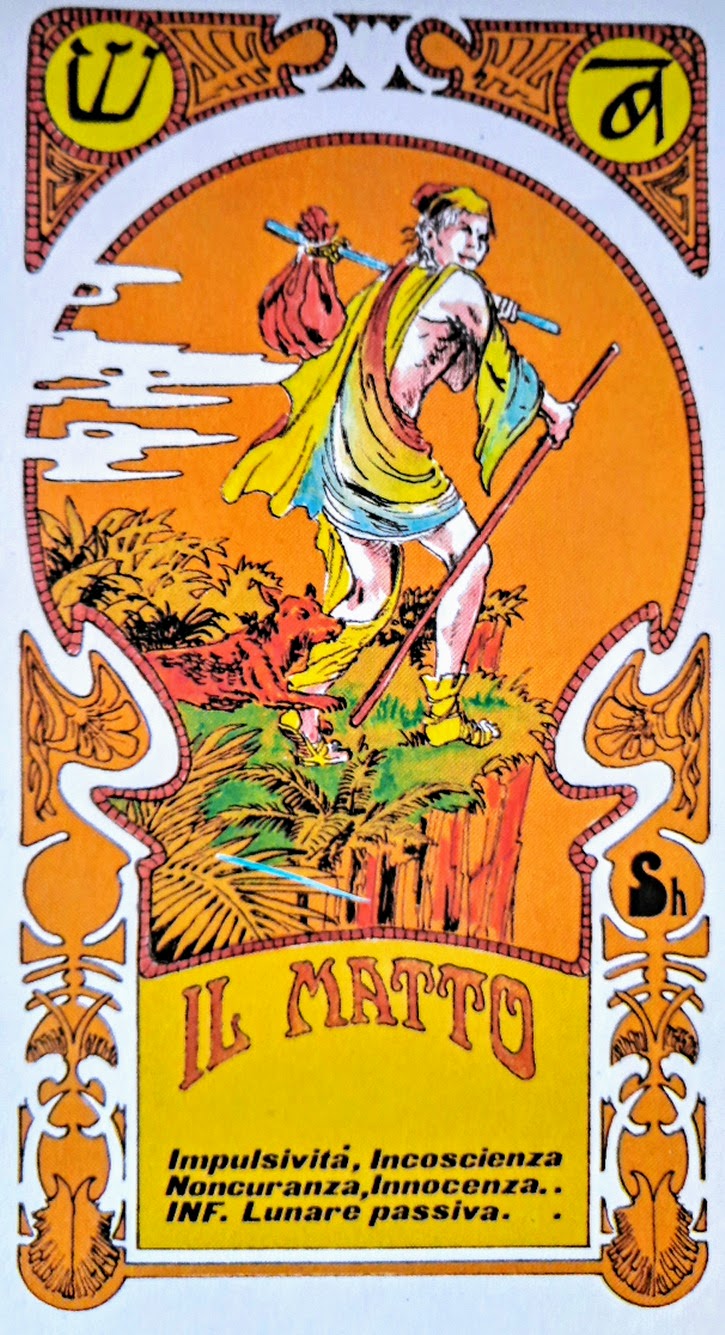
I’ve also been contemplating using the tarot cards as my story finder — to do readings for my characters to see who they are as well as daily or weekly readings (depending on how often I want to update the story on the blog) to see what they are doing. For an additional interest point, I could post the cards I used to write each segment of the story, which would give an added depth to those who can do their own reading of the cards, relating it to the blog segment.

Is this something that would keep me interested for the duration? I don’t know. Obviously, considering how seldom I am updating this blog, I am quite content not to write at all.

But things change.

And who knows what the future will hold? Not I, that’s for sure.

***

Pat Bertram is the author of Grief: The Inside Story – A Guide to Surviving the Loss of a Loved One. “Grief: The Inside Story is perfect and that is not hyperbole! It is exactly what folk who are grieving need to read.” –Leesa Healy, RN, GDAS GDAT, Emotional/Mental Health Therapist & Educator.
Dona Nobis Pacem

Every November fourth for the past dozen or so years, I’ve been blogging for peace, though I’m not sure why I decided to participate in the first place. I don’t believe in “world peace” as a cause, and this year I’ve been particularly demoralized by all the wars going on in the world. Is this really who are? After all these eons of human life, is war still the only way we have of resolving international conflicts? Of defending freedom?

People always talk about the human race as if we are warmongers, and yes, some people are, most notably those who make money and take power from wars, but think about it. How many wars have you personally started? For the most part, we (you and me, anyway) are peace lovers. We shy away from violence, even in the name of freedom. Most of us don’t even start personal conflicts, though sometimes we do unwillingly get involved in contretemps we don’t quite know how to end.

When people accept that humanity will probably never be able to eradicate aggression and violence, they look to nature for peace, thinking of warm bucolic days when the only sound is a distant a bird or a nearby insect. But even that isn’t “peace.”

Think about it — there you are, having a pleasant walk through the woods, having a picnic in a meadow, or perhaps standing on top of a mountain. All is peaceful. Or is it? If your ears were hypersensitive, as is the hero from my novel Bob, The Right Hand of God:

All seemed silent, still.

His ears became attuned to the quiet, and he heard insects cricking and chirring and buzzing.

Then other sounds registered, sounds so faint several seconds passed before he comprehended what he was hearing: the relentless hunger of nature. The larger prairie creatures and the most minute devoured each other in a cacophony of crunching, tearing, ripping, gnashing, grinding.

At the realization he was sharing space with things that must be fed, he took a step backward and bumped into a tree, a gnarled oak that hadn’t been there a moment ago. Leaning against the ancient tree, he heard the roots reaching out, creeping, grasping, wanting, needing. He jerked away from the tree and fell to hands and knees. Blades of grass moaned under his weight, and the screams of wildflowers being murdered by more aggressive vegetation almost deafened him.

He opened his mouth to add his own shrieks to the clamor but closed it again and cupped his ears when he became aware of a long sonorous undulation deep beneath the ground. The heartbeat of the earth.

Yeah, right. Peace.

If we expand peace to a microscopic or even a cosmic plane, we see a stasis created by opposite but equal forces in conflict.

And yet . . . and yet . . .

Today hundreds, maybe thousands of people are peacefully blogging about peace, creating peaceful images, sharing peaceful words, contemplating peace, visiting each other’s peace blogs. A lovely day. A peaceful day.

We may not be stopping wars or violence. We may or may not be attaining peace within ourselves, may or may not be at peace with our world.

But despite all that, today seems less about peace and freedom (today’s theme is No Freedom, No Peace) and more about believing we matter. And we do matter.

At least I hope so.

***

Pat Bertram is the author of Grief: The Inside Story – A Guide to Surviving the Loss of a Loved One. “Grief: The Inside Story is perfect and that is not hyperbole! It is exactly what folk who are grieving need to read.” –Leesa Healy, RN, GDAS GDAT, Emotional/Mental Health Therapist & Educator.

A Burden I Didn’t Know I Was Carrying

A few days ago, I wrote about rethinking this whole blogging thing. Since I had nothing else to write about, I’d been writing about the one thing I know — me — and I’d come to the conclusion it wasn’t healthy or smart to put so much of myself out there.

I thought it would be difficult to break the daily blogging habit of almost three years, but in the end, it was simple. I did what I felt like doing, which was keep my thoughts to myself. Actually, it wasn’t that I wanted to keep my thoughts to myself, but that I didn’t want to have any thoughts in the first place. It’s hard, of course, not to think, but it’s one thing to let one’s thoughts slide into the mind and then slide right out again, and another thing to try to sift through all those fleeting thoughts, capture one, and then expand on it for a blog topic.

What a relief to just let the thoughts go.

And I was right — the world did not come to an end when I stopped blogging every day.

What I found interesting is how this new non-daily blog habit has made itself felt. It gives me two or three extra hours every day. I imagine my breezy writing style makes it seem as if I jot a few words and then simply publish what I write, but it takes a lot of work to make something seem light and easy — writing, editing, re-editing, re-re-editing, adding tags to the blog so it will show up in search results, preparing a photo, publishing the blog, republishing to another blog, posting the reblogged link on Facebook. Even better, because I’m not blogging, I have no need to check Facebook and the blogsite and my email because there are no comments to respond to. So yes, a lot of free time!

Without having to think about what I am thinking, and without having to examine my days for a topic, I have a lot of free mental time, too. And I know that Socrates is wrong: the unexamined life is worth living. In fact, it might even be worth more than an examined life.

And then there’s the whole compassion fatigue situation. Because I am not a therapist or a grief counselor, I never would have thought such a state would apply to me, but over the past twelve and a half years I have mentored (for lack of a better word) hundreds of people through the worst of their grief, and I am truly fatigued. I have always felt powerless in the face of other people’s grief, but knowing at least to an extent what they are going through, I tried my best to listen and be kind, but now I am having a hard time summoning up any compassion or patience. I understand that to them, grief is new and ever-present, but to me . . . not so much. My life with Jeff is now far in the past and so is my grief for him. In fact, I barely remember what I went through unless I am reminded by people who want to talk about their grief. So, without having to deal with other people’s grief, I have a lot of free emotional time, too.

I don’t regret my work on behalf of grievers, in fact, I’m glad I could help, but now it’s time for me to let that part of my life go. So for those of you who need help with your grief or who simply want to talk about what you are going through, please check out the various grief forums and online grief support groups. I know a lot of people who found them helpful and comforting, and I am sure you will, too. (I will, of course, continue to respond to comments left on my blog.)

So, what am I doing with all this free time? Not thinking, that’s for sure. Not feeling much, either, except lightness at having shrugged off a burden I didn’t know I was carrying.

***

Pat Bertram is the author of Grief: The Inside Story – A Guide to Surviving the Loss of a Loved One. “Grief: The Inside Story is perfect and that is not hyperbole! It is exactly what folk who are grieving need to read.” –Leesa Healy, RN, GDAS GDAT, Emotional/Mental Health Therapist & Educator.
The Year of Soylent Green

This is the year of Soylent Green, or rather the year that Soylent Green was supposed to portray. The novel upon which the movie was based, Make Room, Make Room by Harry Harrison, took place in 1999, but the movie makers moved things forward a couple of decades to 2022.

I’ve come across a few articles (one of which was sent to me by a friend) whose authors tried to figure out where the movie got 2022 so wrong, because, of course, we have not devolved to the point where the population is so staggeringly immense, corporate greed so all-consuming, and human life so worthless that the masses are being fed a mystery product called soylent green.

I don’t know why these authors are concerned that the movie got it wrong — after all, most dystopian movies don’t come true. Although some books are burned and banned, the world is awash in books, unlike the society portrayed in Fahrenheit 451. Although Big Sib (have to be politically correct, you know) does seem to be watching us, we have not moved into the extreme totalitarianism of 1984. And although we seem to be living in a society controlled more and more by corporations and technology, we have not yet moved to the robotic social order of Brave New World.

Dystopian literature is about extending what is or what might be into the furthest reaches of imagination. It’s not supposed to predict or preach or even give us a glimpse into a world we are fated to endure. Instead, it’s supposed to expose — perhaps — the truth of humans and what we can or can’t endure, what we can or can’t control, what we can or can’t accept if we wish to retain our humanity. It’s no wonder that in all of these books the authorities, whoever or whatever they might be, show the worst face of us. That lone dissenter, either hero or anti-hero, hopefully shows the best of us. As for the masses — all the rest of us — if the literature tells us anything about ourselves, it’s that we will be corralled somewhere in the middle, just trying to get by.

What so many of the dystopian books and movies of the 1950s through the l970s seemed to be trying to show were possible results of an unchecked birthrate, and no wonder. The population increased 5.5 billion from 2.5 billion in 1950 to 8 billion in 2022. Technology and agricultural advances made it possible to feed all those people or a great percentage, anyway. Despite a supposedly adequate food supply, 9 million people starve to death every year, a totally unacceptable number, and untold other millions deal with malnutrition because so much of the food that is available lacks essential nutrients.

Even though the world did not become as insanely crowded as the dystopian authors seemed to prophesy, our population still increased exponentially, though suddenly, any talk of overpopulation, whether in the dystopian literature, the daily media, or think tanks (formal and informal) has become taboo, making stories like Soylent Green seem even more stridently fanatical. Also, despite periodic whispers of a population cleanse or worldwide genocide, it will never happen. Why? There’s no money in it. Big business makes money with growth. No population growth, no profits. (Is it any wonder that any time the USA birth rate dips the immigration rate rises?)

If instead of disregarding the dystopian stories, if instead of creating more dubious agricultural practices and food products, we had been able to curtail the world’s population back in the nineteen fifties and sixties, we wouldn’t be dealing with a so-called climate crisis now. But then, cynical me says that there are fortunes to be made with selling more and more green vehicles and other green technologies to an ever-greater number of people.

So did the dystopian stories of the early and mid-twentieth century get it wrong? Not really — they got it right for the times. They just weren’t cynical enough, relying more on shock tactics of population bombs than critical thought about what effects a slowly decreasing population would have on the world economy.

***

What if God decided S/He didn’t like how the world turned out, and turned it over to a development company from the planet Xerxes for re-creation? Would you survive? Could you survive?

A fun book for not-so-fun times.

Click here to buy Bob, The Right Hand of God.

Real Reality

I’ve been reading a book about cyber technology running amok, or perhaps people running amok using advanced cyber technology (so advanced, it hasn’t yet been created, though obviously it has been postulated by someone, even if only the author). To be honest, I’m not really sure what the story is about because unlike most books that I read at a single sitting or two or three (at most), the pages on this book aren’t advancing at all. I tend to think my slow progress has to do with my falling asleep while reading. (Well, no. I don’t “tend to think” that napping is the reason for the slow progress — I know it is.)

It’s no wonder the story isn’t keeping my interest. It’s hard for me to care about people —real or otherwise — who wrap themselves in the latest technology. I understand some body/computer interfaces could have (or for all I know, all ready do have) lifesaving capabilities, but I’ve passed my time of keeping up with current cyberlife. I use only a fraction of my computer’s potential, sticking with such basics as blogging, researching, shopping a bit, playing a game (though my interest in the hidden object game I was once fascinated with has been steadily waning). I certainly have no interest in the internet of things, a potential combined internet of things and persons, the metaverse, or virtual reality of any kind. I prefer to stick with real reality (or rather what passes for real reality since there is no real consensus on what reality is).

It is ironic, though, that despite my decreased use of social networking sites (I write my blog and spend about two minutes on Facebook going through the whole rigamarole FB has forced me into to post my blog on the site, but that’s it) I don’t feel as if I’m alone, though I actually do spend most of my time alone. It made more sense to feel as if I were with people back in the days where I was in fairly consistent contact with people, especially on the now-defunct writing site that was the best social networking site for authors, but now it’s more of a sense of being in contact rather than actually being in contact.

And then, of course, there are all those characters in the books I read that people my life.

I keep saying that one of these days I’ll start writing again, and I tend to think that day is coming soon. I was showing friends my zinnias yesterday, and it suddenly struck me that Zinnia would be a great name for a character. Later in the conversation, as we talked about lilies, it seemed that Lily and Billy would be great names for twins. Once an author has names, can a story be far behind?

I’m still “researching” the story. (By research, I mean I’m just living, but if I call my everyday life “research” then I can pretend I’m actually working as a writer.) Unfortunately, I still have no idea what story I want to write. It would be fun to write another “Pat” story, sort of a sequel to Madame ZeeZee’s Nightmare. One visitor told me I have a ghost, so I’m considering a ghost story. One friend has told me a few of her experiences that makes me wonder if I want to write some sort of alternate reality tale. For example, a wildfire burned all around her house, and the people who used to own the place (who were still emotionally invested in the house) watched four tanker trucks circling her property, spraying the house and trees to keep the fire away. The firefighters working that day said they only had one tanker truck, and they needed it to keep them safe from the fast-moving fire. Even worse, they saw embers landing on her roof, and later told her they felt bad they couldn’t save her house. They were astounded when she told them the house hadn’t been touched.

It’s certainly interesting to speculate which reality was real — the former owner’s, the firefighters, or my friend’s. They couldn’t all be real, could they?

Someday, I am sure, a story — either this one or another — will gather enough strength that will compel me to write, and when that time comes, I sure hope the book won’t put people to sleep.

***

Pat Bertram is the author of intriguing fiction and insightful works of grief.