Reviews!

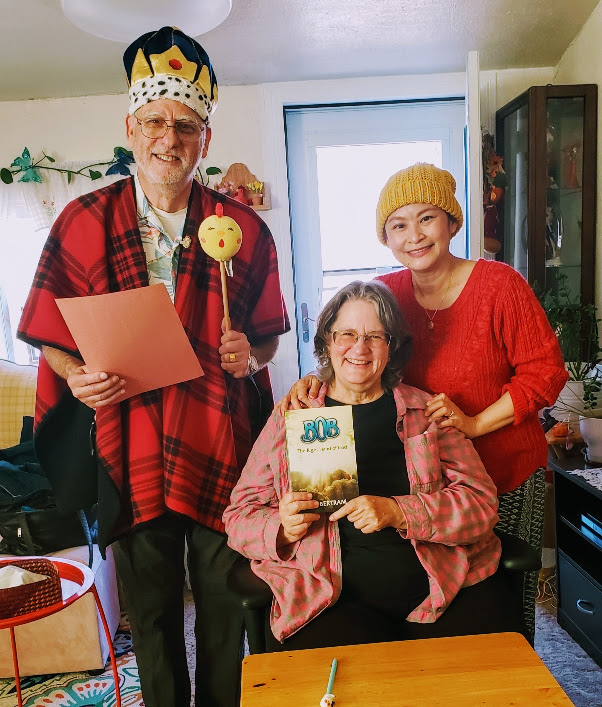
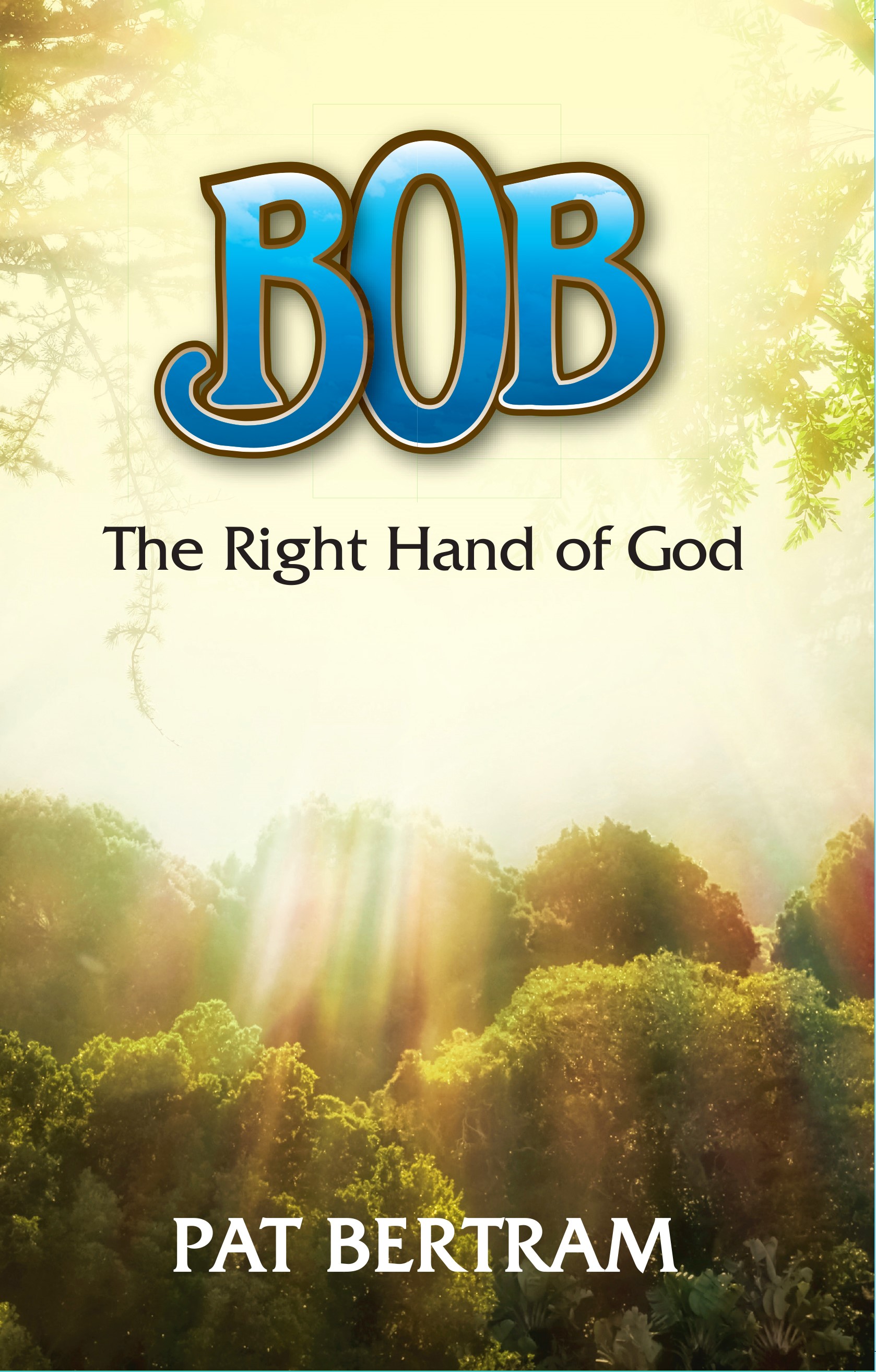
I received a couple of excellent reviews for my novel Bob, The Right Hand of God, which was recently published by Stairway Press. Not that I was worried — I know the book is good (though I’m sure all authors think that about their books) but both reviewers are people whose opinion I value, so I was hoping for good words.

Luckily, both of them liked the book.

Malcolm Campbell, author of Fate’s Arrow wrote: “The book is many things: highly readable, realistic and believable in portraying how the characters react and interact, dystopian in that everything we know is gone and the replacement plan isn’t providing anything better, and (yes) playful. Should the reader laugh or cry? Hard to say. While the ending was predictable, this well-written novel is highly recommended.” Click here to read the full review: https://malcolmsroundtable.com/2020/11/04/review-bob-the-right-hand-of-god/

Sam Sattler of the book blog “Book Chase,” wrote: “Bob: The Right Hand of God is funny and it’s clever, but deep down, it has a message about the important things in life. Pat Bertram has written several books on grief and grieving and she brings that kind of emotional sensitivity even to a farcical tale like this one. If you are looking for something fun to read, this is one you should consider.” Click here to read the full review: https://bookchase.blogspot.com/2020/11/bob-right-hand-of-god-pat-bertram.html

If you, too, enjoyed the book, please leave a review on Amazon. It doesn’t have to be a full review such as the above two reviewers wrote. It can be as simple as single sentence saying you enjoyed the book, or that it’s the perfect book for these time, or that you’d like to see it made in a movie, or anything. (If you hated it, then never mind.) I would like to see this book find a wide audience. I think people would like it, even those who don’t read much.

If you haven’t yet read the book, click here to order the print version of Bob, The Right Hand of God. Or you can buy the Kindle version by clicking here: Kindle version of Bob, The Right Hand of God.

Thank you!

Next Time

A portmanteau word is a word that combines words, such as brunch, which is a combination of breakfast and lunch, but since a portmanteau is a large trunk, it would make more sense for portmanteau words to be those that carry extra weight and meaning.

Such as “next time.”

I’d never thought of those particular words — they are so common as to be almost meaningless — but a character in a novel I just finished reading believes “next time” are the two best words in the English language. “Next time” is not exactly mellifluous — others words are much prettier, such as ethereal or serene — but the more I think about “next time”, the more I can see what the character means.

“Next time” tells a story. Something didn’t happen the way you planned, you made a mistake, you weren’t quite good enough, but another time will come around where perhaps things will happen the way you planned, you didn’t make a mistake, you were good enough.

“Next time” is actually the premise of most stories. The story of the three bears comes to mind. The first time Goldilocks sits at the table in the bear’s house, the chair was too hard and the porridge too hot. The second time, the chair was too soft and the porridge too cold. But the next — oh, the next time everything was perfect. As simple as the story line is, it’s the basis of many tales, especially the hero’s journey. He tries, doesn’t succeed. Tries a second time, giving it his all, and still doesn’t succeed. But he undergoes a transformation, becoming the hero — the person who can succeed. And the next time he tries, he accomplishes his task. (Technically, I suppose, the middle try is also a “next time,” but in a way, instead of disproving my point, it shows that there is always another next time.)

“Next time” isn’t just about stories. “Next time” carries within itself a whole trunk full of possibilities, of hope, even of miracles. Anything can happen the next time because . . . well, because it’s not this time when so many things are going wrong.

“Next time” offers a promise of a second chance.

“Next time” gives us a chance to be better. To be kinder, more thoughtful, more careful, more whatever we need to be next time.

So, no matter what happens today and in the next several days, take heart that there will be a next time.

***

Bob, The Right Hand of God is now published! Click here to order the print version of Bob, The Right Hand of God. Or you can buy the Kindle version by clicking here: Kindle version of Bob, The Right Hand of God.

What if God decided to re-create the world and turn it into a galactic theme park for galactic tourists? What then?

Help My Publisher Buy a Maserati

If we sell enough Bob, The Right Hand of God books, my publisher says he will be able to buy a new Maserati. I doubt his choice would be purple, but still, it’s a pretty car.

I’m not sure if this desire of his for a new Maserati is a real wish or if it’s more a metaphor for selling a ton of books. Well, several tons. A ton of my books would be about 3,000 of them, and there’s no way the profits on that would get him anything but a junker. Still, it’s a goal to reach for, and then once that’s reached, we can aim for another ton.

And I? What would I buy from the proceeds of all these tons of books? There’s nothing I need right now, though I must admit financial solvency would be nice.

What would be even nicer is if large numbers of people read and enjoyed the book. I wouldn’t mind if fame didn’t come along with the the sales of those tons of books because fame is overrated. But I would like people to recognize the name of the book, maybe even my name as an author. And I’d like to be able to say, “I sold a ton of books,” and know it was the literal truth.

To help us reach this tonnage, after you read the book, I would appreciate your leaving a review on Amazon. It’s a relatively easy way of supporting the author you love (me).

***

What if God decided to re-create the world and turn it into a galactic theme park for galactic tourists? What then?

Click here to order the print version of Bob, The Right Hand of God
Click here to purchase the Kindle version of Bob, The Right Hand of God.

Countdown to Publication

It’s only ten days until the publication of my new novel, which will be published on October 20, 2020. If you would like to be notified by email when the book is available, click here: Bob, The Right Hand of God, sign up for email notifications, and Amazon will let you know the minute it is for sale. Meantime, here are a couple of brief excerpts to whet your interest:

The screen went black.

“Something must be wrong with the cable,” Isabel said. “I’ll call them tomorrow.”

After thirty seconds of whistles, hums, and buzzes, the picture came back on. Instead of the anchorperson, the head of a gnomish man with a round, bespectacled face, a bald pate, and a receding chin filled the screen.

“I am Bob, the Right Hand of God. As part of the galactic renewal program, God has accepted an offer from a development company on the planet Xerxes to turn Earth into a theme park. Not even God can stop progress, but to tell the truth, He’s glad of the change. He’s never been satisfied with Earth. For one thing, there are too many humans on it. He’s decided to eliminate anyone who isn’t nice, and because He’s God, He knows who you are; you can’t talk your way out of it as you humans normally do. For another thing—”

Isabel clicked off the television and stood up. “We must have missed the news.”

Clutching the remote, she stalked to the guestroom and shut the door.

Chet continued to stare at the darkened screen. He would have liked to see more of Bob—looked like it could have been an interesting science fiction movie—but dealing with Isabel exhausted him. He didn’t have the energy to get up and manually turn the television back on.

[The next day, John the butcher stopped by Chet’s pet store with entrails and such for the reptiles. They talked for a bit, then John started to leave, hesitated, and turned back.]

“Does it feel a little strange to you today?”

“Strange how?”

“I don’t know. Just a creepy feeling I have, like a storm’s coming.” John twitched his shoulders. “Probably nothing. Maybe I let that Bob thing get to me.”

“What Bob thing?” Chet asked.

“Some guy pulled an April Fool’s prank last night. Hacked into the television signal. Claimed he was The Right Hand of God. Silly, but I’ve been feeling creepy all day.”

“I thought it was a movie.”

“Nope. A friend of mine at Channel Ten told me they lost the signal for about five minutes.”

Chet shivered. “Now I’ve got the creeps. Thanks a lot.”

And so the saga begins . . .

***

Pat Bertram is the author of Grief: The Inside Story – A Guide to Surviving the Loss of a Loved One. “Grief: The Inside Story is perfect and that is not hyperbole! It is exactly what folk who are grieving need to read.” –Leesa Healy, RN, GDAS GDAT, Emotional/Mental Health Therapist & Educator

Oh, Look! My Book!

My new novel will be published on October 20, 2020. If you’d like to be notified by email when it’s available, click here: Bob, The Right Hand of God, sign up for email notifications, and Amazon will let you know the minute it is available.

All Chet Thomlin wants is to be left alone to care for the abandoned and neglected animals at his store, Used Pets, but his obnoxious customers and clinging mother make life miserable. And nothing ever seems to change.

On April Fool’s day, a gnome-like little man appears on television. He introduces himself as Bob, the Right Hand of God, and says that as part of the galactic renewal program, God has accepted an offer from a development company on the planet Xerxes to turn Earth into a theme park.

Chet laughs at the prank, but then bizarre things happen. Carrier pigeons return, millions of them, darkening the sky as they hadn’t done for over a hundred years. His mother and her entire subdivision are wiped off the face of the earth. And his friends disappear.

On Easter Sunday, a bright light appears, and Bob tells the remaining population of Denver that if they enter the light, they will be safe from the reconstruction zone. Chet watches people enter one by one, but he refuses to step forward, thinking that he’d rather have his freedom than to be in a dubiously safe place.

The light fades, and Chet gets what he wanted. He is left alone. Well, except for Bob. Bob won’t let him be. Bob calls Chet on his now defunct cellphone, taunts him, plays with his senses. Being chosen by The Right Hand of God is no fun!

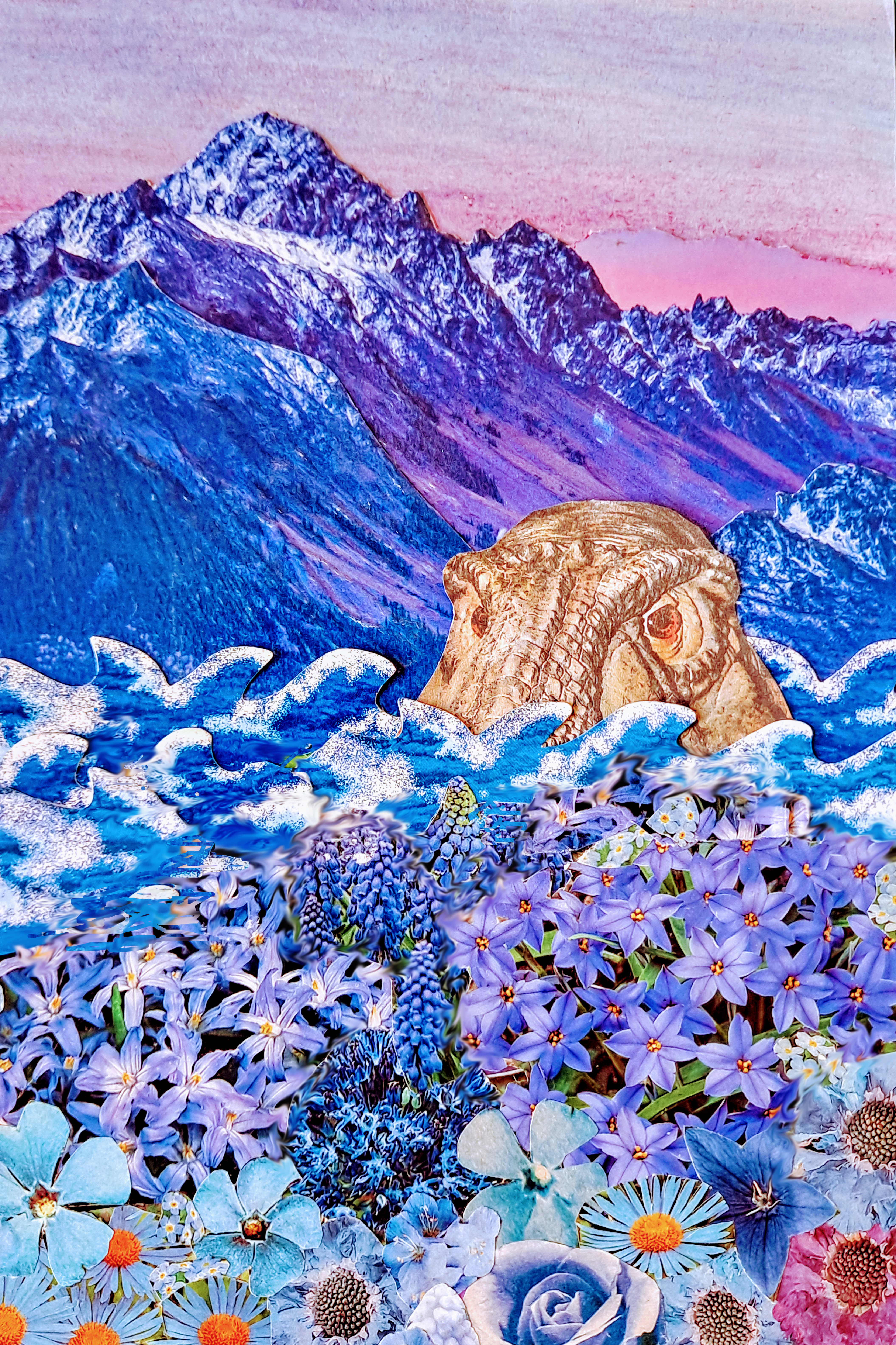
Even worse, Chet gets more change than he can handle. Plumbing and all other signs of civilization vanish. Denver becomes a prairie of blue flowers that sweep into an inland sea where a prehistoric monster lives. Volcanoes grow at his feet.

And Chet has become prey.

Maybe going into that mysterious light wouldn’t be so bad after all . . .

***

Pat Bertram is the author of Grief: The Inside Story – A Guide to Surviving the Loss of a Loved One. “Grief: The Inside Story is perfect and that is not hyperbole! It is exactly what folk who are grieving need to read.” –Leesa Healy, RN, GDAS GDAT, Emotional/Mental Health Therapist & Educator

Kill Your Darlings

“Kill your darlings,” is a quote by Stephen King. No, it was William Faulkner. No, it was Agatha Christie. No, it was F. Scott Fitzgerald. Well, of course, they all said it, but the first use of the construction appeared in print a hundred years ago by Sir Arthur Quiller-Couch, who urged wannabe writers to murder their darlings. (Quiller-Couch was the inspiration for Rat in “The Wind in the Willows.” It’s amazing the things you can find out with a bit of research!)

By definition, darlings — those parts of our manuscripts that we love even when they don’t advance the story — are painful to kill, but some are more painful than others. Originally, More Deaths Than One was designed to be a series of stories told to Bob Stark (so named to remind me that he seems an ordinary fellow, but is stark of speech). It was through listening to the various stories that he was to discover the truth about himself, but though the idea had merit, the first draft was terrible. Bob barely surfaced in his own story, and the storytellers themselves seemed disembodied. I rewrote the book several times, trying to find the right way to tell the story, but it wasn’t until the fourth draft when I gave Bob a love interest, a waitress he met at a coffee shop, that the story took off. He had someone to butt heads with, someone to ooh and aah over his achievements, someone to be horrified at what had been done to him.

After the story took focus, the original idea of Bob learning about himself from tales told to him had to be scrapped, and some of those tales — those darlings — had to be scrapped. It was hard to get rid of those sections, but I did it for the sake of the story.

In my soon-to-be-published novel, I didn’t have any darlings — at least, I don’t think I do — because as I was writing the book, I remained focused on what I needed to accomplish. This is the first book I wrote with a theme in mind, and that helped considerably. If something didn’t further illuminate the theme of freedom (how much freedom we’re willing to give up for security, and how much security we’re willing to give up for freedom) I didn’t even bother to develop the scene.

Not everyone is able recognize let along kill their darlings, especially if those darlings are the whole reason for writing the book. For example, I just finished reading a novel that had been given to me by a friend of the author. It was readable, but his darlings destroyed the story. The book reads as if it’s a roman à clef, a story of the author’s struggle with alcoholism, which would be fine if that’s what he wanted. But apparently, he also wanted to write a political thriller, which gave the book a rather strange duality, as if two different stories had been cobbled together.

Authors, of course, can write whatever they wish, with unkilled darlings galore. But once they decide to write a particular type of story, they have to focus on the story they want to write, and to edit out anything that doesn’t fit. (Like a sculptor, chiseling away at all of the marble that doesn’t benefit the artist’s vision.)

Because the first half of this particular book was all about the personal story, the second half with the political intrigue was shortchanged. The author relied too much on current events to piece the story together, which kept him from having to fully develop the president or the situation he was involved with. The author just assumed everyone would know. Even worse, there was no conflict in the political part of the story, just internal vacillation as the character tried to decided if he wanted to finish the course of action he had started.

The author would have been so much better off using the personal part to add depth to the political part. Also, adding conflict to the political intrigue would have turned it into the thriller the blurb described.

The only reason this matters to me is that I read the book. If I hadn’t, I wouldn’t have cared because I wouldn’t know.

I suppose more than anything, this book is a reminder to myself to kill my darlings or, even better, don’t bring them to life in the first place.

***

Pat Bertram is the author of Grief: The Inside Story – A Guide to Surviving the Loss of a Loved One. “Grief: The Inside Story is perfect and that is not hyperbole! It is exactly what folk who are grieving need to read.” –Leesa Healy, RN, GDAS GDAT, Emotional/Mental Health Therapist & Educator.