Everyday Magic

After the past four days of enumerating and celebrating my blog accomplishments, I woke this morning feeling uneasy. I have spent the past ten and a half years talking about my life, my grief, my feelings, my traumas, and the dramas that seem to follow me. (Before that, I mostly talked about reading and writing, but Jeff’s death blew me wide open, and that was reflected here on this blog.) Suddenly, after all this time, I’m uneasy, unsure that I like people knowing so much about me. It makes me vulnerable, and seems to put me at a disadvantage with people I see in real life. Do I really want them to know my innermost thoughts? Do I really want them to see my soul bared? It doesn’t seem a smart thing to do.

For example, too many people here have guessed the identity of the one person in town I try to avoid (this person’s insulting remarks were the last straw for me and Facebook), and that’s more than I want anyone to know. I’m also not sure how comfortable I am discussing things that bother me when I know the people involved will be reading what I write. I’ve been censoring myself to an extent because of this, but even so, I tend to think I say too much. Still, whatever a person says to an author and blogger is fair game for a writing topic. That’s what I do — I write about what happens in my life and try to find a lesson or gratitude or some sort of accommodation with the occurrence.

But it does make me vulnerable, and I wonder how wise I am to continue with my way of blogging.

One thing in particular happened, a minor occurrence for sure, but I took it to heart. This added to my confusion about continuing the blog path I’m on, mostly because I wanted to write about it and wasn’t sure if I should. And yet, it is a bloggable situation.

The other day, I was driving back from a nearby town when I happened to see a vehicle ready to pull onto the highway. After I passed, it pulled in behind me, and it stayed behind me as we headed into town. This tickled me because it was only the day before that I had seen the vehicle for the first time, and I knew who was driving. It seemed a bit of serendipity, even solidarity, on what is normally a faceless and friendless highway. One of life’s small miracles. Everyday magic.

The other driver’s reaction? That I drive slowly.

Huh? When is driving the speed limit slowly? Well, to be honest, it almost always is. Several cars had passed me, crossing a double-yellow line to get ahead of me shortly before I met up with this particular driver. I wonder what all those drivers would have done if I had been driving 55mph the way I’m supposed to. Driving 65mph is not a good idea for a car with such a small, air-cooled engine, and my mechanic cautioned me about burning out the engine. Still, I sailed along at 65 until we hit town, and then I slowed way down to the new speed limit, and then way, way down when it came time to turn.

I tend to forget that people don’t know there are cars without power steering, power brakes, and automatic transmissions. If you’ve ever driven such a car, you know you can’t slow at the last minute and then careen around a corner. You have to brake in plenty of time, and then downshift to make a safe turn.

Still, this wasn’t the point. The point is that I thought the drive into town was something special, a bit of magic, and the other driver thought I drove too slowly.

I just realized I answered my dilemma. This episode is not a reason to back off from telling my truth, the only thing unique I have to write about, but is instead a reason to keep going. Someone needs to point out the minor miracles, the everyday magic, the important lessons, and the serendipitous moments on the road of life that would otherwise pass unnoticed.

I’m sure my uneasiness will eventually dissipate. After all, considering the myriad heartfelt grief posts I’ve written, I’m no stranger to vulnerability.

***

Pat Bertram is the author of Grief: The Inside Story – A Guide to Surviving the Loss of a Loved One. “Grief: The Inside Story is perfect and that is not hyperbole! It is exactly what folk who are grieving need to read.” –Leesa Healy, RN, GDAS GDAT, Emotional/Mental Health Therapist & Educator.

Celebrating Milestones

Today is my 365th straight day of blogging. A whole year’s worth of posts! That is certainly a milestone worth celebrating.

Tomorrow marks 100 days until the end of the year, another milestone worth celebrating. That is the day I make resolutions, if I need to make any. New Year’s resolutions are complicated because a year is so very long, especially this year. I can do 100 days. Maybe not easily, but it is possible. So, my resolutions are the same ones I always make — to blog each of those days, to try to lose a few pounds, to exercise more. And I’m sure I’ll continue my tarot studies, one card at a time.

Thursday, the final of these three milestones, will be my bloggiversary — the thirteenth anniversary of when I started this blog. That first blog post was a short one. It said simply:

Am I an aspiring writer? I have written 4 books, rewritten them, and will continue rewriting them until they are perfected.

No. I am not an aspiring writer. I am aspiring to be a published writer.

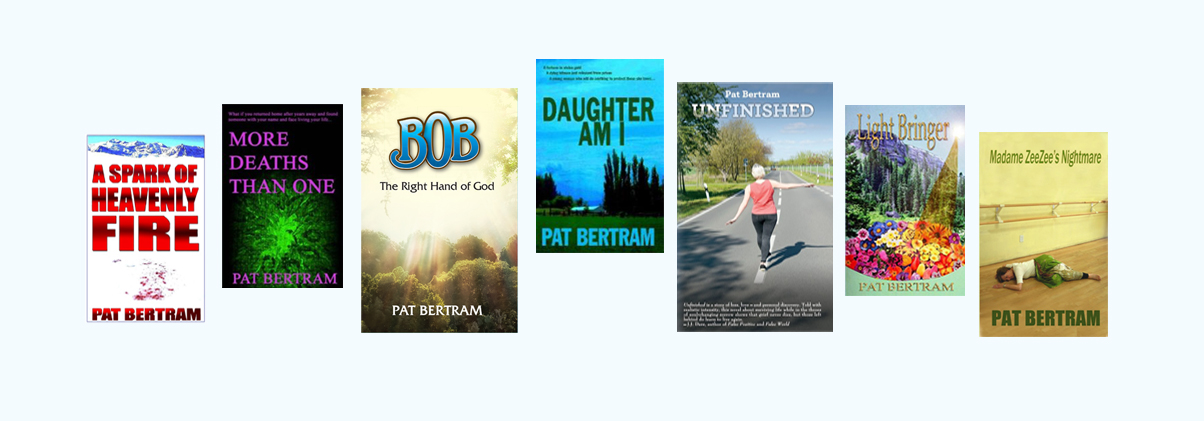
And that is what I became — a published writer. Soon, maybe even by the end of this year or the beginning of next year, my ninth book will be published. This particular work of fiction will be a real departure for me, not suspense (except to the extent that all novels are suspenseful), not a book about grief. Maybe it could be considered an allegory, maybe fantasy, maybe a lot of things. But always a Pat Bertram story.

It was a hard book to write because it was the last one Jeff brainstormed with me, and he died before it could be finished. It sat for years with only an occasional word being added because it was simply too painful to write. Every time I looked at the manuscript I was reminded he was gone.

But I did finish the book. And it will be published.

Although I haven’t been interested in writing (except this blog, of course), the first paragraph of a sequel to this special book recently popped into my head. And the novel does demand a sequel. With two children being born, one named Adam and one Eve, the book cries out for a second installment to the story.

Oops. Maybe I gave too much away with those names. Since there are religious overtones, I worried people would think it sacrilegious considering my — at times — irreverent outlook, so I had some of my religious friends read it, and they assured me it’s fine. As one reader emailed me, “As to your question about offending Christian readers, any Christian reader who gets beyond the title (which is perfect — enticing, with just the right level of warning, like one of those TVMALV ratings) will most likely delight in spotting Biblical echoes, enjoy the broken-creation and God/god themes, and eagerly wonder how on earth you’re going to end it. Your final scene is a perfect surprise — a beautifully apt and satisfying end to the tale, which really doesn’t need to fit any religious conviction; it creates and completes its own convincing artifice. I love it!

I can hardly wait for you to be able to read the book. And no, I won’t mention the title just yet — it will tell too much about the story, and I don’t want to give anyone else the idea for a story of their own before the book is safely in print.

The book was never supposed to have any religious overtones or undertones. The theme is actually more of a political one, eternally apropos, and never more so than today: How much freedom we are willing to give up for safety, how much safety we are willing to give up for freedom, and in the end, since freedom tends to be an illusion, it’s about embracing responsibility.

I got off the track of milestones for a bit there, but chalk it up to enthusiasm for my new book.

I have much to be grateful for this first day of autumn, which, come to think of it, is another milestone to celebrate. We made it through this endless summer and are now heading for more glorious days.

***

Pat Bertram is the author of Grief: The Inside Story – A Guide to Surviving the Loss of a Loved One. “Grief: The Inside Story is perfect and that is not hyperbole! It is exactly what folk who are grieving need to read.” –Leesa Healy, RN, GDAS GDAT, Emotional/Mental Health Therapist & Educator
Keeping The Faith

I’m one of those who keeps the faith with language. I say what I mean and I try to live by what I say, though sometimes it’s hard because the inner voice of truth that comes out when I am speaking or writing is often wiser than I am.

I prefer other people to use correct language too, though I realize that’s an old-fashioned concept.

I just read an article that talked about Trump supporters spreading hate because they were getting in altercations with the protestors. So we’re supposed to believe that only Trumpers hate? That the self-proclaimed Marxist protestors who are burning and looting are doing it out of love? Oh, for cripes sake. Has the world lost its mind?

Words no longer mean what they once did. Peaceful once meant . . . peaceful. Free from disturbance. Tranquil. Not burning and looting, not screaming, not blocking emergency entrances at hospitals and chanting: “We hope they die.”

Words have always been plastic, meaning that they can be easily molded or shaped, not the way the word is now used, meaning something hard and indestructible. It seems words are even more plastic than I realized in this gaslighting era, where what we are told is the exact opposite of what we are seeing. For example, I had the misfortune to watch a television news broadcast the other day. They showed someone saying something, and then immediately afterward the newscaster told us the person had said something completely different.

In many cases, I’m one of last to keep the faith when it comes certain words. I say vegetables instead of . . . gag . . . veggies. I never use the outdated and so very sexist term “co-ed.” I don’t use permuted words like “styling,” whatever that means. (I assume it’s good because the other day someone told me my hat was “stylin.” Though with the plasticity of words nowadays, for all I know it could mean that I was wearing the ugliest hat the young woman had ever seen.)

I especially don’t say “love” when I mean “hate.” And I don’t say “peaceful demonstrations,” when I mean that people are rioting. I don’t say “taking what they need,” “expropriating property,” or “reparations” when I mean stealing. (Looting is stealing. To a person with a passing acquaintance with a dictionary, looting means to steal during a riot, and it’s a crime no matter how many people defend the act.)

It’s possible my adherence to words in their proper form and proper meaning is due to the intransigency of age, but it still doesn’t make the actions hidden in these plastic words palatable to me.

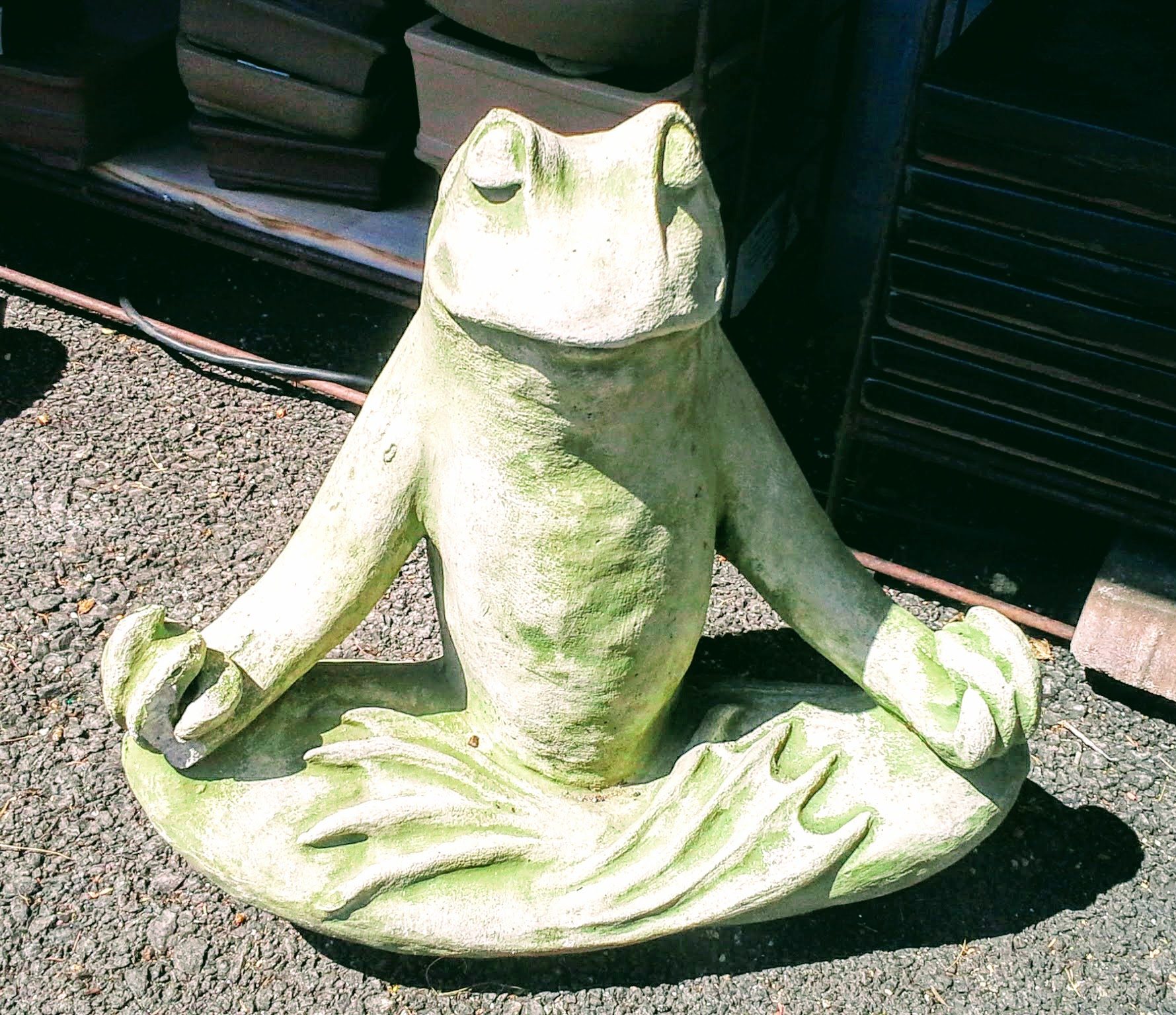
I think it’s time for me to pull in my head and channel my inner turtle for a while.

***

Pat Bertram is the author of Grief: The Inside Story – A Guide to Surviving the Loss of a Loved One. “Grief: The Inside Story is perfect and that is not hyperbole! It is exactly what folk who are grieving need to read.” –Leesa Healy, RN, GDAS GDAT, Emotional/Mental Health Therapist & Educator

Imagined Future

I’ve been continuing my practice of picking one tarot card every day, not so much to learn what is in store for me in the future or to delve into the secret places of my soul, but simply to get familiar with the idea of the tarot. I mean, I have all those decks of cards that my deceased brother collected, so I should do something with them, right? Besides, it’s a way of honoring him and all he wanted but was never able to accomplish.

The most interesting thing I’ve found while doing this exercise is how often I get one of the dire cards one day, such as the nine or ten of swords, and one of the most fortunate cards the next day, such as The Sun.

So far, I haven’t learned much about the cards themselves or myself, just that I refuse to see bad in the bad cards, though I do enjoy seeing good in the good cards. If I get a card that seems to spell disaster, then I keep searching for meanings until I find an interpretation that portends something better. For example, the ten of swords can mean violent accident or death or misfortune on a grand scale, which I won’t accept. It also means that no matter how much we try, we cannot control everything, which I will accept. Not being able to control everything is a truth that can be applied to any situation and a lesson that behooves us all to learn.

Beyond that, I hadn’t realized why I objected to anything to do with foretelling the future until I read this quote:

People didn’t want to know their real future. They wanted to know their imagined future, the one they cherished instead of fearing. — “The True Secret of Magic,” a short story by Joe Edwards

I realized then that foretelling the future is like writing a story. Every story, taken to its logical conclusion leads to death because we all die. If we write the story all the way to that end, the story is a sad one. To make a happier story, we end at a pleasant time in the character’s life. Perhaps a wedding and a belief in happy ever after. Or the solution to a crime and justice for a victim.

Telling the future would be the same. Almost any fortune that doesn’t include specifics, such as telling someone they will be divorced within the year, will fit practically any situation. Almost any future will include happiness and sorrow, success and failure, sickness and health, betrayal and forgiveness. And every future, no matter how sunny and felicitous, ends in death. At least an earthly future does, and that’s what concerns us: how our life will be.

We want the pretty story, a belief that no matter how bad things are, things will work out to some sort of satisfying conclusion. (Isn’t that what we want from fiction, too? A satisfying end to a story, a belief that all the horror the character went through was worth it in the end?)

I know my end, perhaps not the specifics of my expiration date, but that there will in fact be an end to me. Meantime, I try to create my fortune — my future — every day. Even knowing that I can’t control everything, I try to control something — my attitude, my actions, my interactions with people — in such a way that I will have a felicitous fortune.

I don’t need to be told a bright future, and I certainly don’t need to be told a bleak one. Both will happen. Both will affect me. Both will be processed and I will move on to another day, another future.

I suppose if I were young, I would want to know if I’d be pretty, if I’d be rich, if I’d find love and happiness, but those wishful, youthful days are long gone. I once loved greatly, once was loved. I once felt immense joy and experienced vast sorrow. I once shared my life with someone. And now I don’t.

But just as I shy away from foretelling, I shy away from backtelling. In the first case, whatever will be, will be, though my actions today can affect what will be. In the second case, whatever was, was, and my actions today won’t change any of it.

But neither case really matters. What matters is . . .

What matters is . . .

Hmm. I’m not really sure what matters. That I am determined to cherish whatever my future might be rather than fearing it? That right now I am living a future I could never have imagined even a couple of years ago? That I am trying to imagine a comfortable future for myself? (Though if a great present came from nothing I ever imagined in the past, would anything I imagine in the present affect the future?)

Maybe what matters is that I am living as fully as I can, which, apparently includes picking and learning about one tarot card every day.

***

Pat Bertram is the author of Grief: The Inside Story – A Guide to Surviving the Loss of a Loved One. “Grief: The Inside Story is perfect and that is not hyperbole! It is exactly what folk who are grieving need to read.” –Leesa Healy, RN, GDAS GDAT, Emotional/Mental Health Therapist & Educator

Restless Mind

Playing computer solitaire has become my way of doodling while my mind is occupied with other things, such as trying to capture a single thought to blog about, but my mind is restless nowadays, and a single interesting thought is hard to capture.

I worry, of course, about what’s going on in the world today. I wish I could believe the so-called truths we are fed. I wish I could believe the simple slogans that are being bandied about, but unfortunately, as with everything else I do, I look beneath the surface to find the blind wiggly things that will not, cannot be ignored. A business or organization can call itself anything it wants; it can use a popular slogan to name itself. But that slogan is simply that: a slogan. A way of keeping people from looking deeper, and if one does find the blind wiggly things, one can’t say anything because of that slogan.

What a world!

My mind is also scurrying about trying to find a new password for my bank account. Every six months, mine becomes defunct. Oh, the pressure!

And, even more pressurizing — my blog platform is discontinuing the simple, classic editing program that I’ve used all these years. (I just realized, in just three weeks, it will be the thirteenth anniversary of this blog, and the end of a year’s worth of daily blogging.) I suppose I should be lucky that although they have changed their editor box several times over these years, they have also kept the classic editor, so I was able to ride out all the changes.

But that ride is over. They are gradually changing all blogs to the new editor, which means when my time comes, they will be changing things on my blog itself, not just the things I want to change. In a way, it will be easy enough — there are only a few blog posts that consistently bring people here, so those are the ones I will start putting right, and then gradually bring all the other 2,280 posts into line. I’m hoping the new way of doing things won’t be as confusing as it sounds. I do know I am an old style blogger, where I just post an essay plus an accompanying photo, but apparently, people like a lot of different styles of content in one post — videos, polls, apps, multiple columns, etc. Although I don’t consider myself a neophyte at this sort of thing, I’ve never been able to figure out this whole block content thing. The photo never ends up where I want, I can’t edit the html the way I want. In other words, the promised simplicity just is not there.

So, although I will be continuing my daily foray into blogging, don’t be surprised if you see a post with just a word or two while I try to figure the whole thing out. Luckily, I still have time before they force me into this new mode, so I might be able to make the changeover seamlessly. But not, as you can see, without a lot of cogitation and restlessness and infinite games of solitaire.

***

Pat Bertram is the author of Grief: The Inside Story – A Guide to Surviving the Loss of a Loved One. “Grief: The Inside Story is perfect and that is not hyperbole! It is exactly what folk who are grieving need to read.” –Leesa Healy, RN, GDAS GDAT, Emotional/Mental Health Therapist & Educator

Interview: Talking about Grief and Being an Author

What inspired you to write Grief: The Inside Story — A Guide to Surviving the Loss of a Loved One?

When Jeff, my life mate/soul mate died, I was completely unprepared for the depth and breadth of my grief. I had never felt such pain, pain that escalated by the minute. I never even knew such pain existed. How could I? I’d grieved the deaths of my mother and my younger brother, but what I felt after Jeff died in no way resembled those earlier bouts of grief.

I started writing about grief not only to make sense of my own feelings but also as a rebellion against a society that reveres happiness at all costs. There is something dreadfully wrong with a society that expects the bereft to hide their grief after a couple of months simply because it makes people uncomfortable to see outward shows of mourning. Seeing grief makes people realize how ephemeral their lives really are, and they can’t handle it (which leaves the bereft, who already feel isolated, totally alone with their sorrow.) It also cracks the façade of our relentlessly glass-half-full society.

People who are grieving often find comfort in the truth about grief and how long it takes because it matches what they feel and it makes them feel not so alone. And so, after years of dealing with my own grief and that of my widowed blog readers, I wrote the book “Grief: The Inside Story – A Guide to Surviving the Loss of a Loved One” to help explain the grief process both to grievers and those who want to understand what their grieving friends are going through.

The earliest incidents you recall from your life where you first felt you had a writer in you?

I loved books from the moment I learned to read, and I often wrote stories and poems, so I always thought I would be a writer. When I quit a job in my early twenties to start my first book. . . [Click here: to read the entire interview]

Searching for Color

I had a bit of a shock today. In my continued studies into the meaning of the tarot, I decided to dig out the research on color I did for Light Bringer. Color was an important part of the story, adding what I hoped would be a different layer of meaning and “feel” to the characters and their interactions. I also wanted these meanings to resound within the reader even if they didn’t know specifically what a color meant, in the way that archetypal characters do. So, lots of research.

I found the notebook labeled “colors” and all that pertained to color in that notebook were lists of colors. In my novels, I try to stay away from the basic red, yellow, blue, etc. and use less obvious color names such as carmine and vermillion, primrose and mustard, lapis and indigo, and the list made it easier to find the proper color name. But that’s all I found. No notes from all those books I used in my color research.

Panic!

I had thrown away some writing notes. When I began writing fiction, I also studied the craft, reading and taking notes from myriad books. When I packed to move, I needed to get rid of stuff, and since I am beyond the writing basics, I figured I didn’t need all that extra weight, though I did keep some notes as reminders to go beyond the obvious and cultivate subtlety. I couldn’t have thrown away those valuable color notes, could I? It didn’t seem possible, but they weren’t where I thought they should have been.

I had written some articles for this blog and other sites pertaining to color, so I went searching for them, but apparently, most of those articles disappeared into the dead website graveyard, without even a ghost remaining. There are a few brief articles about color on this blog, but that’s it.

Unbelievable. All that research  . . . gone.

But no. I finally went through the stack of my research notebooks and found the color notes in the middle of a book labeled, “technical.” (As opposed to alternate technologies, religious studies, general notes, quotes, etc.)

It might not have mattered (from a tarot standpoint) if I hadn’t found the notes because I remember the basic meanings. The basics might be all that’s necessary to help get a feel for the various tarot cards, but only if the artist bothered to use the proper color symbolism. Or maybe it doesn’t matter? Perhaps it’s better to take each card as is, and not worry too much about what the artist intended. After all, the reader is supposed to gain a feeling for the card itself, and color helps intensify that feeling.

See also:
Coloring Your World
Everything You Always Wanted to Know About Green and More

**

Pat Bertram is the author of Grief: The Inside Story – A Guide to Surviving the Loss of a Loved One. “Grief: The Inside Story is perfect and that is not hyperbole! It is exactly what folk who are grieving need to read.” –Leesa Healy, RN, GDAS GDAT, Emotional/Mental Health Therapist & Educator.

Fool’s Journey and Hero’s Journey

I’m still playing around with the tarot decks I inherited from my brother, which seems an appropriate way of counting down the days to the second anniversary of his death. I haven’t been learning anything about him from the cards, though it still interests me that he collected them — not just one deck (which would indicative of curiosity), but so many of them. There are about four dozen different decks, another dozen or so duplicates, plus the triplicates I sent to a sister who also found the fact of the collection fascinating.

I have learned some things about the tarot itself, though. The most obvious lesson is that there’s no consensus on what the individual cards mean since the creators of each deck put their own slant on the cards to match their vision and their artwork. The instructions on how to learn the tarot invariably say to study the picture on the card, to figure out what the card means to you, but if every “sun” card, for example, is different from every other sun card, if the artists have added their own embellishments, then the images become simply pretty pictures to illustrate the simple idea of “sun.”

There’s no consensus on what the various suits of the minor arcana are, either. Normally, they are wands, swords, cups and coins or pentacles, but in the Robot Tarot, the suits are laser, light, void, and scarab; and in the Servants of the Light Tarot, the suits are weapons, spheres, crescents, staves. Even more confusing, there’s no consensus on what constitutes a tarot. Most decks are composed of 78 cards, but some tarot decks comprise only the 22 cards of the major arcana. Or less. Or more. The Deva Tarot has five suits instead of the normal four (the fifth is a suit called Triax and is supposed to represent the ether or the spirit). If the Deva Tarot is a deck that’s beyond the realm of a tarot, does it become a tarot if you remove the additional cards?

In other words, the tarot seems a rather arbitrary tool depending on what deck you use, what system of meaning you apply, what you read into the cards, and your own inclinations.

(This kind of reminds me of when I decided to learn the names of birds. After a while it began to seem laborious and arbitrary, especially when it dawned on me these were simply names humans gave the birds, not what the birds called themselves, and in no way imparted a sense of “birdness.” To this day, I only know a few common names, though I do have a bird book if I want to know more.)

However, there is one underlying, non-arbitrary aspect of the tarot: as story-telling cards. I was reading about the Major Arcana (the twenty-two trump cards) and discovered that they tell a story — the fool’s journey, from naivete to wisdom. And suddenly I understood — the fool’s journey is nothing more than the hero’s journey. See? Story!!

More than that, how the cards are laid out tell a story — the story of a person’s future; the story of their past, perhaps; maybe even a deeper story of their self. And since there are infinite possible layouts (and infinity squared when you take into consideration all the various types of cards and decks and meanings), there are an infinite number of stories.

So my idea of using the cards to write a story is not at all farfetched. I used the hero’s journey to tell the story of Daughter Am I, and I could use the fool’s journey to write a completely different sort of story. Each character could be assigned a role based on the Major Arcana, or I could do a reading for each character to see what their particular needs are. Or both.

Meantime, I’m on my own fool’s journey when it comes to the tarot. I’ve been doing a one-card reading for myself every day to get familiar with the cards. My question is always, “What do I need to know today?”

So far, the cards aren’t letting me in on any secrets, but the cards do seem to reflect my reflections. For example, today’s card was the sun card, which, according to the particular deck I used, means enlightenment, especially artistic enlightenment. Although card didn’t answer my question, simply reflected it, the card did answer my unasked question: Why should I blog about today?

So, arbitrary or not, the tarot, even in the simplest practice, has meaning.

***

Pat Bertram is the author of Grief: The Inside Story – A Guide to Surviving the Loss of a Loved One. “Grief: The Inside Story is perfect and that is not hyperbole! It is exactly what folk who are grieving need to read.” –Leesa Healy, RN, GDAS GDAT, Emotional/Mental Health Therapist & Educator.

Letter to Facebook

I’m not sure it’s worth continuing to fight Facebook over their blocking this blog from their site, but people I respect have urged me to write them a letter and send it by USPS. So, here is the letter I came up with. What do you think?

Facebook Customer Service
1 Hacker Way
Menlo Park, CA 94025

To Whom it May Concern:

On April 29, Facebook erroneously blocked my blog from the networking site. They said the blog goes against community standards for spam, but it didn’t go against any such standards when I was paying to boost various posts.

Because of the block, all links to my blog posts, included the boosted posts, have disappeared as well as the comments and discussions the posts generated. I have left messages via the onsite support center concerning this matter, but all such messages have been ignored.

Please, a thirty-second perusal of bertramsblog.com will tell you that the blog is not spam. It’s a personal blog, a diary of sorts, telling about my grief after the death of my husband and how I learned to survive the loss. These posts have helped tens of thousands of people deal with their own grief and were often shared on FB. Although I don’t talk about grief much anymore, writing instead about being a new homeowner, people still find my posts inspirational since the posts tell them that there is life and maybe even happiness after grief.

If you won’t unblock my blog, please refund the $355 I spend boosting articles that you have since removed from your site. You have also removed all mention of these ads, but I can send you documentation of these payments on Paypal.

Thank you for your consideration.

Pat Bertram
https://www.facebook.com/PatBertramAuthor/
https://www.facebook.com/patbertram
https://bertramsblog.com/

The Wheel of Time

Since I finished reading all my emergency books, I’m reduced to reading the books in my Nook, books I’ve already read. Although I don’t generally like rereading books, Robert Jordan’s massive Wheel of Time series seems to be the perfect place to go to hide from The Bob.

The books in the series are not stand alone books — you cannot understand one book without the previous books — which means that in effect the WOT series is single novel of over four million words broken up into fifteen parts. In fact, the series itself is not stand alone — there are all sorts of books, blogs, discussion forums comprising billions of words where readers try to figure out the truth of the story.

Not only is the scope of WOT almost impossible to fathom, but Jordan had a bad habit of putting in bits of deus ex machina that he refused to elucidate in the work itself, companion books, or even interviews. Perhaps he himself did not know what those bits meant or maybe he simply wanted to be mysterious for mysterious’s sake, to create a legacy of people debating worthless points. Which they do. Ad infinitum. Jordan also refused to explain what to him were obvious story points, such as who killed a certain bad-guy-turned-maybe-good-guy, but again, dozens of forums present various theories because that obvious point was obvious only to he who created it. At least in this particular case, the murderer was revealed in an appendix several books after the fact. Jordan also spent thousands upon thousands of words on red herrings and subplots that go nowhere, but sometimes used a single sentence buried in huge blocks of description to bring out a major point. Yikes.

And wow, is there description. Tons of description. Whenever food is mentioned, I find myself skipping a paragraph or two. When clothes are mentioned, I skip a couple of pages. And sometimes, when there is zero action or character development, such as in a few very clean bathing scenes, I skip the whole dang chapter.

I also tend to skip over some of the women’s parts. Although Jordan mostly develops his three main male characters into individual heroes, each with his own mythic journey, he turns his three main women characters into insufferable caricatures, indistinguishable from one another except for a few annoying character tics. At first I thought he had a problem with women, but his secondary and tertiary female characters are often well-defined or at least not brats and prigs who believe, without giving a single shred of thought to the forces the other characters face, that they know the best for everyone.

Even after investing so much time in reading and rereading the books, I’m still not sure I like the series — although the theme seems to be about the importance of having choices, most of the characters, both good and evil, go out of their way to force others to their will. Too much torture and punishment for my taste. It seems to me that in a world where everyone is free to choose (or at least what the pattern created by the wheel of time allows them to choose), it’s just as easy to find someone to willingly do your bidding as to waste the effort forcing someone to do it. (Oddly, the three main males do turn others to their will, but without wanting to or without even trying.)

But despite my ambivalence, I keep rereading. The scope of the story is utterly astounding. In the story, during the so-called age of legends, people wielding the power that turns the wheel of time, broke the world. Mountains grew where no mountains had been, waters flooded lands, green spaces became deserts. And humans started over. Again.

Interestingly, breaking the world is exactly what Robert Jordon did when he wrote his series — he smashed our world into bits, mixed it all up — legends and traditions; countries and races, clothes and customs; myths and mysteries, religions and philosophies — and put it all back together into his own creation.

I wonder what it would be like to create such a massive fiction world, a world that reflects our world but not. A world that reflects our values but not. A world that exists only in our minds but not. Or, rather, maybe not. If it exists in our minds, it’s possible Jordan’s world exists for real, sort of dream world we all created together, just as philosophers and physicists say we do with the real world.

Assuming there is a real world.

Maybe we’re all writing the story of our world as we live it, creating with our hive mind the very fact of our existence. If we all stopped believing in it, would it disappear as if we were closing the cover of a novel? Would we disappear if we stopped believing all the things we see and hear except with our own eyes or ears? Would we be different if we simply refused to accept the role that has been forced on us?

Maybe, as I study Jordan’s world, I’ll learn how to help build a better version of our own — how to write it or right it, either one.

Meanwhile, the wheels of time keeps turning . . .

***

Pat Bertram is the author of Grief: The Inside Story – A Guide to Surviving the Loss of a Loved One. “Grief: The Inside Story is perfect and that is not hyperbole! It is exactly what folk who are grieving need to read.” –Leesa Healy, RN, GDAS GDAT, Emotional/Mental Health Therapist & Educator.