Skimming

I have the terrible habit of ingesting books whole without actually reading the words. I’ve never been able to explain how I read — it’s not skimming exactly, but if I read every single word individually as if reading aloud, the meaning of what I’m reading gets lost in the words themselves. Maybe the way I read is a form of meditation. Or daydreaming without visuals. (I have aphantasia — the inability to form images in my mind.) Despite having said that, I do occasionally skim, especially scenes of violence or sections that don’t keep my interest, and considering that I have read more than 25,000 books of all genres, unless the writing is better than merely competent, most books have huge sections that don’t keep my attention. Also, when it comes to fiction, there are few plots or characters that don’t echo in my head — some because I’ve read those very books before; some because they are similar to those books.

Which is why it surprises me that the Wheel of Time saga has caught my imagination enough to allow for rereads. Though there are chunks of the middle books that I can’t bring myself to read again, or even just to skim, I find myself trying to slow down and savor the rest of Jordan’s words. (Even subtracting out the last three unreadable books written by the substitute author as well as the chunky parts of Jordan’s books, there are still approximately three million words that I do read. And if half of those are used for prosaic storytelling, there are still one and a half million of Jordan’s words to savor.) A lot of his writing is truly beautiful. The subtleties are beguiling. And there is much to puzzle out as I deconstruct Robert Jordan’s world and his writing.

Sometimes I miss little things if I get to skimming a section I remember well, until something draws me back. For example, in a passage I read today, a character noticed the hero’s guards/ guardians/ personal army outside the hero’s room quietly playing a finger game: knife, paper, stone. A little later, three of those people entered the hero’s room to deal with his latest infraction of their “honor.” As they left him, one said they’d won the right to punish him and warned him not to dishonor them again. Written out like this, it’s obvious that their game (their version of rock, scissors, paper) was to choose those three, but when these elements are separated by several pages, the association becomes so obscured I missed it in previous rereads.

Admittedly, the situation wasn’t important to the overall story, but it tickles me to find such correlations. Because of this, I’m training myself not to skim, but that will work against me in the long run — without skimming, most books are not worth my time to read.

When I was young, I often read as a way of expanding my mental horizons — a way to work out in advance how I would deal with the circumstances the characters are faced with — but that’s no longer an issue with me since most fictional situations are now either somewhere in my past or will never be in my future. A choice between love and a career? No longer applicable. What to do with an unexpected pregnancy? Definitely not applicable! Taking revenge on someone? Not something I would ever do. Save the world from the forces of evil? Only applicable if that evil appears in my own backyard and even then it’s not something I want to contemplate. (I’m wary enough of thoughts to think that thinking itself can bring down upon my head whatever it is I am thinking of.)

Without any necessity for reading myself into the story, most novels become ho-hum, especially if the writer can’t make me care for the characters. Without skimming at least a part of the book and skipping other sections completely, I’d probably never have read most of the books that I did. Not finding other books of interest to me could be why I’m caught in the spokes of the Wheel of Time.

I’m not sure where I’m going with this, and since you’re probably skimming this essay anyway, I doubt it matters.
***

Pat Bertram is the author of Grief: The Inside Story – A Guide to Surviving the Loss of a Loved One.
Nothing to Do With Me

Every once in a great while, I will see a spike in my blog statistics where suddenly, for no apparent reason, the views on a particular day jump by 1000% or even more. During the first years of blogging, I could see where views came from, what was googled, or what link was clicked to get here, but apparently, privacy laws have now eliminated much of the practice. Sometimes I can see what posts were read, but when there is a big jump, all I see is that the views were for the homepage of my blog, not any specific article.

So I’m left wondering what it was I said that struck such a chord. I know it’s not something I wrote on that day, because this even happened a few times when this blog was all but dormant. Since no one left a comment on any post (which few people do any more), I’m left in the dark.

I’d think this was an algorithmic anomaly or maybe bots trolling the site since sometimes the jump signifies a single view, but sometimes the statistics show that people stayed to check out another post or two. Why? I have no idea. In the past when this happened, I’d congratulate myself on having said something that resonated with people, but now I wonder if such a jump in views has anything to do with me at all.

For a non-blog example: it used to be that when people were kind to me, I’d be pleased with myself, thinking that their kindness was because of something I did, my own kindness, perhaps, then it dawned on me that they were kind to me simply because they themselves were kind. It had nothing to do with me.

Is it possible the jump in views has nothing to do with me or anything I wrote? It certainly has nothing to do with any promotion I’m doing because I gave up promoting this blog years ago when Facebook banned it for being spam. Sometimes I like to think this blog could be considered S.P.A.M. — Special, Perspicacious, Astute, Meaningful — at least to some people, but that’s just me being self-indulgent. But, come to think of it, writing this blog itself is a form of self-indulgence. And so perhaps is wondering what brings people here.

I don’t suppose it matters why people come, at least it shouldn’t matter to me, though I can hope it matters to those who stop by. In any case, I can only write what I feel, throw my words out to the winds of the internet, and what happens after that has nothing to do with me.

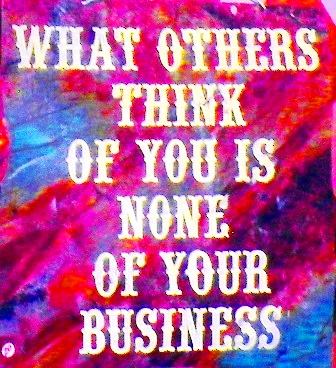
It’s like that saying: “What others think of you is none of your business.” Perhaps nothing that happens here after I post is any of my business. Though that doesn’t mean I can’t be curious about what brings people here.

***

Pat Bertram is the author of Grief: The Inside Story – A Guide to Surviving the Loss of a Loved One.

A Simple Life

I still check on what the monks are doing now that they have finished their Walk for Peace, and today I found out the head of the walk is planning to write a book about the walk based on the extensive journal he kept during that time.

That made me laugh, but not for the reason you think. Here is this guy who got up before dawn every morning, meditated for an hour, walked 25 to 30 miles (half the time barefoot) greeting and blessing people along the way, gave talks and hosted meditations in the evening.

And kept a detailed journal.

Me? I got up this morning. Period. Yep, laughing at the comparison.

I am understating just a bit because obviously I am sitting here at my computer writing this, but when I finish? Nothing but lounging around and reading. Pretty pathetic.

But I’m okay with that. I might not be inspiring anyone, but I’m not hurting anyone, either. I’m just enjoying my peaceful day, being glad I have this time, being grateful for the blessings of my life. There is grace in that, I think. I hope there is, anyway.

The monk, however, is still going about doing good. He’s planning his next mission for late April, traveling to Sri Lanka for a sapling from the sacred Bodhi tree to bring back for an exhibition in Fort Worth. Me? I might travel with a friend to the next town to get groceries.

I don’t know why this amuses me. I’ve learned long ago not to compare myself to others, but still, I can’t help but see the difference in lifestyles. Well, beyond the obvious one of his being a monk and me . . . not.

What else is funny to me (funny odd, not funny ha-ha) is that whatever I once did or once was has been lost somewhere in the past. It’s as if this is the only life I’ve ever had.

And a way, it is. I’ve always lived simply, partly from a belief in walking softly through life and a lack of funds to do otherwise. Long before recycling became a catchword, I recycled, not in a recycling bin but in reality — using things up, wearing them out, making do, and doing without. (I have no idea where those depression era ideals came from, but they have shaped my life.)

But maybe that is the way it’s supposed to be — living in my own moment without comparison to anyone, not a monk or even a younger me, and seeing the worth even in that.

***

Pat Bertram is the author of Grief: The Inside Story – A Guide to Surviving the Loss of a Loved One.

That “R” Thing Again

Daily writing prompt
If you could permanently ban a word from general usage, which one would it be? Why?

There are many terms that really get on my nerves, words and phrases I don’t use and would like expunged from the English/American language: “110%” (a physical impossibility); “intestinal fortitude” (just have the guts to say “guts”); “veggies” (the very sound of that mawkish word gags me), and “climate change” (the term is redundant. Climate is change. Climate is always changing).

Recently I have expunged another word from my vocabulary, and though I would like it banned from general use, simply the idea of suggesting banning it would seem to prove the very thing I would like banned.

It’s that “R” thing I wrote about yesterday. The word is so dangerous, so powerful and pejorative that just being called that “R” thing will bring down collective wrath on your head. It’s the one thing that is outside the normal rule of “innocent until proven guilty.” If you’re called that “R” thing, whether or not you did anything to earn that slur, that’s what you are. End of story. Except it’s not the end. Just being called that “R” thing can get you banned from social sites online and community groups offline, can get you ostracized from family or friends, and can sometimes get you fired from your job. It also subverts the law — too many district attorneys refuse to charge criminals for minor crimes and even great crimes, and they ignore fraudsters for stealing billions because they don’t want to be tarnished with the brush of that “R” thing.

I’m not saying the “R” thing doesn’t exist, but that the word itself has become something separate from the behavior it describes. It’s become such a triggering word that the true definition has all but been lost — there seems to be a disconnect between how easily the word is thrown out there and what it actually means.

People have become hyper-vigilant toward cultural nuance or slight and what can be perceived as aggression (even if it’s not directed at them), and they are quick to point it out. At the same time, we have become hypersensitive to and fearful of being called that “R” thing. In a world where words are considered an instance of violence, this could be the most violent. It’s also a weapon, a sure-fire way to silence opposition, to shut down any discussion, and with it any hope of true understanding because it’s an attack on the speaker, not on what is spoken.

Nowadays, it seems as if everything is viewed through that “R” lens, even when unnecessary, even if what you say is true or is not in any way divisive or derogatory.

Yesterday, I posted a blog about the conservative black commentators I have been following. As far as I can see, there was nothing discriminatory about what I wrote, and yet I hesitated to post it because of that “R” thing. I’d already been slandered on Facebook for simply sharing a post from a black commentator, and I didn’t want to continue being slandered. On the other hand, why should I not be able to write what I think just because others might see that “R” thing in my words?

Anyway, whatever anyone else does, in my little world (basically just me and this blog), I am getting rid of that word. There are plenty of other words to use to describe that particular attitude, words that aren’t as incendiary, words such as prejudiced, biased, intolerant, discriminatory, xenophobic, ethnocentric. Too bad I can’t also get rid of the emotional connotations attached to being called the “R” thing, but I’m afraid it’s now embedded the world today, and even in my own psyche. Still, there’s hope . . . well, probably not. I’ve always been sensitive to any sort of slight, and I don’t see that changing any time soon.

***

Pat Bertram is the author of Grief: The Inside Story – A Guide to Surviving the Loss of a Loved One.

A World of Opinions

Sometimes if I check online to see what other people think a cryptic passage in the Wheel of Time means (because Robert Jordan seemed to love being enigmatic and making readers work), I end up falling down the rabbit hole of old online discussions. That everyone would have a different opinion makes sense when it comes to these cryptic passages (especially those that prophesy the characters’ journeys), but this difference holds true even when Jordan is very clear about what is happening.

For a hypothetical example, say that a character went to a tavern to eat, and someone in a forum asked what Jordan meant. By the end of the discussion, you would think that the character was motivated by a desire to foment rebellion rather than a simple desire to assuage hunger. Admittedly, it’s not necessarily a cut-and-dried sentence since, as I said, Jordan delighted in being enigmatic, but still . . . The character went to a tavern to eat. Simple. No discussion required. And yet there are dozens of different points of view even though everyone read the exact same sentence. Or maybe they didn’t read the same sentence; maybe everyone’s eyes saw different words and hence the confusion.

There is also a difference in the way readers look at the saga as a whole. Everyone seems to admit that Jordan got caught up in his vision, and lost the forward momentum of the story about three-fourths of the way through. Some people see this as a vindication of their belief that he is a terrible writer. Others, like me, overlook those parts (that might have made sense if Jordan had been able to finish his epic) and see the brilliance that he did display elsewhere.

So, yes. We do see things differently even when we see the same thing.

A few years back there were all sort of photos going around the internet, like a pair of shoes or a dress. Oddly, though everyone saw the same photo, people saw different colors. I think the shoe was supposed to be pink and white, but I saw grey and turquoise. The dress was supposed to be blue and black, which is what I saw, but some people saw white and gold. Even when people would look at the same screen, such as on one person’s phone, they still saw different colors. Supposedly, there is an explanation, but explanations differed, so who knows the truth of it. The point is the vast difference in perception.

[It reminds me, though, of something I always wondered — do two people actually see the same color in the same way? If I were to show a blue flower, for example, everyone who is not color blind would agree that it was blue, but are we actually seeing the same color or do we just give the name “blue” to whatever color it is we see when shown that color?]

In cases like those I mentioned above, where opinions vary widely, where even what one sees varies, the difference is rather meaningless, since it doesn’t affect anything.

But this divergence holds true even when it does mean something, when it’s not a simple difference of opinion, when the disagreement can affect our very lives. Like the direction the country is going. Some people want open borders, equity more than equality (equality is giving everyone the same opportunity; equity is making sure everyone ends up in the same place), free trade, and a continued move toward globalism. Others want a sovereign nation with closed borders, putting legal citizens first, fair trade, less reliance on inimical countries, and a return to nationalism.

Those who want globalism also, paradoxically, believe in democracy. They believe that they are able to choose their own destiny, and so they can’t see that the policies they support are being pushed on them by outside global influences. The nationalists often do see that globalism hides in certain policies, such as open borders and punitive tariffs placed on American goods, and so they want to retract from world-wide policies that seem to go against sovereignty. For years, these nationalists were hushed by taunts of “conspiracy theorist,” but labels don’t affect the truth that these are two disparate visions of the United States.

It makes me wonder if both sides are seeing the same thing but interpreting it differently, as in the example of the hypothetical sentence in the Wheel of Time mentioned above, or if we are seeing completely different things as with the example of the shoes and dress.

I used to not pay much attention to current doings (it’s easier to study the past because it’s not ever changing as is the present). But now I worry about what could happen when the difference is so great, when whatever opinion you have is subsumed into one of those two vastly different visions. I also worry that the country I die in will be unimaginably different from the one I was born in.

Oh, well. That’s my fault for blogging every day. When I wasn’t blogging, if I had ideas such as these, I’d just let them pass, but now I think about them so I can write a cogent essay. A good reason to stop blogging, but so far, I don’t have an opinion about whether or not to continue.


***

Pat Bertram is the author of Grief: The Inside Story – A Guide to Surviving the Loss of a Loved One.

My Every Day

Daily writing prompt
Describe your most ideal day from beginning to end.

My most ideal day? Well, that’s simple enough to describe — it’s pretty much my every day so far this year:

Get up. Do stretching exercises. Make the bed. Have a cup of tea. Play a bit of a hidden object game. Write a blog post. Read. Have breakfast. Read. Have lunch. Read. Take a short walk. Read. Rest a bit. Read. Have a quick snack. Read. Check online to see what if anything is going on with my blog. Read. Read some more until it’s time to go to bed, then read until lights out.

Well, that’s my every day except for the walk. I keep trying to get back into walking every day, but I can’t seem to always find the energy. Of course, in an ideal day, I’d have plenty of energy, no sinus issues, and the get up and go to just get up and go. Sometimes, of course, my ideal day involves a visit with a friend or neighbor or whoever else I might encounter during the walk, but apparently not today.

I used to play the hidden object game a lot more until much of that online time got supplanted by blogging. Odd how that happened. I never actually decided to start posting every day as I used to. I just . . . did.

I must admit, blogging does help make my day an ideal one. It feels like coming home, in a way, a comfortable way to spend time, a pleasant way to communicate without having people cut me off while I am speaking if they disagree. (You might cut me off and stop reading, but since I’d never know, it’s not hurtful.) It also gives me something to think about other than the state of the world and the lack of common sense (though why something that’s in such short supply is called “common,” I don’t know, and neither does anyone else, apparently, since this is a sentiment I encounter so often that it’s embarrassingly trite). Best of all, blogging allows me to play with words, like above when I wrote “the get up and go to just get up and go.” I tend to be too serious, so word play lets me indulge my fantasy that I’m witty and charming and lighthearted. (And no, that fantasy is not part of my ideal day since ideally, I need to be what I am, whatever that might be.)

Well, this part of my ideal day has been fulfilled. Now on the next part: Reading!!

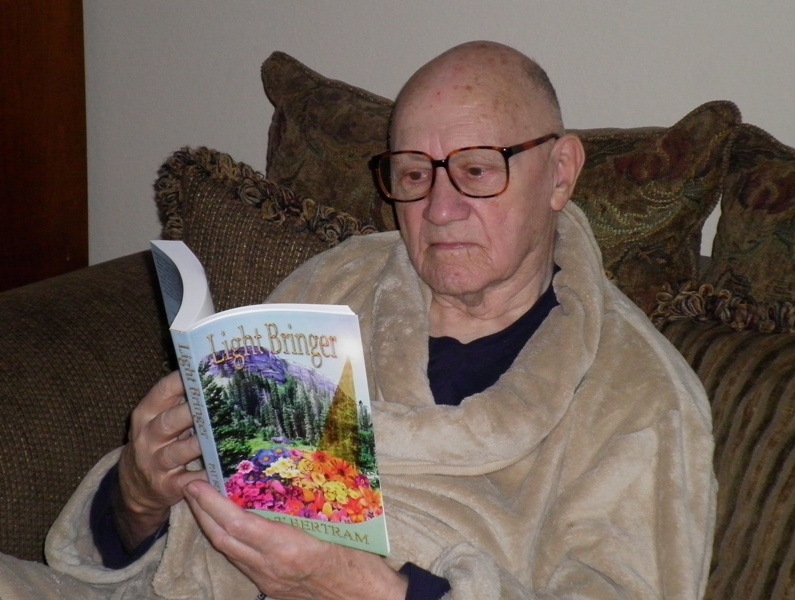
(I couldn’t find a photo of myself reading, so here is the next best thing: my 97-year-old father reading one of my books during his last days.)

***

Pat Bertram is the author of Grief: The Inside Story – A Guide to Surviving the Loss of a Loved One.

When Online Friends Disappear

For almost twenty years now, I’ve been a quiet presence on the internet. Nothing I’ve posted has ever gone viral, though a few posts have accumulated thousands of views over the years. Most of those, I think, were posts about grief that apparently resonated with people, but for whatever reason, people have found me. Many of the people I met through this blog, as well as through various networking sites, became online friends. Some even became offline friends.

Once I stopped blogging about grief, stopped blogging every day about anything, and stopped participating in places like Facebook (Facebook banned all links to this blog, so I had no real reason to participate since all I had to say, I said here), I didn’t “see” those friends as often, but I did catch a glimpse of them online now and again, so I knew they were well.

Facebook has recently lifted their 7-year ban of this blog, so I have no real reason to continue my boycott, except that the ban pretty much put the kibosh on book sales since most of my buyers came from there, and that’s hard to forgive. I did log in to check on a friend, one who I admired and with whom I had a wonderful visit on my cross-country trip, but he was gone from the site. No record of his ever having been there. It turns out, it wasn’t his choice. Facebook just arbitrarily deleted his account. No reason. No recourse.

I’ve seen a lot of really horrible things posted online over the years, but this author, who I’ve followed almost from the beginning, has never posted anything the least bit controversial. He’d mention books, the ones he wrote and the ones he read. He’d share a joke. He’d write about his research. Oh, any number of interesting, totally benign subjects, and then . . . nothing.

He was understandably angry and mentioned his troubles a couple of times in a blog post, but then he even stopped posting anything on his blog. I emailed him, and when I got no answer, I checked obituaries. (But he wasn’t there, either. Whew!)

Obviously, we weren’t close or otherwise we would have kept in contact more frequently after our visit, but to tell the truth, I lost contact with a lot of people. I settled down, eventually began to live more offline than on, stopped writing. Most of my online friends were people I met through various author groups, some groups of which are now defunct (that’s why so many of us reluctantly migrated to Facebook). When I lost interest in writing novels, I also lost interest in talking about writing, so there went most of my online activity.

If I hadn’t met him in person, I would begin to think this disappeared friend was a figment of the internet, perhaps an avatar of some artificial intelligence, but I know for a fact he existed and that his intelligence was anything but artificial.

I may never know what happened to him, though I hope he is doing well.

Other people I have lost track of occasionally check in here with me, just to say they’re still around, which I appreciate. But then, I suppose that’s the way of the ever-turning wheel of the internet. It spins us together and then whirls us apart.

Though come to think of it, that “apart” part might just be life. Or aging. Many of the friends I’ve made since moving into my house I seldom see. Even a friend who lives a mere two blocks away!

So, for all of you I’ve lost track of, know I am thinking of you and hoping you are well and at peace.

***

Pat Bertram is the author of Grief: The Inside Story – A Guide to Surviving the Loss of a Loved One.

Figuring Out the End of The Wheel of Time

Yesterday I wrote about parts of the Wheel of Time that should have been edited out or at least shortened considerably.

One of those story lines involved the hero rescuing a nation from an evil king who’d usurped the throne while the daughter heir was off doing other things. In addition, the hero twice conquered another nation. He intended both countries to be ruled by the daughter heir who would have been the rightful heir under normal circumstances. But because he said he was “giving” her those thrones, there was a huge furor since she claimed they were hers by right. Except they weren’t hers by right any longer. He’d conquered both nations. He could have put anyone in charge as he did with other nations where he defeated the evil rulers. But she was angry at him because of that word: give. Sure, she didn’t want people to think she was his puppet and so she needed to gain the crown on her own by having the ladies and lords vote for her. But there they were, on the brink of a cosmic catastrophe, and she worried about them thinking she was a puppet? It seems to me that if all existence were at stake, that would be a minor issue. Certainly not one worth tens of thousands of words.

What makes the whole thing even sillier is that the city, Caemlyn, was a Camelot equivalent. (In the King Arthur Legend, The Battle of Camlaan was the climax to his rule.) So it might have made sense, perhaps, to waste time on a plotline that went nowhere if only to establish the importance of that city, except that the very first casualty of the cosmic battle was Caemlyn. So at that point it mattered not who ruled.

It surprises me that I ever bothered to read these books in the first place, and I probably never would have if I hadn’t been laid up at the time and desperately needed something to read. Then, when I realized what the books were with all their real-world references, not just homages to previous series, like The Lord of the Rings, but a retelling of the King Arthur tale as well as dozens of other myths and legends from around the world, I got interested in finding all the subtext. Then, when I found out how terrible the ending was, I decided to try to figure out the real ending. Which is where I am now. But sheesh. All that verbiage! Luckily, I know how to skim, and I am not at all adverse to skipping huge sections. (The seventh book took me two or three days to read. The eighth took me two or three hours.)

I am finding bits, though, that would have made the ending more interesting. The most obvious would be to have accepted that most of the characters had already reached the end of their arc and were ready for the last battle. In one case, the substitute author repeated an entire character arc. In another case, he simply undid the arc, erased the character’s growth and his acceptance of responsibility, and returned him back to his immature ways with no further development.

Another thing that should have been addressed is that at one point, the kings and queens of the northern nations all decided to head south with their armies. They did not like what the hero was doing to the southern nations, not realizing he was rescuing those nations from the forces of the Dark One, and they didn’t want the same thing to happen to them. So they decided to do something about it. The subtext (and even Robert Jordan alluded to it) was that this displacement was part of the dark side’s plan, and was helping to further disrupt the forces of the light. This coalition was going after the hero, and the whole thing was so hush-hush, that they were ready to kill anyone who found out or who got in their way. Not exactly a peaceful mission. By this time in the books, it’s obvious that nothing happens by coincidence, and yet combined, this northern coalition ended up with thirteen Aes Sedai (the women power wielders, who some called witches). And thirteen Aes Sedai, when linked could destroy the hero, no matter how strong he was against them individually.

And yet, despite this, the rather weak reason given during the substitute ending was that they were there to test the hero to see if it was okay for him to fight the Last Battle. Um, yeah. If this were true, all they’d have to do was send an envoy, asking for an audience. Instead, they took a force of 200,000 as well as all those Aes Sedai to deal with him. And if they found him unworthy and killed him, they would have doomed the entire cosmos to the dark side. Definitely sounds like a plan made by the evil ones.

Even sillier, they were acting on a so-called prophesy that had been handed down by word of mouth for 3,000 years, negating one of Robert Jordan’s themes, which is based on the game of Whisper, or Telephone, or Gossip, whatever it was called in your part of the country. In the game, someone passes a secret to the next person, who passes on what they heard to the next person, and in the end, what results is generally nothing much like what was originally said. His point was that things change over the centuries, that stories change, that names change. So the chance that this prophesy, passed down orally through the millennium, would be the same at the end as at the beginning isn’t that great.

Even worse, though this army that had been manipulated by the dark side to leave their lands could have become a great disrupter at the last battle, instead the substitute author brought in a devil-ex-machina — an entire hitherto unknown army of dark friends.

I’m thinking I’ll eventually give up my idea of figuring out the real ending (for me just to decipher, not to write). Until then, it is rather an interesting puzzle. If I can get through all the scenes that should have been edited out, that is.

***

Pat Bertram is the author of Grief: The Inside Story – A Guide to Surviving the Loss of a Loved One.

When Editors Don’t Edit

Too often, novels that start out good and end with a satisfying twist, lose traction somewhere in the second half. The best that can be said of those parts is that “stuff happens.” Nothing important to the story, nothing important about the character, nothing that propels the plot forward. Just stuff happening. Ho hum. This seems especially true of authors who are extremely profitable. I don’t know if the editors just give a cursory look before passing the manuscript on to be published, if they are too intimidated to ask for rewrites, if deadlines proscribe rewrites, or if it’s simply that no one cares because no matter how good or bad the book is, it will still make a fortune.

The Wheel of Time books are a good example of this. The first seven are generally good, sometimes great, and sometimes truly brilliant, but after those books, the brilliance fades, the lovely writing gets lost in the muddle, and the best that can be said is that “stuff happens.” There are still remarkable parts, but those parts are surrounded by hundreds of pages where things happen, but they don’t seem to have anything to do with the thrust of the book, don’t seem to move anyone closer to the last cosmic battle that will determine if life and even the universe will continue as it is.

I understand that Robert Jordan liked turning fantasy tropes on their end, for example, making women major players (in most fantasy written before him, women had bit parts if that). He also was playing against the lone hero concept, not just with three interconnected heroes, but also with the idea that the entire world had to cooperate to make it possible for the forces of light to win against the darkness. But, as I pointed out before, what an author intends and what ends up in readers minds is not always the same thing.

Some people like those parts, where tens of thousands of words are devoted to the women characters setting up their power bases, and I sort of understand the necessity, but not the huge portions of books devoted to their power grabs. A lot could be simply skipped, later showing that they achieved their goals, because as the books stand, two of major heroes mostly disappeared, one for an entire book. The third one’s story could be vastly truncated, especially since the same basic story (his fight with himself about whether or not he is a leader) plays out again and again. Even after he accepts leadership, there is a whole other book that repeats that entire character arc. Admittedly, this repeated arc is not Jordan’s fault, but the fault of the author who finished the series, since the substitute apparently didn’t pay attention to the fact that the characters had almost all become who they needed to be to go to battle, and so made a hash of it.

Still, I can understand why people don’t care that those final books didn’t make sense. His editor didn’t care. Since she was also Jordan’s wife, I imagine ending the series in any way possible was her way of honoring him and his last wishes. The publisher certainly didn’t care. A barrelful of money rested on those books. And most readers didn’t care because there was an ending to a series they had lived with for most of their lives. Besides, after all those books where stuff just happened without any sense that the story was moving forward, people were thrilled that the story finally pushed toward to an ending. (Not THE ending, but an ending.)

In the last books that Jordan wrote, there are still flashes of brilliance, still parts where exciting events took place, but yikes. The rest of it should have cut considerably by a few hundred thousand words or more, but apparently no one dared suggest such a thing to such a popular author.

***

Pat Bertram is the author of Grief: The Inside Story – A Guide to Surviving the Loss of a Loved One.

Would-Be Fantasy Writer

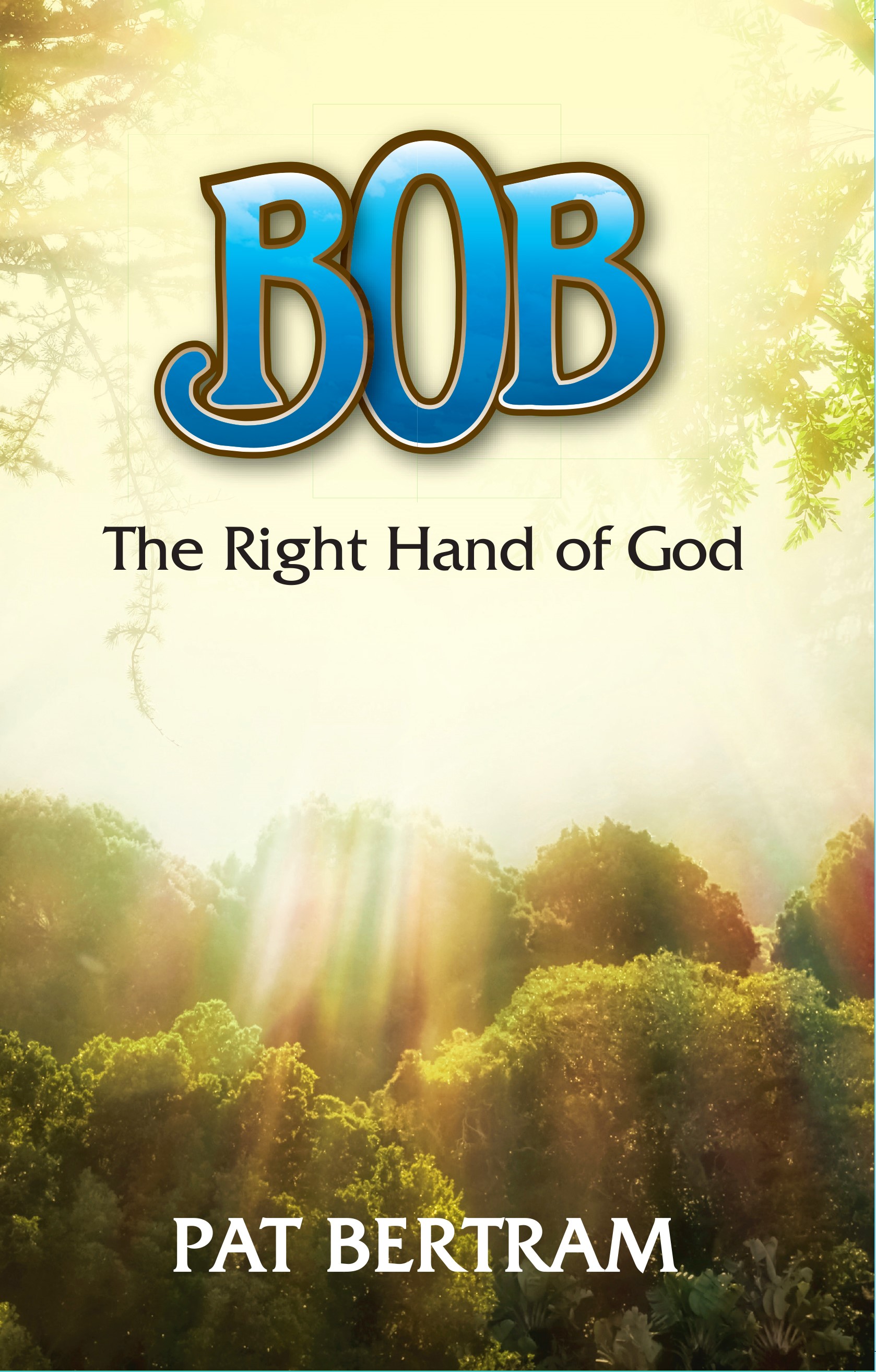
The Wheel of Time book series has apparently inspired as well as created a couple of generations of fantasy writers. Although I have never been able to get into any of those other stories (the books may have been inspired by Robert Jordan, but their worlds and their writing styles fall vastly short of his example), I can understand the urge to create one’s own world. I’ve thought about it myself, perhaps continuing the story I began in Bob: The Right Hand of God. Although Bob: The Right Hand of God is a stand-alone novel, it does seem to lend itself to a sequel since anyone born into that re-made world would have to start developing a new civilization (or not), but I don’t have any interest in writing the sequel. To me, the interesting part of the story was the de-creation of life on Earth as we know it. Anything further seems as if it would be just a ho-hum book. A been there, read that sort of thing.

So, if not Bob: The Right Hand of God, then what? Create a whole new world and culture as so many fantasy writers do? I considered that possibility, thinking a world of my own would be a place to escape to in my own head if not in fact but, though I hate to admit any failing, I don’t have the imagination for such an undertaking. (Although I’ve written two novels that could be considered fantasy, both took place more or less in our own world.) Nor do I need to live any more in my head than I already do. Besides, the truth is, so-called real life is fantasy enough for me.

There are theories that all time exists at once, so we are living our past and our future at the same time we are living in the present. My very first book, the terribly written one that no one will ever see (mostly because a few months ago, in a fit of decluttering, I threw away the only copy of the manuscript), was the story of two people who meet and fall instantly into if not love, then an incredibly deep connection, only to find out that they are reincarnations of each other. My question (and hence the premise of the book) was that if everything exists at once and if there is any validity to reincarnation, could this happen? There is an obscure theory that we are all reincarnations of one another. That not only is there a single electron that moves so fast and through so many dimensions and quantum processes that it creates the entire universe (or even multiple universes), but that there is also a single soul that we are all part of. (Yeah, I read weird stuff, which is inevitable when one reads almost anything almost all the time.)

Other theories say we are creating the world as we live it, that nothing exists yet but possibilities we haven’t yet encountered or envisioned. Other theories suggest that everything exists in our thoughts, that we are thinking into reality the world we live in. The reason we are such a mess is that everyone is thinking of different things and wanting different things. If everyone thought of the same thing at the same time, then that thing would come into fruition. Of course, the chances of that happening are nil since whenever you have even just three people together, one will always be thinking of something else, daydreaming or disagreeing or whatever goes on in people’s heads, and the other two will be saying they are thinking of the same thing, but that thing could be completely different for each of them. (For example, if they are trying to envision an apple, one might see a green apple, another red.)

Am I getting too silly here? Well, not too silly for a fantasy writer, but except for Bob: The Right Hand of God and Light Bringer, I probably will never be a fantasy writer. Probably will never write another book, either, but who knows. I could get bored with the books that currently exist and need to occupy my mind another way.


***

Pat Bertram is the author of Grief: The Inside Story – A Guide to Surviving the Loss of a Loved One.