Death Certificate Error

My mother, far right, on her 60th wedding anniversary

I found out something today that shocked the heck out of me, and after the horrendous shock of my grief after the death of my life mate/soul mate, I’m not very shockable any more.

My mother died of lung cancer four and a half years ago. Her cause of death surprised me a bit since she’d never been a smoker, but at 85, one is susceptible to many forms of cancer, so I mostly found it ironic that a woman who’d never even been around second hand smoke (except for my father’s very occasional cigars) should die in such a manner. However, as I found out today, her death certificate says that she’d contributed to her death because she’d been a smoker for thirty years.

What???? How is that possible? She’d never smoked as long as I knew her, so if she’d been a smoker for thirty years, she would have had to start puffing away a couple of years before she was even a glint in her parents’ eyes, found a way to sneak smokes before she could crawl, and keep up the habit while enduring the privations of growing up in a coal mining town.

I hope this mistake on her death certificate was simply that — a mistake — rather than someone’s agenda to prove that smoking causes lung cancer. My sister doesn’t want to take a chance on upsetting my father during his final years, so she’s waiting until after he’s gone to get the death certificate changed. Until then, it’s a wonder my mother isn’t haunting us. My mother was a very exact and truthful woman, who believed in choosing the right words. (I can’t tell you how often we argued with her about “almost exactly.” She insisted things were either almost or exactly, while we were just as insistent that there were gradations of almost.) And this error on her death certificate is a more grievous transgression than a simple misuse of words.

To be honest, I doubt she cares any more what her death certificate says, but it will be good for the rest of us when the record is set straight. It isn’t only smokers who die of lung cancer. Non-smokers die of the disease, too, and their deaths should not be dismissed because of errors on their death certificates. Nor should non-smokers smugly go on about their lives feeling secure in the belief that they will never get lung cancer. They can, and they do.

Suspense/Thriller Writers Self-Promotion Extravaganza!

Every Saturday, I host a self-promotion extravaganza for my Suspense/Thriller Writers Group on Facebook. You don’t have to belong to the group to join the event and participate in the extravaganza, so if you are an author with a book to promote, I hope you will join us! While you’re there, be sure to check out the books of the other authors. You can find the event here: Suspense/Thriller Writers Self-Promotion Extravaganza! Just click on “join” and tell us about your book.

You already know my books, but if you are using Internet Explorer to view this blog, you won’t be able to see the cover images on the sidebar until WordPress fixes a glitch, so I’m listing them here. If you’d like to read the first chapter of any of them, just click on the cover.

Light Bringer: Becka Johnson had been abandoned on the doorstep of a remote cabin in Chalcedony, Colorado when she was a baby. Now, thirty-seven years later, she has returned to Chalcedony to discover her identity, but she only finds more questions. Who has been looking for her all those years? Why are those same people interested in fellow newcomer Philip Hansen? Who is Philip, and why does her body sing in harmony with his? And what do either of them have to do with a shadow corporation that once operated a secret underground installation in the area?

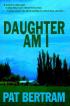
DAIDaughter Am I: When twenty-five-year-old Mary Stuart learns she inherited a farm from her recently murdered grandparents — grandparents her father claimed had died before she was born — she becomes obsessed with finding out who they were and why someone wanted them dead. Along the way she accumulates a crew of feisty octogenarians — former gangsters and friends of her grandfather. She meets and falls in love Tim Olson, whose grandfather shared a deadly secret with her great-grandfather. Now Mary and Tim need to stay one step ahead of the killer who is desperate to dig up that secret.

More Deaths Than One: Bob Stark returns to Denver after 18 years in Southeast Asia to discover that the mother he buried before he left is dead again. He attends her new funeral and sees . . . himself. Is his other self a hoaxer, or is something more sinister going on? And why are two men who appear to be government agents hunting for him? With the help of Kerry Casillas, a baffling young woman Bob meets in a coffee shop, he uncovers the unimaginable truth.

A Spark of Heavenly Fire: In quarantined Colorado, where hundreds of thousands of people are dying from an unstoppable disease called the red death, insomniac Kate Cummings struggles to find the courage to live and to love. Investigative reporter Greg Pullman, is determined to discover who unleashed the deadly organism and why they did it, until the cost — Kate’s life — becomes more than he can pay.

Thursday the 12th — A Day of Bad Luck

After yesterday, Friday the 13th holds no horrors. I started the day at an outdated dentist’s office that seemed like something from the inquisition rather than a modern tool of torture. It wasn’t so bad since I was not the patient, though I did have to be patient to sit through his political diatribes. (He’s British and thinks there are so few USA-born doctors because Americans are lazy, and he thinks our schools should be based on the British model, but he came here to dentistry school because he wanted a first-rate education and stayed because he couldn’t make money in Britain as a dentist.) I’ll stick with my Vietnamese dentist. At least he keeps the torturous chatter to a minimum.

Next, when I went online and checked Facebook, I discovered that someone had plagiarized me. I pointed out the word-for-word passages she used. She apologized, agreed to comply, since I was “so obviously offended.” Offended? You think? Then, after she finally removed the plagiarized bits, she said, “I assure you that this won’t be discussed with anyone.” Why would I need that assurance? I did nothing wrong. I don’t care who knows that she’s a plagiarist. I unfriended her, of course, since obviously, she was no friend. (She’s an author I only knew through Facebook, so I’m not losing a real friend.)

And then the real horror began. Something happened to my blog. The right sidebar with my covers sank to the bottom of the page, and the admin bar, the black bar across the top that takes me from the blog page to the dashboard and back again, stopped working. It turns out WordPress offers support only to those who pay for upgrades, which I don’t, so I spent all day on the WordPress Forums looking for a solution. One person suggested, Go to Settings > Writing and select “ ___ WordPress should correct invalidly nested XHTML automatically” and then scroll down and click “Save Changes.” Now, starting with your latest post, open it in the editor, make one minor change such as adding a space and then deleting it, and then click “Update Post.” Check your blog and see if it is back to normal.

The problem is on all five of my blogs that use the same theme, so the problem couldn’t have stemmed from anything I did. Still, I followed their instructions on the off-chance that it would help. It didn’t help me, but if you have a wordpress blog, I would suggest changing the setting. Any stray bit of html can wreak havoc on your blog.

Another person had me disable “infinite scrolling.” It used to be that you could choose how many posts would be displayed when people came to your blog, but now, when you reach the bottom of the page, you get more blog posts. In other words, there is no bottom of the page. If you want to dismantle infinite scrolling, here are the instructions: http://wpbtips.wordpress.com/2012/06/05/disabling-infinite-scrolling/

Dismantling infinite scrolling did not correct the problem, so the next task they had me do was change all the images in the right sidebar (which of course you can’t see if you are using IE9) to smaller ones that fit the width of the sidebar. Supposedly, IE9 doesn’t make the conversions from larger images to smaller ones very easily, though until yesterday, I never had a problem. But even going through all that trouble didn’t make a difference.

I hoped that things would miraculously be back to normal today, but alas, the blog is still broken. So . . . Friday the 13th? It doesn’t scare me. But Thursday the 12th? Yikes.

Is Facebook Still Cool?

For years now, writers have been told that to promote their books, they need to sign up for Facebook, mostly because when Facebook was new, very few authors used social networking sites to engage with readers so those who did found a goldmine. Ever since then, authors by the hundreds of thousands have joined Facebook to find readers and found only other writers. Why? Unless you are a known writer, readers aren’t searching you out. Writers try to connect with everyone FB suggests or anyone they come in contact with, but readers don’t. They have no reason to connect because they have nothing to gain by it.

Because of the peculiarities of Facebook, I am connected to very few people outside the writer’s community (and those few non-writer connections are mostly family or real life friends). It’s hard to believe that with over 900 million users, I can’t break out of this tight enclave into the mainstream of Facebook, but I have nothing to say to anyone besides what every other author says, “Buy my books,” and even I know that doesn’t sell books. Mostly what I do is use Facebook as a bulletin board to post links to my blog posts. I also scan my feed to see if anything interesting is going on, (so-and-so’s book is being given away free on Amazon, such-and-such a book is on sale for 99¢ . . . yawn) and finally check in with my writing discussion group.

Shouldn’t there be more to such a vast network than a writer’s group? But then, I have made a lot of online friends through Facebook, I keep up with many of my fellow Second Wind authors on Facebook, and I try to get to know the people I am connected with. Considering that joining Facebook used to be a coming-of-age ritual for thirteen-year-olds, it’s amazing I’ve found anything to do on the site! I mean really, what could I possibly have in common with such new and untried persons?

Along with all the other problems Facebook is having (such as not finding enough ways to gouge money out of us via ads), they now have to contend with the loss of their youngest members. Among some young teens, it’s no longer considered cool to join facebook — they prefer to text or to join sites where they are not pressured to connect to everyone in their class. No wonder there are so many offline traumas instigated by online life. The unpopular kids can never get away from their unpopularity. And anyway, why would they join a network that is aging? Facebook is eight years old, which in online years has to be closing in on 57. (Assuming web years are equivalent to dog years.) Even worse, from the point of view of a young teen, is that more than one-fourth of FB users are 50 to 64 years old.

I’m not sure where I’m going with this post. It started out as a light-hearted commentary about the whole Facebook phenomena, and I planned to end up with saying that there are worst things that joining Facebook to connect with readers and finding only writers of a certain age, but I’ve since discovered a fb author friend plagiarized something I posted on Facebook, which is so not cool. So now I have no end to this post. Except maybe to say that I need to stop spending so much time online.

Upsurges in Sadness Are Like Shortness of Breath After Exercise

I’m fine. Truly I am. For all of you who have expressed concern over my current upsurge in grief, I just want to tell you there is nothing to worry about. Upsurges in sadness do not in any way affect my life or my dealings with other people. They are just there, a fact of my life like shortness of breath after exercise. If I didn’t write about my feelings, no one would know about my times of sadness. There is so much bad advice given to people about grief, such as acceptable durations and ways of grieving, that I want to provide a counterpoint, and I wouldn’t do much good if I kept silent about what I happened to be feeling at any given moment.

Many people have told me that after the death of their husband, they never found happiness until they married again. People have told me that even after they got married, they still experienced upsurges in grief, sometimes years afterward. People tell me they never got over grief at the loss of a life mate, it just got different. The death of a cousin or even a brother doesn’t affect us the same way as the loss of a child or a soul mate, so the severity of the loss has to be taken into affect before you start wondering if someone is grieving inappropriately. Some people do fall in a pit of depression and cannot get out without help, but I am not one of them. Nor am I ruining my health by riding out the sadness. That’s what tears are for — to release the stress. Walking, exercising, and blogging also relieve the stress of trying to create a new life for myself out of the embers of the old one.

For me, an upsurge in grief usually comes right before or right after a new level of acceptance or a greater understanding. This latest upsurge began on Independence Day. It’s a day for families to get together, to have fun, to do whatever it is that families do when they get together, and I was alone. I understood that this could be the way holidays will be for the rest of my life, and I found it difficult dealing with the unwelcome understanding. Also, while walking in the desert recently, I’ve had several revelations that are helping me with my search to find a new focus for my life, and such forward motions bring on an upsurge of sadness because they take me further away from the past I shared with my deceased life mate/soul mate.

And anyway, even though I am no longer a child in the world of grief, I’ve not yet achieved full growth, either. Therapists who have studied grief and grievers admit that it takes three to five years to find your way back to life, and I am just past two years. I still have a long way to go. Besides, what’s a few tears among friends?

The truth is, though, I am more exhausted than sad. I’m tired of living in an alien world, tired of having to figure out where to go from here, tired of not feeling like me, but mostly, I’m tired of his being dead. Whether I continue to be sad or find happiness, whether I continue floundering of find new focus, he will still be dead. And absolutely nothing I do or say or feel will ever change that.

Grief and the Double Standard of Love

It seems as if our whole culture revolves around and reveres couplehood. Most songs, novels, movies, are either about people looking for someone, finding someone, losing someone, or getting a second chance at love. A large percentage of non-fiction books are written to help people find a mate or help them stay mated. Hundreds of websites are devoted to matching people with their true love or a reasonable facsimile. Many holidays are geared toward love — Valentine’s Day, anniversaries, kissing your love at midnight on New Year’s day.

Clichés about love abound, mostly because they are true (or feel true). When you meet the right person, your life suddenly make sense. Whatever has been missing now is found. Love fulfills you. Love makes the world go round. All you need is him/her. Love is all that matters. Two hearts beating as one. Soul mates. Everlasting love.

It’s so inbred in us, this need for true love, that few people question it. In movies (and maybe even life) when someone has an affair and ends their marriage to be with the new love, all they ever feel the need to say is, “I fell in love,” and that explains everything.

But . . .

When you lose your one true love to death, all of a sudden you are supposed to be able to slough it off as if love didn’t matter, and go on with your life. Everyone else is celebrating their love, but you are supposed to accept that yours is over and you are supposed to have a good attitude so you inconvenience others as little as possible.

This double standard is hard to deal with. Not only do we bereft have to contend with the effects of suddenly being deprived of love, companionship, fulfillment, not only do we have to contend with being alone in a coupled world, we have to deal with our culture’s belief that love is all important. Other people can continue to have the benefits of a living love, but somehow we bereft are supposed to be able to make do with memories.

My life mate/soul mate and I didn’t have an easy life, in large part because of his illness and other setbacks beyond our control, but like most couples, we hoped for a payoff sometime in our golden years, and his death killed our hopes.

I’m finally to the point where seeing couples doesn’t bother me, but for many months, just the sight of two people, middle-aged or older, holding hands brought me to tears. I realize some people never find anyone to love, but others have been married for forty, fifty, even sixty years. I try not to compare, try to accept my situation, but the truth is he was my home, and now I am homeless. When I was with him, I had a sense of belonging, but now I belong nowhere, especially not in this coupled world.

Floundering in a Sea of Sorrow

A friend sent me a link to website describing grief as walking a tightrope back to life, which is an interesting metaphor, but doesn’t fit with what I’ve been feeling lately. Mostly it seems as if I am bobbing on a sea of sadness, going with the flow, accepting what has happened to both me and my deceased life mate/soul mate, then suddenly I start floundering and, occasionally, I feel as if I am foundering.

The verb flounder means to struggle, to make clumsy efforts to move or regain one’s balance, much like a fish out of water. The verb founder means to fail utterly, to collapse, and comes from a Latin word meaning “bottom.”

I seldom feel as if I am reaching bottom any more, though sometimes, grief catches me unaware and I feel as if I am once again drowning in the sea of sadness. Those times confuse me, because after two years and three months, I feel as if I shouldn’t still become so submerged in sadness. Luckily, though, my times of feeling as if I am foundering don’t last long. My times of floundering, however, are still fairly frequent. A few days can pass without an up swell of grief, and then for no reason I can fathom, I begin floundering again, and have to try to regain my balance.

Even though I’m becoming used to his absence, his goneness still confuses me at times. How can such a vital human being be gone from my life, gone from this earth, just . . . gone? And why do I still miss him? Shouldn’t I be over him? Accept that he is gone and get on with my life? But grief doesn’t work that way, or at least, my grief doesn’t.

He was a big part of my life for more than half my years. Almost everything I own belonged to the two of us. I have a few things that predate his appearance in my life — my car, some household goods — but everything else reminds me of him. He was my best friend, the one person to whom I could say anything, no matter how shocking the rest of the world would find my musings. Oddly, he is still the only person I can talk to, though I do find it pathetic at times that the only one I have to converse with on a regular basis is a dead guy, especially since he doesn’t keep up his end of the conversation.

I am getting on with my life, though I seem to be missing something — verve perhaps, or buoyancy. Even when things were going wrong, our togetherness brought lightness to my life, and I don’t know how to find that in myself. I feel heavy-hearted and lead-footed, as if every movement takes more effort than it should. I suppose it’s just a matter of getting used to this weightiness as well as his goneness and my loneliness and everything else I have to get used to.

And I will get used to it all. My good days, my days of going with the flow show me that it’s possible. And then I flounder, and I wonder how I ever managed to get as far as I have without foundering.

Have you ever had difficulty killing off a favorite character in your story?

No. For me, story is sovereign. Everything must serve the story, and if the death of a favorite character will serve the story, then that’s the way it has to be. To be honest, though, I haven’t yet killed off a favorite character. The ones I have killed were created to be killed, and I took great glee in doing so. Mostly, I’m not one for being selective in my killings. In A Spark of Heavenly Fire, I decimate Colorado. (I am using the word in its proper context here — I kill off a tenth of the population.) In Light Bringer, I hint at the destruction of vast numbers of people, and in my current work (that isn’t progressing very rapidly) I do, in fact, kill off almost the entire population of the world. After all that carnage, what’s one more character killed off, favorite or not?

Here are some responses from others authors about difficulty of killing off a favorite character. The comments are taken from interviews posted at Pat Bertram Introduces . . .

From an interview with Dellani Oakes, Author of Lone Wolf

I greatly dislike killing a character and avoid it if I can. However, there are times when a character must die to advance the plot. The one who upset me the most was a guy named Murdock Pickford. He’s in a prequel to my sci-fi series. Murdock is a nice guy. He’s kind, capable, loving and forgiving. He’s engaged to a woman who’s pregnant with another man’s baby & he agrees to raise her as his own. He’s thrilled about the baby, excited about getting married—and he has to die, horribly, brutally, for the book to move forward. I’m not ashamed to admit that I cried when I had to kill him off.

From an interview with Jocelyn Modo, Author of “Revolution Lovers”

In Revolution Lovers something truly horrible happens to Adie…I’ve avoided that scene since I wrote it. I can’t look at what I did to her, don’t want to face what I did to my beloved character. I feel silly saying it, but I feel guilty about hurting her.

From an interview with Rod Marsden, Author of “Disco Evil” and “Ghost Dance”

When you deal with the supernatural killing off a characters doesn’t mean they won’t return. I have had characters return a number of times after death to either help or hinder the living.

From an interview with Christine Lindsay, Author of “Shadowed in Silk”

I have to laugh at this as it may sound horribly brutal. But I have no problem killing my characters off at all.  In all of my books I kill off at least one secondary character, sometimes more as is the case of Shadowed in Silk.

I love having my strongest Christians die. I often cry as I write the scenes where they are ready to meet their Lord. And sometimes bad characters have to die too. I try hard not to think of their eternal situation, and remind myself that they are fictional characters — not flesh and blood — and I am not God.

What about you? Have you ever had difficulty killing off a favorite character in your story?

(If you’d like me to interview you, please check out my author questionnaire http://patbertram.wordpress.com/author-questionnaire/ and follow the instruction.)

Pat is Prologue

Yesterday I mentioned a revelation I had in the desert — a question, really. What is the point of being me?

It had suddenly struck me that I am truly part of the unfolding universe. There I stood baking under the sun, my sweat evaporating into the space around me, my feet solidly on the ground, air flowing in and out of my lungs, connected in dozens of ways to the world and, ultimately, to the universe.

When the universe came into being, creating itself in the big bang, everything that ever would be came into being at the same time. The matter of the universe — stardust, to be romantic — has been connecting and disconnecting, rearranging itself in an infinity of shapes and forms, for billions of years. At one moment of such creativity, I was born. I am of the universe, perpetually a part of it. Although my body seems to be a thing in and of itself, it continues to exchange matter with its surroundings. In a quantum sense, my few electrons are indistinguishable from the whole.

Here I am, a creature born of stardust, at once eternal and ephemeral, physical and psychical, emotional and logical, alive yet forever dying.

Everything that ever happened on earth and in the universe since the beginning has culminated in a single person — me. Everything that happened in my life up till now has created the person I am today. So, what is the point of being me?

This is not a religious question. Nor am I looking for simplistic answers or rehashed dogmas. Instead, it’s more of a credo or a different way of looking at the world and my future. What do I want to do while in this body made of stardust? What do I want to feel? What do I want to think? How do I want to live? How do I keep from wasting the miracle that is me? How do I celebrate this connection to the unfolding universe? What is the life that only I can live? In other words, what is the point of being me?

(You, of course, are the culmination of life up to the point of your birth, but it’s up to you to ask your own questions.)

What is the Point of Being Me?

I walked in the desert today, talking to my deceased life mate/soul mate. (Or maybe I was talking to myself. I’m still not sure to whom I think I’m talking when I’m out there, but it does help me to talk aloud at times — I don’t feel quite so alone.) I was trying to understand my latest upsurge in grief. It doesn’t seem to be tied into an anniversary or a holiday, though it did start on the 4th. Nor does it seem to have resulted from any new or renewed experience. Anyway, there I was, walking, talking aloud, feeling sorry for myself, and I heard myself say, “I’m not much good to anyone, so what is the point of being me?” I stopped in my tracks, arrested by the simple question. What is the point of being me?

For the past two years, ever since his death, I’ve been haunted by the hard questions: Who are we? Why are here? Is this all there is? Where did our loved ones go? Will we see them again? What is the meaning of life, and probably most haunting of all, what is the meaning of death? In all this time, I have never asked: What is the point of being me.

It seems such a simple question, doesn’t it? But here is the truth of it:

Billions of years ago, the universe was born. Through untold eons it learned how to create various life forms, and finally, it created a semblance of a human being. A million years later, our present species came into being, and many thousands of years after that, I was born. I learned to walk and talk, and as I grew, I learned how to communicate ideas rather than just simple needs and wants. Later, I learned how to read, and because of that one skill, I learned way more than I ever could by merely observing. Along the way I learned about love and finally, during the past six years, I learned about dying through watching loved ones struggle with the end of their lives. (I won’t really know about dying until I have the experience, but it does seem as if I have been steeped in death for too many years.)

Here I am today, the culmination of billions of years of learning — a unique individual. So, what is the point of being me?

I’m not sure why the question has caught my imagination, but I’ve found myself smiling at odd moments today. It seems as if finding the right question is as important as finding the right answer, and this appears to be the right question. The meaning of life and especially death is too immense for my mind to grasp, and anyway, finding the answer can’t really help me figure out how I am supposed to live the rest of my life alone or what I am supposed to be doing. Yet suddenly, there it was, my guide to the future — a simple question, specific to me, that no one else can answer.

What is the point of being me?