Putting the “Who” in Whodunit

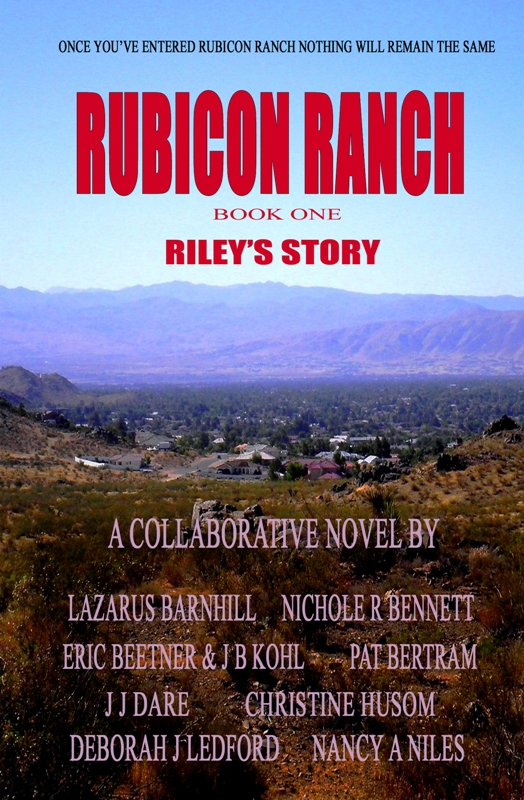
I’m collaborating with several other Second Wind Publishing authors to write a series of novels online on a blog. The first novel is about the death of a little girl. Her body was found in the desert outside a bedroom community that once had been a working ranch, hence the name of the series, Rubicon Ranch.

Collaboration is a bit of an over-statement. Rubicon Ranch is more of a cross between a round robin or campfire tale, with each author taking turns adding to the story, and a role-playing game. We each create and control a POV character, show who s/he is, what relationship s/he has with the deceased, and why s/he might want him dead.

I have it easy — my character, Melanie Gray, is a photographer/writer who wanders the desert taking photos for the coffee table books she used to write with her dead husband. (He wasn’t dead when they were working together, of course.) He died in a one-car accident while texting his mistress, though there are suspicious circumstances leading investigators to think that perhaps he was killed. Melanie has a talent for finding strange things in the desert, such as the child’s body stuffed in an abandoned television console in the first book, and the scattered body parts that will be found in the second book. This is all that leads the sheriff to suspect her.

The other characters, however, have to simultaneously prove that they are the murderer, yet also have a plausible explanation for why they acted guilty if they weren’t the murderer. (That’s because we don’t know whodunit until all the end of the book. So not only do readers of the ongoing story not know who the villain is, neither do we.)

In the first book, the authors solved the problem of simultaneously setting their characters up to be murderers while allowing for the possibility that they were innocent by giving their characters strange characteristics, such as sleepwalking, to keep the characters themselves from knowing if they were the killer.

In the second book that we are in the process of organizing, there is no way the killer can be unaware of having killed the victim. Even if by chance the character killed in some sort of fugue state, the character will still be faced with a dead body, which he or she will cut in small pieces and distribute it around the desert.

So how do you write a character from a strict third person limited point of view, from inside the character’s head, proving that your character is the killer, while at the same time giving yourself an out if the character turns out to be innocent?

Well . . . If your character has killed before, you can have him/her worrying about if the sheriff will find out what s/he did, without being specific as to which crime s/he is wondering about. You can have your character act guilty — perhaps desperately trying to cover something up. You can have him/her try to pin the murder on someone else, offering assistance to the sheriff, which would make your character seem guilty, but in the end (if your character is not the killer) have an alternate explanation. You can be hiding something in your house that can be construed as your having Morris’s body that you’re cutting up bit by bit. I’m sure you can come up with better ideas than these, but you get the idea.

I’m looking forward to seeing what the other authors come up with.

Meantime, if you haven’t checked out Rubicon Ranch, and wish do so, click here: Rubicon Ranch.

Big Brother, Thy Name is Facebook

I feel as if I’ve fallen down a rabbit hole, and that rabbit hole has a name — Facebook. A couple of months ago, I met a reviewer on Facebook who had been prohibited from posting her reviews of mysteries on the Mystery Writer’s of America Page by MWA. (Isn’t that bizarre? Wouldn’t you think they would have wanted her reviews.) I invited her to post her reviews in my Suspense/Thriller Writers Group. I’ve mentioned before that we’ve banned most promotions except for reviews of other authors’ works, interviews with other authors, and excerpts from other authors’ novels. I’ve been trying to foster a sense of camaraderie, of authors helping authors rather than letting the authors inundate us with book links everyone is sick of seeing, and this reviewer’s posts seemed to fit with my concept.

But now she has been banned from posting links to her reviews in my group, not by me but by Facebook. Apparently, FB now have new rules banning any sort of promotion on one’s profile and from one’s profile. You have to use a business page for that. And so for now, people are still being allowed to blatantly promote their books, but unpaid reviewers are banned. Not just prohibited, but blocked — the links from her WordPress account and Networked blogs no longer post to her profile. And if she posts the links manually, her account will be suspended.

Technically, Facebook has always prohibited promotion. The profiles are supposed to be about socializing and connecting with real life friends, but people posted books links, giveaways, and all sorts of promos anyway, and Facebook never enforced it. A major change is coming now that FB is traded publicly. If FB allows promo anywhere on the site, the pages lose their competitive edge. FB also loses potential advertising bucks. (A related issue is that FB is not being welcomed by investors as enthusiastically as they had expected — huge numbers of users are accessing the site via phone and tablet and are bypassing the advertising, which makes FB not quite so lucrative as it was just a few months ago.)

But still . . . not to allow book reviews? Why is that a business? For some people it might be, but for this particular reviewer, it is a hobby, nothing more.

I asked the reviewer how FB found her and why they singled her out. She responded, “They tripped over me on another site and they FOLLOWED ME THERE! Yes, THEY FOLLOWED ME and about 4,000 OTHER people! That’s how they knew about my reviews, reviews that are free mind you. In time, though, I believe this will get to everyone. I’m betting I’m just in the first batch, but I’m sure they will be more.”

Yikes. Shades of big brother. I generally presume articles about Facebook fall under the category of urban legend until corroborated, but this reviewer’s experience seems to corroborate the following article: Wow. Facebook Rules Prohibit Users From Promoting Their Work, Company, And Much, Much More . . .

A Day for the Broken-Hearted

February 14th. A day to celebrate love with flowers, chocolate, romance. Sounds wonderful if you have someone to love, or even the hope of finding your true love, but if you are one of the many bereft whose beloved has died, the day brings not romance but tears. You remember that once you were loved, that once you loved. Of course, you still do love — love doesn’t die — but loving the eternal essence of someone who is dead is not exactly the same thing as loving someone who is present in body and mind and heart and voice.

We bereft are no longer whole-hearted. Our poor hearts still beat the same, but not with the same intensity they once did. Where once joy (or at least contentment) coursed through our veins, sorrow now flows. Sorrow doesn’t always flow, of course. We do heal . . . sort of. We piece our hearts together the best we can and go on living. But then comes Valentine’s Day, reminding us once again that we are broken-hearted.

My life mate/soul mate and I did nothing on Valentine’s Day. For us, it was just another meaningless day given significance only because we were together. Most of my fellow bereft are dreading tomorrow, knowing it will bring an upsurge in grief. They are planning lunches with friends and special outings to keep from thinking of what they have lost. I too am planning to go to lunch with friends, and this very effort underlines my problem. I can find people to do things with, but I no longer have someone to do nothing with.

My mate and I did nothing on Valentine’s Day, but we did it together. And now tomorrow I will have one more irreplaceable thing to mourn — nothing.

How Do You Discover the Books You Want to Read?

Two-and-a-half-years ago, I took an informal poll to find out how people discover new authors. I posted the following on discussion boards on both Goodreads and Facebook:

It seems as if there are as many ways of discovering books as there are readers, but I’m curious as to how you choose the books you want to read. Do you go by reviews? By recommendations from friends? Because you’re familiar with other works by the author? Do you ever read a book because of an ad you saw? Because of a blog article? Because of a mention on a website such as Goodreads? Do you cruise book stores, libraries, or online sites like Amazon? Do you find them some way I haven’t mentioned, such as gifts, perhaps?

Admittedly, the questions were loaded, but I still got an interesting and probably quite accurate overview:

Favorite authors or previously read authors: 36
Word of mouth: 26
Blog reviews/Book websites: 26
Goodreads/Shelfari: 24
Local bookstores: 21
Amazon/B&N/other online stores: 15
Library: 13
Publisher sites/newsletters: 5
Social networking sites like Facebook: 5
Book Clubs: 5
Author appearances/writing conferences: 5
NY Times bestseller list: 5
Offline reviews: 5
Yard sales/second hand bookstores: 4
Advertising: 3
Saw the movie: 3
Oprah: 1
Free downloads: 1
Gifts: 1

Recently, I posed the questions and got similar responses (though from a much smaller group):

books by favorite authors: 8
recommendations from friends: 5
browsing in bookstores: 4
libraries: 2
imprints (the trade name under which the book is published): 1
newspaper reviews: 1
blog reviews:1
recommendations from Amazon: 1
book clubs: 1

So, even with small independent publishing houses springing up like new forest growth, and self-published books proliferating like elm tree seeds, the means of finding books are still the same. That means, if you are an author looking for a readership, you need to be everyone’s favorite author and have your readers recommend you. An almost impossible task when most people already have their favorite authors.

What about you? How do you discover the books you want to read? Or rather where. (A lot of people said they found books to read by the front cover or the blurb on the back, but I’m more curious as to where they saw the cover.)

Celebrating Twenty Weeks of Daily Blogging

On September 25, 2011, I made a vow to blog for 100 days straight without fail. I wanted to get back into the discipline of daily writing, but didn’t want to make a major commitment such as writing a novel. I figured daily blog posts would satisfy the discipline and also satisfy the part in me that needs the reinforcement of completing a project. I passed the 100 day mark without even noticing, and now I’ve been posting a blog every day for twenty weeks — 140 posts.  Surprisingly, very few are frivolous, posted just for the sake of posting something. So today, let’s forget the seriousness of my usual posts. Let’s forget that this is Saturday, my sadder day. Let’s forget that my publisher, Second Wind Publishing, has moved to a new website and I have thousands of now-dead links to update. Let’s forget all of that, and just play.

And if that isn’t any fun, here’s a jigsaw puzzle (I get such a kick out of these!)

Want more fun?

Click here to read the first chapter of: Light Bringer

Click here to read the back cover copy and an excerpt: Light Bringer

Click here to check out (and buy at $2.00 off!) Light Bringer at Second Wind Publishing’s new site: Light Bringer

How To Keep From Having Too Much Exposition in Your Novel

In an online discussion today, a writer asked what was the best way to keep from having too much exposition in your fiction, and how to insert it if necessary. Apparently, her character spends a lot of time alone, and she needed to know how to insert exposition during the long scenes when he is by himself.

That is a tough situation. Characters alone are hard to write. They need someone to butt heads with, they need to show readers who they are through comparison or contrast with other characters, and they need allies and enemies. When a character is around others, tension is inevitable, so conflict comes naturally. When a character is by himself, he has perhaps less interesting conflicts — the environment, his own nature, personal disasters. A lot of books are based on such non-human antagonists or inner demons, but readers like to see characters acting and reacting with other characters.

In scenes with only one character, it’s best to keep exposition to a bare minimum and focus on the action. One character alone for long periods of time without another character to butt heads with gets boring for readers, and exposition only exacerbates the problem. Feed the exposition into the story bit by bit as you need it, and refrain from long exposition dumps.

My novel Light Bringer, available from Second Wind Pubishing, is based on myth, both Sumerian myths and modern conspiracy theories, and all of that background information had to be presented to show the sweep of history. I created a discussion group among several colorful characters, each with his or her own take on the situation, then used the various conspiracy theories to help create the the characters and show their differences, which became a lively and painless way of dealing with the exposition. In addition, I ended up with a cast of ready-made characters I could pull from whenever I needed a minor character to fulfill a role.

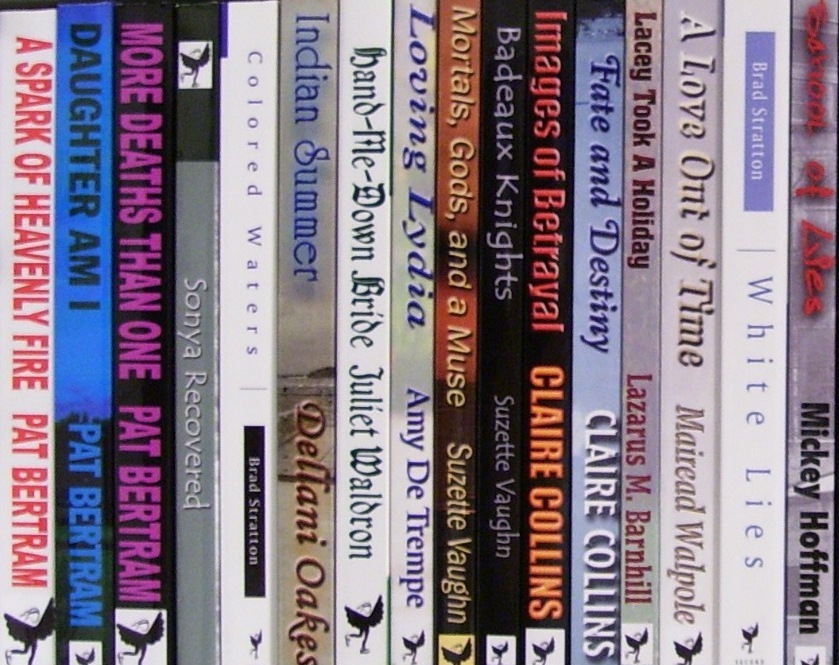
The best way to insert exposition, though, is to make one character desperate to get the information, that way readers will want it, too. I used that technique in A Spark of Heavenly Fire, also available from Second Wind Publishing. The thriller required a lot of background information about biological warfare. I made one character desperate to hear the information, but I parceled it out bit by bit to make his desperation for the truth grow stronger while he became increasingly sickened by what he learned.

But you can’t use that particular technique with a single character, unless perhaps he is ransacking someone’s files, all the while fearful of being discovered. With a single character, it’s best to keep with action. Exposition slows the pace of the book, so does a single character unless he is dealing with a lot of external conflict.

Exposition can also be used to give readers a breather between fast-paced scenes, but even so, information dumps seldom add to the excitement of a story, so they have to be used sparingly. Exposition is best spread throughout a book, feeding readers only that which they need to know in order to understand the current scene.

A common mistake beginning writers make is to think that readers need to know the entire backstory before they can get involved with the characters, and so first chapters are generally exposition-heavy. I have a great fix for that — leave everything as is until the book is completely finished, then cut out the first chapter. (Which is what I did for A Spark of Heavenly Fire.) You will be amazed at how much of that first information dump is spread delicately throughout the book when needed, making the first chapter redundant. Of course, if there is a bit of necessary information in the deleted chapter that does not appear in the remaining chapters, it’s easy enough to find the proper place to insert it. The first chapter of a book should begin in the middle of the action, not before the action even begins. And speaking of first chapters, please, don’t ever use flashbacks in the opening scenes. Establish your  story, and then, if necessary, use flashbacks judiciously.  By definition, flashbacks lack the immediacy of present action.

Is “No Promotion” Really so Hard to Understand?

I moderate a writing discussion group on Facebook where we’ve banned any kind of promotion. The point is to develop a sense of camaraderie among members, and to share writing tips, techniques, friendship. It’s supposed to be a destination, a fun place to hang out, rather than a bulletin board with links to other sites. It’s almost impossible to get people to understand the benefits of such a group. The following correspondence I had with a Facebook Friend (now a former Facebook friend) is a graphic example. FBF joined the group on December 18, participated in a few discussions, and then sent me an interview for my interview blog.

December 20 — FBF: Did you receive my interview? I felt really good about my answers. What did you think?

December 23 — PB: Yes, I received it. Haven’t read it yet, but I did see it. I’ll read it when I format it for the site. It will be perhaps in a week.

December 23 — FBF: Yeah. You answered me on a post in the group so I already knew. I’m very excited. Thank you for doing this for me. You are amazing. Don’t let those promo people bug you. They obviously lack the social skills necessary to make friends and understand what professional respect means.

December 23 — PB: Actually, the one that bothered me the most was the guy who posted on the wall that what he hated was my whining about no promo. Before you joined, all anyone posted was promo, and some of the members rebelled. I was pleased because I’d just about decided to dismantle the whole thing. I think we’re developing a great group. Thank you for joining and for participating in our discussions.

December 23 — FBF: Your welcome. I’ve already gotten my book on two websites. An interview and two reviews in progress. And I never promoted my book once! So thank you.

December 23 — PB: See, that’s the whole point. Get to know people, and let them promote your book! And you’re welcome. I am glad to do what I can.

December 31 — PB: Hi. I posted your interview. Thank you! Sorry it took so long. Let me know if you need me to make any changes.

January 1 — FBF: It’s great. Thank you.

January 10 — FBF (in response to the question what three words describe your writing?): Comical, dialogue, needs-improvement. But that’s why I’m here.

February 8 — FBF: I posted a promo (a book trailer) on the group wall yesterday for a good writer, and it was removed. I’ve had enough. I’m outa here. [And then he used a lot of not-so-nice words.]

Building Better Plots

In Building Better Plots, Robert Kernen provides a quick quiz to help you decide if your subject matter is strong enough to sustain a novel. I thought these questions were interesting enough to pass along:

Does your concept create obstacles that effectively challenge the characters? If so, which specific elements will be the source of that challenge?

Does your concept provide a strong backdrop for exploring the strengths and limitations and psychology of your characters? What specific elements does the plot have that provide vivid comparisons and contrasts that will delineate your character in intriguing ways?

Does your concept provide a strong environment for the messages and themes you want to explore? What metaphors and motifs grown naturally out of that environment will illuminate those themes and messages?

Does your concept provide any realistic hooks that will make it easy for the audience to relate to? What elements will they relate to? Even if you are writing science fiction or fantasy, you will want to give your audience some element to which they can connect their sympathy.

Does your concept provide enough tension to hold the audience’s interest? What are those sources of tension?

The questions seem a bit complicated to help create a story — by the time you’ve answered them all, you’d be sick of the story — but it seems they would be ideal as a tool to help clarify a muddy middle.

Grief: Overflowing Into the Empty Places

During all these months of posting blogs about my grief journey, I never understood their emotional impact on others. To me, writing the posts was all about finding words to explain how I felt so that perhaps those who had never experienced the loss of a soul mate could understand a little of what their bereft friends and family are feeling. But even more than that, it was about finding a measure of peace.

Grief is a difficult journey, and it’s made even more difficult when you lose a life mate/soul mate because the one person you need to turn to for support is the one who is gone. It’s also why, for some people, grief grows during the second and perhaps even the third year — the further you get away from your mate and your shared life, the more you need to talk to him about your bewilderment at his being so very gone from your life. You want to talk with him about the changes you’ve made in your life, to discuss ways of continuing to live without him, to share bits of your journey and show your growth. But he is not here to respond, and never will be again.

I’ve used this blog as a way of crying out to cyberspace, flinging my words to the electronic winds, sharing all those thoughts I can no longer share with him. And oddly (to me, anyway since it was never my intention) my grief somehow ends up overflowing into the empty spaces between the words, just as my sadness overflows into the empty spaces of my life. This emotional overflow is even odder when you consider that often when I write the posts, I am not feeling particularly bereft.

Yesterday I noticed that one of my grief blogs was getting an upsurge of views, and out of curiosity, I scanned the article to see what had caught people’s attention. Unexpectedly, the emotion of my words slipped through my usual editorial block and slammed into me. I started weeping. I don’t know how all that emotion ended up in a few hundred squiggles on a webpage (because, after all, letters are simply squiggles with no intrinsic meaning except that which we give them), but the sorrow is undeniable.

I’ve never been able to read my grief book all the way through. I had to edit in bits and pieces, and to depend on others to copyedit the book for me. All that angst just waiting between the covers of a book! I don’t quite know what to make of it. I don’t know why it was so important to me to show people that grieving is okay and even necessary, don’t know how so much of myself ended up in the book, don’t know where I got the courage to be publicly vulnerable. And yet, there it is, or rather, it there it will be in a couple of weeks when the book is finally released.