
What challenges did you face as you wrote your book?

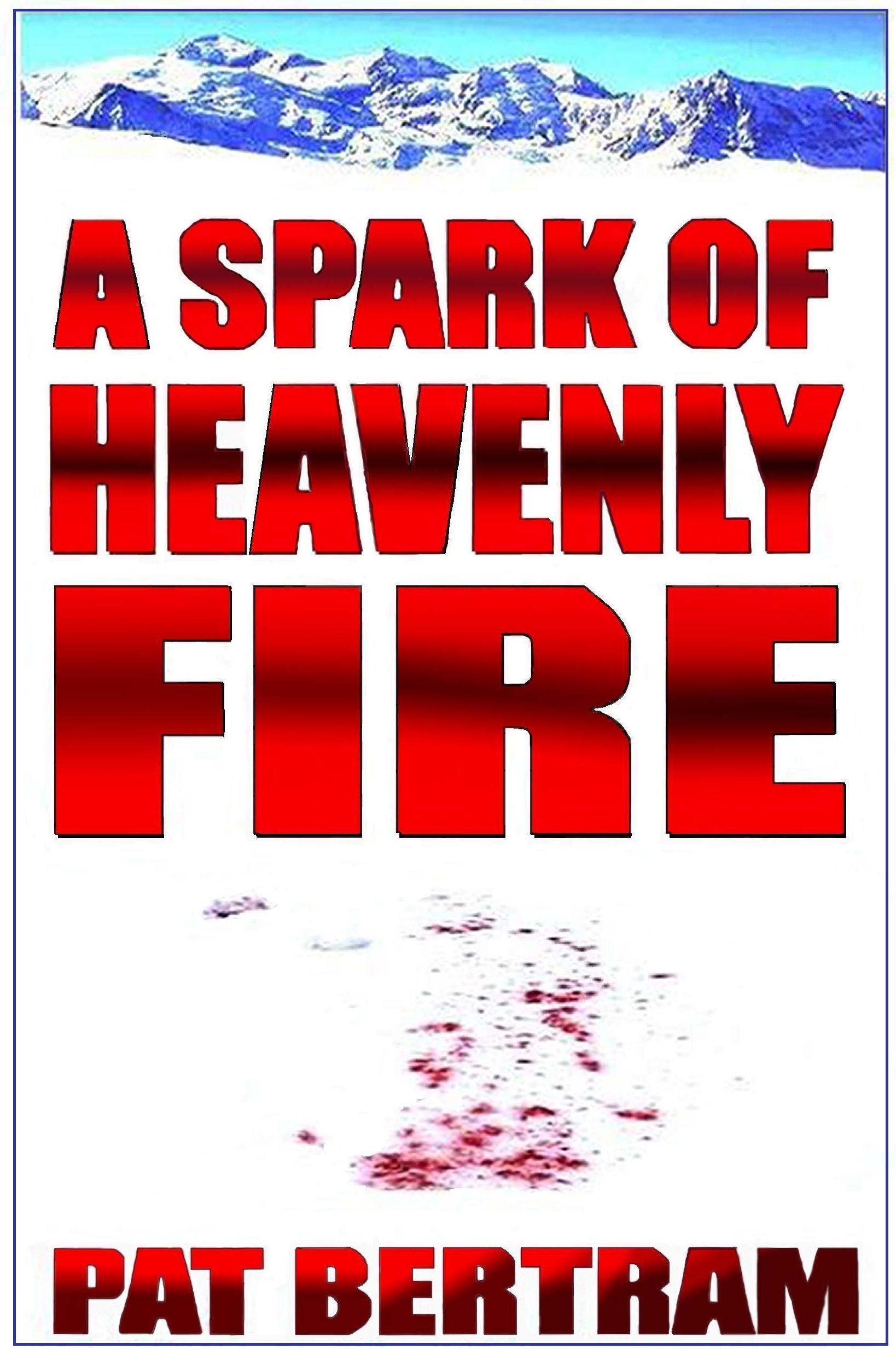
My biggest challenge in writing A Spark of Heavenly Fire was finding the beginning of the story. I liked the story, and I kept telling myself that if people could just get through the first fifty pages they would like the story, too. Then one day it dawned on me that the solution of getting readers to see the story beyond the less than sparkling beginning was to get rid of the first fifty pages. So I junked those early chapters, wrote a new beginning, and then the real challenge began — getting it published. After two hundred rejections, I finally found a publisher who loved the book.

Here are some challenges other authors faced as they wrote their books. The comments are taken from interviews posted at Pat Bertram Introduces . . .

From an interview with Gisela (Gigi) Sedlmayer, Author of “Talon, Come Fly With Me”

To face myself. When I started to write the book, I never thought of the things they came out then. I wanted to write an adventure story for children and see what came out of that. Because, like Matica, I was rejected in school, not because of the growth handicap she has. I had other things. I had to face what Matica is facing and learned, even from writing the book, more and more to cope with myself, to overcome my own rejection and to realise that I have survived a deadly disease.

From an interview with Louis Bertrand Shalako, Author of ‘Redemption: an Inspector Gilles Maintenon mystery’

I moved three times during the writing of the book, as well as cleaning out my father’s house and selling it. There were lots of disruptions and quite a bit of lost sleep.

From an interview with Viola Russell, Author of “Love at War”

The most difficult part was that I wanted to be accurate about the history and facts, and I tend to be a perfectionist. I’d be in the middle of a scene, and I’d then have to move quickly to the internet to confirm a detail. I wanted accuracy on things like the types of weapons the various armies used and on the various uniforms.

From an interview with Malcolm R. Campbell, Author of “Sarabande”

I write from a third person restricted point of view. This means that I am always with only one character from start to finish; everything in the book is filtered directly or indirectly through that character’s eyes, ears and thoughts. The challenge here, especially with some of the deeply personal women’s issues in the plot, was putting myself into a woman’s point of view and keeping it realistic. I did not want the book to sound like it was written by a man who was speculating about how a woman might talk, act, and re-act to the ordeals in the storyline. The challenge was making the story truly seem as though it were being told by a woman and that all of it rang true to the women reading the book.

From an interview with Noah Baird, Author of Donations to Clarity

I didn’t have people around who supported my writing. They weren’t taking it as seriously as I was. As a unpublished writer, it was difficult to convince them this was something I needed to do. It was also hard to know if the writing or the story was good. It takes a great deal of faith in yourself and the story to see it all of the way through.

So, what challenges did you face as you wrote your book?

(If you’d like me to interview you, please check out my author questionnaire http://patbertram.wordpress.com/author-questionnaire/ and follow the instruction.)
What is your goal for your book? What do you want readers to take with them?

I would like readers to take with them a slightly different way of looking at the world, perhaps seeing it in a better light or a maybe just a more truthful slant. And if not that, I’d like them to feel good about having spent time with my characters. The best compliment I ever received was from someone who said he didn’t want the book to end.

Here are some goals other authors have for their books. The comments are taken from interviews posted at Pat Bertram Introduces . . .

From an interview with Jerold Last, Author of “The Ambivalent Corpse”

I try to write books that are fast moving and entertain the reader, while introducing the readers to a region where I’ve lived and worked that is a long way from home for most English speakers. Montevideo, Salta, Machu Picchu, and Iguazu Falls are characters in these books, and the novels will have succeeded for me if some of you say that you’d like to visit these places because they seem so vivid and real.

From an interview with Polly Iyer, Author of “Hooked”

My goal is a good read. I always have issues in my books; otherwise, they wouldn’t interest me. I like to dig deep in my characters’ pasts in order to explain why they’re the way they are. Sometimes, in doing that, I get into some heavy subjects, but that’s okay.

From an interview with Qwantu Amaru, Author of “One Blood”

This is a great question. At its heart, One Blood is a book about the danger of belief. We believe things so blindly that sometimes we find ourselves in situations where that belief is challenged and we react badly. I would like readers to question more and follow less. Find their own paths and if they must believe in anything, believe in themselves.

From an interview with Benjamin Cheah, author of “Eventual Revolutions”

For this book, I want people to recognise that they have free will, that they can choose to make their lives better. It’s not easy, it requires a lot of work, but it’s possible.

From an interview with Alan Nayes, Author of “Smilodon”

My goal—and it’s the same with all my books—is to write the most entertaining story I know how. If the reader finishes one of my novels and can say he/she was entertained, then I did my job and I’m happy. In SMILODON, I did add a brief statement about the big cats of the world, but that was only to remind readers we are reaching a point when some of these magnificent animals may vanish forever, unless some action is taken to protect them and their environment.

So, what is your goal for your book, ie: what do you want people to take with them after they finish reading the story?

(If you’d like me to interview you, please check out my author questionnaire http://patbertram.wordpress.com/author-questionnaire/ and follow the instruction.)

How do you develop and differentiate your characters?

Usually I try to do scenes with only two characters since it’s easy to differentiate between two characters, but in Daughter Am I, I ended up with twenty-five-year-old Mary Stuart driving around the country with a busload of funny and heartbreaking octogenarians, including a con artist, a dying hit man, and a gangster’s moll. Because these characters were always together, I had to give each a specific characteristic — a foible — and I had to make sure those foibles became part of the story, otherwise the characters might have turned into caricatures. For example, Happy (an ex-wheelman for the mob) has Parkinson’s disease. He also carries a gun, which terrifies the others since he can’t hold the gun steady. Mary ends up confiscating the gun. The weapon, Happy, and Mary’s relationship to both gun and man become a part of the story. Another character, Crunchy, used to be a mob enforcer, and he becomes Mary’s protector, promising to crunch anyone who does her harm. This promise, too, becomes part of the story, as he learns his limits and she learns to take care of herself.

As for dialogue, each character has a specific way of talking. For example, Happy is prone to gloomy pronouncements, Teach loves to lecture, Crunch speaks in broken sentences, Kid Rags always talks food and drink. Especially drink.

Here are some ways other authors develop and differentiate their characters. The comments are taken from interviews posted at Pat Bertram Introduces . . .

From an interview with Sherrie Hansen, Author of Merry Go Round:

I think my characters have very distinctive personalities, and in Merry Go Round, the differences in the sisters is very apparent when they’re all in the same scene, interacting with one another. I try to get into their heads and consistently think and act like they would.

From an interview with R.M. Doyon, author of Upcountry:

Like most novelists, my characters are based on many real people.  I liked to take one quirk here, one detail there from many different individuals and create a new person.   Once you build a character, particularly a principal player, the most important questions I had to ask myself were: would he or she DO something like this?  Would he or she SAY something like this?  Are they true to themselves?  You must give them a personality, but at the same time a very human element.  Humans are not perfect.  They make mistakes in judgment, and so it was important to keep them true to themselves.

So, how do you develop and differentiate your characters?

(If you’d like me to interview you, please check out my author questionnaire http://patbertram.wordpress.com/author-questionnaire/ and follow the instruction.)
How (or when) do you decide that you are finished writing a story?

A story is finished when it is published. Otherwise, it is never finished. The more one writes, the more one learns, and the more one learns, the more one sees how earlier works can be improved. The only thing that stops this cycle of learning and rewriting is getting the book published.

Here are some ways other authors decide when they are finished writing a story. The comments are taken from interviews posted at Pat Bertram Introduces . . .

From an interview with Louis Bertrand Shalako, Author of ‘Redemption: an Inspector Gilles Maintenon mystery’

When I can find vast stretches with no errors, no grammar problems, no spelling mistakes, it’s finished. When I can think of nothing to add, or nothing to object to, no problems with the logical flow, and when I am convinced there is nothing more I can do to make it a better story, then it’s done. The funny thing is, there will always be doubts, and there will always be some insecurity. That’s just what it means to be a writer.

From an interview with Benjamin Cheah, author of Eventual Revolutions

When there are no more changes to make, no corrections to be done, and when the entire story flows seamlessly.

From an interview with Cynthia Vespia, author of “Demon Hunter: Saga”

The story decides for you. You let it run its course. The best endings are those that surprise you as the writer.

From an interview with Meg Mims, Author of “Double Crossing”

That’s a tough question, because I can’t just hammer it out. I prefer letting it “heat up” like in glassblowing, fine-tuning, rolling, even breaking it up and starting over. And the “KEY” element must be there or else it will remain unfinished for me. So while Double Crossing finaled in many RWA contests, it took over a year for me to find that “key” that let all the elements fall into place and then I knew it was submission-ready.

From an interview with Michael Haskins, Author of “Stairway to the Bottom”

I know the beginning, middle and end of a story before I begin. How I get to the middle and end is the fun part. As I write the things I knew or wanted in the story sometimes change, including the end. In Stairway to the Bottom, I didn’t like the ending and added one more chapter. I hadn’t totally thought of that way on ending the story, but as I re-read it, I knew it need a little more than I planned on. I think the ending found me.

From an interview with Tom Winton, Author of “Beyond Nostalgia”

You never finish a story, you abandon it. No matter how many drafts you do, eventually you have to let it go. I did nine drafts of Beyond Nostalgia and sometimes, during that ninth draft, I’d spend a full hour reworking a single paragraph that I’d overhauled eight times before. A writer can go over and over a manuscript forever and keep making changes. When you’re confident that you’ve given it ninety-nine percent, ya gotta let it go.

So, how (or when) do you decide that you are finished writing a story?

(If you’d like me to interview you, please check out my author questionnaire http://patbertram.wordpress.com/author-questionnaire/ and follow the instruction.)

What is the easiest part of the writing process?

The easiest aspect of writing is editing. The words are all there, it’s just a matter of making sure they are the right ones and that they say what I want them to say. The most rewarding is knowing I wrote a book worth reading.

Here are some other authors’ responses to the question about the easiest part of the writing process. The comments are taken from interviews posted at Pat Bertram Introduces . . .

From an interview with Rod Marsden, Author of “Disco Evil” and “Ghost Dance”

The first draft is the easiest part of the writing process. You can really let yourself go. Very few writers expect the first draft to be the last. Michener went through a number of drafts before he was happy with Hawaii. I go through a number of drafts before I even approach an editor.

From an interview with Joylene Nowell Butler, Author of “Broken but not Dead”

Editing. Once I’ve written that first draft, I step back and regroup for a week or so. I do the same thing when I’m finished the last draft. The second draft is my favourite part. It’s filling in the blanks, eliminating all the garbage, adverbs, excessive wordage, unnecessary characters and scenes, and baring the bones of the story. It never fails to excite me during this process. Like unveiling Cinderella’s beauty. Love it.

From an interview with J J Dare, Author of “False Positive” and “False World”

Inspiration. When it’s there, the words flow like a raging river. If the story is in my head and I’ve been tapped by my muse (and she stays with me), I can write a novel in a week.

From an interview with A. F. Stewart, Author of Once Upon a Dark and Eerie

For me, the easiest element of writing is the dialogue. I rarely have a problem with the flow of dialogue. Possibly because I can hear all those character voices whispering in my head.

From an interview with Michael Haskins, Author of “Car Wash Blues”

Oh that’s easy, turning on the computer!

From an interview with James Boyle, Author of “Ni’il: Waking Turtle”

There comes a point after you’ve struggled for days and weeks, seemingly trying to wring words out of stone, when you finally hit your groove and the story simple flows out of you. It feels less like writing than channeling the story from some outside source. It is an amazing feeling when it happens.

So, for you, what is the easiest part of the writing process?

(If you’d like me to interview you, please check out my author questionnaire http://patbertram.wordpress.com/author-questionnaire/ and follow the instruction.)
How much of yourself is hidden in the characters in your book?

Freud thought every role in a dream was played by the dreamer, and in a way, that’s the way my books are. The emotions the characters feel are mine since I can only write what I feel, and their personal problems are ones I’ve grappled with. In the writing, though, the characters become more than I ever was as they develop in response to the needs of the story. Kate from A Spark of Heavenly Fire is the most like me, maybe because she was the first character I created.

Here are some other authors’ responses to the question about much of themselves are hidden in their characters. The comments are taken from interviews posted at Pat Bertram Introduces . . .


From an interview with A. F. Stewart, Author of Once Upon a Dark and Eerie

I really hope there is very little of me in my characters since many of them tend to be immoral, vicious, bloodthirsty killers, or unwise enough to get themselves into situations where they are maimed or killed. Well, maybe they share my odd sense of humour.

From an interview with Debra Purdy Kong, Author of “The Opposite of Dark”

When I first began writing about Casey several years ago, I think we had more in common than we do now. Like Casey, I wasn’t interested in marriage, I was studying criminology, and my parents were divorced. However, I’ve grown older while Casey’s stayed young so our interests and concerns are quite different. She’s still building her career and attending school, and looking for love. I’ve been there, done that, so I look at her from a different perspective and see almost nothing of myself in her now.

From an interview with Bonnie Toews, Author of “The Consummate Traitor”

There are elements of myself in both heroines, but yet they are stronger than I think I could ever be. The journalist, Lee, lives with my recurring nightmare and my affinity with the Holocaust. I have often said, “I am a Gentile with a Jewish soul.” The pianist, Grace, reflects my more naive, pollyanna side. And yet, the one time I headed into the Rwandan conflict that proved the UN’s promise of “never again” would the world tolerate another genocide to be an outright lie, I went with complete faith, like Grace, that I was protected from harm.

From an interview with J J Dare, Author of False Positive and False World

The aggressive part of my passive/aggressive personality is turned loose in the books. I can let myself go through my characters; I can destroy without regret, lie with a straight face and a cold heart, and generally, get away with murder.

From an interview with Dellani Oakes, Author of Lone Wolf

Matilda is a lot like me in some respects. Her fierce devotion and the way she takes up for those she loves is totally me. Oddly enough, some of the aspects of Wil’s personality come from me as well. Mostly, he and Marc mirror aspects of my husband’s personality.

So, how much of yourself is hidden in the characters in your book?

(If you’d like me to interview you, please check out my author questionnaire http://patbertram.wordpress.com/author-questionnaire/ and follow the instruction.)

What words would you like to leave the world when you are gone?

I’ll be leaving the world my books, which are words enough, but besides that, this is how I’d like the world to see me:  “Pat Bertram has a marvelous ability to write the longest parables in all of literature. She unglues the world as it is perceived and rebuilds it in a wiser and more beautiful way.” — Lazarus Barnhill, author of The Medicine People and Lacey Took a Holiday.

Here are some other authors’ responses to the question of what words they would like to leave the world when they are gone. The comments are taken from interviews posted at Pat Bertram Introduces . . .

From an interview with Jim Magwood, Author of “The Lesser Evil”

Some goals are so worthy that even to fail is glorious.

From an interview with June Bourgo, Author of Winter’s Captive

Hmm…my writing career has come late in life for me. I have been a late bloomer with many things in my life. So I guess I would say: You’re never too old to follow your dreams and accomplish your goals. I don’t mind getting older, if I have followed my dreams. But I don’t want to get old and have regrets.

From an interview with Charlie Kenmore, author of “Earth Angel”

“There’s been a mistake.”

From an interview with Cynthia Vespia, author of “Demon Hunter: Saga”

Wow, that’s huge. I don’t know about words but I’d like to know that I made the world a better place for somebody just by being there for them. My words have always been “Live Your Dreams” Because life is short and dreams shouldn’t be dashed.

From an interview with Linda Nance, author of Journey Home

I tried…I really did and I did not give up.

So, what words would you like to leave the world when you are gone?

(If you’d like me to interview you, please check out my author questionnaire http://patbertram.wordpress.com/author-questionnaire/ and follow the instruction.)
How long had the idea of your book been developing before you began to write the story?

Light Bringer, my most recent release from Second Wind Publishing, stewed in my brain pan for several years before I actually started to write it. It was the first book I conceived, but I couldn’t figure out who my alien characters were, where they were from, how they traveled here, and why they came, so when other stories captured my imagination, I followed my enthusiasm. In between finishing my various novels, I worked on Light Bringer, trying to develop the idea and research the specifics. If you include my research, which I’d been doing for decades before the story ever entered my mind, you could say the idea for the book had been developing for about thirty years.

Here are some other authors’ responses to the question of how long the idea had been developing before beginning to write their stories. The comments are taken from interviews posted at Pat Bertram Introduces . . .

From an interview with Jerold Last, Author of “The Ambivalent Corpse”

It took a while for me to find the time to sit down and start writing the book. In this case “a while” spanned 12 years. The major challenges for me are finding the time to write and the discipline to edit the dialogue and descriptive passages over and over until things feel right and pass my wife’s critical evaluation. I haven’t needed to spend much time on research as yet, since I’ve lived in the locations that the books have been set in.

From an interview with Guy Harrison, author of “Agents of Change”

For over a year, if you can believe it. I originally wrote Agents of Change as a television pilot script around this time last year. As an aspiring screenwriter for many years, I finally got tired of banging my head against the wall as I attempted to sell the script.

This past October, I finally asked myself “what if I wrote a novel?” I really believed in the television pilot’s concept but knew I needed to rework it for the purposes of a book. It’s darker than the television series would have been. Truth be told, I actually like it a lot better as a novel.

From an interview with Dale Cozort, Author of “Exchange”

For this particular book, almost twenty years. I know that because I came across a notebook with dated entries from when I was in my late teens outlining some of the ideas. That’s unusual for me. Most of my stories go from concept to writing within a year or two. I had the idea for Exchange long before I had the maturity or self-discipline to write it.

From an interview with Stephen Prosapio, Author of “Ghosts of Rosewood Asylum”

Funny in that this story had to “brew” quite a while, Pat. I thought up the rough idea for GHOSTS OF ROSEWOOD ASYLUM after my first novel DREAM WAR didn’t sell to the Big Six publishers. I didn’t quite pitch it right to my agent though, and she suggested I go with another idea I had at the time (a vampire novel). Unfortunately, I got blocked with that idea and came back to the TV Paranormal Investigator angle. Pitching it a second time to my agent went much better. She gave me some great advice. Thus, GHOSTS OF ROSEWOOD ASYLUM (GoRA) was the easiest novel to write thus far. I wrote the first draft within 3 months.

From an interview with Ellis Vidler, Author of “Cold Comfort”

Cold Comfort took about a year to write and five more to revise till I felt it was right. The first one, Haunting Refrain, took eight years to complete. I’m getting better.

From an interview with Joylene Nowell Butler, Author of “Broken but not Dead”

Too long. Someone asked me the other day about my mother and it occurred to me then that the day she died I’d written the first four pages of “Broken but not Dead”. I gave them to her to read, then retired for the night. When I got up the next morning the pages were on the dining room table with spelling corrections and a note that said she liked it very much. I didn’t realize then that she’d passed. That was October 16, 1999. It takes me a long time to write, and I don’t think it’s because I’m slow. I work on so many different projects at the same time and I like to take breaks and distance myself often.

So, How long had the idea of your book been developing before you began to write the story?

(If you’d like me to interview you, please check out my author questionnaire http://patbertram.wordpress.com/author-questionnaire/ and follow the instruction.)

Feeling Small

When you have a long-term relationship with someone, you are involved with something that is both you and bigger-than-you. By definition, love and a deep connection to another makes you bigger than you are, expanding your self beyond the barrier of your skin. After he dies, your grief is so enormous that it, too, expands beyond your self, filling some of the empty space he left behind.

And then one day, your grief shrinks into the confines of your body, and all you are left with is you and the unfilled empty space around you, and you begin to feel very small. Doing something to fill in that empty space doesn’t really help because you can’t replace something you were, such as being part of a couple or feeling grief, with something you do, such as volunteer work.

That’s where I am right now — feeling small — as if I am wearing clothes way too big for me. I miss being part of something that expands beyond my self, miss feeling as if I am part of something important.

I still have importance, of course. I am important in my 95-year-old father’s life — he needs someone to stay with him so he can continue to maintain his independence. I am important in my siblings’ lives since my being here with my father gives them peace of mind. I’m important to those who find comfort in my words. I am important to those I do volunteer work for. And yet . . . and yet . . .

My whole life has been a search for meaning, and somehow the importance of the quest is eluding me. I hope life has meaning — I’d hate for my mate’s death to be the end of what he was — but I no longer have any great desire to find out what that meaning is. If there is meaning, it’s there whether I search for it or not.

I sound as if I’m feeling sorry for myself, don’t I? But I’m not, or at least, not very. One day, this shrunken me will feel normal, and I might even forget that once I was more than I am. But until then . . . I’m just me, and right now that doesn’t feel like it’s enough.

Is Irritation & Frustration a New Stage of Grief?

I’ve been blogging about my grief for almost two years, and I’ve run out of things to say. Right now I have no great insights to share, no deep emotions to purge, no angst to get out of my system. I’m just going through the motions of having a life, hoping that someday something will spark a new enthusiasm, and there’s not much to say about that. It’s just a matter of waiting to see what happens.

A couple of days ago someone told me that pain at the death of my life mate/soul mate still showed through my writing, but the truth is, I’m going through a hiatus. I’m not feeling much of anything except irritation and frustration. Do these signify a new stage of grief? Perhaps I’m nearing the end of this time of great emotions and have descended into the pit of trivial feelings. But this irritation and frustration don’t seem trivial. They loom large, coloring everything I do.

I’m irritated at having to deal with the all the foolishness of life — the eating, sleeping, grooming. I’m irritated that after all these months of grieving, I’ve gained no great insights, no great growth. I’m irritated that despite all the changes in my circumstances, life seems so much the same as usual, just infinitely sadder and lonelier. I’m irritated that he’s still dead. I mean, come on — a joke is a joke. It’s past time for him to stop playing dead so we can get on with our lives. I’m frustrated that so much seems beyond my reach — understanding, enthusiasm, wonder. And I’m frustrated at all that is within my reach — loneliness, aloneness, pointlessness. I’m both irritated and frustrated that the world still feels alien with him dead. I’m both irritated and frustrated that he hasn’t bothered to call to let me know how he’s doing. I’m frustrated that I still want to talk with him and irritated that I can’t. I’m frustrated that I’m alone and irritated that I have no one to share my life. I’m frustrated that I don’t seem to be able to get a grip on my life, and I’m irritated with my lack of motivation to even try.

I still think there could come a time when everything works out for me. (My dead life mate/soul mate was a bit of a seer, and during his last days, he told me everything would come together for me, though foolishly I never asked him what he meant.) And I’m irritated and frustrated that it hasn’t yet happened.

I keep telling myself that I’m not yet where I need to be for everything to work out, and maybe that’s true, but it doesn’t keep me from being irritated and frustrated.




