Happy End of the Creeping Darkness!

20171214_195354-1.jpg

The creeping darkness ended this morning at 8:58 MT. “Creeping darkness” is a phrase I created, so unless you read this blog, it’s a term you probably haven’t heard of before. The correct term, of course, is “winter solstice.”

For the past six months, ever since the summer solstice, darkness has been creeping into our days and stealing our light. Today we have reached the end. Tomorrow the light begins to grow, but only in the northern hemisphere. Down under, they begin a time of creeping darkness.

“Solstice” comes from two Latin words, sol meaning “sun” and sistere meaning “stationary” because on this day, in the northern hemisphere, the sun seems to stand still, as if garnering it’s strength to fight back the darkness.

Technically, the winter solstice marks the moment when there is a 23.5-degree tilt in Earth’s axis and the North Pole is at its furthest point from the sun — from here on, the days will get longer, gaining us an additional 6 and 1/2 hours of sunlight per day by June 21st when the days begin to get shorter again. (This is reversed in the southern hemisphere, so today those down under will be celebrating their summer solstice.)

Though neo-pagans have claimed the solstice for their own, this is one of those natural holidays (holy days) that we all should be celebrating. The end of the lengthening nights. The triumph of light over darkness. We don’t even need the metaphors of light=good and dark=bad to find reason to celebrate this day. It’s simply a day of stillness, of hope. A day to give thanks for the promise that even in our darkest hour, light will return.

My celebration will be simple. I turned on my bowls of light and toasted the sun when the morning clouds drifted away and showed me Sol’s shining face.

Whatever hemisphere you live in, I wish you a day filled with light and lightness of being.

***

What if God decided S/He didn’t like how the world turned out, and turned it over to a development company from the planet Xerxes for re-creation? Would you survive? Could you survive?

A fun book for not-so-fun times.

Click here to buy Bob, The Right Hand of God.

More Truth and Secrets

Yesterday I pondered a saying I’d read, that the truth of a person lies in her secrets. I wasn’t, and still am not, convinced of the truth of that particular sentiment. For one thing, I think we are more than whatever secrets we might have, and for another, I’m not sure if we ever can know the truth of a person, whether our self or someone else.

I do know that what we secretly value tells us more about us than our secrets. For many of us, our secret values are the same as our overt values, the results of which anyone can see. In my case, this blog attests to my valuing truth, honesty, integrity, good writing, friendship, home.

For others, the values they brag about are at odds with what they secretly value. Some politicians are a good example of this. They are revered for their public service, and in fact see themselves as public servants, when what they secretly value is the power and money that accrue to them for what is so euphemistically called “service.” They do serve their constituents to the point where they can keep getting elected, but more than that, they serve those who can bring them the wealth and power they want. Public service? Baloney! If all public service were so lucrative, making these self-serving “servants” millions over the course of their tenure, we all we would be out serving the public. (The definition of “public service,” according to the Cambridge dictionary is “something necessary that is done or provided for the public without trying to make a profit,” which is the opposite of people earning millions as so-called public servants.)

The truth of us might also lie in how we view ourselves, whether that view is true or not. Again, in the example of some politicians, despite the money and power they crave and do all they can to garner more of each, they might truly see themselves — and cherish that view of themselves — as public servants, doing all they can to better the world. That what they are doing might be actually be worsening the world is ignored by even their inner voice because it does not fit with their cherished view of themselves.

All of this, of course, comes down to one of my original points in the first paragraph, that perhaps we can never know the truth of a person. Nor do I suppose it matters, except in the case of a writer constructing a character for a novel. Other than that, we deal with one another — and ourselves — the best as we can despite whatever the truth of us might be.

***

What if God decided S/He didn’t like how the world turned out, and turned it over to a development company from the planet Xerxes for re-creation? Would you survive? Could you survive?

A fun book for not-so-fun times.

Click here to buy Bob, The Right Hand of God.
Truth and Secrets

I came across an interesting quote today: The truth of a person is in her secrets. I know this is true of fiction, especially mysteries and suspense. You learn about a character from what they are willing to do to protect their secrets, and what you think they are willing to do. For example, a reader could think a particular character might be willing to kill to protect that secret, but the character would not take a life under any circumstances.

But is this true in real life? Oh, not the killing part, but the bit about the truth of a person being in her secrets. If so, I have no truth because I have no secrets. I have habits I would prefer people didn’t know about, such as an unconscious tendency to bite off hangnails, and while that might tell you more about me than I would like you to know, it’s not exactly a secret except perhaps from me. If I knew I were doing it, I wouldn’t.

I paused here to look up the definition of secret to see if there is a secret to “secret” I didn’t know that would further explain the quote, but no . . . it’s as I thought. A secret is something that is kept or meant to be kept unknown or unseen by others.

Although I might prefer the people I see regularly to know less about me than I disclose here (though surprisingly, it isn’t as uncomfortable as I thought it would be, and in fact, it’s rather nice not having to talk about the minutiae of my life since they already know it from reading my blog), nothing I write about is a secret. When I was writing about my grief, people offline did not see the same sort of grief in me that I wrote about online, but that’s just the way things were. Even if I was hurting, I generally didn’t show it when I was around people. Like every other griever, I soon learned to hide was I was feeling to protect others from having to deal with my pain as well as to protect myself from their well-meaning (and sometimes not well-meaning) platitudes, such as “You have to move on,” and “You need to get over it.”

But as for secrets? Nope. None.

Some people have accused me of being secretive, confusing secretive with reticent, but the truth is that not everyone deserves to know everything about anyone. There needs to be boundaries, and people who try to look beyond the boundaries aren’t necessarily looking for the truth but are simply being nosy.

I do generally answer direct questions, mostly because I am not as devious as I should be and so don’t lie, nor have I ever learned to graciously deflect questions, but I tend to resent probing questions, and it shows. I don’t ask such questions, either, which becomes a problem when I am talking with someone who thinks that probing questions is how one converses. These people generally don’t want to wait until I volunteer information, which I will when it come up naturally in a conversation without the resentment I feel in an “interrogation.” And they feel belittled because they think I don’t care enough about them to ask them questions.

(Jeff and I were both of the “ask no personal questions” school, and yet over the years, we learned almost everything there was to know about each other, the information coming out in myriad conversations.}

This essay has devolved into a discussion of various means of conversing rather than the topic of the truth being in the secrets, but I suppose the two are opposites sides of the same coin. If you don’t divulge personal information, the other person sees secrets rather than reticence.

But it still doesn’t answer the question about the validity of the quote: the truth of a person in is her secrets. I don’t think it can be true except in the case of someone who is nosy enough to want to invade a person’s privacy. The truth of us might be in our most secret self, but that self is for us to know, not for general consumption.

***

Pat Bertram is the author of Grief: The Inside Story – A Guide to Surviving the Loss of a Loved One. “Grief: The Inside Story is perfect and that is not hyperbole! It is exactly what folk who are grieving need to read.” –Leesa Healy, RN, GDAS GDAT, Emotional/Mental Health Therapist & Educator.

Knowing and Not Knowing

We generally know what we know, and sometimes we even know what we don’t know — or at least we feel there is something we don’t know. This second feeling gives rise to conspiracy theories because we know that there’s more to many news stories, for example, than we are being told.

But we can’t know what we don’t know that we don’t know. Or maybe I mean we can’t know that we don’t know what we don’t know. An example of this is grief. I thought I knew what grief was, and I thought I knew that there was more to grief than I knew, but there was no way I could have ever known the truth about the epic grief after the loss of a life mate/soul mate. How could I? I didn’t know that I didn’t know what I didn’t know. Only those who experience it can know the truth of it. Until you’ve been there, you don’t even know there is such a feeling even when people tell you there is.

This is also true of mundane things. For example, I am reading a book about the blue people of Kentucky.

What? Blue people? Yes, there were such people. I didn’t know about them, and it shocked me to realize that I hadn’t known that I didn’t know, but it shouldn’t have shocked me. How could I have known such a thing if I didn’t know it? It’s not as if blue (Blue Man Group aside) is a color we associate with humans on a regular basis. Oh, there is that whole blue blood thing, but that’s different than skin color. Supposedly the phrase originated with the Spanish — the purebred Spanish were white skinned, and so the blue of their veins was easily visible, but as they intermarried with the Moors, those hybrids had a darker skin and so their veins weren’t as visible.

On the other hand, the blue people of Kentucky actually were blue, though it wasn’t a skin condition. Rather, it was a rare hereditary blood disorder called methemoglobinemia inherited through a recessive gene from both parents. Their blood was blue due to a lack of oxygen in the hemoglobin. In the 1960s, doctors discovered that a commonly used dye called methylene blue could donate a free electron to the methemoglobin so it could bond with oxygen.

The blue people of Kentucky weren’t the only blue people — some isolated Inuit communities in Alaska were also blue. And there must have been others because the two people who were responsible for the blue folk of Kentucky were not blue themselves — the man was a French orphan, the woman a red-haired, pale white American, but both had the recessive gene.

Which makes me wonder if there really were blue blooded royals in ancient Spain, and that the story of their veins showing through their pale skin was simply that — a story.

All this brings me back to the whole thing about not being able to know what we don’t know that we don’t know. There are a lot of things I don’t know, but I know I don’t know them such as fractals or string theory. But since I can’t know what I don’t know that I don’t know, how could I ever learn about things I don’t even know exist? I suppose it comes down to the simple truth that I don’t need to know such things, and if I do need to know them, I will either be forced into the knowing, such as with grief, or stumble upon the knowing, such as with the blue-skinned people.

Either way, from your standpoint, it’s probably not worth your time trying to untangle these thoughts. It’s enough to know what we know and know what we don’t know without going further into the mental maze than that.

***

Pat Bertram is the author of Grief: The Inside Story – A Guide to Surviving the Loss of a Loved One. “Grief: The Inside Story is perfect and that is not hyperbole! It is exactly what folk who are grieving need to read.” –Leesa Healy, RN, GDAS GDAT, Emotional/Mental Health Therapist & Educator.

Tomorrow and Tomorrow

Because of various Bob-related issues around town, I haven’t been working much lately, which has been nice. I like having my time to myself to do what I wish (and even what I don’t wish but need to get done).

Sometime during the next couple of weeks, things should settle down enough that we (my fellow caregiver and our client) can get back to our regular schedule, which will also be nice because the extra company is good for me and the extra money helps pay for a few frivolities, such as groceries and grass (the lawn kind, not the erstwhile illegal kind). Still, I’m okay with whatever might happen. Over the past decade or so, I’ve learned to be resilient enough to take whatever comes my way, though I do reserve the right to whine a bit if I feel it.

In two weeks and a day, we start a new year. I’ve never been particularly excited about a new year since basically all it means is a clean calendar and learning to put a different year on the few checks I write. Even worse, we carry our old selves into the new year, so despite all our resolutions (or lack of resolutions), the old year folds into the new one without a hitch. For some reason, though, perhaps because of uncertainties The Bob is still causing, I am looking forward to this new year with a bit of hope, as if it is actually something new.

For sure, it’s a new month, one that will bring me closer to spring and spring flowers to brighten my day. It will also bring me closer to another “elder” birthday, but that’s not a problem. The actual number of years don’t matter, of course, though what all those years have done to me does. I can still do almost everything I want to, but I am slower, and I find myself tilting forward when I stand or walk. It takes a concerted effort to remember to roll my shoulders back and stand up straight, but I can still do that, which is good. (In his old age, my father tilted forward when he walked, too, and I always wondered why. Perhaps our sense of equilibrium goes out of whack like so much else.)

The other thing that the new year will bring is an end to my 100-day blogging challenge, though that won’t be the end of the daily blogging. Although sometimes it’s hard to come up with something to say, it’s still a good exercise for me, so I will continue at least until I reach the 1000-day mark. (183 more days.) Or not. Life itself is a continual challenge, and we never quite know what each day will bring, but if everything goes as planned, I’ll be here every day until the middle of June.

Meantime, there’s the rest of today to enjoy, and tomorrow, and tomorrow, and tomorrow.

***

Pat Bertram is the author of Grief: The Inside Story – A Guide to Surviving the Loss of a Loved One. “Grief: The Inside Story is perfect and that is not hyperbole! It is exactly what folk who are grieving need to read.” –Leesa Healy, RN, GDAS GDAT, Emotional/Mental Health Therapist & Educator.

Lazy Days

Yesterday was a lazy day for me. The winds were so strong, I barely made it to my mailbox. There was no way I could water the grass or take a walk or any other outside activity. And because of those gale force winds, I was too unsettled to do much of anything, so I spent the day reading and playing games on the computer.

Gale force winds is not a figure of speech. Gale force is 34 to 40 miles per hour, and I’m sure the winds were at least that strong. In a nearby town, the wind was clocked at 107 mph, though luckily, we were well below that number. Still, the winds wreaked a considerable amount of damage, so today was anything but a lazy day.

When I went out to water my grass, I was shocked to see the lawn covered with leaves. I have no idea where all those leaves came from because I made sure that there were no leaves on the nearby trees when I did my final raking — or rather, what I thought was my final raking. Before I turned on my hoses, I had to rake up all those leaves. It was so not a job I was prepared to do, yet I did it. I also had to gather shingles that had rained in my yard from the roof of my neighbor’s garage, and I’ll probably have more to do tomorrow since I only dealt with the largest pieces today.

I should be grateful (and I am!) that those were the only two problems I had from the wind. Other people spent the day clearing out the downed tree branches and getting estimates from roofers. I had to call someone, too, though not for me. A neighbor of the people whose house I am looking after called someone who called someone who called someone who called me to tell me that shingles had blown off the roof. (Come to think of it, next time I see that neighbor, I should give her my phone number so she could call me directly.) So I called my contractor who went out to take a look at the damage.

If that wasn’t enough for one day, I still had to go to the library to return books that were due and to get gas for my car. Now that inclement weather is popping up, I don’t like my tank to get too low in case of emergencies. Nor do I like the idea of running out of books to read. I’m sure I did a few other chores, though I can’t think of any offhand. Not that it matters — what’s done is done, right? (Obviously not, or I wouldn’t be sitting here listing all the things I did today.)

Considering the dryness and the winds, I’m glad I haven’t yet planted my wildflower seeds — they would have ended up all over the neighborhood and come spring, I’d have wondered why I didn’t get a single flower out of the bunch. I’ve been waiting for the first snow before planting, which helps glue the seeds to the ground, but I might have to make alternate plans, such as waiting for a week when the highs are only in the forties, and those weeks are coming. Around here, so I’ve been told, February is the coldest month, and this area is noted for its late snows. Besides, I’ve had enough to do without worrying about those seeds.

Tomorrow might be another lazy day, and if not tomorrow, then Saturday. The best I can say about the weekend forecast is brrrrr.

***

What if God decided S/He didn’t like how the world turned out, and turned it over to a development company from the planet Xerxes for re-creation? Would you survive? Could you survive?

A fun book for not-so-fun times.

Click here to buy Bob, The Right Hand of God.

Little Things

Yesterday I cited a quote, “Little things amuse little minds,” but I tend to think that saying is not true. Well, some little things do designate a small mind (or at least an immature one) such as body noises humor, but other little things tend to designate a great mind (or at least an imaginative one).

For example, people throughout the centuries noticed apples falling. Isaac Newton saw the same thing, but he wondered why it fell straight down. I’m sure other people had wondered the same thing, but apparently, that was an idea whose time had come.

It’s been said that genius is finding the extraordinary in the ordinary, which is the direct opposite of little things amusing little minds. (Finding the extraordinary in the ordinary is also the definition of creativity and artistic expression, so maybe all three are related.) Another apropos quote is “The ordinary think inside of the box, the extraordinary think outside of the box, but genius thinks inside, outside, below and above the box.” (Matshona Dhliwayo) My problem with the second quote is that dang box. Why is anyone even thinking about that clichéd box let alone talking about it? (Though I suppose the box itself could be one of those little things that amuse little minds and awaken the genius in those who find the extraordinary in it.)

Appreciating the little things of life is makes us grateful, brings us happiness, and feeds our sense of worth.

Gardening is one such little thing, though it doesn’t take a great or creative mind to enjoy the activity, so perhaps that’s not a good example of what I’m talking about. A better example of little things amusing creative minds — especially when it comes to writers — is words. There is nothing as little as a word, and nothing as great. Without words, there would be no thought, no communication, no stories, no . . . humanness. (I don’t need to expound on this here since I’ve done so several times before, such as here: Giving Thanks for Words)

Word play — playing with words, not necessarily writing with them — has always amused me. For example, “words” is an anagram of “sword,” and both can be sharp objects. See? Little things amusing — little? creative? ordinary? extraordinary? — minds.

***

What if God decided S/He didn’t like how the world turned out, and turned it over to a development company from the planet Xerxes for re-creation? Would you survive? Could you survive?

A fun book for not-so-fun times.

Click here to buy Bob, The Right Hand of God.

Little Things Amuse Little Minds

On the entrance to the library, there is a sign that says “Possession of dangerous weapons is prohibited on these premises.” I always have to laugh at that, wondering why a library would ban sharp minds, because truly, there is no weapon so dangerous as that. They let me in, so perhaps I’m not as sharp — or as humorous — as I once thought I was.

I’ve been seeing all sorts of “boycott Kellogs” notes online, and I have to laugh at that, too. Even if I wanted to find out why I should boycott (I am still on my news fast, eschewing all news), and even if I did find out and want to boycott, I couldn’t. I don’t buy any of their products. Not one. So who would know if I boycotted or not? I also find it ironic that Kellogs — the company that manufactures such delicacies as Pop Tarts, Pringles, and Froot Loops — started out as a health resort. Dr. Kellogs’ invention, cornflakes, was one of the early health foods. (Graham crackers and the first cereal called “granula” predated cornflakes.)

I am also amused by all the return address labels I get. What century do those people live in? Haven’t they ever heard of texting? Email? Not that I want them to spam me — I certainly don’t them sending me emails or texts. I’m merely pointing out that hardly anyone uses return labels any more. I use maybe one or two a month. It used to be I didn’t use any until the appearance of The Bob temporarily closed the office where I paid my utility bill, and I got into the habit of mailing it. (Silly, really, because it’s only three blocks away. Luckily, the local mail stays in town, so it gets there quickly. When I lived on the western slope, my local mail went first to Grand Junction, the next county over, then back to the town where I lived, which sometimes took a week.)

Because of all the begging mail I get, I would have to live ten lifetimes to use up those address labels. And perhaps by then, even texting will be passe. We might all have implants that let us transfer information to one another instantly without resorting to such unwieldy tools as phones and computers.

I hadn’t realized so many things have been amusing me lately, but apparently, I amuse easily.

This reminds me of my eight grade teacher who would stand in front of the class and reprimand us for playing around at our desks. As she was warning us that “Little things amuse little minds,” she’d be fiddling with a pen, which always made me want to laugh.

I started out talking about smart minds and end up with little minds. I better quit before I start talking about things I never mind.

***

What if God decided S/He didn’t like how the world turned out, and turned it over to a development company from the planet Xerxes for re-creation? Would you survive? Could you survive?

A fun book for not-so-fun times.

Click here to buy Bob, The Right Hand of God.
Secondhand Christmas

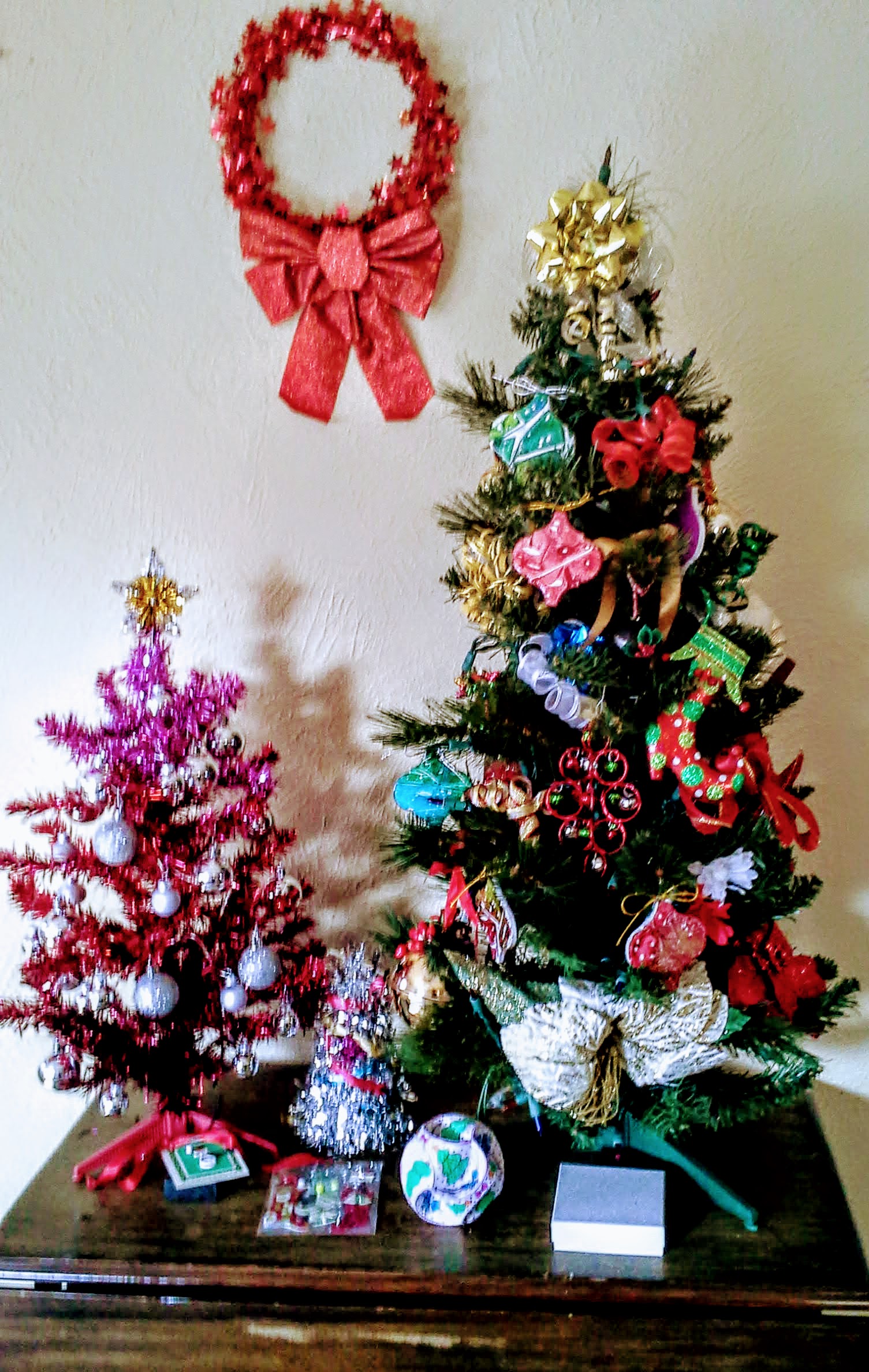
I finished decorating my tree today, which sort of surprised me. I figured at the rate I’ve been working, I’d have it finished just in time to start undecorating, but I have twelve to twenty-eight days to enjoy the festive feel of the place before I feel lazy about keeping the tree up. I could do what a friend did — leave it up all year. Hers was an eight-footer that filled a bow window area, so it was out of the way of the rest of the house. It was so ornately decorated, I can see why she left it up all the time. It must have taken months to do all that work (though at the rate I was decorating my tree, it would have taken me years), and by the time she got everything off the tree and put away, it would have been time to take it all out again. So in her case it was better to just leave it up and enjoy it all year round.

My tree is small, a hand-me-down from my father. I’m not even sure why I kept it. Perhaps it was that when I was cleaning out my father’s house after he died, I didn’t know what to do with it, I had space in my storage unit, and it never seemed to be important enough to make the effort to throw it away. So I still have it, and I’m glad. The tree was actually gifted to him by my sister, and so now it reminds me of both of them. That seems as good enough reason to set it up. When I stop looking at it and stop feeling grateful, then I know it’s time to put it away for another year.

The red tree is also a hand-me-down. That one is from my brother who brought it to me back when I’d destroyed my arm and was housebound for several months.

It’s not just the trees that reminds me of others. In fact, almost everything I own at the moment has a story and a special memory, whether it is the furniture in this house, the dishes in my cupboards, even some clothes (and hats!) in my closet. For some people, living with all these secondhand possessions would make them feel poor, but it makes me feel rich. And blessed. And grateful.

Come to think of it, those are all good reasons to bring out my tree even though the Christmas season isn’t that big of a deal to me, especially now that I’m alone.

Related post: What Do You Say to Someone Who is Grieving at Christmas?

***

Pat Bertram is the author of Grief: The Inside Story – A Guide to Surviving the Loss of a Loved One. “Grief: The Inside Story is perfect and that is not hyperbole! It is exactly what folk who are grieving need to read.” –Leesa Healy, RN, GDAS GDAT, Emotional/Mental Health Therapist & Educator.

Rain Dance

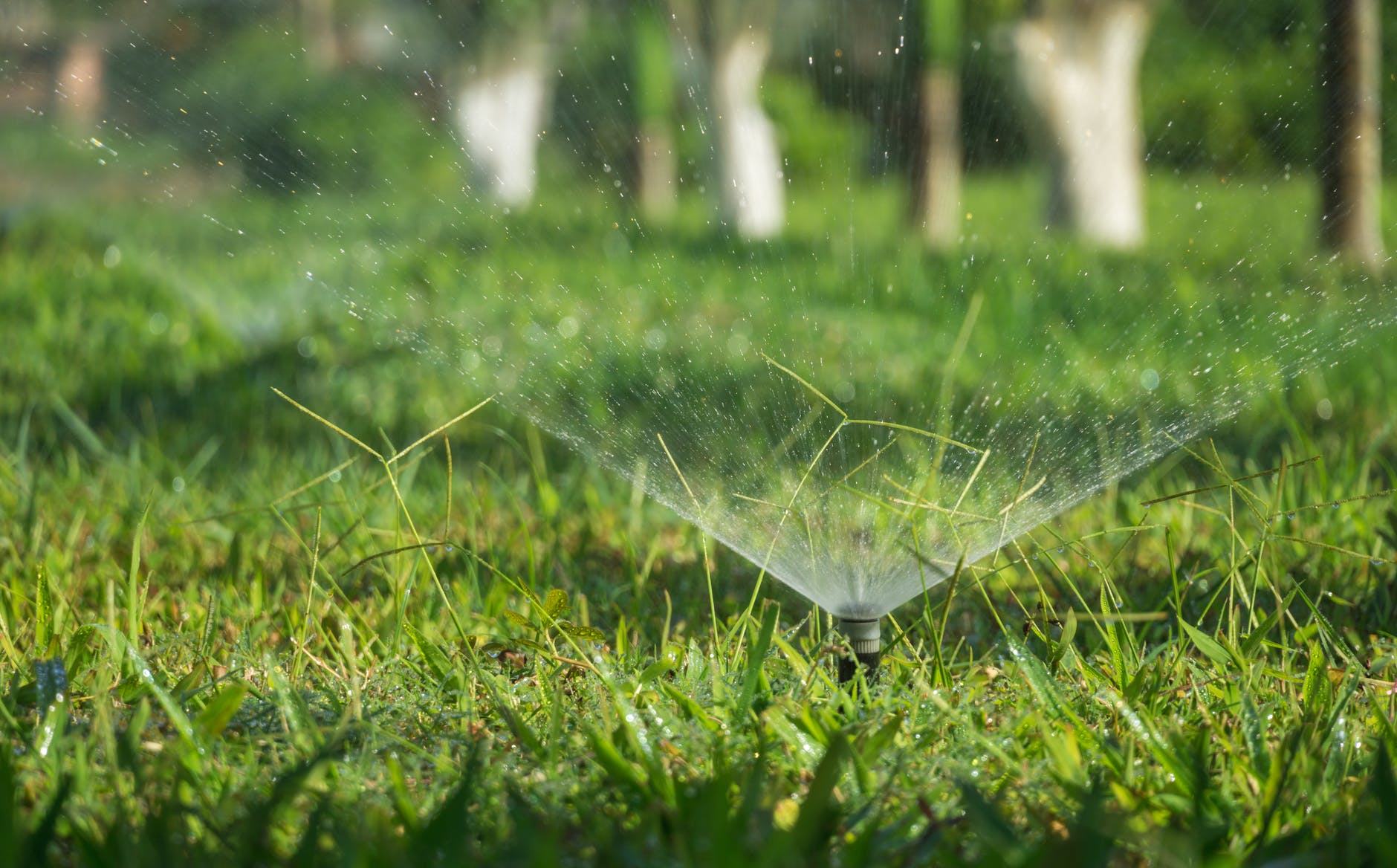
Even though there is no sign of rain or snow, and neither is forecast for the near future, I hoped that by going out to water today, it would act as a sort of rain dance so that the clouds would release whatever moisture they were holding.

But no rain came. At least, no water came from the sky. I suppose the sprinklers can be considered artificial rain, so from that standpoint, my sort of rain dance brought results.

Despite my best efforts at taking care of the grass, it’s starting to brown out a bit, but I suppose that’s understandable. Most nights the temperature hovers around freezing, though sometimes the temperature drops down to the single digits. (Fahrenheit.) In fact, although the day had warmed up to about fifty by the time I got out there, what water hadn’t drained out of the hoses was still frozen. I had decided I wouldn’t water when the temperature is in the forties because it’s way too cold, especially since I seem to get as wet as my lawn. Now I know I probably couldn’t even if I wanted too. It’s hard to water when the hoses are blocked with ice.

Can you tell I really have nothing to say? I’m just spinning my mental wheels, going nowhere. Actually, I’m not even spinning the wheels. I seem to be mired in the doldrums. Oh, I’m not depressed or anything like that, it’s more like the sailor’s doldrums — a place of such calm that ships get stuck on the windless waters. That’s me — my words are getting stuck on the windless calm of my mind. Nothing is roiling around inside for me to work out. No big questions or lessons are waiting for a resolution.

There is one lesson, come to think of it. I checked to see which came first, the doldrums meaning mental stagnation or the doldrums meaning the stagnating seas, and it turns out that the first definition came first. In fact, the “dol” of doldrums is related to our word “dull.”

Whether I am becalmed or simply dull, I do know one thing — this place itself can never be likened to the sailor’s doldrums. There are no seas for one thing, and too much wind for another. I feel bad for the neighbors. No matter how much I try to keep from watering their driveway, the winds shift and their driveway gets wet anyway unless I water by hand. Which I do — I lay out a sprinkler hose in one part of the yard while I hand water another part.

It’s been working.

So far, anyway.

p.s. The photo is not mine, and that’s not my yard, but I didn’t think to take a picture when I was out there earlier, and now it’s too dark, so I used a free photo available from my blog platform.

***

Pat Bertram is the author of Grief: The Inside Story – A Guide to Surviving the Loss of a Loved One. “Grief: The Inside Story is perfect and that is not hyperbole! It is exactly what folk who are grieving need to read.” –Leesa Healy, RN, GDAS GDAT, Emotional/Mental Health Therapist & Educator.