Letting Go

Jeff and I had such a deep almost cosmic connection that for many years, I thought I’d be pulled into death when he died. It didn’t really bother me; it just seemed as if that’s the way it would be. Later though, as he neared death, it began to seem unfair. Because he was five years older than I was, I felt that if I died when he did, I’d be cheated out of five years of my life.

About a year before he died, I hugged him and accidentally touched his left ear. I know now cancer had metastasized all the way up his left side and into his brain, but at the time, all I knew was that he pushed me away, wincing in agony. Some part of me closed down at that moment, and a voice deep inside me said, “He might be dying, but I have to live.” During that year, we went our separate ways, he to dying, me to living. Then, six weeks before he died, he made the connection with me again. He needed to talk about what was happening to him so he could gather courage to face what was coming, and during that daylong conversation, I remembered why I’d fallen in love with him all those years ago.

Because of the disconnect during our final year, a year where I felt dissociated from him and our life, I didn’t expect to grieve, so the depth of my pain stunned me. I struggled for many years to deal with the wreckage of our shared life. Although he did not pull all of me into death with him, apparently, he did pull part of me into the abyss, and that hole — that amputation — will always be a part of me.

Well, I’ve had those five years I was afraid I wouldn’t get, and six more besides, but mixed in with all the other chaotic feelings of grief were feelings of shame and guilt and betrayal that in the end, my love wasn’t strong enough to keep him here. And it wasn’t strong enough to take me where he had to go. I know he wouldn’t have wanted me to be dragged into death with him, which could be one of the reasons he dissociated from me during that last year. He wanted me to have a happy life after he was gone. In fact, almost the last thing he ever said was to assure me that things would work out for me.

This guilt wasn’t strictly survivor’s guilt because I realized neither of us had a choice. That voice inside me didn’t say “I want to live.” It said, “I have to live.”

And he had to die. With all that was wrong with him, he couldn’t have survived.

Still, whether this is a case of survivor’s guilt or not isn’t the issue. The issue is that many people have similar feelings of shame and guilt when they lose a mate. As if we somehow failed them. As if we failed the test of love. As if we don’t deserve to continue to live. As if our “letting” them die was a shameful act. (In fact, someone said that to me, “How could you have let him die?”)

We feel ashamed too of our feeling that all of this is unfair, but we have that sense of terrible unfairness for a good reason. It is unfair that they died. It is unfair that we have to live this half-life without our mates while others continue their shared lives.

And then, as our shared life begins to fade into the shadows of yesterday, we feel as if we’re doing something shameful when we forget them for a minute or two.

At some point, though, we learn to just let these feelings go. They are truly not important and perhaps don’t even reflect the truth. During their last days and even months, we didn’t always act in the saintliest manner. Even if we knew they were dying, we didn’t KNOW it. We thought it would always be the way it was — our struggling to live despite the death sentence hanging over us. I do know the truth, though. No matter how we now view our behavior both before and after they died, we did the best we could. If we could have done better, we would have, but it’s almost impossible to be our best, most loving selves when dealing with the chaos of end times.

And we’re still doing the best we can despite our mates not being here. Although we often think we have a choice, we don’t always. People don’t choose to have fatal accidents or die from terrible diseases. Those of us left behind didn’t choose our fate, either. It wasn’t a case where we had to decide which of us died and which lived. The choice was out of our control.

I can’t tell you not to feel guilt or shame that you are still living and your beloved is not because everything to do with death, dying, and grief defies logic. We feel what we feel. Still, if you sense that these feeling are getting the best of you, try to let them go. You don’t need to feel guilt or shame. There are enough torments with all the things that life throws at us during the long years of grief that we don’t need to torment ourselves.

***

This post was written at the request of a fellow griever. If anyone wants me to write about a certain aspect of grief, feel free to leave a suggestion. Since little of grief is truly unique to any one of us, chances are I went through whatever you’re concerned about.

***

Pat Bertram is the author of Grief: The Inside Story – A Guide to Surviving the Loss of a Loved One. “Grief: The Inside Story is perfect and that is not hyperbole! It is exactly what folk who are grieving need to read.” –Leesa Healy, RN, GDAS GDAT, Emotional/Mental Health Therapist & Educator

Stay Cool

I’m sitting here trying to think of something to say that sounds at least halfway intelligent, but I’m falling asleep at the computer. It might be that I’m tired or it could be allergies, though most probably it’s the heat. It’s so hot it feels as if my eyeballs are boiling. Not a pretty image, for sure, but then, neither is this heat. At the moment, before noon, it’s 100 degrees and the temperature will continue rising for the next several hours.

I’d be cooler, of course, if I turned on the air conditioner, but somehow it feels wrong to sit inside the cool when a couple of men are here moving rocks around my yard. I realize that’s misplaced guilt or some such, but still, it does make me hesitate to turn on the cooling. That’s one of the reasons, anyway. The woman I work for doesn’t have central air conditioning, and if I went from a cool house to her much warmer house, I’d feel the heat over there even more than I already do, so I usually refrain from cooling my house down until I get home.

Whatever the reason for my leaving off the air conditioner, it doesn’t really matter. Compared to outside, it’s cool. Cooler, anyway. I can’t imagine how those guys who are working outside my house are faring. Luckily, they brought plenty of cool water, and if they want more, I will be glad to oblige. They’re also using the hose to shower off the sweat occasionally, which is amusing to me. It’s not amusing that they’re using such a method of keeping cool of course, but I do find it amusing that today I rolled up the hose and set it aside where it wouldn’t be in their way, and the next thing I know, it’s back where I normally keep it, sprawled all over the yard.

Part of me hopes they will knock off work early to get out of the heat; part of me hopes they continue working. It’s so hard to get people here that I’m certainly not going to make waves or rock the boat or upset the applecart or whatever cliché you prefer.

Luckily, it will cool down tomorrow. The high will be at least fourteen degrees lower than today’s high. A veritable cold front!

I hope you’re managing to stay cool.

***

What if God decided S/He didn’t like how the world turned out, and turned it over to a development company from the planet Xerxes for re-creation? Would you survive? Could you survive?

A fun book for not-so-fun times.

Click here to buy Bob, The Right Hand of God.

Moving the Earth

People say faith can move mountains, but more often, it’s men (and women, too, I suppose) in heavy machinery who move mountains. I first realized this when I lived on the western slope of Colorado and watched as a new flat road was built on what used to be a small mountain. To be honest, I doubt the protuberance was high enough to be called a mountain, but it was huge for a hill. And over the months, that hill disappeared. Just . . . gone. I doubt anyone who drives that once-new road even knows they are driving over the corpse of a mountain.

The current project here at my house is nowhere near as extensive as that earth-moving project, but still, a lot of dirt is being moved around, more than I could ever do with my 2-gallon pail (which is what I generally use to move dirt from one spot to another). The dirt being moved came from the right-of-way between the sidewalk and the street. That area was filled with tree stumps, dozens and dozens of small trees growing out of the exposed roots leftover from those stumps, and huge, waist-high weeds. What will be going in that area is rock (yay!! No more trying to stay on top of that mess!) and three ornamental trees.

The dirt is being spread over the yard to fill in holes and gouges that were created by the skid steer that was used to move concrete from the mixer to the back yard when the ramp from the house to the garage was built. I suppose, over the years I could have smoothed the ground myself, but with machinery, it won’t take more than a few hours for all that dirt to be smoothed over the rough spots in the yard. This is all part of my taking care of the old lady I will someday become — I certainly don’t want her twisting her ankles on holes or tripping on uneven ground.

Although it’s hard to get anyone to come here to work — the contractor I hired (and the person these folks work for) always seems to have need of his entire crew at various other job sites — the worker who mostly comes is getting excited about the changes we are making and wants to see what it will look like when it’s all done. Which means, I hope, that he will do his best to stick with the job until it’s finished.

It is interesting how we humans can change a landscape. After the hardscape is finished, the yard won’t look at all the way it did when I came here. The old property lines (or what were assumed to be the property lines) have been replaced by the new surveyed lines and a fence placed around the property. The old garage is gone to be replaced by a raised garden. The old carport is gone, replaced by a new garage. The old driveway is gone, replaced by a red gravel walking path through ornamental rock. Diseased trees are gone to be replaced by young trees. Weed patches will be replaced with grassy areas and gardens. And oh, so many things!

Even if the hardscaping is finished this year as I hope, trees and plants take a long time to mature, so it will be many years before I can see the final project. It’s a good thing, then, that I’m enjoying the process of moving the earth around and creating special oases in my yard.

***

What if God decided S/He didn’t like how the world turned out, and turned it over to a development company from the planet Xerxes for re-creation? Would you survive? Could you survive?

A fun book for not-so-fun times.

Click here to buy Bob, The Right Hand of God.

100 Plants Planted

Well, I did it — planted the 100 dayliles I’d ordered. It turns out I needed that many. I really thought I only needed twenty-five for each side of my walkway, and I would have made them work if that’s all I’d ordered, but since one hundred pretty much cost the same as fifty when I took such things as shipping into consideration, I’m especially glad I ordered twice as many. And especially glad that the planting is now done. It took me several days to prepare the soil, so today’s planting took only about three hours. Three hard hours.

They sure doesn’t look pretty, but that’s the way the plants came — yellow and scraggly. With any luck and a bit of water, they ought to green up and maybe even establish themselves before winter comes.

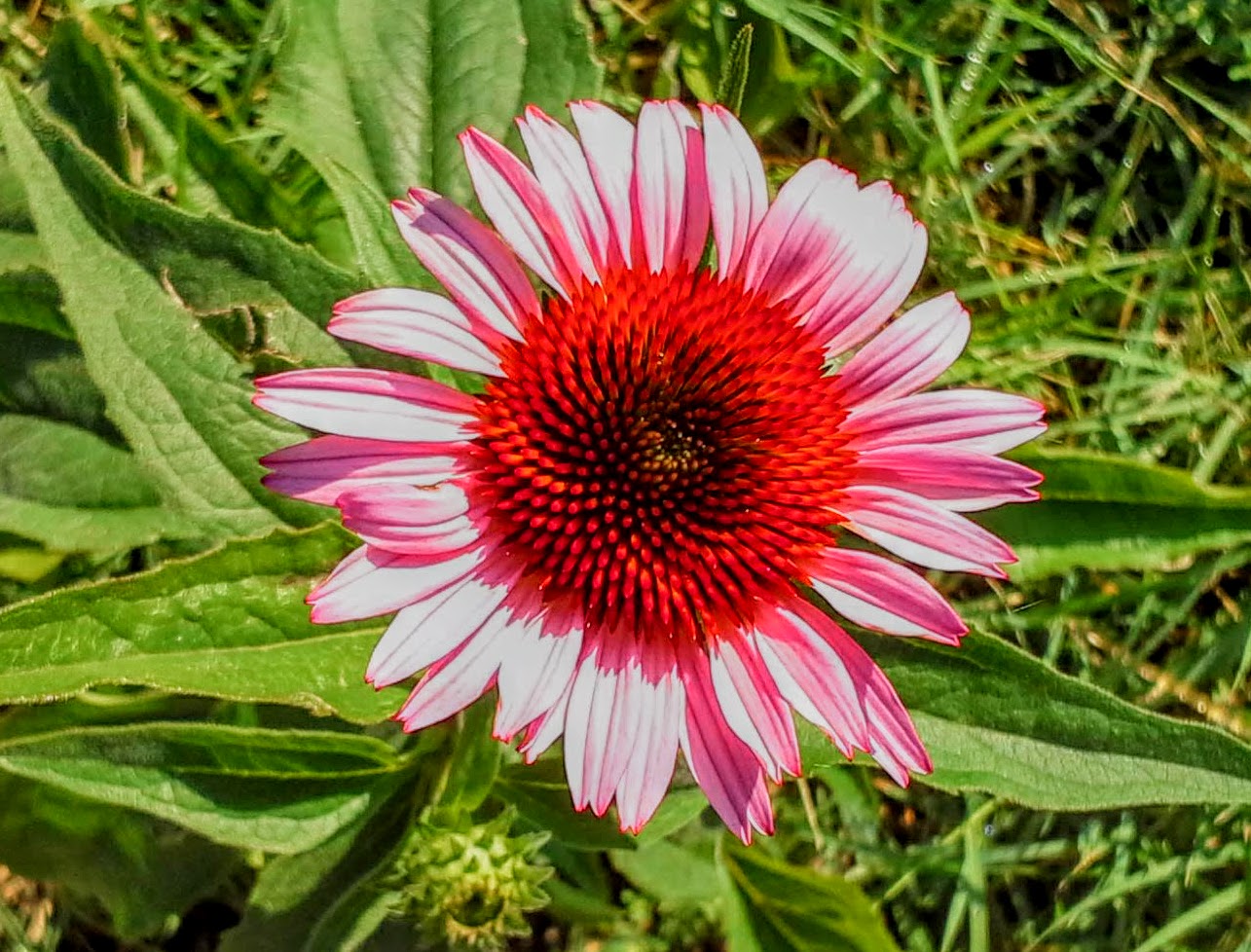
A prettier surprise was the blossom on this mangus echinacea. The tag I’d planted with along with the echinacea had blown away, so I had no idea what the plant was until it bloomed and I was able to look it up. So now I know.

And my zinnias are doing great.

Anyone who plants a garden is planting hopes and dreams and perhaps poems, and this is even more true when it comes to an amateur gardener. Without any extensive knowledge about how to care for plants, one can only hope and dream that one day blossoms will appear.

So, in a couple of years, when the newly-planted daylilies take hold, I hope I will have copious blooms to show you!

***

Pat Bertram is the author of Grief: The Inside Story – A Guide to Surviving the Loss of a Loved One. “Grief: The Inside Story is perfect and that is not hyperbole! It is exactly what folk who are grieving need to read.” –Leesa Healy, RN, GDAS GDAT, Emotional/Mental Health Therapist & Educator
Busy Day Tomorrow!

I am going to be busy tomorrow — busier than I normally am, that is. I just received my shipment of daylilies, which are supposed to be planted immediately. Immediately, in this case, has to mean tomorrow because I go to work this afternoon. Besides, it’s very hot and very humid right now, so I wouldn’t want to take a chance on getting heatstroke.

Everything takes longer and is harder than I expect, and I suspect it’s going to take a long time to plant one hundred daylilies. Luckily, I prepared the garden beds, removing the weeds and grass and digging down several inches, so it’s mostly going to be a matter of putting the plants to bed.

Still, one hundred is a lot of plants!

I’m hoping the two beds I prepared, one on each side of my front ramp, will be big enough for all the daylilies. If not, I’ll probably have to store the remainder in wet dirt until I can prepare other areas.

I hadn’t planned on getting so many of the plants — I figured I needed about twenty-five per bed since they have to be planted at least a foot apart, but two batches of twenty-five with postage cost the same as four batches with free postage,, which is why I ended up with that many plants. So tomorrow I get to work!

Touch-up paint for my car also came today. The paint below the gas cap rotted either because of the fumes or because of drips, and that discolored strip of paint recently fell off. Luckily, the gray primer is intact, so all I have to do is hope that the paint people sent the right color and that I can paint it on without it looking too sloppy.

That chore can wait a couple of days or even weeks, if necessary, but the planting can’t wait. It will be good to have something fun growing in those front-yard areas. Weeds and thick-bladed grass are not the sort of things I want greeting me when I get home from work.

I’d planned to take it easy today so I wouldn’t be too sore for the chore tomorrow, but the contractor assigned a worker who assigned a different worker to come and fill in the moat around the house that they’d dug up when they fixed the cracks in the foundation. That wouldn’t have been a problem, but the guys who were supposed to have come on Saturday to whack the weeds around the house never showed up, so I ended up helping dig out the worst of the weeds so the worker could fill in the moat. (Some of my stories about the contractor and his workers sound like a Judge Judy show waiting to happen, but I’m not a litigious sort, and besides, the work will get done. Eventually.)

Still, I’ll rest this evening, perhaps with a bit of luck even go to sleep early, so that I can play in the dirt tomorrow before it gets too hot.

***

What if God decided S/He didn’t like how the world turned out, and turned it over to a development company from the planet Xerxes for re-creation? Would you survive? Could you survive?

A fun book for not-so-fun times.

Click here to buy Bob, The Right Hand of God.

War Zone

It sounded like a war zone around here last night. From before dark until long after midnight, many people around here were shooting off firecrackers. There must have been thousands and thousands of dollars spent on the ridiculous things, especially the illegal ones. Although Colorado has banned any fireworks that leave the ground, the sky was alit with so many fake stars that the natural firework show was often obscured, but still I got to enjoy the sheet lightning that so often shows up on the fourth of July.

Can you tell I don’t like fireworks? I can’t imagine how military veterans who had actually been in a war zone felt like last night. Even if they hadn’t suffered from flashbacks or PTSD, the constant booms and cracks as well as the whine of rockets probably brought it all back. My nerves are generally pretty steady, but even I had to jump when explosions seemed to sound right outside my window.

It’s odd living so close to a state line. People in Kansas come here to buy the marijuana that’s illegal there, and people here go to Kansas to buy the fireworks that are illegal here. I suppose it’s a fair trade for a lot of people, but neither of those products have any meaning to me.

Whatever happened to glow worms and sparklers and homemade fireworks like dried cattails?

I probably sound curmudgeonly, but there is a good reason for that — I am curmudgeonly! Or at least, I am becoming so.

If previous years are any indication, tonight will be a repeat of last night as the seasonal firework peddlers sell of the last of the their wares. But luckily, eventually things do quiet down.

***

Pat Bertram is the author of Grief: The Inside Story – A Guide to Surviving the Loss of a Loved One. “Grief: The Inside Story is perfect and that is not hyperbole! It is exactly what folk who are grieving need to read.” –Leesa Healy, RN, GDAS GDAT, Emotional/Mental Health Therapist & Educator

Why Don’t People Read?

I read a column in the local paper about why people don’t read any more. His rather glib response to the question was to blame it on the Dick and Jane books schools used to teach reading from 1940 to 1970. Admittedly, those were not riveting books even for a first grader, but some of us still managed to develop a love of reading. Those books fell out of favor more than fifty years ago, so they really have nothing to do with the low book-reading rate today. In fact, most of those who read on a regular basis seem to be those who learned from the Dick and Jane books. Younger folks grew up in a later era with a large array of diversions to choose from, and perhaps books are simply too labor intensive for them, though I don’t know for sure. I do know that many of my acquaintances don’t have the time to read; some can’t sit still long enough; and others just don’t see the point.

To be honest, I don’t care. I read and I have access to a library. That’s what counts to me.

The one thing that the columnist said that struck a chord, and why I am writing this piece, is his comment: “Maybe the government should give people an additional tax exemption for every book report they attach to their tax return.”

Such a brilliant idea! If you take all the money the government hands out to literacy programs and programs purporting to get people to read and put it in a separate account to pay for book reports, it might not do much for literacy, but it sure would be a windfall for us readers.

One of the big problems with getting kids to read is that their parents don’t read books, so they don’t have any reading role models. And since the parents don’t like books, they don’t urge their children to read. But if they got money for each book report they or their kids did? I bet they’d be more willing to help their youngsters read. I imagine there would be a lot of cheating in such a program, but it wouldn’t really matter. If a kid copied a book report from the internet, it would be enhancing their non-game-playing computer skills. And if the parents wrote the reports for the kids, they’d have to at least scan the books, which would allow the kids to see books in their parents’ hands.

Come to think of it, from my standpoint, it might not be such a good idea. I do tend to be rebellious, and if I am being urged to read, I might feel the cold fingers of the government prodding me, which would make me dig in my heels.

Though perhaps not, because . . .

Reading!

It’s what I do.

My Father reading my novel Light Bringer

***

What if God decided S/He didn’t like how the world turned out, and turned it over to a development company from the planet Xerxes for re-creation? Would you survive? Could you survive?

A fun book for not-so-fun times.

Click here to buy Bob, The Right Hand of God.

Mucking Around in the Dirt

I wasn’t outdoorsy when I was young, nor was I particularly prissy. I was a bit of a dreamer, but more than that, I was a reader. All I ever wanted to do was read, so any digging in the dirt was done vicariously between the covers of books. To be honest, I don’t remember any instance of soil in books, though there must have been. I read stories about farming and archaeology and escaping from prison camps via tunnels, but somehow I never really associated such literary activities with dirt. When I inserted myself into the books I read, I was always relatively clean, no matter what the activity.

As an adult, my jobs were of the clean variety — no getting dirt under my fingernails — and reading continued to be my preferred method of escape and entertainment and education.

So it mystifies me that I’ve become rather fond of mucking around in the dirt. I spent the morning preparing a bed for the daylilies that will be arriving next week, and to fill in the low areas where deep clumps of weeds and grass were removed, I hauled buckets of dirt from a dirt pile left behind when the stumps of my felled trees were removed. A couple of the buckets were pure mud, and I found myself spreading out the damp soil using my gloveless hands. I never even thought anything of it until a person who happened to see me doing so chuckled and said, “I love mucking around in the dirt, too.”

It’s funny sometimes to get a glimpse of how others see us. To me, I was just gardening. It never occurred to me that I might actually like the feel of dirt. And, as it turns out, I do. Usually I wear gloves when I “muck,” but I hadn’t planned on doing anything this morning but a bit of digging, so I’d left my gardening gloves in the garage. I’m glad I did. There’s something so elemental about one’s hands in the dirt; it’s only when we become civilized and have to worry about grooming and manicures and such that dirt on our hands becomes the enemy.

Oh, and reading. One can’t read with dirty hands. To do so seems a desecration of the written word.

I’ve gone through many changes, not just of me but of my lifestyle, during the years after Jeff died, and this mucking around in the dirt is a surprising one, though it does go along with my new-found love of gardening.

***

Pat Bertram is the author of Grief: The Inside Story – A Guide to Surviving the Loss of a Loved One. “Grief: The Inside Story is perfect and that is not hyperbole! It is exactly what folk who are grieving need to read.” –Leesa Healy, RN, GDAS GDAT, Emotional/Mental Health Therapist & Educator
Happy Halfway Day

Today is halfway day, and as I am typing, right this very moment (12:00 pm), we’re exactly half way through the year. I wouldn’t even have known it except that I received a rather nice halfway present from a relative who enjoys celebrating offbeat holidays. It’s hard to think that in 183 days we will be celebrating the New Year. It seems as if we just came off winter, and summer, too, now that I think about it, since we had a very cold late winter and a very hot early summer. For the past few days, we’ve had a respite from the heat, so for all I know, it could be fall.

It’s a good thing I try to take the days as they come otherwise my mind would be in a whirl trying to keep track of the unseasonal seasons. But I am enjoying the respite from our usual excessive heat at this time of year.

What I am not enjoying are the fireworks. People around here start shooting them off at the end of June and continue for a week beyond July 4th. I’ve never understood the point of loud noises, but then, there a lot of things I don’t understand, so I’ll add “fireworks” to that every-growing list.

Offsetting somewhat the annoyance of the nerve-shattering bangs are the newly blooming zinnias. I considered planting a garden full of zinnias, but didn’t get the seeds in time, so I only have a partial garden of zinnias. I’ll have to rectify that next year. If I were really dedicated, I’d start some zinnias inside in the spring and then plant the seedlings along with the seeds so I’d have a longer growing season, but that would take more planning than I plan to do. I’m still very much of a spontaneous gardener, doing what I can when I think of it. But someday, perhaps I’ll get into the habit of starting seeds indoors. But then, the seedling would have to be planted, and it’s oh, so much easier just throwing seeds out there and then hoeing a bit of dirt over them.

Luckily, I don’t have to think of that until next year, which is much closer than I imagined.

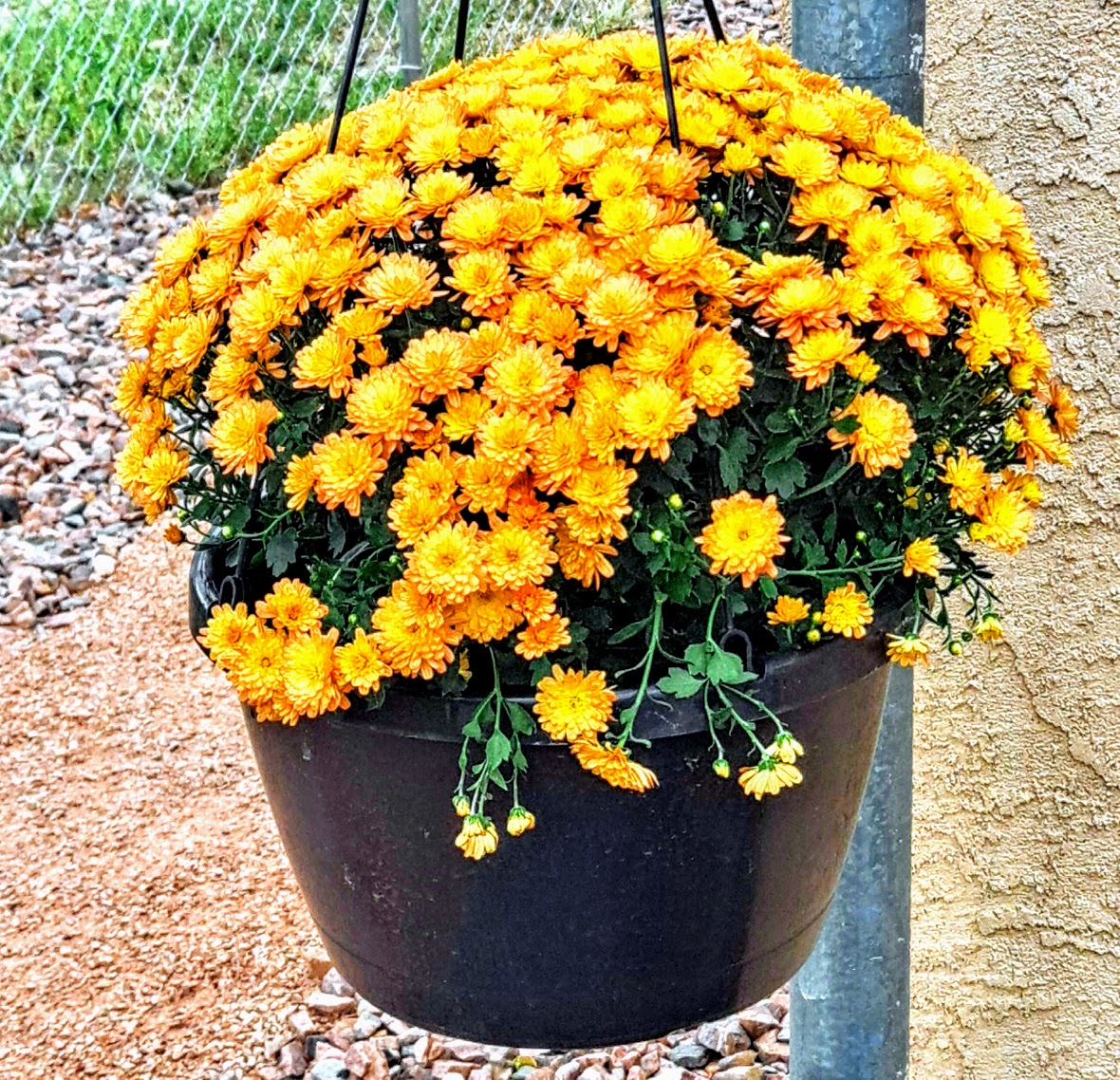
Anyway, here are some flowers for you. Happy Halfway Day!

***

Pat Bertram is the author of Grief: The Inside Story – A Guide to Surviving the Loss of a Loved One. “Grief: The Inside Story is perfect and that is not hyperbole! It is exactly what folk who are grieving need to read.” –Leesa Healy, RN, GDAS GDAT, Emotional/Mental Health Therapist & Educator
Tarot Classic

The tarot deck I am using this month is called “Tarot Classic,” and is based on medieval woodcuts. As with most decks, the given meanings of the cards are brief because tarot readers are supposed to assign their own interpretation to the cards based upon their impulses, subconscious, and conscious association of ideas with the symbols. I suppose some people can do that, but I am stuck with traditional interpretations because I look at the cards and feel . . . nothing, really. Luckily, I have a notebook full of various interpretations, so I can get a general idea of what each card is supposed to signify.

Today starts my second year of doing a daily tarot reading. Up until now, I’ve just picked one card per day, but it’s time to expand my studies, so today I picked two cards. Wow! So daring! I’m being silly, but I suppose in a way it is daring. It was hard enough to relate one card to my daily life, I can’t image what I will do with two. Still, it’s a way of using the dozens of tarot decks that were handed down to me from my now deceased brother.

Most layouts seem to be done with five or more cards, but even with two cards, there are myriad ways of reading. For example, the first card can demonstrate a strength, the second a weakness. Or perhaps the first can represent an emotion, the second a thought. Other possible readings:

Valid fear/invalid fear
Fear/reality
Perception/reality
Mistake made/lesson learned
Pros/cons
What empowers/what disempowers
Situation/main challenge
If this, then what
What to act on/what to leave alone.

A two-card layout can be about almost anything. So can a one-card, really, but I stuck with “What do I need to know today?” I decided to stick with the same question as well as adding an addendum for the second card, “What do I need to let go today?”

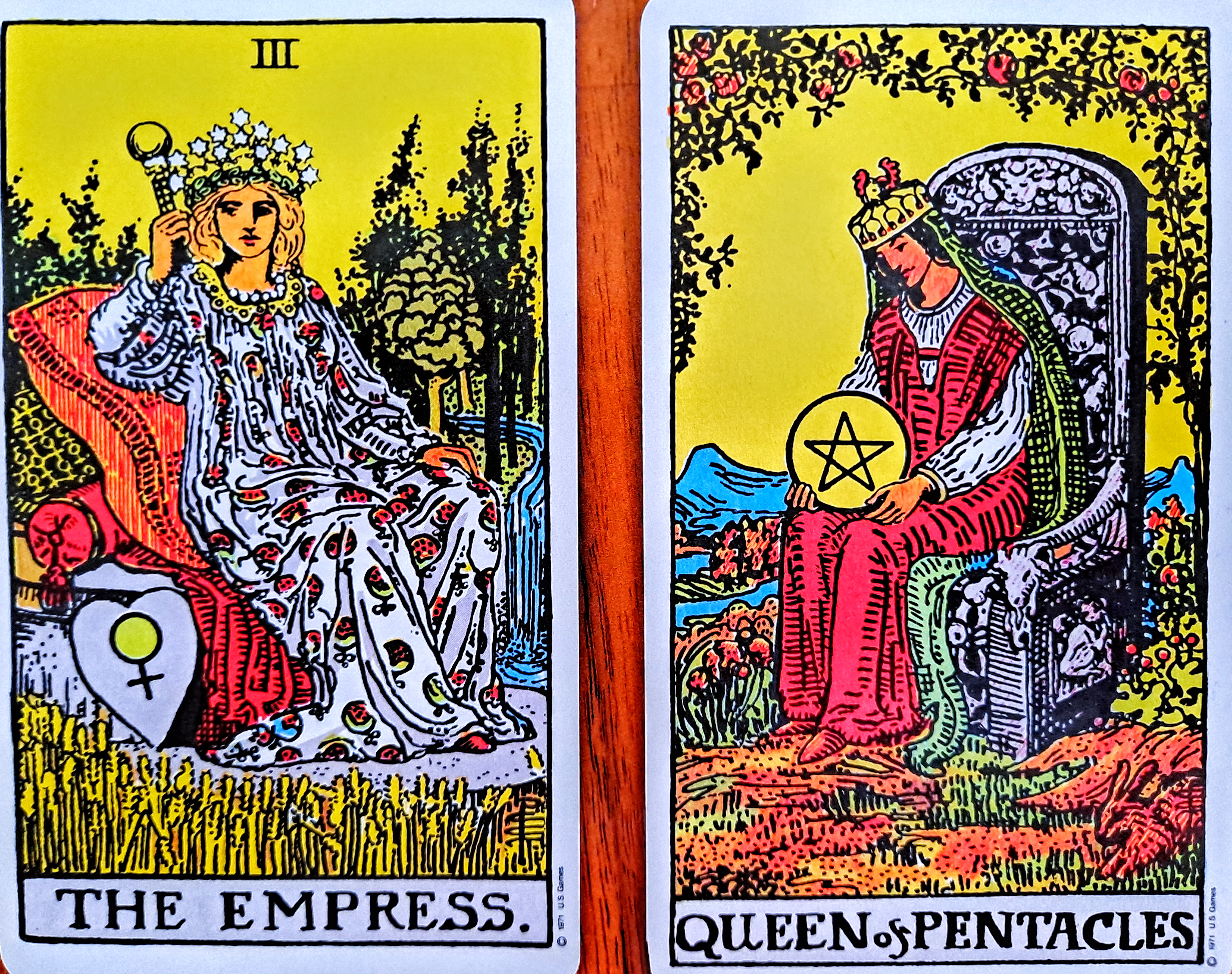
The first card was the Empress, the second the four of swords. (I got a kick out of the four ones for the Roman numeral four rather than the usual IV.)

The Empress is about beauty, creativity, entering a period of growth, feeling rather than thinking, being grateful for the bounty that surrounds you. The four of swords is about rest, replenishment, letting go of anxiety, taking time out to restore your energy.

I suppose those two cards fit — if what I need to know today is that I’m going to be entering a time of growth, then for sure I need to let go of any anxieties that might be keeping me back.

Even if that’s not what the cards mean, apparently the tarot means whatever anyone wants it to mean, so that’s what those cards mean to me today.

***

What if God decided S/He didn’t like how the world turned out, and turned it over to a development company from the planet Xerxes for re-creation? Would you survive? Could you survive?

A fun book for not-so-fun times.

Click here to buy Bob, The Right Hand of God.