I spent a lot of time researching the final books of the Wheel of Time saga, trying to figure out what parts Robert Jordan wrote and what parts the substitute wrote. Since there was no one place for the information, I had to comb through hundreds of sites and interviews until I came as close as possible to knowing who wrote what.
It was all suspect, of course, because even the parts that Jordan himself wrote were added to by the substitute. Occasionally, the substitute added just a few words, but those few words sometimes changed the thrust of the scene or at least diluted it. And even when the substitute hadn’t changed parts that were written by Jordan, they would have been subject to change if Jordan been able to write the entire ending himself.
Jordan was both a pantster (one who writes by the seat of his pants, who creates and discovers the story as he is writing) and a plotter (one who outlines, who knows the story before he writes). He knew the major points he wanted to hit as well as the end to aim for, but the journey to get there wasn’t plotted out. Which means that even if he had written a significant scene ahead of time to give himself something to aim for, by the time he got to that scene in the writing, things might have changed. In the books he finished, that was often the case, so it would probably have been the same with the finale.
He had supposedly written the final scene while writing the first book, which is why the end seems somewhat sketchy (both in the meaning of not being fully drawn and of not being totally true). The woman who helped the hero at the end was never named, had never appeared previously in the story, and was someone the hero didn’t know because I think at the time he wrote that, Jordan himself didn’t know. And yet, through several of the last books Jordan did write, he was developing a character who was foretold as someone who would help, so I have a hunch by the time he reached the end, this woman would have replaced the unnamed one. And if not, it would have been a grievously misplaced use of Chekhov’s gun. (Chekhov’s gun is a principle where every element in a story should be necessary. As Chekhov pointed out, “One must not put a loaded rifle on the stage if no one is thinking of firing it.”)
Jordan did seem to delight in turning assumptions on end, and even though he said that not every prophecy needed to have a major resolution, still, to have a character who was fated to help the hero and who was central to other characters’ actions (they thought she would kill him), to end up simply having her place a pile of clothes and money aside for him to use if he happened to survive the last battle is not a big enough payoff for all the drama instigated by that prophecy, especially since the hero could have done that himself.
The point I’m trying to make, at least to myself, is that even the parts Jordan wrote are not canonical.
So, basically, for me, the entirety of the final three books are not worth the paper they’re written on.
I am beginning to see, however, why people revere the substitute so much. Not only do they prefer his style of writing (though why people would slog through millions of words of a saga if they didn’t like Jordan’s style, I don’t know), but otherwise they’d be left with the utter sadness of Jordan never being able to finish his epic. Sad for him, of course, and sad for us. I have a hunch his ending would have been visionary if not spectacular — all the issues readers had with his getting sidetracked had pretty much been resolved, and he was again focused on getting the characters to the last battle. Most readers, I’m sure, are just as glad not to have to contemplate what could have been and are willing to settle for what they were given.
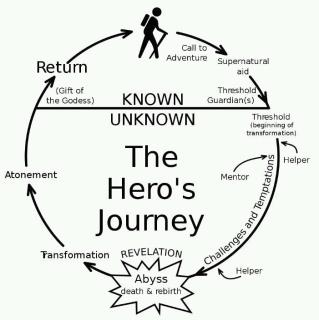
Most. Not all. Not me. I keep thinking I should be able to figure out what the ending would have been because of all the clues Jordan had laced into the saga with foreshadowing and prophecies. The “hero’s journey” concept could be a clue, too, since that was a big part of the origin of the books, but in the end, it’s a fool’s game since there’s no way of knowing what would have come out of Jordan’s subconscious and what he would have discovered as he wrote.
Still, as a person who gets caught up in literary mysteries, I’m sure I’ll continue to do what I can to puzzle out the end, fool’s game or not.
***
Pat Bertram is the author of Grief: The Inside Story – A Guide to Surviving the Loss of a Loved One.
 In googling “the rule of the gun” to find its author (I’d forgotten it was Chekhov), I came across a wonderful site:







 Bertram's Blog