Figuring Out the End of The Wheel of Time

Yesterday I wrote about parts of the Wheel of Time that should have been edited out or at least shortened considerably.

One of those story lines involved the hero rescuing a nation from an evil king who’d usurped the throne while the daughter heir was off doing other things. In addition, the hero twice conquered another nation. He intended both countries to be ruled by the daughter heir who would have been the rightful heir under normal circumstances. But because he said he was “giving” her those thrones, there was a huge furor since she claimed they were hers by right. Except they weren’t hers by right any longer. He’d conquered both nations. He could have put anyone in charge as he did with other nations where he defeated the evil rulers. But she was angry at him because of that word: give. Sure, she didn’t want people to think she was his puppet and so she needed to gain the crown on her own by having the ladies and lords vote for her. But there they were, on the brink of a cosmic catastrophe, and she worried about them thinking she was a puppet? It seems to me that if all existence were at stake, that would be a minor issue. Certainly not one worth tens of thousands of words.

What makes the whole thing even sillier is that the city, Caemlyn, was a Camelot equivalent. (In the King Arthur Legend, The Battle of Camlaan was the climax to his rule.) So it might have made sense, perhaps, to waste time on a plotline that went nowhere if only to establish the importance of that city, except that the very first casualty of the cosmic battle was Caemlyn. So at that point it mattered not who ruled.

It surprises me that I ever bothered to read these books in the first place, and I probably never would have if I hadn’t been laid up at the time and desperately needed something to read. Then, when I realized what the books were with all their real-world references, not just homages to previous series, like The Lord of the Rings, but a retelling of the King Arthur tale as well as dozens of other myths and legends from around the world, I got interested in finding all the subtext. Then, when I found out how terrible the ending was, I decided to try to figure out the real ending. Which is where I am now. But sheesh. All that verbiage! Luckily, I know how to skim, and I am not at all adverse to skipping huge sections. (The seventh book took me two or three days to read. The eighth took me two or three hours.)

I am finding bits, though, that would have made the ending more interesting. The most obvious would be to have accepted that most of the characters had already reached the end of their arc and were ready for the last battle. In one case, the substitute author repeated an entire character arc. In another case, he simply undid the arc, erased the character’s growth and his acceptance of responsibility, and returned him back to his immature ways with no further development.

Another thing that should have been addressed is that at one point, the kings and queens of the northern nations all decided to head south with their armies. They did not like what the hero was doing to the southern nations, not realizing he was rescuing those nations from the forces of the Dark One, and they didn’t want the same thing to happen to them. So they decided to do something about it. The subtext (and even Robert Jordan alluded to it) was that this displacement was part of the dark side’s plan, and was helping to further disrupt the forces of the light. This coalition was going after the hero, and the whole thing was so hush-hush, that they were ready to kill anyone who found out or who got in their way. Not exactly a peaceful mission. By this time in the books, it’s obvious that nothing happens by coincidence, and yet combined, this northern coalition ended up with thirteen Aes Sedai (the women power wielders, who some called witches). And thirteen Aes Sedai, when linked could destroy the hero, no matter how strong he was against them individually.

And yet, despite this, the rather weak reason given during the substitute ending was that they were there to test the hero to see if it was okay for him to fight the Last Battle. Um, yeah. If this were true, all they’d have to do was send an envoy, asking for an audience. Instead, they took a force of 200,000 as well as all those Aes Sedai to deal with him. And if they found him unworthy and killed him, they would have doomed the entire cosmos to the dark side. Definitely sounds like a plan made by the evil ones.

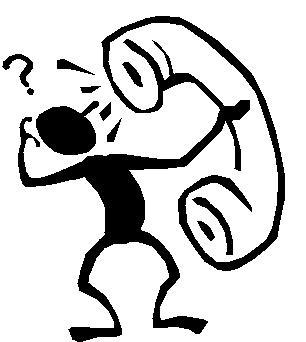
Even sillier, they were acting on a so-called prophesy that had been handed down by word of mouth for 3,000 years, negating one of Robert Jordan’s themes, which is based on the game of Whisper, or Telephone, or Gossip, whatever it was called in your part of the country. In the game, someone passes a secret to the next person, who passes on what they heard to the next person, and in the end, what results is generally nothing much like what was originally said. His point was that things change over the centuries, that stories change, that names change. So the chance that this prophesy, passed down orally through the millennium, would be the same at the end as at the beginning isn’t that great.

Even worse, though this army that had been manipulated by the dark side to leave their lands could have become a great disrupter at the last battle, instead the substitute author brought in a devil-ex-machina — an entire hitherto unknown army of dark friends.

I’m thinking I’ll eventually give up my idea of figuring out the real ending (for me just to decipher, not to write). Until then, it is rather an interesting puzzle. If I can get through all the scenes that should have been edited out, that is.

***

Pat Bertram is the author of Grief: The Inside Story – A Guide to Surviving the Loss of a Loved One.

Would-Be Fantasy Writer

The Wheel of Time book series has apparently inspired as well as created a couple of generations of fantasy writers. Although I have never been able to get into any of those other stories (the books may have been inspired by Robert Jordan, but their worlds and their writing styles fall vastly short of his example), I can understand the urge to create one’s own world. I’ve thought about it myself, perhaps continuing the story I began in Bob: The Right Hand of God. Although Bob: The Right Hand of God is a stand-alone novel, it does seem to lend itself to a sequel since anyone born into that re-made world would have to start developing a new civilization (or not), but I don’t have any interest in writing the sequel. To me, the interesting part of the story was the de-creation of life on Earth as we know it. Anything further seems as if it would be just a ho-hum book. A been there, read that sort of thing.

So, if not Bob: The Right Hand of God, then what? Create a whole new world and culture as so many fantasy writers do? I considered that possibility, thinking a world of my own would be a place to escape to in my own head if not in fact but, though I hate to admit any failing, I don’t have the imagination for such an undertaking. (Although I’ve written two novels that could be considered fantasy, both took place more or less in our own world.) Nor do I need to live any more in my head than I already do. Besides, the truth is, so-called real life is fantasy enough for me.

There are theories that all time exists at once, so we are living our past and our future at the same time we are living in the present. My very first book, the terribly written one that no one will ever see (mostly because a few months ago, in a fit of decluttering, I threw away the only copy of the manuscript), was the story of two people who meet and fall instantly into if not love, then an incredibly deep connection, only to find out that they are reincarnations of each other. My question (and hence the premise of the book) was that if everything exists at once and if there is any validity to reincarnation, could this happen? There is an obscure theory that we are all reincarnations of one another. That not only is there a single electron that moves so fast and through so many dimensions and quantum processes that it creates the entire universe (or even multiple universes), but that there is also a single soul that we are all part of. (Yeah, I read weird stuff, which is inevitable when one reads almost anything almost all the time.)

Other theories say we are creating the world as we live it, that nothing exists yet but possibilities we haven’t yet encountered or envisioned. Other theories suggest that everything exists in our thoughts, that we are thinking into reality the world we live in. The reason we are such a mess is that everyone is thinking of different things and wanting different things. If everyone thought of the same thing at the same time, then that thing would come into fruition. Of course, the chances of that happening are nil since whenever you have even just three people together, one will always be thinking of something else, daydreaming or disagreeing or whatever goes on in people’s heads, and the other two will be saying they are thinking of the same thing, but that thing could be completely different for each of them. (For example, if they are trying to envision an apple, one might see a green apple, another red.)

Am I getting too silly here? Well, not too silly for a fantasy writer, but except for Bob: The Right Hand of God and Light Bringer, I probably will never be a fantasy writer. Probably will never write another book, either, but who knows. I could get bored with the books that currently exist and need to occupy my mind another way.


***

Pat Bertram is the author of Grief: The Inside Story – A Guide to Surviving the Loss of a Loved One.


Point of View

The Wheel of Time culture shows me exactly why people can’t agree politically on . . . well, on anything.

By Wheel of Time culture, I don’t mean the various cultures in the books, though there are many, but the real-life culture surrounding the books. There are hundreds of websites devoted to discussions of the books, many websites that offer encyclopedias of Jordan’s world, other sites that offer snippets from Robert Jordan’s notes showing the development of his ideas and that sometimes include answers to questions fans ask (his answer most often is, “read and find out,” though sometimes he does elucidate). There are also companion books to the series that offer more information on characters, motivations, glossaries, a dictionary of his made-up language, explanations of things that don’t show up in the books like outlying cultures that have little to do with the story and things that Jordan never wanted people to know.

His subtlety (which it seems he prided himself on) is such that often there is no way to find the truth in the books themselves. In one case, we don’t find out who killed a particular bad guy until we see it in the glossary of the following book. I understand that he wants people to think about the issues and the happenings in the books, tries to get them involved in his world, and accords them the intelligence to be able to fill in vague lines. (The person who finished the series after the death of Jordan had no subtlety, no granting readers a modicum of intelligence, and explained every little detail.) I can also understand an author wanting people to figure things out on their own, such as Frank R. Stockton did in his 1882 story, “The Lady or the Tiger,” but at times it also feels a bit like a cheat. If it’s important, it should be in the books somewhere. If it’s not important, it shouldn’t be treated as if it’s some sort of mystery. (Though as Jordan admitted once in an interview, he was surprised when these — to him — throwaway incidents garnered much discussion.)

Still, as long as I can find out the information I want by checking online sources, I don’t really care that much if such particulars aren’t in the books since I certainly can’t remember every single detail of a 4,000,000 word story. I often end up checking on characters who showed up again after 1,000,000 words and I needed a refresher on who they were and what they had done. Sometimes if I can’t find an explanation for a certain minor point in any of the encyclopedias, I end up reading various discussions to see if any reader had figured it out.

All this to explain why I get caught up in other people’s opinions of the various aspects of the books.

It makes sense, of course, that people would have disparate opinions about the unsaid bits, but what’s really interesting to me is even when the story is explicitly laid out, when the characters’ actions are visible to everyone, when the motivations are obvious, that readers all see something different and are vocal about defending their point of view.

And this is just a story. The words are static. There are no edited versions of the sentences making them seem to say what they didn’t say, no edited videos making us see a different version of the action. It’s all right there in the books. And yet, the interpretations are wildly different. Some people hate a couple of the characters because their plot line goes on and on and seems to accomplish nothing. Other people love those characters and hate other characters. That makes sense to me. Some people even hate the main hero while loving the books, which doesn’t make sense to me, but it doesn’t have to make sense. It’s about preference.

But misinterpreting the story? Seeing what isn’t there? Not seeing what is there? That doesn’t make sense to me since we all have access to the exact same words. I suppose it’s possible that it is I who is misinterpreting the story, since after all, I am totally the wrong demographic (older by decades!) but even that would prove my point, which is . . .

Hmm. What is my point? I suppose it’s that if people can’t even agree on what they are seeing in a book series, can’t agree on what is right and what is wrong when it matters little, it’s easy to see why there is no agreement about what is best for us individually and ultimately the country.

***

Pat Bertram is the author of Grief: The Inside Story – A Guide to Surviving the Loss of a Loved One.
A Sort of Apology

I feel as if I should apologize for all these Wheel of Time posts, and yet, here I still am.

In an effort to find an alternative to posting here, I looked for book discussions, thinking it would be fun to talk about the story, characters, and implications of the various events with other students of the work, but the discussions fell into a few distinct categories:

Discussions during the long years while fans waited for a new book to be published, most centering on where they thought the story was going, and which are now defunct because the series of books is finished and the ending, or at least an ending, is known.

Discussions centered on who loved what character, and how foolish were those who didn’t like said character. That sort of non-discussion gets old, especially if you hold a minority opinion and don’t want to be lambasted.

Discussions about the end of the book, and how wonderful the ending was, or if not how wonderful the ending was, how wonderful the substitute writer was for writing it (ignoring the fact that he got paid, and even more importantly, that the project catapulted him into fantasy superstardom).

None of those discussions fit with anything I wanted to discuss, and anyway, most were many years old. Any newer discussions revolved around the now cancelled television series, and how terrible/wonderful the show was. (Terrible because it turned the story into something completely different from the books, wonderful because . . .  well, because it was the Wheel of Time.)

I tried starting my own discussion, but only got the usual fan-type comments such as “I liked character A, I hated character B.”

I considered resurrecting one of my dormant blogs and doing a chapter-by-chapter discussion, but that didn’t appeal to me. I like the puzzle the books present, and I like that in some ways it is (was?) a cultural phenomenon, with many more millions of words written about the books than were actually in the books (the first book was published right around the time the internet, discussion boards, and social sites were just beginning, and the story happened to be geared to the age group that first embraced the online world). To be honest, I didn’t want to spend that much effort on what is really just a way for me to pass mental time. (Physical time, too, but I like having something to occupy my mind, more than the issues of the day or . . . whatever.) Besides, however much I determine that upon this rereading, for sure, I will read every word, I never do. I find myself skimming or even skipping the characters I find annoying and the parts that include too much torture, both mental and physical.

I make sure, however, that I never skim or skip some of the most lyrical of Jordan’s writing. At one point, a character got lost in thoughts of the past, remembering that “They danced beneath the great crystal dome at the court of Shaemal, when all the world envied Coremanda’s splendor and might.” That’s pretty much all we ever find out about the lost nation of Coremanda, but that one sentence is haunting, conjuring in just a few words a long-forgotten time.

And then there’s a song that the same character remembers from long ago, a song that seems to be a theme of the books (NB: the Aes Sedai are the women power wielders):

Give me your trust, said the Aes Sedai.
On my shoulders I support the sky.
Trust me to know and to do what is best,
And I will take care of the rest.
But trust is the color of a dark seed growing.
Trust is the color of a heart’s blood flowing.
Trust is the color of a soul’s last breath.
Trust is the color of death.

Anyway, that lyricism is beside the point . . . actually, no — it’s not beside the point, it is the point of my rereading the books. It’s just not the point of this blog post and my feeling I should apologize for dumping my thoughts on the books here.

So, if you want an apology, you got it, but it’s not truly an apology because a sincere apology connotes a promise of not repeating the offense, and perhaps unfortunately for you, I will continue posting my thoughts until I’ve finished this reread or until I’ve given up blogging again.

***

Pat Bertram is the author of Grief: The Inside Story – A Guide to Surviving the Loss of a Loved One.
The Lord of Chaos

In the Wheel of Time book I’m reading now, the story starts off with one of the bad guys being summoned before the head bad guy (not a guy, exactly, but a cosmic dark force that’s the opposite of the Light). The head guy gives his minion many directions, which we are not privy to, except for the last: “Let the Lord of Chaos Rule.” At the end of the book, this same bad guy again goes before dark force and asked if he did good. The Dark One lets out a loud laugh.

All through numerous rereads, I never could understand what the bad guy did because except for the beginning and very end, he’s practically invisible throughout the book.

But then, I never paid attention to the reason things happened in the book but the obvious since they seemed to be isolated actions taken by various characters. This time, I’m looking at the things that happen, thinking perhaps they are the result of the dark side’s behind-the-word machinations. And now it’s obvious.

The “lord of chaos” comes from the real Medieval and Renaissance New Year’s tradition of upsetting the class system, where the peasants become the rulers and rulers pretend to be peasants. The person chosen to be the “lord” of this celebration was called the Lord of Misrule or the Lord of Chaos, and was often the least competent person around, adding to the hilarity. (Perhaps that’s why the Dark One laughed at the end of the book? Finding the chaos his edict created hilarious?)

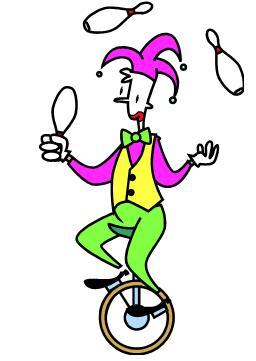
During the book, a shepherd (the hero who is meant to fight the dark force during the last battle) leads nations. (He doesn’t become king for another 500,000 words or so.) A blacksmith and a gambler command vast armies, a juggler becomes a wise mentor, queens become maids, an untried girl is chosen to lead the women wielders of power. (She was chosen as a puppet, and the only reason this particular chaotic bit doesn’t have the desired effect is that the dark minions completely underestimated her lust for power. Once she gets it, she grabs hold, and never lets go until it finally kills her.)

Often the bad guys play both sides. For example, it’s minions of the dark that have the hero kidnapped and tortured, but also, minions of the dark that save him. Chaos, indeed! (Create chaos, but in the end be sure to let the Lord of Chaos live so he can rule!) We don’t find out until later that some of the people that are supposed to be on the side of the light are actually on the other side, which adds to the chaos. These people might have their own orders, or they might be victims of compulsion, or they could simply be incompetent, all of which adds to the chaos.

Besides, no one knows the truth, though all characters, all factions, believe they do know what is true. The hero is the devil. The hero will destroy them. The hero needs to be killed. The hero needs to be controlled. The hero needs to be protected until he is delivered up to the Dark One at the Last Battle. The hero needs to be put in prison. Very few people ever stop to realize that the hero is doing what he must, that if he’s imprisoned, he will never grow into what he needs to become in order to win (which could be what the dark side wants, but the light also wants the imprisonment because they don’t believe he will voluntarily do his duty), and despite the very large disparities of belief, they all act with utter conviction.

Do you see where I am going with this post? (Minus the hero bit, that is.) Although the book was written thirty years ago, it seems (spookily) as if I am reading an allegory of our times. In a world of short-form content and edited video clips, it seem as if very few people take the time to delve deeper into the background (or foreground) of events to try to find out the truth. Everyone sees what they believe is true and they act on it because for them, it is the truth. It’s as if we’re living in two distinct worlds where there is no overlapping, so while both sides can be saying the same thing (“the opposition is ignorant,” for example) and both can be acting according to their honest beliefs, they both mean completely different things and have completely different results.

Let the lord of chaos rule, indeed.

***

Pat Bertram is the author of Grief: The Inside Story – A Guide to Surviving the Loss of a Loved One.

Emergency Library

When I was young, I often reread books, but in my middle years, I discovered I didn’t like rereading, didn’t like the echoes of previous readings reverberating in my head. Like most readers, I’d accumulated shelves of books, but when I realized I didn’t want to reread any, I gave them away. The only books I liked having on hand were those I hadn’t read, what I called my “emergency stash.”

When the quarantine hit, and the library was closed, I quickly used up my emergency stash, and ended up rereading The Wheel of Time series. I found I liked living in Jordan’s world, one that purported to be both our distant past and our even more distant future. Well, I liked the parts when they were traveling, not so much the parts when they were manipulating each other, torturing each other, bending each other to their will. When the reread seemed to work out, I started searching for other books or series I could keep on hand to reread. Although I tried, I was never able to get into any other fantasy series, could not relate to any of them. There were too many ridiculous unpronounceable names and even more ridiculous situations in never-were-could-never-be worlds, to say nothing of the often-execrable writing. I did enjoy Ender’s Game and some other of Orson Scott Card’s science fiction books, but none I wanted to re-reread.

Recently, I went through series I’d previously read, but this time, instead of picking up books haphazardly, I read them in the order they were written to get a better idea of the character’s story. Most were mysteries, most I’d read so long ago I didn’t remember the story, but none caught my imagination enough to want to ever reread again. Others were stories I once loved, such as the Mrs. Pollifax books, Dune, and The Lion, the Witch, and the Wardrobe, but although I liked the first book in all three of those series, the rest didn’t hold up to my adult scrutiny.

I did order the Noel Barber novels — I couldn’t get Tanamera, Sakkara, and Farewell to France from the library and I thought a friend would like to read Tanamera since she’d grown up in the Cameron Highlands in Malaysia. I ordered the others because at one time I’d liked them, and as it turned out, I still do.

So that’s the extent of my emergency library — Robert Jordan and Noel Barber. It turns out that no matter how much I once liked a book, few of them have the depth or sink-into-ability that I need to enjoy rereading a familiar story. It’s just as well. I don’t like having a lot of clutter, and books I don’t want to reread seem clutterish to me. I do have a stack of books about alchemy that I inherited from my brother and haven’t yet read, but I’m saving them for . . . actually, I don’t know what I’m saving them for. A time when I have the mental effort to expend on them, perhaps, but at least they are there as an emergency stash for my emergency stash.

Come to think of it, I also have the books I’ve written, but I’m afraid to read them in case I’m no longer proud of them. But someday I might read them. Or not.

Are there any books you enjoy rereading? Any you love? Any you’ve read multiple times?

***

Pat Bertram is the author of Grief: The Inside Story – A Guide to Surviving the Loss of a Loved One.
Intentions and Unintentions

So far most of my New Year’s resolutions are on track, both the intentional ones and the unintentional ones. My plan of taking a walk every day was pretty much buried in the snow a few days ago. Although the snow is melting, there is too much slush to for me to want to be out there; also I’m fighting some sort of allergy or early cold symptom, which gives me even more of an excuse to remain inside. I am doing well staying away from the news, though occasionally the news comes calling with an email or an inadvertent glimpse when I let my attention wander. I’m also staying with the no sugar/no wheat thing, though I am looking forward to some sort of treat when the month is over. (This resolution was only for a month, though the intention of sticking with real food is an ongoing one.)

My unintentional resolution of blogging every day is still on track. Fifteen days and counting! I never really planned to blog every day . . . I just started, and now here I am. It feels good to be back blogging. An additional benefit is that it’s getting me away from playing games on the computer, which is just as well. The hidden object game I play is getting tiresome, though I still log in and play a bit every day just to keep my hand in, but any sense of wanting to work toward game goals has dissipated.

One unvoiced intention this year was to reread The Wheel of Time series by Robert Jordan and try to pick out clues to the real ending, not the ending we ended up with, which I am trying to do. Jordan, the one who created his world out of a mosaic of our history, culture, myths, and legends, died before he could finish, and the author chosen to finish the series did an execrable job. Not only was he at best a serviceable writer, he dumped characters that played a role through Jordan’s writings, ignored many characters’ development and regressed them to the beginning, traded established subplots for new subplots of his own that added nothing to the story, destroyed his own timeline so that things happened in no order (even seemingly having one character in two places at a time and two characters meeting where their timelines couldn’t have intersected).

[What astonishes me about those ersatz books is how protective everyone is of that substitute author. There are no one- and two-star ratings of his offerings, though there are plenty of low ratings when it comes to Jordan’s books. (Admittedly, some of those are deserved. Although much of Jordan’s story is brilliant and shows the ten years he spent researching, and his writing seems epic at times, it could do with a serious editing, including slashing huge sections of a couple of books.) I did find one review that was an honest critique of the last three books, yet the overwhelming response to the thoughtful piece was that the review was “overwrought drivel” written by an angry fan. (Even though the reviewer admitted he wasn’t a fan.)]

I read this series multiple times because after volume 6, I could no long remember what had happened in volume one. Most of the brilliance in the series comes from foreshadowing, and it’s hard to tell when a foreshadowed event occurs when you can’t remember the foreshadowing. So now I am able to remember the story going both ways — what I’ve read and what I’m going to read. Unfortunately, now I can’t forget those last three mishmash books by the substitute author in order to come up with my own ending as foreshadowed by Jordan’s writings.

I am not a fan of these books so much as a student, which is why I want to puzzle out the real ending. (Something to occupy my mind, if nothing else.) Perhaps as I find more of the clues to the ending Jordan intended, I’ll be able to override in my mind the bad ending with one of my own concoction.

Meantime, the year progresses. Already halfway through January! And my intentions (and unintentions) are still holding strong.

***

Pat Bertram is the author of Grief: The Inside Story – A Guide to Surviving the Loss of a Loved One.

The Transformation of the Hero

One of the best books about writing I ever read was David Gerrold’s Worlds of Wonder. It’s a how-to for writing science fiction and fantasy, but it’s applicable to all writers since, in the end, we are all creating worlds of wonder.

The aspect of the book I would like to discuss is the transformation of the hero. In the beginning, the situation is introduced and the hero discovers she has a problem. She attempts action and, though she gives it all she has, she is beaten by the problem. She gains a deeper understanding of the problem, then tries again, exhausting all possibilities she knows. All that is left is what she doesn’t know. Finally, because some event occurs or some person says something that triggers the hero’s realization of what she has to do, the hero goes through a shift in being, a reinvention of herself, and confronts the problem directly.

This transformation of the character is the reason you’re telling the story. A story is an account of how a particular person who started out like that ended up like this.

Most problems are about not handling the problem. By choosing to make the situation the problem, the hero creates herself as the source of the problem. Until she recognizes her own authorship of the dilemma, she cannot create herself as the source of the resolution. She has to give up whatever investment she has in not solving the problem. The hero has to be awakened to the possibility that there is another way to think about this. Another way to be.

So transformation is not only the re-creation of the hero as the owner of the situation, it is self-empowerment as well.

In science fiction and fantasy, this transformation is not metaphysical but real. In the process of transformation, not only is the hero changed, but the world in which he exists is also transformed.

In all other fictions, this transformation is more internal, but still real.

I have been thinking about transformation lately as pertaining to my real life. In order to become one of those rare writers who can support herself with sales of her books, I need to transform myself into an “Author,” to recreate myself as if I were a character in one of my books. Don’t know how to do it, and the only reason I’m mentioning it is to show the validity of the hero’s transformation.

So, what problems confront your heroes? How do they attempt to solve them? How are they thwarted? And finally, how do they recreate themselves to solve the problems?

add to del.icio.us : Add to Blinkslist : add to furl : Digg it : add to ma.gnolia : Stumble It! : add to simpy : seed the vine : : : TailRank : post to facebook