Gathering Patience for the Lonely Years Ahead

A major loss in one’s life, such as the death of a long-time mate, often changes a person. For almost twenty months now, I’ve been saying I’m no different than I was, but lately I can feel a small change. It started with his long illness, developed during his final agonizing weeks, and came to fruition in the months since his death. This change? Patience. An ability to wait.

I’ve never been a particularly patient person. I always open mail as soon as I receive it. (It used to mystify me how my late mate could let his mail sit for days without any inclination to see what the sender wanted.) I immediately begin to read books when I get them, open packages of snacks when I return from the grocery story, check my email first thing in the morning.

Well, I still do those things, but I am more patient with life’s vagaries and people’s foibles. There is no person I prefer to be with above all others, no place I want to be. If I have to stand in line at the grocery store, I simply wait without tapping my foot or wishing the line would move faster. If someone tells a long boring story, I simply listen without trying to edge away.

I’m not sure this is patience so much as resignation. When my mate died, he detached one of my connections to the world, and this connection has never been replaced. There’s something missing in me, some synapses that doesn’t spark, as if I am at one remove from the world. It’s possible this feeling of reserve comes from a new awareness of death or an awareness that life is not as it seems. Life isn’t all about shopping and what’s on television. It’s not about cars and clothes and things. I always knew that, of course, and because of it was already one step away from the everyday world.

My mate and I were not materialistic people. We lived in a world of ideas, of books, of films. Learning, research, discovery, growth were important to us. He used to say we were bad for each other — since we had someone to share these unthings, we had no reason to make a concession to the materialistic world. Though he’s dead, I’m still unable to connect to such a world. In fact, with my disconnect from him, I am now two removes from the so-called real world.

I’ve built new connections, made new friends, experienced new places and activities. I’ve become more aware of basic connections, such as the way my feet connect to the ground, or the way air flows through us, around us, connecting us one to the other. I’ve grown more empathetic and sympathetic. But still, there is no great attachment to any specific thing or any specific person. There is only me, and wherever I am, there I am, so there is no reason to be anywhere else.

This could change in the next few months, of course. I am almost two-thirds through my second year of grief, and the second half of the second year seems to be a limbo, a time for settling into this new phase of life, a time of gathering patience for the lonely years ahead. (The first half of the second year is often a time of re-grief, of having to deal with the horrible realization that even though you managed to get through your first year without him, even though you passed this test, your loved one is still dead. It can be a time of catastrophic pain.)

I’ve managed to come this far, and I will continue to manage. I’m from a family of long-lived people, so it’s a good thing I am learning patience (or resignation). I will need it.
Grief Doesn’t Take a Holiday

I wasn’t going to write about grief this Thanksgiving (except for yesterday’s brief mention of the guests who won’t be coming to dinner) because I didn’t want to break anyone’s holiday mood. Then I realized this is exactly the attitude I’ve been fighting. We shouldn’t ignore grief just because it is inconvenient for others or because it might make them pause to reflect on the ephemeral nature of life. Grief is part of life, and for some of us, it is our life.

The truth is, a huge number of people in the United States will be crying themselves to sleep tonight. For some of those people, this is the first Thanksgiving since the death of a significant person in their lives — a spouse, perhaps, or a child. For others it is the second Thanksgiving or even the tenth. But the number of years that the person has been gone doesn’t matter when it comes to holidays. What matters is that our loved ones are dead. A happy occasion with family, friends, food, turns out not to be so much fun when an absence (or a remembered presence) looms darkly over our hearts. Or if the occasion is fun, and the bereft forgets the truth for a moment, the grief rebound can be painful.

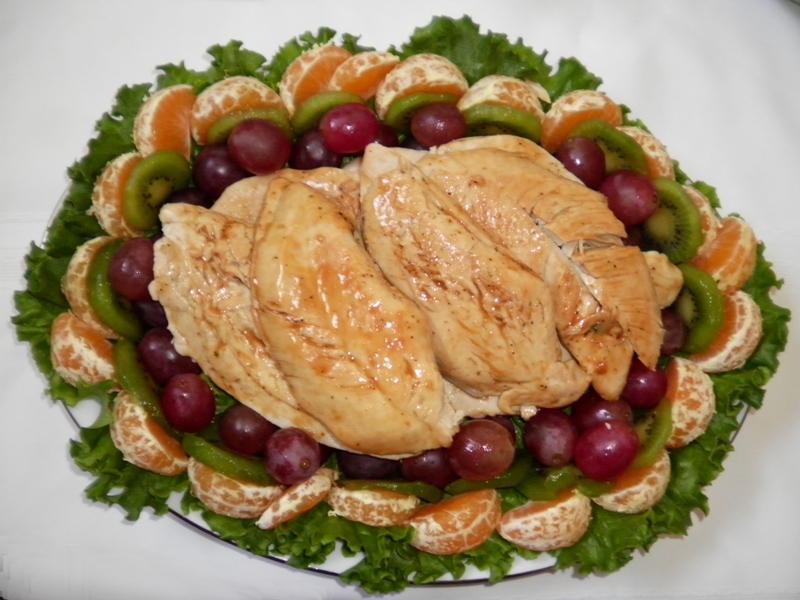
I had a lovely time today. Three of my brothers and their mates came to have dinner with my father and me. They brought everything except the table decorations and the turkey. Those I did. (I didn’t actually cook a turkey. I cooked turkey tenderloins several days ago and froze them, then today I steamed the pieces and arranged them on a platter. I didn’t feel up to cooking a turkey, and anyway, the oven is on the blink.)

The talk was congenial, the company delightful, the meal delicious, the toasts divinely inspired (I toasted my mother, who would have been proud of her men. During her final weeks, she worried that the family would drift apart.)

Afterward, two by two, the guests headed home. My father lay down for his nap. And there I was, alone, with no way to go home. My dead mate was my home, and even after nineteen months, I haven’t been able to find “home” within myself or anywhere else for that matter. I stood for a moment feeling adrift and sorry for myself, then set my father’s house to rights — taking the extra leaf out of the table, putting away the dishes that had been washed, doing all the other after tasks.

And then . . . in the quiet moment before I focused my mind on another activity, grief — that great yearning — burst over me. (For those of you who worry about me, there is no need. I am okay. Truly. These grief bursts, which relieve the stress of my sorrow, are how I keep on being okay.)

He is gone, and there is nothing I can do about it. I keep re-realizing those two simple facts. I do not think our brains are wired to understand the sheer goneness of death. Someone emailed me not long ago, expressing her admiration that I can talk about grief without feeling sorry for myself, but honestly, except for isolated moments, which I refuse to feed, I don’t feel sorry for myself. A lot of grief has to do with the mind disconnect that happens when you realize your loved one is no longer here on earth. It’s as if for a second you open up to a cosmic reality or an eternal truth. The façade of life shatters, and through the cracks you can almost see, almost sense, almost know . . .

Then you are back to yourself, and you don’t see, you don’t sense, you don’t know anything but that — holiday or not — you are alone.

To all of my bereft friends, who are struggling with the challenges of this holiday, I wish for you a peaceful night.

Waiting For the Guests to Arrive

I’ve been staying with my almost 95-year-old father, not to take care of him so much as to look out for him. Last year, the two of us spent a quiet Thanksgiving. He wasn’t up to company and neither was I since it was the first Thanksgiving after my life mate’s death. This year, a couple of my brothers (who perhaps had no more exciting plans) decided they wanted to get together for dinner, and one fast-talking brother conned . . . er, sweet-talked . . . my father into letting them come here. This brother also negotiated a deal where up to six people could stay for two hours. (Which worked out to be three brothers and their mates.) If you knew how quickly that many people would wear out a 95-year-old recluse, you’d understand what a great concession my brother wangled. (BTW, I really admire this brother’s negotiating skills. I once saw him talk a clerk at Office Max into giving him an extra l0% discount, and the guy agreed to it for no reason that I could see.)

The last time I spent Thanksgiving with any of my siblings was four years ago, a couple of weeks before my mother died. We’d come to spend a final Thanksgiving with her, but she was too sick and too weak to join us. Still she was glad we came. She always wanted her children to be close, and she worried that after her death, we would drift apart. Now here I am, in her house, and she is not here.

She’s just one of the guests who can’t come because of cosmic impossibilities. My next youngest sibling died the year before she did, and her grief at his dying helped bring on her own death. And then there’s my life mate. I doubt he would have come (he couldn’t the last time because of his own illness), but it saddens me that he doesn’t have the choice. Makes me even sadder that after the holiday, I won’t be going home to him.

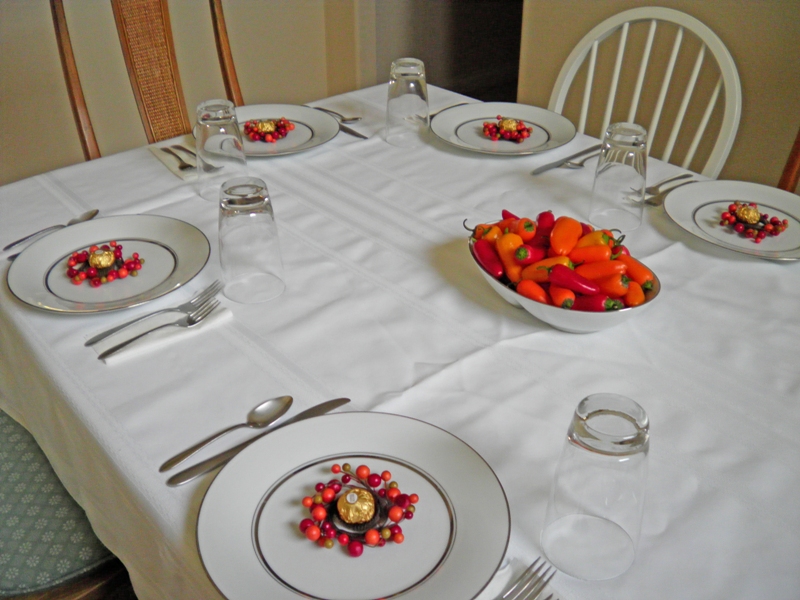
I set the table today to lessen tomorrow’s commotion, and I used my mother’s china. (Sorry, BBB. Paper plates just won’t cut it!! And yes, I will do the dishes.) I want the day to be special because how many more Thanksgivings can my father have? And if he’s blessed with a dozen more, who knows whether even my brother’s vast negotiating skills will gain such concessions again.

And it pleased me to be able to do this small thing.

Afterward, I was overcome with a burst of grief (to be honest, it wasn’t so much grief as plain old feeling sorry for myself.) My brothers will be at dinner with their mates, and I won’t be with mine. Still, I had him for all those years, and for that, I am truly grateful.

(And never mind trying to figure out how many siblings I had. For most of my years there were too many, and now there aren’t enough.)

Grief Bursts

From the beginning (the beginning of my grief, that is) I’ve talked about various aspects of grief, even the parts I thought made me look weak. Today’s topic — grief bursts — is one I was going to keep to myself, but it’s an important one so I’m going to risk seeming weak once more.

I’ve often said that the trouble with grief is that it doesn’t stay gone. You think you’re doing well, settling into your new life, accepting your situation, and then zap! It hits you, generally when you’re least expecting it. One of the worst of these zaps occurred after my life mate had been dead for five months. I dreamed that he died, and in the dream I woke to discover that he was alive and getting better. I could feel the tension of grief draining out of me, and it felt good to just be . . . me. I awoke for real with a smile on my face, glad he was still alive, and then I was sucker punched by the truth. I felt the way I did the first time I realized he was dead, and it set off an upsurge of grief that lasted several months.

Then last spring, at about the fourteen month mark, I was walking, collected and serene, down a suburban street carved out of the desert,  and I was blindsided by lilacs. He loved lilacs, and we’d planted lilacs all around our property. The year before he died, the plants were tall enough to create an oasis of privacy, and when they bloomed, we’d go outside and bask in the heavenly scent. When I came to the desert, I  never expected to encounter lilacs, but there they were, growing wildly in a vacant lot. That familiar scent, coming toward me when I was unsteeled against a grief upsurge, did me in for a couple of weeks.

The last big upsurge of grief that stayed with me for more than a day or two came at the eighteen month mark. I still don’t know why — there was nothing in particular that set it off, and a year and a half doesn’t seem like a special anniversary, not like the first year anniversary or the second. Eighteen months just sort of hangs innocuously in the middle. Or it should have, but it didn’t. Well, I got through that grief upsurge like I did all the others. (How? Glad you asked that. The only way to get through a grief upsurge is to feel it, process it, and when it begins to abate, let go.)

Mostly now, I’ve settled into uncoupled life. I miss him, of course, and yearn desperately at times to talk with him, but I’ve accepted as well as is possible that I have to continue on with my life. I feel like myself again (meaning I don’t feel weighted down with grief all the time, nor do I hold myself tensed against possible upsurges of pain).

What I do experience are grief bursts — brief bursts of grief, with all the angst I felt at the beginning, that last but a minute or two. These bursts come a couple of times a day, generally after I’ve been concentrating on a project (such as writing a blog or reading a book), and in the moment when my mind is not otherwise engaged, I remember that he’s dead, and grief bursts over me. I cry for a minute or two as if my heart will break (though I know it won’t. It’s already been shattered and glued back together, stronger than before). And then I’m fine again with no lingering aftereffects.

Of all the strange stages of grief I’ve experienced, these grief bursts are the strangest. Like being skewered with a burning poker and then healed a second later. This particular stage, or so I’ve been told, can last a long time. Even decades after a significant death, you can experience bursts of grief. I’m sure, like all the other phases of grief I’ve gone through, these bursts will diminish in frequency, perhaps even diminish in intensity, but oddly, this is one stage of grief I don’t mind. It reminds me that he was worth grieving for, that his absence from this world matters, that he once was part of my life.

***

Pat Bertram is the author of the suspense novels Light Bringer, More Deaths Than One, A Spark of Heavenly Fire, and Daughter Am I. Bertram is also the author of Grief: The Great Yearning, “an exquisite book, wrenching to read, and at the same time full of profound truths.” Connect with Pat on Google+. Like Pat on Facebook.

Hurrying Through Grief To See What is On the Other Side

During the first months of wild grief after the death of my life mate, I occasionally had the feeling that something wonderful was going to happen to me. I don’t know why I had that feeling — perhaps my sense of fairness dictated that a great good was needed to balance a great grief. Or perhaps such a cataclysmic closing of one segment of my life demanded an earthshaking opening of another segment. Or perhaps after years of waiting for his suffering to be over, I felt deep down that it was time for me to live.

I wasn’t the only one who thought his death might bring good changes to my life. Shortly before he died, he himself told me that everything would come together for me after he was gone. (He never explained what he meant, though, and foolishly, I never asked.) And afterward, my sister, who witnessed my grief and saw it as life affirming, told me that I could be entering the happiest time of my life.

Whatever the truth of it, I held on to the feeling because . . . well, because it was all I had to hold on to. In fact, the feeling was so strong at times that I wanted to hurry through my grief to see what was waiting for me on the other side. But here it is, nineteen months of grief later, and whatever that wonderful thing I expected to happen, didn’t.

Part of me is still waiting (just as an ever-diminishing part of me still waits for his phone call to tell me I can come home), but mostly, the feeling that something wonderful was going to happen to me is gone. Oddly, this is not an uncommon feeling for us bereft, and those who had the feeling of expectation also felt let down when nothing wonderful happened, which leads me to believe that the feeling is a survival mechanism, or perhaps another one of the many stages of grief nobody ever talks about. (Those who did have something wonderful happen in their lives weren’t able to feel the wonder of it, which left them feeling empty, and that is almost as bad as having nothing wonderful happen.)

Yesterday at the grocery store, I saw one of the hospice social workers who occasionally moderated the grief group I used to attend, and I thanked her for helping me through such a terrible time. During our conversation, I mentioned the odd feeling of anticipation I’d had during my months of grief. She replied, “Something wonderful did happen to you. You got through it.”

Is that wonderful enough to account for all those months of expectation? Maybe is has to be.

Do Blogs Need to Have a Single Topic?

untitle

Most articles about blogging mention that you need to pick a topic for your blog and all your posts need to center on that topic. Is this really necessary? I suppose if you are a literary agent who sets himself up as an interpreter of the publication industry (explaining what one needs to do get published, for example), you’d need to stick to your topic, otherwise you’d lose your readers. Or if you are a marketing coach who is trolling for clients, it would be a good idea to stick to the topic at hand. But what about the rest of us? Specifically, what about us authors? Is it necessary for us to stick to a single topic? And if so, what should that topic be?

I have two fairly well-received blogs that are topic-oriented — Book Marketing Floozy, which is an indexed blog of book marketing tips and hints written by various authors, and Pat Bertram Introduces . . ., which is a blog for interviews with authors and their characters.  (Ahem! You know this because, of course, you have already submitted an interview, right?! If you haven’t yet submitted your interview, you can find the instructions and questions here: Author Questionnaire. I’ll be waiting for it!!)

I also have a third blog that isn’t as highly rated as those two, but it is rated (if an Alexa rating of 21,000,000 passes for a rating.) That third blog, Dragon My Feet, went through several metamorphoses from a blog to talk about all the things I did while procrastinating from writing (which I never used because when I was procrastinating from writing, I wasn’t even writing blog posts) to a blog highlighting excerpts from books as part of my ongoing effort to promote others while I learn to promote myself. You can find submission requirements for that blog here: Let me post your excerpt!

Which brings me to the blog at hand, the one you are reading, the point of the discussion. This blog started out as a place to talk about my efforts to get published, my efforts to get noticed once I was published, and what I learned along the way. I’d talk about reading and writing, and over the years I ended up with some pretty impressive views on some of my articles about writing.  “Describing a Winter Scene,” for example, has almost reached 10,000 views for that article alone, and it spawned a couple of other posts with good ratings: “Describing a Winter Scene — Again” and “Describing a Winter Scene — Again. And Yet Again.” And all of those winter scene articles descended from the grandmommy of them all: “Describing a Scene in an Interesting Way.” But continuing to write such articles would get boring after a while, both for me and my poor readers, most of whom know more about writing than I do!

Before boredom set in, Death intervened. Not my death, of course, but it was a significant event in my life nontheless, and so I started writing about grieving. Partly, I couldn’t think of anything else but my sorrow, and partly I got so furious at novelists who didn’t seem to understand the first thing about grief that I wanted to set the record straight. Well, I accomplished that to a certain extent, and now I have a book about my grief that will be published next year. So, in a way, all that talk about grief was still within the parameters of this blog — all part of writing.

But now I’m coming out of the worst of the fog. I’ve said most of what I wanted to say about grief and most of what I wanted to say about writing (I mean, how many articles about describing winter can one person write?) and now I’m at a crossroads. I’ve been talking about the various things I’ve been doing to put my life back together, such as “Halt and I’ll Shoot! (Adventures With Firearms)” and “Proving to Myself That I’m Real,” but eventually I’ll move beyond that, and then what? I’ll have to decide on a topic for this blog. Or do I? Is “life, writing, and the writing life” a specific enough topic? Is it better for an author to write about whatever catches his or her interest so readers (hypothetical though they may be) can better get to know you? Is it enough simply to blog?

I Am Not Grieving Inappropriately

I recently received a message from a woman who is concerned that I’m still counting sad Saturdays — she’s worried that my grief for my dead mate is going on too long and keeping me from living. I appreciate her concern and her continued prayers (just as I appreciate the concern and prayers from all of you), but the truth is, except for readers of this blog, no one knows I still have my sad times. I don’t hide myself away from life, I’m not missing from life, and I’m not missing life. I miss him, of course, and I hate that he is missing from this life, but that particular sorrow is something I accept as part of my life.

There is nothing wrong with sad times, and there is no reason to fear sadness. Depression is dangerous, but not all sadness is depression, nor does all sadness lead to depression. Sometimes sadness is melancholic or nostalgic — a seasoning of life rather than a banishment of life, a reminder not to take life for granted. For several months now I’ve been hesitant to continue posting about grief since such posts show me (perhaps) in a pathetic or needy light, but there are too many misconceptions about grief that we accept as truth, and I want people who have lost the most significant person in their life to know that they do not need to put aside their sorrow simply to placate others. It is their grief and they need to feel the sorrow, not ignore it. Experiencing grief and processing it are how we learn to be whole again (or as whole as is possible).

The first year after such a traumatic loss, one struggles to survive the psychic shock. The second year one deals with the effects of the ongoing loss and begins to look ahead more often than one looks behind. Since I am still in my second year, I don’t know what the third and fourth year bring — perhaps occasional upsurges of grief or a continual (though diminishing) struggle to comprehend life and death and loss. People who have been on this journey and come out of it mostly intact, tell me that it takes four years before one completely gets back the joy of living. So I am still within the normal bounds of grief.

For some people, grief is a time of shutting themselves away, of forgetting that they have other people in their life who need them, and if this goes on too long, they might need to seek professional help, especially if there are children involved. For me, though, and for others who are grieving appropriately, this is a time of opening up, of showing our vulnerability, of admitting that life is not always happy or fun. And in doing so, we make connections to help us rebuild our lives.

If I had hidden my sadness, if I had followed my natural inclination to bear my pain in silence, my life would have been much diminished. You and all the people I met since I began this journey nineteen months ago have added so much to my life that it tells me what I already know: I am not grieving inappropriately.

Saturday, My Sadder Day

Another sad Saturday — 83 of them since my life mate died. Even when I don’t remember that it’s Saturday, or that Saturday is the day of the week he died, my body remembers, and my usual muted feeling of sadness becomes more pervasive. It’s not that I want to be sad; the sorrow just comes, especially when the weather is as perfect as today’s — warm, still, clear sky, bright sun, gently cooling breeze. I’d worry more about my continuing sadness except that I tend to be of a melancholic bent. And the sadness does reminds me to pay attention. Since he can no longer make note of a lovely day, it’s as if I need to appreciate it twice — once for me and once for him.

If Saturday is a sadder day than normal, that must be a sign that I am doing okay most of the time (otherwise I wouldn’t feel sadder; I’d just feel sad). The world still feels flawed, I still feel the phantom itch from where he was amputated from my life, and I still yearn to talk with him. Part of me (perhaps that fabled inner child?) cannot understand why I can’t call him to find out how he is doing, to see if he needs anything, to ask if I can come home. This yearning flares up every Saturday, as if he’s closer on this day, and it seems as if I should be able to reach out and touch him. But he’s gone, out of reach of even my sadness.

Oddly, in many respects, my life is much better now, at least temporarily, than it was at the end of “our” life. I don’t have to worry about him any more (though the habit of a lifetime is hard to break, so I wonder if he is feeling as lost and as alone as I sometimes feel). I have a lovely place to stay with proximity to wild spaces. I have a respite from bills and other such annoyances. I have time to indulge myself with small excursions and escapes.

But my heart doesn’t care for such things. It wants what it cannot have, especially on Saturday, my sadderday.

Life Goes On Even if the Whole Thing is Flawed

Today marks the nineteenth month since my life mate — my soul mate — died of inoperable kidney cancer. 580 days of missing him have passed, and there is still a lifetime of such days ahead of me.

It was a quiet day for me today, no big emotional storm — the storm came last month. I can see why there would be a grief upsurge at twelve months — that is a major anniversary and a big step. But at eighteen months? Can’t figure that one out. But, as I have learned, grief has no logic. It comes and goes as it pleases. Most times I do well by keeping busy and focusing on the moment, other times I am overwhelmed . . . again . . . by the realization that he is dead.

I hate that he is gone. The world is so much poorer without him. If he had left me for another person or place on earth, I would probably be furious at him for leaving, but I would not have this feeling of blank. It’s as if something in the middle of the page of my life was erased, and that blank spot remains. I work around the blank spot, fill it with excursions, friends, exercise, online activities, but still, it is there, a major flaw in my life.

He and I used to make tapes of the songs we liked, along with an index of each tape so we’d know what we have. I started going through some of his music tapes, trying to decide what I want to do with them. (I’d like to keep everything I have left of his, but when one leads an unsettled life, extraneous possessions become a burden rather than a luxury.) I was doing fine until I came across a tape marked flawed. I pulled out the paper that listed the songs on that particular tape. He had written in big letters across the top of the page: whole thing flawed. I set both the tape and the index on my work table, and that was the end of that. I haven’t been able to go through any more of his music, nor have I been able to throw away that tape or that paper. So every day I see that message: Whole thing flawed. That’s what life feels like now — it’s continuing on, but with him gone, the whole thing seems flawed.

I still have his tape player, and in the player is one of his tapes. If I rewind the tape a bit, I’ll be able to listen to the last song he ever heard. That’s something else I haven’t been able to do, or wanted to do. I don’t know how I’ll feel. Don’t know if it will make me feel connected to him, if it will set off a storm of tears, or if I will feel as if I were spying on him. So the tape player with that final tape is packed away, along with all his other tapes except the one on my table with it’s stark reminder: whole thing flawed.

I’m Declaring This Blog Reader Appreciation Day

As most of you know, this has been a hard couple of years for me. I watched my life mate (soul mate, business partner, best friend) die slowly of inoperable kidney cancer. I survived months of grueling grief. I left my home to take care of my 94-year-old father. I’ve struggled to keep from being swallowed up in the quicksand of emotion and trauma.

Through it all, you’ve been here for me. I want you to know how much every comment, every word of support, every story you shared has meant to me. Even those of you who have never left a comment (so I was never able to thank you personally) have helped me get through this terrible time because I knew you were there, suffering your own traumas. Your presence made me feel as if we were going through this journey together.

And perhaps we are going through this journey together. We are so often in competition with each other we forget that in some intangible way, we are connected one to the other. The internet, though it does sometimes keep us from connecting in the offline world, keeps us connected in a more ethereal way. The internet and computers are fueled by electrons, and so are we.  Somehow the two streams of electrons manage to collide. How else to explain the very real connections we have made though many miles — sometimes half a world — separate us?

So, thank you. Thank you for holding out a virtual hand and keeping me from sinking. Thank you for reading my blog, for caring, for connecting. Thank you for being part of my stream of electrons.