Where I Am Supposed to Be

When I was starting to come out of the worst of my grief, when life overwhelmed me, I used to take a deep breath, let it out, then tell myself, “I am where I am supposed to be.” The ritual brought me comfort even though I don’t really believe that there are any “supposed to be”s. There just is “is”. And yet . . .

Because of an unexpected series of events, I spent the night in a town I had never heard of. The string of happenstance began even before the encounter between a peacock and the Amtrak bus I was in yesterday. (In case you didn’t read yesterday’s post, a few minutes after I began my trip, the bus I was in collided with a peacock in flight, which destroyed the windshield. The poor bird died.) I would not have been in the bus except for a series of unexpected events — the woman I am going to visit offered to pick me up in a distant town, and the woman I was staying with so kindly agreed to get me to the station at 6:00 am, so that allowed me to take a different and quicker route than I had planned.

As things worked out, it wasn’t quicker (though the hours spent on bus and train remained almost the same). Because of the peacock incident, I missed my connection to Eureka. Antrak put me up in a motel. (A very expensive motel that certainly didn’t use the money to clean.) Amtrak also paid for a taxi to and from the motel, as well as dinner last night and breakfast this morning. All that was wonderful, of course, especially since it will allow me to see the scenery I pass through today. (If all had gone as planned, most of the final leg of this journey would have been I’m the dark.) But all those perks are not what gave last night its “supposed to be” feel.

I’m using my new backpack for luggage, and every time I put the thing on, I had to wonder once again if backpacking, even short distances was for me. And yet, whenever we passed a trail of any kind, I could feel the pull. I’ve always liked mysteries (though it’s really the truth finding I love more than the mystery itself. I like to know esoteric things that not everyone knows). And the pull of the trail is its mystery. Where does it go? What’s around the next bend?

So, after a day spent watching the world pass by my window and wondering what it would be like to be walking instead of being driven, I ended up spending the night in Martinez, in the Muir Lodge, two blocks from where John Muir lived.

That sure gave me pause!

John Muir was a naturalist, co-founder of the Sierra Club and was instrumental in the development of our national parks system. He is something of an inspiration to hikers, the grandfather of ultralight backpacking. And last night I found myself steeped in his aura.

Maybe I am where I am supposed to be. If so, then where I am currently supposed to be is on an Amtrak bus, heading for other places I am supposed to be.

***

(Pat Bertram is the author of the suspense novels Light Bringer, More Deaths Than One, A Spark of Heavenly Fire, and Daughter Am I. Bertram is also the author of Grief: The Great Yearning, “an exquisite book, wrenching to read, and at the same time full of profound truths.”)

Into the Woods

I’ve watched a couple of Disney fairy tale movies recently, and both brought me reminders of how I want to — need to — live my life.

In Cinderella, the dying mother tells Ella to have courage and to always be kind. Good reminders! ( Similar to the admonition Swayze gave his bouncers in the adult fairy tale Roadhouse. Be nice . . . until it’s time not to be nice.)

In Into the Woods, the witch tells Rapunzel that she is safer in the tower, that yes, charming princes are out there in the woods, but so are bad things, such as wolves. It seemed reflection of my current state of affairs, where people remind me of the dangers of a woman traveling alone, and either urge me to settle down and if l still insist on traveling, then bring a companion. And yet, despute their concern and possibly good advice, I still wish to go into the woods alone.

Having a companion would be very nice at times during my travels, but being alone would also nice, especially for an introvert. (An introvert is not always a timid loner as we often imagine. An introvert is simply someone who gains strength, energy, and renewal by being alone. Extroverts gain the same advantages by being around people.) And, considering the purpose of my journey — to embrace life; to interact with the world in a more basic way; to find new ways of being me — alone time is a must.

So into the woods . . .

At least, that’s the plan. I’m still city-bound, still vehicleless, still living on the mercy of friends still dreaming of adventure. But one day soon, my real journey will begin. Or maybe it already has. It becomes more impossible every day to imagine myself in an apartment or rented room, and more possible to imagine myself going into the woods. Alone.

***

(Pat Bertram is the author of the suspense novels Light Bringer, More Deaths Than One, A Spark of Heavenly Fire, and Daughter Am I. Bertram is also the author of Grief: The Great Yearning, “an exquisite book, wrenching to read, and at the same time full of profound truths.”)

Trying to Imagine a New Life

It’s amazing the convoluted paths one’s brain takes when one needs to start building a new life.

Technically, I suppose, it’s never possible to start anew since we always drag ourselves and our experiences with us, but still, for me and others I have recently met, our old life has expired, become unworkable, or no longer exists. In my case, my shared life with my life mate/soul mate no longer exists. He no longer exists, at least not here on earth. I still have many of our shared belongings, but even if I wanted to, there is no way to retrace my steps. Not only that, my current life has expired. When my old life ceased to exist, I filled an interim niche looking after my nonagenarian father. And now he, too, is gone. Even if by some stroke of good luck (or bad) and I were allowed to stay here in my father’s house, it would not be workable because I simply would not have the resources to keep up such a huge place.

And so I am trying to imagine a new life.

I often think of living on foot, at least for a while. Although it seems physically impossible for me, I can’t get the idea out of my head. Could I? Would I? Should I? It’s possible that life itself would dictate my taking the massive first step. For example if my ancient VW were to break down in the middle of nowhere, I would need to start walking. And perhaps I would simply keep on walking.

trailsOr, my latest harebrained idea — a friend has broached the subject of my visiting Florida. A long shot, and only in the first stages of consideration, but my thoughts immediately glommed onto the idea of walking back across the USA if the trip came to fruition. Supposedly, if one is going to make a cross-country trip on foot, east to west is best — probably because there are more resources in the east, such as close-flung towns and more water sources than in the dry west.

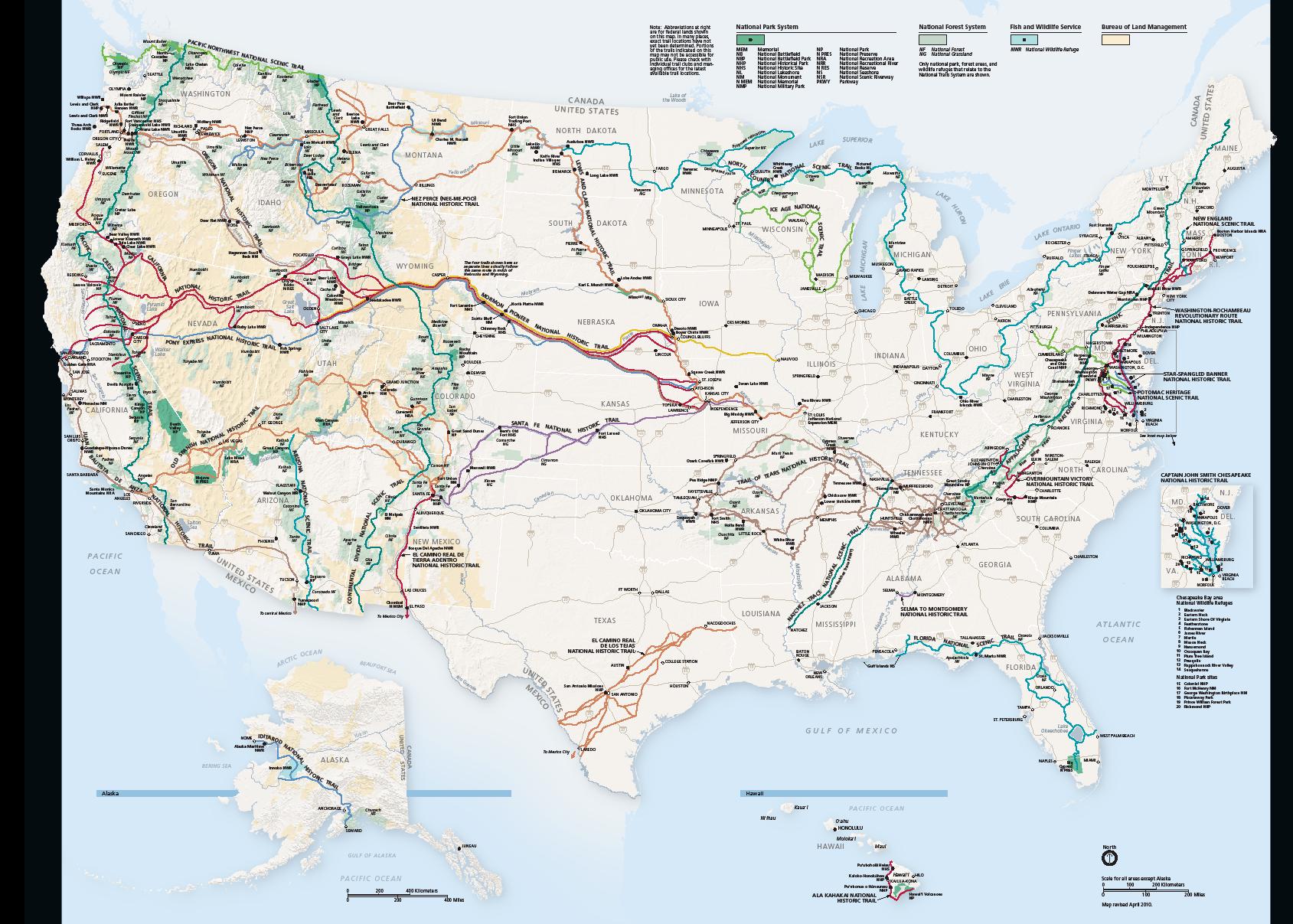
I would like to visit a friend in Louisiana, a very dear friend I have yet to meet. Could I walk to her house from deep in the Florida panhandle? There are roads, of course, mainly highways, but then I checked the national trails map, and oh, my. There is a Florida National Scenic Trail for hikers. (Click on the map, and then click again to zoom out if you’d like to see a higher resolution image.)  The Florida National Scenic Trail is not finished, but there are connecting spurs via rail-to-trail paths and other such footpaths from completed section to completed section. (Rail-to-trail is a system of abandoned railroad tracks and rail beds that have been converted to various trails.) And so my mind spins wonderful possibilities as well as even more wonderful impossibilities.

I have been thinking about some sort of trek for so long, some day I will have to attempt . . .  something. Even if I manage a single day and night, that would still be an adventure.

Meantime, I’m also considering the possibility of some sort of van conversion for an extended road trip. Should I buy something already outfitted like a mini camper? Should I get something inexpensive in case I end up hating the idea? (I’ve been researching renting such a camper van, and the cost for a year is more than the purchase price of a decent used model.) Or should I buy something that would also serve as a city vehicle, and just a throw a mattress in the back to start? Would I want to live in a van for any length of time? (That old Saturday Night Live sketch about living in a van down by the river comes to mind.) And if so, would I want to design and build my own interior as a couple of people have suggested?

I like the idea of living large in small spaces — there seem to be a growing trend to miniscule homes, 300 square feet or less. I considered such a house, even went so far as to check out the feasibility of building one myself, but to tow the finished product would require a stronger vehicle than I have or would want to have. Still, the idea of designing my own place based on my basic needs is an interesting concept. What do I need? A bed, of course. A computer and electricity to run it. Some sort of potty. Maybe cooking facilities, maybe not. Maybe a lovely and lovingly furnished interior, maybe not. Maybe a shower, maybe not. (Yeah, I know, “maybe” includes “maybe not” but I liked the alliteration and the emphasis.)

Some people who have chosen such a lifestyle have omitted bathing facilities from their tiny space, instead opting for a membership at a national health club where hot showers would be available. An interesting solution.

People caution me about planning too much. They keep telling me I have no idea what might happen, and that is true, so I am simply playing with these ideas. Maybe, contrary to my gut feeling, my father’s house won’t sell right away. Maybe someone will offer a suggestion that I fall in love with for my next step, something I didn’t imagine. Maybe . . . well, I did say I have no idea what might happen so it’s foolish to continue listing maybes.

But I will continue to wonder what it is I need from life, what it is I need for life.

***

Pat Bertram is the author of the suspense novels Light BringerMore Deaths Than OneA Spark of Heavenly Fireand Daughter Am IBertram is also the author of Grief: The Great Yearning, “an exquisite book, wrenching to read, and at the same time full of profound truths.” Connect with Pat on Google+. Like Pat on Facebook.

Looking For Life in all the Right Places

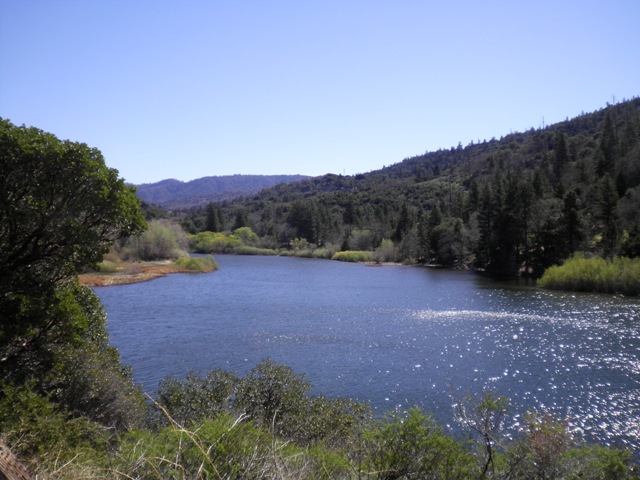
I went hiking yesterday, looking for life wherever I might find it,

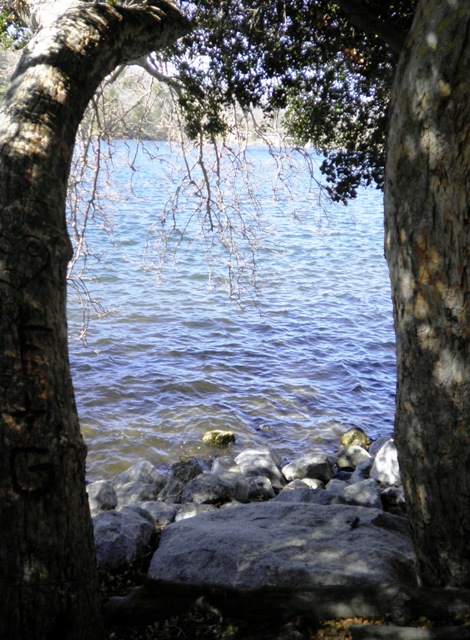
and ended up on the shores of a lake.

This lake is actually a man-made lake with a drowned settlement at the bottom. Ironically, the once living town of Cedar Springs had plenty of water with abundant rain, spring runoffs, and a year-round stream, so the residents (first ranchers, then homesteaders, and finally townspeople) never expected to have water problems. But when the state needed reservoirs to store water for its ever-growing population, this shallow canyon seemed a natural location. And so the town with plenty of water was killed by even more water.

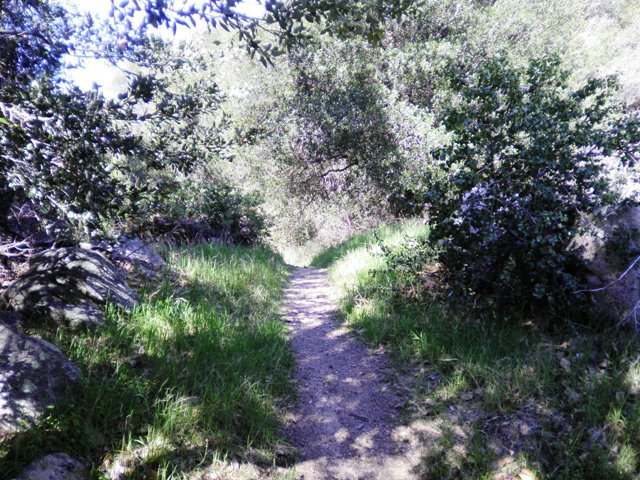
I didn’t think of that poor drowned town when I was hiking, of course. I just enjoyed the walk through the woods to the shores of the lake. It was a gorgeous day, and even the difficult footing, rivulets to cross on slippery rocks, and fallen tree trunks to clamber over didn’t dampen my pleasure at the stunning scenery.

***

Pat Bertram is the author of the suspense novels Light Bringer, More Deaths Than One, A Spark of Heavenly Fire, and Daughter Am I. Bertram is also the author of Grief: The Great Yearning, “an exquisite book, wrenching to read, and at the same time full of profound truths.” Follow Pat on Google+. Like Pat on Facebook.

Simulating the Future

Fiction is a type of simulator, much like a flight simulator, where we can experience life at one remove. Just like a flight simulator, the situations we encounter in fiction (particularly fiction that poses dilemmas) seem real, and they have real effects on our minds. Although this is recent research, I have known it since I first learned to read. I never read fiction just for entertainment. It was more real to me than that — like practice for life. I didn’t see myself as the main character, rather I read myself into the story, trying to figure out how I would act in a similar situation. Unlike many of the youth of my generation, I never had to use recreational drugs to understand what could happen. I knew secondhand through books the possible consequences. I also knew the consequences of teen-age pregnancy, drunk driving, and whatever other trouble kids my age could get into, and it made me cautious. Maybe too cautious. Still, I never got into a mess I couldn’t get myself out of.

As I grew older, potential problems became more serious, and again, books simulated various scenarios I was able to sidestep. I might have continued to be too cautious, but I never saddled myself with avoidable problems such as overwhelming debt. (I was going to change this cliché, but I got an image of debt as a saddle with a banker as the person sitting on the saddle riding me, and I thought it was an apt image, so the cliché stays.)

Popular books, easy books, happily-ever-after books, books without major moral dilemmas never did much for me. In fact, if I read too many of these “junk food” books, I’d get depressed. Oddly, all books now depress me the way these books once did, perhaps because the situations in books no longer act as a simulator. I know I will never be an unwed mother, a single mother, or a woman struggling to handle a family and a career. I know I will never solve a murder, either as an amateur or a professional. I know how it feels to love. I know how it feels to lose the one man who made life worth living, know how it feels to take care of an aged parent, know how it feels to be the subject of a brother’s rage.

But I still have a “flight simulator” — my imagination. Although imagination isn’t as good a simulator as fiction since we tend not to be able to project our true feelings into the future, a life time of reading and living has trained me at least in a small part to imagine how I would deal with certain situations.

Pacific Crest TrailI’ve been writing lately about my idea of hiking the Pacific Crest Trail. I have been hiking small sections of the trail (some of my typos crack me up — I just wrote “trial” instead of trail, and that is apropos at times of hiking the PCT — a real trial). These Saturday hikes give me a small taste of the dream. But more than that, talking/writing/thinking about walking up to Seattle expands my mind the way reading a good book used to.

If it sounds as if I am backtracking (instead of backpacking), the truth is that as much as the idea intrigues me, I really don’t think I could do it. It’s way too dangerous for someone who isn’t fit and has no camping experience. Besides, I cannot see me wielding an ice axe to keep from falling off a narrow icy trail, cannot see me coming face to face with a grizzly who wants to wrestle me for my scant food supply, cannot see me “out packing” bags of used toilet paper, carrying the stinky package for hundreds of miles until I came across a place where I could dispose of it. Nor am I interested in doing something that takes such massive planning — the preparation takes longer that the 2650-mile hike itself. I want to be spontaneous, just take off walking and keep on walking, and that is so not possible on the PCT. It’s also expensive — hikers typically spend $4000 to $8000 for the 5-6 month jaunt.

Still, I want an epic adventure someday, and I want it for real, not second hand from books — if not the PCT, then perhaps something that stems from this particular simulation. I’ll keep imagining, keep throwing myself into the future, and see what happens.

***

Pat Bertram is the author of the suspense novels Light Bringer, More Deaths Than One, A Spark of Heavenly Fire, and Daughter Am I. Bertram is also the author of Grief: The Great Yearning, “an exquisite book, wrenching to read, and at the same time full of profound truths.” Follow Pat on Google+. Like Pat on Facebook.

Hiking the Pacific Crest Trail

Sometimes I have to laugh at my pretensions. Yesterday I half-jokingly told my sister I was thinking of walking up to Seattle to visit her, a mere 2,500 miles along the Pacific Crest Trail. She, like almost everyone else to whom I have talked about my dream of hiking the PCT, mentioned Cheryl Strayed’s book.

I’d never heard of the book before the idea of hiking the PCT took hold of me and I started telling people about my dream, and I must admit, I was disappointed to discover how much of a bestseller Strayed’s book was. I’d planned to keep a journal of my adventure, posting it to my blog when I reached the major towns along the way (El Cajon, Idyllwild, Big Bear, Aqua Dulce, Tehachapi, Kennedy Meadows, Mammoth Lakes, South Lake Tahoe, Sierra City, Chester, Burney, Mount Shasta, Etna, Ashland and White Pass). And perhaps, someday publish it as a book. A bestselling book, of course.

But, as I told my sister, since Strayed’s book is already published, on bestseller lists, with a movie about to come out, my book would merely seem a “me too,” as if I were as if I were riding on her coattails.

And here is where I had to laugh at myself. What does her book and her success have to do with me? I have never written a single word about my journey because, of course, there is no journey. I haven’t walked a single step on my way to Seattle. I don’t know if I will ever walk a single step. (I have hiked approximately 14 1/2 miles of the trail, but I wasn’t going anywhere, just walking with a group of Saturday hikers.) Unlike Strayed, I am not a young woman. I don’t know if my body or any parts thereof would hold up to such a grueling feet. (I know that’s a misspelling, but I kept the typo because . . . how perfect!) Even if I were to hike to Seattle or at least a part of the way, I don’t know if the story of my travels would lend themselves to a book — you need more than just a recounting of adventures to be readable. You need heart, soul, uniqueness, growth.

Perhaps it would be a good idea for me to read Strayed’s book, but the truth is, I want my own epic adventure, not an echo of someone else’s. Still, I have been doing research for the journey. And what I’ve been reading has given me pause.

Some of the worst weather in the country can, and does, occur on the Pacific Crest Trail, so you always have to carry equipment for foul weather, even during the summer. You need an ice axe, and knowledge how to self-arrest to keep from sliding into oblivion. Waterways can be too swollen to cross. (My feet got soaked last weekend just from trying to cross a tiny rivulet, not much more than a puddle.) Long stretches of the trail have no water source at all — none — though it is recommended that hikers drink a gallon of this non-existent water a day. And even where water is plentiful, you need a water purifier that is effective against giardia and bacteria. You need wilderness permits. You need a bear canister to protect your food in bear territory. (Yep, long sections of the trail wind through bear country.) And you need food, lots of food — a through hiker, one who travels the whole trail or long sections of it, needs up to 5000 calories a day, and you have to be prepared since there are few places to replenish supplies — sometimes you have to hike more than 200 miles in the wilderness before crossing any sort of road.

Yikes. No wonder more people have scaled Mount Everest than have through-hiked the Pacific Crest Trail.

And yet, the idea still appeals to me. So what if I have to hole up in one of the few towns along the way until the snow melts? It shouldn’t be a problem for me since I wouldn’t even attempt such a thing as walking to Seattle until/unless I were completely free, and I’m not. I still have responsibilities.

But one day, when I have nothing else to do . . .

Perhaps.

***

Pat Bertram is the author of the suspense novels Light Bringer, More Deaths Than One, A Spark of Heavenly Fire, and Daughter Am I. Bertram is also the author of Grief: The Great Yearning, “an exquisite book, wrenching to read, and at the same time full of profound truths.” Follow Pat on Google+. Like Pat on Facebook.

The Logistics of a Life on Foot

Although I’ve been Dreaming of Life on Foot, hiking around the USA on the National Trails System, the logistics seem unmanageable. To hike just the Pacific Crest Trail would take a minimum of six months, assuming I could walk 10 to 20 miles a day through often-rugged terrain. And that assumption is very optimistic. I get exhausted just walking a mile or two up steep hills. Still, if walking were a way of life, I could walk a mile, rest a while, walk another mile since there would be no reason to hurry to finish the trail. Well, that’s not true. There is one reason — winter. People try to finish the trek in six months so they don’t have to deal with inclement weather — neither the heat of desert summer nor the harsh climes (and climbs) of mountain winter.

Like other through-hikers, I could probably send food ahead so that I wouldn’t have to cart a wagonload of provisions. I could probably map out the watering holes (and from what I have heard, some of these holes are little more than stagnant puddles). I could perhaps even get in shape for such a trip (though the trip itself would get me in shape). But so many other problems seem insurmountable. For example, what would I do with my car? Do I park it at the trailhead and hope it is still there (and the battery still charged) when I return? And if so, how do I return to the car? Would it be better to put the vehicle in storage, and hope I can find a ride to the trailhead? Or do I sell it, and use rental cars in between jaunts? (Since I don’t have a charge card, renting cars isn’t really an option.)

And what about connectivity? I suppose I could just take off and forget about computers and phones and such, but this blog is important to me. I could write my blogs on the trail, and then post them when I got back to civilization, but that could be many weeks, or even months. I could get a solar charger, which would probably be necessary since a working phone would be nice to have in an emergency, but I have a hunch most of the trail(s) would be off the grid anyway.

And what about mosquitoes? Mosquitoes love to feast on me, but my body hates them. I get sick from even a single sting. And I’m allergic to mosquito repellent, even — especially — citronella oil. Until my current (temporary) relocation to the desert, I have always had to be careful to be inside by dusk. It’s only because this seems to be a mosquito-free area that I’ve been able to go walking at night with the Sierra Club. So the idea of camping out in bug season is a bit ludicrous. Can’t you just see me, trying to hike, swathed in yards and yards of mosquito netting?

And what about my eyeglasses? Do I need to have extra pairs with me or stashed in my sent-ahead supply boxes? The same with shoes. Do I break in two or three pairs of shoes, and have those packed in the supply boxes, too? I am not on any medication, but I do take supplements to keep me healthy. Do I forgo those and hope I don’t get colds or allergies or pains that don’t go away?

I thought my original idea of living on the road — perhaps sampling the trails or visiting all the national parks and in between staying at motels or extended stay hotels — was complicated, but that plan seems simple in comparison to a life on foot. I would be out in the wilds for just a few days at a time, I would be not too far from my car (which would provide emergency shelter or an emergency getaway), and I would be able to access my blog and recharge my phone every few days. I could even pass out gifts with information about my books to everyone I see. That was the original purpose of an extended trip — to promote my books — but the idea seems to metamorphose the more I think about it.

And there is a lot to think about. Of course, since my current responsibilities might not end for several years (I am looking after my 97-year-old father, and there is a good chance he could live to be 100), I have plenty of time to wonder, and dream, and prepare for whatever the future might have in store for me.

***

Pat Bertram is the author of the suspense novels Light Bringer, More Deaths Than One, A Spark of Heavenly Fire, and Daughter Am I. Bertram is also the author of Grief: The Great Yearning, “an exquisite book, wrenching to read, and at the same time full of profound truths.” Follow Pat on Google+. Like Pat on Facebook.

On the Trail Again

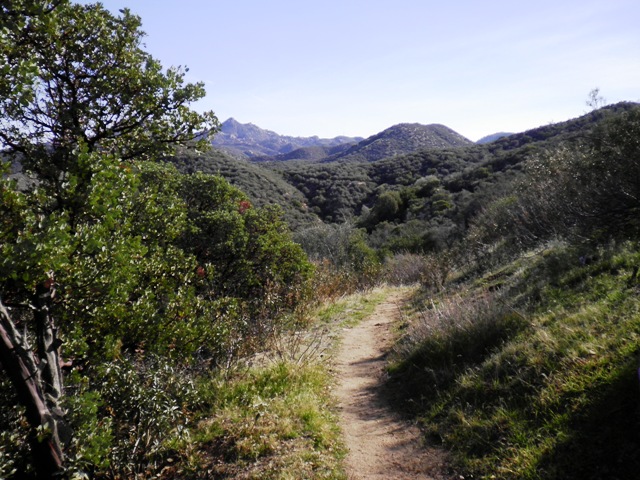
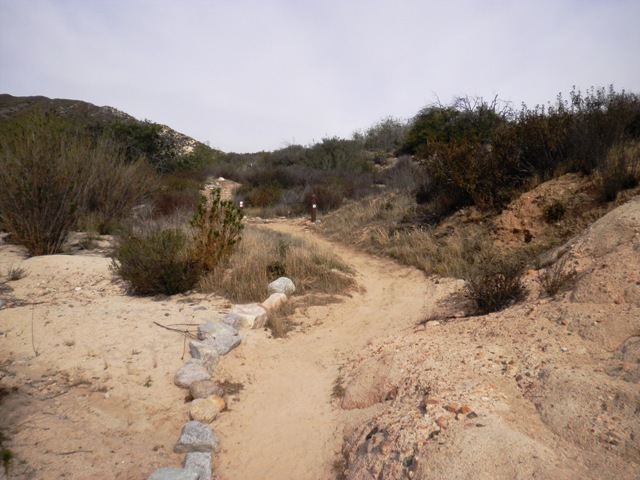
A couple of weeks ago was the first time I hiked a bit of the Pacific Crest Trail (five miles round trip), and it was an incredible experience. The trail was well maintained, no huge climbs up or down, even footing, gorgeous views.

This past weekend I hiked another bit of the trail (just a little over four miles this time), and it was a completely different experience.

Instead of parking by a lake and heading immediately into the mountains, we parked by a heavily trafficked six-lane highway, then took a spooky trip through a long, damp water drainage tunnel under the highway.

We hiked past an abandoned house, through a culvert under the railroad tracks while a freight train went by overheard,

culvert

across a small wooden bridge,

and then we finally got to a part of the trail that was easy to traverse.

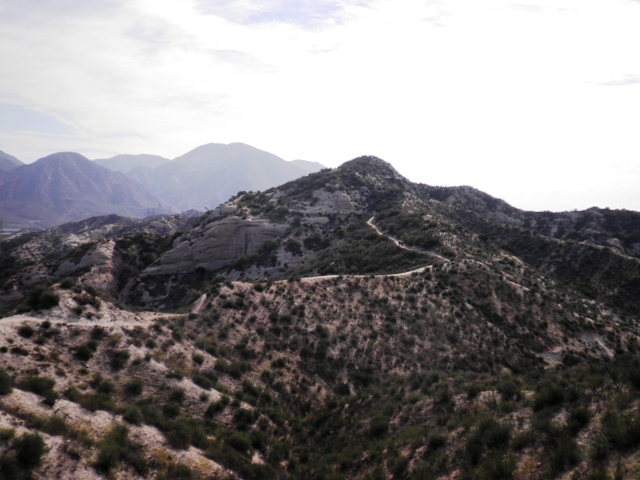
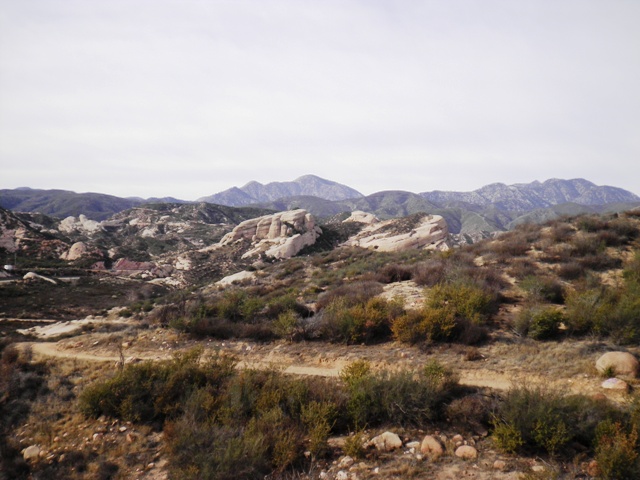
After that flat part of the trail, it climbed steeply into the rocks,

but it was all worth while because of the stunning views.

***

Pat Bertram is the author of the suspense novels Light Bringer, More Deaths Than One, A Spark of Heavenly Fire, and Daughter Am I. Bertram is also the author of Grief: The Great Yearning, “an exquisite book, wrenching to read, and at the same time full of profound truths.” Follow Pat on Google+. Like Pat on Facebook.

Look What I Caught!

Three days ago, I turned off the computer and went fishing for life. It was a lovely day, sunny and warm with just a hint of coolness in the air. I accompanied a group of hikers on a trek along the fabled Pacific Crest Trail. Since the PCT (as it is affectionately called) stretches from Mexico to Canada, it’s impossible to traverse the whole of the trail in just a few hours, but we hiked a three-mile portion of it. (Three miles out and three miles back for a total of six miles.) The trail is narrow, but well maintained, which makes hiking it easy. Well, the level areas are easy. I hear that parts of the trail rise steeply for miles. Whew! That would be a hike indeed.

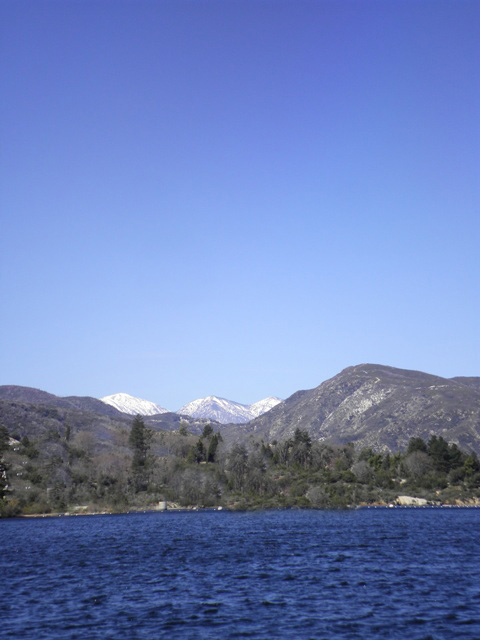
We started at this lake (a dam, actually)

And headed up into the hills.

I’m glad I didn’t spent this gorgeous day inside and online.

***

Pat Bertram is the author of the suspense novels Light Bringer, More Deaths Than One, A Spark of Heavenly Fire, and Daughter Am I. Bertram is also the author of Grief: The Great Yearning, “an exquisite book, wrenching to read, and at the same time full of profound truths.” Follow Pat on Google+. Like Pat on Facebook.

Fishing for Life: Another Hill to Climb

I’m still making an effort to fish for life, and that “fishing” so far has centered mostly around climbing hills. Today was no exception.

High on a hill over looking town are the ruins of a once magnificent house.

The house is on fenced private property, so a couple of days ago I tried to climb up the unfenced side of the hill. Being more of a hiker than a rockclimber, I didn’t quite make it. (Visions not of sugar plums but broken limbs danced in my head.)

Determined not to give up, today I found a break in the fence, and quite daringly climbed up the steep old driveway, but it turns out half the town uses that old road as a hiking trail, so all that derring-do went to waste.

Unfortunately, the ruins, while still fascinating, weren’t quite as attractive close up. Graffiti? Why? Doesn’t anyone have a sense of awe anymore? Is it necessary to desecrate everything? Apparently so.

Still, the house was fascinating, and the views magnificent. The hills in the background are my “backyard” where I go walking every day.

***

Pat Bertram is the author of the suspense novels Light Bringer, More Deaths Than One, A Spark of Heavenly Fire, and Daughter Am I. Bertram is also the author of Grief: The Great Yearning, “an exquisite book, wrenching to read, and at the same time full of profound truths.” Follow Pat on Google+. Like Pat on Facebook.