My Favorite of the Books I Have Written

A friend asked me if I had a favorite of the books I have written. The truth is, each is a favorite in it’s own way.

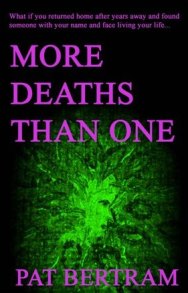
More Deaths Than OneMore Deaths Than One is my favorite because of all the rewrites. I rewrote it four different times, each time making it better, and so I learned to rewrite and to edit. I also liked the ironies that showed up in the book.

Click here to read the first chapter: More Deaths Than One

***

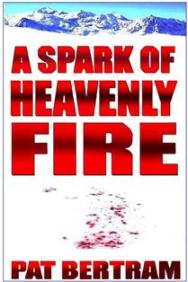
A Spark of Heavenly FireA Spark of Heavenly Fire is my favorite, because halfway through I realized I’d learned how to write, and because it is a solid, classic story of life and love in impossible times.

Click here to read the first chapter of: A Spark of Heavenly Fire

***

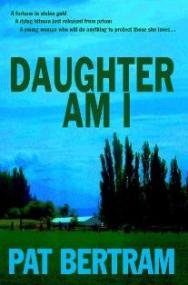
DAIDaughter Am I is my favorite because of the fun we (my mate and I) had coming up with the great characters, and because it was the fulfillment of a desire to write a “hero’s journey” story.

Click here to read the first chapter of: Daughter Am I

***

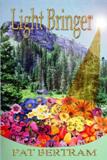
Light Bringer is my favorite because it’s the culmination of a lifetime of research, combining modern and ancient myths into a plausible whole, and because some of the descriptions were stunningly beautiful.

Click here to read the first chapter of: Light Bringer

***

Grief: The Great Yearning is my favorite because writing it helped me get through the worst year of my life, and because unwittingly, it turned out to be the story I always wanted to write, the story of a love that transcended time and physical bonds, told with wisdom and sensitivity.

***

Pat Bertram is the author of the suspense novels Light Bringer, More Deaths Than One, A Spark of Heavenly Fire, and Daughter Am I. Bertram is also the author of Grief: The Great Yearning, “an exquisite book, wrenching to read, and at the same time full of profound truths.” Connect with Pat on Google+

Excerpt from LIGHT BRINGER by Pat Bertram

Description of Light Bringer:

Becka Johnson had been abandoned on the doorstep of a remote cabin in Chalcedony, Colorado when she was a baby. Now, thirty-seven years later, she has returned to Chalcedony to discover her identity, but she only finds more questions. Who has been looking for her all those years? Why are those same people interested in fellow newcomer Philip Hansen? Who is Philip, and why does her body sing in harmony with his? And what do either of them have to do with a shadow corporation that once operated a secret underground installation in the area?

Excerpt from Light Bringer:

Where am I? A new foster home?

Philip supported his throbbing head in his hands and wondered if he’d live to adulthood.

Tamping down the pang of self-pity, he raised his head, and everything came clear. Or almost everything.

He knew who he was: the thirty-eight-year-old Philip, dressed in yesterday’s clothes. He knew where he was: the foldout bed in Emery Hill’s den. But he didn’t know how he got there. He remembered being in the car with the creature, flinging himself against the door—no wonder he felt so bruised—and the icy touch on his neck. Had it brought him back here?

He stood, rocking until he caught his balance, then staggered off in search of the coffee he could smell brewing.

When he entered the kitchen, Emery started and dropped the mug he had been removing from a cabinet. It came to rest at Philip’s feet. Wincing, Philip bent to pick it up.

“Jeeminy Christmas!” Emery exclaimed. “You about scared the intellect out of me. What are you doing here? I thought you went back to Denver. See what you’ve done? I’m already turning into a blithering idiot.”

Philip laughed, then cut it off and clutched his head.

“What’s wrong? Hangover?”

“Feels like it, but I haven’t been drinking.” Getting a mug for himself and pouring a cup of coffee, he wondered if he’d been drugged. He took a sip of the brew, which seemed strong enough to soften a stone, and barely refrained from spitting it out. “Tomorrow I make the coffee.”

“Fine,” Emery said absently, regarding Philip with narrowed eyes. “I always know when one of my students is in trouble. It’s time you told me what’s going on.”

“I was never one of your students.”

Emery waved away the remark. “Between the two of us we should be able to solve your predicament.”

“I’m not sure there is a solution. Right before I came here, two NSA agents came to my apartment.”

Emery shook his head as if to clear it. “I must have misunderstood. I thought I heard you say NSA agents.”

***

Where to buy Light Bringer:

Second Wind Publishing

Amazon

Barnes & Noble Nook

iStore (on iTunes)

Palm Doc (PDB) (for Palm reading devices)

Epub (Apple iPad/iBooks, Nook, Sony Reader, Kobo)

Sample Sunday

If you’ve been wanting to check out my books, now is your chance to read the first chapter of each novel online.

More Deaths Than OneBob Stark returns to Denver after 18 years in SE Asia to discover that the mother he buried before he left is dead again. At her new funeral, he sees . . . himself. Is his other self a hoaxer, or is something more sinister going on?

Click here to read the first chapter: More Deaths Than One

***

A Spark of Heavenly FireIn quarantined Colorado, where hundreds of thousands of people are dying from an unstoppable, bio-engineered disease, investigative reporter Greg Pullman risks everything to discover the truth: Who unleashed the deadly organism? And why?

Click here to read the first chapter of: A Spark of Heavenly Fire

***

DAIWhen twenty-five-year-old Mary Stuart learns she inherited a farm from her recently murdered grandparents — grandparents her father claimed had died before she was born — she becomes obsessed with finding out who they were and why someone wanted them dead.

Click here to read the first chapter of: Daughter Am I

***

Thirty-seven years after being abandoned on the doorstep of a remote cabin in Colorado, Becka Johnson  returns to try to discover her identity, but she only finds more questions. Who has been looking for her all those years? And why are those same people interested in fellow newcomer Philip Hansen?

Click here to read the first chapter of: Light Bringer

***

Pat Bertram is the author of Light Bringer, More Deaths Than One, A Spark of Heavenly Fire, and Daughter Am I.All Bertram’s books are available both in print and in ebook format. You can get them online at Second Wind Publishing, Amazon, B&N and Smashwords.  At Smashwords, the books are available in all ebook formats including palm reading devices, and you can download the first 20-30% free!

How does your environment/upbringing color your writing?

Because I’ve always lived in the shadow of mountains, mountains always shadow my writing. This is especially true in Light Bringer. The story begins when a baby is found on the doorstep of a remote cabin in the shadows of the Rocky Mountains, and continues years later when the foundling, now an adult, returns to the high country to find out who she is. The mountains in my novel are both protective and secretive — the hills protect those who live in their shadow, yet the mountains also harbor terrible and awesome secrets that threaten those same people.

Whenever I needed a hiding place for the secrets of the ages in Light Bringer, I searched maps for isolated mountain ranges, and ended up with a library beneath the Ahaggar Mountains in Algeria, ancient artifacts beneath the Beishanmai Mountains in the Gobi Desert, and experimental spacecraft beneath the McDonnell Ranges in Australia. I’d heard about  the mountains in Australia where the experiments were being done, and in my research I’d come across hints of what lay beneath the Ahaggar Mountains, but the Gobi location was strictly a guess, though later I discovered that in fact, caves deep inside the Beishanmai Mountains were repositories for ancient treasures.

Maybe the mountains themselves were helping with the book.

Here are some responses from other authors about how their environment colors their writing. The comments are taken from interviews posted at Pat Bertram Introduces . . .

From an interview with: J. P. Lane, Author of “The Tangled Web”

I’ve traveled from an early age and I’ve lived in several countries, so maybe that’s the reason The Tangled Web trots around the world a bit. I chose Prague as one of the locations, because I’d been to Prague the year before I started writing it and the memories were still fresh. The familiarity with the Hispanic characters comes from having lived in Miami for twenty years and having had a lot of Hispanic friends and work associates. I also lived in Puerto Rico at one point. And there’s the Jamaican dialect in the book. Only someone who’s lived in Jamaica for some length of time could write that.

From an interview with: Dale Cozort, Author of “Exchange”

I grew up in a fair-sized city, but I spent a lot of time with relatives in the country, so I probably write rural life a little more authentically than someone without that experience. I also have a computer background, so there is always a little bit of the techie in my stories. I have to dial that back so it doesn’t get in the way of the story.

From an interview with: Sherrie Hansen Decker, Author of “Love Notes”

Love Notes is my first Christian inspirational novel and certainly reflects some of my deepest beliefs about my Christian heritage. In other of my books, the main characters have been rebelling against the very faith Hope clings to in Love Notes. So yes, my Christian beliefs definitely color my writing, whether in shades of guilt or hope. In Love Notes, I love it that Hope’s strong faith is intact even though she’s lost everything dear to her, including her husband, who died in a tragic car accident. Tommy has everything a man could want, yet he is cynical and discontented and very short on faith. In the end, Tommy finds hope, joy, peace and love where he least expects it — as have I on several occasions!

What about you? How does your environment/upbringing color your writing?

(If you’d like me to interview you, please check out my author questionnaire http://patbertram.wordpress.com/author-questionnaire/ and follow the instruction.)

Have you ever had difficulty killing off a favorite character in your story?

No. For me, story is sovereign. Everything must serve the story, and if the death of a favorite character will serve the story, then that’s the way it has to be. To be honest, though, I haven’t yet killed off a favorite character. The ones I have killed were created to be killed, and I took great glee in doing so. Mostly, I’m not one for being selective in my killings. In A Spark of Heavenly Fire, I decimate Colorado. (I am using the word in its proper context here — I kill off a tenth of the population.) In Light Bringer, I hint at the destruction of vast numbers of people, and in my current work (that isn’t progressing very rapidly) I do, in fact, kill off almost the entire population of the world. After all that carnage, what’s one more character killed off, favorite or not?

Here are some responses from others authors about difficulty of killing off a favorite character. The comments are taken from interviews posted at Pat Bertram Introduces . . .

From an interview with Dellani Oakes, Author of Lone Wolf

I greatly dislike killing a character and avoid it if I can. However, there are times when a character must die to advance the plot. The one who upset me the most was a guy named Murdock Pickford. He’s in a prequel to my sci-fi series. Murdock is a nice guy. He’s kind, capable, loving and forgiving. He’s engaged to a woman who’s pregnant with another man’s baby & he agrees to raise her as his own. He’s thrilled about the baby, excited about getting married—and he has to die, horribly, brutally, for the book to move forward. I’m not ashamed to admit that I cried when I had to kill him off.

From an interview with Jocelyn Modo, Author of “Revolution Lovers”

In Revolution Lovers something truly horrible happens to Adie…I’ve avoided that scene since I wrote it. I can’t look at what I did to her, don’t want to face what I did to my beloved character. I feel silly saying it, but I feel guilty about hurting her.

From an interview with Rod Marsden, Author of “Disco Evil” and “Ghost Dance”

When you deal with the supernatural killing off a characters doesn’t mean they won’t return. I have had characters return a number of times after death to either help or hinder the living.

From an interview with Christine Lindsay, Author of “Shadowed in Silk”

I have to laugh at this as it may sound horribly brutal. But I have no problem killing my characters off at all.  In all of my books I kill off at least one secondary character, sometimes more as is the case of Shadowed in Silk.

I love having my strongest Christians die. I often cry as I write the scenes where they are ready to meet their Lord. And sometimes bad characters have to die too. I try hard not to think of their eternal situation, and remind myself that they are fictional characters — not flesh and blood — and I am not God.

What about you? Have you ever had difficulty killing off a favorite character in your story?

(If you’d like me to interview you, please check out my author questionnaire http://patbertram.wordpress.com/author-questionnaire/ and follow the instruction.)

Sundries

Sundries are articles too numerous to be listed separately, and though I am going to list each sundry individually,  none of them need a separate blog post.

First — “sundry” is an adjective meaning “various,” so the way I used it here is wrong though it feels right and fits with “sundries,” which I did use correctly, so I’m leaving “sundry” here. If you want to fight about it, it’s only fair to warn you that my adjectives are stronger than yours. (Sorry, couldn’t resist the silliness, though perhaps I should have.)

Second — I am being interviewed on Susan Whitfield’s blog today, so be sure to stop by to learn more about me. (Though you probably know everything about me since you’ve been reading this blog for a long time, right?) Cick here for: Pat Bertram’s Light Bringer on Susan Witfield’s blog

Third — I am collaborating with six other authors to write a mystery online. Residents of Rubicon Ranch are finding body parts scattered all over the desert. Who was the victim and why did someone want him so very dead? Everyone in this upscale housing development is hiding something. Everyone has an agenda. Everyone’s life will be different after they have encountered the Rubicon. Rubicon Ranch, that is. We don’t know the ending, and will not know until the story is written. So stop by and see the story as it is developing. Welcome to “Rubicon Ranch: Necropieces”

Fourth — I have a fan page on Facebook. Don’t quite know what it’s good for, but if you feel like liking the page, you are welcome do so. Pat Bertram’s Fan Page on Facebook.

Fifth — I have been blogging every day since September 25, 2011, so this is my 278th straight blog post. I originally planned to blog daily for 100 days in a row, but somehow just kept up the habit. Do you think I can keep it up for another 87 days without running out of topics?

Sixth: You can get the latest Second Wind anthology, Change is in the Wind for only $.99 cents on Smashwords. Use the coupon code FC75E when purchasing.

I think that’s a long enough list to be considered sundries. Oh, just one more point — thank you to everyone who has supported this blog and me, especially during the past couple of years. You helped me get through some hard times.

Great Reviews for Light Bringer

I got a great review for Light Bringer yesterday from S.M Senden. “Pat Bertram has woven a wonderful story that weaves together imagination with history, science fiction, love, power and so much more, and it works so well. If you are looking for a good story, well written, then read this book. I hope you will love it as much as I did!”

I am thrilled when readers love any of my books, but especially Light Bringer.

First, it is very difficult to classify, even for reviewers. As Aaron Lazar wrote, “Light Bringer is something completely new and surprising . . . surprising in its freshness, originality, its genre bending brilliance. Part thriller, part fantasy, part sci fi, part mystery . . . its plots were large and complex, encompassing themes that plague us every day; offering social and world commentary blended with weather trend observations (where ARE all those tornadoes and tsunamis coming from??) I do believe Bertram has defined a new genre, and it is a pure delight. Fresh. Original. Riveting. The characters are real and engaging.”

Second, it is the result of twenty years of research into conspiracy theories and myth. Many researchers have traced the drive toward a one-world government conspiracy back 7000 years. Others believe that the black death was a man-made epidemic, created in an effort to “dumb down” the inhabitants of Earth. (William Bramley, author of Gods of Eden, wrote: “Strange men in black, demons, and other terrifying figures were observed in other European communities carrying ‘brooms’ or ‘scythes’ or ‘swords’ that were used to sweep or knock at people’s doors. The inhabitants of these houses fell ill with plague afterwards. It is from these reports that people created the popular image of death as a skeleton, a demon, a man in a black robe carrying a scythe.” This is the origin of the grim reaper) In fact, myths all over the world speak of the gods giving and the gods taking away. According to the Popul Vuh, the gods created the first humans exactly like the gods themselves. Displeased that the simple creatures of their making were also gods, the creators took some of the god-like abilities away from them, and we are the result. And from all that research came the idea for Light Bringer.

Third, the lyricism of the book seems to bring out a corresponding lyricism in reviewers. Sheila Deeth called Light Bringer “mysteriously beautiful and musical,” and then added, “Pat Bertram’s novel soars in her descriptions of mystery and scenery. The song of the rainbow flows through the characters, binding them together, while the silence of the great unknown drives them and pulls them apart.” Tracy Fabre wrote, “This novel is color and sound and more color, described as it’s never been described before. Part sci-fi, part small town life, part intrigue, part romance, part rainbow explosion, this is a tale of two people who are not like other people yet end up in a little out-of-the-way community where a lot of strange things have happened and continue to happen. It’s a multi-layered story she should be very proud of, and incidentally will make you crave muffins. Consider yourself warned.”

***

Light Bringer: Becka Johnson had been abandoned on the doorstep of a remote cabin in Chalcedony, Colorado when she was a baby. Now, thirty-seven years later, she has returned to Chalcedony to discover her identity, but she only finds more questions. Who has been looking for her all those years? Why are those same people interested in fellow newcomer Philip Hansen? Who is Philip, and why does her body sing in harmony with his? And what do either of them have to do with a shadow corporation that once operated a secret underground installation in the area?

Click here to read the first chapter of Light Bringer by Pat Bertram

Click here to buy Light Bringer from Second Wind Publishing, LLC

Click here to download 20% free at Smashwords or to buy any ebook format, including Kindle.

(Also available from Amazon and B&N)

How long had the idea of your book been developing before you began to write the story?

Light Bringer, my most recent release from Second Wind Publishing, stewed in my brain pan for several years before I actually started to write it. It was the first book I conceived, but I couldn’t figure out who my alien characters were, where they were from, how they traveled here, and why they came, so when other stories captured my imagination, I followed my enthusiasm. In between finishing my various novels, I worked on Light Bringer, trying to develop the idea and research the specifics. If you include my research, which I’d been doing for decades before the story ever entered my mind, you could say the idea for the book had been developing for about thirty years.

Here are some other authors’ responses to the question of how long the idea had been developing before beginning to write their stories. The comments are taken from interviews posted at Pat Bertram Introduces . . .

From an interview with Jerold Last, Author of “The Ambivalent Corpse”

It took a while for me to find the time to sit down and start writing the book. In this case “a while” spanned 12 years. The major challenges for me are finding the time to write and the discipline to edit the dialogue and descriptive passages over and over until things feel right and pass my wife’s critical evaluation. I haven’t needed to spend much time on research as yet, since I’ve lived in the locations that the books have been set in.

From an interview with Guy Harrison, author of “Agents of Change”

For over a year, if you can believe it. I originally wrote Agents of Change as a television pilot script around this time last year. As an aspiring screenwriter for many years, I finally got tired of banging my head against the wall as I attempted to sell the script.

This past October, I finally asked myself “what if I wrote a novel?” I really believed in the television pilot’s concept but knew I needed to rework it for the purposes of a book. It’s darker than the television series would have been. Truth be told, I actually like it a lot better as a novel.

From an interview with Dale Cozort, Author of “Exchange”

For this particular book, almost twenty years. I know that because I came across a notebook with dated entries from when I was in my late teens outlining some of the ideas. That’s unusual for me. Most of my stories go from concept to writing within a year or two. I had the idea for Exchange long before I had the maturity or self-discipline to write it.

From an interview with Stephen Prosapio, Author of “Ghosts of Rosewood Asylum”

Funny in that this story had to “brew” quite a while, Pat. I thought up the rough idea for GHOSTS OF ROSEWOOD ASYLUM after my first novel DREAM WAR didn’t sell to the Big Six publishers. I didn’t quite pitch it right to my agent though, and she suggested I go with another idea I had at the time (a vampire novel). Unfortunately, I got blocked with that idea and came back to the TV Paranormal Investigator angle. Pitching it a second time to my agent went much better. She gave me some great advice. Thus, GHOSTS OF ROSEWOOD ASYLUM (GoRA) was the easiest novel to write thus far. I wrote the first draft within 3 months.

From an interview with Ellis Vidler, Author of “Cold Comfort”

Cold Comfort took about a year to write and five more to revise till I felt it was right. The first one, Haunting Refrain, took eight years to complete. I’m getting better.

From an interview with Joylene Nowell Butler, Author of “Broken but not Dead”

Too long. Someone asked me the other day about my mother and it occurred to me then that the day she died I’d written the first four pages of “Broken but not Dead”. I gave them to her to read, then retired for the night. When I got up the next morning the pages were on the dining room table with spelling corrections and a note that said she liked it very much. I didn’t realize then that she’d passed. That was October 16, 1999. It takes me a long time to write, and I don’t think it’s because I’m slow. I work on so many different projects at the same time and I like to take breaks and distance myself often.

So, How long had the idea of your book been developing before you began to write the story?

(If you’d like me to interview you, please check out my author questionnaire http://patbertram.wordpress.com/author-questionnaire/ and follow the instruction.)

Celebrating Twenty Weeks of Daily Blogging

On September 25, 2011, I made a vow to blog for 100 days straight without fail. I wanted to get back into the discipline of daily writing, but didn’t want to make a major commitment such as writing a novel. I figured daily blog posts would satisfy the discipline and also satisfy the part in me that needs the reinforcement of completing a project. I passed the 100 day mark without even noticing, and now I’ve been posting a blog every day for twenty weeks — 140 posts.  Surprisingly, very few are frivolous, posted just for the sake of posting something. So today, let’s forget the seriousness of my usual posts. Let’s forget that this is Saturday, my sadder day. Let’s forget that my publisher, Second Wind Publishing, has moved to a new website and I have thousands of now-dead links to update. Let’s forget all of that, and just play.

And if that isn’t any fun, here’s a jigsaw puzzle (I get such a kick out of these!)

Want more fun?

Click here to read the first chapter of: Light Bringer

Click here to read the back cover copy and an excerpt: Light Bringer

Click here to check out (and buy at $2.00 off!) Light Bringer at Second Wind Publishing’s new site: Light Bringer

Balm to a Writer’s Bruised Psyche

Not only do I not understand this new publish-anything world, I don’t understand this everyone-is-a-reviewer world.

It used to be that professional reviewers (I am including reviewers employed by newspapers and magazines in this category) pretty much decided what were considered worthwhile books, and readers either paid attention to those recommendations and bought the books or ignored the recommendations and bought whatever they felt like. Today, anyone is a reviewer, whether s/he is qualified or not. All it takes is an opinion. The thing is, readers who see those reviews don’t take them as an opinion. They give them the same credence they gave the professional reviewers.

To be honest, I don’t know if it’s better to have a certain literary elite passing judgment on the books or if it’s better to have casual readers doing it. Either way, people are “grading” books based on nothing more than a whim. And those whims can destroy a writer’s career, or at least keep people from buying her books.

Light Bringer is my magnum opus, the result of twenty years of research into myths, both ancient and modern. I created an entirely new worldview based on these myths, one that could very well be true if the Sumerian cosmology and today’s conspiracy theories are true. According to the editors and agents who rejected the manuscript, it was unsellable. It had too many science fiction elements to be commercial and not enough science fiction elements to be science fiction. Because of this, I purposely did not send Light Bringer out for review. People generally hate books they can not categorize, and at best, Light Bringer has a narrow niche. Still, a few readers have given the book glowing reviews, so when a reviewer contacted me recently asking for a copy of the book to review, I sent it to her.

I don’t know why she wanted to review Light Bringer.  As it turns out, she’s a romance reviewer, and Light Bringer is not a romance and was never promoted as such. Even worse, she hadn’t a clue what the book was about. To be fair, she is used to paranormal romances she can quickly skim through, but I don’t want to be fair to her since she wasn’t fair to me. She wrote a terrible review and posted it on the review site. Why? What’s the point of posting a terrible review of a book you don’t understand? It’s not as if I asked her to review the book. She asked me. Adding to the insult, the review doesn’t even make sense. If it didn’t have the name of my book on it, I would never have recognized it as my story.

On the other hand, some people do understand Light Bringer and they honor the book with their poetic descriptions.

Sheila Deeth wrote:

Pat Bertram’s novel soars in her descriptions of mystery and scenery. The song of the rainbow flows through the characters, binding them together, while the silence of the great unknown drives them and pulls them apart.

The unknown, when finally revealed, is satisfyingly strange, though, unlike many of the characters, I maintain a healthy respect for the integrity of scientists and science. Romantic subplots are simultaneously lyrical and down-to-earth; dialog is natural and sometimes laugh-out-loud fun; secrets of history and astronomy are intriguing; and the whole is a fascinating read — a touch of old-fashioned sci-fi, blended with modern magic and corporate greed, shaken, stirred and conspired against, then woven into beautiful words.

Aaron Paul Lazar wrote:

I’m already a fan of Pat Bertram’s books. I’ve read them all and loved them deeply. But LIGHT BRINGER was something completely new and surprising… surprising in its freshness, originality, its genre bending brilliance. Part thriller, part fantasy, part sci fi, part mystery…its plots were large and complex, encompassing themes that plague us every day; offering social and world commentary blended with weather trend observations (where ARE all those tornadoes and tsunamis coming from??) I do believe Bertram has defined a new genre, and it is a pure delight. Fresh. Original. Riveting. The characters are real and engaging. I particularly enjoyed the bit of romance between Luke and Jane — yes, another subplot. I couldn’t put it down and extend my highest compliments to Ms. Bertram for her supremely smooth writing — there are no hiccups in this book. Very highly recommended.

Ah, balm to a writer’s bruised psyche.