Memory, Sorrow, and Thorn

Prester John or Presbyter John was a supposed mythical figure, a priest of an Eastern Christian church and ruler of a famed kingdom of untold wealth, that people of the Middle Ages hoped would help quell the rise and encroachment of the Islamic world into Christian countries. Although some people believe he was a real historical character, Prester John’s origins have been traced to 1145 and a letter that was said to have been written by him and later shown to be a forgery. (Though that supposed forgery, in itself, could be a myth.)

Although I’d been aware of Prester John’s story for decades, I’d never thought about it until I started reading the Memory, Sorrow, and Thorn series by Tad Williams, but seeing the name rang an internal bell. The first book of the series begins in the kingdom of the realm King John Presbyter, and although the book is not about the mythical king, apparently Tad Williams borrowed the name for his own fictional king. I shrugged off the coincidence until later in the series when the young hero ends up in the house of a sort-of wise witch. She helps the young hero escape the bad guys, and while on the run, he stumbles on the stilt holding up her house and is shocked to see that it resembled a chicken foot.

Just like with King Presbyter John, the hut on chicken legs rang a bell — Baba Yaga, of course, a witch/wise woman in Slavic folklore. Then I realized that this series, like the Wheel of Time, took its inspiration from various myths and legends.

There are many other folkloric creatures in the series that I’ve noticed, such as the Kilpa, water spirits that lure sailors to their death, based on Scottish legends of the Kelpie. Sithis, the sort of good fairies based on the Irish Sidhe, and the Norns, the human-hating fairies based on Norwegian Norns. Certain episodes in the tale are based on historic battles and famous people, such as the War of the Roses and King Alfred the Great of England and three burnt cakes. And the religion of the story people seems to be based on the Osiris myth.

Although I spent years digging through all the references in The Wheel of Time series, not just the legends and myths, but world religions and philosophies, historical references and costumes, I’m not sure I want to do the same with Tad Williams’ series. But still, as I pointed out, many references echo in my head, so I might end up decoding his influences by default.

Two things stand out for me. One: that both these series —The Wheel of Time and Memory, Sorrow, and Thorn — that are based so much on real world mythologies and histories began to be written about the same time. Though Tad Williams’ books were published first, there’s no doubt that Robert Jordan developed his ideas separately. It seems perhaps as if ideas are floating in the ether, and they belong to whatever writers happens to catch them. And two: that not only was The Game of Thrones inspired by Memory, Sorrow, and Thorn, much of it seems to be a rip off, but who knows. Although The Game of Thrones came out much later, it’s possible Martin himself grabbed the similarities from the ether.

It does seem as if the fantasy genre that interests me is mythic based, which makes sense that so few fantasy novels appeal to me — too many are based on totally fake history and mythology and worlds that I cannot connect to.

***

Pat Bertram is the author of Grief: The Inside Story – A Guide to Surviving the Loss of a Loved One
Authors and Their Publishers

I’ve collected four epic fantasy book series, and the behind-the-scenes revelations of the authors’ dealings with their publishers are stories in themselves. In the first book series I read, The Wheel of Time series by Robert Jordan, the author was apparently allowed to do whatever he wanted, go way off into the hinterlands of his story, and turn the original six-novel series into a massive and overblown fourteen books. His digressions cost him readership (though not money, which is why his wife-editor and his publisher let him do what he wanted), and those digressions, what fans call “The Slog” are what made them prefer the substitute author who wrote the ending after Jordan passed away. Although I’ve reread the series multiple times, I discount the ending completely, and skip over all the digressions, as well as his annoying female characters who tend to think the story is about them, even though none of them are prophesied to save the world from the Shadow. In this way, I edit the books to the way they should have been — a focused six-book series — but apparently, the extra money in the publisher’s pocket offset any need to create an edited masterpiece.

The next series I read, the unfinished Kingkiller Chronicles was the opposite. Although he had written the entire epic before he sought a publisher, they edited the first book so much that the second needed to be rewritten to match the first book. Then, when it came time to publish the final book of the trilogy, it turns out Patrick Rothfuss was at a loss. He’d have to scrap the 300,000 words of the book and start over, which he tried to do, but stress of all kinds — marital problems, mental issues, and trying to live up to his reputation — laid him low. Apparently, he thought he could still finish the project because he offered an unpublished chapter of the final book for anyone who would donate to a certain cause. Fans donated a ton of money, but he couldn’t come up with the chapter. Nor could he come with the cash to reimburse everyone since it went to the cause. Fans are incredibly angry with him, but it’s really the publisher’s and editor’s fault. Since they had the entire series in their hands, they should have edited the whole thing at once before publishing the first book to prevent the numerous problems they caused by doing it piecemeal. That way, the three books would hold together, and they’d each have been ready in time for their publication date.

The third series, Memory, Sorrow, and Thorn by Tad Williams, the one I’m reading now, had the perfect relationship with his publishers and editors. Even before a single word had been written, they were there, helping, offering suggestions, editing, and they stuck with him through the entire writing, editing, and publishing process. What’s amazing to me is not only that almost unheard-of author/publisher relationship, but with all that, there are some decidedly amateurish writing issues, such as a torrent of similes. Way too many! In one case, I found six similes, all unrelated, in a single six-sentence paragraph. And no one caught that stylistic issue? Still, for better or worse, of the four series I own, this is the only one that was ever finished.

The fourth one, the Master Li and Number Ten Ox series by Barry Hughart was supposed to be a seven-book series, but problems with his publishers destroyed his desire to finish, so there are only three books available. Apparently, the first book, Bridge of Birds, won major book awards, but his publishers never bothered to let him know. They also screwed up release of his books, so that when reviews were published, the books weren’t available. Also, with the third book, they published both hardback and paperback at the same time, which considerably reduced the sale of hardback books, making the publishers decide not to publish any more of his books in hardback, which limited his income. They also refused to consider promoting his books to any other market than the fantasy market, which again limited sales of his books. All of which made writing less than profitable. And killed his enthusiasm for the project.

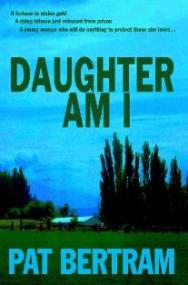
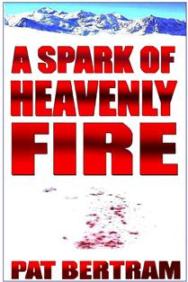
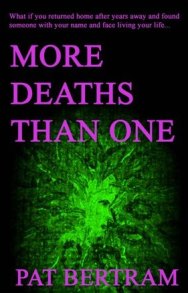
My experience is closest to Hughart’s in that my publishers killed my desire to write. The first publisher fought with me over every little thing. I accepted a contract with him on the condition that I got to approve the final copy, but he still insisted on editing my books without telling me. Even worse, he (or the college kid he had edit them) actually added mistakes. I gave him one final chance, again with the caveat that if he made any changes, he’d let me see them, but he didn’t. In fact, he took a perfectly formatted book, one that was ready to be published (I’d been formatting books for him for years on a volunteer basis— silly me — so I don’t know what his problem was), but he redid the formatting so that there was no gutter allowance. (The gutter allowance allows room for the binding of a book, otherwise the text disappears into the binding.) He finally fixed the formatting and removed the mistakes he added, and mostly got it correct, but was angry with me for “self-publishing on his dime,” as he said. Though how can it be self-publishing when he has yet to send me any royalties?

My second publisher was great for the first book. He sent me the gallows to check, did a perfect cover, published in a timely manner. A truly awesome experience. Then, I don’t know what happened — Covid maybe? Anyway, whoever edited my second book for that publisher made a terrible change to my formatting, and by the time I realized what a mess of my book the editor had made, it was too late for the problem to be corrected.

[They separated the beat from the dialogue, putting each on a separate line, so it was impossible to tell who was saying what. A beat is the bit of action that is used in place of “she said.” For example:

The way it was supposed to be:

She sighed. “I am so disappointed in how the book turned out.”

They changed it to:

She sighed.

“I am so disappointed in how the book turned out.”

It’s not a big deal with a single bit of dialogue, but with a long back and forth, it got complicated. Even I couldn’t tell who was speaking since the person sighing and the person speaking could be two different people.]

I know the story is something to be proud of, but the way it was published utterly broke my heart as well as my will to write any more novels.

Hughart is dead now, so his series will never be finished. As I am still alive, there is a vague chance that I might write another novel, but I doubt it. It doesn’t seem worth the aggravation.

***

Pat Bertram is the author of Grief: The Inside Story – A Guide to Surviving the Loss of a Loved One