My Every Day

Daily writing prompt
Describe your most ideal day from beginning to end.

My most ideal day? Well, that’s simple enough to describe — it’s pretty much my every day so far this year:

Get up. Do stretching exercises. Make the bed. Have a cup of tea. Play a bit of a hidden object game. Write a blog post. Read. Have breakfast. Read. Have lunch. Read. Take a short walk. Read. Rest a bit. Read. Have a quick snack. Read. Check online to see what if anything is going on with my blog. Read. Read some more until it’s time to go to bed, then read until lights out.

Well, that’s my every day except for the walk. I keep trying to get back into walking every day, but I can’t seem to always find the energy. Of course, in an ideal day, I’d have plenty of energy, no sinus issues, and the get up and go to just get up and go. Sometimes, of course, my ideal day involves a visit with a friend or neighbor or whoever else I might encounter during the walk, but apparently not today.

I used to play the hidden object game a lot more until much of that online time got supplanted by blogging. Odd how that happened. I never actually decided to start posting every day as I used to. I just . . . did.

I must admit, blogging does help make my day an ideal one. It feels like coming home, in a way, a comfortable way to spend time, a pleasant way to communicate without having people cut me off while I am speaking if they disagree. (You might cut me off and stop reading, but since I’d never know, it’s not hurtful.) It also gives me something to think about other than the state of the world and the lack of common sense (though why something that’s in such short supply is called “common,” I don’t know, and neither does anyone else, apparently, since this is a sentiment I encounter so often that it’s embarrassingly trite). Best of all, blogging allows me to play with words, like above when I wrote “the get up and go to just get up and go.” I tend to be too serious, so word play lets me indulge my fantasy that I’m witty and charming and lighthearted. (And no, that fantasy is not part of my ideal day since ideally, I need to be what I am, whatever that might be.)

Well, this part of my ideal day has been fulfilled. Now on the next part: Reading!!

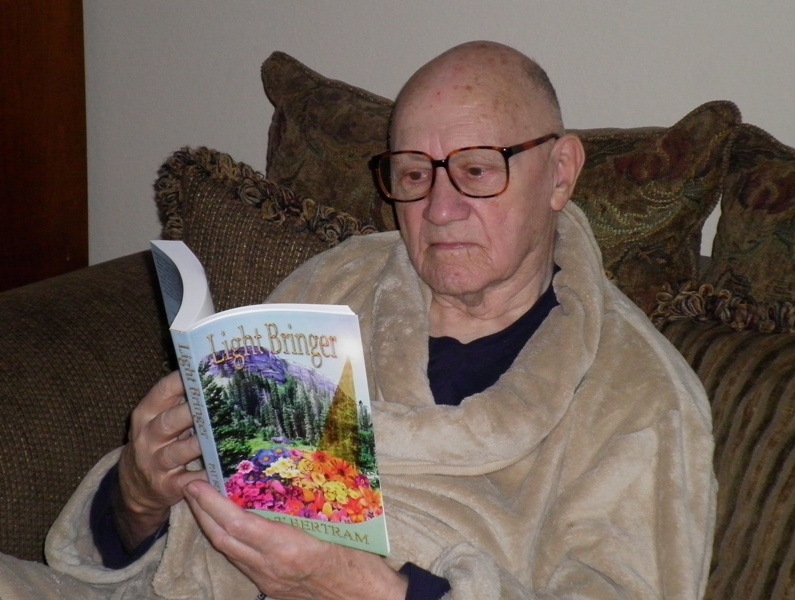
(I couldn’t find a photo of myself reading, so here is the next best thing: my 97-year-old father reading one of my books during his last days.)

***

Pat Bertram is the author of Grief: The Inside Story – A Guide to Surviving the Loss of a Loved One.
Emergency Library

When I was young, I often reread books, but in my middle years, I discovered I didn’t like rereading, didn’t like the echoes of previous readings reverberating in my head. Like most readers, I’d accumulated shelves of books, but when I realized I didn’t want to reread any, I gave them away. The only books I liked having on hand were those I hadn’t read, what I called my “emergency stash.”

When the quarantine hit, and the library was closed, I quickly used up my emergency stash, and ended up rereading The Wheel of Time series. I found I liked living in Jordan’s world, one that purported to be both our distant past and our even more distant future. Well, I liked the parts when they were traveling, not so much the parts when they were manipulating each other, torturing each other, bending each other to their will. When the reread seemed to work out, I started searching for other books or series I could keep on hand to reread. Although I tried, I was never able to get into any other fantasy series, could not relate to any of them. There were too many ridiculous unpronounceable names and even more ridiculous situations in never-were-could-never-be worlds, to say nothing of the often-execrable writing. I did enjoy Ender’s Game and some other of Orson Scott Card’s science fiction books, but none I wanted to re-reread.

Recently, I went through series I’d previously read, but this time, instead of picking up books haphazardly, I read them in the order they were written to get a better idea of the character’s story. Most were mysteries, most I’d read so long ago I didn’t remember the story, but none caught my imagination enough to want to ever reread again. Others were stories I once loved, such as the Mrs. Pollifax books, Dune, and The Lion, the Witch, and the Wardrobe, but although I liked the first book in all three of those series, the rest didn’t hold up to my adult scrutiny.

I did order the Noel Barber novels — I couldn’t get Tanamera, Sakkara, and Farewell to France from the library and I thought a friend would like to read Tanamera since she’d grown up in the Cameron Highlands in Malaysia. I ordered the others because at one time I’d liked them, and as it turned out, I still do.

So that’s the extent of my emergency library — Robert Jordan and Noel Barber. It turns out that no matter how much I once liked a book, few of them have the depth or sink-into-ability that I need to enjoy rereading a familiar story. It’s just as well. I don’t like having a lot of clutter, and books I don’t want to reread seem clutterish to me. I do have a stack of books about alchemy that I inherited from my brother and haven’t yet read, but I’m saving them for . . . actually, I don’t know what I’m saving them for. A time when I have the mental effort to expend on them, perhaps, but at least they are there as an emergency stash for my emergency stash.

Come to think of it, I also have the books I’ve written, but I’m afraid to read them in case I’m no longer proud of them. But someday I might read them. Or not.

Are there any books you enjoy rereading? Any you love? Any you’ve read multiple times?

***

Pat Bertram is the author of Grief: The Inside Story – A Guide to Surviving the Loss of a Loved One.
Living Vicariously

I have noticed that while my daily tarot card pick seldom reflects what I am feeling or doing (possibly because I am not feeling or doing much of anything), it sometimes reflects the situation of someone I’ve been talking to, especially if I empathize with them. Just as often, the card seems to reflect the situation of a character in a book I’m reading.

To the extent that the tarot has meaning, and to the extent that I am not reaching far afield to find any sort of meaning in the card, this does seem to indicate that our brains can interpret a fictional world and a fictional experience as being as real as a real-life experience.

Research does tend to corroborate this idea — people who read fiction are more empathetic than those who don’t read. They think better, connect to new ideas quicker, are more able to comprehend other people’s motivations, can understand and accept more easily the idea that others hold beliefs that are different from one’s own.

When testing readers to see what happens to their brains, scientists have recorded noticeable changes in brain chemistry that seem to bear out the idea that the experiences in fiction are in some way interpreted as real. This makes sense when you consider that a story we read becomes a memory as does everything else we’ve ever experienced, so when the brain isn’t focused on daily tasks — or maybe when it is — it plumbs our memories for clues about what worked, what didn’t, and how to proceed.

There are many things I have done in a fictional world, whether one I created or someone else did, that I would never be able to (and certainly wouldn’t want to) experience in real life, such as be a spy in a hostile country, become an assassin or a victim of an assassin, be a psychic, deal with drug problems.

From a young age, long before most kids started experiencing with drugs and alcohol and smoking, I’d developed a fear of addiction because of the books I’d read (though now, I can’t imagine what I was reading when I was a child to give me these ideas), and so I abstained even when pressured and ridiculed. I never understood how people could be so blasé about experimenting. In fact, I was shocked at people’s ignorance when all the class-action lawsuits dealing with tobacco companies showed people the dangers of smoking. How could they not know? It seemed so obvious to me. Apparently, one doesn’t have to personally go through the trauma of addiction to understand how devastating it can be.

This connection between fiction and real memories makes me wonder what I will remember when I get old. Will I remember my life or one of the tens of thousands of other lives I’ve lived vicariously? And will it matter?

***

Pat Bertram is the author of Grief: The Inside Story – A Guide to Surviving the Loss of a Loved One. “Grief: The Inside Story is perfect and that is not hyperbole! It is exactly what folk who are grieving need to read.” –Leesa Healy, RN, GDAS GDAT, Emotional/Mental Health Therapist & Educator
Odds and Ends

Yesterday I got the courage to get down on the floor to do some stretching exercises. Ever since I damaged my left knee, I haven’t ventured to floor in case I couldn’t get back up. Although I am right-handed, I am left-legged, and I didn’t want to stress the knee. It was a bit iffy, but I managed to get back on my feet. Oddly, it was harder getting down than up. I’m not going to try it again for a while. I’ll continue to do other knee exercises, as well as walking. I walked a mile today — walked, not trudged! The muscles around the knee are a bit sore, but I hope that they will soon get back in shape.

Do you care? Probably not. I don’t blame you. Other people’s ills get to be a bore.

I’m sure my talk of the tarot is every bit as boring. The only interesting thing (to me, anyway) is that except for an occasional card warning me not to take things for granted, to accept what comes, to live each day to the fullest, and to make good choices when it comes to opportunity, most of the cards speak of harmony, of peace, of good fortune, of being in the right place. It’s possible I’d read these things into any card because that’s my current situation. Also, if I don’t like the first interpretation I find, I search around for another interpretation. (For example, the ten of swords is a card of death and misfortune, but since I refused to accept such a meaning, I delved deeper and found that the card could also mean a renewal or even simply accepting your present circumstances.)

I mentioned yesterday I’ve been reading a series of spy/adventure novels. I remember back in the days of Glasnost thinking that a whole genre of cold war spy novels, Russia vs the USA, had suddenly become defunct, and that sure seemed to be true. In the following years, spy novels centered more on the Mideast, which killed any interest I had in the genre. But now, all these years later, those old Russia vs. USA novels are current again. And the mention in one of these book about the Chinese and their bioweapons program sure struck a chord.

Come to think of it, at the beginning of The Bob, people talked about the Chinese being held accountable, and then suddenly, that whole topic of news disappeared. I wonder what that’s about? I could create all sorts of scenarios based on these old spy books, but to be honest, it doesn’t really matter where it came from. It’s here, it’s killing people as well as destroying a way of life and the world economy, and no reparations can ever make up for all the problems it caused. (Hmm. I didn’t realize I’d adopted such a laissez faire attitude. Maybe it’s because I’m abstaining from the nastiness of Facebook.)

For some reason, the sun yesterday was exceptionally hot. It seared my skin and desiccated the plants that had been watered the day before. All summer, watering every other day was fine, and yesterday? Not the hottest day of the year, but it sure seemed like it!

Today is supposed to be a bit cooler, though I’m glad I got my walking in early. And my blogging. Now I can sit back and read for the rest of the day.

***

Pat Bertram is the author of Grief: The Inside Story – A Guide to Surviving the Loss of a Loved One. “Grief: The Inside Story is perfect and that is not hyperbole! It is exactly what folk who are grieving need to read.” –Leesa Healy, RN, GDAS GDAT, Emotional/Mental Health Therapist & Educator

Librarier

There is an anecdote going around the internet where a mother asks her little girl what she wants to be when she grows up.

The girl responds, “A librarier.”

“Don’t you mean a librarian?” the mother asks.

“No,” the girl says. “A librarier. Someone who goes to the library and reads.”

This could be a true story because kids can be that precocious, but even if someone besides a little girl made up the word, it’s a good one. And since I identify with the term, I would modify it to simply mean “someone who goes to the library.” I don’t do well reading in public — I need the mental space and freedom to relax into the book, and I can’t do that — don’t want to do that — when people are around. I feel too vulnerable.

Since I’m such a good and reliable librarier, I get to check out more than the maximum. (Being a “good girl” sometimes has its privileges!) But I still go quite frequently.

I have a friend who also reads a lot, but she does read at the library. She once said to me, “People always tell me that life’s too short to spend it reading. I say life’s too short not to spend it reading.”

That’s basically my philosophy. In my younger years, that’s what I did — read. It’s all I ever wanted to do. It’s not a good career choice since there’s no money in it (I could have been a librarian, I suppose, but then I’d have to watch everyone else read while I worked, and that’s not the same thing.) Still, I managed to mostly read my life away.

After Jeff died, everything changed, even reading. For the first time in my life, I couldn’t stand to read fiction. Too many books involved death, and I couldn’t face that faceless beast. Other books involved couples getting together, which was excruciatingly painful since I no longer had anyone. Still other books involved couples not getting together, which was just as bad, because it reminded me of my situation. And I was too unfocused to read non-fiction.

I did struggle with books for a while, but when the library closed for asbestos cleanup, I didn’t miss reading. I did buy an occasional book, but my finances don’t really lend themselves to such an indulgence.

Now, though my finances are even in greater disrepair than ever before, I have a library a few blocks away, a decade’s worth of reading to catch up on, and even better, death’s sting has receded.

So once again, I am a librarier.

***

Pat Bertram is the author of Grief: The Inside Story – A Guide to Surviving the Loss of a Loved One. “Grief: The Inside Story is perfect and that is not hyperbole! It is exactly what folk who are grieving need to read.” –Leesa Healy, RN, GDAS GDAT, Emotional/Mental Health Therapist & Educator.


Happy Decimal Birthday to Me

A decimal birthday is any birthday that can be evenly divisible by ten, and though it can refer to yearly birthdays, a decimal birthday is most often counted in days. The more zeros, the more significant the decimal birthday, such as 10,000, 15,000, 25,000.

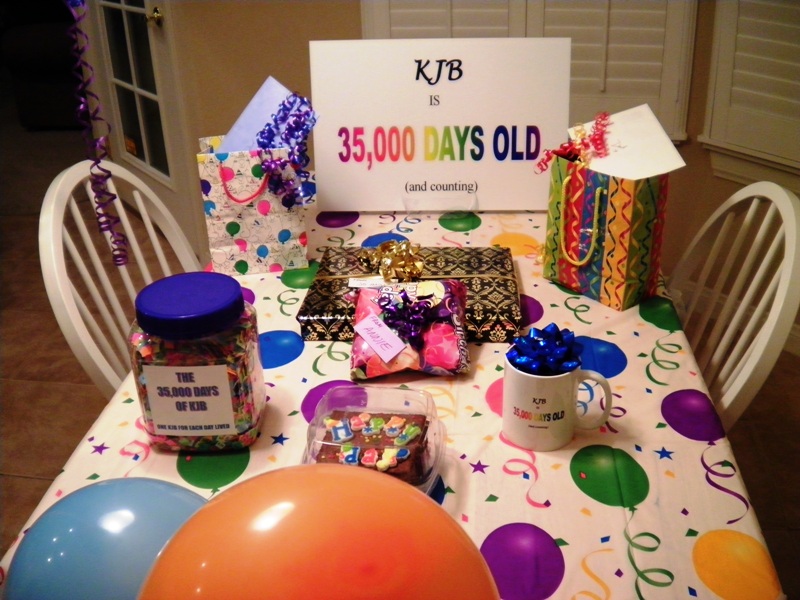
When I discovered my father was going to reach his 35,000th day, it seemed so significant, I created a party for him.

Today is my decimal birthday, one of the significant ones (though many thousands of days away from 35,000). I’ve been trying to think of something special to do to celebrate, then I realized I don’t need to celebrate the day. The day itself is a celebration, as is any day I am alive.

I’ve always tried to make each day special, particularly after Jeff died. (Before that, every day was a celebration because of his presence. Even the days that weren’t particularly pleasant were worth celebrating because we were together.)

The worst of my grief was a sort of celebration — a celebration of life, both his and mine. The grief was proof that he once lived, that I once loved greatly. Every day I lived through the agony and angst was a day of triumph because I did live through it. Those days were of such heightened pain and sorrow that ironically, I felt more alive than any time since. And that, in itself, was a celebration of sorts.

My celebrations (and triumphs) are much less cosmic today than they were during my time of grief, but still, each day is a celebration — a day that is mine to do with as I can. (I was going to say to do with as I wish, but so often, life does not grant us such wishes, but it does grant us the ability to do something.)

I’ve been spending my most recent days alone. Not lonely, just alone. And that is a celebration in itself, a boon, since the non-loneliness was a long time coming.

During all the years of grief, I had a hard time reading — I couldn’t handle books that feted death such as thrillers because I’d had enough of death, couldn’t handle books where two people got together in the end because I didn’t have that, couldn’t handle two people not getting together because I did have that and knew how it felt. But I’m finally past that time, and have reverted back to my youth when reading was like breathing. Something I did without thinking. In fact, the local library had a summer reading program for adults, and I was the big winner.

I haven’t just been reading, of course, because now I have the house, and the house needs attention. Each little project has definitely been a celebration. I never expected to own a house, never even wanted to, but here it is. And here I am.

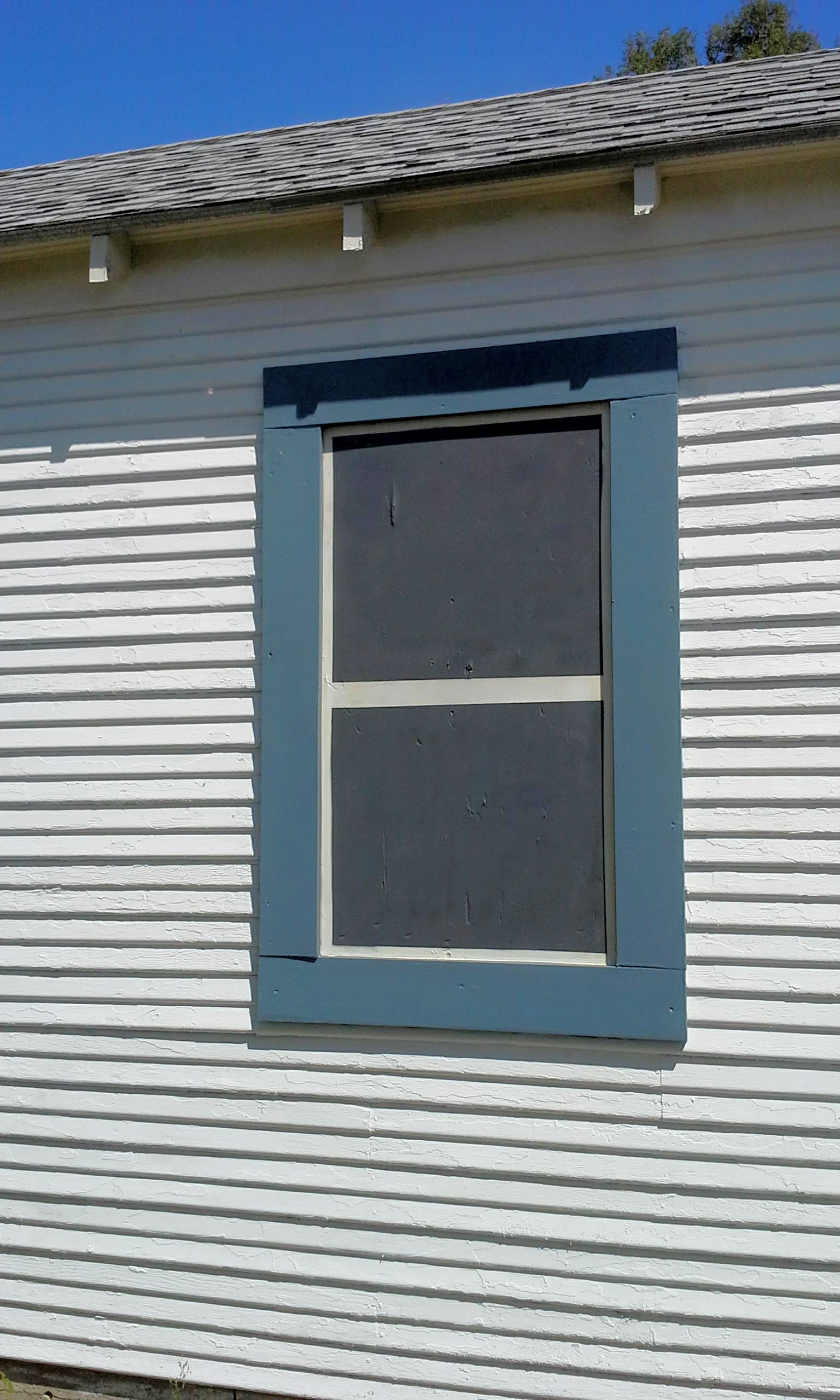
Some of the projects were simple and fun, such as painting a boarded-up garage window to look like a window.

Some of the projects have been simply fun, such as ordering bulbs to plant in my front yard this fall. I’m not sure how much fun it will be to plant all 200+ bulbs but, as I have learned, a lot can be accomplished little by little. Besides, there is no better way to celebrate life and hope than to plant flowers.

Until then, there is today — a special day because it is a day that has been granted to me. To all of us.

I hope you will take a moment to celebrate this day.

***

Pat Bertram is the author of Grief: The Inside Story – A Guide to Surviving the Loss of a Loved One. “Grief: The Inside Story is perfect and that is not hyperbole! It is exactly what folk who are grieving need to read.” –Leesa Healy, RN, GDAS GDAT, Emotional/Mental Health Therapist & Educator.

Simulating the Future

Fiction is a type of simulator, much like a flight simulator, where we can experience life at one remove. Just like a flight simulator, the situations we encounter in fiction (particularly fiction that poses dilemmas) seem real, and they have real effects on our minds. Although this is recent research, I have known it since I first learned to read. I never read fiction just for entertainment. It was more real to me than that — like practice for life. I didn’t see myself as the main character, rather I read myself into the story, trying to figure out how I would act in a similar situation. Unlike many of the youth of my generation, I never had to use recreational drugs to understand what could happen. I knew secondhand through books the possible consequences. I also knew the consequences of teen-age pregnancy, drunk driving, and whatever other trouble kids my age could get into, and it made me cautious. Maybe too cautious. Still, I never got into a mess I couldn’t get myself out of.

As I grew older, potential problems became more serious, and again, books simulated various scenarios I was able to sidestep. I might have continued to be too cautious, but I never saddled myself with avoidable problems such as overwhelming debt. (I was going to change this cliché, but I got an image of debt as a saddle with a banker as the person sitting on the saddle riding me, and I thought it was an apt image, so the cliché stays.)

Popular books, easy books, happily-ever-after books, books without major moral dilemmas never did much for me. In fact, if I read too many of these “junk food” books, I’d get depressed. Oddly, all books now depress me the way these books once did, perhaps because the situations in books no longer act as a simulator. I know I will never be an unwed mother, a single mother, or a woman struggling to handle a family and a career. I know I will never solve a murder, either as an amateur or a professional. I know how it feels to love. I know how it feels to lose the one man who made life worth living, know how it feels to take care of an aged parent, know how it feels to be the subject of a brother’s rage.

But I still have a “flight simulator” — my imagination. Although imagination isn’t as good a simulator as fiction since we tend not to be able to project our true feelings into the future, a life time of reading and living has trained me at least in a small part to imagine how I would deal with certain situations.

Pacific Crest TrailI’ve been writing lately about my idea of hiking the Pacific Crest Trail. I have been hiking small sections of the trail (some of my typos crack me up — I just wrote “trial” instead of trail, and that is apropos at times of hiking the PCT — a real trial). These Saturday hikes give me a small taste of the dream. But more than that, talking/writing/thinking about walking up to Seattle expands my mind the way reading a good book used to.

If it sounds as if I am backtracking (instead of backpacking), the truth is that as much as the idea intrigues me, I really don’t think I could do it. It’s way too dangerous for someone who isn’t fit and has no camping experience. Besides, I cannot see me wielding an ice axe to keep from falling off a narrow icy trail, cannot see me coming face to face with a grizzly who wants to wrestle me for my scant food supply, cannot see me “out packing” bags of used toilet paper, carrying the stinky package for hundreds of miles until I came across a place where I could dispose of it. Nor am I interested in doing something that takes such massive planning — the preparation takes longer that the 2650-mile hike itself. I want to be spontaneous, just take off walking and keep on walking, and that is so not possible on the PCT. It’s also expensive — hikers typically spend $4000 to $8000 for the 5-6 month jaunt.

Still, I want an epic adventure someday, and I want it for real, not second hand from books — if not the PCT, then perhaps something that stems from this particular simulation. I’ll keep imagining, keep throwing myself into the future, and see what happens.

***

Pat Bertram is the author of the suspense novels Light Bringer, More Deaths Than One, A Spark of Heavenly Fire, and Daughter Am I. Bertram is also the author of Grief: The Great Yearning, “an exquisite book, wrenching to read, and at the same time full of profound truths.” Follow Pat on Google+. Like Pat on Facebook.

Taking “R” Things With Gratitude

When it comes to life the critical thing is whether you take things for granted or take them with gratitude. ~~ G. K. Chesterton

For the rest of November, I’m going to take with gratitude some of those things I often take for granted — an entire alphabet’s worth! Since today is the eighteenth day of this surge of gratitude, I am giving thanks for “R” things.

I am especially grateful for:

Rest, relaxation, recreation, relief, restoration, refreshment, renewal. There are a host of “r” words that speak of rejuvenation after hard work or stressful times. I am truly grateful and blessed that I have been able to find respite — if only for a few hours at a time — from my cares. I’m also grateful for the resiliency that enabled me to continue going SANYO DIGITAL CAMERAafter the death of my life mate/soul mate and which is enabling me to find some sort of renewal on new paths.

Reminiscences. More and more now, I’m remembering the good times with my life mate/soul mate, not just the end times where he was slowly wasting away. I’m grateful there were good memories, though I am careful not to wallow in the past. He is gone, and though I cannot be grateful for that, I am very grateful he is no longer suffering.

Red. What would the world be like without red? Much of our world is steeped in blues and green and tan, and red seems like an exclamation point that reminds us of wonder and joy and passion and warmth. Even though red is not abundant in nature, we still take it for granted, but today, for once, I will take with gratitude all the red in my life.

Reading, of course. I don’t remember a time when I couldn’t read, so it’s easy to take the ability for granted, and yet I am very grateful for being able to read. It was my life for decades — until recently, all I ever really wanted was to read.

So, what “R” things are you taking for gratitude today?

***

See also:
Taking “A” Things With Gratitude, Taking “B” Things With Gratitude, Taking “C” Things With Gratitude,Taking “D” Things With Gratitude, Taking “E” Things With Gratitude, Taking “F” Things With Gratitude, Taking “G” Things With Gratitude, Taking “H” Things With Gratitude, Taking “I” Things With Gratitude, Taking “J” Things With Gratitude,Taking “K” Things With Gratitude, Taking “L” Things With Gratitude, Taking “M” Things With Gratitude, Taking “N” Things With Gratitude, Taking “O” Things With Gratitude, Taking “Q” Things With Gratitude

***

Pat Bertram is the author of the suspense novels Light Bringer, More Deaths Than One, A Spark of Heavenly Fire, and Daughter Am I. Bertram is also the author of Grief: The Great Yearning, “an exquisite book, wrenching to read, and at the same time full of profound truths.” Connect with Pat on Google+. Like Pat on Facebook.

Creativity Has No Price

A couple of days ago, I posted a bloggery What is the Price of Creativity, where I lamented the devaluation of books. What everyone believes they can do, no one values, and so readers today expect to get ebooks for a nominal sum, or even free.  Mickey Hoffman, author of School of Lies and Deadly Traffic, wrote such an insightful rebuttal to that article that I thought it deserved to be featured here (though truthfully, everyone made important  points). Mickey wrote:

Rembrandt died poor. He’s now regarded as one of the creative geniuses of the art world. This stuff has been going on forever. In ancient times the people who carved the famous statues in Greece didn’t even put their names on their work. Creativity has never been as useful to humans or held as high a value as the ability to make money, to manipulate others, to convince the masses that one is a god, etc.

The ability to write used to be admired only because for centuries most people could not even read or write their own names. And only the Bible was deemed worthy of reading. When reading no longer was such a mysterious process done only by a monk or priest and people realized it wasn’t so difficult to learn to do it for themselves, then they began to read, but still mostly religious tomes. If you look at many countries today, the kids are taught to read only for the purpose of reading the Koran. So it still happens.

In the West, as the ability to read became more common, writing became more common. Letter writing was the rage and those who could write creatively were held in high esteem. But were they actually paid well for it? Not often. Rich people had books but didn’t read them, they used them like trophies to show they were cultured. Writers still struggled to make a living and always have. Only a few have been able to support themselves that way. There have always been trashy publications and well written ones. Just more of both now.

You could argue against public libraries too, and make an argument that the ability to read for free would devalue writing. I don’t think the availablity has much to do with it. What’s changed are two things. One is the cultural idea that’s infected education: Everyone’s a winner. No one can be told they’re not good at something for fear of damaging their self-esteem. Kids aren’t reading well-written books in elementary or high school anymore so they have no means of comparison. They don’t have to learn how to write well either unless it’s on a test. College professors are getting essays with abbreviated text messaging words in them. My brother, a professor, used to read me some of the stuff his students wrote. These things were so unintelligible I didn’t know whether to cry or laugh. Somehow they made it into college anyway.

Second, television and films. Need I say more? I think we’ve all noticed that best sellers read like they’ve been written to be made into an action/thriller movie. And if they are, then they’re actually composed with different elements in mind than a writer puts into a story made for reading only.

So how is the public to know they’re reading garbage? Just throw in a vampire or a ghost or a serial killer or a few sex scenes and that’s enough to find an audience. And the agents and publishers know this. Don’t blame Amazon or anyone else, blame US.

Are You Playing The Kindle Game?

People keep saying that Kindle, even more than other reading devices, has revitalized the book industry, making books affordable and reading more accessible. They say the market is expanding, that people who never read are now interested in books. But is this true? Are they interested in reading, or are they interested in playing the Kindle game, downloading books as fast as possible to fill their new toy?

One reason people always gave for not reading is that they don’t have time. Do people suddenly have huge extra blocks of time to read, to get into a book, to explore new ways of thinking and experience new ways of being? I think not. It seems that reading is now part of the multi-tasking generation, where you read while doing something else. Is this reading? People say that reading is not a solitary activity any more, that new enhanced reading apps make it social. If so, is this really reading?

The other half of the Kindle game is the author game, where selling as many books as possible, is all that matters. Whether people actually read the book is immaterial. Of course, the major publishers started this game a long time ago, this game of sales records, and now it’s been taken to the people where anyone can play. But that doesn’t mean the books being sold then or now are worth reading.

When I mentioned in a comment to a fellow blogger that Amazon was a major publisher, she corrected me and said it was a sales platform, like using WordPress. It’s a perfect analogy, and it explains an unusual phenomenon — my rapidly increasing blog rating. It always used to hang around 3,500,000 on Alexa.com, but suddenly, for no reason I could see (my readership is growing, but not enough to explain a leap in rankings), my blog began increasing in rank, and now it’s at 929,990 (out of 346 million sites). Are blogs disappearing (or falling off the scale) because people are now uploading things for Kindle that they once posted on their blogs? If so, then books are being devalued to the level of a bloggerie.

Makes me wonder if I’ll ever take up writing again.

But for now, if you are playing the Kindle game, all my books are available both in print and in ebook format. You can get them online at Second Wind Publishing, Amazon, B&N and Smashwords. Smashwords is great! The books are available in all ebook formats, including palm reading devices, and you can download the first 20-30% free.

This is the third post where I’ve been mulling over the current state of the book business. The other two are: Is the Book Business Dying? and First the Bread Wars, Now the Book Wars.