An Insular Life

When I started with the internet, blogging first then signing up for various networking platforms, I had no patience for people who posted about the minutiae of their lives. I especially didn’t care what they ate — it didn’t seem to have any relevance in the grand scheme of a thoughtful literary life, and it certainly had nothing to do with my objective of making a name for myself as an author.

Well, here I am, a dozen or so years later, writing about my latest meal. In my defense, with the isolation, meals are basically the only thing I do of any value. And generally, if I stick to a healthy diet, my meals are boring. Salads get tiresome, as does any sort of vegetable eaten regularly for any length of time, and trying to find healthy proteins is a lost cause.

Today I decided to put some effort into making something different. (It was either this or ordering a pizza I really do not need). It might not look like much, but this spinach mushroom quiche alternative (baked eggs without a crust) turned out to be quite good.

I’m continuing to wean myself away from the computer, which leaves me with little to do but read. Since I finished my emergency stash of books, and since my email to the library with a list of books for me to pick up curbside resulted in no action, I’m in emergency-emergency mode — immersed in The Wheel of Time, a 4,000,000 word literary work that I’ve read many times before. The best thing I can say about it (besides its length — no need to look for books to read for a long time!) is that it has to be the quintessential good vs evil story. Or more accurately — sort of good some of the time vs, mostly evil all of the time.

It’s exhausting, not just the constant conflicts between the good and evil, the good and good, and evil and evil, but the sheer amount of activity. All the characters are always on the move, traveling from one part of their world to another, on foot, by horse, or by ship.

And the food they eat is even less interesting than what I generally eat — so often, they are on short rations of porridge, cheese, dried meat, and crusty rolls or bread sometimes flecked with weevils. (I must admit, though, that bread or rolls hot from the oven does sound wonderful. Minus the weevils, of course.)

I’m getting to the point where I can’t imagine a different life, though I don’t know if that is a good thing or a not-so-good thing. But it is what I have, at least for now.

And anyway, even if I couldn’t find anything more relevant in the grand scheme of things than my insular life to write about, at least I’m still writing every day.

That’s something to the good. At least, I hope it is.

***

Pat Bertram is the author of Grief: The Inside Story – A Guide to Surviving the Loss of a Loved One. “Grief: The Inside Story is perfect and that is not hyperbole! It is exactly what folk who are grieving need to read.” –Leesa Healy, RN, GDAS GDAT, Emotional/Mental Health Therapist & Educator.

Treasures in My Yard

I check in with Facebook occasionally, but I’m gradually weaning myself away. They are still blocking any links to my blog with no explanation other than that it goes against their community guidelines on spam. One of the truly annoying aspects is they keep sending me notifications telling me I need to post on my page if I want viewers, so now I purposely post spam — links to my books on Amazon and Smashwords. (Speaking of which, if you haven’t yet downloaded it, A Spark of Heavenly Fire is available as a free download from Smashwords in all ebook formats. You can find the book here: https://www.smashwords.com/books/view/1842. Be sure to use the coupon code WN85X when purchasing.)

To be honest, I’m just as glad to be staying away from people, especially those who so close-mindedly believe what they believe without taking any other idea into consideration. And usually these are the very people who pride themselves on their intelligence and open-mindedness. Me? I’m willing to take all ideas into consideration as long as they agree with my established beliefs. (And yes — that is a joke! A bad one, but still an attempt at humor. In truth, I like ideas that challenge me and help me see things in a different light, I just don’t like people dismissing my ideas out of hand and being coerced into believing what others think is true.)

I’m continuing my efforts to hearten myself, though the Bob crisis is the least of my worries. The knee is a greater problem, and I’d be more worried but I know from experience that knees take a long time to heal. Or at least mine do. The last time I damaged a knee it took over a year for it to return to normal. It’s the knee more than anything else that’s keeping me home and isolated. Since I can’t go out walking, I roam my yard, looking for treasures.

Today I was delighted to discover a wild rose in full bloom as well as a bud. These are on bushes we dug up to make room for the garage apron, and transplanted elsewhere. Since the transplants were fairly tall, I didn’t expect to have much luck with them filling out for another year or two, but I had to cut back one to keep it from spreading out over the walkway, and when I noticed how well that one did, I cut most of the others back, too. (Some that had been in the middle of a clump were nothing but long empty thorny stems with but a bit of branching at the very top, so I was afraid to lop them off.)

The rose bushes seem to be doing well. Although I have poor luck with bulbs and no luck with seeds, I do seem to be able to keep transplants alive.

The wild iris that is moving into my yard is also doing well, probably because it wasn’t a bulb I planted.

The poor captive roses that got caught between the garage next door and my fence are also starting to bloom. Such a joy to see any color!

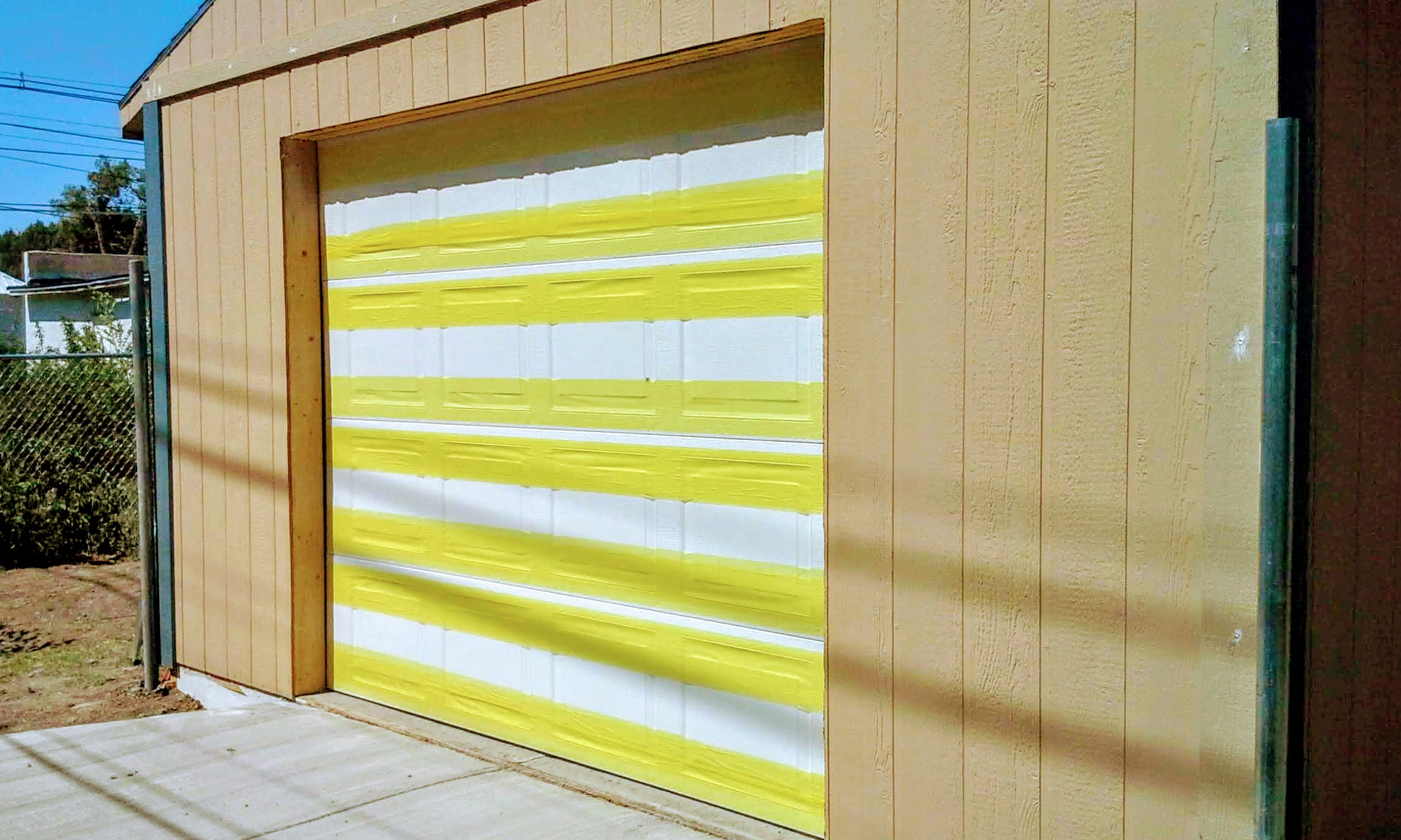
From the photos, you might think I have a fabulous garden, but what I mostly have is dirt with a few sparse weeds, an unfinished garage, building supplies, and a displaced carport taking up most of my yard. To add to the muddle, I ordered metal shelves for the garage — fifteen feet of them in five sections. I’ll need help putting them together since each section weighs 62 pounds, but that’s not something to worry about now. The garage needs to be finished first.

Meantime, I am babying my knee, roaming the fictional world in The Wheel of Time, and being heartened by the treasures I find in my yard.

***

Pat Bertram is the author of Grief: The Inside Story – A Guide to Surviving the Loss of a Loved One. “Grief: The Inside Story is perfect and that is not hyperbole! It is exactly what folk who are grieving need to read.” –Leesa Healy, RN, GDAS GDAT, Emotional/Mental Health Therapist & Educator.

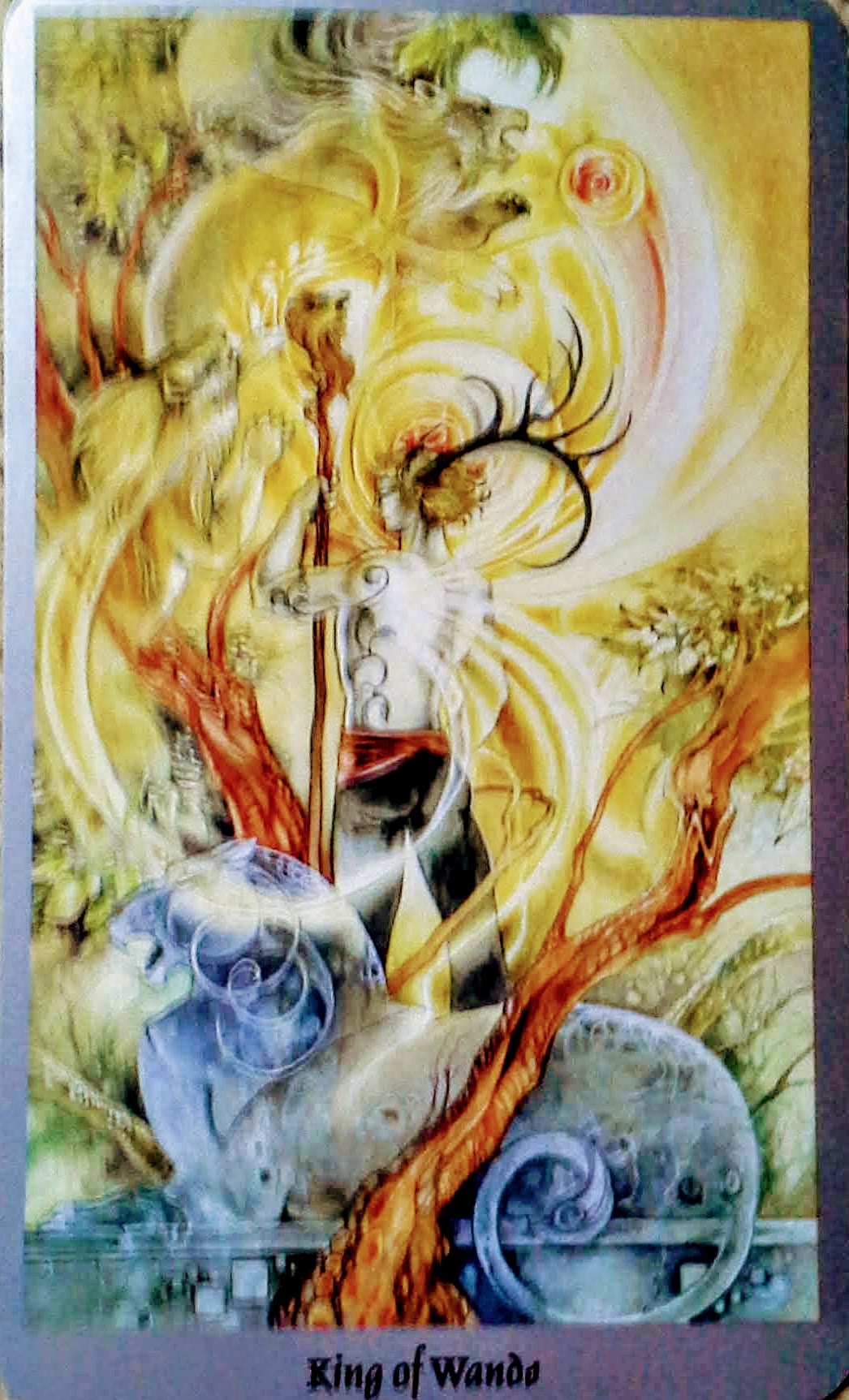
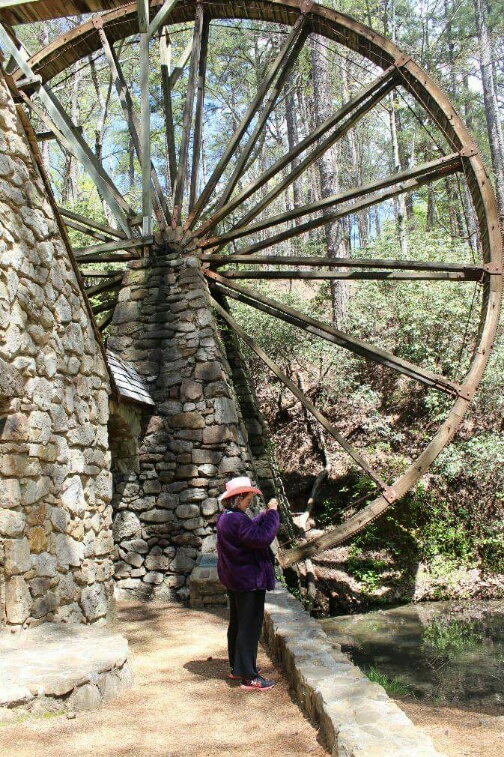
The Wheel of Time

Since I finished reading all my emergency books, I’m reduced to reading the books in my Nook, books I’ve already read. Although I don’t generally like rereading books, Robert Jordan’s massive Wheel of Time series seems to be the perfect place to go to hide from The Bob.

The books in the series are not stand alone books — you cannot understand one book without the previous books — which means that in effect the WOT series is single novel of over four million words broken up into fifteen parts. In fact, the series itself is not stand alone — there are all sorts of books, blogs, discussion forums comprising billions of words where readers try to figure out the truth of the story.

Not only is the scope of WOT almost impossible to fathom, but Jordan had a bad habit of putting in bits of deus ex machina that he refused to elucidate in the work itself, companion books, or even interviews. Perhaps he himself did not know what those bits meant or maybe he simply wanted to be mysterious for mysterious’s sake, to create a legacy of people debating worthless points. Which they do. Ad infinitum. Jordan also refused to explain what to him were obvious story points, such as who killed a certain bad-guy-turned-maybe-good-guy, but again, dozens of forums present various theories because that obvious point was obvious only to he who created it. At least in this particular case, the murderer was revealed in an appendix several books after the fact. Jordan also spent thousands upon thousands of words on red herrings and subplots that go nowhere, but sometimes used a single sentence buried in huge blocks of description to bring out a major point. Yikes.

And wow, is there description. Tons of description. Whenever food is mentioned, I find myself skipping a paragraph or two. When clothes are mentioned, I skip a couple of pages. And sometimes, when there is zero action or character development, such as in a few very clean bathing scenes, I skip the whole dang chapter.

I also tend to skip over some of the women’s parts. Although Jordan mostly develops his three main male characters into individual heroes, each with his own mythic journey, he turns his three main women characters into insufferable caricatures, indistinguishable from one another except for a few annoying character tics. At first I thought he had a problem with women, but his secondary and tertiary female characters are often well-defined or at least not brats and prigs who believe, without giving a single shred of thought to the forces the other characters face, that they know the best for everyone.

Even after investing so much time in reading and rereading the books, I’m still not sure I like the series — although the theme seems to be about the importance of having choices, most of the characters, both good and evil, go out of their way to force others to their will. Too much torture and punishment for my taste. It seems to me that in a world where everyone is free to choose (or at least what the pattern created by the wheel of time allows them to choose), it’s just as easy to find someone to willingly do your bidding as to waste the effort forcing someone to do it. (Oddly, the three main males do turn others to their will, but without wanting to or without even trying.)

But despite my ambivalence, I keep rereading. The scope of the story is utterly astounding. In the story, during the so-called age of legends, people wielding the power that turns the wheel of time, broke the world. Mountains grew where no mountains had been, waters flooded lands, green spaces became deserts. And humans started over. Again.

Interestingly, breaking the world is exactly what Robert Jordon did when he wrote his series — he smashed our world into bits, mixed it all up — legends and traditions; countries and races, clothes and customs; myths and mysteries, religions and philosophies — and put it all back together into his own creation.

I wonder what it would be like to create such a massive fiction world, a world that reflects our world but not. A world that reflects our values but not. A world that exists only in our minds but not. Or, rather, maybe not. If it exists in our minds, it’s possible Jordan’s world exists for real, sort of dream world we all created together, just as philosophers and physicists say we do with the real world.

Assuming there is a real world.

Maybe we’re all writing the story of our world as we live it, creating with our hive mind the very fact of our existence. If we all stopped believing in it, would it disappear as if we were closing the cover of a novel? Would we disappear if we stopped believing all the things we see and hear except with our own eyes or ears? Would we be different if we simply refused to accept the role that has been forced on us?

Maybe, as I study Jordan’s world, I’ll learn how to help build a better version of our own — how to write it or right it, either one.

Meanwhile, the wheels of time keeps turning . . .

***

Pat Bertram is the author of Grief: The Inside Story – A Guide to Surviving the Loss of a Loved One. “Grief: The Inside Story is perfect and that is not hyperbole! It is exactly what folk who are grieving need to read.” –Leesa Healy, RN, GDAS GDAT, Emotional/Mental Health Therapist & Educator.

The Wheel of Time

Over the past several months, I’ve been reading (and rereading) Robert Jordan’s massive Wheel of Time series. The books in the series are not stand alone books — you cannot understand one book without the previous books — which means that in effect the WOT series is single novel of over four million words broken up into fifteen parts. In fact, the series itself is not stand alone — there are all sorts of books, blogs, discussion forums comprising billions of words where readers try to figure out the truth of the story.

Not only is the scope of WOT almost impossible to fathom, but Jordan had a bad habit of putting in bits of deus ex machina that he refused to elucidate in the work itself, companion books, or even interviews. Perhaps he himself did not know what those bits meant or maybe he simply wanted to be mysterious for mysterious’s sake, to create a legacy of people debating worthless points. Which they do. Ad infinitum. Jordan also refused to explain what to him are obvious story points, such as who killed a certain bad-guy-turned-maybe-good-guy, but again, dozens of forums present various theories because that obvious point was obvious only to he who created it. At least in this particular case, the murderer was revealed in an appendix several books after the fact. Jordan also spent thousands upon thousands of words on red herrings and subplots that go nowhere, but sometimes used a single sentence buried in huge blocks of description to bring out a major point. Yikes.

And wow, is there description. Tons of description. Whenever food was mentioned, I found myself skipping a paragraph or two. When clothes were mentioned, I’d skip a couple of pages. And sometimes, when there was zero action or character development, such as in a few very clean bathing scenes, I’d skip the whole dang chapter.

I also tended to skip over some of the women’s parts. Although Jordan mostly develops his three main male characters into individual heroes, he turns his three main women characters into insufferable caricatures, indistinguishable from one another except for a few annoying character tics. At first I thought he had a problem with women, but his secondary and tertiary female characters are often well-defined or at least not brats and prigs who believe, without giving a single shred of thought to the forces the other characters face, that they know the best for everyone.

I am not a fan of fantasy fiction, especially not one man vs. the powers of darkness stories, but when I was house bound for all those months, I needed something to do, and a massive read seemed to fill that need. Though I’d tried to get immersed into other such series, books that start with a war in a bizarre place with an incomprehensible name fought by characters with equally tongue-twisting names for a goal that seemed completely alien hold no interest for me. Luckily, the first Wheel of Time book began in an earthly place with understandable actions by understandable people with simple names.

Even after investing all this time in reading the books, I’m still not sure I like the series — although the theme seems to be about the importance of having choices, most of the characters, both good and evil, go out of their way to force others to their will. Too much torture and punishment for my taste. It seems to me that in a world where everyone is free to choose, it’s just as easy to find someone to willingly do your bidding as to waste the effort forcing someone to do it. (Oddly, the three main males do turn others to their will, but without wanting to or without even trying.)

But despite my ambivalence, I keep rereading. The scope to the story is utterly astounding. In the story, during the so-called age of legends, people wielding the power that turns the wheel of time, broke the world. Mountains grew where no mountains had been, waters flooded lands, green spaces became deserts. And humans started over. Again.

Interestingly, breaking the world is exactly what Robert Jordon did — he mashed our world into bits, mixed it all up — legends and traditions; countries and races, clothes and customs; myths and mysteries, religions and philosophies — and put it all back together into his own creation.

I wonder what it would be like to create such a massive fiction world, a world that reflects our world but not. A world that reflects our values but not. A world that exists only in our minds but not. Or, rather, maybe not. If it exists in our minds, it’s possible Jordan’s world exists for real, sort of dream world we all created together, just as philosophers and physicists say we do with the real world.

Assuming there is a real world.

Maybe we’re all writing the story of our world as we live it, creating with our hive mind the very fact of our existence. If we all stopped believing in it, would it disappear as if we were closing the cover of a novel? Would we disappear if we stopped believing all the things we see and hear except with our own eyes or ears? Would we be different if we simply refused to accept the role that has been forced on us?

Maybe, as I study Jordan’s world, I’ll learn how to help build a better version of our own — how to write it or right it, either one.

Meanwhile, the wheels of time keeps turning . . .

***

Pat Bertram is the author of the suspense novels UnfinishedMadame ZeeZee’s Nightmare, Light BringerMore Deaths Than OneA Spark of Heavenly Fireand Daughter Am IBertram is also the author of Grief: The Great Yearning, “an exquisite book, wrenching to read, and at the same time full of profound truths.” Connect with Pat on Google+. Like Pat on Facebook.