Grief Update: Four Years and Four Months

It’s been four years and four months since Jeff — my life mate/soul mate — died. These have been rough years, first dealing with the heartbreak of his death, then dealing with the agony and the void of his being gone, now dealing with the trauma and drama of my father’s dying, my brother’s dysfunction, my sister’s presence.

I’ve shed a few tears today, but I don’t think they are for my lost love. They seem more self-pitying than that, perhaps tears of exhaustion from trying to rectify a situation I cannot settle — everyone is pushing/pulling me, and it’s impossible to resolve the matter in any way that will satisfy or even half-satisfy everyone. Despite my efforts to help, I know that there is no resolution. Even if it’s not this week, my father’s end is nigh. Even if it’s not this week, my homeless brother will be forced back onto the streets. Even if it’s not this week, my sister will still have to deal with whatever comes, as will I.

The truth is, I can barely remember my life with Jeff. It’s so far away in time, place, emotion, that his being gone seems to have no impact any more, and yet his death defines my life. If he hadn’t died, I wouldn’t be here in this house of horrors, wouldn’t have gone through unimaginable grief, wouldn’t be drifting in this transitional state, waiting for my “real” life to begin. (Silly to think that — as John Lennon supposedly said, “life is what happens while you are busy making other plans.” On the other hand, it’s horrific to think that this is my life. Ouch.)

If he hadn’t died, I wouldn’t have wondered for thousands of hours in the desert. (I meant wandered, of course, but I’m leaving the typo because it is actually truer than what I’d intended to write. I did wonder as I wandered. Wondered about life, death, his current whereabouts, my future, the meaning of it all.) If he hadn’t died, I wouldn’t have made so many wonderful friends. Wouldn’t have found dance (my redemption, my joy, my life).

I miss Jeff, but it’s with the dull ache of a half-remembered dream. I know he was real — he was the most real person I ever met — and yet, though he used to be “my North, my South, my East and West, / My working week and my Sunday rest, / My noon, my midnight, my talk, my song,” he no longer has any substantial reality in my life. I talked to him when I was out walking in the desert today, but I had no feeling of connection. It was just me, the heat, the restless air, the sandy soil, the oppressive low-lying clouds, and perhaps a lizard or two.

I keep a photo of Jeff — the one photo I have — where I can see it to remind me that this was not always my life. Once I loved deeply, so deeply that I still felt shattered years after his death, so deeply that I could only scream the pain of my loss to the uncaring winds.

I still have his ashes, but one day soon I will have to figure out what to do with them. When my father is gone, I’m going to have to put my stuff in storage, and though there is nothing left of Jeff in his “cremains,” I cannot see storing them as if they were just more detritus of my life. And I still have many of Jeff’s things to dispose of, things that once I couldn’t bear to part with because he might need them. Now I know the truth — feel the truth — he will never need them. I will never be taking them home to him. I will never be going home to him. Will never talk with him again.

It’s been four years and four months and six days since Jeff and I talked. Tomorrow it will be four years and four months and seven days.

And so the days pass.

***

Pat Bertram is the author of the suspense novels Light Bringer, More Deaths Than One, A Spark of Heavenly Fire, and Daughter Am I. Bertram is also the author of Grief: The Great Yearning, “an exquisite book, wrenching to read, and at the same time full of profound truths.” Connect with Pat on Google+. Like Pat on Facebook.

The Joy That Is To Come

One of my online friends once told me about an old woman she knew, the most joyful person she’d ever met. The woman had lost everyone who had ever mattered to her, and yet somehow she exuded joy.

We marveled at the woman and wondered how she could find joy in the midst of life’s sorrow. And oh, my. There is so much sorrow. My friend had lost two of her children (lost to death, that is, not misplaced them.) I’d lost my life mate/soul mate who was also my best friend, my home, my constant companion. My friend and I were drowning in grief and anger, unable to find a way back to life. I’m now 1000 miles away from my controlled and coupled life, dealing with the chaos of a dying father and a schizoaffective, alcoholic brother. And yet, and yet . . . sometimes I catch glimpses of the joy that is to come and I understand the old woman’s bright outlook.

This morning I took my father his meager meal and kept him company while he ate. He is nothing but bones wrapped in a sack of skin and body fluids, and it seems as if his whole life now revolves around the management of those fluids. Mucus. Saliva. Urine. Feces. Blood. As I sat there, recognizing that this was the same man who sometimes terrorized me as a child, often ignored me, and occasionally showed me he cared, something shifted in my mind, and I saw life at a different slant.

afternoon teaIf this is what it all comes down to in the end, ingesting, digesting, and egesting, then there is no reason to be anything but joyful. The dramas and traumas of our life are eliminated just as surely as the food we eat or the liquids we drink. Sitting here, I can feel joy creeping through the cracks in my life, and I welcome it. My joy does not in any way affect my father, does not make his end days any easier or harder. My joy does not in any way change my brother’s situation. He got screwed in life’s lottery, ending up with problems I can’t imagine and even if I could imagine them, I can do nothing to help besides an offer of life’s necessities.

During the past four years, I have heard many horrific stories, stories of people’s grief, stories of people’s dealings with schizophrenic sons, narcissistic mates, abusive parents. At times I felt as if the whole world was created out of tragedy and pain, and yet, without in any way diminishing those traumas, I now understand that those tragedies are not mine. I can sympathize, empathize, listen with care, but I cannot spend my life bleeding for all the wrongs of the world, though once I thought it was the soulful way to live.

Now my idea of a soulful way to live is to embrace joy. It might be naïve of me to think so, but for now, I am Visualizing a Life of Joy.

***

Pat Bertram is the author of the suspense novels Light Bringer, More Deaths Than One, A Spark of Heavenly Fire, and Daughter Am I. Bertram is also the author of Grief: The Great Yearning, “an exquisite book, wrenching to read, and at the same time full of profound truths.” Connect with Pat on Google+. Like Pat on Facebook.
Summer of Relentlessness

re·lent·less /riˈlentləs/ adjective — oppressively constant; incessant; inflexible; unyieldingly severe, strict, or harsh; steady and persistent; unremitting.

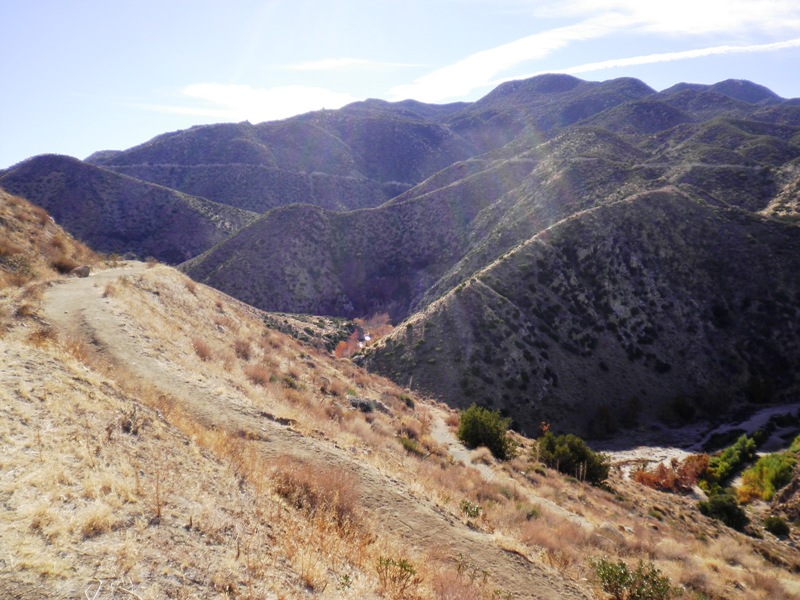
This is a summer of relentlessness: the relentless heat, the relentless wind, the relentlessly oppressive air; my relentless exhaustion; my father’s relentless decline and his relentless needs, my brother’s relentless onslaught of verbal abuse, paranoia, and demands.

We are trying to get my brother out of here, but there seems to be no real help from the “authorities” whoever they may be. The cops have been here several times and have done nothing, only explained why they could do nothing. The social worker from my father’s nursing service has done nothing. My efforts to cajole my brother to leave by offering to drive him back to his home state have come to naught. My efforts at offering incentives have only incited more relentlessness.

fireTo be honest, I never cared whether my brother was here as long as he left me alone. I still don’t care. The trouble is he won’t leave me alone and I need peace, so I try to go along with the advice of others on how to get him to leave. Complicating matters, I don’t want him in jail just to get him off the streets. Don’t want him on the streets around here where he can still inflict his relentlessness on me. Don’t want to be constantly arguing with others about the best way to deal with him. There is no best way. Maybe there is no way. I don’t know.

Even without my brother’s presence, this situation would be hard to handle. People who are trying to help add their own relentlessnesses, whether offering advice or expressing frustration at my inability to take their advice. I grew up in a large family, but I never did learn how to deal with conflicting and relentless needs. The swirling relentlessness of it all confuses me, so although I’m doing the best I can, my best isn’t good enough.

This relentlessness is teaching me one thing, though — the power of letting go. There is nothing one can do to stop the unyielding, unremitting, incessant onrush of unpleasantness. That is the very definition of relentless. If relentlessness could relent, it wouldn’t be relentless. And if there is nothing one can do, one can only let go of any hopes for a resolution and simply accept what comes.

And so it goes, this summer of relentlessness.

***

Pat Bertram is the author of the suspense novels Light Bringer, More Deaths Than One, A Spark of Heavenly Fire, and Daughter Am I. Bertram is also the author of Grief: The Great Yearning, “an exquisite book, wrenching to read, and at the same time full of profound truths.” Connect with Pat on Google+. Like Pat on Facebook.

Putting My Brain in a Box

Talking to my homeless, schizoaffective, and alcoholic brother is an exercise in futility. He bellows, doesn’t listen, is relentlessly and terrifyingly angry. I wouldn’t talk to him, but I’m trying to get him out of here, back to a place where maybe he can get a pension along with food stamps and Medicaid in a state where the pot he needs to help him sleep and to keep his psychosis at bay is legal.

The worsspeedt problem for me (besides his continued presence) is not letting his anger affect me. Sometimes when I am listening to his incessant nastiness and feel his fury coursing through me, I have to clench my fists to keep from beating him into silence. I believe this reaction is the accumulation of his fury assaulting my psyche rather than any innate violence, particularly since the moment I remove myself from his presence, my own anger disappears. I have to make sure I am more than arm’s length from him, because the closer he is, the more I feel the effects. Of course, my backing away infuriates him, so he advances, and we do a strange sort of dance.

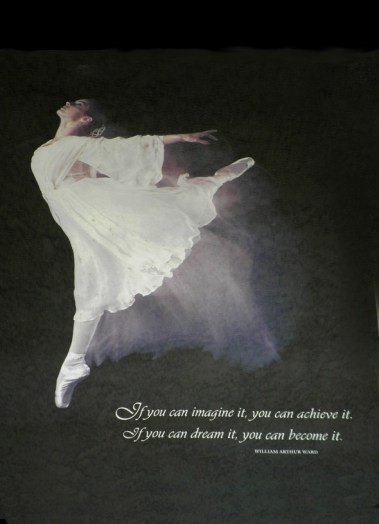
The other day I tried to calm myself by doing the port de bras I learned in ballet class, bringing my arms into a circle over my head, opening them to shoulder height, turning my palms to the floor, and letting my arms gently float to my side. It did help me keep my calm, but my movements, which I’d intended to also calm him, only infuriated him further. He seemed to think I was doing some sort of clumsy Tai Chi or Yoga.

Today a friend told me another way of maintain equanamity — put my brain in a box. She counseled me to mentally construct a box. (Mine looks like a treasure chest with red plush lining.) Then open my head, gently lift out my brain, put it in the box, close my head, close the box. Finally, put the box in a closet and shut the door. That way I can get through times of pain or anger or aggravation without feeling anything because, of course, my brain is in the box.

Seems to work. After I put my brain in the closet, I was able to deal with my brother, my father’s needs, some siblings’ requests for information, the plumber, phone calls, and various and sundry other frustrations.

Maybe I’ll leave my brain where it is temporarily. It seems to be resting peacefully.

***

Pat Bertram is the author of the suspense novels Light Bringer, More Deaths Than One, A Spark of Heavenly Fire, and Daughter Am I. Bertram is also the author of Grief: The Great Yearning, “an exquisite book, wrenching to read, and at the same time full of profound truths.” Connect with Pat on Google+. Like Pat on Facebook.

Going Nowhere

People keep asking me where I am going to live when my father has passed on, and I don’t have an answer. I have dreams, most of which are impossible considering my lack of funds and/or outdoor experience, but beyond that, I really don’t know. I’d like to continue taking dance lessons at a small nearby studio, which seems odd to me because until a year ago, I had no interest in dance whatsoever. The trouble is, I don’t particularly want to live here in this desert town. I don’t particularly what to live anywhere, if the truth be told.

I suppose where I really want to live is nowhere.

Jan Morris in Trieste and the Meaning of Nowhere writes:

“There are people everywhere who form a Fourth World, a diaspora of their own. They come in all colours. They can be Christians or Hindus or Muslims or Jews or pagans or atheists. They can be young or old, men or women, soldiers or pacifists, rich or poor. They may be patriots, but they are never chauvinistic. They share with each other, across all the nations, common values of humour and understanding. When you are among them you know you will not be mocked or resented, because they will not care about your race, your faith, your sex or your nationality, and they suffer fools if not gladly, at least sympathetically. They laugh easily. They are easily grateful. They are not inhibited by fashion, public opinion or political correctness. They are exiles in their own communities, because they are always in a minority, but they form a mighty nation, if only they knew it. It is the nation of nowhere.”

In the Introduction to Tales From Nowhere, Don George talks about nowhere having a quality of disorientness. “For a moment you lose your bearings, there are no coordinates, all sense of familiarity is gone.”

I suppose it’s just as well I want to live Nowhere. When I leave here, no matter where I go or what I do, I will have lost all bearings. My home died with my life mate/soul mate, and though I would go back to him in a moment, that home is four years gone. Where I am living now is no home for me — I am caring for my very weak and declining but still testy father, and I am doing the best I can for my mentally unstable brother. And this is my father’s house. Not home at all. But it is a home base.

And when I have to leave this house?

I’ll be going nowhere.

***

Pat Bertram is the author of the suspense novels Light Bringer, More Deaths Than One, A Spark of Heavenly Fire, and Daughter Am I. Bertram is also the author of Grief: The Great Yearning, “an exquisite book, wrenching to read, and at the same time full of profound truths.” Connect with Pat on Google+. Like Pat on Facebook.
Becoming Matriarch

My father once teased me by calling me the matriarch of the family since I am the oldest living female. (I had to stop here to think. Am I? I’m still in middle age though I am sliding down the banister into the early years of old age, so it seems impossible that there is no older female, but I can’t think of any except some distant relatives.)

Today, however, I feel as if I have graduated into matriarch-ness. My father finally conceded (at least for the moment, anyway) that he can no longer do his accounts, pay the bills, keep up with house repairs and everything else that needs doing to make sure everyone is comfortable, so he “passed the torch” to me. (Those are the words he used.) I told him I’d continue doing everything his way, but he said as long as the accounts were understandable to the executor of his estate, he didn’t care how I did things.

spiderSo here I am, matriarch of our dysfunctional little family — one elderly father who seldom leaves his bed, one dysfunctional brother who refuses to leave the area, one sister who has come to help and leaves whenever she is free, and me who sometimes dreams of leaving and sometimes dreads it. Besides that, the house is so big that something always needs to be repaired. I feel like a black widow spider, sitting in the middle of my poorly-spun web, but instead of me twanging the web to attract insects, the insects twang me, keeping me trapped in the center of it all.

There are others in the family, far-flung siblings that I used to keep informed when my father was ailing, but for some reason, during the past couple of weeks I haven’t felt like sending out my usual emails, maybe because no one is contacting me to see how he is doing. The truth is, I wouldn’t know what to say even if they did. He is definitely declining at an ever-rapid rate, but he is peaceful in his isolation. If anyone wanted to come, of course I as matriarch would give permission even if he were not so disposed, but for now we’re just letting the days slip away, one after the other, taking each minute as it comes.

I’ve played many different roles in my life. Some roles, like daughter and sister, have been with me from the moment I was born, but this new role of matriarch will not be long-lived. When my father is gone, probably within a few months, I will slip off the mantel, turn everything over to the executor, and head out on my own, unencumbered by any responsibility. For now, however, here I am, doing the best I can in a strange and bewildering situation.

***

Pat Bertram is the author of the suspense novels Light Bringer, More Deaths Than One, A Spark of Heavenly Fire, and Daughter Am I. Bertram is also the author of Grief: The Great Yearning, “an exquisite book, wrenching to read, and at the same time full of profound truths.” Connect with Pat on Google+. Like Pat on Facebook.

My Heavenly and Hellish Life

My life continues to be one extreme or the other, either heavenly or hellish without any in between.

For example, today a friend and I took a road trip to the beach for frozen bananas, which I’d never eaten. They were superb, a thousand times better than the deep-fried cheesecake we’d sampled on our last excursion. The day was a perfect blend of warm sun and cool sea breezes, and the ocean itself looked like photos I’ve seen of tropical waters — white surf and turquoise water. I was so mesmerized, it never occurred to me to take photos.

The day ended, as heavenly days always do, and I came back here to the house of hell. My brother immediately began harassing me, and although my father was asleep, I found that he’d checked my bookkeeping, misplaced household bills I need to pay, and left me indecipherable notes and meaningless messages. He has every right, of course, and I understand his need to be in control of everything in his life, but after a month of his leaving me to pay the bills, I felt as if he were treating me like a child who couldn’t be trusted to do her prescribed chores.

I escaped online as is my habit to find that my publisher has a new website, and all the thousands of buy links I have posted over the past few years for my books and for the other authors are now defunct. I am disheartened to say the least. Maybe my disheartenment is premature and during the next few days the links will be properly redirected. I’m keeping my fingers crossed.

Meantime, I’m thankful that I have dance classes tomorrow. No matter how bad things are, I can look forward to the joy of learning new dance steps. And so I will get through another day.

***

Pat Bertram is the author of the suspense novels Light Bringer, More Deaths Than One, A Spark of Heavenly Fire, and Daughter Am I. Bertram is also the author of Grief: The Great Yearning, “an exquisite book, wrenching to read, and at the same time full of profound truths.” Connect with Pat on Google+. Like Pat on Facebook.

Dealing With Elderly Parents

A friend spoke to me today about our different reactions to the care of our aging parents. She seems to think I’m more accepting of my elderly father’s insistence on having his way than she is of her mother’s foibles. Maybe it’s true, but no matter how we deal with the problems that arise with elderly parents, it will always be difficult. To our parents, we are eternal children who lack the necessary skills to navigate through life. More than that, it’s difficult for them to see what is so obvious to us — that they are no longer the strong-bodied and strong-minded people they once were. All that is left is the strong will they are determined to exert even if they no longer have the means of assessing the situation.

icecreamAlthough my run-ins with my father do bother me at the time they happen, I quickly let the frustration go. For the most part, I don’t see that it makes any difference what he does, and besides, I’ve used up my cajolability. If he wants to eat ice cream for every meal, that’s his prerogative. I’m not going to cajole him into eating healthily. If he doesn’t want to do his breathing treatments, well, that’s his choice too. He’s 97 years old. His various medications can only help him be more comfortable. They can’t cure his congestive heart failure, his COPD, his prostate problems. Nor can they give him what he most needs — a modicum of youth.

I suppose it’s possible my blasé attitude comes more from exhaustion than acceptance. I’ve been here for four years watching him deteriorate at an increasingly rapid rate, and there’s not much I can do except watch.

This particular wage of daughterhood is so hard that some days I want to run away, but running away won’t change the situation, just remove me from the equation. I suppose if I had somewhere to go, I would go, but as of right now, only emptiness awaits me when I leave here. I’ll have to start rebuilding my life, and I don’t really have any strong inclinations to do one thing or another. I’d like to keep taking dance lessons, of course, but other than that . . . nothing.

And so I stay, answering my father’s summons when he wants something, checking on him when he doesn’t, and dealing with the other strange elements of my life the rest of the time. (My dysfunctional brother and the sister who has come to help with our father.)

Some day there will only be me to consider.

People tease me and tell me I will miss all this. I doubt that I will miss any of it, and yet there has been so much insane drama during the past fifteen months that the emptiness of my life afterward will seem even emptier by comparison.

I’m trying not to look to the future, though. For a while, dreaming impossible dreams helped me feel alive and made me believe that one day things will be different, but for now all I can do is hunker down and survive each day the best I can.

***

Pat Bertram is the author of the suspense novels Light Bringer, More Deaths Than One, A Spark of Heavenly Fire, and Daughter Am I. Bertram is also the author of Grief: The Great Yearning, “an exquisite book, wrenching to read, and at the same time full of profound truths.” Connect with Pat on Google+. Like Pat on Facebook.

The Gathering Forces

My sister is here helping take care of my 97-year-old father who seems to be declining. (I say “seems to be” because so far, every time I thought the end was nearing, he managed to find his way back to life.) A bit of a mystic, she claims benevolent spirits are gathering, though they aren’t telling her what they are doing or hope to accomplish.

It’s entirely possible that benevolent energy is in the air. Normally I spend quiet weekends running errands, walking, doing housework, but this weekend, I’ve been invited to four different social events. I feel like the belle of the ball, especially since my sister agreed — Cinderella-like — to look after our father while I am out gallivanting.

windThe forces of entropy also seem to be gathering. A window broke. That my brother has been banging on it for most of a year seems to escape him, and he can’t understand why it disintegrated. “I don’t know how that happened,” he told me. “I’ve been banging on it for a year, and it never broke before.” Decorative masonry is falling off the entryway supports. The two air conditioners broke down, each with a different problem. And now the hot water is gone.

I’m doing what I can to make the benevolent spirits feel welcome and at the same time staving off the destructive powers that are swirling around, though to be honest, I don’t really believe anything out of the ordinary is happening. I’ve made good friends, and the outings we have planned simply landed on the same weekend, and things do break down. (So do people break down, though I am holding up well considering how little sleep I got last night.)

I am worried about the immediate future, though. My father asked the urologist to take out the catheter, and now he gets up frequently to go to the bathroom. He is very frail, and we are afraid of his falling, but we can’t be with him every minute. Besides, if we were to get up every time he did, we would be worn out after just a couple of nights and would be no good to anyone. (Dealing with an aging parent, especially the authoritarian sort, is always difficult because to them, we are eternally the minions, and not very bright ones at that.)

Perhaps those benevolent spirits are here to give us all strength. Perhaps the forces of entropy will win in the end as they always do, and we will wind down like those old-fashioned mechanical toys. Or maybe I’m simply feeling the effects of sleeplessness.

Only the coming days will tell.

***

Pat Bertram is the author of the suspense novels Light Bringer, More Deaths Than One, A Spark of Heavenly Fire, and Daughter Am I. Bertram is also the author of Grief: The Great Yearning, “an exquisite book, wrenching to read, and at the same time full of profound truths.” Connect with Pat on Google+. Like Pat on Facebook.

Handmaiden of Death

In June, I finished my started projects, cleaned house, and did everything I could think of to enable me to dedicate July to writing my new novel. I wrote for five days, then life, with a mocking laugh, stole my free time.

My elderly father developed prostate complications, and while he was in the hospital, his general practitioner decided to use the opportunity to do other tests. And since my father decided he had the right to refuse any treatment, he declined to sit in a chair or walk down the hall. And so he developed pneumonia, which extended his hospitalization.

He is home now, but mostly bedridden by choice. He can still walk, but both my sister, who came to help out, and I insist that one of us be there because he refuses to use the walker. Not a problem, really. He prefers to stay in bed except when he feels the need to empty his bowels, and so often, that feeling comes from his body sending him the wrong signal or perhaps he is simply misinterpreting what he feels.

During the past few years, I’ve seen way too many people in the final stages of life — a brother, my mother, my life mate/soul mate, and now my father. The first three died of cancer, and my father is simply wasting away from old age, his once strong body slowly shutting down.

To be honest, I find the end of life horrific, both for the dying and the tortures they endure(d), and for me as a bystander and future victim. I know this is the cycle of life — conception, birth, growth, decline, death — but something in me cannot grasp (or accept) the idea of decline.

heavenOne of my favorite end-of-life scenes is from the movie Soylent Green where the sick and dying are taken to beautiful rooms and treated to a visual and musical montage of forests, wild animals, rivers, and ocean life, scenes that had long disappeared from earth because of human overpopulation. And then the sick folks were gone, peacefully and instantly. That seems a much better and more humane way to die than waiting for the body to eat itself with cancer or to begin decaying while the body is still alive. (In Biblical times, executioners would strap a dead man — the “body of death” — on to the one convicted, and as it began to decay it would begin killing the living man . . . by decomposition. So vastly different from a Soylent Green death!)

In our culture, we basically have no recourse but to let the body do what it will. And rightly so, I suppose. Who among us is wise enough to say who is to live and who is to die? I remember another story I once read where the aged mother had told her daughter she didn’t want to live as a vegetable, and if that ever happened, then she wanted her daughter to end her life. One day the mother did end up paralyzed with no means of communication, but she found a quiet joy in her greatly condensed world. And then her daughter killed her. Ouch.

My sister had a rough time with our father last night, and tonight is my turn to be on call. We got a long-range wireless doorbell and gave him the button to push when he wants us. We women move the doorbell from room to room depending on who is to answer his call. It seems strange to be handmaidens of death, but that is the role we have accepted for now.

Despite all this, I’m still hoping to work on my book a little more this month, though exhaustion — for me, anyway — is not exactly conducive to literary endeavors.

***

Pat Bertram is the author of the suspense novels Light Bringer, More Deaths Than One, A Spark of Heavenly Fire, and Daughter Am I. Bertram is also the author of Grief: The Great Yearning, “an exquisite book, wrenching to read, and at the same time full of profound truths.” Connect with Pat on Google+. Like Pat on Facebook.