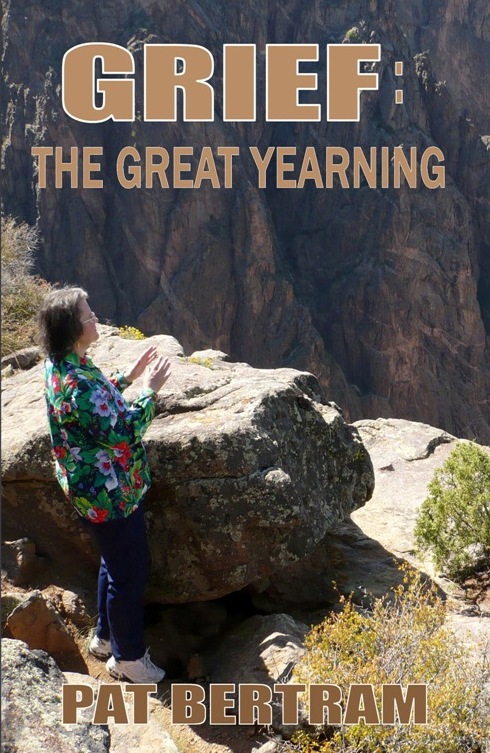
Hurrying Through Grief To See What is On the Other Side

During the first months of wild grief after the death of my life mate, I occasionally had the feeling that something wonderful was going to happen to me. I don’t know why I had that feeling — perhaps my sense of fairness dictated that a great good was needed to balance a great grief. Or perhaps such a cataclysmic closing of one segment of my life demanded an earthshaking opening of another segment. Or perhaps after years of waiting for his suffering to be over, I felt deep down that it was time for me to live.

I wasn’t the only one who thought his death might bring good changes to my life. Shortly before he died, he himself told me that everything would come together for me after he was gone. (He never explained what he meant, though, and foolishly, I never asked.) And afterward, my sister, who witnessed my grief and saw it as life affirming, told me that I could be entering the happiest time of my life.

Whatever the truth of it, I held on to the feeling because . . . well, because it was all I had to hold on to. In fact, the feeling was so strong at times that I wanted to hurry through my grief to see what was waiting for me on the other side. But here it is, nineteen months of grief later, and whatever that wonderful thing I expected to happen, didn’t.

Part of me is still waiting (just as an ever-diminishing part of me still waits for his phone call to tell me I can come home), but mostly, the feeling that something wonderful was going to happen to me is gone. Oddly, this is not an uncommon feeling for us bereft, and those who had the feeling of expectation also felt let down when nothing wonderful happened, which leads me to believe that the feeling is a survival mechanism, or perhaps another one of the many stages of grief nobody ever talks about. (Those who did have something wonderful happen in their lives weren’t able to feel the wonder of it, which left them feeling empty, and that is almost as bad as having nothing wonderful happen.)

Yesterday at the grocery store, I saw one of the hospice social workers who occasionally moderated the grief group I used to attend, and I thanked her for helping me through such a terrible time. During our conversation, I mentioned the odd feeling of anticipation I’d had during my months of grief. She replied, “Something wonderful did happen to you. You got through it.”

Is that wonderful enough to account for all those months of expectation? Maybe is has to be.

The Symphony of a Life Gone By

It is impossible to freeze a single moment of music — what you get is a chord that means little by itself. It only gains meaning by what went before it and what comes after, by existing as part of a whole.

Ever since the death of my life mate, I’ve been haunted by images of him at various stages of his life — when I first met him, when we were in the fullness of our relationship, and then at the end, when there was nothing left but a body depleted of life. Which of these moments was him? Were any of them him? Or, like music, were each a single meaningless chord in the symphony of his life?

This might seem a foolish reflection, but it is one that echoes now that his life has been silenced. When a person is alive, the person you know is the culmination of a life, with everything — every note and chord of his existence — leading up to that very moment and foreshadowing the song of his future. When the person is gone from this earth, there is no more culmination. The man I knew at the end — the man who had spent his last breath — is gone, burned into a pile of ashes and crushed bone. The man I knew at the beginning, the radiant man with half of his life still ahead of him is also gone, burned by the fires of living and dying. So which is the real person? How do you remember a life — a man — when all you have are bits of the whole?

We were not picture takers, and I have but a single photo of him. Although it looked exactly like him when it was taken fifteen years ago, it doesn’t look at all like him at the end of his life. For months after his death, I refused to look at the photo, afraid that the image of him in my mind would be supplanted by the image of the photo. Recently I decided it doesn’t matter if the image in my head is not of him. No image is “him.” He is gone, his moments forever broken into meaningless chords. I know I cannot hold the whole of him in my mind — it took 63 years of living to play his entire repertoire, parts of which I never heard.

And so, I look at the photo, this single chord of his life, and remember the symphony of a life gone by.

Introduction to Beth Groundwater, Author of “A Real Basket Case”

When I first joined Facebook, like many new members, I hadn’t a clue what to do, so I became a moderator of an almost defunct writing group called the Suspense/Thriller Writers. Sounds ho-hum, doesn’t it? But it was that simple. I was trolling around the site, looking for groups that might interest me, and I stumbled on that particular group. It had eight members at the time. On the right sideboard was a button that said, “become a moderator of this group.” I was curious what becoming a moderator would entail, so I clicked the button. And that’s how I became the moderator of the group. To make it a viable group, rather than a typical Facebook group where people just posted book covers and other promotional bits, I decided to have weekly discussions.

Brazen me, I picked people from the group at random (after an active membership drive I had over 1,500 members because those were the days authors were signing up for facebook  in droves. Or do I mean signing up in murders — you know, like a murder of crows. What else do you call a convocation of mystery writers?) and asked if they’d like to host a discussion. That was my introduction to Beth Groundwater. Three years ago — November 13, to be exact — I asked if she’d host a discussion, and she said yes. (One of the many strangenesses of Facebook is that the email discussion about the discussion is archived for all times, which is how I know the date, but the discussion itself, which took place on November 18, 2008, has disappeared into the great maw of Facebook’s yesteryear.)

It was an apropos discussion, too, considering all the changes Facebook has made. To lead off her discussion, Beth said, “I’d like to see the members of this group help each other figure out how to effectively use the features of Facebook to promote themselves and their books without turning off members of the network.” Today, without the discussion board and the help we offered each other, any serious discussions rapidly disappear beneath the steady stream of self-promotion. So all we can do is post information about our books, probably turning off the members of the network in the process.

The discussions may have disappeared from the group, but Beth is still there and still a class act.

The title of this post is Introduction to Beth Groundwater, Author of “A Real Basket Case,” but all I did was natter on about me and my running battle with Facebook. So, I’ll tell you what — if you click the link below, it will take you to my other blog where I am interviewing Beth. And that interview is all about her. I promise.

Click here for an interview with: Beth Groundwater, Author of “A Real Basket Case”

Have You Ever Felt as if the World Were Backward and Upside Down?

?drawkcab saw dlrow ruoy fi sa tlef reve uoy evaH

Hɐʌǝ ʎon ǝʌǝɹ ɟǝlʇ ɐs ıɟ ʎonɹ ʍoɹlp ʍɐs ndsıpǝ poʍu¿

¿uʍop ǝpısdn puɐ pɹɐʍʞɔɐq ɥʇoq sɐʍ plɹoʍ ɹnoʎ ɟı sɐ ʇlǝɟ ɹǝʌǝ noʎ ǝʌɐH

At times, we’ve all felt as if the world was backward and upside down, felt as if we needed to stand on our heads to make sense of life. In truth, the world is upside down all the time, or at least half of it is, though I doubt anyone knows which half is upright and which half is upside down. Does space have an orientation? Is there a top and a bottom? A right and a left? An east and a west? We know the east is where our sun rises (at least, that’s what we’ve been taught) but in space, with no rising suns, with not much of anything in fact, is there an east?

We live on a small ball, careening around in space, twirling and tumbling at unimaginable speeds. And yet, for the most part, we manage to deal with each sluggish day as it comes without a thought to our precarious situation. Some days, we feel as if we are on top of the world even when there’s nothing to prove to ourselves that we are on top. Other days, by definition, we have to be at the bottom of the world because, in a globe situation, there is no way for everyone to be on top all the time.

There are some things one cannot make sense of, even when you and the world are both upright. Electrons, for example. We live in an electronic world, with billions of electrons careening around in mostly empty space (hmmm. Too obvious a metaphor, perhaps?). Or maybe there is only one electron zinging around so fast it creates the whole shebang. (Not my idea about there being a single electron, though with the way my mind is working tonight, it might as well be. As for shebang — that’s something no one seems to be able to make sense of — apparently it appeared out of nowhere like the big bang.)

Now, don’t you feel so much better about your problems? Life may not always make sense, but it muddles along whether we understand it or not.

Do Blogs Need to Have a Single Topic?

untitle

Most articles about blogging mention that you need to pick a topic for your blog and all your posts need to center on that topic. Is this really necessary? I suppose if you are a literary agent who sets himself up as an interpreter of the publication industry (explaining what one needs to do get published, for example), you’d need to stick to your topic, otherwise you’d lose your readers. Or if you are a marketing coach who is trolling for clients, it would be a good idea to stick to the topic at hand. But what about the rest of us? Specifically, what about us authors? Is it necessary for us to stick to a single topic? And if so, what should that topic be?

I have two fairly well-received blogs that are topic-oriented — Book Marketing Floozy, which is an indexed blog of book marketing tips and hints written by various authors, and Pat Bertram Introduces . . ., which is a blog for interviews with authors and their characters.  (Ahem! You know this because, of course, you have already submitted an interview, right?! If you haven’t yet submitted your interview, you can find the instructions and questions here: Author Questionnaire. I’ll be waiting for it!!)

I also have a third blog that isn’t as highly rated as those two, but it is rated (if an Alexa rating of 21,000,000 passes for a rating.) That third blog, Dragon My Feet, went through several metamorphoses from a blog to talk about all the things I did while procrastinating from writing (which I never used because when I was procrastinating from writing, I wasn’t even writing blog posts) to a blog highlighting excerpts from books as part of my ongoing effort to promote others while I learn to promote myself. You can find submission requirements for that blog here: Let me post your excerpt!

Which brings me to the blog at hand, the one you are reading, the point of the discussion. This blog started out as a place to talk about my efforts to get published, my efforts to get noticed once I was published, and what I learned along the way. I’d talk about reading and writing, and over the years I ended up with some pretty impressive views on some of my articles about writing.  “Describing a Winter Scene,” for example, has almost reached 10,000 views for that article alone, and it spawned a couple of other posts with good ratings: “Describing a Winter Scene — Again” and “Describing a Winter Scene — Again. And Yet Again.” And all of those winter scene articles descended from the grandmommy of them all: “Describing a Scene in an Interesting Way.” But continuing to write such articles would get boring after a while, both for me and my poor readers, most of whom know more about writing than I do!

Before boredom set in, Death intervened. Not my death, of course, but it was a significant event in my life nontheless, and so I started writing about grieving. Partly, I couldn’t think of anything else but my sorrow, and partly I got so furious at novelists who didn’t seem to understand the first thing about grief that I wanted to set the record straight. Well, I accomplished that to a certain extent, and now I have a book about my grief that will be published next year. So, in a way, all that talk about grief was still within the parameters of this blog — all part of writing.

But now I’m coming out of the worst of the fog. I’ve said most of what I wanted to say about grief and most of what I wanted to say about writing (I mean, how many articles about describing winter can one person write?) and now I’m at a crossroads. I’ve been talking about the various things I’ve been doing to put my life back together, such as “Halt and I’ll Shoot! (Adventures With Firearms)” and “Proving to Myself That I’m Real,” but eventually I’ll move beyond that, and then what? I’ll have to decide on a topic for this blog. Or do I? Is “life, writing, and the writing life” a specific enough topic? Is it better for an author to write about whatever catches his or her interest so readers (hypothetical though they may be) can better get to know you? Is it enough simply to blog?

Happy Birthday, Roy Rogers!!

Today is the 100th anniversary of Roy Rogers’s birth. (Actually, it’s the 100th anniversary of Leonard Slye’s birth. Leonard Slye didn’t legally become Roy Rogers until 1942, so this is only the 69th anniversary of Roy Roger’s birth. Or rebirth?) I didn’t grow up watching television or going to the movies, but even I had heard of Roy Rogers and Tigger. Oops. I mean Trigger. Not wanting to spend another sad Saturday hiding away, I hied away to the park to listen to Roy Rogers Jr and the High Riders sing his daddy’s songs.

After a few sets, he talked about his father and about the difference between country songs and western songs. He said country singers sing about lyin’ and cryin’ and cheatin’ and dyin’ but he didn’t say what western singers wailed about. Wide open spaces, I guess. And loneliness. Hmmm. I know something about that!!

He went on to say that we don’t want western music to disappear, and at that very moment, his voice disappeared. At first, I thought he was making a point, but it turns out the batteries on his microphone decided to die right then. Cracked me up. But no one else seemed to catch the irony. Not a single person but me smiled. Apparently the thought of the demise of western music is not to be taken lightly in certain circles. Or perhaps everyone’s face was too frozen to move. The day was bright and sunny, but the winds were icy.

Still, it was a perfect setting for the centennial. And for taking photos. The fellow in the photo below seemed to fit the scene perfectly, and I couldn’t help taking his picture. Turns out it was a day for irony — he was there to take photos of the event!! (Maybe taking a photo of someone who was there to take photos isn’t ironic, but it did amuse me.)

Short Story Contest!!!

Second Wind Publishing invites you to submit an entry to their short story contest.

Stories are to be about spring or renewal, at least, that’s what the contest rules say, though that does not mean the stories have to be upbeat or happy. You can work against the theme — contrasting a disaster that takes place in the spring with the beauty of the season, perhaps. Of course, up beat is good, too, it’s just that most of the writers I know (including me) don’t do upbeat.

My grief book, which will be published early next year, begins: Death came in the spring. And the end of the introduction says: The spring of death gave way to the summer of grief, and grief flowed into the fall and winter of renewal. See? Who says spring has to be about happy upbeat things?

You have until December 31, 2011 to submit an entry.

Go to the Second Wind Contest Blog for rules and how to enter.

Best of luck!!

Let’s Talk About Rhythm in Writing

A story that whips you through scene after scene is as exhausting as a story that drags you through the intervals between scenes at an excruciatingly slow pace. An experienced storyteller knows when to ramp up the tension and when to slow it down, when to take away a reader’s breath and when to let the reader take a breather, when to run through the drama or wander through the background. This alternating of ups and downs, successes and failures, satisfactions and woes is as rhythmic as music and can be as compelling as a drumbeat.

A steady pace of ups and downs can lull a reader into a feeling of complacency, but a syncopated rhythm, with ups and downs coming at uneven intervals can create an underlying sense of unease that gets beneath a reader’s skin. Even a small shift in pace can have a dramatic impact by making a minor defeat seem catastrophic or making a big victory seemed doomed.

Humorous moments, especially in tense scenes, can create a change of pace, lightening the mood and causing the reader to be more shocked by subsequent horrendous events. Sex scenes can create a change of pace, either as a diversionary tactic or as a quiet time between hectic scenes. A sex scene can even be a fast-paced action scene to get the reader’s blood roiling. (What it can never be, incidentally, is a scene thrown in there just because you thought it was time for a sex scene. Such scenes need to be as germane and as necessary as a plot twist or a revelation. If the scene can be removed from the book without leaving a hole, it should be removed or rewritten.)

A change in rhythm can be subtle, such as a shift in the dynamics between two characters, a change in focus or mood, or simply a preparation for future conflicts. Or it can be as blatant as a murder.  The rate of change in a story can affect the rhythm, too. A lot of changes coming rapidly, one right after the other, create a hectic pace. A few changes after intervals of stasis can make the pace seem slower, even bucolic.

How you present dialogue can change the pace. To speed up the pace you can use quick exchanges with few speaker tags. To slow the pace, use longer speeches and/or more detailed speaker tags.

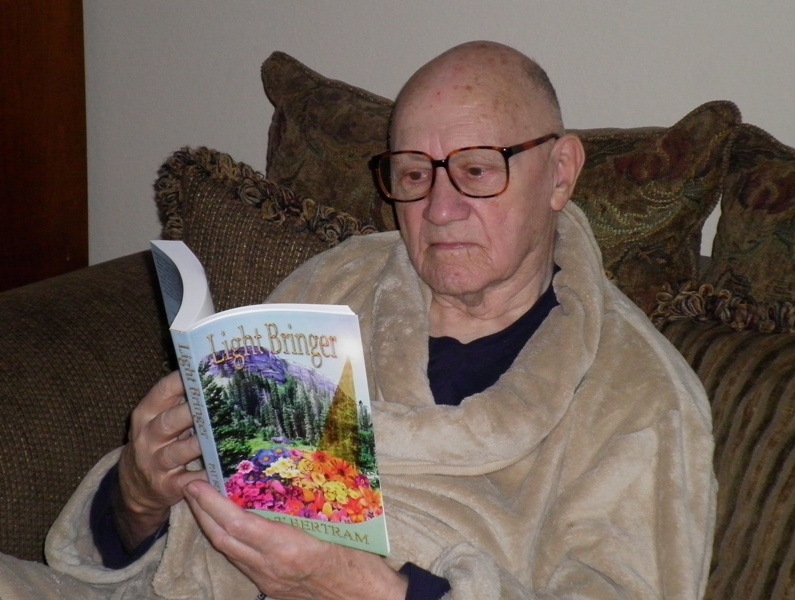
This example from Light Bringer uses short speaker attributes:

Emery regarded Philip with narrowed eyes. “I always know when one of my students is in trouble. It’s time you told me what’s going on.”

“I was never one of your students.”

Emery waved away the remark. “Between the two of us we should be able to solve your predicament.”

“I’m not sure there is a solution. Right before I came here, two NSA agents came to my apartment.”

Emery shook his head as if to clear it. “I must have misunderstood. I thought I heard you say NSA agents.”

“I did. That’s who they identified themselves as, any-way. They told me they were concerned about the books I’ve been checking out of the library.”

Emery froze. “They said that?”

“Yes.” Philip paused to reconsider, then heaved a sigh. “No. They told me they wanted to speak to me. I suggested they were there because of the books I read.”

Emery scowled at him. “Have I taught you nothing? Never volunteer. If you don’t know what’s going on, keep your mouth shut until you find out.”

And this example from the same book uses longer speaker attributes which sets a more leisurely pace:

As the cowboy approached, she wondered why a man like him worked in a coffee shop instead of punching cows or whatever men like him usually did.

In a slow, deliberate voice that stopped short of being a drawl, he said, “What can I get for you?”

“Coffee.”

He ushered her to a table. “How about some pie to go with it? Or a muffin? Mabel from the bakery sent over a fresh batch of whole-wheat blueberry muffins.”

“A muffin sounds good.”

He loped around behind the counter. A minute later he returned and set a mug of coffee on the table along with a muffin almost as big as a cake.

“I don’t believe I’ve seen you here before,” he said.

Jane tore open a packet of sugar. “Just passing through.” She dumped the sugar in her coffee and stirred it. Thinking that, next to bars, her sister liked to hang around places like this to get local color, she considered asking the cowboy if he knew where she could find Georgy.

“Hey, Luke,” one of the old men called out. “Bring me a muffin, too.”

Jane sipped her coffee, grateful for the interruption. Georgy would never have forgiven her for inquiring about her, and there would go any hope of getting a loan.

“Holler if you need anything else,” the cowboy said, then ambled off.

These dialogue samples also show one of the contrasts in the book, the the fast-paced action/conspiracy story commingling with the slower-paced cowboy story. Then there were the ethereal characters contrasting with the down to earth ones. Lots of scope for pacing in Light Bringer!! (Which, incidentally, is on sale for $1.99 for the Kindle edition on Amazon until November 8, 2011.)

So, let’s talk about rhythm. Do you pay attention to the rhythm of your story? Do you use the rhythm to create a mood or a change of pace? How do you create the rhythm of your story? What devises do you use? Do you make sure that even your story’s quiet moments are necessary to the story? Do you use words or sentence structure to help create the rhythm? (Short words and sentences give the scene a feeling of speed and immediacy. Longer sentences and words create a more relaxed pace.)

I Am Not Grieving Inappropriately

I recently received a message from a woman who is concerned that I’m still counting sad Saturdays — she’s worried that my grief for my dead mate is going on too long and keeping me from living. I appreciate her concern and her continued prayers (just as I appreciate the concern and prayers from all of you), but the truth is, except for readers of this blog, no one knows I still have my sad times. I don’t hide myself away from life, I’m not missing from life, and I’m not missing life. I miss him, of course, and I hate that he is missing from this life, but that particular sorrow is something I accept as part of my life.

There is nothing wrong with sad times, and there is no reason to fear sadness. Depression is dangerous, but not all sadness is depression, nor does all sadness lead to depression. Sometimes sadness is melancholic or nostalgic — a seasoning of life rather than a banishment of life, a reminder not to take life for granted. For several months now I’ve been hesitant to continue posting about grief since such posts show me (perhaps) in a pathetic or needy light, but there are too many misconceptions about grief that we accept as truth, and I want people who have lost the most significant person in their life to know that they do not need to put aside their sorrow simply to placate others. It is their grief and they need to feel the sorrow, not ignore it. Experiencing grief and processing it are how we learn to be whole again (or as whole as is possible).

The first year after such a traumatic loss, one struggles to survive the psychic shock. The second year one deals with the effects of the ongoing loss and begins to look ahead more often than one looks behind. Since I am still in my second year, I don’t know what the third and fourth year bring — perhaps occasional upsurges of grief or a continual (though diminishing) struggle to comprehend life and death and loss. People who have been on this journey and come out of it mostly intact, tell me that it takes four years before one completely gets back the joy of living. So I am still within the normal bounds of grief.

For some people, grief is a time of shutting themselves away, of forgetting that they have other people in their life who need them, and if this goes on too long, they might need to seek professional help, especially if there are children involved. For me, though, and for others who are grieving appropriately, this is a time of opening up, of showing our vulnerability, of admitting that life is not always happy or fun. And in doing so, we make connections to help us rebuild our lives.

If I had hidden my sadness, if I had followed my natural inclination to bear my pain in silence, my life would have been much diminished. You and all the people I met since I began this journey nineteen months ago have added so much to my life that it tells me what I already know: I am not grieving inappropriately.

Kindle Sale! Get Any of My Books for Only $1.99!!

Have you been wanting to get one of my books? Well, now is the perfect time! The Kindle edition is only $1.99 on Amazon from now until November 8, 2011. Happy reading!

***

ASHFIn quarantined Colorado, where hundreds of thousands of people are dying from an unstoppable disease called the red death, insomniac Kate Cummings struggles to find the courage to live and to love. Her new love, investigative reporter Greg Pullman, is determined to discover who unleashed the deadly organism and why they did it, until the cost — Kate’s life — becomes more than he can pay. This is a story of survival in the face of brutality, government cover-up, and public hysteria. It is also a story of love: lost, found and fulfilled.

Click here to read the first chapter of: A Spark of Heavenly Fire by Pat Bertram

$1.99 Kindle sale! Click here to buy: A Spark of Heavenly Fire by Pat Bertram

***

Bob Stark returns to Denver after 18 years in Southeast Asia to discover that the mother he buried before he left is dead again. He attends her new funeral and sees . . . himself. Is his other self a hoaxer, or is something more sinister going on? And why are two men who appear to be government agents hunting for him? With the help of Kerry Casillas, a baffling young woman Bob meets in a coffee shop, he uncovers the unimaginable truth.

Click here to read the first chapter of: More Deaths Than One by Pat Bertram

$1.99 Kindle sale! Click here to buy: More Deaths Than One by Pat Bertram

***

When twenty-five-year-old Mary Stuart learns she inherited a farm from her recently murdered grandparents — grandparents her father claimed had died before she was born — she becomes obsessed with finding out who they were and why someone wanted them dead. Along the way she accumulates a crew of feisty octogenarians — former gangsters and friends of her grandfather. She meets and falls in love Tim Olson, whose grandfather shared a deadly secret with her great-grandfather. Now Mary and Tim need to stay one step ahead of the killer who is desperate to dig up that secret.

Click here to read the first chapter of: Daughter Am I by Pat Bertram

$1.99 Kindle sale! Click here to buy: Daughter Am I by Pat Bertram

***

Becka Johnson had been abandoned on the doorstep of a remote cabin in Chalcedony, Colorado when she was a baby. Now, thirty-seven years later, she has returned to Chalcedony to discover her identity, but she only finds more questions. Who has been looking for her all those years? Why are those same people interested in fellow newcomer Philip Hansen? Who is Philip, and why does her body sing in harmony with his? And what do either of them have to do with a shadow corporation that once operated a secret underground installation in the area?

Click here to read the first chapter of: Light Bringer by Pat Bertram

$1.99 Kindle sale! Click here to buy: Light Bringer by Pat Bertram